×

Australia🇦🇺 | landmarksWave Rockcurved granite formation, desert outcrop, Aboriginal rock art, photogenic landmark | things to do and best time to go

Explore Sydney Opera HouseExplore Willandra Lakes Region

Backpacking in Wave Rock
👌 Worth visitingunique site ranked #7
By Johan Kruseman 🇳🇱 | Updated September 4, 2026

Everyone goes to Wave Rock for that one sideways-wave photo, but the rock itself is only half the story; what actually matters is whether you’re into weird geology, big-sky silence, and the feeling of being very far from your comfort zone. Wave Rock sits outside the tiny town of Hyden in Western Australia’s wheatbelt, a long, dry haul from Perth that instantly filters out casual tourists. As a backpacker, you get a solid wow-factor on first sight and killer photo angles, but it’s not a spiritual world wonder and the crowds around midday can make it feel like a bus-stop attraction. Entry and transport add up, especially without your own wheels, yet the surrounding granite outcrops, Noongar cultural stories, and empty-country vibe turn it into more than just a selfie stop if you let yourself linger.

Discover everything you want to know in the 📖 Australia Travel Guide.
Loading the map 🌍
CLICK TO FILTER
cities
towns
villages
landmarks
national parks
hikes
beaches
attractions
festivals
regions
SHOW COUNTRY’S BESTSHOW ALL

✨ Why go?
Ranked #7 unique site in Australia
Why Wave Rock should be on your travel list

Wave Rock isn’t just another Instagram backdrop; it’s a natural masterpiece that demands your attention. Sure, you’ll encounter crowds, especially during peak season, but don’t let that deter you. The effort-to-reward ratio is solid. A quick drive from Perth, it fits perfectly into a broader route through Western Australia, making it an easy stop on your adventure.

The uniqueness of Wave Rock lies in its sheer scale and the way it seems to defy gravity. Standing before this 15-meter high, wave-shaped granite formation, you’ll feel a rush of awe that no photo can capture. Plus, it’s low-cost—entry is often free or just a few bucks, making it a budget-friendly highlight.

Take a moment to explore the surrounding area, where you’ll find ancient Aboriginal rock art and the quirky nearby town … read more 👉
Wave Rock isn’t just another Instagram backdrop; it’s a natural masterpiece that demands your attention. Sure, you’ll encounter crowds, especially during peak season, but don’t let that deter you. The effort-to-reward ratio is solid. A quick drive from Perth, it fits perfectly into a broader route through Western Australia, making it an easy stop on your adventure.

The uniqueness of Wave Rock lies in its sheer scale and the way it seems to defy gravity. Standing before this 15-meter high, wave-shaped granite formation, you’ll feel a rush of awe that no photo can capture. Plus, it’s low-cost—entry is often free or just a few bucks, making it a budget-friendly highlight.

Take a moment to explore the surrounding area, where you’ll find ancient Aboriginal rock art and the quirky nearby town of Hyden. This isn’t just a stop; it’s a chance to connect with the land and its stories. That’s the real magic of Wave Rock.
Want to include Wave Rock in your Australia route?
Create a personalized Australia itinerary that includes Wave Rock and the places that fit your trip — based on your travel style, budget, and available time. Get your route in seconds.

Generate my trip

💡 HighlightsThe experiences that define the visit

  • The Wave Face — The iconic curving wall of orange-pink granite that looks exactly like a frozen breaking wave; its scale and striped weathering make it one of the most recognizable natural rock formations in the world.
  • Walk the Base — A short, easy path runs along the bottom of the wave so you can get up close, touch the slick, banded rock and study the flared-slope weathering patterns that created the shape; great for seeing details you miss from a distance.
  • Top of Hyden Rock — Climb to the summit for a very different perspective: from above the curve the landscape opens out, you can walk along smooth granite, check out rock pools and get wide views over the wheatbelt.
  • Mulka’s Cave — A short walk from the main site, this shallow cave contains Aboriginal rock art and strong Dreaming stories
read more 👉
  • The Wave Face — The iconic curving wall of orange-pink granite that looks exactly like a frozen breaking wave; its scale and striped weathering make it one of the most recognizable natural rock formations in the world.
  • Walk the Base — A short, easy path runs along the bottom of the wave so you can get up close, touch the slick, banded rock and study the flared-slope weathering patterns that created the shape; great for seeing details you miss from a distance.
  • Top of Hyden Rock — Climb to the summit for a very different perspective: from above the curve the landscape opens out, you can walk along smooth granite, check out rock pools and get wide views over the wheatbelt.
  • Mulka’s Cave — A short walk from the main site, this shallow cave contains Aboriginal rock art and strong Dreaming stories tied to the site; it’s culturally important to the Njakinjaki (Noongar) people, so observe signage and respect the place.
  • Hippo’s Yawn — An oddly shaped cavity in the same rock complex that really does resemble a yawning hippo; it’s fun to wander through and makes a nice photo counterpoint to the wave itself.
  • Rock pools, lichen and wildlife — After rain the pockets and shallow pools on the granite fill with water and attract birds, frogs and delicate lichens; these tiny, temporary ecosystems are surprisingly rich if you slow down and look.
  • Sunrise and sunset light — The wave’s colors really pop in the low light: golden hues at sunrise and deep ambers at sunset give the granite dramatic banding and texture that a midday snap won’t capture.
Spotted a mistake or missing something? Contact us.

Things to do around Wave Rock

Ratings based on Tripadvisor reviews. When you book through this link, you support our work at no extra cost to you.

🌤️ When to go?Weather, crowds, and seasonal trade-offs


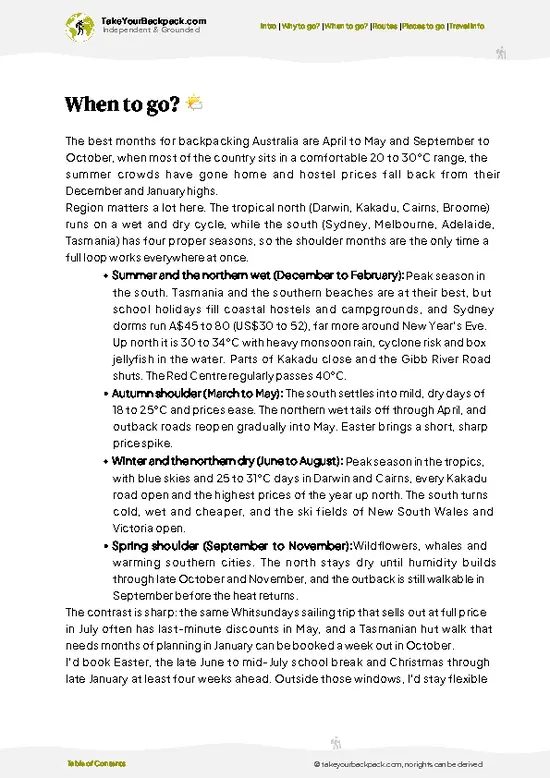
  • Weather: The best time to visit Wave Rock is during the Australian spring (September to November) and autumn (March to May). Summers can scorch you with highs around 35°C (95°F), making the hike uncomfortable and dehydration a real risk. Winters are mild but can be chilly at night, dropping to 5°C (41°F).

  • Temperature: Spring and autumn offer a sweet spot between 20-25°C (68-77°F), perfect for exploring without frying or freezing.

  • Daylight Hours: Longer days in spring and autumn mean more time to soak in the rock’s curves and snap photos without rushing. Winter days are shorter, cutting your window for adventure.

  • Crowds: Peak summer and school holidays bring in the crowds, turning the serene landscape into a busy tourist spot. Off-peak seasons offer a quieter, more personal experience.
read more 👉

  • Weather: The best time to visit Wave Rock is during the Australian spring (September to November) and autumn (March to May). Summers can scorch you with highs around 35°C (95°F), making the hike uncomfortable and dehydration a real risk. Winters are mild but can be chilly at night, dropping to 5°C (41°F).

  • Temperature: Spring and autumn offer a sweet spot between 20-25°C (68-77°F), perfect for exploring without frying or freezing.

  • Daylight Hours: Longer days in spring and autumn mean more time to soak in the rock’s curves and snap photos without rushing. Winter days are shorter, cutting your window for adventure.

  • Crowds: Peak summer and school holidays bring in the crowds, turning the serene landscape into a busy tourist spot. Off-peak seasons offer a quieter, more personal experience.

  • Seasonal Activities: Spring blooms add unexpected color around the rock, while autumn’s cooler air makes hiking more enjoyable. Summer’s heat limits outdoor time, and winter’s chill can be a dampener.

  • Price Fluctuations: Accommodation and tours spike in summer and school holidays. Visiting off-season can save you a chunk of cash and avoid the tourist rush.


Pro-tip: Aim for early spring or late autumn to dodge crowds, enjoy perfect temps, and catch Wave Rock in its most natural, unhurried state.


source: climatestotravel.comJANJanuary: fair for travelingFEBFebruary: fair for travelingMARMarch: highly recommended for travelingAPRApril: excellent for travelingMAYMay: excellent for travelingJUNJune: good for travelingJULJuly: good for travelingAUGAugust: good for travelingSEPSeptember: excellent for travelingOCTOctober: excellent for travelingNOVNovember: highly recommended for travelingDECDecember: fair for traveling
when-to-go

✈️ The backpacker research shortcutAustralia Travel Guide

An offline-friendly backpacking guide with optimized travel routes, ranked highlights, transport advice, and the best areas to stay.
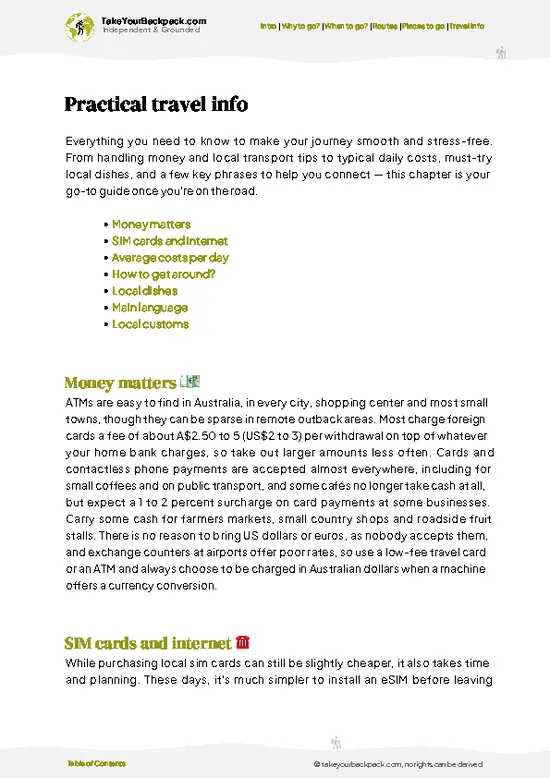
example page 0 from our offline Travel Guide for Australia
example page 1 from our offline Travel Guide for Australia
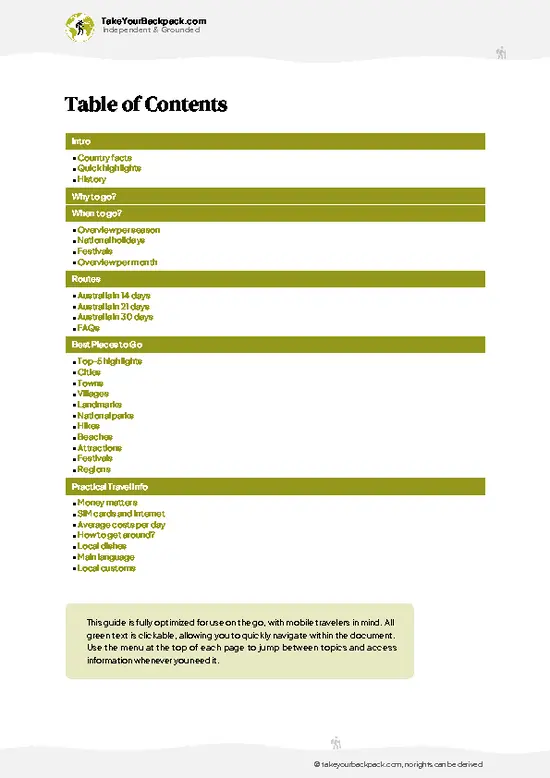
example page 2 from our offline Travel Guide for Australia
example page 3 from our offline Travel Guide for Australia
example page 4 from our offline Travel Guide for Australia
example page 5 from our offline Travel Guide for Australia
example page 6 from our offline Travel Guide for Australia
example page 7 from our offline Travel Guide for Australia
The digital guide (544 pages) contains:
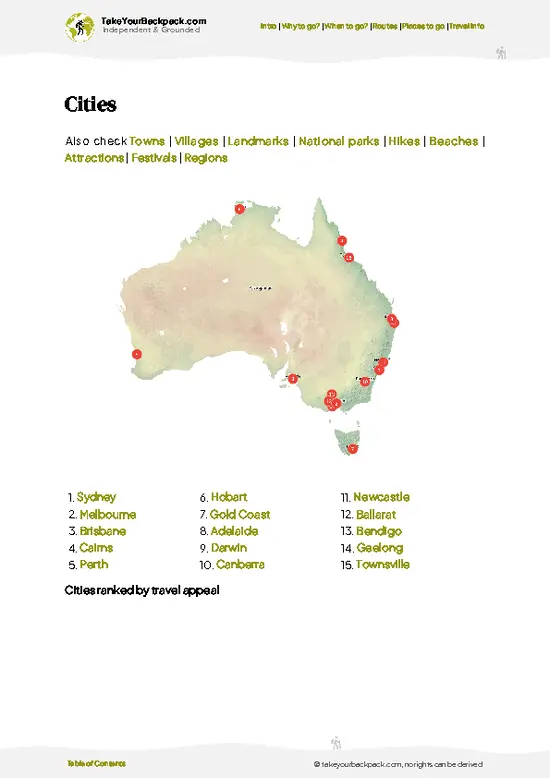
149 highlights, ranked by travel appeal
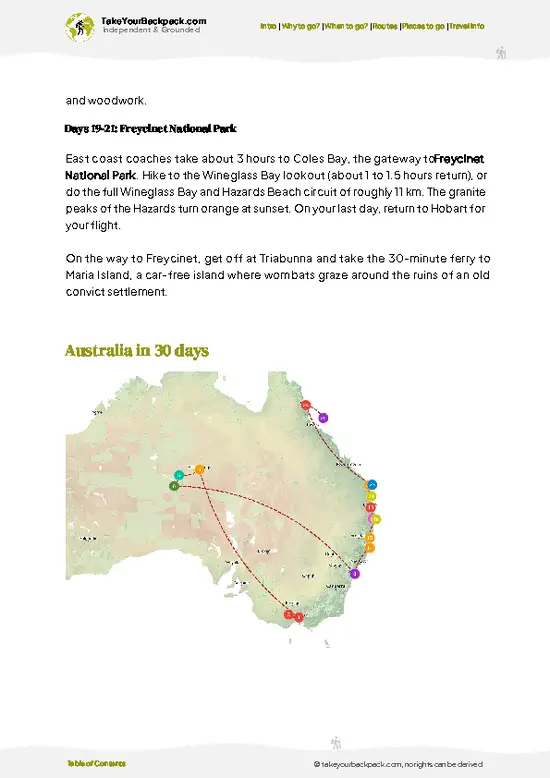
Optimized 14, 21 & 30-day travel routes
Cities, national parks, landmarks, beaches
How to get around
Offline-friendly for travel without Wi-Fi
👉 Click to see all 30+ guide features

📅 Plan smarter in minutes, not weeks
Month by month travel advice
Festivals & national holidays
Budget expectations

🗺️ Go to the right places, skip the overrated ones
Honest pros & cons of destinations
Top hikes, parks & viewpoints
Lesser-known places most travelers miss
Clear “worth it vs skip it” guidance

🛏️ Travel smoothly without rookie mistakes
Best areas to stay
Transport systems explained simply
Common scams & safety advice
SIM cards, money & practical tips

🌍 Understand the country, not just visit it
Culture & traditions
Local customs
Festivals worth planning around
Traveler-friendly historical context
Insights that make places more meaningful

📱 Built for real travel conditions
Fully downloadable PDF
Works completely offline
Optimized for phone use
Useful in remote areas & buses
Everything in one place
Save weeks of stressful planning
Get instant access to your full guide. 30‑day money-back guarantee.
+ Add another guide for just US$7.80

By proceeding you agree to our terms.
Sent to your inbox immediately after payment • 100% Secure Checkout
Best Backpacking Travel Advisor 2025 tourism awardBest Backpacking
Travel Advisor
2025
What others say about Take Your Backpack Guides:
⭐⭐⭐⭐⭐
Fantastic, amazing amount of information!
⭐⭐⭐⭐⭐
My goodness this is amazing, it's what I've been looking for hats off too you!
⭐⭐⭐⭐⭐
I think this is absolutely BRILLIANT
⭐⭐⭐⭐
Very complete and informative. It's still missing places, but I gotta to commend you
⭐⭐⭐⭐⭐
This is truly amazing, thank you, can't wait to explore it with my kids!
⭐⭐⭐⭐⭐
Awesome resource, thank you!
⭐⭐⭐⭐⭐
This is amazing! Can't wait to explore the ones I haven't seen
⭐⭐⭐⭐
I love this! Well done, great idea.
⭐⭐⭐⭐⭐
Thanks for taking the time to make this gem!
⭐⭐⭐⭐⭐
This might be the best website I've ever seen.
⭐⭐⭐⭐⭐
Congratulations, and thank you so much for your work; it's incredibly valuable.
⭐⭐⭐⭐
In all seriousness I think you did a great job pointing out the important spots
⭐⭐⭐⭐⭐
10/10 very good
⭐⭐⭐⭐⭐
As someone who's only just starting to visit regularly this is awesome, thank you.
⭐⭐⭐⭐
Thank you very much! I'm going to visit my dad, it's going to be very useful!
⭐⭐⭐⭐⭐
This is really cool! We'll be travelling for the first time and this definitely come in handy.
⭐⭐⭐⭐⭐
You are now our minister of culture, congratulations 👨‍💼
⭐⭐⭐⭐⭐
Just wanted to tell you that this is a pearl! Going to follow your recommendations.
⭐⭐⭐⭐⭐
This is so cool. I'll definitely be using the resource for my travels soon.
⭐⭐⭐⭐⭐
This is very impressive! Good work.
⭐⭐⭐⭐⭐
This is an amazing and informative site. Very well done!

🛏️ Where to stay?How to pick the right area

Wave Rock is a stunning natural wonder, but let’s cut through the Instagram haze. The crowds can be overwhelming, especially during peak season. You’ll want to stay somewhere that balances proximity with a bit of local charm.

Head to Hyden, the closest town. It’s small but has a welcoming vibe. You’ll find a mix of backpacker-friendly accommodations and local eateries. The social scene here is laid-back, perfect for striking up conversations with fellow travelers.

Another option is to camp nearby. There are designated camping areas that let you soak in the landscape without the tourist rush. … read more 👉
Wave Rock is a stunning natural wonder, but let’s cut through the Instagram haze. The crowds can be overwhelming, especially during peak season. You’ll want to stay somewhere that balances proximity with a bit of local charm.

Head to Hyden, the closest town. It’s small but has a welcoming vibe. You’ll find a mix of backpacker-friendly accommodations and local eateries. The social scene here is laid-back, perfect for striking up conversations with fellow travelers.

Another option is to camp nearby. There are designated camping areas that let you soak in the landscape without the tourist rush. Imagine waking up to the sound of nature rather than the hum of a busy street.

If you’re feeling adventurous, consider a short drive to nearby national parks. They offer stunning hikes and fewer people. You’ll get the real magic of the Australian outback, away from the selfie sticks.

Stay smart, stay social, and embrace the authentic experience. Wave Rock is worth it, but the journey there can be just as rewarding.

👛 Costs (as of 4 September 2026)How expensive it really is

Visiting Wave Rock in Australia can be a unique experience, but it comes with its own set of costs. Here’s a breakdown to help you plan your trip without any surprises.
  • Entry Fee: The cost to access Wave Rock is around $12 USD per vehicle. This fee covers parking and access to the rock itself. If you’re traveling solo, it’s about $5 USD per person. Not a huge hit to the wallet, but worth knowing.
  • Accommodation: If you plan to stay overnight, options range from budget motels to campgrounds. Expect to pay around $20-30 USD for a campsite or $80-150 USD for a basic motel room. Prices can spike during peak season, so book ahead if you can.
  • Food: Dining options are limited near Wave Rock. If you’re eating out, budget around $10-20 USD for a simple meal at a local café. Alternatively, bring your own
read more 👉
Visiting Wave Rock in Australia can be a unique experience, but it comes with its own set of costs. Here’s a breakdown to help you plan your trip without any surprises.
  • Entry Fee: The cost to access Wave Rock is around $12 USD per vehicle. This fee covers parking and access to the rock itself. If you’re traveling solo, it’s about $5 USD per person. Not a huge hit to the wallet, but worth knowing.
  • Accommodation: If you plan to stay overnight, options range from budget motels to campgrounds. Expect to pay around $20-30 USD for a campsite or $80-150 USD for a basic motel room. Prices can spike during peak season, so book ahead if you can.
  • Food: Dining options are limited near Wave Rock. If you’re eating out, budget around $10-20 USD for a simple meal at a local café. Alternatively, bring your own food to save money. Grocery stores in nearby towns offer decent prices for supplies.
  • Transportation: If you’re driving, factor in fuel costs. Depending on where you’re coming from, you might spend around $50-100 USD on gas. Public transport options are limited, so a rental car is often the best choice.
  • Activities: Beyond just viewing Wave Rock, consider exploring nearby attractions like Hippo’s Yawn or the Wave Rock Wildlife Park. These usually have minimal fees, around $5-10 USD, but check ahead for any changes.

Understanding these costs will help you appreciate the real magic of Wave Rock without breaking the bank. It’s all about the experience, not just the Instagram posts.
⚠️ Prices can change and everyone travels differently, so take this as a rough guide. Hope it helps you plan your adventure!

FAQTraveler FAQ

Wave Rock is a natural rock formation shaped like a tall breaking ocean wave, located in Western Australia. It is about 15 meters high and 110 meters long, formed from granite over millions of years. It is a popular geological and tourist site known for its unique shape and colors.
Visiting Wave Rock typically requires 1 to 2 hours to fully explore the rock and surrounding area, including nearby attractions like Hippo's Yawn and the Wave Rock Wildlife Park. Most visitors plan a half-day trip to enjoy the site without rushing.
You get to Wave Rock by driving approximately 340 kilometers east of Perth, near the town of Hyden. The site is accessible via sealed roads, and the closest major town with accommodation is Hyden, about 4 kilometers from the rock.
⚠️ Things can change over time, so always validate details locally before you go.

Other Australian landmarks near Wave Rock

Explore more nearby:


💡 Not sure where to go next?
Create a personalized itinerary for Australia including Wave Rock and the places that fit your trip.

Generate my itinerary

👉 Discover all landmarks

Or checkout all Australia has to offer (think cities, towns, villages, national parks, hikes, beaches, festivals)
Country photo of Australia

We 💚 feedbackParting advice and final tips

Wave Rock is a stunning natural wonder that feels like stepping into a surreal painting. The colors and curves are mesmerizing, and the surrounding landscape offers a sense of isolation that’s hard to find elsewhere. But let’s be real: it can get crowded, especially during peak season, and the facilities are basic. If you can handle the hustle, the experience is worth every step. Just go early to beat the crowds.

✈️ When did I visit Australia?
On my trip to New Zealand in 1993, I had a short stop in Australia as well.

✍️ Help improve this page!
The information on this page is based on my own backpacking experience in Australia, supplemented with up-to-date research and feedback from other travelers. Travel details can change, so if you notice anything outdated or incomplete, feel free to let me know.


🙋‍♂️ Give feedback

👋 Meet the founderWho’s Behind Take Your Backpack?

Johan, backpacker and founder of TakeYourBackpackHi, I’m Johan (Netherlands 🇳🇱), the creator of TakeYourBackpack. Over the past decade, I’ve backpacked through 80+ countries across six continents, gaining extensive experience with independent travel, long-term trips, and overland routes.

This site is built on a combination of firsthand travel experience and carefully curated insights from other backpackers. Many guides are based on places I’ve personally visited, while others bring together tips, observations, and practical advice shared by trusted travelers I’ve met along the way.

The goal is to provide realistic, experience-driven guidance — not generic itineraries — so you can explore destinations with better context, clearer expectations, and more confidence.

Get full Australia guide •
Instant download • 149 highlights • Full Offline guide