×

Australia🇦🇺 | regionsTasmaniamountain ranges, temperate rainforest, convict heritage, wild rivers | things to do and best time to go

Explore South West regionExplore Top End region

Backpacking in Tasmania
UNESCO World Heritage site
🏆 Top pickregion ranked #1
By Johan Kruseman 🇳🇱 | Updated July 30, 2026

Your boots crunch on frost as the first light hits the buttongrass, breath hanging in the air, fingers numb around a chipped enamel mug that somehow makes instant coffee taste like victory. A raven heckles you from a dead tree, the wind smells like wet eucalyptus and cold rock, and somewhere down in the valley you hear a river you can’t see yet, just roaring away like it has all the time in the world.

Tasmania sits off Australia’s southeast corner, a compact island that feels like someone sliced off the wild bits of the mainland and turned the volume up. For backpackers, it’s a trade: outrageous national parks, empty beaches, moody little towns like Hobart and Launceston, but fewer buses, higher grocery prices, and hostels that thin out fast once you leave the main hubs. Compared with Victoria or New South Wales, Tassie is quieter, more weather-beaten, less polished; you feel like a guest in a real place, not a product. It’s where you go when you’d rather earn your views with muddy socks than with a credit card.

Discover everything you want to know in the 📖 Australia Travel Guide.
Loading the map 🌍
CLICK TO FILTER
cities
towns
villages
landmarks
national parks
hikes
beaches
attractions
festivals
regions
SHOW COUNTRY’S BESTSHOW ALL

✨ Why go?
Ranked #1 region in Australia
Reasons people choose to visit here

Backpackers flock to Tasmania for its variety of landscapes that range from rugged coastlines to lush forests. You can dive into multiple experiences without the hassle of constant relocation. This island is compact yet packed, making it easy to explore. Transport options are flexible, whether you’re hitching a ride or renting a car.

What’s golden here is the chance to blend nature and culture through slow travel. You can hike in the morning, then sip local wine in the afternoon. It’s a place where every moment feels rich, and you’re not just passing through; you’re truly soaking it all in.
Want to include Tasmania in your Australia route?
Create a personalized Australia itinerary that includes Tasmania and the places that fit your trip — based on your travel style, budget, and available time. Get your route in seconds.

Generate my trip

💡 HighlightsMust-see experiences and standout moments

  • Cradle Mountain (Dove Lake) — The jagged peaks and glacial lakes of Cradle Mountain-Lake St Clair National Park feel like alpine Tasmania turned up to 11. Walk the Dove Lake circuit or day-hike parts of the Overland Track to see ancient button grass plains, rainforest, and wildlife (wombats at dusk) in a landscape you won’t find anywhere else in Australia.
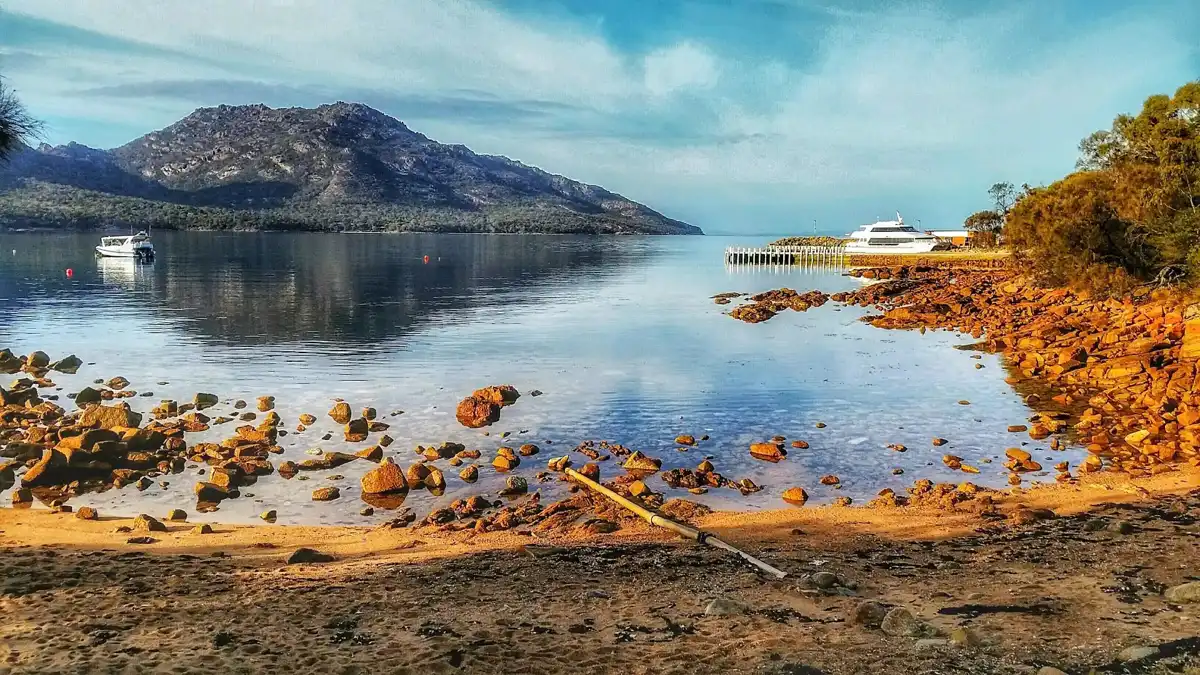
  • Wineglass Bay, Freycinet National Park — That perfect crescent of white sand framed by pink granite is genuinely worth the fuss. Hike to the lookout for the classic photo, then drop down to the beach or kayak the sheltered bays; the coastline’s geology and scale are very Tasmanian and hard to replicate elsewhere.
  • Maria Island National Park — A car-free island where cathedral-sized cliffs, conservatively restored convict ruins at Darlington
read more 👉
  • Cradle Mountain (Dove Lake) — The jagged peaks and glacial lakes of Cradle Mountain-Lake St Clair National Park feel like alpine Tasmania turned up to 11. Walk the Dove Lake circuit or day-hike parts of the Overland Track to see ancient button grass plains, rainforest, and wildlife (wombats at dusk) in a landscape you won’t find anywhere else in Australia.
  • Wineglass Bay, Freycinet National Park — That perfect crescent of white sand framed by pink granite is genuinely worth the fuss. Hike to the lookout for the classic photo, then drop down to the beach or kayak the sheltered bays; the coastline’s geology and scale are very Tasmanian and hard to replicate elsewhere.
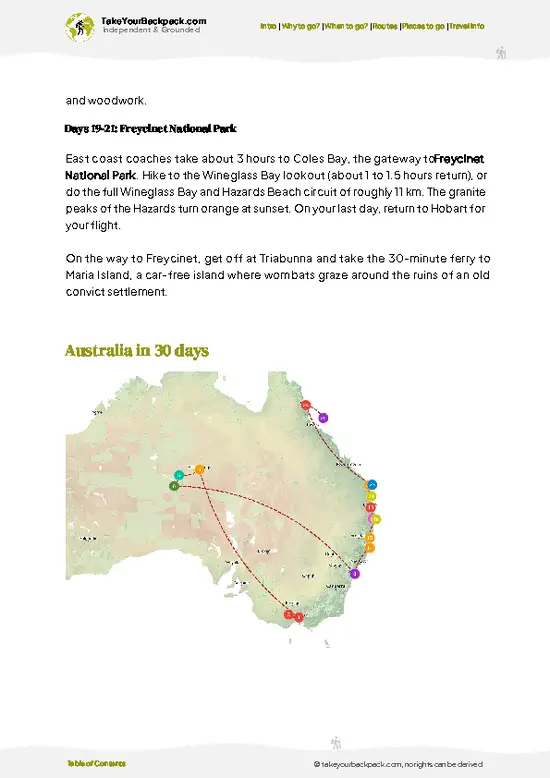
  • Maria Island National Park — A car-free island where cathedral-sized cliffs, conservatively restored convict ruins at Darlington and fearless wildlife (wombats, pademelons, Tasmanian devils on organised tours) mingle. It’s a hands-on mix of colonial history and coastal wilderness reached by a short ferry from Triabunna.
  • Bruny Island — The Neck & Adventure Bay — Dramatic sea-cliffs, sweeping beaches and a local food scene (oysters, cheese, smoked salmon) make Bruny feel like Tasmania in microcosm. Walk the Neck for the view, hop a short boat to see seabird colonies, and eat like a local between scenic stops.
  • Bay of Fires (Binalong Bay & Eddystone Point) — Orange lichen-streaked granite outcrops, insanely clear water and long quiet beaches — this coastline has a light and color palette unique to Tasmania. It’s brilliant for camping, coastal strolls and low-key beach days away from heavy tourist infrastructure.
  • kunanyi / Mount Wellington — Ten minutes from Hobart and you’re in arctic-looking scrub. Drive or walk up for sweeping views across the Derwent, dramatic dolerite cliffs and wildly changeable weather — an instant reminder how small and rugged Tasmania is.
  • Strahan & the Gordon River — Deep temperate rainforest, mirrored rivers and ancient Huon pine give the World Heritage-listed west coast a very different mood to the east. A Gordon River cruise or short forest walk feels like stepping into a primeval Tasmanian chapter few other places can match.
  • Oatlands Georgian Village (Hidden gem) — One of the best-preserved Georgian townscapes in Australia, with sandstone buildings, a convict-built gaol site and a quiet main street that time mostly left alone. If you like colonial architecture without the crowds, this is the stop locals quietly recommend.
  • Ida Bay Railway (Hidden gem) — A tiny, working heritage railway tucked into southern Tasmania that takes you through forest and to remote coastal spots. It’s low-key, charming, and gives a proper peek at the island’s timber and mining past without the usual tourist gloss.
  • Cockle Creek / Recherche Bay (Hidden gem) — The southernmost drivable point in Tasmania opens onto windswept beaches, estuaries and the start of serious wilderness (South Coast Track). Fewer visitors get here; the vast, open feel and quiet historic sites make it a special place for people who actually want to disappear into wild Tasmania for a while.
Spotted a mistake or missing something? Contact us.

Things to do around Tasmania

Ratings based on Tripadvisor reviews. When you book through this link, you support our work at no extra cost to you.

⌛️ 5 daysHow to make the most of Tasmania

Day 1: Hobart
Hobart is your launchpad. The transport system here is straightforward, with buses connecting you to key spots. Spend the day exploring Salamanca Market for local crafts and fresh produce. Grab a coffee at a nearby café and soak in the vibrant atmosphere. This sets the tone for your trip, grounding you in Tasmania’s culture.

Day 2: Port Arthur
Take a bus to Port Arthur. The journey is about an hour and a half, but it’s worth it. The historic site is a deep dive into Tasmania’s convict past. You’ll appreciate the haunting beauty of the ruins and the surrounding landscapes. This is where history and nature collide.

Day 3: Freycinet National Park
Rent a car for flexibility. Freycinet is a couple of hours away, but the drive is scenic. Hike to Wineglass Bay for breathtaking … read more 👉
Day 1: Hobart
Hobart is your launchpad. The transport system here is straightforward, with buses connecting you to key spots. Spend the day exploring Salamanca Market for local crafts and fresh produce. Grab a coffee at a nearby café and soak in the vibrant atmosphere. This sets the tone for your trip, grounding you in Tasmania’s culture.

Day 2: Port Arthur
Take a bus to Port Arthur. The journey is about an hour and a half, but it’s worth it. The historic site is a deep dive into Tasmania’s convict past. You’ll appreciate the haunting beauty of the ruins and the surrounding landscapes. This is where history and nature collide.

Day 3: Freycinet National Park
Rent a car for flexibility. Freycinet is a couple of hours away, but the drive is scenic. Hike to Wineglass Bay for breathtaking views. The park’s trails are well-marked, making it easy to navigate. This is where you’ll feel the pulse of Tasmania’s wild heart.

Day 4: Launceston
Head north to Launceston. The drive is about two hours. Visit Cataract Gorge for a refreshing walk and maybe a swim. This city has a laid-back vibe, perfect for unwinding after your adventures.

Day 5: Off-Path Reward - Bay of Fires
On your way back to Hobart, take a detour to the Bay of Fires. The stunning beaches and orange lichen-covered rocks are Instagram gold. This stop is a hidden treasure that adds a splash of color to your trip.

The must-do day? Day 3 in Freycinet. The combination of hiking and stunning views encapsulates the essence of Tasmania. It’s the kind of experience that lingers long after you’ve left.
Turn your Tasmania visit into an Australia adventure
Build a complete Australia route with Tasmania, hidden gems, must-see destinations, and realistic travel times included.

Generate my trip

🌤️ When to go?Best time to visit Tasmania


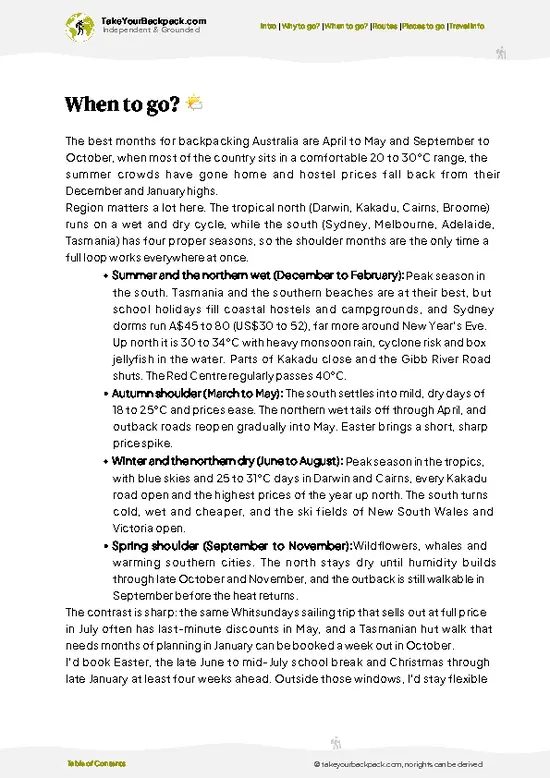
  • Weather: Tasmania’s weather swings fast. Summer (December to February) hits a sweet spot with highs around 20-23°C (68-73°F), perfect for hiking without overheating. Winter (June to August) chills down to 3-11°C (37-52°F), often wet and windy—great if you want solitude but pack layers.

  • Daylight Hours: Long summer days stretch up to 15 hours, giving you more daylight to explore. Winter days shrink to about 9 hours, so plan your hikes early and avoid being caught out in the dark.

  • Crowds: Peak season is summer, especially around Christmas and New Year. Expect busy trails and booked-out campsites. Shoulder seasons (spring and autumn) offer fewer people and a more relaxed vibe without sacrificing too much daylight or warmth.

  • Seasonal Activities: Summer is prime for water sports, mountain
read more 👉

  • Weather: Tasmania’s weather swings fast. Summer (December to February) hits a sweet spot with highs around 20-23°C (68-73°F), perfect for hiking without overheating. Winter (June to August) chills down to 3-11°C (37-52°F), often wet and windy—great if you want solitude but pack layers.

  • Daylight Hours: Long summer days stretch up to 15 hours, giving you more daylight to explore. Winter days shrink to about 9 hours, so plan your hikes early and avoid being caught out in the dark.

  • Crowds: Peak season is summer, especially around Christmas and New Year. Expect busy trails and booked-out campsites. Shoulder seasons (spring and autumn) offer fewer people and a more relaxed vibe without sacrificing too much daylight or warmth.

  • Seasonal Activities: Summer is prime for water sports, mountain biking, and festivals. Autumn paints the wilderness in deep reds and golds, perfect for photography and quieter walks. Winter brings a chance to see snow on the peaks but limits outdoor options.

  • Price Fluctuations: Accommodation and tours spike in summer. Booking early can save you a bundle. Off-season (May to September) sees lower prices but fewer services open, so balance cost with convenience.


Pro-tip: Aim for late spring (October-November) to catch blooming wildflowers, mild weather, and fewer tourists—Tasmania’s sweet spot before the summer rush hits.


source: climatestotravel.comJANJanuary: excellent for travelingFEBFebruary: excellent for travelingMARMarch: highly recommended for travelingAPRApril: highly recommended for travelingMAYMay: good for travelingJUNJune: fair for travelingJULJuly: fair for travelingAUGAugust: fair for travelingSEPSeptember: good for travelingOCTOctober: excellent for travelingNOVNovember: excellent for travelingDECDecember: excellent for traveling
australia-region-tasmania
© Google | Peter

✈️ The backpacker research shortcutAustralia Travel Guide

An offline-friendly backpacking guide with optimized travel routes, ranked highlights, transport advice, and the best areas to stay.
example page 0 from our offline Travel Guide for Australia
example page 1 from our offline Travel Guide for Australia
example page 2 from our offline Travel Guide for Australia
example page 3 from our offline Travel Guide for Australia
example page 4 from our offline Travel Guide for Australia
example page 5 from our offline Travel Guide for Australia
example page 6 from our offline Travel Guide for Australia
example page 7 from our offline Travel Guide for Australia
The digital guide (544 pages) contains:
149 highlights, ranked by travel appeal
Optimized 14, 21 & 30-day travel routes
Cities, national parks, landmarks, beaches
How to get around
Offline-friendly for travel without Wi-Fi
👉 Click to see all 30+ guide features

📅 Plan smarter in minutes, not weeks
Month by month travel advice
Festivals & national holidays
Budget expectations

🗺️ Go to the right places, skip the overrated ones
Honest pros & cons of destinations
Top hikes, parks & viewpoints
Lesser-known places most travelers miss
Clear “worth it vs skip it” guidance

🛏️ Travel smoothly without rookie mistakes
Best areas to stay
Transport systems explained simply
Common scams & safety advice
SIM cards, money & practical tips

🌍 Understand the country, not just visit it
Culture & traditions
Local customs
Festivals worth planning around
Traveler-friendly historical context
Insights that make places more meaningful

📱 Built for real travel conditions
Fully downloadable PDF
Works completely offline
Optimized for phone use
Useful in remote areas & buses
Everything in one place
Save weeks of stressful planning
Get instant access to your full guide. 30‑day money-back guarantee.


By proceeding you agree to our terms.
Sent to your inbox immediately after payment • 100% Secure Checkout
Best Backpacking Travel Advisor 2025 tourism awardBest Backpacking
Travel Advisor
2025
What others say about Take Your Backpack Guides:
⭐⭐⭐⭐⭐
Fantastic, amazing amount of information!
⭐⭐⭐⭐⭐
My goodness this is amazing, it's what I've been looking for hats off too you!
⭐⭐⭐⭐⭐
I think this is absolutely BRILLIANT
⭐⭐⭐⭐
Very complete and informative. It's still missing places, but I gotta to commend you
⭐⭐⭐⭐⭐
This is truly amazing, thank you, can't wait to explore it with my kids!
⭐⭐⭐⭐⭐
Awesome resource, thank you!
⭐⭐⭐⭐⭐
This is amazing! Can't wait to explore the ones I haven't seen
⭐⭐⭐⭐
I love this! Well done, great idea.
⭐⭐⭐⭐⭐
Thanks for taking the time to make this gem!
⭐⭐⭐⭐⭐
This might be the best website I've ever seen.
⭐⭐⭐⭐⭐
Congratulations, and thank you so much for your work; it's incredibly valuable.
⭐⭐⭐⭐
In all seriousness I think you did a great job pointing out the important spots
⭐⭐⭐⭐⭐
10/10 very good
⭐⭐⭐⭐⭐
As someone who's only just starting to visit regularly this is awesome, thank you.
⭐⭐⭐⭐
Thank you very much! I'm going to visit my dad, it's going to be very useful!
⭐⭐⭐⭐⭐
This is really cool! We'll be travelling for the first time and this definitely come in handy.
⭐⭐⭐⭐⭐
You are now our minister of culture, congratulations 👨‍💼
⭐⭐⭐⭐⭐
Just wanted to tell you that this is a pearl! Going to follow your recommendations.
⭐⭐⭐⭐⭐
This is so cool. I'll definitely be using the resource for my travels soon.
⭐⭐⭐⭐⭐
This is very impressive! Good work.
⭐⭐⭐⭐⭐
This is an amazing and informative site. Very well done!

🛏️ Where to stay?Best areas to stay in Australia

In Tasmania, you’ll want to dive into Hobart first. It’s the vibrant heart of the island, with a killer waterfront and a buzzing arts scene. Hit up Salamanca Market on Saturdays for local crafts and food.

Then, head to Launceston. It’s smaller but packed with charm, and the nearby Cataract Gorge is a must-see.

Don’t skip Bicheno for its laid-back beach vibe and access to the stunning Freycinet National Park.

For a true escape, try the tiny town of Strahan. It’s remote but offers breathtaking views and a friendly backpacker community.

Each spot is safe, social, and perfect for connecting … read more 👉
In Tasmania, you’ll want to dive into Hobart first. It’s the vibrant heart of the island, with a killer waterfront and a buzzing arts scene. Hit up Salamanca Market on Saturdays for local crafts and food.

Then, head to Launceston. It’s smaller but packed with charm, and the nearby Cataract Gorge is a must-see.

Don’t skip Bicheno for its laid-back beach vibe and access to the stunning Freycinet National Park.

For a true escape, try the tiny town of Strahan. It’s remote but offers breathtaking views and a friendly backpacker community.

Each spot is safe, social, and perfect for connecting with fellow travelers while keeping your budget in check.

🚌 Getting aroundGetting around like a local

Tasmania flows like a wild river, a blend of rugged landscapes and quirky towns where schedules are more of a suggestion than a rule. You’ll find yourself swaying between the thrill of spontaneity and the comfort of a well-timed bus. This isn’t a place for the rigid planner; it’s for those who can embrace the unexpected. You might miss a bus, but that could lead to a conversation with a local or a detour to a hidden beach. Here, the journey is as rich as the destination.


  • Public Buses: The Metro Tasmania buses connect major towns like Hobart and Launceston. They run roughly every hour, with fares around AUD 3-5. They’re comfortable enough for short trips, but don’t expect luxury.

  • Rental Cars: Renting a car gives you freedom. Prices start at AUD 50 per day. You can explore at your own pace,
read more 👉
Tasmania flows like a wild river, a blend of rugged landscapes and quirky towns where schedules are more of a suggestion than a rule. You’ll find yourself swaying between the thrill of spontaneity and the comfort of a well-timed bus. This isn’t a place for the rigid planner; it’s for those who can embrace the unexpected. You might miss a bus, but that could lead to a conversation with a local or a detour to a hidden beach. Here, the journey is as rich as the destination.


  • Public Buses: The Metro Tasmania buses connect major towns like Hobart and Launceston. They run roughly every hour, with fares around AUD 3-5. They’re comfortable enough for short trips, but don’t expect luxury.

  • Rental Cars: Renting a car gives you freedom. Prices start at AUD 50 per day. You can explore at your own pace, but be mindful of fuel costs and parking fees in towns.

  • Ferries: The Spirit of Tasmania ferry connects the mainland to Devonport. It takes about 9 hours and costs AUD 100-200, depending on the season. It’s a unique experience, but book ahead for the best rates.

  • Shuttle Services: Various shuttles operate between popular tourist spots. Prices vary, but expect around AUD 30-60 for a one-way trip. They’re convenient for reaching remote areas.


For a smooth ride across Tasmania, consider timing your travel around local events or festivals. They often lead to extra transport options and a chance to mingle with locals, making your journey even richer.

🍲 FoodWhat to Eat & Drink

In Tasmania, food is a celebration of the land. Dive into fresh seafood—think succulent oysters and flaky fish, often served with a side of seaweed. Don’t miss the local cheeses; they’re crafted with passion and pair beautifully with a glass of Tassie wine or a crisp cider.

For a true taste of the region, hit up farmers’ markets where you can sample everything from artisanal breads to homemade jams. Casual cafés buzz with locals, serving up hearty breakfasts and rich coffee.

Dining here is relaxed; don’t be surprised if you share a table or chat with the chef. Embrace the quirkiness—like ordering a “flat white” instead of just coffee—and savor the flavors that make Tasmania a culinary delight.

Other Australian regions near Tasmania

Explore more nearby:

  • Freycinet Peninsula—granite peaks, white sand bays, turquoise water, coastal bushland| 90 km away
  • Recherche Bay—calm inlets, southern forests, historic landing sites, remote camps| 155 km away
  • Victoria coast—limestone stacks, surf beaches, coastal drives, seaside villages| 487 km away

💡 Not sure where to go next?
Create a personalized itinerary for Australia including Tasmania and the places that fit your trip.

Generate my itinerary

👉 Discover all regions

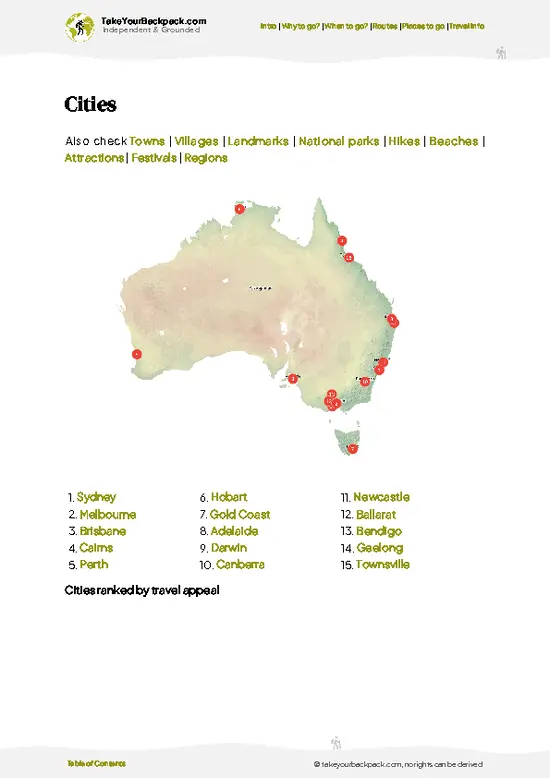
Or checkout all Australia has to offer (think cities, towns, villages, national parks, hikes, beaches, festivals)
Country photo of Australia

We 💚 feedbackIs it worth it?

Tasmania’s wild landscapes are a playground for adventurers. The hiking trails? Next level. But here’s the kicker: it can be remote. You might spend hours driving to get to those epic spots. Embrace the journey, though; it’s all part of the experience. Just plan your time wisely.

✈️ When did I visit Australia?
On my trip to New Zealand in 1993, I had a short stop in Australia as well.

✍️ Help improve this page!
The information on this page is based on my own backpacking experience in Australia, supplemented with up-to-date research and feedback from other travelers. Travel details can change, so if you notice anything outdated or incomplete, feel free to let me know.


🙋‍♂️ Give feedback

👋 Meet the founderWho’s Behind Take Your Backpack?

Johan, backpacker and founder of TakeYourBackpackHi, I’m Johan (Netherlands 🇳🇱), the creator of TakeYourBackpack. Over the past decade, I’ve backpacked through 80+ countries across six continents, gaining extensive experience with independent travel, long-term trips, and overland routes.

This site is built on a combination of firsthand travel experience and carefully curated insights from other backpackers. Many guides are based on places I’ve personally visited, while others bring together tips, observations, and practical advice shared by trusted travelers I’ve met along the way.

The goal is to provide realistic, experience-driven guidance — not generic itineraries — so you can explore destinations with better context, clearer expectations, and more confidence.

Get full Australia guide •
Instant download • 149 highlights • Full Offline guide