×

Australia🇦🇺 | regionsVictoria coastLimestone stacks, penguin parade, Otways rainforest, surf coast | things to do and best time to go

Explore Top EndExplore Bellingen

Backpacking in Victoria coast
By Johan Kruseman 🇳🇱 | Updated October 15, 2026

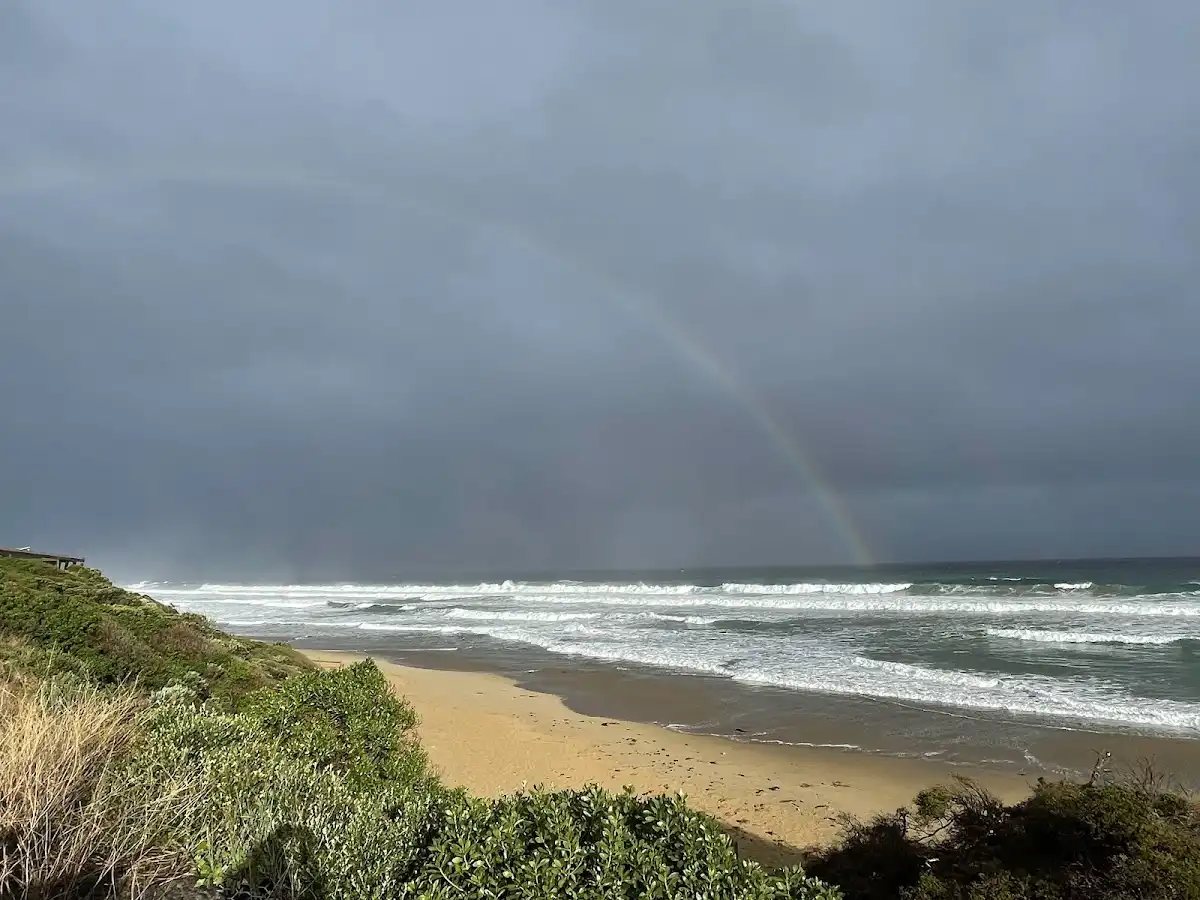
The big decision is whether to drive the Great Ocean Road yourself or hand the wheel to a tour bus, and the answer tips on how much you like stopping at random lookouts. It sits along the southern shore of Victoria in Australia, running in both directions from Melbourne. The good: surf towns, cliffs, rainforest, wildlife and a campervan culture that makes backpackers feel normal. The bad: summer traffic, selfie crowds at the Twelve Apostles, and fuel stops that arrive later than you expect. At Cape Otway I once stood in the trees at dusk, smelling eucalyptus and wet leaf litter while koalas grunted like badly tuned chainsaws. Unlike South Australia’s Limestone Coast, Victoria’s shore packs far more scenery into each stretch of road.

Discover everything you want to know in the 📖 Australia Travel Guide.


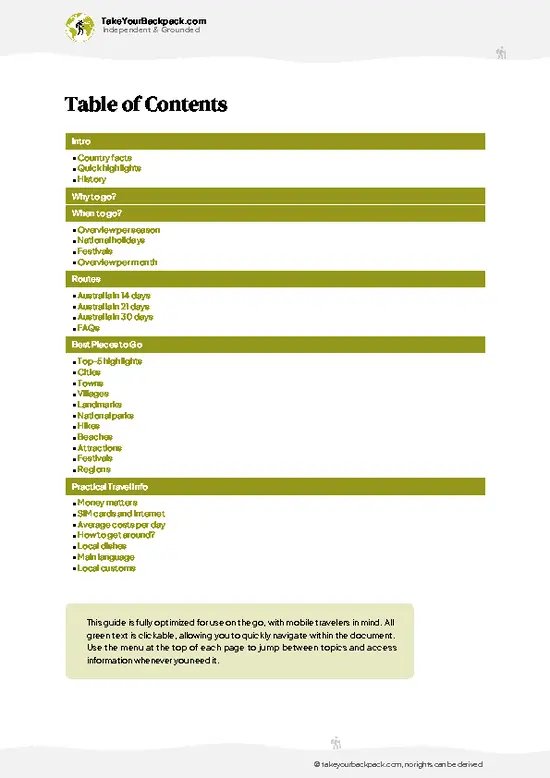
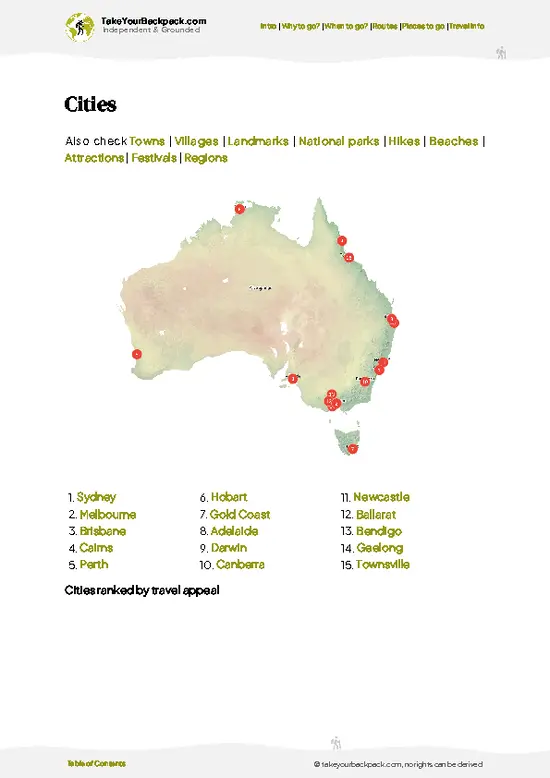
example page 0 from our offline Travel Guide for Australia
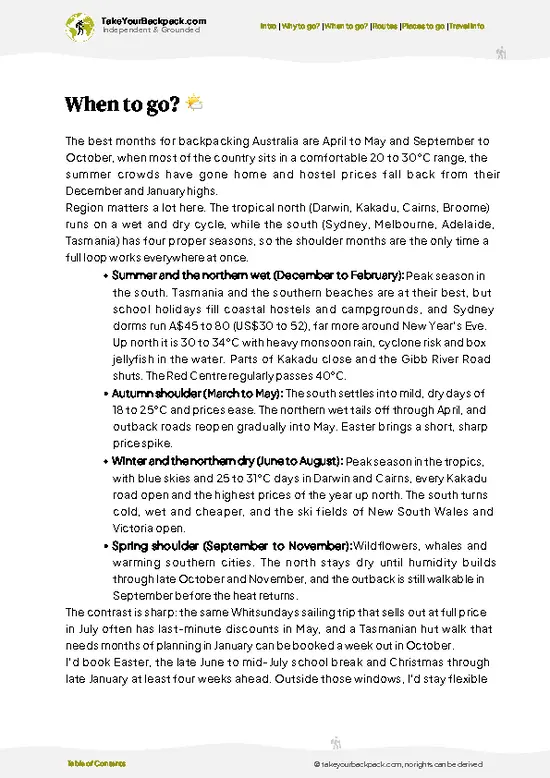
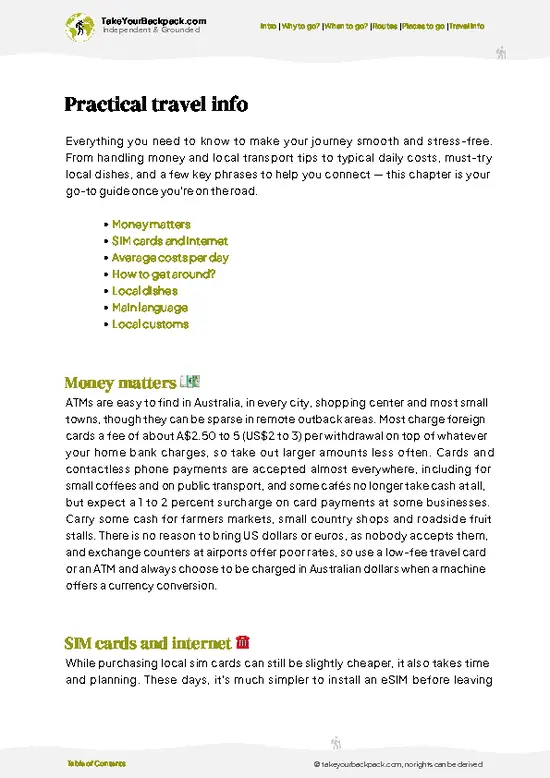
example page 1 from our offline Travel Guide for Australia
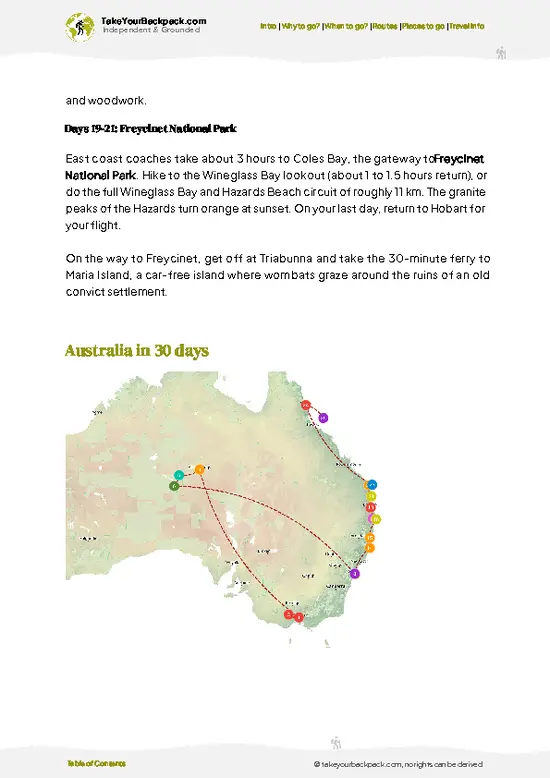
example page 2 from our offline Travel Guide for Australia
example page 3 from our offline Travel Guide for Australia
example page 4 from our offline Travel Guide for Australia
example page 5 from our offline Travel Guide for Australia
example page 6 from our offline Travel Guide for Australia
example page 7 from our offline Travel Guide for Australia
Loading the map 🌍
CLICK TO FILTER
cities
towns
villages
landmarks
national parks
hikes
beaches
attractions
festivals
regions
SHOW COUNTRY’S BESTSHOW ALL

✨ Why go?
Ranked #99 region in Australia
Why Victoria coast should be on your travel list

Backpackers come because the coast changes character every hour or so without needing a new base. Phillip Island’s Penguin Parade sits in the east, a surf town like Torquay opens the western run, and the road itself is the main attraction. You can sleep in a hostel at Apollo Bay, walk in the Otways the next morning, then be on a cliff edge by afternoon. Transport is flexible too. Melbourne has regular trains and coaches to the nearer towns, while a hired car or campervan opens the stretches that buses skip. Slow travel works well here because nature and culture overlap: walking tracks cross Aboriginal country, and the Shipwreck Coast carries a real maritime history in its museums and lookouts. Pick one section, stay a few nights, and you will see more than a rushed single loop allows.

💡 HighlightsTop highlights of Victoria coast

  1. Twelve Apostles: limestone stacks rising from the Southern Ocean near Port Campbell, with boardwalks and a lookout. Free to visit, and the light changes everything.
  2. Phillip Island Penguin Parade: little penguins waddle ashore at dusk on Summerland Beach. Ticketed, with timed viewing stands.
  3. Wilsons Promontory National Park: granite headlands, white sand at Squeaky Beach and wombats around Tidal River. The Mount Oberon summit walk gives a wide view.
  4. Cape Otway Lightstation: Australia’s oldest surviving mainland lighthouse, with sea winds and koalas in the roadside trees.
  5. Bells Beach: surf break near Torquay with cliff viewing platforms, famous for its Easter competition.
  6. Loch Ard Gorge: a sheltered cove with a shipwreck story and a short stair down to the sand.
  7. Erskine Falls: a waterfall above Lorne,
… read more 👉
  1. Twelve Apostles: limestone stacks rising from the Southern Ocean near Port Campbell, with boardwalks and a lookout. Free to visit, and the light changes everything.
  2. Phillip Island Penguin Parade: little penguins waddle ashore at dusk on Summerland Beach. Ticketed, with timed viewing stands.
  3. Wilsons Promontory National Park: granite headlands, white sand at Squeaky Beach and wombats around Tidal River. The Mount Oberon summit walk gives a wide view.
  4. Cape Otway Lightstation: Australia’s oldest surviving mainland lighthouse, with sea winds and koalas in the roadside trees.
  5. Bells Beach: surf break near Torquay with cliff viewing platforms, famous for its Easter competition.
  6. Loch Ard Gorge: a sheltered cove with a shipwreck story and a short stair down to the sand.
  7. Erskine Falls: a waterfall above Lorne, reached by a short bush path. Locals prefer it after rain.
  8. Point Nepean National Park: old fortifications and quarantine buildings at the tip of the Mornington Peninsula, good on foot or by bike.
  9. Cape Bridgewater: far west coastline with a petrified forest and a seal colony walk, usually quiet.
  10. Maits Rest: a short boardwalk through ancient cool temperate rainforest in the Otways, mossy, dripping and nearly empty.
For a first visit, start with the Twelve Apostles, since it shows the coast’s drama in a single easy stop.
Spotted a mistake or missing something? Contact us.

Things to do around Victoria coast

Ratings based on Tripadvisor reviews. When you book through this link, you support our work at no extra cost to you.

⌛️ 5 daysWhat you can realistically do in a week

Days move at the pace of a rental car with frequent stops, because the coastal road is slow, scenic and punctuated by lookouts, and buses beyond Torquay thin out fast.
Day 1: Phillip Island: Begin east of Melbourne, where the island suits a slow first day. Walk the cliffs, spot koalas, then arrive at the penguin viewing stands for dusk, which is the point of the whole day.
Day 2: Torquay: Swing round to the surf coast so you start the Great Ocean Road fresh. Bells Beach and the town’s surf shops set the tone, and it makes a practical overnight with plenty of hostels and dinner options.
Day 3-4: Apollo Bay and Cape Otway: Apollo Bay works as a base because the Otways are close. Spend one day at Cape Otway Lightstation and one in the rainforest, including Maits Rest. A detour to Erskine Falls on … read more 👉
Days move at the pace of a rental car with frequent stops, because the coastal road is slow, scenic and punctuated by lookouts, and buses beyond Torquay thin out fast.
Day 1: Phillip Island: Begin east of Melbourne, where the island suits a slow first day. Walk the cliffs, spot koalas, then arrive at the penguin viewing stands for dusk, which is the point of the whole day.
Day 2: Torquay: Swing round to the surf coast so you start the Great Ocean Road fresh. Bells Beach and the town’s surf shops set the tone, and it makes a practical overnight with plenty of hostels and dinner options.
Day 3-4: Apollo Bay and Cape Otway: Apollo Bay works as a base because the Otways are close. Spend one day at Cape Otway Lightstation and one in the rainforest, including Maits Rest. A detour to Erskine Falls on the way down from Lorne adds a lot for little effort.
Day 5: Port Campbell: Finish at the Shipwreck Coast with the Twelve Apostles and Loch Ard Gorge. My pick for the day that justifies the whole trip is this one, on a clear morning when the stacks glow gold.

🌤️ When to go?Best time to visit Victoria coast

  • Summer (Dec to Feb): Beach weather at 22 to 28°C (72 to 82°F), with daylight lasting until about 8:45 pm. Surf towns fill up, and accommodation prices peak around Christmas and January school holidays.
  • Autumn (Mar to May): Mild days of 16 to 23°C (61 to 73°F), calmer roads and warm water into March. Prices ease after Easter.
  • Winter (Jun to Aug): Cold, wet and windy at 9 to 15°C (48 to 59°F), with sunset near 5 pm. Whale watching at Warrnambool peaks from June to September, and rooms are cheapest.
  • Spring (Sep to Nov): Changeable 13 to 20°C (55 to 68°F), wildflowers and fairy penguins at Phillip Island with thinner crowds.
Book Great Ocean Road stays well ahead for January, but March offers warm water with far fewer people.

source: climatestotravel.comJANJanuary: highly recommended for travelingFEBFebruary: highly recommended for travelingMARMarch: excellent for travelingAPRApril: excellent for travelingMAYMay: highly recommended for travelingJUNJune: fair for travelingJULJuly: below average for travelingAUGAugust: fair for travelingSEPSeptember: good for travelingOCTOctober: excellent for travelingNOVNovember: excellent for travelingDECDecember: highly recommended for traveling
australia-region-victoria-coast
© Google |

✈️ The backpacker research shortcutAustralia Travel Guide

An offline-friendly backpacking guide with optimized travel routes, ranked highlights, transport advice, and the best areas to stay.
example page 0 from our offline Travel Guide for Australia
example page 1 from our offline Travel Guide for Australia
example page 2 from our offline Travel Guide for Australia
example page 3 from our offline Travel Guide for Australia
example page 4 from our offline Travel Guide for Australia
example page 5 from our offline Travel Guide for Australia
example page 6 from our offline Travel Guide for Australia
example page 7 from our offline Travel Guide for Australia
The digital guide (414 pages) contains:
✅ 143 highlights, ranked by travel appeal
✅ Optimized 14, 21 & 30-day travel routes
✅ Cities, national parks, landmarks, beaches
✅ How to get around
✅ Offline-friendly for travel without Wi-Fi
👉 Click to see all 30+ guide features

📅 Plan smarter in minutes, not weeks
✅ Month by month travel advice
✅ Festivals & national holidays
✅ Budget expectations

🗺️ Go to the right places, skip the overrated ones
✅ Honest pros & cons of destinations
✅ Top hikes, parks & viewpoints
✅ Lesser-known places most travelers miss
✅ Clear “worth it vs skip it” guidance

🛏️ Travel smoothly without rookie mistakes
✅ Best areas to stay
✅ Transport systems explained simply
✅ Common scams & safety advice
✅ SIM cards, money & practical tips

🌍 Understand the country, not just visit it
✅ Culture & traditions
✅ Local customs
✅ Festivals worth planning around
✅ Traveler-friendly historical context
✅ Insights that make places more meaningful

📱 Built for real travel conditions
✅ Fully downloadable PDF
✅ Works completely offline
✅ Optimized for phone use
✅ Useful in remote areas & buses
✅ Everything in one place
Stop searching, start planning
Get instant access to your full guide. 30‑day money-back guarantee.
+ Add another guide for just

By proceeding you agree to our terms.
Sent to your inbox immediately after payment • 100% Secure Checkout
Best Backpacking Travel Advisor 2025 tourism awardBest Backpacking
Travel Advisor
2025
What others say about Take Your Backpack Guides:
⭐⭐⭐⭐⭐
Fantastic, amazing amount of information!
⭐⭐⭐⭐⭐
My goodness this is amazing, it's what I've been looking for hats off too you!
⭐⭐⭐⭐⭐
I think this is absolutely BRILLIANT
⭐⭐⭐⭐
Very complete and informative. It's still missing places, but I gotta to commend you
⭐⭐⭐⭐⭐
This is truly amazing, thank you, can't wait to explore it with my kids!
⭐⭐⭐⭐⭐
Awesome resource, thank you!
⭐⭐⭐⭐⭐
This is amazing! Can't wait to explore the ones I haven't seen
⭐⭐⭐⭐
I love this! Well done, great idea.
⭐⭐⭐⭐⭐
Thanks for taking the time to make this gem!
⭐⭐⭐⭐⭐
This might be the best website I've ever seen.
⭐⭐⭐⭐⭐
Congratulations, and thank you so much for your work; it's incredibly valuable.
⭐⭐⭐⭐
In all seriousness I think you did a great job pointing out the important spots
⭐⭐⭐⭐⭐
10/10 very good
⭐⭐⭐⭐⭐
As someone who's only just starting to visit regularly this is awesome, thank you.
⭐⭐⭐⭐
Thank you very much! I'm going to visit my dad, it's going to be very useful!
⭐⭐⭐⭐⭐
This is really cool! We'll be travelling for the first time and this definitely come in handy.
⭐⭐⭐⭐⭐
You are now our minister of culture, congratulations 👨‍💼
⭐⭐⭐⭐⭐
Just wanted to tell you that this is a pearl! Going to follow your recommendations.
⭐⭐⭐⭐⭐
This is so cool. I'll definitely be using the resource for my travels soon.
⭐⭐⭐⭐⭐
This is very impressive! Good work.
⭐⭐⭐⭐⭐
This is an amazing and informative site. Very well done!

🛏️ Where to stay?Choosing the right base

Torquay, Lorne and Apollo Bay are the best bases for backpackers on the Victoria coast, and each has a different pace. Torquay is the surf capital, with board hire, lessons and a younger crowd that gathers around Bells Beach, just 10 minutes away. It is also an easy hop from Geelong and Melbourne. Lorne is smaller and prettier, backed by waterfalls and forest walks, and it feels safe and relaxed even for solo travelers. Apollo Bay sits closer to the Otways and the Twelve Apostles, which suits anyone heading west by car, and its harbor has a laid-back, friendly feel. In the east, Phillip Island … read more 👉
Torquay, Lorne and Apollo Bay are the best bases for backpackers on the Victoria coast, and each has a different pace. Torquay is the surf capital, with board hire, lessons and a younger crowd that gathers around Bells Beach, just 10 minutes away. It is also an easy hop from Geelong and Melbourne. Lorne is smaller and prettier, backed by waterfalls and forest walks, and it feels safe and relaxed even for solo travelers. Apollo Bay sits closer to the Otways and the Twelve Apostles, which suits anyone heading west by car, and its harbor has a laid-back, friendly feel. In the east, Phillip Island (Cowes) works for penguin parades and cheap beach days with a sociable hostel scene. Further along, Warrnambool and Port Fairy suit travelers continuing toward South Australia, with whale watching in winter. Book ahead in January, since small towns fill quickly.

🚌 Getting aroundHow to get from A to B

A rental car or campervan is the easiest way to cover the Victoria coast, because the best stops sit on narrow roads between towns that buses reach only a few times a day. Trains and coaches do cover the main hubs reliably, though you will spend a lot of time admiring the timetable rather than the ocean.
  • V/Line trains and coaches: Melbourne to Geelong takes about 1 hour by train (A$10 to 12), and coaches continue to Warrnambool (about 3.5 hours, A$25 to 30). You get dependable service and a window seat over Bass Strait paddocks.
  • Myki-linked suburban trains and buses: Frankston line trains and buses reach the Mornington Peninsula, with Melbourne to Sorrento costing a few dollars capped daily. The reward is a ferry-ready beach town without a car.
  • Day tours from Melbourne: A$90 to 150 buys a 12-hour
… read more 👉
A rental car or campervan is the easiest way to cover the Victoria coast, because the best stops sit on narrow roads between towns that buses reach only a few times a day. Trains and coaches do cover the main hubs reliably, though you will spend a lot of time admiring the timetable rather than the ocean.
  • V/Line trains and coaches: Melbourne to Geelong takes about 1 hour by train (A$10 to 12), and coaches continue to Warrnambool (about 3.5 hours, A$25 to 30). You get dependable service and a window seat over Bass Strait paddocks.
  • Myki-linked suburban trains and buses: Frankston line trains and buses reach the Mornington Peninsula, with Melbourne to Sorrento costing a few dollars capped daily. The reward is a ferry-ready beach town without a car.
  • Day tours from Melbourne: A$90 to 150 buys a 12-hour Great Ocean Road run to the Twelve Apostles. It is a long day on a coach, but someone else handles the hairpin bends and you see the limestone stacks glow at sunset.
  • Rental car or campervan: From about A$50 to 90 a day, fuel extra. Roads are sealed and well signed, and you stop for koalas at Kennett River whenever you spot one dozing in a gum tree.
  • Hitching and cycling: Cyclists enjoy the Bellarine and Gippsland rail trails, but the Great Ocean Road has little shoulder room and plenty of coach traffic. Thumbing is rare and slow.
Pick up a car in Geelong rather than central Melbourne to skip the city traffic and gain an hour of coastline.

🍲 FoodEating & Drinking in Victoria coast

Seafood is the soul of the Victoria coast, and the best of it comes wrapped in paper. Order fish and chips with flathead or whiting and eat it on a harbor wall, where gulls watch your every chip. Apollo Bay and Lakes Entrance have fresh scallop pies and crayfish from local cooperatives. Further west, Port Fairy serves excellent abalone and mussels, and Gippsland adds creamy local cheeses and dairy.

For casual eating, look to bakeries (try a hot meat pie or vanilla slice), beachside cafés with strong flat whites, and weekend farmers’ markets in Torquay, Geelong and Mornington. The Bellarine and Mornington Peninsula also have cellar doors for cool-climate pinot noir, plus craft breweries in Torquay and Apollo Bay.

Order at the counter in most casual spots, and tipping is not expected. Many … read more 👉
Seafood is the soul of the Victoria coast, and the best of it comes wrapped in paper. Order fish and chips with flathead or whiting and eat it on a harbor wall, where gulls watch your every chip. Apollo Bay and Lakes Entrance have fresh scallop pies and crayfish from local cooperatives. Further west, Port Fairy serves excellent abalone and mussels, and Gippsland adds creamy local cheeses and dairy.

For casual eating, look to bakeries (try a hot meat pie or vanilla slice), beachside cafés with strong flat whites, and weekend farmers’ markets in Torquay, Geelong and Mornington. The Bellarine and Mornington Peninsula also have cellar doors for cool-climate pinot noir, plus craft breweries in Torquay and Apollo Bay.

Order at the counter in most casual spots, and tipping is not expected. Many kitchens close early, often by 8 or 9 pm, and small towns shut up even sooner outside summer.

FAQCommon questions from travelers

Four to five days gives you enough time for the Great Ocean Road, with Melbourne as the start and finish. Allow two days for the road itself from Torquay to Port Campbell (about 200 km), one day for Phillip Island and its penguin parade, and another for the Mornington Peninsula. Add two to three more days if you want to push on to Port Fairy or east toward Gippsland.
A mix of V/Line trains and coaches, tours and local buses covers most hubs. Melbourne to Geelong takes about 1 hour by train (A$10 to 12), and coaches run on to Warrnambool in about 3.5 hours. For the Twelve Apostles, a day tour from Melbourne costs A$90 to 150, and Phillip Island has tours and a coach link via Cowes.
The Victoria coast is known for the Great Ocean Road, a scenic route of about 240 km with the Twelve Apostles limestone stacks near Port Campbell. It is also famous for surf at Bells Beach near Torquay, the nightly penguin parade on Phillip Island, and koalas along the Otway coast. Wineries and seafood on the Mornington Peninsula and Bellarine add to the list.
⚠️ Things can change over time, so always validate details locally before you go.

Other Australian regions near Victoria coast

Explore more nearby:

  • Coonawarra—Terra rossa soil, cabernet cellar doors, Penola cottages, one flat road| 375 km away
  • Tasmania—Island loop, dolerite peaks, convict ruins, Hobart markets| 487 km away
  • Freycinet Peninsula—Pink granite, curved bay, lighthouse boardwalk, east coast oysters| 543 km away

💡 Not sure where to go next?
Create a personalized itinerary for Australia including Victoria coast and the places that fit your trip.

Generate my itinerary

👉 Discover all regions

Or checkout all Australia has to offer (think cities, towns, villages, national parks, hikes, beaches, festivals)
Country photo of Australia

We 💚 feedbackFinal thoughts on visiting Victoria coast

Most first-timers rush the road and miss the lookouts that are free and empty, like short side tracks off the main drive. I would skip a tight one-day tour and sleep in Apollo Bay instead. Pack a warm layer, because the Southern Ocean wind has opinions even in summer.

✈️ When did I visit Australia?
On my trip to New Zealand in 1993, I had a short stop in Australia as well.

✍️ Help improve this page!
The information on this page is based on my own backpacking experience in Australia, supplemented with up-to-date research and feedback from other travelers. Travel details can change, so if you notice anything outdated or incomplete, feel free to let me know.


🙋‍♂️ Give feedback

👋 Meet the founderWho’s Behind Take Your Backpack?

Johan, backpacker and founder of TakeYourBackpackHi, I’m Johan (Netherlands 🇳🇱), the creator of TakeYourBackpack. Over the past 3 decades, I’ve backpacked through 90+ countries across six continents, gaining extensive experience with independent travel, long-term trips, and overland routes.

This site is built on a combination of firsthand travel experience and carefully curated insights from other backpackers. Many guides are based on places I’ve personally visited, while others bring together tips, observations, and practical advice shared by trusted travelers I’ve met along the way.

The goal is to provide realistic, experience-driven guidance — not generic itineraries — so you can explore destinations with better context, clearer expectations, and more confidence.