×

Belgium🇧🇪 | best landmarksDiscover the 6 Best landmarks Across Belgium

Landmarks in Belgium come in tight, close-packed clusters, which is convenient and slightly comic: you can see a medieval belfry before your waffle cools. Flanders serves guild halls and canal-side towers, with crowds that thicken by 11 a.m. and cost more in Bruges than in Ghent. Brussels goes grand and civic, with a few oversized monuments and fewer queues once you leave the center. Wallonia trades polish for hilltop fortresses, caves and WWI sites, quieter but harder to reach without a train timetable and patience. For backpackers, independent travel works well because the rail network does most of the heavy lifting. Pick a kind, not everything.

By Johan Kruseman 🇳🇱 | Updated October 25, 2026
Explore the best national parks in Belgium

Why go?What Makes Them Special

Belgium has spent two thousand years as Europe’s favorite place to stage other people’s wars, trade routes and religious arguments, and the built heritage shows it. Wealthy medieval cloth and trading cities competed by building taller belfries, bigger town halls and fancier guild houses, so the density of landmarks per square kilometer is unusually high. The country is small, flat in the north and hilly in the south, which means the variety is large while the distances stay laughable. A dense rail network links almost every major site, and most stops are walkable from the station.

What a traveler should know first: the weather is unreliable, so plan for drizzle even in a good month. Many landmarks are small, so the experience is often a courtyard, a climb or a facade rather than an all-day … read more 👉
Belgium has spent two thousand years as Europe’s favorite place to stage other people’s wars, trade routes and religious arguments, and the built heritage shows it. Wealthy medieval cloth and trading cities competed by building taller belfries, bigger town halls and fancier guild houses, so the density of landmarks per square kilometer is unusually high. The country is small, flat in the north and hilly in the south, which means the variety is large while the distances stay laughable. A dense rail network links almost every major site, and most stops are walkable from the station.

What a traveler should know first: the weather is unreliable, so plan for drizzle even in a good month. Many landmarks are small, so the experience is often a courtyard, a climb or a facade rather than an all-day outing. Several sites charge entry that adds up fast, and some churches and towers close on Mondays or for long lunches. The country also has three languages (Dutch, French, German) and the same place can carry two names on the signs, which is fun until you are checking a train board. Belgium suits those who like compact, layered history over wilderness drama.
Evaluating the Top Choices
The list of best unique sites in Belgium is created based on history or culture, wow factor, atmosphere, quirks, and memorability. If you feel a unique site is missing in this list, please let us know.

When to go?Best Time to Visit Belgium for landmarks

Best months and weather: April to June and September to early October are the best months for landmarks in Belgium, with daytime highs of roughly 13 to 22°C, long daylight and fewer crowds than midsummer. Rain falls about 12 to 15 days a month year-round, around 70 to 90 mm monthly, so a light waterproof matters more than the season you choose.
Peak, shoulder and winter: July and August bring highs of 21 to 25°C, the biggest crowds in Bruges and Brussels, and hotel prices that can run 20 to 40 percent above spring rates. Weekends in any month squeeze popular towers and timed-entry sites, so weekdays make the queues shorter. Shoulder months of March, late October and November are cheaper and moodier, with highs of 7 to 14°C and grey skies that suit stone and spires well enough.
Winter and regional … read more 👉
Best months and weather: April to June and September to early October are the best months for landmarks in Belgium, with daytime highs of roughly 13 to 22°C, long daylight and fewer crowds than midsummer. Rain falls about 12 to 15 days a month year-round, around 70 to 90 mm monthly, so a light waterproof matters more than the season you choose.
Peak, shoulder and winter: July and August bring highs of 21 to 25°C, the biggest crowds in Bruges and Brussels, and hotel prices that can run 20 to 40 percent above spring rates. Weekends in any month squeeze popular towers and timed-entry sites, so weekdays make the queues shorter. Shoulder months of March, late October and November are cheaper and moodier, with highs of 7 to 14°C and grey skies that suit stone and spires well enough.
Winter and regional notes: December to February drops to 1 to 6°C and daylight ends around 4:30 p.m. in December. Christmas markets in Brussels, Bruges and Ghent lift prices and crowds in late November and December. Some small sites shorten hours or close for winter. The Ardennes in Wallonia runs colder than the coast and can see frost or snow, so fortress and cave visits there are best from April to October.

unique site hoppingTips for Visiting Multiple Destinations

How many days and which direction: A trip combining several landmarks in Belgium needs 5 to 8 days, and 6 is comfortable. Belgium is small, so the mistake is rarely distance and usually greed. Start in Brussels, the main rail hub with fast trains across the country, then work west and north through Flanders (Ghent, Bruges, Antwerp) before cutting south to Wallonia if time allows.
Time per stop and transfers: Allow half a day to a full day per major landmark, and a full day for a city with several. Brussels to Ghent takes about 35 to 45 minutes by train, Ghent to Bruges 25 to 30, Brussels to Antwerp 35 to 50, and Brussels to Namur around 1 hour. Reaching Ardennes sites from Namur or Liège often adds 1 to 2 hours on slower regional trains or buses, so give those a whole day.
Planning mistakes: … read more 👉
How many days and which direction: A trip combining several landmarks in Belgium needs 5 to 8 days, and 6 is comfortable. Belgium is small, so the mistake is rarely distance and usually greed. Start in Brussels, the main rail hub with fast trains across the country, then work west and north through Flanders (Ghent, Bruges, Antwerp) before cutting south to Wallonia if time allows.
Time per stop and transfers: Allow half a day to a full day per major landmark, and a full day for a city with several. Brussels to Ghent takes about 35 to 45 minutes by train, Ghent to Bruges 25 to 30, Brussels to Antwerp 35 to 50, and Brussels to Namur around 1 hour. Reaching Ardennes sites from Namur or Liège often adds 1 to 2 hours on slower regional trains or buses, so give those a whole day.
Planning mistakes: The classic error is trying Bruges, Ghent and Brussels in one day, because distances are short and enthusiasm is long. Do two at most. Another is ignoring Monday closures and midday breaks, so check hours before locking the order. Travelers also pick a rural Wallonia site without checking the last train back, which turns a nice outing into an expensive taxi. Base in one or two cities and day trip, since luggage hauling eats more time than the train does.

The ListThe Best landmarks of Belgium

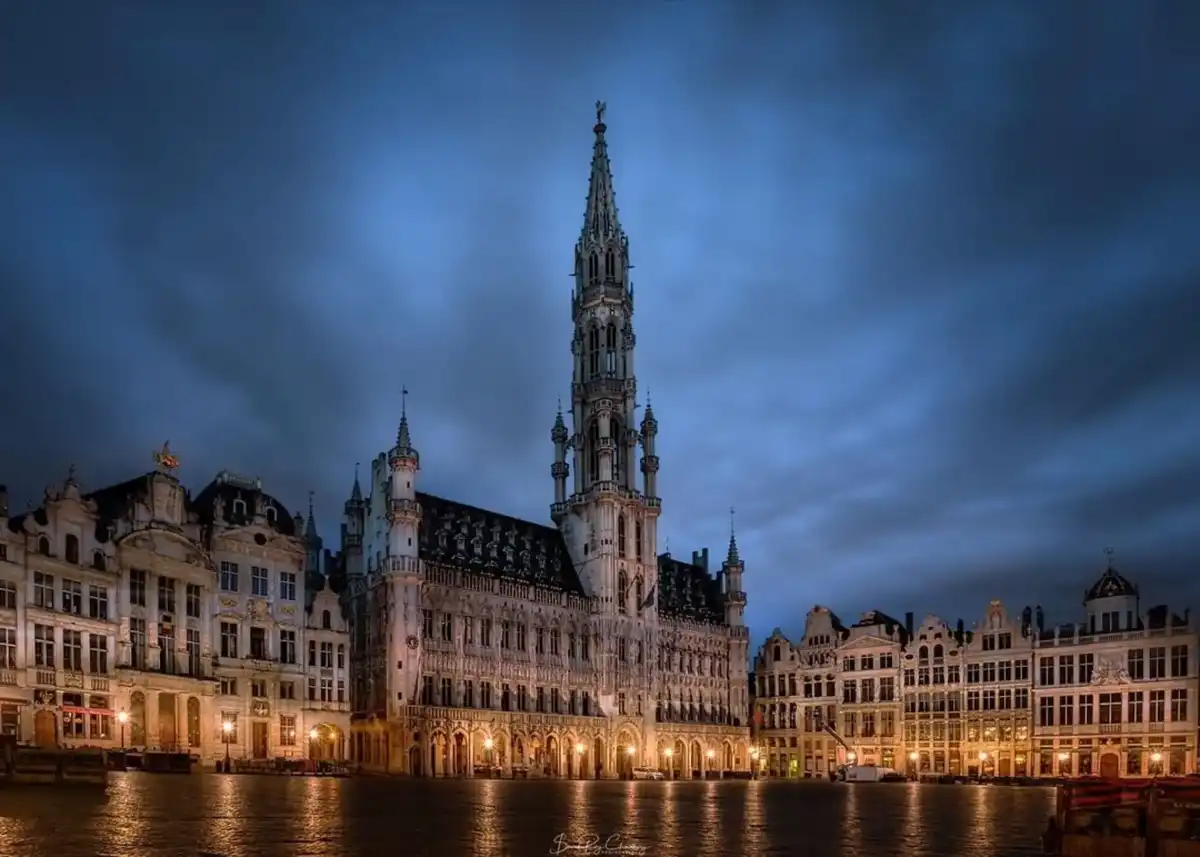
1 Grand-Place

ornate guildhalls, open square, city events

Stand at the heart of Brussels surrounded by intricate facades, where daily rhythms and public gatherings shape the city’s social core.

belgium-unique-site-grand-place
© Google | Photos Are Copyrighted By Their Owners

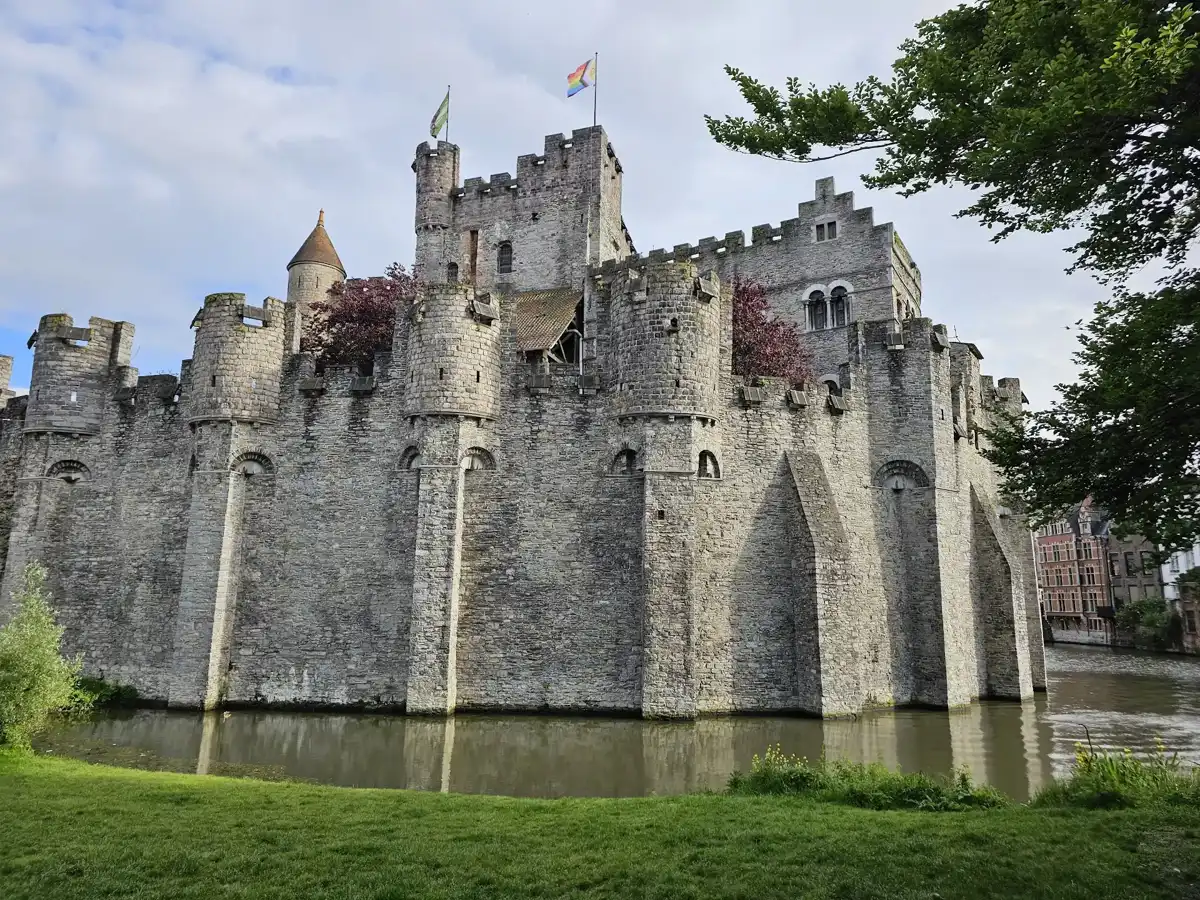
2 Gravensteen

stone ramparts, medieval armory, moat views

Climb narrow staircases and stand atop ancient walls for a direct encounter with the defensive architecture and daily life of medieval Flanders.

belgium-unique-site-gravensteen
© Google | Hans Sonck

3 Hallerbos

bluebell forest, spring bloom, shaded trails

Time your visit to walk beneath tall beeches as a dense carpet of wildflowers transforms the woodland into a fleeting natural spectacle.

belgium-unique-site-hallerbos
© Google | Lenka Csandová

4 Namur Citadel

hilltop fortress, panoramic terraces, underground passages

Ascend winding paths to survey the Meuse valley, then descend into tunnels that reveal the layered military past of this strategic stronghold.

belgium-unique-site-namur-citadel
© Google | Citadelle De Namur

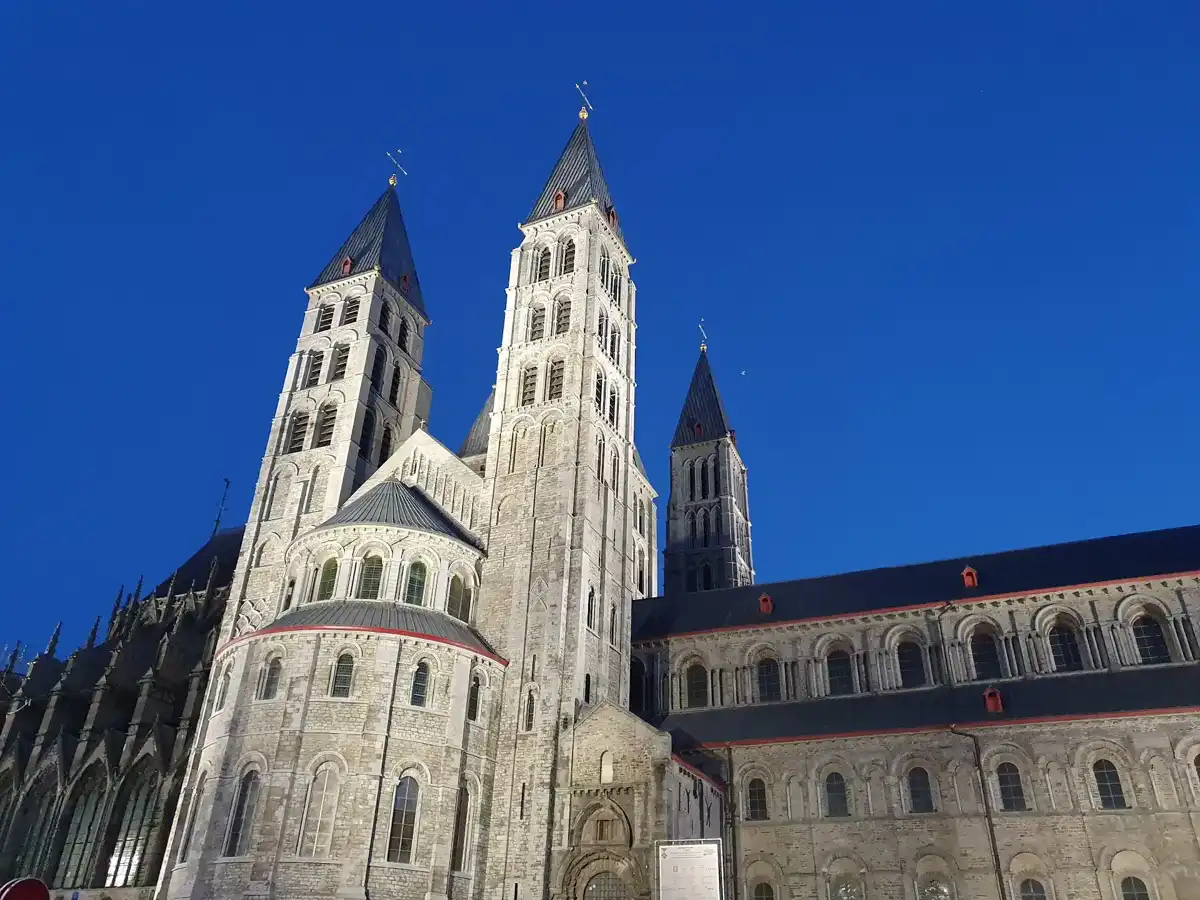
5 Tournai Cathedral

Romanesque towers, stained glass, UNESCO site

Step inside to experience a rare blend of architectural styles and centuries-old craftsmanship preserved in a working place of worship.

belgium-unique-site-tournai-cathedral
© Google | Bernard Dugauquier

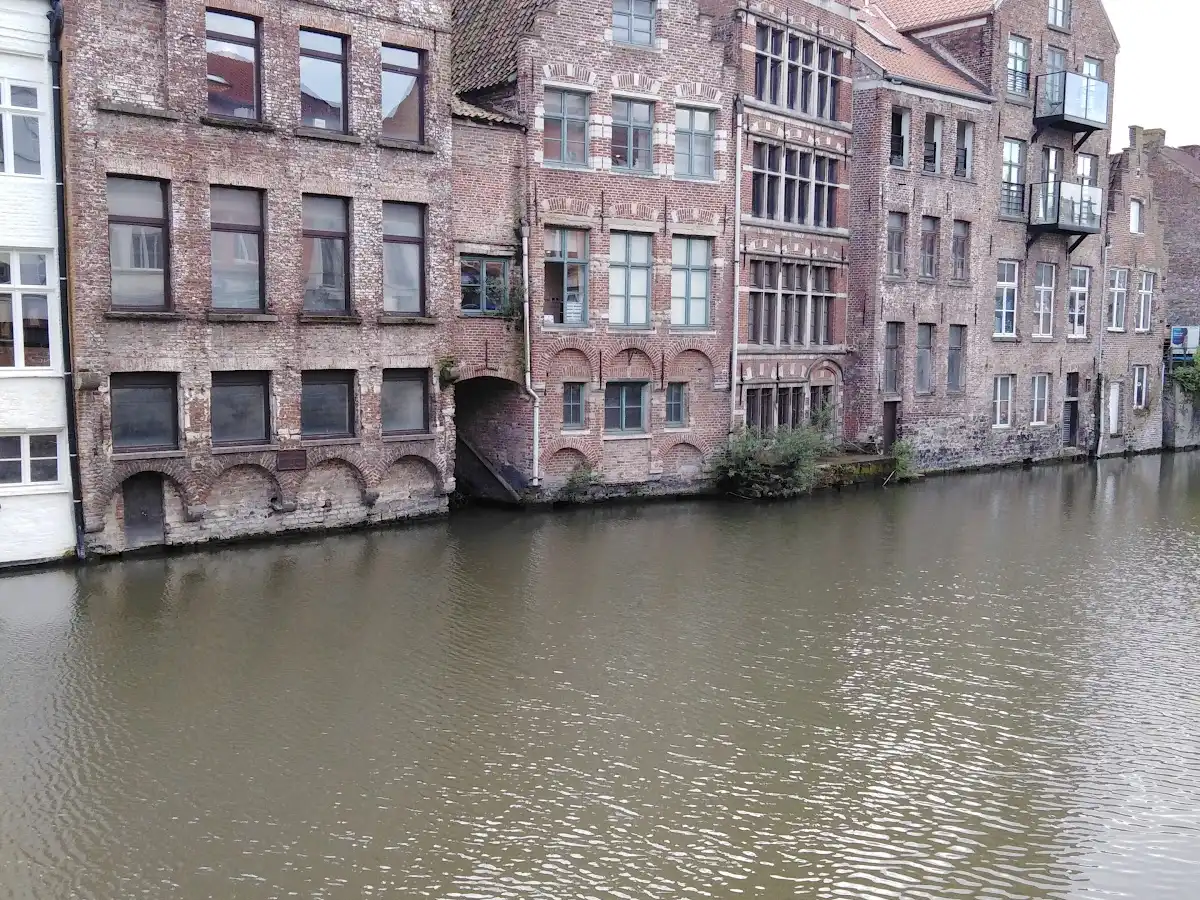
6 Patershol

cobblestone lanes, artisan shops, tucked-away courtyards

Wander through a compact maze of centuries-old streets where independent eateries and quiet corners reveal Ghent’s layered urban history.

belgium-unique-site-patershol
© Google |
Loading the map 🌍

Expert viewTips and Advice from Travelers

How many to visit: Aim for 8 to 12 landmarks over a week, not 20. Belgium packs so much into small areas that more than two or three a day blurs into a haze of gables and gift shops. Two main sights a day, with a long lunch and an unplanned wander, leaves room to notice things.
Prioritizing by travel style: History lovers should favor the medieval towers, guild halls and WWI sites, which give the clearest sense of why Belgium looks and feels as it does. Budget travelers get the best value from free exteriors, church interiors and city squares, many of which cost nothing and look just as good from the street. Photographers should chase early mornings and weekday evenings, when the famous squares are almost empty. Anyone short on time should skip the paid viewpoints that duplicate a free view … read more 👉
How many to visit: Aim for 8 to 12 landmarks over a week, not 20. Belgium packs so much into small areas that more than two or three a day blurs into a haze of gables and gift shops. Two main sights a day, with a long lunch and an unplanned wander, leaves room to notice things.
Prioritizing by travel style: History lovers should favor the medieval towers, guild halls and WWI sites, which give the clearest sense of why Belgium looks and feels as it does. Budget travelers get the best value from free exteriors, church interiors and city squares, many of which cost nothing and look just as good from the street. Photographers should chase early mornings and weekday evenings, when the famous squares are almost empty. Anyone short on time should skip the paid viewpoints that duplicate a free view and pick one tower climb at most. A climb of 250 to 400 steps is a fair workout, not a casual add-on.
What it costs: Plan on roughly US$60 to 110 a day (about €55 to 100) including a dorm bed or budget room, food and local transport. Entry to major landmarks usually runs €5 to 15 (US$5.50 to 16), with towers and museum-style sites at the higher end. Audio guides add €3 to 6 and guided walking tours run €15 to 30, while many free tours work on tips. Regional train tickets often cost €5 to 20 for a single trip, and a multi-ride pass can save money if you cover several cities. Museum passes pay off only if you visit at least three paid sites in the cities that offer them.
Safety and etiquette: Belgium is safe, but pickpockets work the tourist squares, major stations (especially Brussels-Midi) and crowded trams, so keep phones and wallets zipped away. Churches and cathedrals are active places of worship, so cover shoulders and keep voices down during services. Some require quiet and prohibit flash photography. Cobblestones are lovely and merciless on ankles, and wet stone gets slick, so wear shoes with grip. At war memorials and cemeteries, keep to marked paths and treat them as the graveyards they are. A polite greeting in the local language, Dutch in Flanders and French in Wallonia, gets a warmer response than opening in English.

✈️ The backpacker research shortcutBelgium Travel Guide

An offline-friendly backpacking guide with optimized travel routes, ranked highlights, transport advice, and the best areas to stay.
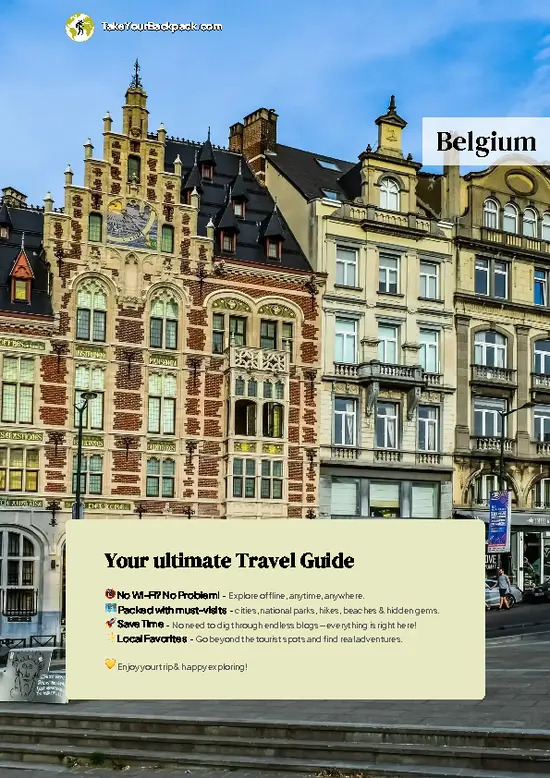
example page 0 from our offline Travel Guide for Belgium
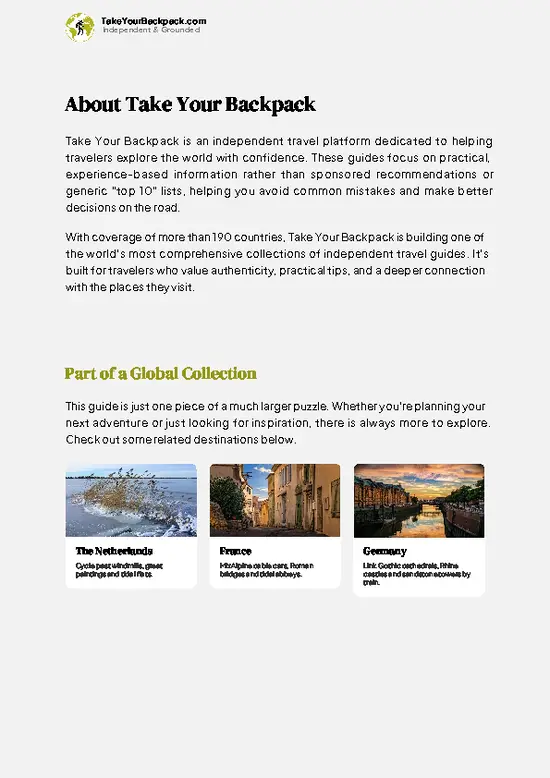
example page 1 from our offline Travel Guide for Belgium
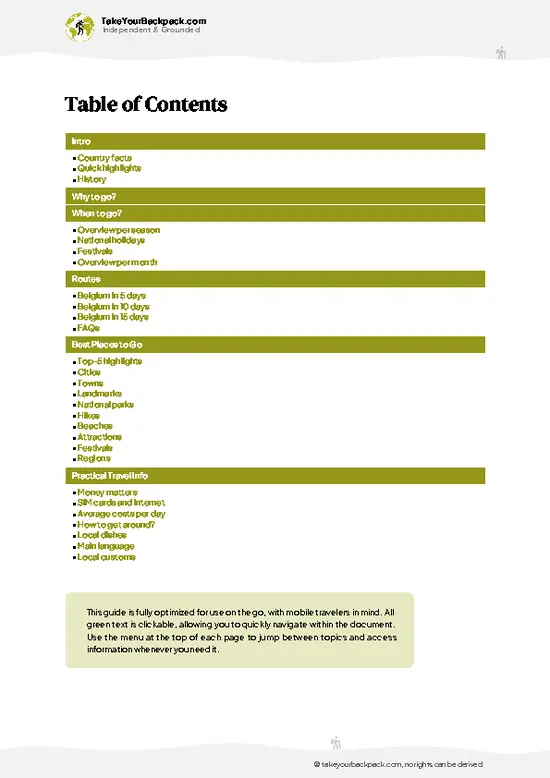
example page 2 from our offline Travel Guide for Belgium
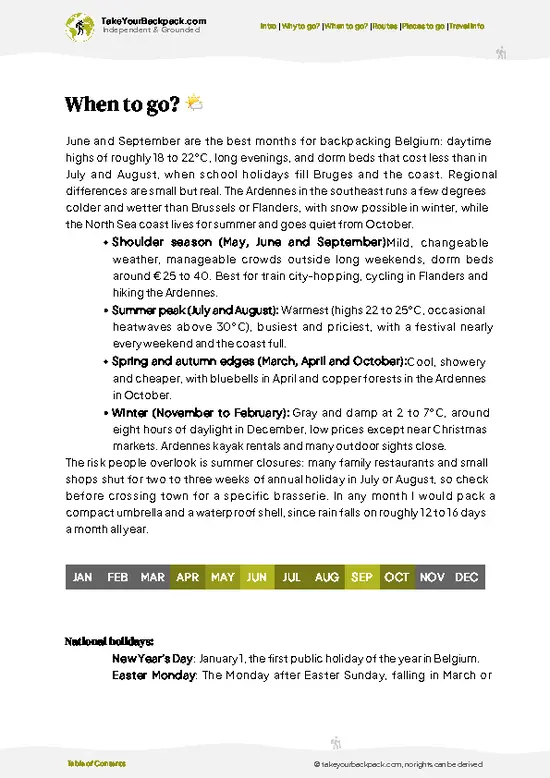
example page 3 from our offline Travel Guide for Belgium
example page 4 from our offline Travel Guide for Belgium
example page 5 from our offline Travel Guide for Belgium
example page 6 from our offline Travel Guide for Belgium
example page 7 from our offline Travel Guide for Belgium
The digital guide (337 pages) contains:
✅ 85 highlights, ranked by travel appeal
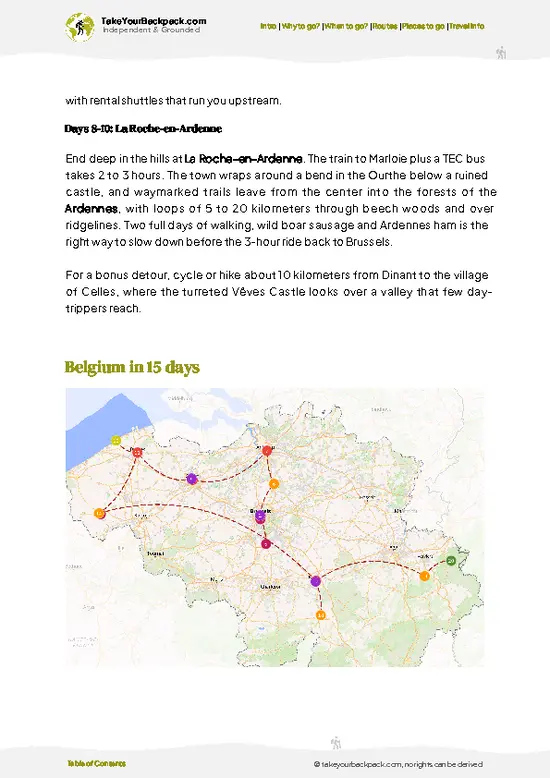
✅ Optimized 5, 10 & 15-day travel routes
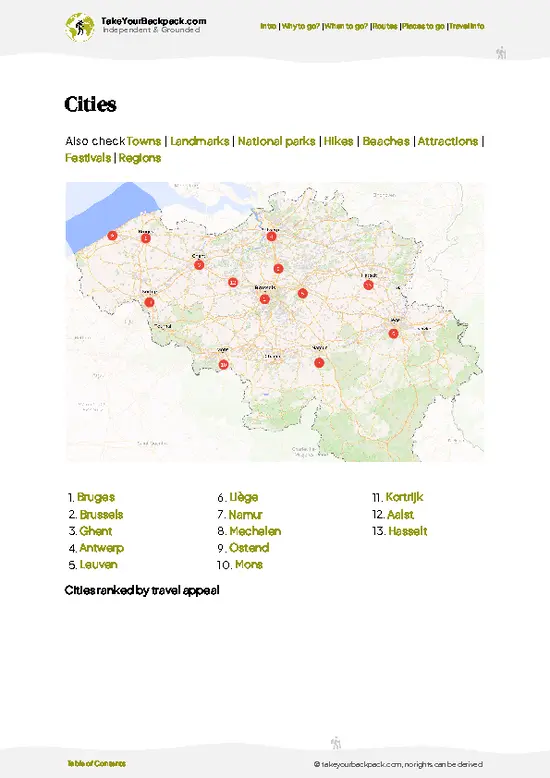
✅ Cities, national parks, landmarks, beaches
✅ How to get around
✅ Offline-friendly for travel without Wi-Fi
👉 Click to see all 30+ guide features

📅 Plan smarter in minutes, not weeks
✅ Month by month travel advice
✅ Festivals & national holidays
✅ Budget expectations

🗺️ Go to the right places, skip the overrated ones
✅ Honest pros & cons of destinations
✅ Top hikes, parks & viewpoints
✅ Lesser-known places most travelers miss
✅ Clear “worth it vs skip it” guidance

🛏️ Travel smoothly without rookie mistakes
✅ Best areas to stay
✅ Transport systems explained simply
✅ Common scams & safety advice
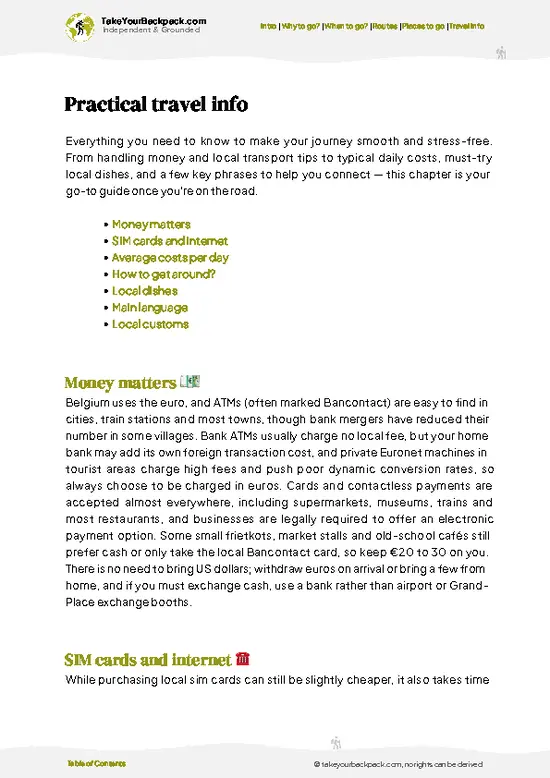
✅ SIM cards, money & practical tips

🌍 Understand the country, not just visit it
✅ Culture & traditions
✅ 52 Essential phrases & customs
✅ Festivals worth planning around
✅ Traveler-friendly historical context
✅ Insights that make places more meaningful

📱 Built for real travel conditions
✅ Fully downloadable PDF
✅ Works completely offline
✅ Optimized for phone use
✅ Useful in remote areas & buses
✅ Everything in one place
Stop searching, start planning
Get instant access to your full guide. 30‑day money-back guarantee.
+ Add another guide for just

By proceeding you agree to our terms.
Sent to your inbox immediately after payment • 100% Secure Checkout
Best Backpacking Travel Advisor 2025 tourism awardBest Backpacking
Travel Advisor
2025
What others say about Take Your Backpack Guides:
⭐⭐⭐⭐⭐
Fantastic, amazing amount of information!
⭐⭐⭐⭐⭐
My goodness this is amazing, it's what I've been looking for hats off too you!
⭐⭐⭐⭐⭐
I think this is absolutely BRILLIANT
⭐⭐⭐⭐
Very complete and informative. It's still missing places, but I gotta to commend you
⭐⭐⭐⭐⭐
This is truly amazing, thank you, can't wait to explore it with my kids!
⭐⭐⭐⭐⭐
Awesome resource, thank you!
⭐⭐⭐⭐⭐
This is amazing! Can't wait to explore the ones I haven't seen
⭐⭐⭐⭐
I love this! Well done, great idea.
⭐⭐⭐⭐⭐
Thanks for taking the time to make this gem!
⭐⭐⭐⭐⭐
This might be the best website I've ever seen.
⭐⭐⭐⭐⭐
Congratulations, and thank you so much for your work; it's incredibly valuable.
⭐⭐⭐⭐
In all seriousness I think you did a great job pointing out the important spots
⭐⭐⭐⭐⭐
10/10 very good
⭐⭐⭐⭐⭐
As someone who's only just starting to visit regularly this is awesome, thank you.
⭐⭐⭐⭐
Thank you very much! I'm going to visit my dad, it's going to be very useful!
⭐⭐⭐⭐⭐
This is really cool! We'll be travelling for the first time and this definitely come in handy.
⭐⭐⭐⭐⭐
You are now our minister of culture, congratulations 👨‍💼
⭐⭐⭐⭐⭐
Just wanted to tell you that this is a pearl! Going to follow your recommendations.
⭐⭐⭐⭐⭐
This is so cool. I'll definitely be using the resource for my travels soon.
⭐⭐⭐⭐⭐
This is very impressive! Good work.
⭐⭐⭐⭐⭐
This is an amazing and informative site. Very well done!

🛏️ Where to stay?Best Places to Stay in Belgium

Belgium has plenty of hostels, with dorm beds typically running €25 to €45 a night (more on summer weekends in Bruges) and a handful of guesthouses and budget hotels filling the gap above that. In Brussels, the Lower Town around the Grand-Place puts you within walking distance of the main sights and bars but gets loud at night, while Saint-Gilles near Midi station is cheaper and local-feeling though a bit scruffy after dark, and Ixelles is safer and livelier for nightlife but a tram ride from the center. In Bruges, staying inside the canal ring is quiet and a short walk from the Markt (with little nightlife), and in Ghent the historic center wins on student-fueled bars, whereas Antwerp splits … read more 👉
Belgium has plenty of hostels, with dorm beds typically running €25 to €45 a night (more on summer weekends in Bruges) and a handful of guesthouses and budget hotels filling the gap above that. In Brussels, the Lower Town around the Grand-Place puts you within walking distance of the main sights and bars but gets loud at night, while Saint-Gilles near Midi station is cheaper and local-feeling though a bit scruffy after dark, and Ixelles is safer and livelier for nightlife but a tram ride from the center. In Bruges, staying inside the canal ring is quiet and a short walk from the Markt (with little nightlife), and in Ghent the historic center wins on student-fueled bars, whereas Antwerp splits between the handy but grittier area by Centraal station and the trendier, calmer Zuid district.

If you enjoy meeting fellow travelers, consider choosing hostels with high ratings for atmosphere. On the other hand, if you prefer having your own space, a hotel might be a better option.

BelgiumExplore Belgium

👋 Meet the founderWho’s Behind Take Your Backpack?

Johan, backpacker and founder of TakeYourBackpackHi, I’m Johan (Netherlands 🇳🇱), the creator of TakeYourBackpack. Over the past 3 decades, I’ve backpacked through 90+ countries across six continents, gaining extensive experience with independent travel, long-term trips, and overland routes.

This site is built on a combination of firsthand travel experience and carefully curated insights from other backpackers. Many guides are based on places I’ve personally visited, while others bring together tips, observations, and practical advice shared by trusted travelers I’ve met along the way.

The goal is to provide realistic, experience-driven guidance — not generic itineraries — so you can explore destinations with better context, clearer expectations, and more confidence.