×

Belize🇧🇿 | national parksBelize Barrier Reef Reserve SystemGreat Blue Hole, seven reef sites, cayes and atolls | things to do and best time to go

Explore Bacalar Chico National Park and Marine ReserveExplore Blue Hole National Park

Backpacking in Belize Barrier Reef Reserve System
UNESCO World Heritage site
🏆 Top picknational park ranked #1
By Johan Kruseman 🇳🇱 | Updated October 22, 2026

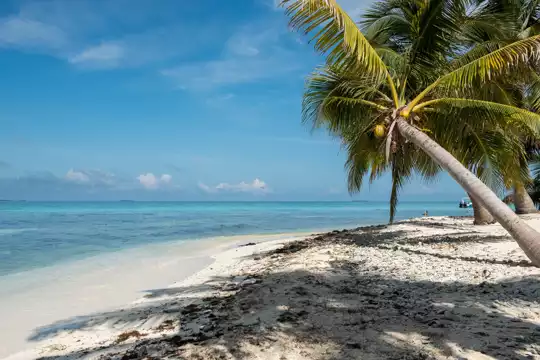
The big decision here is whether to base yourself on the cayes or stay on the mainland and reach the reef by boat, and it comes down to how much you want to spend on beds versus boat time. The Belize Barrier Reef Reserve System runs off the coast of Belize, a chain of seven protected sites stretching roughly from the north near Ambergris Caye down past Placencia in the south. Above water you get mangrove islands, coconut palms clacking in the trade wind, and boat engines at dawn. Below, water in shades from milky jade to deep navy, brain coral the size of armchairs, and nurse sharks sliding over sand. The downsides are real: it is no hiking park, the sun is brutal, and popular snorkel sites like Hol Chan can feel like a crowded bathtub by 11 a.m. Cut-rate operators skimp on safety gear and cram boats, so check reviews and ask about guide-to-guest ratios. Book the earliest departure to beat both heat and crowds. Pay reef fees in cash, since card machines on boats are unreliable.

Discover everything you want to know in the 📖 Belize Travel Guide.


example page 0 from our offline Travel Guide for Belize
example page 1 from our offline Travel Guide for Belize
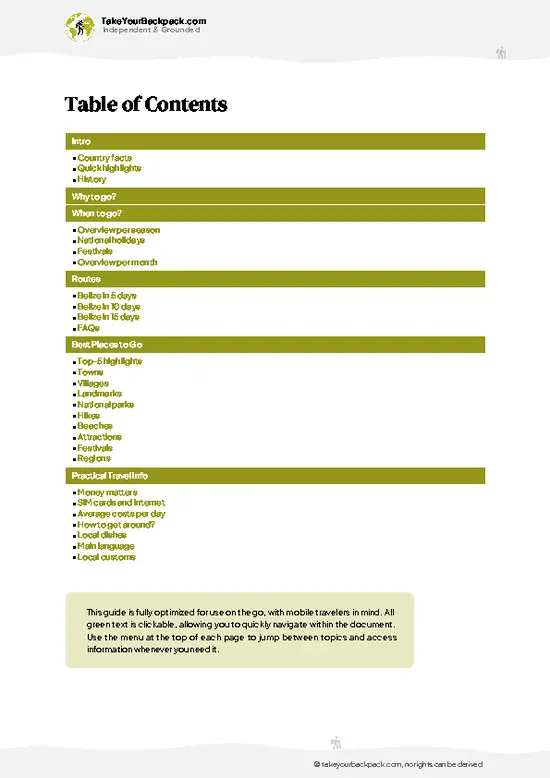
example page 2 from our offline Travel Guide for Belize
example page 3 from our offline Travel Guide for Belize
example page 4 from our offline Travel Guide for Belize
example page 5 from our offline Travel Guide for Belize
example page 6 from our offline Travel Guide for Belize
example page 7 from our offline Travel Guide for Belize
Loading the map 🌍
CLICK TO FILTER
towns
villages
landmarks
national parks
hikes
beaches
attractions
festivals
regions
SHOW COUNTRY’S BESTSHOW ALL

✨ Why go?
Ranked #1 national park in Belize
Reasons people choose to explore here

The Belize Barrier Reef Reserve System suits backpackers because you can organize everything yourself on the cayes, then pick the cheapest legitimate operator from a dozen dockside shops. No permit hoops, no mandatory package. Walk the pier at Caye Caulker, compare boards, and negotiate a group rate with other travelers from your hostel.

The diving and snorkeling are the draw. The Great Blue Hole is a collapsed limestone sinkhole more than 300 meters across and about 125 meters deep, and it rewards experienced divers with stalactites and reef sharks at depth. Snorkelers get Shark Ray Alley, where nurse sharks and stingrays swarm to the boat for scraps of fish. Both are far easier to reach with a local guide than alone.

The third reason is flexibility. Hammocks and dorm beds sit steps from … read more 👉
The Belize Barrier Reef Reserve System suits backpackers because you can organize everything yourself on the cayes, then pick the cheapest legitimate operator from a dozen dockside shops. No permit hoops, no mandatory package. Walk the pier at Caye Caulker, compare boards, and negotiate a group rate with other travelers from your hostel.

The diving and snorkeling are the draw. The Great Blue Hole is a collapsed limestone sinkhole more than 300 meters across and about 125 meters deep, and it rewards experienced divers with stalactites and reef sharks at depth. Snorkelers get Shark Ray Alley, where nurse sharks and stingrays swarm to the boat for scraps of fish. Both are far easier to reach with a local guide than alone.

The third reason is flexibility. Hammocks and dorm beds sit steps from the water, and sailing trips between the cayes let you camp on a tiny sandbar one night and eat grilled snapper on the beach the next.

💡 HighlightsDon't-miss highlights and experiences

  1. Great Blue Hole: The reserve's best-known sight, a near-perfect circular sinkhole seen from above as a dark blue eye in pale turquoise shallows. Divers descend to around 40 meters to swim among giant stalactites. Most trips go from Belize City or the cayes and take a full day.
  2. Hol Chan Marine Reserve: A cut in the reef just south of Ambergris Caye, with healthy coral, moray eels, and schools of snapper. Snorkeling here is easy for beginners, and the entry fee is around US$10 to 20 per person.
  3. Shark Ray Alley: A shallow sandy channel where nurse sharks and southern stingrays circle your legs. They are habituated to humans, and the touch of their skin is sandpaper-rough.
  4. Half Moon Caye Natural Monument: A tiny sand island with a red-footed booby colony nesting in the trees and a wall dive right
… read more 👉
  1. Great Blue Hole: The reserve's best-known sight, a near-perfect circular sinkhole seen from above as a dark blue eye in pale turquoise shallows. Divers descend to around 40 meters to swim among giant stalactites. Most trips go from Belize City or the cayes and take a full day.
  2. Hol Chan Marine Reserve: A cut in the reef just south of Ambergris Caye, with healthy coral, moray eels, and schools of snapper. Snorkeling here is easy for beginners, and the entry fee is around US$10 to 20 per person.
  3. Shark Ray Alley: A shallow sandy channel where nurse sharks and southern stingrays circle your legs. They are habituated to humans, and the touch of their skin is sandpaper-rough.
  4. Half Moon Caye Natural Monument: A tiny sand island with a red-footed booby colony nesting in the trees and a wall dive right off the beach. Frigatebirds hang overhead.
  5. Glover's Reef Atoll: A remote ring of reef in the south with basic cabins and camping on small cayes. The water is clear enough that you can see the bottom from your hammock.
  6. Laughing Bird Caye National Park: A small island off Placencia, once nesting ground for laughing gulls, now a calm snorkeling and picnic stop with palm shade.
  7. South Water Caye Marine Reserve: A caye with cabins and a lively fringing reef close to shore, good for snorkeling directly from the dock.
  8. Sapodilla Cayes Marine Reserve: Far south near Punta Gorda, with quiet reefs, sea turtles, and few other boats on the horizon.
Belize Barrier Reef Reserve System sites charge per-site reserve fees, and trips to the Great Blue Hole and Half Moon Caye should be booked a day or more ahead because boats leave full early in the morning.
Spotted a mistake or missing something? Contact us.

Things to do near Belize Barrier Reef Reserve System

Ratings based on Tripadvisor reviews. When you book through this link, you support our work at no extra cost to you.

🌤️ When to go?Choosing the right time of year

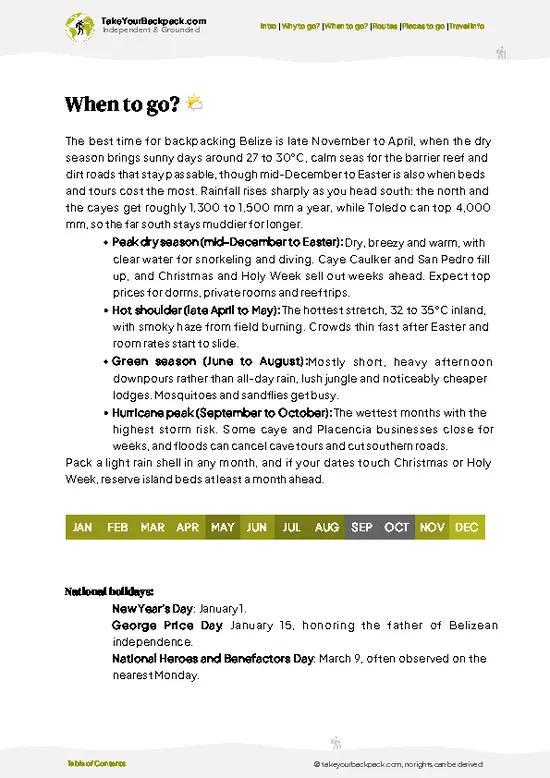
  • Dry Season (February to May): Calm seas and visibility of 20 to 30 m (65 to 100 ft) on the reef make this prime time for snorkeling and diving. Days run 27 to 32°C (81 to 90°F), with sunrise to sunset spanning about 11 to 12.5 hours.
  • Whale Shark Window (April to June): Gladden Spit, near Placencia, draws whale sharks around the full moon. Book spots a few weeks ahead.
  • Wet Season (June to November): Showers come in short heavy bursts, with highs of 29 to 33°C (84 to 91°F) and humid nights near 23°C (73°F). Boats still run, crowds thin out, and guesthouse rates can fall 20 to 30 percent.
  • Hurricane Peak (August to October): Storms can close the cayes and cancel boats for several days. Insurance matters here.
  • Holiday Peak (mid-December to Easter): Beds on Caye Caulker and Ambergris Caye fill up and
… read more 👉
  • Dry Season (February to May): Calm seas and visibility of 20 to 30 m (65 to 100 ft) on the reef make this prime time for snorkeling and diving. Days run 27 to 32°C (81 to 90°F), with sunrise to sunset spanning about 11 to 12.5 hours.
  • Whale Shark Window (April to June): Gladden Spit, near Placencia, draws whale sharks around the full moon. Book spots a few weeks ahead.
  • Wet Season (June to November): Showers come in short heavy bursts, with highs of 29 to 33°C (84 to 91°F) and humid nights near 23°C (73°F). Boats still run, crowds thin out, and guesthouse rates can fall 20 to 30 percent.
  • Hurricane Peak (August to October): Storms can close the cayes and cancel boats for several days. Insurance matters here.
  • Holiday Peak (mid-December to Easter): Beds on Caye Caulker and Ambergris Caye fill up and prices climb 25 to 40 percent. Winter nights dip to about 19°C (66°F).
Aim for late January or early May to find good conditions with fewer people.


source: climatestotravel.comJANJanuary: excellent for travelingFEBFebruary: excellent for travelingMARMarch: excellent for travelingAPRApril: highly recommended for travelingMAYMay: fair for travelingJUNJune: fair for travelingJULJuly: fair for travelingAUGAugust: fair for travelingSEPSeptember: below average for travelingOCTOctober: fair for travelingNOVNovember: highly recommended for travelingDECDecember: excellent for traveling
belize-national-park-belize-barrier-reef-reserve-system
© Google | Ishmael Nicholson

✈️ The backpacker research shortcutBelize Travel Guide

An offline-friendly backpacking guide with optimized travel routes, ranked highlights, transport advice, and the best areas to stay.
example page 0 from our offline Travel Guide for Belize
example page 1 from our offline Travel Guide for Belize
example page 2 from our offline Travel Guide for Belize
example page 3 from our offline Travel Guide for Belize
example page 4 from our offline Travel Guide for Belize
example page 5 from our offline Travel Guide for Belize
example page 6 from our offline Travel Guide for Belize
example page 7 from our offline Travel Guide for Belize
The digital guide (168 pages) contains:
✅ 45 highlights, ranked by travel appeal
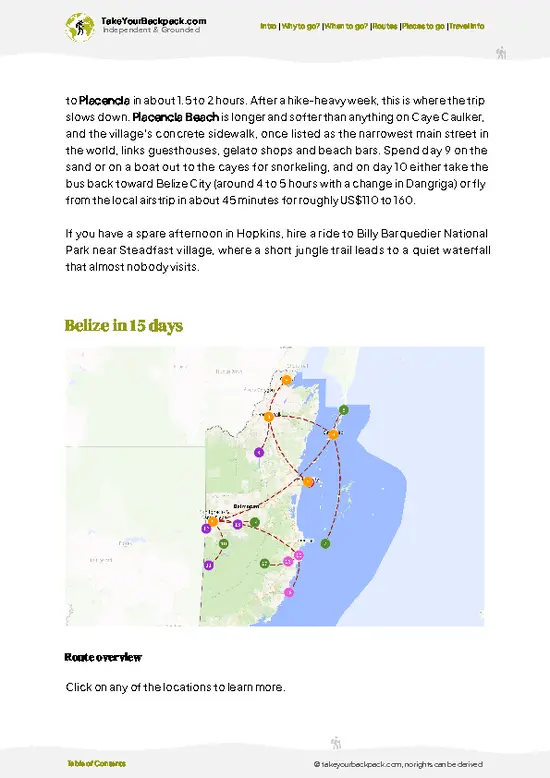
✅ Optimized 5, 10 & 15-day travel routes
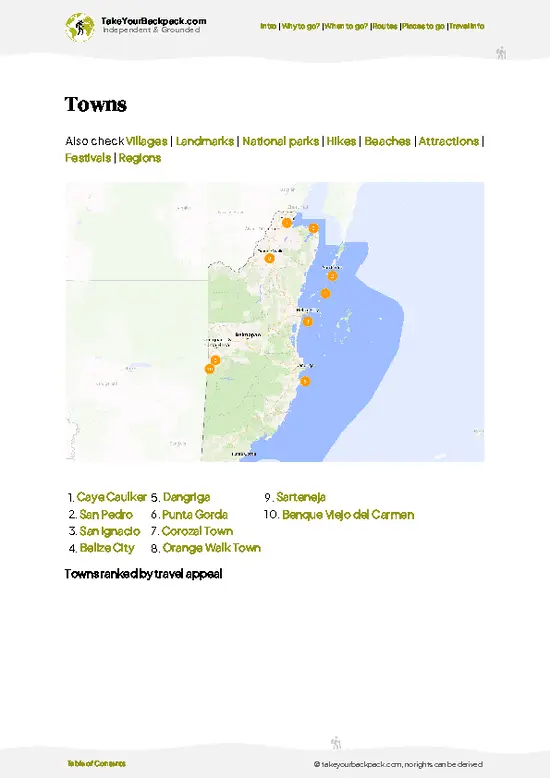
✅ Cities, national parks, landmarks, beaches
✅ How to get around
✅ Offline-friendly for travel without Wi-Fi
👉 Click to see all 30+ guide features

📅 Plan smarter in minutes, not weeks
✅ Month by month travel advice
✅ Festivals & national holidays
✅ Budget expectations

🗺️ Go to the right places, skip the overrated ones
✅ Honest pros & cons of destinations
✅ Top hikes, parks & viewpoints
✅ Lesser-known places most travelers miss
✅ Clear “worth it vs skip it” guidance

🛏️ Travel smoothly without rookie mistakes
✅ Best areas to stay
✅ Transport systems explained simply
✅ Common scams & safety advice
✅ SIM cards, money & practical tips

🌍 Understand the country, not just visit it
✅ Culture & traditions
✅ 52 Essential phrases & customs
✅ Festivals worth planning around
✅ Traveler-friendly historical context
✅ Insights that make places more meaningful

📱 Built for real travel conditions
✅ Fully downloadable PDF
✅ Works completely offline
✅ Optimized for phone use
✅ Useful in remote areas & buses
✅ Everything in one place
Stop searching, start planning
Get instant access to your full guide. 30‑day money-back guarantee.
+ Add another guide for just

By proceeding you agree to our terms.
Sent to your inbox immediately after payment • 100% Secure Checkout
Best Backpacking Travel Advisor 2025 tourism awardBest Backpacking
Travel Advisor
2025
What others say about Take Your Backpack Guides:
⭐⭐⭐⭐⭐
Fantastic, amazing amount of information!
⭐⭐⭐⭐⭐
My goodness this is amazing, it's what I've been looking for hats off too you!
⭐⭐⭐⭐⭐
I think this is absolutely BRILLIANT
⭐⭐⭐⭐
Very complete and informative. It's still missing places, but I gotta to commend you
⭐⭐⭐⭐⭐
This is truly amazing, thank you, can't wait to explore it with my kids!
⭐⭐⭐⭐⭐
Awesome resource, thank you!
⭐⭐⭐⭐⭐
This is amazing! Can't wait to explore the ones I haven't seen
⭐⭐⭐⭐
I love this! Well done, great idea.
⭐⭐⭐⭐⭐
Thanks for taking the time to make this gem!
⭐⭐⭐⭐⭐
This might be the best website I've ever seen.
⭐⭐⭐⭐⭐
Congratulations, and thank you so much for your work; it's incredibly valuable.
⭐⭐⭐⭐
In all seriousness I think you did a great job pointing out the important spots
⭐⭐⭐⭐⭐
10/10 very good
⭐⭐⭐⭐⭐
As someone who's only just starting to visit regularly this is awesome, thank you.
⭐⭐⭐⭐
Thank you very much! I'm going to visit my dad, it's going to be very useful!
⭐⭐⭐⭐⭐
This is really cool! We'll be travelling for the first time and this definitely come in handy.
⭐⭐⭐⭐⭐
You are now our minister of culture, congratulations 👨‍💼
⭐⭐⭐⭐⭐
Just wanted to tell you that this is a pearl! Going to follow your recommendations.
⭐⭐⭐⭐⭐
This is so cool. I'll definitely be using the resource for my travels soon.
⭐⭐⭐⭐⭐
This is very impressive! Good work.
⭐⭐⭐⭐⭐
This is an amazing and informative site. Very well done!

🛏️ Where to stay?How to pick the right area

Caye Caulker is the best base for most backpackers, with dorm beds around US$15 to 25 and private rooms from US$40 to 80. Nothing sits inside the reserve itself apart from a handful of small marine-reserve cayes, so you sleep on an island or on the coast and take boats out.
On Caye Caulker, you can walk everywhere along sand streets, and hostels such as Yuma’s House, plus guesthouses along Front Street, cluster near the water taxi dock. Tour operators here run snorkel trips to Hol Chan and Shark Ray Alley daily.
Ambergris Caye (San Pedro) is bigger, pricier and more resort-oriented. Budget rooms … read more 👉
Caye Caulker is the best base for most backpackers, with dorm beds around US$15 to 25 and private rooms from US$40 to 80. Nothing sits inside the reserve itself apart from a handful of small marine-reserve cayes, so you sleep on an island or on the coast and take boats out.
On Caye Caulker, you can walk everywhere along sand streets, and hostels such as Yuma’s House, plus guesthouses along Front Street, cluster near the water taxi dock. Tour operators here run snorkel trips to Hol Chan and Shark Ray Alley daily.
Ambergris Caye (San Pedro) is bigger, pricier and more resort-oriented. Budget rooms start at about US$50, so many backpackers visit as a day trip by water taxi from Caulker.
Further south, Placencia peninsula suits you if you want Silk Cayes, Laughing Bird Caye and whale shark trips. Hostels and cabanas run US$15 to 30 for a bed, and rooms from US$45.
Hopkins village offers cheap beach cabanas for US$30 to 60 and works for Glover’s Reef access.
Basic camping and a few huts exist on Glover’s Reef and South Water Caye, but these are pricey at US$40 to 120 per person with meals. Book them ahead and bring your own snorkel gear if you want to save.

👛 Costs (as of 22 October 2026)Travel costs and budget guide for Belize Barrier Reef Reserve System

Budget about US$95 a day for Belize Barrier Reef Reserve System, including a modest dorm bed, simple meals and one reef tour. Tours are the big expense, and you pay in Belize dollars or US dollars interchangeably at a fixed 2 to 1 rate.
CategoryBudget RangeLocal Reality
Marine Reserve FeesUS$10 to 20Hol Chan charges about US$15 to 20 per person and some other reserves charge around US$20, usually added to the tour price on top of operator fees.
Accommodation (high season)US$18 to 30Dorm beds on Caye Caulker run US$15 to 25. Private rooms start near US$40, and rates drop in the wet season.
Reef ToursUS$40 to 90A full-day snorkel trip to Hol Chan and Shark Ray Alley costs about US$60 to 90. Gear rental is about US$5 to 10 if not included.
Local TransportUS$5 to 15Water taxis from Belize City to Caye
… read more 👉
Budget about US$95 a day for Belize Barrier Reef Reserve System, including a modest dorm bed, simple meals and one reef tour. Tours are the big expense, and you pay in Belize dollars or US dollars interchangeably at a fixed 2 to 1 rate.
CategoryBudget RangeLocal Reality
Marine Reserve FeesUS$10 to 20Hol Chan charges about US$15 to 20 per person and some other reserves charge around US$20, usually added to the tour price on top of operator fees.
Accommodation (high season)US$18 to 30Dorm beds on Caye Caulker run US$15 to 25. Private rooms start near US$40, and rates drop in the wet season.
Reef ToursUS$40 to 90A full-day snorkel trip to Hol Chan and Shark Ray Alley costs about US$60 to 90. Gear rental is about US$5 to 10 if not included.
Local TransportUS$5 to 15Water taxis from Belize City to Caye Caulker cost around US$20 to 25 each way. On the island you walk or rent a bike for about US$10 a day.
Food and SuppliesUS$12 to 25Street plates of rice and beans or fry jacks cost US$4 to 8. A seafood dinner costs US$12 to 20, and bottled water is pricey.
Total Daily BudgetUS$85 to 180Typical figure of about US$95 assumes a dorm bed, cheap food and a shared tour.


source: travelbelize.org
⚠️ Prices can change and everyone travels differently, so take this as a rough guide. Hope it helps you plan your adventure!

🥾 TrailsHiking Belize Barrier Reef Reserve System national park: highlights and difficulty

Belize Barrier Reef Reserve System is for water walking rather than trail hiking, so the main routes are snorkel and dive sites you reach by boat, plus short island strolls on the cayes. Terrain is flat sand, mangrove, and coral rubble, and the heat is the main challenge.
  • Hol Chan Marine Reserve: Roughly a 2 to 3 hour snorkel stop with easy swimming, mild current in the cut, and plenty of fish. Difficulty: easy.
  • Shark Ray Alley: A short 30 to 45 minute stop in waist-deep water. Difficulty: easy, though nurse sharks can unnerve first-timers.
  • Half Moon Caye Natural Monument: A short loop trail of about
… read more 👉
Belize Barrier Reef Reserve System is for water walking rather than trail hiking, so the main routes are snorkel and dive sites you reach by boat, plus short island strolls on the cayes. Terrain is flat sand, mangrove, and coral rubble, and the heat is the main challenge.
  • Hol Chan Marine Reserve: Roughly a 2 to 3 hour snorkel stop with easy swimming, mild current in the cut, and plenty of fish. Difficulty: easy.
  • Shark Ray Alley: A short 30 to 45 minute stop in waist-deep water. Difficulty: easy, though nurse sharks can unnerve first-timers.
  • Half Moon Caye Natural Monument: A short loop trail of about 20 to 30 minutes leads to a viewing platform over the booby colony, with a beach and snorkeling on the same island. Difficulty: easy.
  • Great Blue Hole: A dive of about 8 minutes at depth to 40 meters, for advanced certified divers only, within a full-day trip. Snorkelers and flyover passengers see it from the surface or air. Difficulty: advanced for divers.
  • Glover's Reef Atoll: Multi-day trips with snorkeling off the beach, kayaking around the lagoon, and wall dives. Difficulty: easy to moderate.
  • Laughing Bird Caye: A half-day snorkel and short beach walk from Placencia. Difficulty: easy.
Wildlife includes sea turtles, eagle rays, manatees in the quieter southern waters, nurse sharks, groupers, and seabirds. Reef-safe sunscreen is required, and a rash guard saves your back from burning.

For access, water taxis run from Belize City to Caye Caulker and San Pedro, and small boats run from Placencia and Sarteneja. Crowds peak at midday at Hol Chan and Shark Ray Alley, so go early. Every site charges a reserve fee, paid in cash on the boat or dock, and operators usually include it in the price of the trip.
⚠️ Hiking info can sometimes be outdated or inaccurate. Before you hit the trail, check the latest conditions with locals. If you do spot anything that's off, I'd love to hear from you, so I can update it for fellow travelers.

🛡️ SafetySafety Tips and Common Scams in Belize Barrier Reef Reserve System

The reef is straightforward and heavily guided, and the main hazards are sun, sea conditions and boat logistics. Wear a long-sleeve rash guard and reef-safe sunscreen, because the glare on open water burns you through cloud. Drink more water than feels necessary, since the heat dehydrates you fast on a boat.
Currents at cuts and channels can be strong, so stay with your guide and use a flotation vest if you tire easily. Never stand on or touch coral. It cuts easily, and the cuts infect quickly in warm water.
Nurse sharks and stingrays at Shark Ray Alley are used to people. Keep your hands to yourself and don’t grab them. Barracuda ignore swimmers, and lionfish are best avoided with a respectful distance.
Choose licensed operators, check that life jackets are on board, and skip trips in rough … read more 👉
The reef is straightforward and heavily guided, and the main hazards are sun, sea conditions and boat logistics. Wear a long-sleeve rash guard and reef-safe sunscreen, because the glare on open water burns you through cloud. Drink more water than feels necessary, since the heat dehydrates you fast on a boat.
Currents at cuts and channels can be strong, so stay with your guide and use a flotation vest if you tire easily. Never stand on or touch coral. It cuts easily, and the cuts infect quickly in warm water.
Nurse sharks and stingrays at Shark Ray Alley are used to people. Keep your hands to yourself and don’t grab them. Barracuda ignore swimmers, and lionfish are best avoided with a respectful distance.
Choose licensed operators, check that life jackets are on board, and skip trips in rough weather. On the cayes, keep valuables out of sight, and don’t walk empty beaches at night after drinking.

FAQCommon questions from travelers

Plan on three to four days for Belize Barrier Reef Reserve System if you want to snorkel the main sites. That gives you one day for Hol Chan and Shark Ray Alley, one for Caye Caulker’s Split and the Coral Gardens, and a day to spare for weather. Add two more days for Placencia’s Silk Cayes or Glover’s Reef.
You can reach Belize Barrier Reef Reserve System without a car, and most backpackers do. Water taxis leave Belize City for Caye Caulker in about 45 minutes and for San Pedro in about 75 minutes, costing roughly US$20 to 25 one way. Placencia has a regular bus link from Dangriga, and the cayes are car-free anyway.
Belize Barrier Reef Reserve System charges fees per marine reserve rather than one park pass. Hol Chan costs about US$15 to 20 per person and the Southwater Caye and Laughing Bird Caye areas charge roughly US$10 to 40, which is normally included in your tour. No separate permit is needed for snorkeling with a licensed guide, but diving requires certification, and independent boat trips to protected areas are not allowed.
⚠️ Things can change over time, so always validate details locally before you go.

Other Belizean national parks near Belize Barrier Reef Reserve System

Explore more nearby:


💡 Not sure where to go next?
Create a personalized itinerary for Belize including Belize Barrier Reef Reserve System and the places that fit your trip.

Generate my itinerary

👉 Discover all national parks

Or checkout all Belize has to offer (think cities, towns, villages, national parks, hikes, beaches, festivals)
Country photo of Belize

We 💚 feedbackIs it worth it?

Belize Barrier Reef Reserve System pairs well with inland Belize on a route: spend a few days on Caye Caulker, then head west to San Ignacio for caves and Maya ruins, or south to Placencia for quieter cayes. I would book the Great Blue Hole or Half Moon Caye trip first, early in your stay, and keep the lazy snorkeling for after. Bring your own mask.

✍️ Help improve this page!
The information on this page is based on in-depth research, insights shared by experienced travelers, and feedback from the local travel community in Belize. While every effort is made to keep the information accurate and current, conditions can change — so if you spot anything incorrect or outdated, please get in touch.


🙋‍♂️ Give feedback

👋 Meet the founderWho’s Behind Take Your Backpack?

Johan, backpacker and founder of TakeYourBackpackHi, I’m Johan (Netherlands 🇳🇱), the creator of TakeYourBackpack. Over the past 3 decades, I’ve backpacked through 90+ countries across six continents, gaining extensive experience with independent travel, long-term trips, and overland routes.

This site is built on a combination of firsthand travel experience and carefully curated insights from other backpackers. Many guides are based on places I’ve personally visited, while others bring together tips, observations, and practical advice shared by trusted travelers I’ve met along the way.

The goal is to provide realistic, experience-driven guidance — not generic itineraries — so you can explore destinations with better context, clearer expectations, and more confidence.