v2.webp)
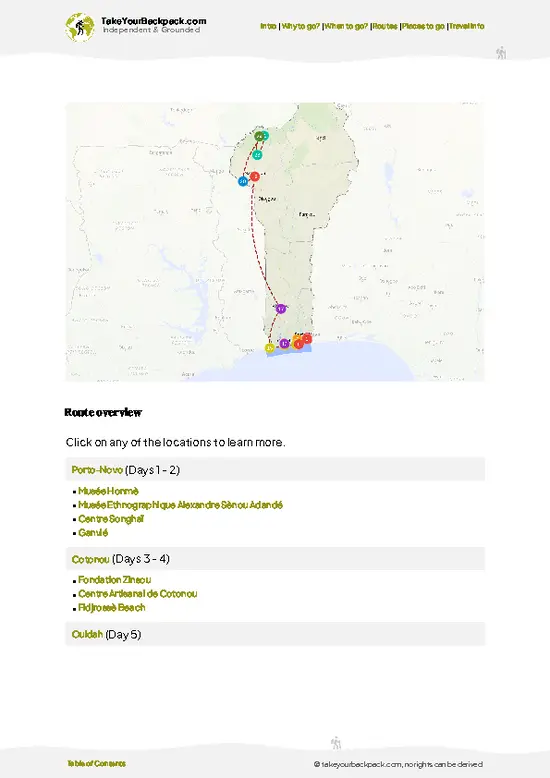
- Grand Marché de Malanville: The town’s reason for being. Rows of onions, millet, dried fish, cloth and motorbike parts spread under tin roofs and tarps. Go early morning, when it is cooler and the trucks are unloading. Entry is free, allow 1 to 2 hours.
- Niger River banks: Fishermen launch narrow wooden boats and women wash clothes on the shore. Late afternoon gives soft light and a breeze. Free, about 1 hour.
- Border bridge viewpoint: The long bridge to Gaya in Niger, thick with trucks and motorbike taxis, shows the trade that feeds the town. Look from a respectful distance and do not photograph officials. Free, 20 to 30 minutes.
- Livestock market area: Cattle and goats arrive with Fulani herders, who wear distinctive wide hats and carry long staffs. Mornings are liveliest. Free, 30 to 60 minutes.
- Grand Marché de Malanville: The town’s reason for being. Rows of onions, millet, dried fish, cloth and motorbike parts spread under tin roofs and tarps. Go early morning, when it is cooler and the trucks are unloading. Entry is free, allow 1 to 2 hours.
- Niger River banks: Fishermen launch narrow wooden boats and women wash clothes on the shore. Late afternoon gives soft light and a breeze. Free, about 1 hour.
- Border bridge viewpoint: The long bridge to Gaya in Niger, thick with trucks and motorbike taxis, shows the trade that feeds the town. Look from a respectful distance and do not photograph officials. Free, 20 to 30 minutes.
- Livestock market area: Cattle and goats arrive with Fulani herders, who wear distinctive wide hats and carry long staffs. Mornings are liveliest. Free, 30 to 60 minutes.
- Central Mosque: A local landmark that anchors the Muslim community of the north. Visit outside prayer times and dress modestly. Free or a small donation, 15 to 20 minutes.
- Rice fields along the river: The irrigated plots north of town turn bright green after the rains and show a different side of the Sahel. Best during the growing season. Free, 1 to 2 hours on a motorbike taxi, which costs about €2 to 4.
- Street grill stalls: Evening stalls sell grilled lamb, spiced skewers and fresh bread. Go after dark when the smoke rises and the lanes fill. Expect €1 to 3 a plate, 45 minutes.
Spotted a mistake or missing something? Contact us.

 Best Backpacking
.jpg) Hi, I’m Johan (Netherlands 🇳🇱), the creator of TakeYourBackpack. Over the past 3 decades, I’ve backpacked through 90+ countries across six continents, gaining extensive experience with independent travel, long-term trips, and overland routes.
Hi, I’m Johan (Netherlands 🇳🇱), the creator of TakeYourBackpack. Over the past 3 decades, I’ve backpacked through 90+ countries across six continents, gaining extensive experience with independent travel, long-term trips, and overland routes.