×

Benin🇧🇯 | citiesNatitingouSomba tata houses, Atacora hills, waterfalls, regional museum | things to do and best time to go

Explore SavalouExplore Nikki

Backpacking in Natitingou
🌟 Highlightcity ranked #4
By Johan Kruseman 🇳🇱 | Updated October 24, 2026

Natitingou is not a gateway to the Pendjari park in the sense of sitting beside it; the park gate is a few hours away, and plenty of travelers assume otherwise. The town sits in the northwest of Benin, in the Atacora hills, with red laterite roads, mango shade and motorbike taxis whining past from dawn. It suits travelers who like Somba country, craft markets and cooler evenings, and who can live without nightlife or polished cafés. The center is dusty and plain, and a stroll there takes less than an hour, so spend your time at the museum and in the villages and rock country around it instead. Heat at midday is heavy, and wifi comes and goes. A good first day: wander the market in the morning among charcoal smoke and spice piles, visit the museum, then watch the hills darken from a terrace with a cold beer.

Discover everything you want to know in the 📖 Benin Travel Guide.


example page 0 from our offline Travel Guide for Benin
example page 1 from our offline Travel Guide for Benin
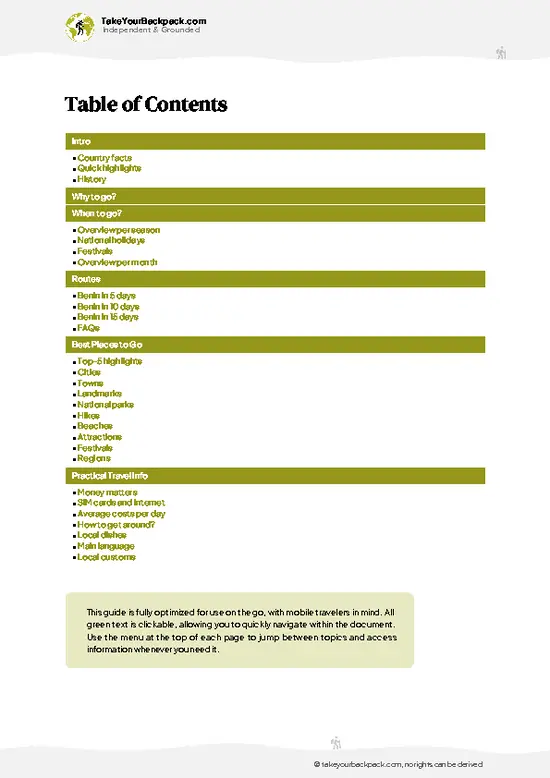
example page 2 from our offline Travel Guide for Benin
example page 3 from our offline Travel Guide for Benin
example page 4 from our offline Travel Guide for Benin
example page 5 from our offline Travel Guide for Benin
example page 6 from our offline Travel Guide for Benin
example page 7 from our offline Travel Guide for Benin
Loading the map 🌍
CLICK TO FILTER
cities
towns
landmarks
national parks
hikes
beaches
attractions
festivals
regions
SHOW COUNTRY’S BESTSHOW ALL

✨ Why go?
Ranked #4 city in Benin
What sets this place apart

Natitingou is the practical hub of northwest Benin, and that is the main reason to come. The town is the only place in the area with a decent spread of guesthouses, a real market, restaurants serving grilled fish and pounded yam, and drivers who know the roads into the hills. If you want to see the Somba tata houses and the Atacora escarpment, you sleep here and go out each day. The town itself is compact and easy to walk, with little to do after dark beyond a drink and conversation, so it works best as a base for two or three nights rather than a long stay. It is also the natural jumping-off point for the north. Buses and shared taxis head toward Tanguiéta, Kandi and Parakou, so it slots into a Benin route that runs from the coast up to the savanna. Cooler nights compared with the south are a welcome bonus.

💡 HighlightsKey sights and experiences for travelers

  1. Musée régional de Natitingou: A small museum on Somba culture, with models of tata houses, ritual objects, tools and local history. It is the best primer before you head into the villages. Go in the morning when it is cooler. Entry is roughly €2 to 3, and you need about 1 hour.
  2. Tata Somba houses near Boukoumbé: Two-story mud fortresses with granary turrets, still lived in by Betammaribé families. Visits are done with a local guide, who explains the layout, animal quarters and initiation customs. Go in the morning for good light. Expect about €5 to 10 for guide and village contribution, and half a day including the drive.
  3. Chutes de Kota: A forested waterfall a short drive from town, with a pool where you can swim in the wetter months. The flow is strongest after the rains and thin by the end
… read more 👉
  1. Musée régional de Natitingou: A small museum on Somba culture, with models of tata houses, ritual objects, tools and local history. It is the best primer before you head into the villages. Go in the morning when it is cooler. Entry is roughly €2 to 3, and you need about 1 hour.
  2. Tata Somba houses near Boukoumbé: Two-story mud fortresses with granary turrets, still lived in by Betammaribé families. Visits are done with a local guide, who explains the layout, animal quarters and initiation customs. Go in the morning for good light. Expect about €5 to 10 for guide and village contribution, and half a day including the drive.
  3. Chutes de Kota: A forested waterfall a short drive from town, with a pool where you can swim in the wetter months. The flow is strongest after the rains and thin by the end of the dry season. Entry costs about €1 to 2, and a visit takes 2 to 3 hours with the walk.
  4. Marché de Natitingou: A busy market with shea butter, dried fish, woven baskets, calabashes and pottery. Come in the morning, before the heat builds. Browsing is free, and 1 hour is plenty.
  5. Cascade de Tanougou: A waterfall with a wide natural pool near Tanguiéta, good for a cooling dip in the dry season, reached by a short walk through shrubs. Entry is roughly €2 to 4, and you should allow 2 to 3 hours.
  6. Hills viewpoint walks above town: Rocky tracks climb to lookouts over the red roofs and the Atacora ridge. Late afternoon gives the softest view. It is free, and 1 to 2 hours is enough.
Natitingou also sets you up for Pendjari National Park, the Tanougou area and the Koussoukoingou rock villages, all best done as day trips or short overnights. Doing everything on this list takes about two full days.
Spotted a mistake or missing something? Contact us.

🏘️ NeighborhoodsNeighborhood guide to Natitingou

Natitingou is small enough that you can read its districts in a morning, and each one has a different texture.
  • Central market area: This is where you should spend your first hours. Motorbike horns, charcoal smoke, shea butter, fried yam and piles of red peppers crowd the lanes, and the big market day draws farmers and Betammaribé traders down from the hills. Walk it, since cars barely move here.
  • Along the main road: The paved artery lined with small bars, phone kiosks and grilled-meat stands is loud and dusty, but it is where you will find cold drinks, money changers and evening life. Cheap, and not pretty. Fine for a short stroll after dark.
  • Hillside quarters near the old lookout: Quieter, with mango trees, red earth lanes and goats at dusk. The climb is short but hot, and the view over the
… read more 👉
Natitingou is small enough that you can read its districts in a morning, and each one has a different texture.
  • Central market area: This is where you should spend your first hours. Motorbike horns, charcoal smoke, shea butter, fried yam and piles of red peppers crowd the lanes, and the big market day draws farmers and Betammaribé traders down from the hills. Walk it, since cars barely move here.
  • Along the main road: The paved artery lined with small bars, phone kiosks and grilled-meat stands is loud and dusty, but it is where you will find cold drinks, money changers and evening life. Cheap, and not pretty. Fine for a short stroll after dark.
  • Hillside quarters near the old lookout: Quieter, with mango trees, red earth lanes and goats at dusk. The climb is short but hot, and the view over the tin roofs to the Atacora ridge is worth it in the late afternoon. Little to eat up here.
  • Museum quarter: The regional museum of the Betammaribé and Otammari peoples sits on the edge of the center and gives context to the tata houses you will see in the countryside. Skip it if you are short on time, but it is a calm, shady half hour.
  • Outer neighborhoods and road to Boukoumbé: Mostly residential and spread out, so you need a moto-taxi. Nothing to see in town here, but it is the gateway to the villages.

⌛️ 1 dayA smart one-day plan

The day works best on foot in town and by hired moto or taxi for the outskirts, with a long rest at midday when the heat peaks.
7:30 AM: Marché de Natitingou Start early among charcoal smoke, shea butter and stacked calabashes. Buy a street breakfast of bean fritters and sweet tea, then walk ten minutes to the next stop.
9:30 AM: Musée régional Look at the tata house models and ritual objects so the villages later make sense. Ask staff about the guide contacts they know.
11:00 AM: Chutes de Kota Take a moto or taxi out to the waterfall. Walk the forest path, cool your feet in the pool and return to town by noon.
1:00 PM: Lunch and rest Grilled fish with pounded yam at a local maquis, then lie low in the shade until the heat eases.
3:30 PM: Quartier of the hillside tracks Away from the standard … read more 👉
The day works best on foot in town and by hired moto or taxi for the outskirts, with a long rest at midday when the heat peaks.
7:30 AM: Marché de Natitingou Start early among charcoal smoke, shea butter and stacked calabashes. Buy a street breakfast of bean fritters and sweet tea, then walk ten minutes to the next stop.
9:30 AM: Musée régional Look at the tata house models and ritual objects so the villages later make sense. Ask staff about the guide contacts they know.
11:00 AM: Chutes de Kota Take a moto or taxi out to the waterfall. Walk the forest path, cool your feet in the pool and return to town by noon.
1:00 PM: Lunch and rest Grilled fish with pounded yam at a local maquis, then lie low in the shade until the heat eases.
3:30 PM: Quartier of the hillside tracks Away from the standard circuit, walk the residential lanes uphill where goats wander and children play. Reach the rocky lookout for views across the roofs and the long ridge line.
6:00 PM: Terrace drink Return to the center for a cold beer or ginger juice while the call to prayer and motorbikes blend into the dusk. Dinner is grilled chicken and fried plantain nearby.

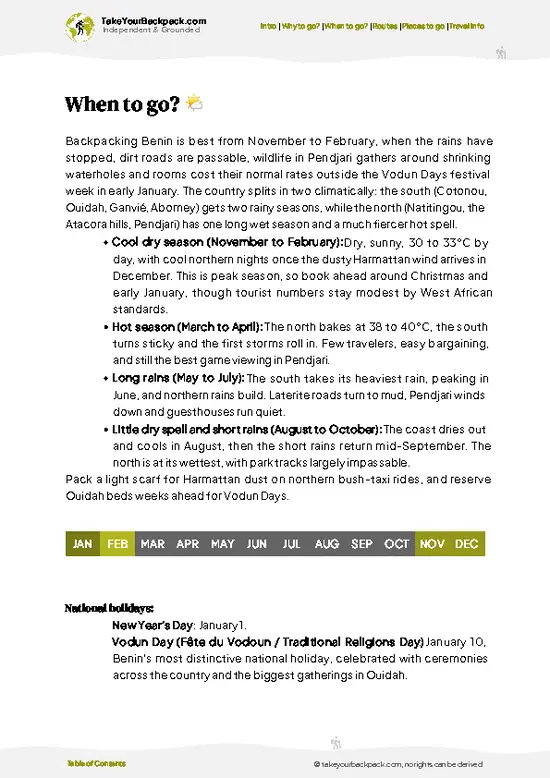
🌤️ When to go?Best time to visit Natitingou

  • Harmattan (December to February): Dry, dusty haze from the Sahara, cool mornings near 18°C (64°F) and afternoons of 32 to 35°C (90 to 95°F). Hiking is most comfortable, and this is peak season for the few visitors who come, so beds are fullest.
  • Hot season (March to May): Afternoons often reach 36 to 40°C (97 to 104°F). Walk at dawn, rest at midday. Expect the first storms by late spring.
  • Rainy season (June to October): Daytime 26 to 31°C (79 to 88°F), green fields and full waterfalls at Tanougou, but dirt tracks to villages turn to mud and motorbikes struggle. Prices stay low, and you will have trails to yourself.
  • Festival time: Local Gaani celebrations among the Bariba in the north usually fall in the dry months, and are worth catching if you can.
Daylight stays close to 12 hours all year, so plan treks to finish by late afternoon.

source: climatestotravel.comJANJanuary: excellent for travelingFEBFebruary: highly recommended for travelingMARMarch: highly recommended for travelingAPRApril: fair for travelingMAYMay: fair for travelingJUNJune: fair for travelingJULJuly: fair for travelingAUGAugust: fair for travelingSEPSeptember: fair for travelingOCTOctober: fair for travelingNOVNovember: highly recommended for travelingDECDecember: excellent for traveling
when-to-go

✈️ The backpacker research shortcutBenin Travel Guide

An offline-friendly backpacking guide with optimized travel routes, ranked highlights, transport advice, and the best areas to stay.
example page 0 from our offline Travel Guide for Benin
example page 1 from our offline Travel Guide for Benin
example page 2 from our offline Travel Guide for Benin
example page 3 from our offline Travel Guide for Benin
example page 4 from our offline Travel Guide for Benin
example page 5 from our offline Travel Guide for Benin
example page 6 from our offline Travel Guide for Benin
example page 7 from our offline Travel Guide for Benin
The digital guide (213 pages) contains:
✅ 48 highlights, ranked by travel appeal
✅ Optimized 5, 10 & 15-day travel routes
✅ Cities, national parks, landmarks, beaches
✅ How to get around
✅ Offline-friendly for travel without Wi-Fi
👉 Click to see all 30+ guide features

📅 Plan smarter in minutes, not weeks
✅ Month by month travel advice
✅ Festivals & national holidays
✅ Budget expectations

🗺️ Go to the right places, skip the overrated ones
✅ Honest pros & cons of destinations
✅ Top hikes, parks & viewpoints
✅ Lesser-known places most travelers miss
✅ Clear “worth it vs skip it” guidance

🛏️ Travel smoothly without rookie mistakes
✅ Best areas to stay
✅ Transport systems explained simply
✅ Common scams & safety advice
✅ SIM cards, money & practical tips

🌍 Understand the country, not just visit it
✅ Culture & traditions
✅ 52 Essential phrases & customs
✅ Festivals worth planning around
✅ Traveler-friendly historical context
✅ Insights that make places more meaningful

📱 Built for real travel conditions
✅ Fully downloadable PDF
✅ Works completely offline
✅ Optimized for phone use
✅ Useful in remote areas & buses
✅ Everything in one place
Stop searching, start planning
Get instant access to your full guide. 30‑day money-back guarantee.
+ Add another guide for just

By proceeding you agree to our terms.
Sent to your inbox immediately after payment • 100% Secure Checkout
Best Backpacking Travel Advisor 2025 tourism awardBest Backpacking
Travel Advisor
2025
What others say about Take Your Backpack Guides:
⭐⭐⭐⭐⭐
Fantastic, amazing amount of information!
⭐⭐⭐⭐⭐
My goodness this is amazing, it's what I've been looking for hats off too you!
⭐⭐⭐⭐⭐
I think this is absolutely BRILLIANT
⭐⭐⭐⭐
Very complete and informative. It's still missing places, but I gotta to commend you
⭐⭐⭐⭐⭐
This is truly amazing, thank you, can't wait to explore it with my kids!
⭐⭐⭐⭐⭐
Awesome resource, thank you!
⭐⭐⭐⭐⭐
This is amazing! Can't wait to explore the ones I haven't seen
⭐⭐⭐⭐
I love this! Well done, great idea.
⭐⭐⭐⭐⭐
Thanks for taking the time to make this gem!
⭐⭐⭐⭐⭐
This might be the best website I've ever seen.
⭐⭐⭐⭐⭐
Congratulations, and thank you so much for your work; it's incredibly valuable.
⭐⭐⭐⭐
In all seriousness I think you did a great job pointing out the important spots
⭐⭐⭐⭐⭐
10/10 very good
⭐⭐⭐⭐⭐
As someone who's only just starting to visit regularly this is awesome, thank you.
⭐⭐⭐⭐
Thank you very much! I'm going to visit my dad, it's going to be very useful!
⭐⭐⭐⭐⭐
This is really cool! We'll be travelling for the first time and this definitely come in handy.
⭐⭐⭐⭐⭐
You are now our minister of culture, congratulations 👨‍💼
⭐⭐⭐⭐⭐
Just wanted to tell you that this is a pearl! Going to follow your recommendations.
⭐⭐⭐⭐⭐
This is so cool. I'll definitely be using the resource for my travels soon.
⭐⭐⭐⭐⭐
This is very impressive! Good work.
⭐⭐⭐⭐⭐
This is an amazing and informative site. Very well done!

🛏️ Where to stay?How to pick the right area

The best budget base in Natitingou is the area around the central market and main road, where small guesthouses and basic auberges cluster within a short walk of food, money changers and the bus park. Dorm beds are rare, so expect private rooms with a fan for about €10 to 20 a night, and fewer options than in southern Benin. Book ahead in the dry months if you plan a visit around a festival or market day.

The trade-off is noise. Motorbikes start before dawn and bars along the main road can play music late, so ask for a room at the back, away from the street. Transport links are excellent here, … read more 👉
The best budget base in Natitingou is the area around the central market and main road, where small guesthouses and basic auberges cluster within a short walk of food, money changers and the bus park. Dorm beds are rare, so expect private rooms with a fan for about €10 to 20 a night, and fewer options than in southern Benin. Book ahead in the dry months if you plan a visit around a festival or market day.

The trade-off is noise. Motorbikes start before dawn and bars along the main road can play music late, so ask for a room at the back, away from the street. Transport links are excellent here, since moto-taxis wait on nearly every corner and the shared taxi park is close.

The quieter option is the hillside quarters above the center. Streets are calmer, nights are cooler and the air is cleaner, though you will rely on a moto-taxi for dinner after dark. Walking down alone at night is possible but the lanes are poorly lit, so carry a headlamp. Options are fewer up there, and a few places take cash only, so keep small notes.

🚌 Getting aroundTransportation options and practical tips

Moto-taxis, called zemidjans, are the easiest way for a backpacker to get around Natitingou, because they are everywhere, cost little and reach villages that no bus serves. Walking works for the center, which you can cross in about 20 minutes, though the heat and red dust make midday strolling tiring. Public transport inside town does not exist as a formal system, so expect to improvise.
  • Walking: Free, and best in early morning and after 4 pm, when the sun softens and the market lanes come alive. Pavements are patchy, so watch for open drains and passing bikes.
  • Moto-taxi (zemidjan): A ride inside town costs about €0.40 to 0.80, and a longer hop to the outskirts about €1 to 1.50. Agree the price before you climb on. They run from early morning until late evening, and the noise, exhaust and open
… read more 👉
Moto-taxis, called zemidjans, are the easiest way for a backpacker to get around Natitingou, because they are everywhere, cost little and reach villages that no bus serves. Walking works for the center, which you can cross in about 20 minutes, though the heat and red dust make midday strolling tiring. Public transport inside town does not exist as a formal system, so expect to improvise.
  • Walking: Free, and best in early morning and after 4 pm, when the sun softens and the market lanes come alive. Pavements are patchy, so watch for open drains and passing bikes.
  • Moto-taxi (zemidjan): A ride inside town costs about €0.40 to 0.80, and a longer hop to the outskirts about €1 to 1.50. Agree the price before you climb on. They run from early morning until late evening, and the noise, exhaust and open air are part of the experience. Ask the rider for a helmet, and hold on tight on gravel.
  • Chartered moto for day trips: A full day to villages, waterfalls or the Tata Somba country usually costs €10 to 20 depending on distance and fuel. The tracks are rough and dusty, so bring a scarf and sunglasses. Rainy season makes some routes slow or impassable.
  • Shared taxis and minibuses: These leave from the main gare routière for nearby towns like Boukoumbé, Tanguiéta and Kouandé, costing about €1 to 4 a seat. They depart when full, mostly in the morning, and the last ones leave by mid-afternoon. Luggage rides on the roof, and the ride can be cramped and slow.
  • Long-distance buses: Coaches head south toward Parakou and Cotonou, with fares about €10 to 20 and journeys that take most of a day. Book a seat the evening before and leave early, since the last departures go in the morning.

👛 Costs (as of 24 October 2026)Travel costs and budget guide for Natitingou

Natitingou costs about €27 to 43 a day for a backpacker, and prices stay below those on the southern coast.
CategoryBudget RangeLocal Reality
Dorm accommodation (high season)€10 to 15True dorms are rare, so a simple private room with a fan is the norm.
Dorm accommodation (off-season)€8 to 12Rainy months bring lower prices and easy bargaining.
Meals€5 to 9Market plates and grilled meat; a sit-down meal costs a little more.
Local transport€2 to 5Several moto-taxi rides at €0.40 to 1.50 each.
City transport passNot availableNo pass exists, you pay per ride.
Basic activities/entry fees€3 to 10Museum, village visits and guide tips; waterfalls cost more.
Miscellaneous€2 to 4Water, SIM data and small tips.
Total Daily Budget€27 to 43Pendjari safaris and chartered rides push this much higher.
Eat at the market … read more 👉
Natitingou costs about €27 to 43 a day for a backpacker, and prices stay below those on the southern coast.
CategoryBudget RangeLocal Reality
Dorm accommodation (high season)€10 to 15True dorms are rare, so a simple private room with a fan is the norm.
Dorm accommodation (off-season)€8 to 12Rainy months bring lower prices and easy bargaining.
Meals€5 to 9Market plates and grilled meat; a sit-down meal costs a little more.
Local transport€2 to 5Several moto-taxi rides at €0.40 to 1.50 each.
City transport passNot availableNo pass exists, you pay per ride.
Basic activities/entry fees€3 to 10Museum, village visits and guide tips; waterfalls cost more.
Miscellaneous€2 to 4Water, SIM data and small tips.
Total Daily Budget€27 to 43Pendjari safaris and chartered rides push this much higher.
Eat at the market stalls and share a moto-taxi for village trips to keep costs down. Travelers pay in West African CFA francs, and cash is essential since cards are rarely accepted.
⚠️ Prices can change and everyone travels differently, so take this as a rough guide. Hope it helps you plan your adventure!

🚌 Day tripsEasy escapes and nearby places

Natitingou works well as a base because the main sights lie within a couple of hours, though most require a moto or a hired driver, and many tracks are poor in the rains.Tata Somba villages: The fortress-like clay houses of the Otammari people around Boukoumbé are the reason many people come north. Allow a full day with a chartered moto or car, about €15 to 30 including a local guide and small village donations. Go in the dry months, and do not photograph people without asking, which is the common first-timer mistake.
Pendjari National Park: About 1.5 to 2 hours by road toward Tanguiéta, this is where you can see elephants, hippos and antelope on a safari. A day trip is possible but tight, and costs run about €60 to 120 with park entry and a vehicle. Best from December to May, when animals … read more 👉
Natitingou works well as a base because the main sights lie within a couple of hours, though most require a moto or a hired driver, and many tracks are poor in the rains.Tata Somba villages: The fortress-like clay houses of the Otammari people around Boukoumbé are the reason many people come north. Allow a full day with a chartered moto or car, about €15 to 30 including a local guide and small village donations. Go in the dry months, and do not photograph people without asking, which is the common first-timer mistake.
Pendjari National Park: About 1.5 to 2 hours by road toward Tanguiéta, this is where you can see elephants, hippos and antelope on a safari. A day trip is possible but tight, and costs run about €60 to 120 with park entry and a vehicle. Best from December to May, when animals gather at waterholes.
👉 Explore Pendjari National ParkTanougou Waterfalls: Roughly an hour from town, the falls pour into a natural pool where you can swim. Fares by moto or shared taxi plus entry come to about €8 to 15 in all. Visit in rainy season for full flow, but the approach road can be muddy.
👉 Explore Tanougou FallsTanguiéta: A short ride away, this market town is the gateway to the park and has an interesting Saturday market. Shared taxis cost about €1 to 3, and it works as a half-day trip.

🍲 FoodLocal Cuisine & Drinks

Eating in Natitingou means northern flavors that differ from the coast. Look for wagasi, the soft fresh cheese of the Fulani, fried golden and served with pepper sauce, along with riz sauce arachide and grilled guinea fowl sold by the roadside. Pâte de maïs or igname pilée comes with a sticky okra or peanut sauce, and in the north pounded yam is a staple. The local drink is tchoukoutou, a sour, cloudy sorghum beer served from calabashes, which you will smell before you see. It is cheap and best drunk with locals at a village bar at dusk.

Backpackers eat mostly at the central market and at the stalls along the main road, where a plate costs about €1 to 3. Evening grilled meat and skewer stands light up around dusk, and small restaurants serve rice, spaghetti and fish. Expect to sit on plastic … read more 👉
Eating in Natitingou means northern flavors that differ from the coast. Look for wagasi, the soft fresh cheese of the Fulani, fried golden and served with pepper sauce, along with riz sauce arachide and grilled guinea fowl sold by the roadside. Pâte de maïs or igname pilée comes with a sticky okra or peanut sauce, and in the north pounded yam is a staple. The local drink is tchoukoutou, a sour, cloudy sorghum beer served from calabashes, which you will smell before you see. It is cheap and best drunk with locals at a village bar at dusk.

Backpackers eat mostly at the central market and at the stalls along the main road, where a plate costs about €1 to 3. Evening grilled meat and skewer stands light up around dusk, and small restaurants serve rice, spaghetti and fish. Expect to sit on plastic stools and eat with your right hand when sharing a bowl. Bottled water is easy to find, and street food is best eaten hot and freshly cooked.

🛡️ SafetyStaying Safe: What Travelers Should Know

Natitingou is calm and friendly, and most problems here are small. Petty theft can happen in the crowded market, so keep your phone and cash in a front pocket and carry only what you need for the day. Moto-taxi drivers may quote higher prices to foreigners, so agree the fare first and keep small change. After dark, the unlit side streets and hillside lanes are hard to read, so use a headlamp or take a moto home. Solo travelers, including women, usually get curious greetings and offers to guide rather than trouble, and a firm, polite no works. Wear a helmet on rough tracks. The far north near the Pendjari park and the borders with Burkina Faso and Niger has had security concerns, so check current government advice and local guidance before heading far from town. Malaria is present, so use repellent in the evening.

FAQFrequently asked questions about Natitingou

Two to three days suit Natitingou well. One day covers the market and museum, another the Tata Somba villages near Boukoumbé, and a third can go to Tanougou Falls, about an hour away. Add two more days if you plan a safari in Pendjari National Park.
Natitingou is a comfortable base for solo backpackers, with friendly locals and little serious crime. Watch for pickpockets at the market, agree moto-taxi fares first at about €0.40 to 1.50 a ride, and avoid unlit lanes at night. Check current advice before traveling toward the northern borders.
Natitingou is known as the gateway to the Atacora region, home to the clay Tata Somba houses of the Otammari people. It is also the base for Pendjari National Park, about 1.5 to 2 hours by road, and for the Tanougou Waterfalls. The town has a lively market and a museum on local cultures.
⚠️ Things can change over time, so always validate details locally before you go.

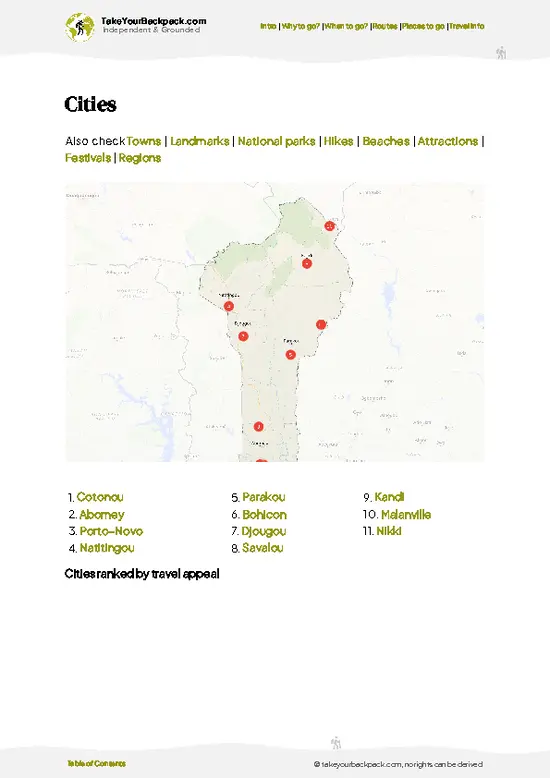
Other Beninese cities near Natitingou

Explore more nearby:

  • Djougou—Shea and kola trade, Dendi quarter, cattle days, rocky lookout| 73 km away
  • Parakou—Arzèkè market, indigo cloth, railway terminus, goat grills| 171 km away
  • Kandi—Grain market, zebu herds, brochette stands, northern stopover| 193 km away

💡 Not sure where to go next?
Create a personalized itinerary for Benin including Natitingou and the places that fit your trip.

Generate my itinerary

👉 Discover all cities

Or checkout all Benin has to offer (think cities, towns, villages, national parks, hikes, beaches, festivals)
Country photo of Benin

We 💚 feedbackWhat to keep in mind

Natitingou is for travelers who like villages, hills and unhurried days more than nightlife or neat sightseeing lists. I would hire a local guide for the Somba houses, bring small bills and a headlamp, and skip rushing the schedule. The surprise is how quickly the town feels friendly once you start chatting with people at the market.

✍️ Help improve this page!
The information on this page is based on in-depth research, insights shared by experienced travelers, and feedback from the local travel community in Benin. While every effort is made to keep the information accurate and current, conditions can change — so if you spot anything incorrect or outdated, please get in touch.


🙋‍♂️ Give feedback

👋 Meet the founderWho’s Behind Take Your Backpack?

Johan, backpacker and founder of TakeYourBackpackHi, I’m Johan (Netherlands 🇳🇱), the creator of TakeYourBackpack. Over the past 3 decades, I’ve backpacked through 90+ countries across six continents, gaining extensive experience with independent travel, long-term trips, and overland routes.

This site is built on a combination of firsthand travel experience and carefully curated insights from other backpackers. Many guides are based on places I’ve personally visited, while others bring together tips, observations, and practical advice shared by trusted travelers I’ve met along the way.

The goal is to provide realistic, experience-driven guidance — not generic itineraries — so you can explore destinations with better context, clearer expectations, and more confidence.