×

Benin🇧🇯 | citiesKandiCotton fields, regional market, Fulani settlements | things to do and best time to go

Explore DjougouExplore Malanville

Backpacking in Kandi
👌 Worth visitingcity ranked #9
By Johan Kruseman 🇳🇱 | Updated September 3, 2026

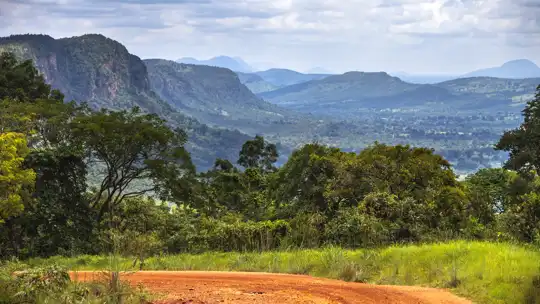
The first real fork in the road for travelers eyeing Kandi is whether to linger or just pass through. That choice matters: Kandi isn’t a destination that dazzles on arrival, but it’s a crucial crossroads in northern Benin, sitting on the main north-south artery between Parakou and the borderlands near Niger. The town itself is a swirl of red dust, mango trees, and the hum of motorbikes, with a market that’s more practical than picturesque. For backpackers, Kandi works best as a launchpad—think: a night’s rest before heading to the wilds of Parc W or the remote Somba villages, rather than a place to soak up urban charm. It’s easy enough to reach by bus, but you’ll need moto-taxis to get around. Social life is low-key; you’ll find a few basic guesthouses, but don’t expect a hostel scene or late-night buzz. Costs are low, safety is typical for rural Benin, and compared to Parakou, Kandi feels rougher, less cosmopolitan, but more honest—an unvarnished slice of the north, best appreciated by those who value the journey as much as the destination.

Discover everything you want to know in the 📖 Benin Travel Guide.


Get your Benin guide
55 ranked highlights, routes & tips, works offline (230 pages)
Loading the map 🌍
CLICK TO FILTER
cities
towns
landmarks
national parks
hikes
beaches
attractions
festivals
regions
SHOW COUNTRY’S BESTSHOW ALL

✨ Why go?
Ranked #9 city in Benin
The unique appeal for travelers

Kandi, a small town in Benin, serves as a gateway for backpackers seeking both adventure and culture. Its proximity to stunning hikes and local beaches makes it a convenient stop for those eager to explore the natural beauty of the region. The walkable streets invite you to wander, with small-scale hostels and guesthouses offering a cozy, intimate atmosphere. Here, you can savor local food experiences that reflect the heart of Beninese cuisine, from spicy stews to fresh grilled fish.

Travelers often find themselves lingering a few days, soaking in the friendly social atmosphere that encourages connection among solo travelers and small groups alike. It’s not a party town, but rather a place where you can share stories over a meal or a cup of local coffee. If you’re a slow traveler or a hiker, … read more 👉
Kandi, a small town in Benin, serves as a gateway for backpackers seeking both adventure and culture. Its proximity to stunning hikes and local beaches makes it a convenient stop for those eager to explore the natural beauty of the region. The walkable streets invite you to wander, with small-scale hostels and guesthouses offering a cozy, intimate atmosphere. Here, you can savor local food experiences that reflect the heart of Beninese cuisine, from spicy stews to fresh grilled fish.

Travelers often find themselves lingering a few days, soaking in the friendly social atmosphere that encourages connection among solo travelers and small groups alike. It’s not a party town, but rather a place where you can share stories over a meal or a cup of local coffee. If you’re a slow traveler or a hiker, Kandi is a perfect fit. It’s a spot to recharge before heading deeper into the wild or to the vibrant markets nearby, making it more than just a pit stop.
Want to include Kandi in your Benin route?
Create a personalized Benin itinerary that includes Kandi and the places that fit your trip — based on your travel style, budget, and available time. Get your route in seconds.

Generate my trip

💡 HighlightsTop highlights of Kandi

  • Grand Marché de Kandi — The heartbeat of the town: a chaotic, colorful market where you can buy fresh peanuts, cotton cloth, spices and watch daily Bariba life up close. Great for photos, people-watching and cheap street food.
  • La Cathédrale de Kandi (siège du diocèse) — A quietly imposing church that anchors the city’s Christian community; worth visiting for its local services, stained glass and to see how faith shapes everyday rhythms in Kandi.
  • La Grande Mosquée de Kandi — A focal point for the Muslim population and a good place to observe local religious architecture and community life (visit respectfully outside prayer times or ask first).
  • Palais du chef coutumier — The traditional ruler’s compound: a living piece of Bariba governance and ceremony. You’ll get a real sense of local
read more 👉
  • Grand Marché de Kandi — The heartbeat of the town: a chaotic, colorful market where you can buy fresh peanuts, cotton cloth, spices and watch daily Bariba life up close. Great for photos, people-watching and cheap street food.
  • La Cathédrale de Kandi (siège du diocèse) — A quietly imposing church that anchors the city’s Christian community; worth visiting for its local services, stained glass and to see how faith shapes everyday rhythms in Kandi.
  • La Grande Mosquée de Kandi — A focal point for the Muslim population and a good place to observe local religious architecture and community life (visit respectfully outside prayer times or ask first).
  • Palais du chef coutumier — The traditional ruler’s compound: a living piece of Bariba governance and ceremony. You’ll get a real sense of local authority, traditional costumes and the stories that keep the area’s history alive.
  • Marché aux bestiaux / marché aux chevaux — One of the most vivid local scenes: livestock trading (often including horses) where you can see barter, bargaining and a slice of pastoral culture that’s central to the region.
  • Atelier de coton / huilerie d’arachide — Small-scale ginning and peanut-oil workshops around town show how Kandi’s economy runs. Tours aren’t formal, but a polite visit to a workshop or cooperative gives hands-on insight into local industry.
  • Rives de la rivière Sota — The riverbanks inside the commune are pleasant for a sunset stroll, watching fishermen and riverside life, and escaping the town bustle for a short nature break.
  • Quartier des artisans — Woodcarvers, weavers and leatherworkers clustered near the market produce functional and decorative pieces. It’s the best place to buy authentic souvenirs and see skills passed between generations.
  • Mairie et bâtiments coloniaux — The town hall and a few colonial-era structures give a compact lesson in Kandi’s 20th-century past; they’re small, walkable and useful for understanding how the modern town grew.
  • Place publique / Maison de la culture (lieu des fêtes locales) — The informal public square and cultural meeting spots are where weddings, dances and seasonal festivals happen. If your timing’s right you’ll catch music, dance and community ceremonies that reveal the city’s spirit.
For easy day trips from Kandi look into nearby Nikki (the Bariba royal palace and Gaani festivities), Parakou (big regional market and transport hub), and the river towns toward the Niger border for riverside markets and borderland culture.
Spotted a mistake or missing something? Contact us.
🏘️ NeighborhoodsHow different areas shape the experience

Kandi, a vibrant town in Benin, offers a rich tapestry of experiences for backpackers. Each neighborhood has its own character, making it essential to choose wisely.

Centre Ville: This is the heart of Kandi. The vibe is lively, with bustling markets and street vendors. It’s walkable, and you can easily grab a meal or a drink. Prices are reasonable, making it ideal for budget travelers. Nightlife is modest, with local bars offering a taste of the community. Perfect for short stays, as you can soak in the local culture quickly.

Quartier Bénin: A quieter area, Quartier Bénin is where you’ll find a more laid-back atmosphere. It’s less touristy, giving you a chance to connect with locals. Accommodations here are affordable, and the streets are safe for evening strolls. This neighborhood is better … read more 👉
Kandi, a vibrant town in Benin, offers a rich tapestry of experiences for backpackers. Each neighborhood has its own character, making it essential to choose wisely.

Centre Ville: This is the heart of Kandi. The vibe is lively, with bustling markets and street vendors. It’s walkable, and you can easily grab a meal or a drink. Prices are reasonable, making it ideal for budget travelers. Nightlife is modest, with local bars offering a taste of the community. Perfect for short stays, as you can soak in the local culture quickly.

Quartier Bénin: A quieter area, Quartier Bénin is where you’ll find a more laid-back atmosphere. It’s less touristy, giving you a chance to connect with locals. Accommodations here are affordable, and the streets are safe for evening strolls. This neighborhood is better for longer stays, allowing you to immerse yourself in daily life.

Quartier Tchamba: Known for its vibrant arts scene, this area buzzes with creativity. Street art adorns the walls, and local artisans showcase their crafts. It’s a bit more expensive, but the unique experiences justify the cost. Walkability is decent, and you’ll find a mix of quiet spots and lively cafes. Ideal for those looking to blend relaxation with cultural exploration.

Quartier Togo: This neighborhood is a bit off the beaten path, offering a more authentic experience. It’s less developed, which means lower prices and fewer tourists. The atmosphere is calm, making it suitable for longer stays. Transport access is limited, so be prepared to walk or bike. This area rewards those willing to venture beyond the usual routes.

⌛️ 1 daySeeing the highlights in 24 hours

Kandi, a vibrant town in Benin, pulses with the rhythm of local life. It’s a place where the air is thick with the scent of spices and the sounds of laughter echo through the streets. While it may not be on every tourist’s radar, Kandi offers a genuine slice of Beninese culture that’s both enriching and refreshing.

Start your day early at the bustling market in the heart of town. The sun casts a warm glow over colorful stalls, where vendors sell everything from fresh produce to handmade crafts. Engage with the locals; their stories are as rich as the fabrics they sell. Grab a breakfast of akassa (fermented corn porridge) from a nearby vendor. The tangy flavor will fuel your adventures ahead.

In the afternoon, head to the nearby **Kandi Museum**, a hidden treasure that showcases the region’s … read more 👉
Kandi, a vibrant town in Benin, pulses with the rhythm of local life. It’s a place where the air is thick with the scent of spices and the sounds of laughter echo through the streets. While it may not be on every tourist’s radar, Kandi offers a genuine slice of Beninese culture that’s both enriching and refreshing.

Start your day early at the bustling market in the heart of town. The sun casts a warm glow over colorful stalls, where vendors sell everything from fresh produce to handmade crafts. Engage with the locals; their stories are as rich as the fabrics they sell. Grab a breakfast of akassa (fermented corn porridge) from a nearby vendor. The tangy flavor will fuel your adventures ahead.

In the afternoon, head to the nearby **Kandi Museum**, a hidden treasure that showcases the region’s history and art. The museum is often overlooked, but it provides a deep dive into local traditions and craftsmanship. Spend some time wandering through the exhibits, absorbing the stories of the people who shaped this area.

As the sun begins to set, make your way to the **Bénin River**. The golden light reflecting off the water creates a magical atmosphere. Find a quiet spot to relax, perhaps with a local drink in hand. The evening is perfect for a stroll through the **Boko neighborhood**, where you can witness the community coming alive with music and dance.

Wrap up your day with dinner at a local eatery, savoring dishes like pounded yam and spicy sauce. The flavors will linger, just like the memories of Kandi. Each moment spent here, from the market buzz to the serene river, weaves together a tapestry of experience that feels both authentic and rewarding.
Turn your Kandi visit into an Benin adventure
Build a complete Benin route with Kandi, hidden gems, must-see destinations, and realistic travel times included.

Generate my trip

🌤️ When to go?Weather, crowds, and seasonal trade-offs


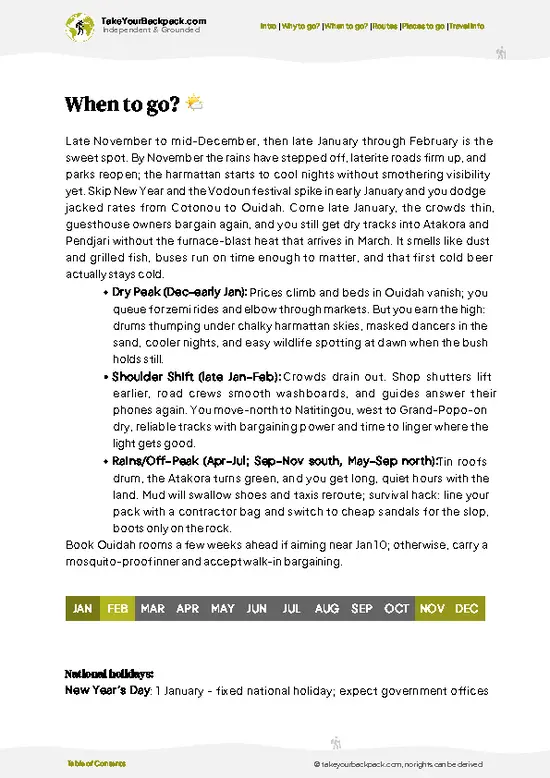
  • Topic: Weather — Kandi’s climate swings between a wet season from May to October and a dry season from November to April. The dry months bring clear skies and less humidity, making trekking and exploring more comfortable. The wet season, while lush and green, can turn trails into slippery mudslides and flood low-lying areas.

  • Topic: Temperature — Expect daytime highs around 30-35°C (86-95°F) during the dry season, with nights cooling to a pleasant 20-24°C (68-75°F). The wet season tends to be slightly cooler but stickier, with humidity pushing the heat index higher than the thermometer suggests.

  • Topic: Daylight Hours — Near the equator, daylight stays steady year-round, roughly 12 hours a day. This consistency means you can plan hikes and market visits without worrying about early sunsets
read more 👉

  • Topic: Weather — Kandi’s climate swings between a wet season from May to October and a dry season from November to April. The dry months bring clear skies and less humidity, making trekking and exploring more comfortable. The wet season, while lush and green, can turn trails into slippery mudslides and flood low-lying areas.

  • Topic: Temperature — Expect daytime highs around 30-35°C (86-95°F) during the dry season, with nights cooling to a pleasant 20-24°C (68-75°F). The wet season tends to be slightly cooler but stickier, with humidity pushing the heat index higher than the thermometer suggests.

  • Topic: Daylight Hours — Near the equator, daylight stays steady year-round, roughly 12 hours a day. This consistency means you can plan hikes and market visits without worrying about early sunsets cutting your day short.

  • Topic: Crowds — Kandi is off the beaten path, so crowds are minimal year-round. However, local festivals during the dry season attract more visitors, adding energy but also bumping up accommodation prices.

  • Topic: Seasonal Activities — The dry season is prime for outdoor adventures like hiking and village visits. The wet season offers a different vibe—rivers swell, and the landscape bursts with life, perfect for photographers who don’t mind a little mud.

  • Topic: Price Fluctuations — Expect higher prices from November to February when the weather is best and festivals draw crowds. The wet season sees fewer tourists, so lodging and transport costs dip, but some services may be limited.


Pro-tip: Aim for the shoulder months of November or April to catch good weather, fewer crowds, and better prices—a sweet spot where Kandi’s rhythms feel just right.


source: climatestotravel.comJANJanuary: highly recommended for travelingFEBFebruary: highly recommended for travelingMARMarch: good for travelingAPRApril: highly recommended for travelingMAYMay: fair for travelingJUNJune: fair for travelingJULJuly: fair for travelingAUGAugust: fair for travelingSEPSeptember: fair for travelingOCTOctober: good for travelingNOVNovember: highly recommended for travelingDECDecember: highly recommended for traveling
benin-city-kandi v1
© Google |

✈️ The backpacker research shortcutBenin Travel Guide

An offline-friendly backpacking guide with optimized travel routes, ranked highlights, transport advice, and the best areas to stay.
example page 0 from our offline Travel Guide for Benin
example page 1 from our offline Travel Guide for Benin
example page 2 from our offline Travel Guide for Benin
example page 3 from our offline Travel Guide for Benin
example page 4 from our offline Travel Guide for Benin
example page 5 from our offline Travel Guide for Benin
example page 6 from our offline Travel Guide for Benin
example page 7 from our offline Travel Guide for Benin
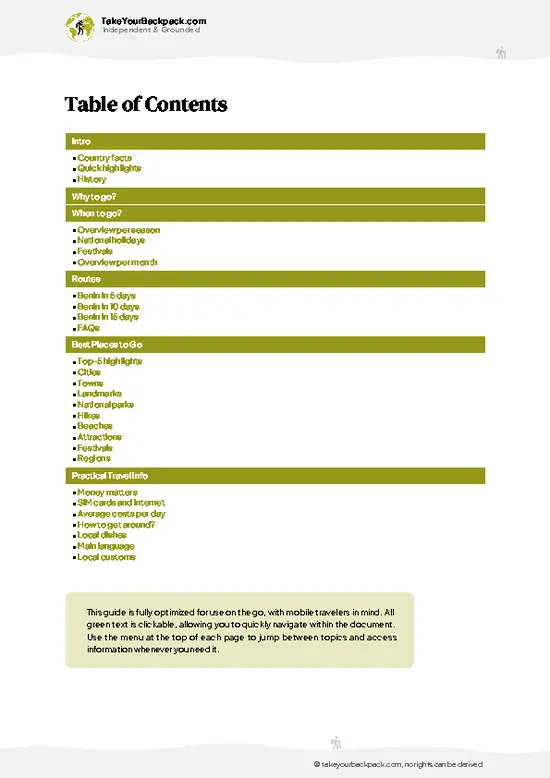
The digital guide (230 pages) contains:
55 highlights, ranked by travel appeal
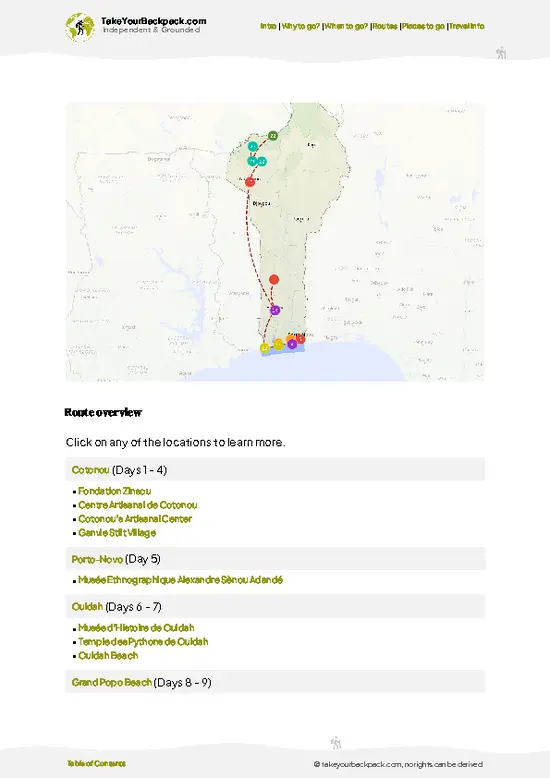
Optimized 5, 10 & 15-day travel routes
Cities, national parks, landmarks, beaches
How to get around
Offline-friendly for travel without Wi-Fi
👉 Click to see all 30+ guide features

📅 Plan smarter in minutes, not weeks
Month by month travel advice
Festivals & national holidays
Budget expectations

🗺️ Go to the right places, skip the overrated ones
Honest pros & cons of destinations
Top hikes, parks & viewpoints
Lesser-known places most travelers miss
Clear “worth it vs skip it” guidance

🛏️ Travel smoothly without rookie mistakes
Best areas to stay
Transport systems explained simply
Common scams & safety advice
SIM cards, money & practical tips

🌍 Understand the country, not just visit it
Culture & traditions
52 Essential phrases & customs
Festivals worth planning around
Traveler-friendly historical context
Insights that make places more meaningful

📱 Built for real travel conditions
Fully downloadable PDF
Works completely offline
Optimized for phone use
Useful in remote areas & buses
Everything in one place
Save weeks of stressful planning
Get instant access to your full guide. 30‑day money-back guarantee.
+ Add another guide for just US$7.80

By proceeding you agree to our terms.
Sent to your inbox immediately after payment • 100% Secure Checkout
Best Backpacking Travel Advisor 2025 tourism awardBest Backpacking
Travel Advisor
2025
What others say about Take Your Backpack Guides:
⭐⭐⭐⭐⭐
Fantastic, amazing amount of information!
⭐⭐⭐⭐⭐
My goodness this is amazing, it's what I've been looking for hats off too you!
⭐⭐⭐⭐⭐
I think this is absolutely BRILLIANT
⭐⭐⭐⭐
Very complete and informative. It's still missing places, but I gotta to commend you
⭐⭐⭐⭐⭐
This is truly amazing, thank you, can't wait to explore it with my kids!
⭐⭐⭐⭐⭐
Awesome resource, thank you!
⭐⭐⭐⭐⭐
This is amazing! Can't wait to explore the ones I haven't seen
⭐⭐⭐⭐
I love this! Well done, great idea.
⭐⭐⭐⭐⭐
Thanks for taking the time to make this gem!
⭐⭐⭐⭐⭐
This might be the best website I've ever seen.
⭐⭐⭐⭐⭐
Congratulations, and thank you so much for your work; it's incredibly valuable.
⭐⭐⭐⭐
In all seriousness I think you did a great job pointing out the important spots
⭐⭐⭐⭐⭐
10/10 very good
⭐⭐⭐⭐⭐
As someone who's only just starting to visit regularly this is awesome, thank you.
⭐⭐⭐⭐
Thank you very much! I'm going to visit my dad, it's going to be very useful!
⭐⭐⭐⭐⭐
This is really cool! We'll be travelling for the first time and this definitely come in handy.
⭐⭐⭐⭐⭐
You are now our minister of culture, congratulations 👨‍💼
⭐⭐⭐⭐⭐
Just wanted to tell you that this is a pearl! Going to follow your recommendations.
⭐⭐⭐⭐⭐
This is so cool. I'll definitely be using the resource for my travels soon.
⭐⭐⭐⭐⭐
This is very impressive! Good work.
⭐⭐⭐⭐⭐
This is an amazing and informative site. Very well done!

🛏️ Where to stay?How to pick the right area

In Kandi, the best spot for backpackers is the area around the central market and the main square. This neighborhood pulses with life from dawn till dusk, where the scent of grilled street food mingles with the earthy aroma of fresh produce. It’s where locals gather, making it a natural hub for meeting people and soaking in authentic daily rhythms. Safety here is noticeably higher thanks to the constant flow of foot traffic and the presence of small shops and cafés that stay open late, giving solo travelers a sense of security without feeling stifled.

Compared to quieter residential zones on … read more 👉
In Kandi, the best spot for backpackers is the area around the central market and the main square. This neighborhood pulses with life from dawn till dusk, where the scent of grilled street food mingles with the earthy aroma of fresh produce. It’s where locals gather, making it a natural hub for meeting people and soaking in authentic daily rhythms. Safety here is noticeably higher thanks to the constant flow of foot traffic and the presence of small shops and cafés that stay open late, giving solo travelers a sense of security without feeling stifled.

Compared to quieter residential zones on the outskirts, this central area offers a social vibe that’s hard to beat. Hostels and budget guesthouses cluster here, catering to travelers who want to swap stories over shared meals or plan day trips together. The streets hum with a mix of languages and laughter, making it easy to connect without the pressure of tourist traps. Staying here means you’re not just passing through Kandi—you’re stepping into its heartbeat, where every corner invites you to slow down and engage. Other parts of town might be quieter or more polished, but they lack this raw, approachable energy that makes backpacking feel like an adventure rather than a chore.

🚌 Getting aroundMoving around without the hassle

Kandi moves at its own rhythm—less a clock-driven town and more a place where the sun’s position and the chatter of locals set the pace. The air carries a mix of earth and spice, and the streets hum with a casual energy that’s part market bustle, part village calm. You won’t find rigid timetables here; instead, transit flows like a conversation, sometimes abrupt, sometimes lingering, but always rooted in the practical needs of daily life. This means your best bet is to embrace flexibility, read the local cues, and lean into the slower, more tactile experience of getting around.


  • Walking: The heart of Kandi is compact enough to explore on foot, especially the market area and main streets. Walking lets you soak in the scent of fresh produce, the clatter of vendors, and the warm, dusty light
read more 👉
Kandi moves at its own rhythm—less a clock-driven town and more a place where the sun’s position and the chatter of locals set the pace. The air carries a mix of earth and spice, and the streets hum with a casual energy that’s part market bustle, part village calm. You won’t find rigid timetables here; instead, transit flows like a conversation, sometimes abrupt, sometimes lingering, but always rooted in the practical needs of daily life. This means your best bet is to embrace flexibility, read the local cues, and lean into the slower, more tactile experience of getting around.


  • Walking: The heart of Kandi is compact enough to explore on foot, especially the market area and main streets. Walking lets you soak in the scent of fresh produce, the clatter of vendors, and the warm, dusty light filtering through the trees. It’s free, reliable, and the best way to catch the town’s pulse.


  • Local Buses: These are the budget traveler’s backbone for reaching neighborhoods beyond the center. Buses run roughly from 6:00 AM to 7:00 PM, with fares typically under 50 rupees. They’re slow and often crowded, but the windows frame everyday life in vivid snapshots—farmers, school kids, and street hawkers all sharing the ride.


  • Auto Rickshaws: For short hops or when time is tight, autos are your go-to. They’re everywhere, and fares start around 30 rupees for short distances. Negotiate before you climb in; drivers expect it. The ride is bumpy and open to the elements, but it’s a fast, immersive way to dart through narrow lanes and busy intersections.


  • Shared Jeeps: These rugged vehicles connect Kandi with nearby villages and the outskirts. They leave when full, so timing is unpredictable, but fares are low—usually 40 to 60 rupees. The ride is rough and noisy, with dust swirling in the open windows, but it’s a genuine slice of local life and a chance to see the landscape shift outside town.


  • Bicycles (Rental): Renting a bike is a smart move if you want freedom without the noise and chaos. Rentals cost about 100-150 rupees per day. The roads can be uneven, so sturdy tires are a must. Cycling lets you control your pace, stop for roadside chai, and explore quieter corners where motor traffic thins out.

👛 Costs (as of 3 September 2026)Money, prices, and spending tips

Backpacking in Kandi, Benin, offers a raw, authentic experience where your budget stretches further than in many West African towns, but knowing the local cost rhythms is key to planning well.
  • Dorm Accommodation: Expect to pay around €5 to €10 per night for basic dorm beds or simple guesthouses. Options are limited and often rustic, so the price reflects a no-frills stay—think mosquito nets, shared bathrooms, and a fan rather than air conditioning.
  • Meals: Local street food and small eateries serve filling meals for about €1 to €3. A plate of rice with sauce, grilled fish, or fried plantains is common. Western-style or imported foods are rare and pricier, so sticking to local fare keeps costs low and flavors genuine.
  • Local Transport: Getting around Kandi usually means shared taxis or motorcycle
read more 👉
Backpacking in Kandi, Benin, offers a raw, authentic experience where your budget stretches further than in many West African towns, but knowing the local cost rhythms is key to planning well.
  • Dorm Accommodation: Expect to pay around €5 to €10 per night for basic dorm beds or simple guesthouses. Options are limited and often rustic, so the price reflects a no-frills stay—think mosquito nets, shared bathrooms, and a fan rather than air conditioning.
  • Meals: Local street food and small eateries serve filling meals for about €1 to €3. A plate of rice with sauce, grilled fish, or fried plantains is common. Western-style or imported foods are rare and pricier, so sticking to local fare keeps costs low and flavors genuine.
  • Local Transport: Getting around Kandi usually means shared taxis or motorcycle taxis (zemidjans). Fares hover around €0.30 to €1 per short trip within town. For longer rides or day trips, budget closer to €3 to €5, depending on distance and negotiation skills.
  • Basic Activities/Entry Fees: Kandi’s attractions are mostly natural or cultural sites with minimal or no entry fees. If you visit local markets or community events, costs are negligible or voluntary donations. Budget around €1 to €3 if you plan to hire a local guide or attend a special event.
  • Miscellaneous Expenses: This covers bottled water, snacks, phone credit, and occasional small purchases. Expect to spend about €1 to €2 daily. Water quality is a concern, so bottled water is a must, adding a small but necessary expense.

A realistic daily budget for backpacking in Kandi ranges from about €8 to €20. This covers basic comfort without luxury, letting you focus on the town’s earthy atmosphere and local rhythms without breaking the bank.
⚠️ Prices can change and everyone travels differently, so take this as a rough guide. Hope it helps you plan your adventure!

🚌 Day tripsShort trips worth adding

Kandi, Benin, is a backpacker’s dream hub, offering easy access to rich experiences without the tourist crowds. Here are some day trips that make the most of your time and energy.

Ouidah: The Slave Route
A visit to Ouidah is a poignant journey through history. The Slave Route, marked by the haunting Tree of Forgetfulness, tells stories that echo through time. It’s about a 45-minute drive from Kandi, costing around 3,000 CFA for a shared taxi. The best time to go is early morning to beat the heat and crowds. Many first-timers miss the local market, where you can find vibrant fabrics and spices that capture the essence of Benin.
👉 Explore Ouidah

Abomey: Royal Palaces
Abomey’s royal palaces are a UNESCO World Heritage site that transports you back to the days of the Dahomey Kingdom. It’s … read more 👉
Kandi, Benin, is a backpacker’s dream hub, offering easy access to rich experiences without the tourist crowds. Here are some day trips that make the most of your time and energy.

Ouidah: The Slave Route
A visit to Ouidah is a poignant journey through history. The Slave Route, marked by the haunting Tree of Forgetfulness, tells stories that echo through time. It’s about a 45-minute drive from Kandi, costing around 3,000 CFA for a shared taxi. The best time to go is early morning to beat the heat and crowds. Many first-timers miss the local market, where you can find vibrant fabrics and spices that capture the essence of Benin.
👉 Explore Ouidah

Abomey: Royal Palaces
Abomey’s royal palaces are a UNESCO World Heritage site that transports you back to the days of the Dahomey Kingdom. It’s about an hour and a half from Kandi, with transport costing around 5,000 CFA. Aim for the dry season, from November to March, when the roads are more manageable. Don’t skip the guided tour; it’s easy to overlook the intricate carvings and stories behind them without a local’s insight.
👉 Explore Abomey

Natitingou: Pendjari National Park
For nature lovers, a day trip to Natitingou is a must. The park is about two hours away and offers a chance to see elephants and other wildlife. Expect to spend around 10,000 CFA for transport. The best time to visit is during the dry season, when animals are more active. A common mistake is not bringing enough water; the heat can be relentless, and staying hydrated is key to enjoying the experience.
👉 Explore Natitingou

Dassa-Zoumé: Sacred Forests
Dassa-Zoumé is known for its sacred forests and stunning viewpoints. It’s roughly a two-hour drive, costing about 4,000 CFA. The cooler mornings are ideal for exploring the trails. Many backpackers overlook the local guides who can share the legends of the area, enriching your visit.


Each of these trips offers a unique slice of Benin’s culture and history, making Kandi the perfect base for your adventures.
Want to know what more Benin offers?
The Benin Travel Guide describes 55 highlights, from cities to national parks, from beaches to hikes

Get the Travel Guide -

🍲 FoodLocal Cuisine & Drinks

In Kandi, Benin, food is a lively negotiation between bold flavors and simple, hearty ingredients. You’ll want to dive into pâte, a thick, doughy staple made from millet or maize, often paired with spicy peanut sauce or rich tomato-based stews. The heat from local chili peppers isn’t shy here—expect your taste buds to wake up. Another must-try is yovo doko, a fried dough ball that’s both a street snack and a comfort food, perfect for nibbling while wandering the bustling markets.

Backpackers find themselves drawn to the open-air markets and street stalls, where the air is thick with the scent of grilled fish and smoky spices. These spots are social hubs, where locals gather to eat, chat, and sip on bissap, a tart hibiscus drink that cools the palate and refreshes after a day in the sun. Casual … read more 👉
In Kandi, Benin, food is a lively negotiation between bold flavors and simple, hearty ingredients. You’ll want to dive into pâte, a thick, doughy staple made from millet or maize, often paired with spicy peanut sauce or rich tomato-based stews. The heat from local chili peppers isn’t shy here—expect your taste buds to wake up. Another must-try is yovo doko, a fried dough ball that’s both a street snack and a comfort food, perfect for nibbling while wandering the bustling markets.

Backpackers find themselves drawn to the open-air markets and street stalls, where the air is thick with the scent of grilled fish and smoky spices. These spots are social hubs, where locals gather to eat, chat, and sip on bissap, a tart hibiscus drink that cools the palate and refreshes after a day in the sun. Casual eateries offer a chance to sit down and watch the city’s rhythm, but the real pulse is in the street food scene—raw, unfiltered, and full of character.

Eating here means embracing the communal vibe. Sharing dishes is common, and meals often come with an unspoken invitation to linger, talk, and savor the moment. Don’t rush; the food is as much about connection as it is about flavor.

🛡️ SafetyTraveler Safety Guide

Kandi, Benin, is generally safe, but a few practical tips can enhance your experience. Stick to well-lit areas at night, especially if you’re solo. The streets can feel quiet, and a little extra awareness goes a long way.

Watch for common scams, like overly friendly locals offering unsolicited help. They might expect a tip, so politely decline if you’re not interested. When using public transport, keep an eye on your belongings; pickpocketing can happen in crowded areas.

Embrace the local vibe by engaging with vendors, but be mindful of inflated prices aimed at tourists. Bargaining is part of the culture, so don’t hesitate to negotiate. Carry yourself confidently, and you’ll blend in more easily. The warmth of Kandi’s community is genuine; just stay aware, and you’ll unlock a richer experience.

FAQCommon questions from travelers

2 to 3 days are sufficient to explore Kandi. This allows time to visit local markets, the nearby Pendjari National Park, and experience the cultural sites. Traveling between attractions is manageable within this timeframe.
Yes, Kandi is generally safe for solo backpackers. Basic precautions like avoiding poorly lit areas at night and securing belongings are advised. The local community is friendly, but infrastructure is limited, so plan accordingly.
Kandi is known for its proximity to Pendjari National Park, one of West Africa's best wildlife reserves. It is also recognized for its traditional markets and cultural heritage linked to the Bariba people. The town serves as a gateway for eco-tourism in northern Benin.
⚠️ Things can change over time, so always validate details locally before you go.

Other Beninese cities near Kandi

Explore more nearby:

  • Malanville—Niger River crossing, border town, Sahelian trade| 95 km away
  • Nikki—Bariba culture, Gaani festival, palace complex| 136 km away
  • Natitingou—Atakora foothills, Tata Somba houses, regional museum| 193 km away

💡 Not sure where to go next?
Create a personalized itinerary for Benin including Kandi and the places that fit your trip.

Generate my itinerary

👉 Discover all cities

Or checkout all Benin has to offer (think cities, towns, villages, national parks, hikes, beaches, festivals)
Country photo of Benin

We 💚 feedbackParting advice and final tips

Kandi pulses with a raw energy that’s hard to shake off. The vibrant market scents—spices, fresh produce, and a hint of wood smoke—create an intoxicating atmosphere. Don’t miss the local music scene; it’s a surprise that’ll have you dancing like no one’s watching. Just be ready for the heat; it can be relentless. Embrace it. The sweat is part of the experience, and it makes that cold drink afterward taste even sweeter.

✍️ Help improve this page!
The information on this page is based on in-depth research, insights shared by experienced travelers, and feedback from the local travel community in Benin. While every effort is made to keep the information accurate and current, conditions can change — so if you spot anything incorrect or outdated, please get in touch.


🙋‍♂️ Give feedback

👋 Meet the founderWho’s Behind Take Your Backpack?

Johan, backpacker and founder of TakeYourBackpackHi, I’m Johan (Netherlands 🇳🇱), the creator of TakeYourBackpack. Over the past decade, I’ve backpacked through 80+ countries across six continents, gaining extensive experience with independent travel, long-term trips, and overland routes.

This site is built on a combination of firsthand travel experience and carefully curated insights from other backpackers. Many guides are based on places I’ve personally visited, while others bring together tips, observations, and practical advice shared by trusted travelers I’ve met along the way.

The goal is to provide realistic, experience-driven guidance — not generic itineraries — so you can explore destinations with better context, clearer expectations, and more confidence.

Get full Benin guide •
Instant download • 55 highlights • Full Offline guide