
×

Benin🇧🇯 | attractionsMusée Honmèroyal residence, regalia, oral history | things to do and best time to go

Explore Musée Historique d’AbomeyExplore Fondation Zinsou

Backpacking in Musée Honmè
🌟 Highlightattraction ranked #6
By Johan Kruseman 🇳🇱 | Updated September 3, 2026

Everyone’s heard the pitch: Musée Honmè is where you go to see the throne room of King Toffa, snap a photo, and tick off “Royal Palace” on your Benin bingo card. But here’s the truth—if you’re coming for Instagram bragging rights or expecting Versailles-in-Africa grandeur, you’ll be underwhelmed. What actually matters is the raw, unvarnished window into Porto-Novo’s royal past, right in the heart of the city. Musée Honmè isn’t about opulence; it’s about context. You walk through faded courtyards and cell-like rooms, feeling the weight of colonial history and local resistance. The wow-factor isn’t visual—it’s visceral, especially if you catch a guide who can decode the symbolism and stories. Yes, it’s small, sometimes crowded with school groups, and the entry fee feels steep for the size, but you’re paying for access to Benin’s tangled, living history. Compared to Ouidah’s slave route or Ganvié’s stilt villages, Honmè is less spectacle, more substance—quiet, gritty, and absolutely worth your time if you want the real story.

Discover everything you want to know in the 📖 Benin Travel Guide.


Get your Benin guide
55 ranked highlights, routes & tips, works offline (230 pages)
Loading the map 🌍
CLICK TO FILTER
cities
towns
landmarks
national parks
hikes
beaches
attractions
festivals
regions
SHOW COUNTRY’S BESTSHOW ALL

✨ Why go?
Ranked #6 attraction in Benin
What sets this place apart

Musée Honmè in Benin isn’t your typical tourist checkbox. Yes, it draws crowds, especially during peak season, and the entrance fee isn’t exactly pocket change for a backpacker. But here’s the kicker: this museum is a living archive of Benin’s soul. It’s not just about dusty artifacts behind glass; it’s about walking through centuries of history that shaped West Africa’s identity. The exhibits dive deep into the Kingdom of Dahomey’s complex past, showcasing royal regalia, spiritual relics, and the raw realities of the slave trade era. That’s heavy stuff, but it’s presented with a gritty honesty that hits harder than any glossy Instagram post.

You’ll find the cultural significance here is unmatched—this isn’t a sanitized souvenir shop but a place where history breathes and challenges you to … read more 👉
Musée Honmè in Benin isn’t your typical tourist checkbox. Yes, it draws crowds, especially during peak season, and the entrance fee isn’t exactly pocket change for a backpacker. But here’s the kicker: this museum is a living archive of Benin’s soul. It’s not just about dusty artifacts behind glass; it’s about walking through centuries of history that shaped West Africa’s identity. The exhibits dive deep into the Kingdom of Dahomey’s complex past, showcasing royal regalia, spiritual relics, and the raw realities of the slave trade era. That’s heavy stuff, but it’s presented with a gritty honesty that hits harder than any glossy Instagram post.

You’ll find the cultural significance here is unmatched—this isn’t a sanitized souvenir shop but a place where history breathes and challenges you to reckon with it. The effort to get here, often involving a bumpy ride through Benin’s vibrant towns, pays off with an adrenaline rush of discovery and perspective. For backpackers on the classic Benin route, Musée Honmè is a major milestone—a moment where the country’s layered stories come alive, demanding more than a quick glance. Skip it, and you miss the backbone of Benin’s heritage. Show up ready to engage, and you’ll leave with a richer, tougher understanding of this corner of Africa.
Want to include Musée Honmè in your Benin route?
Create a personalized Benin itinerary that includes Musée Honmè and the places that fit your trip — based on your travel style, budget, and available time. Get your route in seconds.

Generate my trip

💡 HighlightsDon't-miss highlights and experiences

The Royal Throne Room
Forget the velvet ropes and sterile glass cases you find in European palaces. The throne room at Musée Honmè is raw, intimate, and still feels charged with the weight of decisions made here. The throne itself isn’t some over-the-top golden monstrosity—it’s a symbol of power that’s surprisingly understated, surrounded by relics that whisper of real authority. You’re not just looking at history; you’re standing where kings shaped the fate of Porto-Novo. The room’s energy is thick, and if you’re even a little sensitive to atmosphere, you’ll feel it in your bones.


The King’s Private Quarters
This isn’t a sanitized reconstruction. The king’s personal rooms are preserved with a kind of respectful honesty—faded textiles, worn furniture, and the subtle sense that someone just … read more 👉
The Royal Throne Room
Forget the velvet ropes and sterile glass cases you find in European palaces. The throne room at Musée Honmè is raw, intimate, and still feels charged with the weight of decisions made here. The throne itself isn’t some over-the-top golden monstrosity—it’s a symbol of power that’s surprisingly understated, surrounded by relics that whisper of real authority. You’re not just looking at history; you’re standing where kings shaped the fate of Porto-Novo. The room’s energy is thick, and if you’re even a little sensitive to atmosphere, you’ll feel it in your bones.


The King’s Private Quarters
This isn’t a sanitized reconstruction. The king’s personal rooms are preserved with a kind of respectful honesty—faded textiles, worn furniture, and the subtle sense that someone just stepped out for a moment. You get a rare, unvarnished look at royal life, stripped of the usual museum polish. It’s the closest you’ll get to time travel in Benin, and it’s a sharp reminder that power and privacy have always been uneasy roommates.


Traditional Regalia and Ceremonial Objects
You’ll see more than just costumes behind glass. The regalia here—crowns, scepters, and ritual objects—are displayed with context. Guides (who are worth listening to, even if you usually skip the spiel) explain how each piece was used, who wore it, and why it mattered. There’s a tactile, lived-in quality to these artifacts. They’re not just props; they’re tools of leadership, faith, and sometimes intimidation. The craftsmanship is intricate, but it’s the stories that stick with you.


Oral Histories and Storytelling
If you’re lucky enough to visit when a local guide or elder is sharing stories, drop everything and listen. This is the real magic—oral history delivered with the kind of charisma that makes you forget you’re in a museum. You’ll hear about royal intrigue, colonial entanglements, and the everyday realities of palace life. It’s unscripted, sometimes messy, and always more gripping than any plaque on the wall.


The Courtyard and Palace Grounds
Instagram will show you a sunlit courtyard, but it won’t capture the sense of place. The grounds are where the ceremonial and the mundane collide: royal processions, judicial hearings, and daily palace routines all happened here. The architecture is functional, not flashy, but it’s layered with meaning—each wall and doorway has a purpose. Walk slowly. Let the dust settle around your shoes. This is where the past feels tangible, not just decorative.


Vodun Shrines and Spiritual Symbols
You won’t find these highlighted in glossy brochures, but the palace’s Vodun (Voodoo) shrines are the heartbeat of the site. These aren’t tourist props—they’re active, respected places of worship, woven into the palace’s daily life. The symbols and offerings are cryptic if you don’t know what you’re looking at, but they’re a reminder that Benin’s royal history is inseparable from its spiritual traditions. This is the side of West African heritage that’s rarely packaged for outsiders, and it’s all the more powerful for it.
Spotted a mistake or missing something? Contact us.

🌤️ When to go?Best time to visit Musée Honmè


  • Weather: The best time to visit Musée Honmè is during the dry season from November to March. Expect clear skies and minimal rain, which means fewer interruptions to your exploration. The wet season, from April to October, brings heavy rains that can make outdoor parts of the museum grounds slippery and less enjoyable.

  • Temperature: Temperatures hover between 25°C and 32°C (77°F to 90°F) year-round, but the dry season feels more comfortable with lower humidity. The wet season’s heat combined with humidity can be exhausting, especially if you’re trekking around the museum’s outdoor exhibits.

  • Daylight Hours: Daylight is fairly consistent, with roughly 11 to 12 hours of light daily. Visiting in the dry season means you get the most reliable daylight to soak in the museum without rushing.
read more 👉

  • Weather: The best time to visit Musée Honmè is during the dry season from November to March. Expect clear skies and minimal rain, which means fewer interruptions to your exploration. The wet season, from April to October, brings heavy rains that can make outdoor parts of the museum grounds slippery and less enjoyable.

  • Temperature: Temperatures hover between 25°C and 32°C (77°F to 90°F) year-round, but the dry season feels more comfortable with lower humidity. The wet season’s heat combined with humidity can be exhausting, especially if you’re trekking around the museum’s outdoor exhibits.

  • Daylight Hours: Daylight is fairly consistent, with roughly 11 to 12 hours of light daily. Visiting in the dry season means you get the most reliable daylight to soak in the museum without rushing.

  • Crowds: The dry season attracts more tourists, especially December and January, so expect a livelier atmosphere but also longer waits. The wet season sees fewer visitors, offering a quieter, more intimate experience if you don’t mind the rain.

  • Seasonal Activities: Cultural events and local festivals often peak in the dry season, adding layers of authenticity to your visit. These can include traditional performances and artisan markets near the museum, which are less frequent during the rainy months.

  • Price Fluctuations: Accommodation and local transport prices spike in the dry season due to demand. Visiting in the shoulder months of November or March can save you money while still avoiding the worst weather and crowds.


Pro-tip: Aim for late November or early March to dodge the tourist crush and rain, scoring the best balance of comfort, culture, and cost.


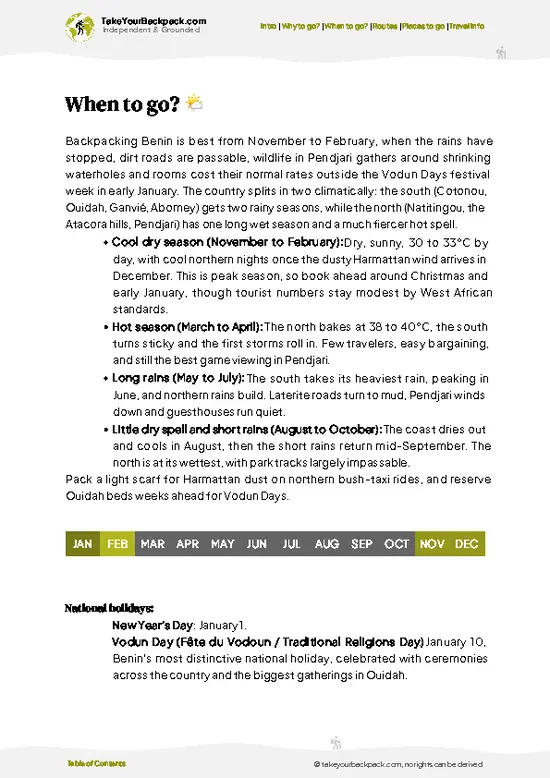
source: climatestotravel.comJANJanuary: highly recommended for travelingFEBFebruary: highly recommended for travelingMARMarch: highly recommended for travelingAPRApril: fair for travelingMAYMay: fair for travelingJUNJune: fair for travelingJULJuly: fair for travelingAUGAugust: fair for travelingSEPSeptember: fair for travelingOCTOctober: fair for travelingNOVNovember: highly recommended for travelingDECDecember: good for traveling
benin-attraction-musee-honme
© Google |

✈️ The backpacker research shortcutBenin Travel Guide

An offline-friendly backpacking guide with optimized travel routes, ranked highlights, transport advice, and the best areas to stay.
example page 0 from our offline Travel Guide for Benin
example page 1 from our offline Travel Guide for Benin
example page 2 from our offline Travel Guide for Benin
example page 3 from our offline Travel Guide for Benin
example page 4 from our offline Travel Guide for Benin
example page 5 from our offline Travel Guide for Benin
example page 6 from our offline Travel Guide for Benin
example page 7 from our offline Travel Guide for Benin
The digital guide (230 pages) contains:
55 highlights, ranked by travel appeal
Optimized 5, 10 & 15-day travel routes
Cities, national parks, landmarks, beaches
How to get around
Offline-friendly for travel without Wi-Fi
👉 Click to see all 30+ guide features

📅 Plan smarter in minutes, not weeks
Month by month travel advice
Festivals & national holidays
Budget expectations

🗺️ Go to the right places, skip the overrated ones
Honest pros & cons of destinations
Top hikes, parks & viewpoints
Lesser-known places most travelers miss
Clear “worth it vs skip it” guidance

🛏️ Travel smoothly without rookie mistakes
Best areas to stay
Transport systems explained simply
Common scams & safety advice
SIM cards, money & practical tips

🌍 Understand the country, not just visit it
Culture & traditions
52 Essential phrases & customs
Festivals worth planning around
Traveler-friendly historical context
Insights that make places more meaningful

📱 Built for real travel conditions
Fully downloadable PDF
Works completely offline
Optimized for phone use
Useful in remote areas & buses
Everything in one place
Save weeks of stressful planning
Get instant access to your full guide. 30‑day money-back guarantee.
+ Add another guide for just US$7.80

By proceeding you agree to our terms.
Sent to your inbox immediately after payment • 100% Secure Checkout
Best Backpacking Travel Advisor 2025 tourism awardBest Backpacking
Travel Advisor
2025
What others say about Take Your Backpack Guides:
⭐⭐⭐⭐⭐
Fantastic, amazing amount of information!
⭐⭐⭐⭐⭐
My goodness this is amazing, it's what I've been looking for hats off too you!
⭐⭐⭐⭐⭐
I think this is absolutely BRILLIANT
⭐⭐⭐⭐
Very complete and informative. It's still missing places, but I gotta to commend you
⭐⭐⭐⭐⭐
This is truly amazing, thank you, can't wait to explore it with my kids!
⭐⭐⭐⭐⭐
Awesome resource, thank you!
⭐⭐⭐⭐⭐
This is amazing! Can't wait to explore the ones I haven't seen
⭐⭐⭐⭐
I love this! Well done, great idea.
⭐⭐⭐⭐⭐
Thanks for taking the time to make this gem!
⭐⭐⭐⭐⭐
This might be the best website I've ever seen.
⭐⭐⭐⭐⭐
Congratulations, and thank you so much for your work; it's incredibly valuable.
⭐⭐⭐⭐
In all seriousness I think you did a great job pointing out the important spots
⭐⭐⭐⭐⭐
10/10 very good
⭐⭐⭐⭐⭐
As someone who's only just starting to visit regularly this is awesome, thank you.
⭐⭐⭐⭐
Thank you very much! I'm going to visit my dad, it's going to be very useful!
⭐⭐⭐⭐⭐
This is really cool! We'll be travelling for the first time and this definitely come in handy.
⭐⭐⭐⭐⭐
You are now our minister of culture, congratulations 👨‍💼
⭐⭐⭐⭐⭐
Just wanted to tell you that this is a pearl! Going to follow your recommendations.
⭐⭐⭐⭐⭐
This is so cool. I'll definitely be using the resource for my travels soon.
⭐⭐⭐⭐⭐
This is very impressive! Good work.
⭐⭐⭐⭐⭐
This is an amazing and informative site. Very well done!

🛏️ Where to stay?Choosing the right base

Musée Honmè is a magnet for anyone curious about Benin’s rich history and culture, but let’s cut through the tourist brochure gloss: the area around it can get crowded, especially during weekends and local holidays. It’s not a quiet, tucked-away spot where you’ll find peace and solitude. Expect a lively buzz, street vendors, and a steady flow of visitors snapping photos. That’s the reality. Now, if you’re a backpacker looking to dive into this scene without getting swallowed by it, you want to stay in neighborhoods that balance accessibility with a genuine vibe.

The best areas are those just … read more 👉
Musée Honmè is a magnet for anyone curious about Benin’s rich history and culture, but let’s cut through the tourist brochure gloss: the area around it can get crowded, especially during weekends and local holidays. It’s not a quiet, tucked-away spot where you’ll find peace and solitude. Expect a lively buzz, street vendors, and a steady flow of visitors snapping photos. That’s the reality. Now, if you’re a backpacker looking to dive into this scene without getting swallowed by it, you want to stay in neighborhoods that balance accessibility with a genuine vibe.

The best areas are those just a short walk or bike ride from the museum, where you can soak in daily life without being right in the tourist throng. These neighborhoods are known for their safe streets and a mix of locals and travelers, which means you’ll find affordable guesthouses, small eateries serving authentic Beninese dishes, and communal spaces where solo travelers naturally connect. It’s not luxury, but it’s real. You’ll meet people who’ve been around the block, share stories over a cold drink, and get tips that no guidebook offers.

Avoid the immediate museum perimeter if you want to dodge inflated prices and tourist traps. Instead, aim for the adjacent districts where the pulse of Cotonou’s everyday life beats strongest. That’s where the real magic happens—safe, social, and budget-friendly, with a character that’s unmistakably Benin.

👛 Costs (as of 3 September 2026)How expensive it really is

As of the most recent estimates, the entrance fee for Musée Honmè in Porto-Novo, Benin, is approximately 1,500 CFA francs (about €2 or $3). ([petitfute.com](https://www.petitfute.com/v49359-porto-novo/c1173-visites-points-d-interet/c958-musee/196226-le-musee-honme-ancien-palais-royal.html?utm_source=openai)) This fee grants access to the museum's exhibits, which include artifacts such as musical instruments, ritual and cult potteries, photographs, sculptures, and furniture. The museum is open Monday to Friday from 8:00 AM to 6:00 PM, and on weekends from 9:00 AM to 6:00 PM, with the last entry at 5:00 PM. ([petitfute.com](https://www.petitfute.com/v49359-porto-novo/c1173-visites-points-d-interet/c958-musee/196226-le-musee-honme-ancien-palais-royal.html?utm_source=openai)) Please note that … read more 👉
As of the most recent estimates, the entrance fee for Musée Honmè in Porto-Novo, Benin, is approximately 1,500 CFA francs (about €2 or $3). ([petitfute.com](https://www.petitfute.com/v49359-porto-novo/c1173-visites-points-d-interet/c958-musee/196226-le-musee-honme-ancien-palais-royal.html?utm_source=openai)) This fee grants access to the museum's exhibits, which include artifacts such as musical instruments, ritual and cult potteries, photographs, sculptures, and furniture. The museum is open Monday to Friday from 8:00 AM to 6:00 PM, and on weekends from 9:00 AM to 6:00 PM, with the last entry at 5:00 PM. ([petitfute.com](https://www.petitfute.com/v49359-porto-novo/c1173-visites-points-d-interet/c958-musee/196226-le-musee-honme-ancien-palais-royal.html?utm_source=openai)) Please note that additional costs may apply for guided tours or special exhibitions.
⚠️ Prices can change and everyone travels differently, so take this as a rough guide. Hope it helps you plan your adventure!

FAQTraveler FAQ

Visiting Musée Honmè typically requires about 1 to 2 hours to fully explore the exhibits and appreciate the cultural artifacts. This allows enough time to understand the historical context and artistic significance without rushing.
Yes, Musée Honmè is worth the entrance fee, which is usually around 1000 CFA francs (approximately $2). The museum offers a unique insight into Benin's history and traditional art, making it a valuable cultural experience for travelers.
To get to Musée Honmè, you can take a taxi or local transport from Cotonou, which is about 10 kilometers away. The journey usually takes around 20 to 30 minutes depending on traffic, and taxis are the most convenient option for direct access.
⚠️ Things can change over time, so always validate details locally before you go.

Other Beninese attractions near Musée Honmè

Explore more nearby:


💡 Not sure where to go next?
Create a personalized itinerary for Benin including Musée Honmè and the places that fit your trip.

Generate my itinerary

👉 Discover all attractions

Or checkout all Benin has to offer (think cities, towns, villages, national parks, hikes, beaches, festivals)
Country photo of Benin

We 💚 feedbackFinal thoughts on visiting Musée Honmè

Musée Honmè isn’t some polished, crowd-proof museum where you breeze through with a selfie stick. Expect a bit of hustle—locals, tourists, and the occasional stray goat all weaving through the same tight spaces. But here’s the kicker: the raw energy of the place, the way history feels alive in the worn artifacts and the stories whispered by the guides, that’s the real magic. If you’re after something glossy, skip it. But if you want to feel the pulse of Benin’s soul, this is where you lean in and listen.

✍️ Help improve this page!
The information on this page is based on in-depth research, insights shared by experienced travelers, and feedback from the local travel community in Benin. While every effort is made to keep the information accurate and current, conditions can change — so if you spot anything incorrect or outdated, please get in touch.


🙋‍♂️ Give feedback

👋 Meet the founderWho’s Behind Take Your Backpack?

Johan, backpacker and founder of TakeYourBackpackHi, I’m Johan (Netherlands 🇳🇱), the creator of TakeYourBackpack. Over the past decade, I’ve backpacked through 80+ countries across six continents, gaining extensive experience with independent travel, long-term trips, and overland routes.

This site is built on a combination of firsthand travel experience and carefully curated insights from other backpackers. Many guides are based on places I’ve personally visited, while others bring together tips, observations, and practical advice shared by trusted travelers I’ve met along the way.

The goal is to provide realistic, experience-driven guidance — not generic itineraries — so you can explore destinations with better context, clearer expectations, and more confidence.

Get full Benin guide •
Instant download • 55 highlights • Full Offline guide