×

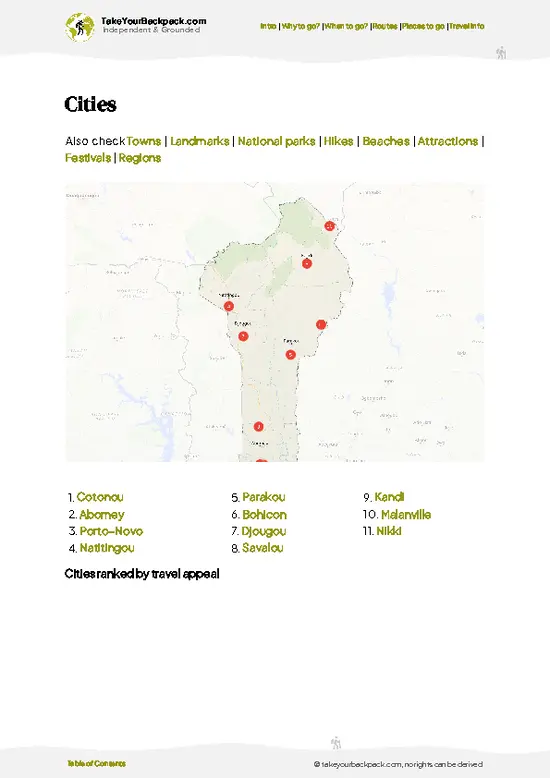
Benin🇧🇯 | citiesParakouArzèkè market, indigo cloth, railway terminus, goat grills | things to do and best time to go

Explore CotonouExplore Porto-Novo

Backpacking in Parakou
🌟 Highlightcity ranked #5
By Johan Kruseman 🇳🇱 | Updated October 24, 2026

Parakou suits travelers who like their cities working rather than performing: overlanders heading north, people curious about Bariba and Fulani culture, and anyone who enjoys watching a trading hub run at full speed. If you need monuments, a beach or a polished hostel scene, you may find it less rewarding. It sits in the north of Benin, on the main highway between the coast and the Sahel. Expect red dust, the buzz of zemidjan motorbike taxis, and smoke from charcoal grills at dusk. Midday heat flattens everything, so do errands early and rest from noon to three, as locals do. Sights are scattered and signs are few, so a moto driver is the practical way to cover them; agree the fare before you climb on. Unlike Natitingou, which is cooler and ringed by hills, Parakou is flat, bigger and far more commercial.

Discover everything you want to know in the 📖 Benin Travel Guide.


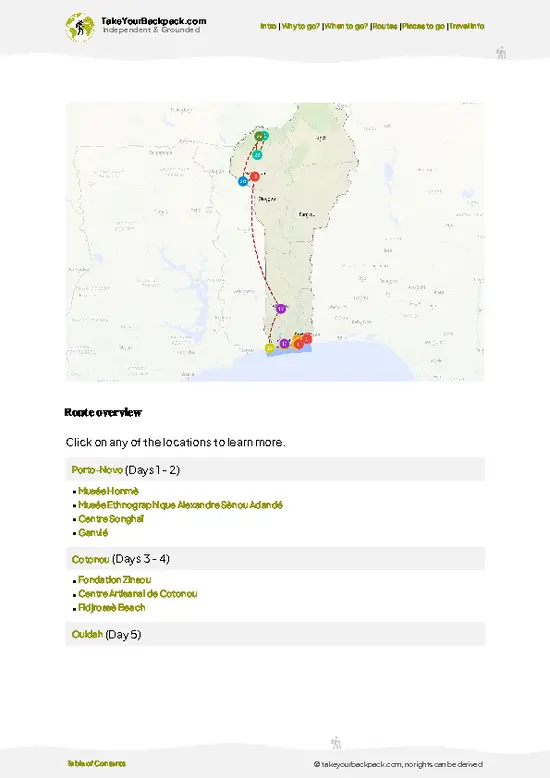
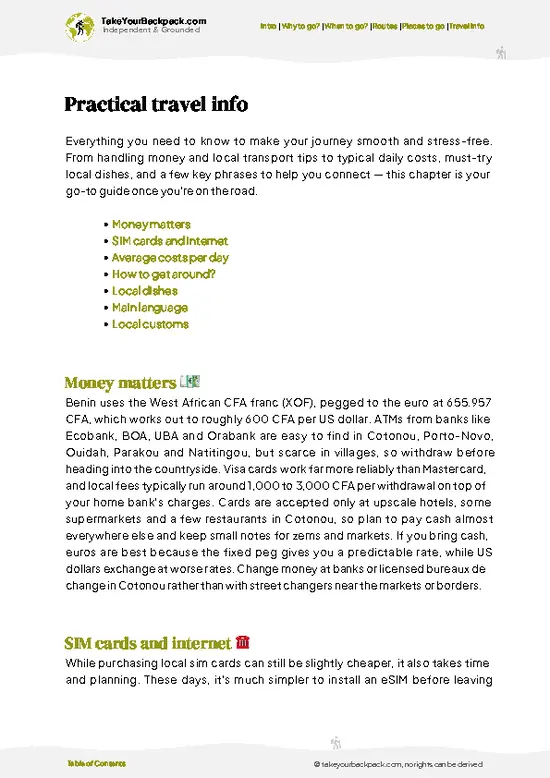
example page 0 from our offline Travel Guide for Benin
example page 1 from our offline Travel Guide for Benin
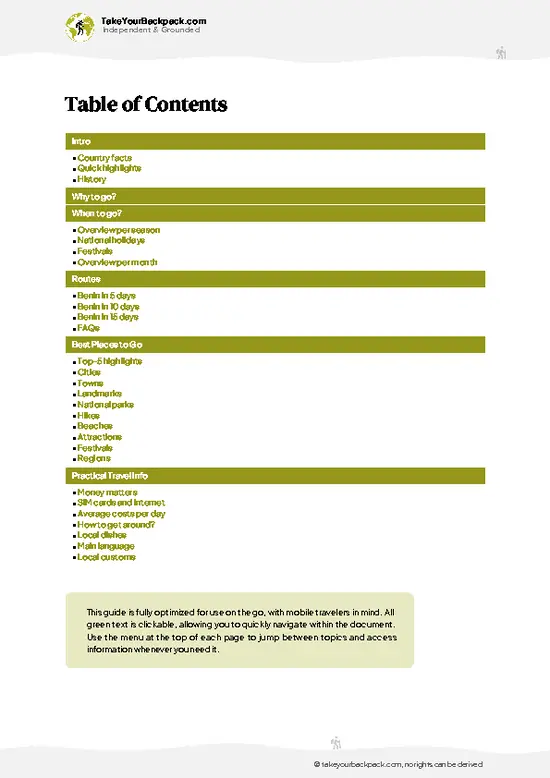
example page 2 from our offline Travel Guide for Benin
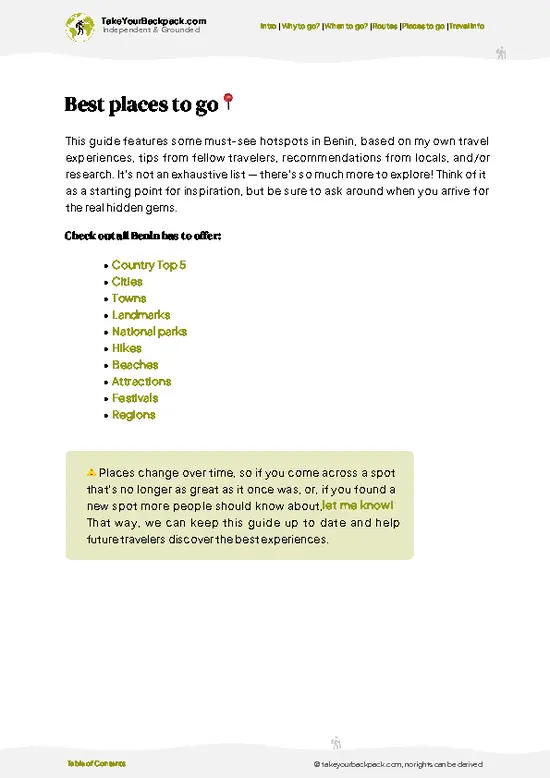
example page 3 from our offline Travel Guide for Benin
example page 4 from our offline Travel Guide for Benin
example page 5 from our offline Travel Guide for Benin
example page 6 from our offline Travel Guide for Benin
example page 7 from our offline Travel Guide for Benin
Loading the map 🌍
CLICK TO FILTER
cities
towns
landmarks
national parks
hikes
beaches
attractions
festivals
regions
SHOW COUNTRY’S BESTSHOW ALL

✨ Why go?
Ranked #5 city in Benin
Why Parakou should be on your travel list

Parakou earns its place on a route as the northern crossroads of Benin, where the paved road from Cotonou splits toward Nikki, Kandi and the Niger border. Most people come for the transport links and stay for the texture: the Grand Marché du Arzèkè and the sprawling truck parks tell you more about how West Africa trades than any museum. It is also the sensible place to rest, restock cash and wash dust out of your clothes before heading to the national parks and hill country in the northwest. Guesthouses are simple and cluster near the center, and the food is hearty and grilled. The city is not a sightseeing destination in itself, and one full day is enough. Treat it as a well-placed pause between the south and the north, and you will use it well.

💡 HighlightsPlaces and moments you shouldn't skip

  1. Grand Marché du Arzèkè: The city's main market spreads over several blocks, selling yams, shea butter, spices, cloth and secondhand goods. Go before 10 a.m., when it is busiest and coolest. Entry is free, and 1 to 2 hours is plenty.
  2. Musée Régional de Parakou: A small regional museum with objects tied to the Bariba kingdoms and northern traditions, including royal regalia and everyday tools. Expect roughly €1 to 2 and about an hour. Opening days can be irregular, so go on a weekday morning.
  3. Mosquée Centrale: The central mosque reflects the city's large Muslim community and is a landmark at prayer times. Visit outside prayer hours, dress modestly and ask permission before entering or photographing. Free, 20 to 30 minutes.
  4. Gbèrè fabric and dyeing quarter: Small workshops in the neighborhoods produce
… read more 👉
  1. Grand Marché du Arzèkè: The city's main market spreads over several blocks, selling yams, shea butter, spices, cloth and secondhand goods. Go before 10 a.m., when it is busiest and coolest. Entry is free, and 1 to 2 hours is plenty.
  2. Musée Régional de Parakou: A small regional museum with objects tied to the Bariba kingdoms and northern traditions, including royal regalia and everyday tools. Expect roughly €1 to 2 and about an hour. Opening days can be irregular, so go on a weekday morning.
  3. Mosquée Centrale: The central mosque reflects the city's large Muslim community and is a landmark at prayer times. Visit outside prayer hours, dress modestly and ask permission before entering or photographing. Free, 20 to 30 minutes.
  4. Gbèrè fabric and dyeing quarter: Small workshops in the neighborhoods produce and sell indigo and printed cloth. Wander in the morning, chat with makers and buy directly; pieces cost about €3 to 15. Allow 1 to 2 hours with a moto driver.
  5. Bariba Gaani festival grounds and royal sites: Gaani, the Bariba festival, is celebrated around Nikki, but the cultural pride shows in Parakou's own neighborhoods in the festival season, with horsemen and drums. Dates follow the lunar calendar, so ask locally. Free to watch.
  6. Evening grill stalls at the central roundabouts: Fire-roasted goat, chicken and fish with pimento sauce appear after sunset. Go at dusk with cash; a plate costs about €1.50 to 4. Allow an hour.
  7. Parakou railway station: The terminus of the Cotonou line is an atmospheric relic with old rolling stock and a sleepy platform. Photograph respectfully and ask first. Free, 20 minutes, best in the soft late afternoon.
From Parakou, day trips reach Nikki, the historic Bariba royal seat, the Kandi region, and the forest reserves and waterfalls around Tchaourou. The railway station and the market cost nothing, so the cheapest day here is also the most revealing.
Spotted a mistake or missing something? Contact us.

Things to do near Parakou

Ratings based on Tripadvisor reviews. When you book through this link, you support our work at no extra cost to you.

🏘️ NeighborhoodsKey areas and districts to know

Parakou is a flat, spread-out city where the zones are defined by its main roads and markets, so you get a feel for each by moving between them on a moto-taxi rather than on foot.
  • Grand Marché Arzèkè: The commercial heart, loud with horns, radios and sellers calling out prices. Stalls of yams, shea butter, spices and fabric crowd the lanes, and the smell of charcoal, smoke and fish hangs in the heat. Go early, before the midday sun turns the lanes into an oven. Walkable once inside, but the surrounding roads are chaos.
  • Banikanni: A residential and administrative district with wider streets, shade trees and a calmer feel. Small maquis (open-air eateries) serve grilled chicken and cold drinks in the evening, and music drifts out after dark. Distances are long, so take a moto.
  • Zongo and the Old
… read more 👉
Parakou is a flat, spread-out city where the zones are defined by its main roads and markets, so you get a feel for each by moving between them on a moto-taxi rather than on foot.
  • Grand Marché Arzèkè: The commercial heart, loud with horns, radios and sellers calling out prices. Stalls of yams, shea butter, spices and fabric crowd the lanes, and the smell of charcoal, smoke and fish hangs in the heat. Go early, before the midday sun turns the lanes into an oven. Walkable once inside, but the surrounding roads are chaos.
  • Banikanni: A residential and administrative district with wider streets, shade trees and a calmer feel. Small maquis (open-air eateries) serve grilled chicken and cold drinks in the evening, and music drifts out after dark. Distances are long, so take a moto.
  • Zongo and the Old Quarter: Dusty red-earth lanes, mud-brick walls, and a Muslim trading heritage tied to the Dendi and Fulani communities. Mosque calls mark the day. Walking works here, and people are friendly if you greet first.
  • Route Nationale 2 corridor: The main axis, lined with truck stops, bus company yards and roadside grills. It smells of diesel and roasting meat. Evenings are lively, but pavement is scarce, so walk with care and use motos for longer stretches.

⌛️ 1 dayWhat you can realistically do in a day

7:30 AM: Marché Central de Parakou
Start where the town starts its day, among stacked yams, cassava flour, smoked fish and motorbike taxis (zemidjans) weaving between stalls. Buy a bag of fresh peanuts or a street breakfast of fried dough and bean fritters for about €0.50 to 1. Give it an hour and a half, then walk or hop on a zem toward the center.

9:30 AM: Grande Mosquée de Parakou
Parakou has a large Muslim community, shaped by Dendi and Bariba traders, and the central mosque shows it. View it from outside and ask permission before stepping near the entrance. Dress modestly, with covered shoulders and knees. A short zem ride takes you to the next stop.

11:00 AM: Palais du Roi Bariba (Bariba court)
Local chiefs of the Bariba people keep a court in the area, and a visit gives you a window … read more 👉
7:30 AM: Marché Central de Parakou
Start where the town starts its day, among stacked yams, cassava flour, smoked fish and motorbike taxis (zemidjans) weaving between stalls. Buy a bag of fresh peanuts or a street breakfast of fried dough and bean fritters for about €0.50 to 1. Give it an hour and a half, then walk or hop on a zem toward the center.

9:30 AM: Grande Mosquée de Parakou
Parakou has a large Muslim community, shaped by Dendi and Bariba traders, and the central mosque shows it. View it from outside and ask permission before stepping near the entrance. Dress modestly, with covered shoulders and knees. A short zem ride takes you to the next stop.

11:00 AM: Palais du Roi Bariba (Bariba court)
Local chiefs of the Bariba people keep a court in the area, and a visit gives you a window into the kingdoms that ruled the north long before colonial borders. Ask a zem driver to take you to the chief’s compound and greet politely. Keep a small gift or donation of about €2 to 3 ready, and expect a half hour of conversation rather than a formal tour.

12:30 PM: Lunch at a maquis near the train station
Sit at a plastic table for pounded yam with peanut or gombo sauce, or grilled chicken with spicy pimento. A plate runs about €1.50 to 3. Order a cold local beer or a sachet of bissap and let the midday heat pass in the shade.

3:00 PM: Gare de Parakou and the railway quarter
This is the northern end of Benin’s old rail line, and it is off the usual track for most backpackers. Wander the quiet platforms and the faded colonial-era buildings, and ask before photographing anything official. Allow an hour. The quarter feels slow and dusty, and the afternoon light on the old rails is good for pictures.

5:00 PM: Neighborhood walk toward the Okpara quarter
Walk the wide red-dirt streets as the heat eases and people gather outside their gates. Kids kick balls, charcoal smoke drifts, and the evening call to prayer carries across the rooftops. Finish with brochettes of grilled meat and a drink at an open-air bar, then take a zem back to your bed.

🌤️ When to go?When to go for the best experience

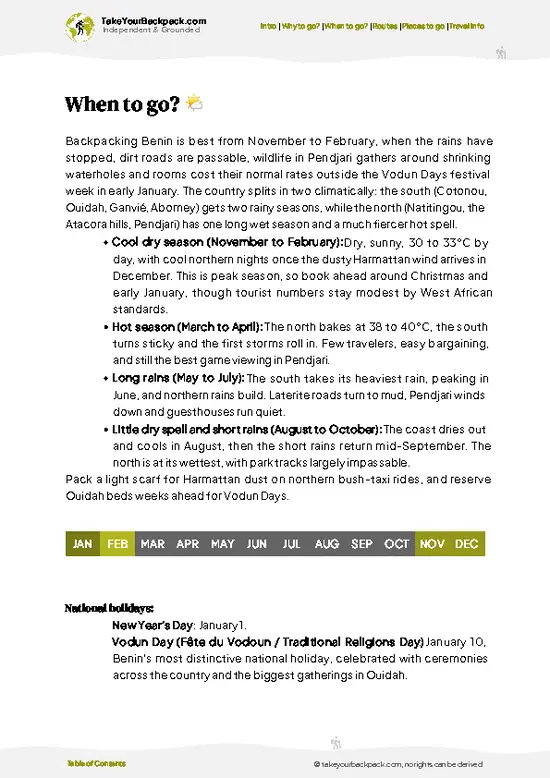
November to February is the most comfortable window for Parakou, with dry days, cooler mornings and clear skies.
  • Harmattan (Dec to Feb): Dusty haze from the Sahara, mornings near 18°C (64°F), afternoons around 33°C (91°F). Views are hazy, but hiking and walking are easiest. Prices for transport rise slightly around holidays.
  • Hot Season (Mar to May): Afternoons reach 35 to 38°C (95 to 100°F). Dry, still and exhausting by midday. Fewer visitors, easy bargaining.
  • Rainy Season (Jun to Oct): Heavy downpours, humidity, highs of 28 to 31°C (82 to 88°F). Dirt roads to outlying villages turn to mud. The countryside is green and crowds are minimal.
  • Daylight: Roughly 11 to 13 hours all year, so plan outings for morning.
Book onward bus seats a day ahead around Tabaski and Christmas, when buses fill up.

source: climatestotravel.comJANJanuary: excellent for travelingFEBFebruary: excellent for travelingMARMarch: highly recommended for travelingAPRApril: good for travelingMAYMay: fair for travelingJUNJune: fair for travelingJULJuly: fair for travelingAUGAugust: fair for travelingSEPSeptember: good for travelingOCTOctober: good for travelingNOVNovember: highly recommended for travelingDECDecember: highly recommended for traveling
when-to-go

✈️ The backpacker research shortcutBenin Travel Guide

An offline-friendly backpacking guide with optimized travel routes, ranked highlights, transport advice, and the best areas to stay.
example page 0 from our offline Travel Guide for Benin
example page 1 from our offline Travel Guide for Benin
example page 2 from our offline Travel Guide for Benin
example page 3 from our offline Travel Guide for Benin
example page 4 from our offline Travel Guide for Benin
example page 5 from our offline Travel Guide for Benin
example page 6 from our offline Travel Guide for Benin
example page 7 from our offline Travel Guide for Benin
The digital guide (213 pages) contains:
✅ 48 highlights, ranked by travel appeal
✅ Optimized 5, 10 & 15-day travel routes
✅ Cities, national parks, landmarks, beaches
✅ How to get around
✅ Offline-friendly for travel without Wi-Fi
👉 Click to see all 30+ guide features

📅 Plan smarter in minutes, not weeks
✅ Month by month travel advice
✅ Festivals & national holidays
✅ Budget expectations

🗺️ Go to the right places, skip the overrated ones
✅ Honest pros & cons of destinations
✅ Top hikes, parks & viewpoints
✅ Lesser-known places most travelers miss
✅ Clear “worth it vs skip it” guidance

🛏️ Travel smoothly without rookie mistakes
✅ Best areas to stay
✅ Transport systems explained simply
✅ Common scams & safety advice
✅ SIM cards, money & practical tips

🌍 Understand the country, not just visit it
✅ Culture & traditions
✅ 52 Essential phrases & customs
✅ Festivals worth planning around
✅ Traveler-friendly historical context
✅ Insights that make places more meaningful

📱 Built for real travel conditions
✅ Fully downloadable PDF
✅ Works completely offline
✅ Optimized for phone use
✅ Useful in remote areas & buses
✅ Everything in one place
Stop searching, start planning
Get instant access to your full guide. 30‑day money-back guarantee.
+ Add another guide for just

By proceeding you agree to our terms.
Sent to your inbox immediately after payment • 100% Secure Checkout
Best Backpacking Travel Advisor 2025 tourism awardBest Backpacking
Travel Advisor
2025
What others say about Take Your Backpack Guides:
⭐⭐⭐⭐⭐
Fantastic, amazing amount of information!
⭐⭐⭐⭐⭐
My goodness this is amazing, it's what I've been looking for hats off too you!
⭐⭐⭐⭐⭐
I think this is absolutely BRILLIANT
⭐⭐⭐⭐
Very complete and informative. It's still missing places, but I gotta to commend you
⭐⭐⭐⭐⭐
This is truly amazing, thank you, can't wait to explore it with my kids!
⭐⭐⭐⭐⭐
Awesome resource, thank you!
⭐⭐⭐⭐⭐
This is amazing! Can't wait to explore the ones I haven't seen
⭐⭐⭐⭐
I love this! Well done, great idea.
⭐⭐⭐⭐⭐
Thanks for taking the time to make this gem!
⭐⭐⭐⭐⭐
This might be the best website I've ever seen.
⭐⭐⭐⭐⭐
Congratulations, and thank you so much for your work; it's incredibly valuable.
⭐⭐⭐⭐
In all seriousness I think you did a great job pointing out the important spots
⭐⭐⭐⭐⭐
10/10 very good
⭐⭐⭐⭐⭐
As someone who's only just starting to visit regularly this is awesome, thank you.
⭐⭐⭐⭐
Thank you very much! I'm going to visit my dad, it's going to be very useful!
⭐⭐⭐⭐⭐
This is really cool! We'll be travelling for the first time and this definitely come in handy.
⭐⭐⭐⭐⭐
You are now our minister of culture, congratulations 👨‍💼
⭐⭐⭐⭐⭐
Just wanted to tell you that this is a pearl! Going to follow your recommendations.
⭐⭐⭐⭐⭐
This is so cool. I'll definitely be using the resource for my travels soon.
⭐⭐⭐⭐⭐
This is very impressive! Good work.
⭐⭐⭐⭐⭐
This is an amazing and informative site. Very well done!

🛏️ Where to stay?Best areas to stay in Benin

The best budget base in Parakou is the area around the Banikanni district, with a few simple guesthouses and low-cost hotels where a basic room runs about €10 to 20. True dorm hostels are rare here, so most backpackers book small private rooms, ideally with a fan or air conditioning because nights stay hot. Banikanni is quieter after dark, with lit streets, restaurants within a short moto ride, and easy links to the bus yards.
The second option is near the RN2 corridor and bus stations, handy if you have a 6 a.m. departure. Rooms are cheaper, around €8 to 15, but trucks, horns and early engines … read more 👉
The best budget base in Parakou is the area around the Banikanni district, with a few simple guesthouses and low-cost hotels where a basic room runs about €10 to 20. True dorm hostels are rare here, so most backpackers book small private rooms, ideally with a fan or air conditioning because nights stay hot. Banikanni is quieter after dark, with lit streets, restaurants within a short moto ride, and easy links to the bus yards.
The second option is near the RN2 corridor and bus stations, handy if you have a 6 a.m. departure. Rooms are cheaper, around €8 to 15, but trucks, horns and early engines mean light sleepers should bring earplugs. Walking at night along this stretch is less pleasant, so take a moto for the last leg.
Book ahead only around major holidays; otherwise arriving by afternoon and checking a few places works well. Cash is standard, and generators cover power cuts in most places.

🚌 Getting aroundGetting around like a local

Parakou is a place where the costliest mistake is accepting a moto ride without agreeing the fare first, because the price quickly doubles for foreigners who ask at the end. Fix it before you climb on, and carry small coins, since drivers rarely have change. The city is spread across wide, flat streets, so distances feel longer than they look on a map, and the heat turns a 3 km walk into a slog. Public transport is limited, so the moto is the default.
  • Walking: Fine inside the market area and old quarter, where lanes are tight and shaded in spots. Elsewhere sidewalks vanish and dust coats everything. Go before 10 a.m. or after 4 p.m.
  • Moto-taxi (zémidjan): The backbone of local travel, usually in yellow shirts. Trips across town cost about €0.30 to 0.80. They are fast and wind-in-your-face, but
… read more 👉
Parakou is a place where the costliest mistake is accepting a moto ride without agreeing the fare first, because the price quickly doubles for foreigners who ask at the end. Fix it before you climb on, and carry small coins, since drivers rarely have change. The city is spread across wide, flat streets, so distances feel longer than they look on a map, and the heat turns a 3 km walk into a slog. Public transport is limited, so the moto is the default.
  • Walking: Fine inside the market area and old quarter, where lanes are tight and shaded in spots. Elsewhere sidewalks vanish and dust coats everything. Go before 10 a.m. or after 4 p.m.
  • Moto-taxi (zémidjan): The backbone of local travel, usually in yellow shirts. Trips across town cost about €0.30 to 0.80. They are fast and wind-in-your-face, but weave through traffic, so ask the driver to slow down and wear the helmet if one is offered. Cheaper at dawn, pricier after dark and in rain.
  • Shared taxis and city cabs: Cars run set routes along the main roads and fill with passengers before leaving. A seat costs roughly €0.30 to 0.60. They are cramped and hot but cover longer stretches such as the bus yards. Charter a whole car for about €2 to 5 within town.
  • Intercity buses and minibuses: Companies depart from yards along the RN2, with services south toward Cotonou (about 8 to 10 hours, roughly €10 to 15) and north toward Natitingou and Malanville. Departures start in early morning, often before 7 a.m., and buses leave when full. Buy your ticket the day before and arrive early, as the yards are noisy with engines and touts.

👛 Costs (as of 24 October 2026)What things cost and how to budget

Parakou costs a backpacker roughly €26 to 35 a day, which works out to about €31 once accommodation and food are added up. Prices are paid in CFA francs, and cash is king.
CategoryBudget RangeLocal Reality
Dorm/budget bed (high season)€10 to 15Few true dorms; a simple private room with a fan is the norm.
Dorm/budget bed (off-season)€8 to 12Rooms are easier to bargain down in the rains and hot months.
Meals€4 to 8Market and maquis plates of yam, rice or grilled meat cost €1 to 3.
Local transport€2 to 4Several moto rides at €0.30 to 0.80 each.
City transport passNot availableNo pass exists; you pay per ride in cash.
Basic activities/entry fees€2 to 5Markets are free; guides or small site fees add up.
Miscellaneous€2 to 3Water, SIM data, snacks.
Total Daily Budget€31Based on high-season accommodation.
… read more 👉
Parakou costs a backpacker roughly €26 to 35 a day, which works out to about €31 once accommodation and food are added up. Prices are paid in CFA francs, and cash is king.
CategoryBudget RangeLocal Reality
Dorm/budget bed (high season)€10 to 15Few true dorms; a simple private room with a fan is the norm.
Dorm/budget bed (off-season)€8 to 12Rooms are easier to bargain down in the rains and hot months.
Meals€4 to 8Market and maquis plates of yam, rice or grilled meat cost €1 to 3.
Local transport€2 to 4Several moto rides at €0.30 to 0.80 each.
City transport passNot availableNo pass exists; you pay per ride in cash.
Basic activities/entry fees€2 to 5Markets are free; guides or small site fees add up.
Miscellaneous€2 to 3Water, SIM data, snacks.
Total Daily Budget€31Based on high-season accommodation.
Negotiate the moto fare before you ride and eat where locals do, which saves a few euros daily.


source: numbeo.com
⚠️ Prices can change and everyone travels differently, so take this as a rough guide. Hope it helps you plan your adventure!

🚌 Day tripsEasy escapes and nearby places

Parakou is a workable base for day trips if you start early, because the roads are decent and the sights are in the countryside around the northern savanna.
Ouidah Forest and Kikélé Hills (Ouèssè area):
Hills and small villages south of the city reward walkers with rocky viewpoints and views over farmland. Reach them by shared taxi in roughly 1.5 to 2.5 hours, with total costs around €5 to 12 including a local guide. Go in the dry season, as tracks are slippery after rain. Many first-timers leave too late and miss the cool morning light.

Nikki and the Bariba Royal Court:
Nikki is the historic seat of the Bariba kingdom, about 1.5 to 2 hours north by shared taxi or bus. The old royal sites and the lively market show a culture that differs from the south. Budget €6 to 12 return. Visit in the … read more 👉
Parakou is a workable base for day trips if you start early, because the roads are decent and the sights are in the countryside around the northern savanna.
Ouidah Forest and Kikélé Hills (Ouèssè area):
Hills and small villages south of the city reward walkers with rocky viewpoints and views over farmland. Reach them by shared taxi in roughly 1.5 to 2.5 hours, with total costs around €5 to 12 including a local guide. Go in the dry season, as tracks are slippery after rain. Many first-timers leave too late and miss the cool morning light.

Nikki and the Bariba Royal Court:
Nikki is the historic seat of the Bariba kingdom, about 1.5 to 2 hours north by shared taxi or bus. The old royal sites and the lively market show a culture that differs from the south. Budget €6 to 12 return. Visit in the morning, since vehicles back become scarce by late afternoon, and a missed ride means an expensive private taxi.
👉 Explore Nikki
Kandi:
Kandi is a market town on the northern route, about 3 hours away by road, with a weekly market and links to the cotton belt. It suits an early start and late return, with costs near €8 to 15. Skip it in the rains, when roads slow down.
👉 Explore Kandi
Tchaourou and Okpara Falls:
Tchaourou lies roughly an hour east, with rural scenery and small waterfalls nearby that flow best after rains. Costs run €4 to 10 with a moto driver. Agree on a waiting fee before leaving, as the last stretch is dirt track.

🍲 FoodLocal Flavors for Backpackers

Parakou sits at the crossroads of northern and central Benin, so the food leans on yam, cheese and grilled meat more than the maize and fish of the coast. The standout is wagashi, the soft Fulani cheese fried or simmered in sauce, often served with spicy tomato and onion. Pounded yam (igname pilée) comes with a peanut or leaf sauce, and its stretchy, dense texture is a local staple. In the evening, charcoal smoke rises from stalls selling grilled guinea fowl, goat skewers and roasted yam.
For drinks, look for tchoukoutou, a sour, cloudy sorghum beer sold in calabashes in the Zongo area, and bissap, a ruby hibiscus drink served cold. Local beer is available at open-air maquis, which are the main social spots after dark.
Eat at the market stalls and roadside buvettes for the cheapest, freshest … read more 👉
Parakou sits at the crossroads of northern and central Benin, so the food leans on yam, cheese and grilled meat more than the maize and fish of the coast. The standout is wagashi, the soft Fulani cheese fried or simmered in sauce, often served with spicy tomato and onion. Pounded yam (igname pilée) comes with a peanut or leaf sauce, and its stretchy, dense texture is a local staple. In the evening, charcoal smoke rises from stalls selling grilled guinea fowl, goat skewers and roasted yam.
For drinks, look for tchoukoutou, a sour, cloudy sorghum beer sold in calabashes in the Zongo area, and bissap, a ruby hibiscus drink served cold. Local beer is available at open-air maquis, which are the main social spots after dark.
Eat at the market stalls and roadside buvettes for the cheapest, freshest plates, usually €1 to 3. Eat with your right hand at shared bowls, and wash first from the water jug offered.

🛡️ SafetyTraveler Safety Guide

Parakou is broadly calm, and most problems are small. Petty theft happens in the Grand Marché and around bus yards, so keep your phone and wallet in a front pocket and avoid flashing a camera in crowds. Moto drivers sometimes quote inflated prices to foreigners, so settle the fare first and carry change. After dark, stick to lit main streets and take a moto rather than walking between neighborhoods, since unpaved side roads are dark and uneven. Solo travelers, including women, usually find people helpful, though dress modestly and greet people politely, as this is a largely Muslim and conservative area. Police checkpoints on the RN2 are routine: carry a passport copy and stay patient. Roads are the real hazard, with fast trucks and unlit motorcycles, so avoid intercity night travel.

FAQFrequently asked questions about Parakou

Two days is enough for Parakou itself: one for the Grand Marché and the old Zongo quarter, one for a relaxed evening around Banikanni. Add a third day for a trip to Nikki, about 1.5 to 2 hours north, or to the Tchaourou area, about an hour east. Most people use Parakou as a stopover on the way between Cotonou and the north.
Parakou is considered fairly safe for solo backpackers, with mostly petty issues like pickpocketing in the Grand Marché and inflated moto fares. Settle prices before a ride, avoid walking on dark side streets, and skip intercity night travel because of road hazards. Women traveling alone should dress modestly and expect friendly curiosity.
Parakou is known as the main commercial hub of northern Benin and a major crossroads on the RN2 between Cotonou, about 8 to 10 hours south, and the north. It has a huge motorcycle culture, a lively Grand Marché, and local dishes like wagashi cheese and pounded yam. It is also a gateway to Bariba heritage in Nikki.
⚠️ Things can change over time, so always validate details locally before you go.

Other Beninese cities near Parakou

Explore more nearby:

  • Nikki—Bariba court, royal tombs, Gaani festival, horse stables| 93 km away
  • Djougou—Shea and kola trade, Dendi quarter, cattle days, rocky lookout| 111 km away
  • Natitingou—Somba tata houses, Atacora hills, waterfalls, regional museum| 171 km away

💡 Not sure where to go next?
Create a personalized itinerary for Benin including Parakou and the places that fit your trip.

Generate my itinerary

👉 Discover all cities

Or checkout all Benin has to offer (think cities, towns, villages, national parks, hikes, beaches, festivals)
Country photo of Benin

We 💚 feedbackParting advice and final tips

Parakou works best as the northern stop between the Cotonou coast and the parks and hills of the northwest, with Nikki or Kandi as a follow-up if you want Bariba history. I would give it one night and one full day, arriving early so you can use the market before the heat. Bring small bills for motos and grills.

✍️ Help improve this page!
The information on this page is based on in-depth research, insights shared by experienced travelers, and feedback from the local travel community in Benin. While every effort is made to keep the information accurate and current, conditions can change — so if you spot anything incorrect or outdated, please get in touch.


🙋‍♂️ Give feedback

👋 Meet the founderWho’s Behind Take Your Backpack?

Johan, backpacker and founder of TakeYourBackpackHi, I’m Johan (Netherlands 🇳🇱), the creator of TakeYourBackpack. Over the past 3 decades, I’ve backpacked through 90+ countries across six continents, gaining extensive experience with independent travel, long-term trips, and overland routes.

This site is built on a combination of firsthand travel experience and carefully curated insights from other backpackers. Many guides are based on places I’ve personally visited, while others bring together tips, observations, and practical advice shared by trusted travelers I’ve met along the way.

The goal is to provide realistic, experience-driven guidance — not generic itineraries — so you can explore destinations with better context, clearer expectations, and more confidence.