×

Bolivia🇧🇴 | national parksCarrasco National ParkOilbird caves, Villa Tunari cloud forest, Chapare rivers, Inca paths | things to do and best time to go

Explore Tuni Condoriri National ParkExplore Kaa-Iya del Gran Chaco National Park

Backpacking in Carrasco
👍 Recommendednational park ranked #8
By Johan Kruseman 🇳🇱 | Updated October 19, 2026

“Not that road, joven, the river is up,” the truck driver at Villa Tunari told me, tapping the hood and pointing me toward a different ford. Carrasco National Park sits in the Cochabamba department of Bolivia, where the Andes drop into steamy lowland forest east of Cochabamba city. Go with a local driver or a park-based guide, because river crossings and washed-out tracks change weekly, and locals know which ones hold. Cloud forest, limestone caves and oilbirds reward you; trails are rough, muddy and often unmarked. Crowds are thin, and the vibe is rugged and unhurried. Adventurous hikers who like mud and wildlife will love it. Anyone wanting polished, signed trails will not.

Discover everything you want to know in the 📖 Bolivia Travel Guide.


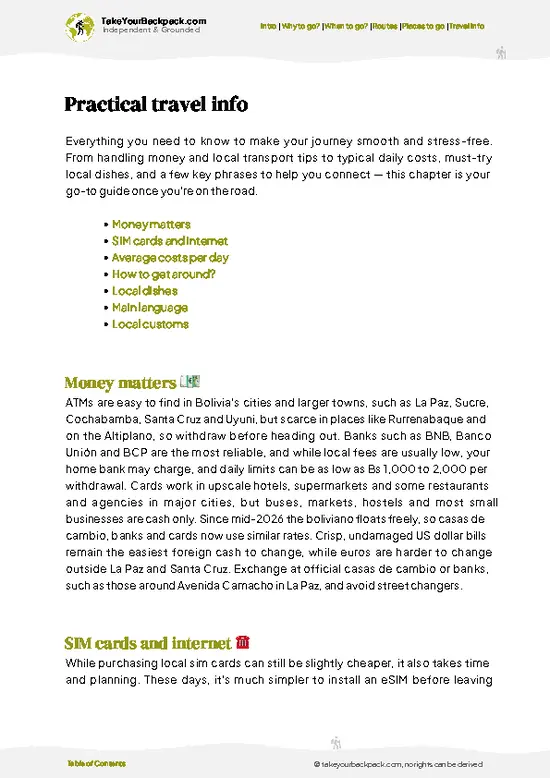
example page 0 from our offline Travel Guide for Bolivia
example page 1 from our offline Travel Guide for Bolivia
example page 2 from our offline Travel Guide for Bolivia
example page 3 from our offline Travel Guide for Bolivia
example page 4 from our offline Travel Guide for Bolivia
example page 5 from our offline Travel Guide for Bolivia
example page 6 from our offline Travel Guide for Bolivia
example page 7 from our offline Travel Guide for Bolivia
Loading the map 🌍
CLICK TO FILTER
cities
towns
landmarks
national parks
hikes
beaches
attractions
festivals
regions
SHOW COUNTRY’S BESTSHOW ALL

✨ Why go?
Ranked #8 national park in Bolivia
What sets this place apart

Carrasco National Park pulls backpackers who want wild terrain without a big-name price tag or a tour-bus crowd. The park drops from high puna to steamy lowland forest, so one trip covers several ecosystems, and the Cavernas del Repechón near Villa Tunari put you among thousands of oilbirds that live in the dark and click like tiny sonar machines. Independent travelers can reach the edges on their own, then hire a local guide for a day or two, which is smarter than a full package because guides know which crossings are passable. The Chapare lowlands offer simple hostels and campsites in Villa Tunari, so you can sleep cheaply and hike from the road. Serious multi-day trekking suits those with some experience and a sense of adventure, while a casual visitor can still enjoy short forest walks and the bat-and-bird caves with minimal planning.

💡 HighlightsPlaces and moments you shouldn't skip

  1. Cavernas del Repechón: The park’s best-known sight, a cave system with a stream running through it, home to a colony of oilbirds (guácharos), nocturnal fruit-eaters that navigate by echolocation. Entry is a few dollars and a visit takes about an hour.
  2. Cloud forest above Villa Tunari: Mossy trees, dripping ferns and tangled epiphytes cover the slopes where the mountains meet the lowlands, and birders come for tanagers and cock-of-the-rock.
  3. Río Espíritu Santo and tributary pools: Clear, cold streams for rock-hopping and swimming below forested banks.
  4. Lowland rainforest edge: Humid, loud with insects and howler monkeys, with a chance of spotting capuchins and colorful macaws.
  5. Puna and high Andean slopes: The upper park brings open grassland, thin air and views back down the steep forested valleys.
… read more 👉
  1. Cavernas del Repechón: The park’s best-known sight, a cave system with a stream running through it, home to a colony of oilbirds (guácharos), nocturnal fruit-eaters that navigate by echolocation. Entry is a few dollars and a visit takes about an hour.
  2. Cloud forest above Villa Tunari: Mossy trees, dripping ferns and tangled epiphytes cover the slopes where the mountains meet the lowlands, and birders come for tanagers and cock-of-the-rock.
  3. Río Espíritu Santo and tributary pools: Clear, cold streams for rock-hopping and swimming below forested banks.
  4. Lowland rainforest edge: Humid, loud with insects and howler monkeys, with a chance of spotting capuchins and colorful macaws.
  5. Puna and high Andean slopes: The upper park brings open grassland, thin air and views back down the steep forested valleys.
  6. Wildlife watching: Spectacled bears, tapirs and jaguars live in the park, though sightings are rare, and tracks and calls are more likely than animals.
  7. Inca-era trail remnants: Old stone paths cross the higher ridges, linking the highlands to the Chapare lowlands.
Allow two to three days to see the cave, forest and river sections together, and add more if you want to trek the high ridges.
Spotted a mistake or missing something? Contact us.

🌤️ When to go?When to go for the best experience

  • Dry Season (May to September): Carrasco’s cloud forest and lowland sections are most walkable now. Days run 20 to 27°C (68 to 81°F), nights in the highlands drop to 5 to 10°C (41 to 50°F). Daylight lasts roughly 11 hours. Roads are firm and crowds stay thin, mostly Bolivian groups on weekends.
  • Shoulder Months (April, October): Showers return gradually, humidity climbs, and trails get patchy mud. Few other visitors, and tour prices stay flat.
  • Wet Season (November to March): Heavy downpours, 25 to 30°C (77 to 86°F) in the lowlands, slick tracks and rivers that can cut access roads. Daylight stretches to about 13 hours. Birdlife is busy, but many guides reduce trips.
  • Holidays: Easter week and national holidays bring local visitors and slightly higher transport demand.
Book a guide a few days ahead in June or July, when the best ones fill up.

source: climatestotravel.comJANJanuary: fair for travelingFEBFebruary: fair for travelingMARMarch: fair for travelingAPRApril: good for travelingMAYMay: excellent for travelingJUNJune: excellent for travelingJULJuly: highly recommended for travelingAUGAugust: highly recommended for travelingSEPSeptember: highly recommended for travelingOCTOctober: highly recommended for travelingNOVNovember: fair for travelingDECDecember: fair for traveling
when-to-go

✈️ The backpacker research shortcutBolivia Travel Guide

An offline-friendly backpacking guide with optimized travel routes, ranked highlights, transport advice, and the best areas to stay.
example page 0 from our offline Travel Guide for Bolivia
example page 1 from our offline Travel Guide for Bolivia
example page 2 from our offline Travel Guide for Bolivia
example page 3 from our offline Travel Guide for Bolivia
example page 4 from our offline Travel Guide for Bolivia
example page 5 from our offline Travel Guide for Bolivia
example page 6 from our offline Travel Guide for Bolivia
example page 7 from our offline Travel Guide for Bolivia
The digital guide (262 pages) contains:
✅ 76 highlights, ranked by travel appeal
✅ Optimized 7, 14 & 21-day travel routes
✅ Cities, national parks, landmarks, beaches
✅ How to get around
✅ Offline-friendly for travel without Wi-Fi
👉 Click to see all 30+ guide features

📅 Plan smarter in minutes, not weeks
✅ Month by month travel advice
✅ Festivals & national holidays
✅ Budget expectations

🗺️ Go to the right places, skip the overrated ones
✅ Honest pros & cons of destinations
✅ Top hikes, parks & viewpoints
✅ Lesser-known places most travelers miss
✅ Clear “worth it vs skip it” guidance

🛏️ Travel smoothly without rookie mistakes
✅ Best areas to stay
✅ Transport systems explained simply
✅ Common scams & safety advice
✅ SIM cards, money & practical tips

🌍 Understand the country, not just visit it
✅ Culture & traditions
✅ 52 Essential phrases & customs
✅ Festivals worth planning around
✅ Traveler-friendly historical context
✅ Insights that make places more meaningful

📱 Built for real travel conditions
✅ Fully downloadable PDF
✅ Works completely offline
✅ Optimized for phone use
✅ Useful in remote areas & buses
✅ Everything in one place
Stop searching, start planning
Get instant access to your full guide. 30‑day money-back guarantee.
+ Add another guide for just

By proceeding you agree to our terms.
Sent to your inbox immediately after payment • 100% Secure Checkout
Best Backpacking Travel Advisor 2025 tourism awardBest Backpacking
Travel Advisor
2025
What others say about Take Your Backpack Guides:
⭐⭐⭐⭐⭐
Fantastic, amazing amount of information!
⭐⭐⭐⭐⭐
My goodness this is amazing, it's what I've been looking for hats off too you!
⭐⭐⭐⭐⭐
I think this is absolutely BRILLIANT
⭐⭐⭐⭐
Very complete and informative. It's still missing places, but I gotta to commend you
⭐⭐⭐⭐⭐
This is truly amazing, thank you, can't wait to explore it with my kids!
⭐⭐⭐⭐⭐
Awesome resource, thank you!
⭐⭐⭐⭐⭐
This is amazing! Can't wait to explore the ones I haven't seen
⭐⭐⭐⭐
I love this! Well done, great idea.
⭐⭐⭐⭐⭐
Thanks for taking the time to make this gem!
⭐⭐⭐⭐⭐
This might be the best website I've ever seen.
⭐⭐⭐⭐⭐
Congratulations, and thank you so much for your work; it's incredibly valuable.
⭐⭐⭐⭐
In all seriousness I think you did a great job pointing out the important spots
⭐⭐⭐⭐⭐
10/10 very good
⭐⭐⭐⭐⭐
As someone who's only just starting to visit regularly this is awesome, thank you.
⭐⭐⭐⭐
Thank you very much! I'm going to visit my dad, it's going to be very useful!
⭐⭐⭐⭐⭐
This is really cool! We'll be travelling for the first time and this definitely come in handy.
⭐⭐⭐⭐⭐
You are now our minister of culture, congratulations 👨‍💼
⭐⭐⭐⭐⭐
Just wanted to tell you that this is a pearl! Going to follow your recommendations.
⭐⭐⭐⭐⭐
This is so cool. I'll definitely be using the resource for my travels soon.
⭐⭐⭐⭐⭐
This is very impressive! Good work.
⭐⭐⭐⭐⭐
This is an amazing and informative site. Very well done!

🛏️ Where to stay?How to pick the right area

Most backpackers sleep in Cochabamba or in Villa Tunari, because the park itself has very little visitor lodging. Villa Tunari, about 3 to 4 hours by road from Cochabamba, is the practical gateway for the northern edge, with hostels and cabañas at US$8 to 20 a night, plus riverside spots along the Espíritu Santo. Cochabamba suits those who want better food, ATMs and gear shops, with dorms from US$7 to 12 and private rooms from US$18 to 35. Along the highway, small towns such as Chimoré, Ivirgarzama and Epizana offer basic rooms around US$6 to 15. Epizana is the usual stop for trips into the cloud … read more 👉
Most backpackers sleep in Cochabamba or in Villa Tunari, because the park itself has very little visitor lodging. Villa Tunari, about 3 to 4 hours by road from Cochabamba, is the practical gateway for the northern edge, with hostels and cabañas at US$8 to 20 a night, plus riverside spots along the Espíritu Santo. Cochabamba suits those who want better food, ATMs and gear shops, with dorms from US$7 to 12 and private rooms from US$18 to 35. Along the highway, small towns such as Chimoré, Ivirgarzama and Epizana offer basic rooms around US$6 to 15. Epizana is the usual stop for trips into the cloud forest section. Camping is possible with guide support, but bring your own tent and food.

👛 Costs (as of 19 October 2026)Money, prices, and spending tips

Expect to spend about US$48 a day at Carrasco National Park on a backpacker budget with a guide, though solo walks near the highway cost less.
CategoryBudget RangeLocal Reality
Entrance FeesUS$3 to 8Fees vary by sector and are paid at ranger posts or through the tour operator, in cash.
Accommodation (High Season)US$8 to 15Hostel dorms or simple cabañas in Villa Tunari. Private rooms run US$18 to 35. In low season, prices drop slightly.
Local TransportUS$3 to 8Shared minibuses and trufis along the Cochabamba to Villa Tunari highway. Reaching park trailheads may need a hired vehicle.
Food and SuppliesUS$6 to 12Set lunches in market eateries cost US$2 to 4. Stock up on snacks and water before heading in.
Guides and ToursUS$10 to 25Day guides are usually split between small groups. Multi-day trips cost
… read more 👉
Expect to spend about US$48 a day at Carrasco National Park on a backpacker budget with a guide, though solo walks near the highway cost less.
CategoryBudget RangeLocal Reality
Entrance FeesUS$3 to 8Fees vary by sector and are paid at ranger posts or through the tour operator, in cash.
Accommodation (High Season)US$8 to 15Hostel dorms or simple cabañas in Villa Tunari. Private rooms run US$18 to 35. In low season, prices drop slightly.
Local TransportUS$3 to 8Shared minibuses and trufis along the Cochabamba to Villa Tunari highway. Reaching park trailheads may need a hired vehicle.
Food and SuppliesUS$6 to 12Set lunches in market eateries cost US$2 to 4. Stock up on snacks and water before heading in.
Guides and ToursUS$10 to 25Day guides are usually split between small groups. Multi-day trips cost more.
Total Daily BudgetUS$30 to 68Roughly US$48 for one typical day.
⚠️ Prices can change and everyone travels differently, so take this as a rough guide. Hope it helps you plan your adventure!

🥾 TrailsTrail guide for Carrasco national park

Carrasco National Park drops from cold cloud-forest ridges near 3,500 meters to steamy lowland jungle under 300 meters, so every walk here is a lesson in how fast the vegetation changes. Terrain is steep, muddy and often wet, with tree ferns, bromeliads and moss-draped trunks in the upper zone, then thick rainforest below. Trails are rough, mostly unmarked outside the main sites, and local guides from the villages are the norm for anything beyond the roadside.
  • Cavernas de Repechón: A short walk of about 30 to 45 minutes from the road near Villa Tunari, easy to moderate, mostly flat with a few muddy
… read more 👉
Carrasco National Park drops from cold cloud-forest ridges near 3,500 meters to steamy lowland jungle under 300 meters, so every walk here is a lesson in how fast the vegetation changes. Terrain is steep, muddy and often wet, with tree ferns, bromeliads and moss-draped trunks in the upper zone, then thick rainforest below. Trails are rough, mostly unmarked outside the main sites, and local guides from the villages are the norm for anything beyond the roadside.
  • Cavernas de Repechón: A short walk of about 30 to 45 minutes from the road near Villa Tunari, easy to moderate, mostly flat with a few muddy stretches. Key feature is the cave mouth, where oilbirds (guácharos) shriek and flutter in the dark.
  • Río Ichoa and Río Chimoré valleys: Guided walks of a half day to several days from the lowland communities. Moderate to hard, with river crossings, hot humidity and good odds of spotting monkeys, macaws and tapirs' tracks.
  • Roadside forest walks along the old Cochabamba to Villa Tunari highway: Easy to moderate, one to three hours, following short paths into cloud forest where mist, orchids and birdsong are the main draw.
  • Multi-day jungle treks: Hard, three to five days with a local guide and camping, passing through all the altitude zones. Fitness, waterproof gear and a good guide are required.
Wildlife includes spectacled bears, jaguars, pumas and giant anteaters, though sightings are rare. Birds are the sure thing: toucans, parrots, tanagers and the odd quetzal. Bring rain gear year-round, since the park sits among the wettest parts of Bolivia, and expect leeches and mosquitoes in the lowlands.
Reaching Carrasco National Park is simple by public transport. Shared minibuses and buses run along the highway from Cochabamba toward Villa Tunari, the usual gateway, and you can ask the driver to drop you at trailheads. Crowds are minimal, even on weekends. An entrance fee applies at some official access points and for guided visits, usually only a few dollars, paid in bolivianos. Landslides can close the highway after heavy rain, so allow slack in your schedule.
⚠️ Hiking info can sometimes be outdated or inaccurate. Before you hit the trail, check the latest conditions with locals. If you do spot anything that's off, I'd love to hear from you, so I can update it for fellow travelers.

🛡️ SafetySafety Tips and Common Scams in Carrasco

Carrasco is manageable with a local guide, and that is the smartest choice since trails are often unmarked and the jungle swallows paths quickly. Rain can arrive any month, so expect slick mud, leech-prone damp ground and river crossings that swell within hours. Waterproof your pack and wear boots with grip. Highland sections near Epizana are cold and foggy at night, so bring a warm layer. Wildlife includes snakes, stinging insects and the occasional large mammal, but encounters are rare. Watch your footing, wear long trousers, shake out boots, and keep food sealed in camp. Mosquitoes carry dengue, so use repellent and check yellow fever vaccination requirements before you travel. Mobile signal fades quickly past the highway. Tell someone your route and carry enough water treatment.

FAQFrequently asked questions about Carrasco

Plan on 2 to 3 days for Carrasco National Park if you want a cloud forest hike plus a lowland jungle or cave visit. A single day from Villa Tunari covers the Cavernas del Repechón and little else. Deeper trips toward Bulo Bulo or Epizana need at least 3 days with a guide.
Yes, you can reach the edges of Carrasco National Park without a car, but the interior needs a guide or hired vehicle. Shared minibuses run from Cochabamba to Villa Tunari in about 3 to 4 hours for roughly US$3 to 5. From there, motorbike taxis and arranged transfers cover short trailhead hops.
Carrasco National Park charges a small entry fee, generally in the US$3 to 8 range depending on the sector, paid in cash at ranger posts or included by tour operators. Guides are strongly recommended for longer routes, and costs run about US$10 to 25 a day. Check with the park authority SERNAP in Cochabamba for current fees and any access permits.
⚠️ Things can change over time, so always validate details locally before you go.

Other Bolivian national parks near Carrasco

Explore more nearby:


💡 Not sure where to go next?
Create a personalized itinerary for Bolivia including Carrasco and the places that fit your trip.

Generate my itinerary

👉 Discover all national parks

Or checkout all Bolivia has to offer (think cities, towns, villages, national parks, hikes, beaches, festivals)
Country photo of Bolivia

We 💚 feedbackFinal thoughts on exploring Carrasco

Carrasco National Park punishes travelers who show up without a plan and a guide, because rivers rise fast and trails vanish into mud. Hire a local guide in Villa Tunari for any hike beyond the caves, and bring waterproof boots plus a dry bag. Skip tight schedules; slow progress is normal here.

✈️ When did I visit Bolivia?
Bolivia I visited during my half year trip through South and Central America back in 2003

✍️ Help improve this page!
The information on this page is based on my own backpacking experience in Bolivia, supplemented with up-to-date research and feedback from other travelers. Travel details can change, so if you notice anything outdated or incomplete, feel free to let me know.


🙋‍♂️ Give feedback

👋 Meet the founderWho’s Behind Take Your Backpack?

Johan, backpacker and founder of TakeYourBackpackHi, I’m Johan (Netherlands 🇳🇱), the creator of TakeYourBackpack. Over the past 3 decades, I’ve backpacked through 90+ countries across six continents, gaining extensive experience with independent travel, long-term trips, and overland routes.

This site is built on a combination of firsthand travel experience and carefully curated insights from other backpackers. Many guides are based on places I’ve personally visited, while others bring together tips, observations, and practical advice shared by trusted travelers I’ve met along the way.

The goal is to provide realistic, experience-driven guidance — not generic itineraries — so you can explore destinations with better context, clearer expectations, and more confidence.