×

Bolivia🇧🇴 | attractionsIsla del Sol Archaeological and Sacred SitesInca ruins, sacred rock, Lake Titicaca views | things to do and best time to go

Explore Tiwanaku Archaeological SiteExplore Casa de la Libertad

Backpacking in Isla del Sol Archaeological and Sacred Sites
🏆 Top pickattraction ranked #2
By Johan Kruseman 🇳🇱 | Updated May 5, 2026

Forget the Instagram fantasy: Isla del Sol isn’t some deserted, mystical island where you’ll have Inca ruins all to yourself at sunrise. You’ll share the trails with other travelers, and yes, the boat from Copacabana can feel like a backpacker conveyor belt. Isla del Sol sits in Lake Titicaca, just off the Bolivian shore—a place that’s been sacred for centuries, long before hashtags. Here’s the real deal: the archaeological sites are scattered and sometimes underwhelming if you’re expecting Machu Picchu-level grandeur, but the magic is in the details—the stone labyrinths, the ancient terraces, the way the light hits the water at dusk. The altitude will slap you if you’re not acclimatized, and the island’s steep paths are no joke. Costs are low by global standards, but you’ll pay for every boat, entrance, and even some village crossings. Still, the vibe is raw, slow, and deeply local—more soul than spectacle, especially if you linger after the day-trippers leave.

Discover everything you want to know in the 📖 Bolivia Travel Guide.


Get your Bolivia guide
82 ranked highlights, routes & tips, works offline (350 pages)
Loading the map 🌍
CLICK TO FILTER
cities
towns
landmarks
national parks
hikes
beaches
attractions
festivals
regions
SHOW COUNTRY’S BESTSHOW ALL

✨ Why go?
Ranked #2 attraction in Bolivia
What sets this place apart

Isla del Sol Archaeological and Sacred Sites in Bolivia isn’t just another pretty stop on Lake Titicaca’s tourist trail—it’s a raw, pulse-quickening dive into the roots of Andean civilization. Yes, the island draws crowds, especially during peak season, and the modest entrance fees can add up if you’re hopping between ruins. But here’s the kicker: this place is a living museum where Inca myths and real history collide. You’re not just looking at stones; you’re tracing the footsteps of the sun god Inti’s worshippers, feeling the weight of millennia in every carved rock and terraced slope.

Backpackers make time here because it’s a checkpoint of cultural gravity—a moment where Bolivia’s ancient past snaps into sharp focus, far beyond the usual tourist gloss. The hike across the island’s rugged … read more 👉
Isla del Sol Archaeological and Sacred Sites in Bolivia isn’t just another pretty stop on Lake Titicaca’s tourist trail—it’s a raw, pulse-quickening dive into the roots of Andean civilization. Yes, the island draws crowds, especially during peak season, and the modest entrance fees can add up if you’re hopping between ruins. But here’s the kicker: this place is a living museum where Inca myths and real history collide. You’re not just looking at stones; you’re tracing the footsteps of the sun god Inti’s worshippers, feeling the weight of millennia in every carved rock and terraced slope.

Backpackers make time here because it’s a checkpoint of cultural gravity—a moment where Bolivia’s ancient past snaps into sharp focus, far beyond the usual tourist gloss. The hike across the island’s rugged terrain demands effort, but the payoff is a panoramic view that’s as much about the landscape as the stories etched into it. It’s a milestone on the Bolivia route, a place where you can pause, catch your breath, and recalibrate your understanding of Andean heritage. If you want a travel experience that’s more than a photo op, Isla del Sol delivers with a rare, unfiltered authenticity.
Want to include Isla del Sol Archaeological and Sacred Sites in your Bolivia route?
Create a personalized Bolivia itinerary that includes Isla del Sol Archaeological and Sacred Sites and the places that fit your trip — based on your travel style, budget, and available time. Get your route in seconds.

Generate my trip

💡 HighlightsKey sights and experiences for travelers

Chincana Ruins (La Chincana)
Forget the Instagram shots of crumbling walls against blue water—this labyrinthine complex is the real deal for anyone who geeks out on ancient engineering. The Chincana isn’t just a pile of rocks; it’s a maze of interconnected rooms and passageways, built by people who believed this island was the birthplace of the sun itself. You’ll feel the wind whip through the doorways, and if you’re lucky, you’ll have the place to yourself for a few minutes—most day-trippers don’t linger. The sense of mystery is palpable, and the views of the Cordillera Real across the lake are a bonus, not the main event.


Escalera del Inca (Inca Staircase)
Yes, you’ll see groups posing on these ancient stone steps, but don’t let the crowds fool you: climbing the Escalera del Inca is a rite … read more 👉
Chincana Ruins (La Chincana)
Forget the Instagram shots of crumbling walls against blue water—this labyrinthine complex is the real deal for anyone who geeks out on ancient engineering. The Chincana isn’t just a pile of rocks; it’s a maze of interconnected rooms and passageways, built by people who believed this island was the birthplace of the sun itself. You’ll feel the wind whip through the doorways, and if you’re lucky, you’ll have the place to yourself for a few minutes—most day-trippers don’t linger. The sense of mystery is palpable, and the views of the Cordillera Real across the lake are a bonus, not the main event.


Escalera del Inca (Inca Staircase)
Yes, you’ll see groups posing on these ancient stone steps, but don’t let the crowds fool you: climbing the Escalera del Inca is a rite of passage. Each step is worn smooth by centuries of feet—Inca, Spanish, and now yours. The staircase leads up from the harbor at Yumani, past a sacred spring, and if you pause to catch your breath, you’ll realize you’re walking the same route as pilgrims did hundreds of years ago. It’s not just a photo op; it’s a physical connection to the past, and the altitude will remind you that this isn’t a theme park.


Templo del Sol (Pilkokaina Temple)
This isn’t Machu Picchu, and that’s the point. The Templo del Sol is smaller, rougher, and far less manicured, but it’s got a raw, unfiltered energy. The stonework is classic Inca—tight joints, no mortar, and a sense of purpose in every block. Stand inside at sunset and you’ll understand why the Incas picked this spot for their solar rituals. The crowds thin out late in the day, so linger if you want to feel the place breathe.


Sacred Rock (La Roca Sagrada)
Here’s where the mythology gets thick: this boulder is said to be the literal birthplace of the sun god. It’s not flashy, but it’s loaded with meaning. Locals still leave offerings, and if you’re lucky enough to catch a ceremony, you’ll see that the spiritual side of Isla del Sol isn’t just for tourists. The energy here is subtle but real—skip the selfie and just sit for a minute.


North-South Island Trek
This is my personal favorite. The classic hike from the north to the south end of the island is where the magic happens. You’ll pass through tiny villages, herds of sheep, and fields of quinoa, with Lake Titicaca stretching out on both sides. The path is ancient, the air is thin, and every step feels earned. You’ll dodge the day-tripper crowds and see the island at its rawest—sun, wind, and silence. This is where Isla del Sol stops being a postcard and starts feeling like a pilgrimage.
Spotted a mistake or missing something? Contact us.

🌤️ When to go?When to go for the best experience


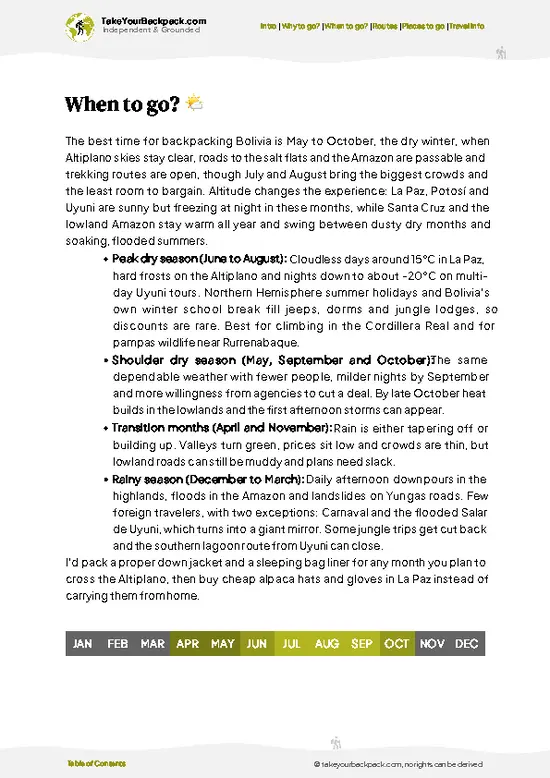
  • Weather: The dry season from May to October is your best bet. Expect clear skies and minimal rain, which means the trails and ruins won’t be a muddy mess. The wet season, November through March, brings heavy rains that can turn the island into a slippery challenge and obscure those breathtaking views.

  • Temperature: Daytime temps hover around 15-20°C (59-68°F) during the dry months—cool but comfortable for hiking. Nights can dip below 5°C (41°F), so pack layers. The wet season is slightly warmer but stickier, with highs around 20-22°C (68-72°F) and chilly, damp nights.

  • Daylight Hours: June and July offer the shortest days, roughly 10 hours of daylight, which means less time to explore. From September to November, you get closer to 12 hours, giving you more daylight to soak in the sites
read more 👉

  • Weather: The dry season from May to October is your best bet. Expect clear skies and minimal rain, which means the trails and ruins won’t be a muddy mess. The wet season, November through March, brings heavy rains that can turn the island into a slippery challenge and obscure those breathtaking views.

  • Temperature: Daytime temps hover around 15-20°C (59-68°F) during the dry months—cool but comfortable for hiking. Nights can dip below 5°C (41°F), so pack layers. The wet season is slightly warmer but stickier, with highs around 20-22°C (68-72°F) and chilly, damp nights.

  • Daylight Hours: June and July offer the shortest days, roughly 10 hours of daylight, which means less time to explore. From September to November, you get closer to 12 hours, giving you more daylight to soak in the sites without rushing.

  • Crowds: Peak tourist season aligns with the dry months, especially July and August. Expect more groups and higher prices. If you want fewer people, aim for shoulder months like May or September, when the weather is still decent but the island feels more like your own secret.

  • Seasonal Activities: The dry season is prime for trekking and exploring the sacred ruins without interruption. Festivals like the Andean New Year in June add cultural depth but also bring crowds and higher costs.

  • Price Fluctuations: Accommodation and boat fares spike during the dry season’s peak months. Booking ahead is essential. The wet season sees lower prices but comes with the risk of limited services and less reliable transport.


Pro-tip: Visit in late May or early September for the sweet spot—good weather, manageable crowds, and better prices. You’ll get the magic without the madness.


source: climatestotravel.comJANJanuary: fair for travelingFEBFebruary: fair for travelingMARMarch: fair for travelingAPRApril: good for travelingMAYMay: highly recommended for travelingJUNJune: highly recommended for travelingJULJuly: good for travelingAUGAugust: good for travelingSEPSeptember: highly recommended for travelingOCTOctober: highly recommended for travelingNOVNovember: fair for travelingDECDecember: fair for traveling
bolivia-attraction-isla-del-sol-archaeological-and-sacred-sites
© Google |

✈️ The backpacker research shortcutBolivia Travel Guide

An offline-friendly backpacking guide with optimized travel routes, ranked highlights, transport advice, and the best areas to stay.
example page 0 from our offline Travel Guide for Bolivia
example page 1 from our offline Travel Guide for Bolivia
example page 2 from our offline Travel Guide for Bolivia
example page 3 from our offline Travel Guide for Bolivia
example page 4 from our offline Travel Guide for Bolivia
example page 5 from our offline Travel Guide for Bolivia
example page 6 from our offline Travel Guide for Bolivia
example page 7 from our offline Travel Guide for Bolivia
The digital guide (350 pages) contains:
82 highlights, ranked by travel appeal
Optimized 7, 14 & 21-day travel routes
Cities, national parks, landmarks, beaches
How to get around
Offline-friendly for travel without Wi-Fi
👉 Click to see all 30+ guide features

📅 Plan smarter in minutes, not weeks
Month by month travel advice
Festivals & national holidays
Budget expectations

🗺️ Go to the right places, skip the overrated ones
Honest pros & cons of destinations
Top hikes, parks & viewpoints
Lesser-known places most travelers miss
Clear “worth it vs skip it” guidance

🛏️ Travel smoothly without rookie mistakes
Best areas to stay
Transport systems explained simply
Common scams & safety advice
SIM cards, money & practical tips

🌍 Understand the country, not just visit it
Culture & traditions
52 Essential phrases & customs
Festivals worth planning around
Traveler-friendly historical context
Insights that make places more meaningful

📱 Built for real travel conditions
Fully downloadable PDF
Works completely offline
Optimized for phone use
Useful in remote areas & buses
Everything in one place
Save weeks of stressful planning
Get instant access to your full guide. 30‑day money-back guarantee.


By proceeding you agree to our terms.
Sent to your inbox immediately after payment • 100% Secure Checkout
Best Backpacking Travel Advisor 2025 tourism awardBest Backpacking
Travel Advisor
2025
What others say about Take Your Backpack Guides:
⭐⭐⭐⭐⭐
Fantastic, amazing amount of information!
⭐⭐⭐⭐⭐
My goodness this is amazing, it's what I've been looking for hats off too you!
⭐⭐⭐⭐⭐
I think this is absolutely BRILLIANT
⭐⭐⭐⭐
Very complete and informative. It's still missing places, but I gotta to commend you
⭐⭐⭐⭐⭐
This is truly amazing, thank you, can't wait to explore it with my kids!
⭐⭐⭐⭐⭐
Awesome resource, thank you!
⭐⭐⭐⭐⭐
This is amazing! Can't wait to explore the ones I haven't seen
⭐⭐⭐⭐
I love this! Well done, great idea.
⭐⭐⭐⭐⭐
Thanks for taking the time to make this gem!
⭐⭐⭐⭐⭐
This might be the best website I've ever seen.
⭐⭐⭐⭐⭐
Congratulations, and thank you so much for your work; it's incredibly valuable.
⭐⭐⭐⭐
In all seriousness I think you did a great job pointing out the important spots
⭐⭐⭐⭐⭐
10/10 very good
⭐⭐⭐⭐⭐
As someone who's only just starting to visit regularly this is awesome, thank you.
⭐⭐⭐⭐
Thank you very much! I'm going to visit my dad, it's going to be very useful!
⭐⭐⭐⭐⭐
This is really cool! We'll be travelling for the first time and this definitely come in handy.
⭐⭐⭐⭐⭐
You are now our minister of culture, congratulations 👨‍💼
⭐⭐⭐⭐⭐
Just wanted to tell you that this is a pearl! Going to follow your recommendations.
⭐⭐⭐⭐⭐
This is so cool. I'll definitely be using the resource for my travels soon.
⭐⭐⭐⭐⭐
This is very impressive! Good work.
⭐⭐⭐⭐⭐
This is an amazing and informative site. Very well done!

🛏️ Where to stay?How to pick the right area

Isla del Sol is often sold as a serene escape, but let’s cut through the postcard-perfect hype: it’s a hotspot, especially in high season. The crowds can be thick, and prices—while not outrageous—are steeper than Bolivia’s usual backpacker-friendly vibe. That said, the real magic isn’t in the polished tourist traps but in the small, local communities hugging the island’s edges.

If you want to be close to the archaeological sites without feeling like you’re in a theme park, aim for the villages of Yumani and Challapampa. These spots are the heartbeat of Isla del Sol’s backpacker scene. They’re … read more 👉
Isla del Sol is often sold as a serene escape, but let’s cut through the postcard-perfect hype: it’s a hotspot, especially in high season. The crowds can be thick, and prices—while not outrageous—are steeper than Bolivia’s usual backpacker-friendly vibe. That said, the real magic isn’t in the polished tourist traps but in the small, local communities hugging the island’s edges.

If you want to be close to the archaeological sites without feeling like you’re in a theme park, aim for the villages of Yumani and Challapampa. These spots are the heartbeat of Isla del Sol’s backpacker scene. They’re safe, social, and packed with travelers who are here for the same reason you are: to soak in the ancient ruins and Andean culture without the fluff. You’ll find communal spaces where locals and travelers mingle over shared meals and stories, which is where the real connection happens.

Staying here means you’re within walking distance of the key ruins but also immersed in daily island life—fishermen hauling nets, kids playing soccer, and elders weaving stories into textiles. It’s not just about the ruins; it’s about the living culture that surrounds them. Skip the pricey, isolated lodges and dive into these villages for a genuine, budget-friendly experience that’s as rich as the history you came to see.

👛 Costs (as of 22 January 2026)How expensive it really is

As of 2026, visiting Isla del Sol in Bolivia involves several costs:

- Boat Transportation: Round-trip boat tickets from Copacabana to Isla del Sol cost approximately 35 BOB (€5) per person. ([machupicchu.org](https://www.machupicchu.org/lake-titicaca-bolivia-2026-copacabana-isla-del-sol-guide.htm?utm_source=openai))

- Island Entrance Fee: A mandatory community fee of 50 BOB (€7.25) grants access to the island. ([machupicchu.org](https://www.machupicchu.org/lake-titicaca-bolivia-2026-copacabana-isla-del-sol-guide.htm?utm_source=openai))

- Accommodation: Budget accommodations on the island range from 50 BOB (€7.25) per night for a hostel dormitory to 280 BOB (€41) per night for a private room in a mid-range hotel. ([machupicchu.org](https://www.machupicchu.org/lake-titicaca-bolivia-2026-copacabana-isla-del-sol-guide. … read more 👉
As of 2026, visiting Isla del Sol in Bolivia involves several costs:

- Boat Transportation: Round-trip boat tickets from Copacabana to Isla del Sol cost approximately 35 BOB (€5) per person. ([machupicchu.org](https://www.machupicchu.org/lake-titicaca-bolivia-2026-copacabana-isla-del-sol-guide.htm?utm_source=openai))

- Island Entrance Fee: A mandatory community fee of 50 BOB (€7.25) grants access to the island. ([machupicchu.org](https://www.machupicchu.org/lake-titicaca-bolivia-2026-copacabana-isla-del-sol-guide.htm?utm_source=openai))

- Accommodation: Budget accommodations on the island range from 50 BOB (€7.25) per night for a hostel dormitory to 280 BOB (€41) per night for a private room in a mid-range hotel. ([machupicchu.org](https://www.machupicchu.org/lake-titicaca-bolivia-2026-copacabana-isla-del-sol-guide.htm?utm_source=openai))

- Meals: Dining at local restaurants serving traditional dishes like trout and soups costs between 25 BOB (€3.60) and 60 BOB (€8.70) per meal. ([machupicchu.org](https://www.machupicchu.org/lake-titicaca-bolivia-2026-copacabana-isla-del-sol-guide.htm?utm_source=openai))

- Additional Fees: Optional guided tours are available, with rates varying based on group size. ([bolivianlife.com](https://www.bolivianlife.com/visiting-isla-del-sol-lake-titicaca/?utm_source=openai))

Overall, a daily budget of €30 to €75 per person is reasonable, depending on your accommodation choices and activities.


source: machupicchu.org
⚠️ Prices can change and everyone travels differently, so take this as a rough guide. Hope it helps you plan your adventure!

Other Bolivian attractions near Isla del Sol Archaeological and Sacred Sites

Explore more nearby:


💡 Not sure where to go next?
Create a personalized itinerary for Bolivia including Isla del Sol Archaeological and Sacred Sites and the places that fit your trip.

Generate my itinerary

👉 Discover all attractions

Or checkout all Bolivia has to offer (think cities, towns, villages, national parks, hikes, beaches, festivals)
Country photo of Bolivia

We 💚 feedbackFinal thoughts on visiting Isla del Sol Archaeological and Sacred Sites

Isla del Sol isn’t some polished tourist trap—it’s raw, rugged, and yes, crowded during peak times. The trek between ancient ruins feels like stepping into a living history book, where every stone whispers Inca secrets. But don’t expect luxury or solitude; the island’s charm is in its authenticity, not comfort. If you can handle basic lodgings and a few fellow travelers, the spiritual weight and stunning lake views make it a rare, grounding experience you won’t forget.

✈️ When did I visit Bolivia?
Bolivia I visited during my half year trip through South and Central America back in 2003

✍️ Help improve this page!
The information on this page is based on my own backpacking experience in Bolivia, supplemented with up-to-date research and feedback from other travelers. Travel details can change, so if you notice anything outdated or incomplete, feel free to let me know.


🙋‍♂️ Give feedback

👋 Meet the founderWho’s Behind Take Your Backpack?

Johan, backpacker and founder of TakeYourBackpackHi, I’m Johan (Netherlands 🇳🇱), the creator of TakeYourBackpack. Over the past decade, I’ve backpacked through 80+ countries across six continents, gaining extensive experience with independent travel, long-term trips, and overland routes.

This site is built on a combination of firsthand travel experience and carefully curated insights from other backpackers. Many guides are based on places I’ve personally visited, while others bring together tips, observations, and practical advice shared by trusted travelers I’ve met along the way.

The goal is to provide realistic, experience-driven guidance — not generic itineraries — so you can explore destinations with better context, clearer expectations, and more confidence.

Get full Bolivia guide •
Instant download • 82 highlights • Full Offline guide