×

Bolivia🇧🇴 | attractionsTiwanaku Archaeological Sitemonolithic gateways, ancient temples, carved stelae | things to do and best time to go

Explore Yungas RoadExplore Isla del Sol Archaeological and Sacred Sites

Backpacking in Tiwanaku Archaeological Site
🏆 Top pickattraction ranked #1
By Johan Kruseman 🇳🇱 | Updated May 20, 2026

Forget the Instagram myth: Tiwanaku is not some lost, empty city waiting for you to wander alone at sunrise. It’s a living, breathing archaeological site just 70 kilometers west of La Paz, perched on the windswept Altiplano near Lake Titicaca. Here’s the real deal: Tiwanaku is a heavyweight in South American history—older than Machu Picchu, with monoliths and sun gates that punch you in the gut with their scale and mystery. But don’t expect Indiana Jones vibes; you’ll share the grounds with school groups, local families, and the occasional llama, not just wide-eyed travelers. The site’s raw, weather-beaten stones are more powerful in person than any filtered photo, but the signage is sparse and the museum is a mixed bag—bring your curiosity and a sense of humor. It’s not cheap by Bolivian standards, but the cost is a fraction of what you’d pay for Peru’s big-ticket ruins. Tiwanaku’s magic is subtle, cerebral, and deeply Bolivian—less about spectacle, more about standing in the wind and feeling the weight of centuries.

Discover everything you want to know in the 📖 Bolivia Travel Guide.


Get your Bolivia guide
82 ranked highlights, routes & tips, works offline (350 pages)
Loading the map 🌍
CLICK TO FILTER
cities
towns
landmarks
national parks
hikes
beaches
attractions
festivals
regions
SHOW COUNTRY’S BESTSHOW ALL

✨ Why go?
Ranked #1 attraction in Bolivia
Why Tiwanaku Archaeological Site should be on your travel list

The Tiwanaku Archaeological Site is not your typical postcard-perfect ruin where you snap a quick selfie and move on. Yes, it’s crowded—especially during peak season—and the entrance fee isn’t dirt cheap by Bolivian standards. But here’s the kicker: this place is the real deal. It’s the cradle of one of South America’s most enigmatic pre-Incan civilizations, dating back over 1,500 years. The scale and precision of the stonework here aren’t just impressive; they challenge everything you think you know about ancient engineering in the Andes.

Backpackers who make the trek aren’t just ticking off a box—they’re stepping into a living narrative of cultural resilience and mystery. The site’s layout, from the Gateway of the Sun to the Akapana pyramid, demands more than a casual glance. You have to … read more 👉
The Tiwanaku Archaeological Site is not your typical postcard-perfect ruin where you snap a quick selfie and move on. Yes, it’s crowded—especially during peak season—and the entrance fee isn’t dirt cheap by Bolivian standards. But here’s the kicker: this place is the real deal. It’s the cradle of one of South America’s most enigmatic pre-Incan civilizations, dating back over 1,500 years. The scale and precision of the stonework here aren’t just impressive; they challenge everything you think you know about ancient engineering in the Andes.

Backpackers who make the trek aren’t just ticking off a box—they’re stepping into a living narrative of cultural resilience and mystery. The site’s layout, from the Gateway of the Sun to the Akapana pyramid, demands more than a casual glance. You have to slow down, absorb the details, and imagine the rituals that once animated this place. It’s a mental workout with a payoff that’s part history lesson, part spiritual jolt.

Plus, Tiwanaku is a major milestone on Bolivia’s classic route, bridging the high-altitude chill of La Paz with the vastness of the Altiplano. It’s a moment to recalibrate your journey, grounding you in the country’s deep roots before you push onward. If you’re after something beyond the usual tourist fluff, Tiwanaku delivers a raw, unfiltered connection to Bolivia’s soul.
Want to include Tiwanaku Archaeological Site in your Bolivia route?
Create a personalized Bolivia itinerary that includes Tiwanaku Archaeological Site and the places that fit your trip — based on your travel style, budget, and available time. Get your route in seconds.

Generate my trip

💡 HighlightsEssential experiences to have while visiting Tiwanaku Archaeological Site

Puerta del Sol (Gateway of the Sun)
Let’s get real: you’ve seen this monolithic arch on every travel brochure, but the photos don’t prepare you for its sheer presence. Carved from a single block of andesite, the Puerta del Sol isn’t just a stone doorway—it’s a cosmic billboard, covered in intricate reliefs that have stumped archaeologists for decades. The central figure, the so-called “Sun God,” stares out with a gaze that feels both ancient and oddly familiar. Here’s the kicker: nobody knows exactly what it was for. Calendar? Portal? Ritual prop? The mystery is half the fun, and standing in its shadow, you feel the weight of a civilization that played by rules we still don’t understand.

Templete Semisubterráneo (Semi-Subterranean Temple)
This sunken courtyard is where Tiwanaku stops being … read more 👉
Puerta del Sol (Gateway of the Sun)
Let’s get real: you’ve seen this monolithic arch on every travel brochure, but the photos don’t prepare you for its sheer presence. Carved from a single block of andesite, the Puerta del Sol isn’t just a stone doorway—it’s a cosmic billboard, covered in intricate reliefs that have stumped archaeologists for decades. The central figure, the so-called “Sun God,” stares out with a gaze that feels both ancient and oddly familiar. Here’s the kicker: nobody knows exactly what it was for. Calendar? Portal? Ritual prop? The mystery is half the fun, and standing in its shadow, you feel the weight of a civilization that played by rules we still don’t understand.

Templete Semisubterráneo (Semi-Subterranean Temple)
This sunken courtyard is where Tiwanaku stops being a pile of rocks and starts whispering secrets. Descend the steps and you’re surrounded by hundreds of stone heads embedded in the walls, each with distinct features—some look Andean, others almost Olmec, a few just plain alien. It’s a hall of faces, and the effect is both eerie and magnetic. This is where the site’s multicultural, possibly pan-Andean connections hit you in the gut. It’s not just a temple; it’s a gallery of humanity, and it’s impossible not to wonder who these people were and why their likenesses ended up here.

Kalassasaya Platform
Forget the Instagrammers posing at the edge—this massive ceremonial platform is where Tiwanaku’s astronomical genius comes alive. The stone pillars and walls are aligned with the solstices, and if you time your visit right (June or December), you’ll see the sun rise or set in perfect harmony with the stones. Even if you miss the celestial show, the scale and precision of the construction are mind-bending. This is where you feel the site’s original purpose: not just as a city, but as a living calendar and a stage for rituals that once drew thousands.

Ponce Monolith
Standing tall and silent, the Ponce Monolith is a stone giant that radiates authority. Carved robes, elaborate headdress, and hands clutching mysterious objects—this isn’t just a statue, it’s a character. The details are so crisp you can trace the patterns with your fingers. There’s a sense of personality here, a glimpse into the ceremonial life of Tiwanaku’s elite. It’s the kind of artifact that makes you want to invent time travel just to see it in action.

Tiwanaku Museums
Here’s where you dodge the crowds and get the real story. The on-site museums (Lithic and Ceramic) are refreshingly no-nonsense: dusty, a bit chaotic, but packed with artifacts that fill in the blanks left by the ruins. You’ll see the original Bennett Monolith (a behemoth), delicate ceramics, and tools that make the engineering feats outside seem even more impressive. If you’re the type who wants context, this is where the site’s magic crystallizes. This is my personal favorite—because the museums are where the puzzle pieces start to fit, and you realize Tiwanaku was more than just a lost city; it was a civilization with ambition, artistry, and a sense of cosmic drama.
Spotted a mistake or missing something? Contact us.

Things to do around Tiwanaku Archaeological Site

Ratings based on Tripadvisor reviews. When you book through this link, you support our work at no extra cost to you.

🌤️ When to go?When to go for the best experience


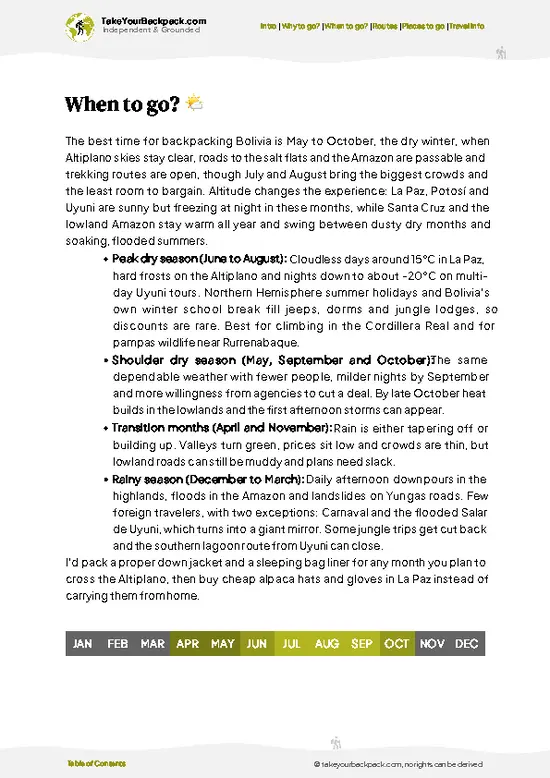
  • Weather: The dry season from May to October is your best bet. Expect clear skies and minimal rain, which means less mud and more walking ease. The wet season, November through March, turns the site slippery and less enjoyable.

  • Temperature: Daytime highs hover around 15-20°C (59-68°F) during the dry months, perfect for exploring without overheating. Nights can dip below freezing, so pack layers. The wet season is slightly warmer but damp and chilly at night.

  • Daylight Hours: From May to August, daylight is shorter—about 10-11 hours—so start early. September and October stretch daylight to 12 hours, giving you more time to soak in the ruins without rushing.

  • Crowds: Peak tourist season aligns with the dry months, especially July and August. Expect more visitors and higher prices. If you
read more 👉

  • Weather: The dry season from May to October is your best bet. Expect clear skies and minimal rain, which means less mud and more walking ease. The wet season, November through March, turns the site slippery and less enjoyable.

  • Temperature: Daytime highs hover around 15-20°C (59-68°F) during the dry months, perfect for exploring without overheating. Nights can dip below freezing, so pack layers. The wet season is slightly warmer but damp and chilly at night.

  • Daylight Hours: From May to August, daylight is shorter—about 10-11 hours—so start early. September and October stretch daylight to 12 hours, giving you more time to soak in the ruins without rushing.

  • Crowds: Peak tourist season aligns with the dry months, especially July and August. Expect more visitors and higher prices. If you want solitude, aim for May or late September when the crowds thin but weather stays solid.

  • Seasonal Activities: The winter solstice in June is a cultural highlight, with local ceremonies at Tiwanaku. It’s crowded but offers a rare glimpse into indigenous traditions that no Instagram post can capture.

  • Price Fluctuations: Entrance fees and local accommodations spike during the dry season and cultural festivals. Booking in shoulder months like May or September can save you a decent chunk of cash.


Pro-tip: Visit in late May or early September to dodge the worst crowds and still enjoy dry, cool weather—perfect for digging into Tiwanaku’s raw history without the tourist circus.


source: climatestotravel.comJANJanuary: fair for travelingFEBFebruary: fair for travelingMARMarch: fair for travelingAPRApril: good for travelingMAYMay: excellent for travelingJUNJune: highly recommended for travelingJULJuly: highly recommended for travelingAUGAugust: highly recommended for travelingSEPSeptember: excellent for travelingOCTOctober: highly recommended for travelingNOVNovember: fair for travelingDECDecember: fair for traveling
bolivia-attraction-tiwanaku-archaeological-site v1
© Google |

✈️ The backpacker research shortcutBolivia Travel Guide

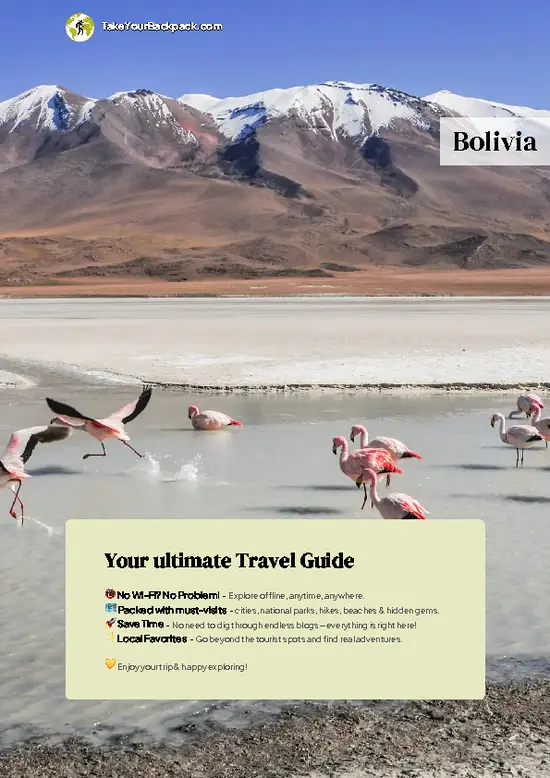
An offline-friendly backpacking guide with optimized travel routes, ranked highlights, transport advice, and the best areas to stay.
example page 0 from our offline Travel Guide for Bolivia
example page 1 from our offline Travel Guide for Bolivia
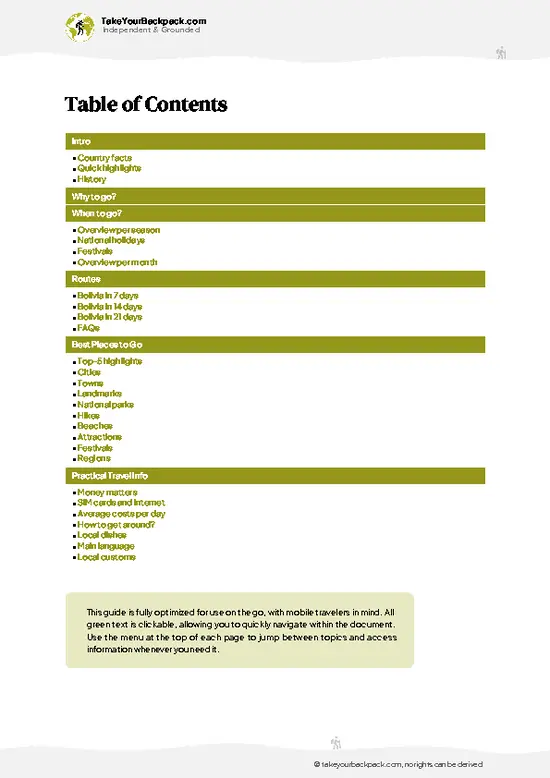
example page 2 from our offline Travel Guide for Bolivia
example page 3 from our offline Travel Guide for Bolivia
example page 4 from our offline Travel Guide for Bolivia
example page 5 from our offline Travel Guide for Bolivia
example page 6 from our offline Travel Guide for Bolivia
example page 7 from our offline Travel Guide for Bolivia
The digital guide (350 pages) contains:
82 highlights, ranked by travel appeal
Optimized 7, 14 & 21-day travel routes
Cities, national parks, landmarks, beaches
How to get around
Offline-friendly for travel without Wi-Fi
👉 Click to see all 30+ guide features

📅 Plan smarter in minutes, not weeks
Month by month travel advice
Festivals & national holidays
Budget expectations

🗺️ Go to the right places, skip the overrated ones
Honest pros & cons of destinations
Top hikes, parks & viewpoints
Lesser-known places most travelers miss
Clear “worth it vs skip it” guidance

🛏️ Travel smoothly without rookie mistakes
Best areas to stay
Transport systems explained simply
Common scams & safety advice
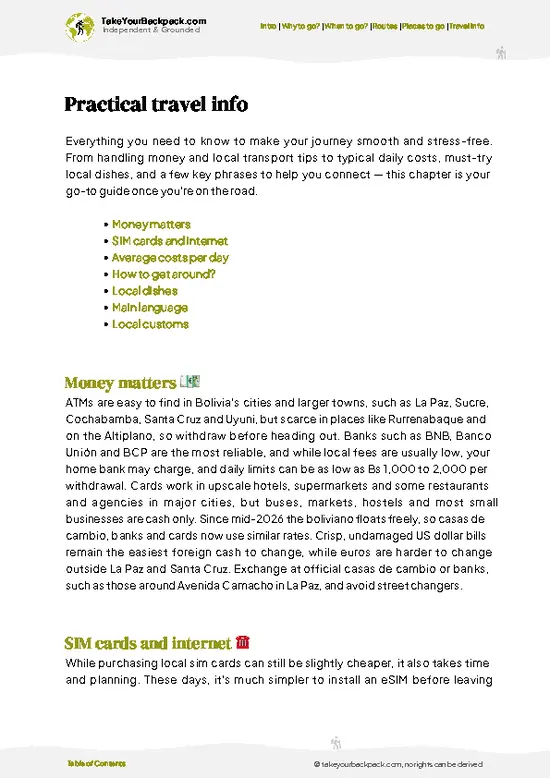
SIM cards, money & practical tips

🌍 Understand the country, not just visit it
Culture & traditions
52 Essential phrases & customs
Festivals worth planning around
Traveler-friendly historical context
Insights that make places more meaningful

📱 Built for real travel conditions
Fully downloadable PDF
Works completely offline
Optimized for phone use
Useful in remote areas & buses
Everything in one place
Save weeks of stressful planning
Get instant access to your full guide. 30‑day money-back guarantee.


By proceeding you agree to our terms.
Sent to your inbox immediately after payment • 100% Secure Checkout
Best Backpacking Travel Advisor 2025 tourism awardBest Backpacking
Travel Advisor
2025
What others say about Take Your Backpack Guides:
⭐⭐⭐⭐⭐
Fantastic, amazing amount of information!
⭐⭐⭐⭐⭐
My goodness this is amazing, it's what I've been looking for hats off too you!
⭐⭐⭐⭐⭐
I think this is absolutely BRILLIANT
⭐⭐⭐⭐
Very complete and informative. It's still missing places, but I gotta to commend you
⭐⭐⭐⭐⭐
This is truly amazing, thank you, can't wait to explore it with my kids!
⭐⭐⭐⭐⭐
Awesome resource, thank you!
⭐⭐⭐⭐⭐
This is amazing! Can't wait to explore the ones I haven't seen
⭐⭐⭐⭐
I love this! Well done, great idea.
⭐⭐⭐⭐⭐
Thanks for taking the time to make this gem!
⭐⭐⭐⭐⭐
This might be the best website I've ever seen.
⭐⭐⭐⭐⭐
Congratulations, and thank you so much for your work; it's incredibly valuable.
⭐⭐⭐⭐
In all seriousness I think you did a great job pointing out the important spots
⭐⭐⭐⭐⭐
10/10 very good
⭐⭐⭐⭐⭐
As someone who's only just starting to visit regularly this is awesome, thank you.
⭐⭐⭐⭐
Thank you very much! I'm going to visit my dad, it's going to be very useful!
⭐⭐⭐⭐⭐
This is really cool! We'll be travelling for the first time and this definitely come in handy.
⭐⭐⭐⭐⭐
You are now our minister of culture, congratulations 👨‍💼
⭐⭐⭐⭐⭐
Just wanted to tell you that this is a pearl! Going to follow your recommendations.
⭐⭐⭐⭐⭐
This is so cool. I'll definitely be using the resource for my travels soon.
⭐⭐⭐⭐⭐
This is very impressive! Good work.
⭐⭐⭐⭐⭐
This is an amazing and informative site. Very well done!

🛏️ Where to stay?How to pick the right area

Forget the postcard-perfect image of Tiwanaku as a quiet, mystical ruin bathed in golden light with barely a soul around. The reality? It’s a magnet for day-trippers from La Paz and tour groups, especially mid-morning to mid-afternoon. Crowds can be a grind if you’re chasing solitude. Plus, the site’s remote location means you’re not exactly stepping into a backpacker’s party zone right at the gates.

If you want to soak in Tiwanaku’s raw power without the tourist circus, your best bet is to base yourself in the nearby town of Tiwanaku itself. It’s a small, unpretentious place where budget travelers … read more 👉
Forget the postcard-perfect image of Tiwanaku as a quiet, mystical ruin bathed in golden light with barely a soul around. The reality? It’s a magnet for day-trippers from La Paz and tour groups, especially mid-morning to mid-afternoon. Crowds can be a grind if you’re chasing solitude. Plus, the site’s remote location means you’re not exactly stepping into a backpacker’s party zone right at the gates.

If you want to soak in Tiwanaku’s raw power without the tourist circus, your best bet is to base yourself in the nearby town of Tiwanaku itself. It’s a small, unpretentious place where budget travelers and solo adventurers converge. The vibe here is low-key but social enough to swap stories over a shared meal or a cheap beer. Safety is solid—this isn’t a sketchy outpost but a quiet Andean town where locals are used to visitors and generally welcoming.

Staying in Tiwanaku means you can hit the archaeological site early, beating the crowds and catching the light when the stone carvings really pop. Plus, you get a slice of authentic rural Bolivian life, far from the polished tourist traps. It’s not glamorous, but it’s real—and that’s where the magic lives.

👛 Costs (as of 7 February 2026)What things cost and how to budget

The entrance fee for international visitors to the Tiwanaku Archaeological Site is 100 Bolivian Bolivianos (approximately €12 to €14), which grants access to the archaeological zone, Museo Lítico (stone museum), and Museo Cerámico (ceramics museum). ([tiwanaku.dgmuvu.com](https://tiwanaku.dgmuvu.com/?utm_source=openai)) Additional costs may include guided tours, which are available for an extra fee. ([ioverlander.com](https://www.ioverlander.com/places/48222-tiwanaku-archeological-site-tickets?utm_source=openai))

source: tiwanaku.dgmuvu.com
⚠️ Prices can change and everyone travels differently, so take this as a rough guide. Hope it helps you plan your adventure!

Other Bolivian attractions near Tiwanaku Archaeological Site

Explore more nearby:


💡 Not sure where to go next?
Create a personalized itinerary for Bolivia including Tiwanaku Archaeological Site and the places that fit your trip.

Generate my itinerary

👉 Discover all attractions

Or checkout all Bolivia has to offer (think cities, towns, villages, national parks, hikes, beaches, festivals)
Country photo of Bolivia

We 💚 feedbackWhat to keep in mind

Tiwanaku isn’t some polished tourist magnet—expect dust, wind, and a handful of fellow explorers rather than crowds. The real draw? Standing among stones carved over a millennium ago, feeling the weight of a civilization that shaped the Andes long before the Incas. It’s raw, a bit rough around the edges, but that’s exactly why it punches above its weight. Just don’t come expecting luxury or Instagram-perfect scenes—this is history you have to work a little to feel.

✈️ When did I visit Bolivia?
Bolivia I visited during my half year trip through South and Central America back in 2003

✍️ Help improve this page!
The information on this page is based on my own backpacking experience in Bolivia, supplemented with up-to-date research and feedback from other travelers. Travel details can change, so if you notice anything outdated or incomplete, feel free to let me know.


🙋‍♂️ Give feedback

👋 Meet the founderWho’s Behind Take Your Backpack?

Johan, backpacker and founder of TakeYourBackpackHi, I’m Johan (Netherlands 🇳🇱), the creator of TakeYourBackpack. Over the past decade, I’ve backpacked through 80+ countries across six continents, gaining extensive experience with independent travel, long-term trips, and overland routes.

This site is built on a combination of firsthand travel experience and carefully curated insights from other backpackers. Many guides are based on places I’ve personally visited, while others bring together tips, observations, and practical advice shared by trusted travelers I’ve met along the way.

The goal is to provide realistic, experience-driven guidance — not generic itineraries — so you can explore destinations with better context, clearer expectations, and more confidence.

Get full Bolivia guide •
Instant download • 82 highlights • Full Offline guide