×

Bolivia🇧🇴 | best attractionsWhere to Find the 10 Best attractions in Bolivia

Bolivia’s attractions are defined by their raw contrasts—altitude that steals your breath, landscapes that shift from salt flats to dense jungle, and cultures that pulse with indigenous pride. For backpackers and independent travelers, the country demands more than a checklist; it requires adapting to regional rhythms and seasonal swings. The dry season opens the vast Salar de Uyuni for mirror-like reflections, while the wet season transforms it into a muddy challenge that tests your grit. Urban hubs like La Paz offer dizzying markets and steep streets that shape your pace and budget differently than the slow, remote trails of the Yungas or the Amazon basin. Choosing the right attraction in Bolivia isn’t just about what you see—it’s about how you move through the country’s logistical puzzles, from altitude sickness to transport reliability, and how deeply you want to dive into local traditions versus ticking off iconic sights. This balance shapes your vibe, safety, and the authenticity of your experience.

By Johan Kruseman 🇳🇱 | Updated June 3, 2026
Explore the best festivals in Bolivia

Why go?What Makes Them Special

Bolivia’s attractions stand apart because they demand more than passive sightseeing—they require engagement with extremes. The country’s geography is a relentless teacher: soaring altiplanos, dense Amazonian jungles, and salt flats that stretch like a white desert under a brutal sun. This variety means travelers face a constant trade-off between accessibility and immersion. Roads can be rough, and distances deceptive, so reaching a site often involves hours of rugged travel. Yet, this grit is the price of entry to experiences that feel untouched by mass tourism, where the landscape and culture remain raw and compelling.

The cultural fabric here is tightly woven with indigenous heritage, which colors every attraction with layers of history and living tradition. Unlike countries where colonial … read more 👉
Bolivia’s attractions stand apart because they demand more than passive sightseeing—they require engagement with extremes. The country’s geography is a relentless teacher: soaring altiplanos, dense Amazonian jungles, and salt flats that stretch like a white desert under a brutal sun. This variety means travelers face a constant trade-off between accessibility and immersion. Roads can be rough, and distances deceptive, so reaching a site often involves hours of rugged travel. Yet, this grit is the price of entry to experiences that feel untouched by mass tourism, where the landscape and culture remain raw and compelling.

The cultural fabric here is tightly woven with indigenous heritage, which colors every attraction with layers of history and living tradition. Unlike countries where colonial influence has largely overwritten native identity, Bolivia’s attractions pulse with Quechua and Aymara presence, visible in festivals, markets, and everyday life. This cultural depth demands patience and openness; visitors must navigate language barriers and limited tourist infrastructure, but the payoff is a connection that feels genuine rather than staged.

Climatic extremes also shape what’s possible. High altitude can sap energy quickly, turning what might be a simple hike elsewhere into a test of endurance. This physical challenge filters the crowd, leaving space for those willing to push their limits. The result is a kind of travel that rewards effort with moments of profound stillness—whether it’s the silence of a salt flat at dusk or the crackling energy of a mountain village market.

Infrastructure is uneven, so travelers must weigh convenience against authenticity. Tourist hubs offer comfort but risk diluting the experience, while venturing off-grid means embracing unpredictability. Bolivia’s attractions matter because they don’t just show you a place—they demand you meet it head-on, trading ease for a deeper, more visceral encounter with the land and its people.
Why These Made the Cut
The list of best attractions in Bolivia is created based on cultural significance or entertainment value. If you feel a attraction is missing in this list, please let us know.

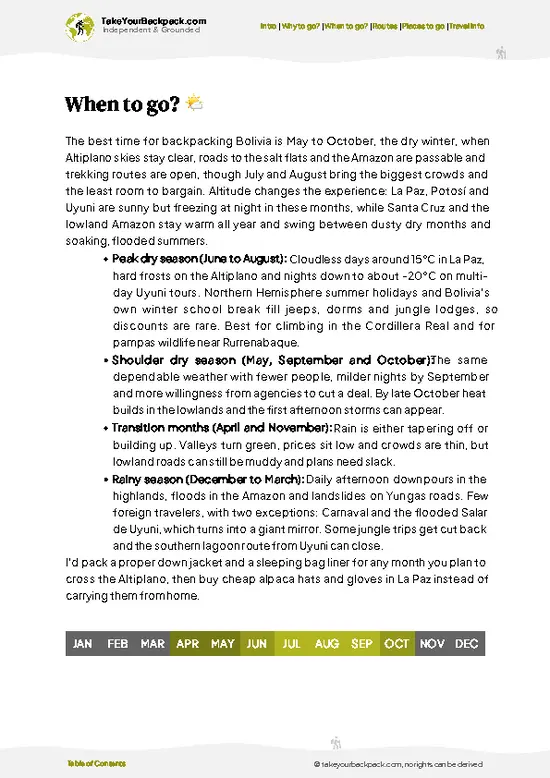
When to go?Timing Your Visit for the Best Experience

Seasonal Rhythms Shape Every Step

Bolivia’s attractions don’t just sit still—they respond to the pulse of the seasons. The dry season carves out clear skies and firm trails, making it the prime window for most outdoor adventures. Expect crisp air and minimal rain, which means dusty roads hold steady and salt flats stretch out like endless mirrors. This period draws the bulk of visitors, so prepare for busier paths and higher prices.

Wet Season’s Wild Card

When the rains roll in, the landscape transforms. Trails soften, rivers swell, and some routes become impassable. The wet season tests your grit but rewards with lush greenery and fewer crowds. It’s a trade-off: fewer travelers and lower costs come with the risk of washed-out roads and unpredictable weather. The salt flats, for example, … read more 👉

Seasonal Rhythms Shape Every Step

Bolivia’s attractions don’t just sit still—they respond to the pulse of the seasons. The dry season carves out clear skies and firm trails, making it the prime window for most outdoor adventures. Expect crisp air and minimal rain, which means dusty roads hold steady and salt flats stretch out like endless mirrors. This period draws the bulk of visitors, so prepare for busier paths and higher prices.

Wet Season’s Wild Card

When the rains roll in, the landscape transforms. Trails soften, rivers swell, and some routes become impassable. The wet season tests your grit but rewards with lush greenery and fewer crowds. It’s a trade-off: fewer travelers and lower costs come with the risk of washed-out roads and unpredictable weather. The salt flats, for example, may flood, turning into shallow lakes that reflect the sky but limit walking or driving.

Shoulder Seasons: The Balancing Act

The edges of the dry and wet seasons offer a middle ground. These shoulder months bring a mix of conditions—some days clear and firm, others damp and slippery. Crowds thin out, and prices ease, but flexibility becomes key. You might face a sudden downpour or a muddy stretch, so packing adaptable gear and a patient mindset pays off.

Altitude and Temperature Swings

Across seasons, altitude plays a relentless role. Even in the dry months, nights can plunge below freezing, while daytime sun burns strong. The wet season adds humidity and chill, especially at higher elevations. This constant push and pull demands layered clothing and readiness for rapid weather shifts.

Understanding Bolivia’s seasonal dance lets you time your visit to match your appetite for challenge and comfort. Whether you chase dry trails or verdant solitude, the country’s rhythm shapes every step of the journey.

attraction hoppingOptimizing Your Multi-Stop Itinerary

Mapping Bolivia’s Attractions for Maximum Impact

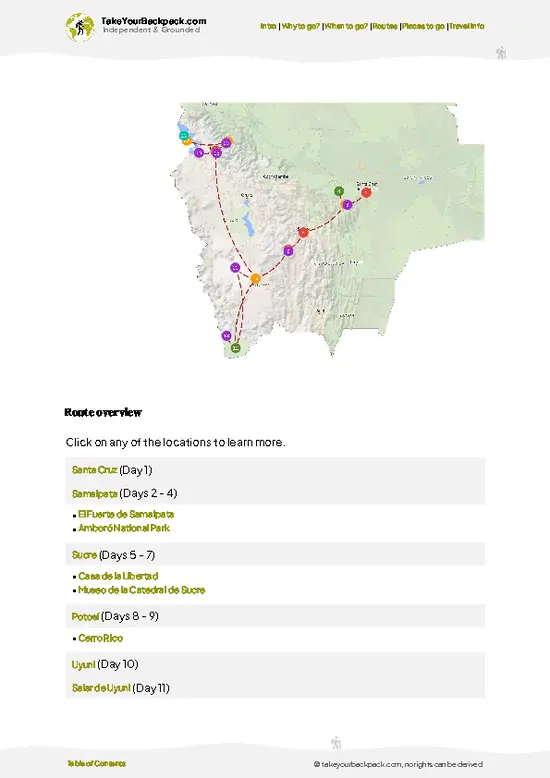
Bolivia’s landscape demands a route that respects its vastness and the rugged pace of travel. The key is to cluster your stops regionally—group high-altitude Andean sites together, then shift to the lowland jungles or salt flats. This avoids backtracking across difficult terrain and cuts down on exhausting transit days. Start in the highlands, where cities and cultural hubs are concentrated, then move outward to the more remote natural wonders.

Balancing Time and Experience

Expect to spend at least two full days in major cultural centers to absorb their history and street life without rushing. Natural sites, especially those requiring trekking or off-road travel, demand more flexible blocks—three to four days to truly engage with the environment … read more 👉

Mapping Bolivia’s Attractions for Maximum Impact

Bolivia’s landscape demands a route that respects its vastness and the rugged pace of travel. The key is to cluster your stops regionally—group high-altitude Andean sites together, then shift to the lowland jungles or salt flats. This avoids backtracking across difficult terrain and cuts down on exhausting transit days. Start in the highlands, where cities and cultural hubs are concentrated, then move outward to the more remote natural wonders.

Balancing Time and Experience

Expect to spend at least two full days in major cultural centers to absorb their history and street life without rushing. Natural sites, especially those requiring trekking or off-road travel, demand more flexible blocks—three to four days to truly engage with the environment and recover from altitude or exertion. Rushing through these spots turns them into checkboxes rather than experiences.

Common Pitfalls in Multi-Stop Planning

A frequent mistake is overloading the itinerary with too many distant stops, underestimating travel times and the physical toll. Bolivia’s roads and weather can be unpredictable, so packing in too many destinations leads to stress and missed opportunities. Another trap is ignoring acclimatization needs when hopping between lowlands and highlands, which can derail the entire trip.

Trade-Offs: Depth Versus Distance

Speed often comes at the cost of depth. Prioritizing comfort and budget means choosing fewer, well-chosen stops with reliable transport and lodging, rather than chasing every highlight on a shoestring. Conversely, pushing for maximum coverage demands stamina and flexibility, often involving rougher travel conditions and simpler accommodations. The payoff is a richer, more varied perspective but requires accepting some discomfort.

Strategic Flexibility

Build buffer days into your plan to adapt to delays or spontaneous detours. Bolivia’s charm lies in its unpredictability—embracing this with a flexible schedule allows for moments when the journey itself becomes the reward, whether it’s a sudden detour to a local market or an unexpected viewpoint on a dusty road. The smartest plans leave room for the country to surprise you.

The ListTop attractions of Bolivia

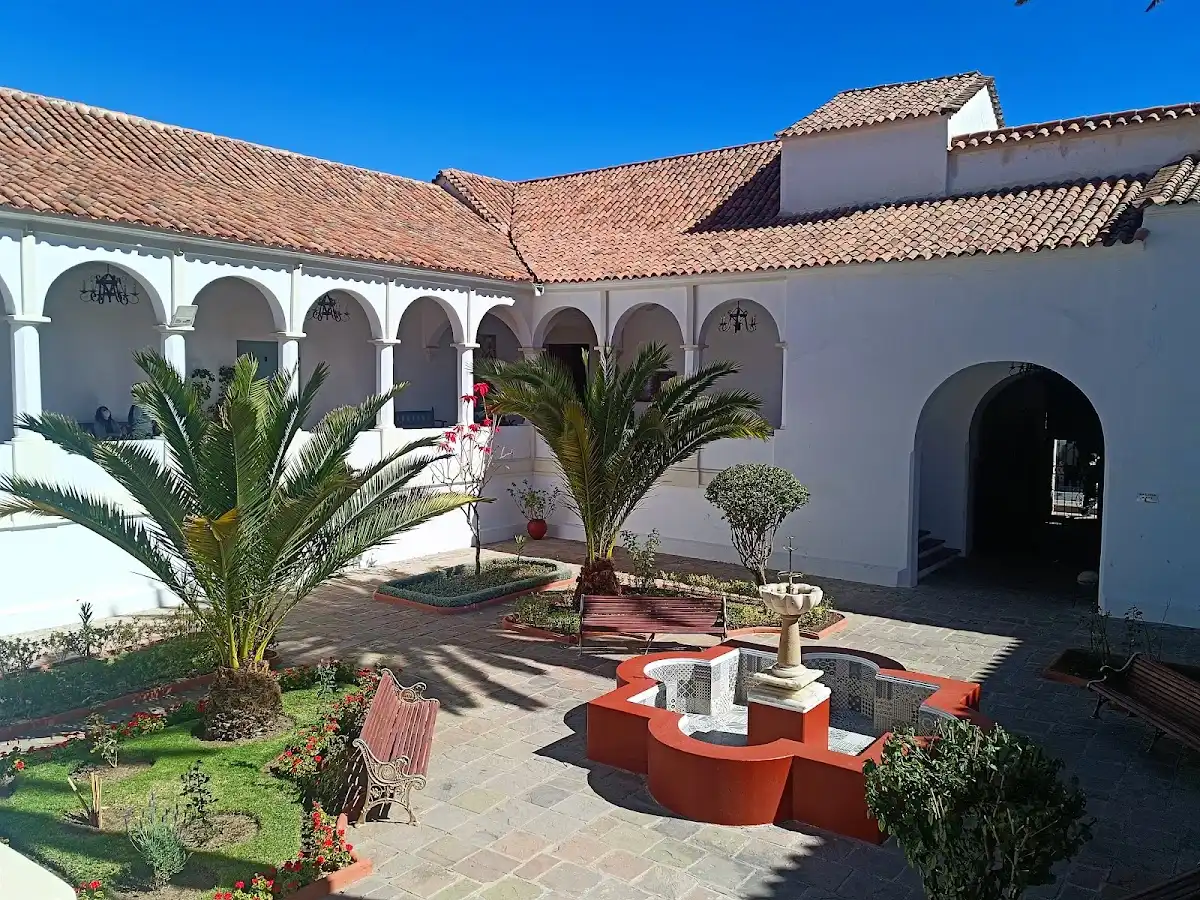
1 Tiwanaku Archaeological Site

monolithic gateways, ancient temples, carved stelae

Wander among monumental stone structures and enigmatic sculptures that reveal the engineering and beliefs of a pre-Inca civilization.

bolivia-attraction-tiwanaku-archaeological-site v1
© Google |

2 Isla del Sol Archaeological and Sacred Sites

Inca ruins, sacred rock, Lake Titicaca views

Walk ancient island trails past stone terraces and shrines, encountering sites central to Andean creation myths and pre-Columbian history.

bolivia-attraction-isla-del-sol-archaeological-and-sacred-sites
© Google |

3 Casa de la Libertad

independence hall, colonial architecture, historic documents

Trace the origins of Bolivia’s nationhood inside a preserved assembly chamber, surrounded by artifacts that shaped the country’s political identity.

bolivia-attraction-casa-de-la-libertad
© Google |

4 Museo Nacional de Arte

colonial paintings, Bolivian masters, baroque interiors

Browse galleries featuring works from the colonial era to modern times, set within a grand palace that reflects changing artistic influences.

bolivia-attraction-museo-nacional-de-arte
© Google |

5 Museo Nacional de Etnografía y Folklore

ethnographic collections, ritual masks, folk traditions

Investigate Bolivia’s cultural diversity through displays of ceremonial costumes, musical instruments, and objects used in traditional festivals.

bolivia-attraction-museo-nacional-de-etnografia-y-folklore
© Google |

6 Museo de Arte Indígena ASUR

textile exhibits, weaving demonstrations, indigenous heritage

Observe master weavers at work and examine intricate textiles that reveal the living traditions of Andean communities.

bolivia-attraction-museo-de-arte-indigena-asur v1
© Google |

7 Museo de la Coca

coca leaf history, traditional uses, cultural context

Learn about the social, medicinal, and spiritual significance of the coca plant through displays that address both tradition and controversy.

bolivia-attraction-museo-de-la-coca
© Google |

8 Museo de Metales Preciosos

gold artifacts, pre-Columbian jewelry, Andean metallurgy

Discover ceremonial objects and adornments crafted by ancient cultures, illustrating the region’s long-standing expertise in working precious metals.

bolivia-attraction-museo-de-metales-preciosos
© Google |

9 Museo de Charcas

colonial art, religious relics, academic collections

Survey a diverse collection of paintings, sculptures, and manuscripts reflecting Sucre’s role as a colonial and ecclesiastical center.

bolivia-attraction-museo-de-charcas
© Google |

10 Museo del Litoral Boliviano

maritime history, War of the Pacific, territorial loss

Explore exhibits detailing Bolivia’s former coastline and the conflict that led to its landlocked status, with maps and personal accounts.

bolivia-attraction-museo-del-litoral-boliviano
© Google |

11 Museo de la Revolución Nacional

1952 revolution, political memorabilia, social change

Examine artifacts and photographs documenting Bolivia’s mid-20th-century upheaval and the reforms that reshaped its society.

12 Museo Tambo Quirquincho

Andean crafts, urban history, restored mansion

Experience a blend of local craftsmanship and city heritage inside a historic building that once served as a merchant’s residence.

13 Museo de la Catedral de Sucre

sacred art, cathedral treasury, silverwork

View ornate liturgical objects and religious paintings housed within the cathedral’s treasury, highlighting centuries of ecclesiastical patronage.

14 Teatro Municipal Alberto Saavedra Pérez

historic stage, ornate interiors, cultural events

Watch performances in a landmark theater that has hosted generations of artists and remains central to La Paz’s cultural life.

15 Teatro Gran Mariscal Sucre

opera house, neoclassical façade, performance venue

Attend concerts or theater productions in an elegant setting known for its acoustics and architectural details.

Think you know Bolivia?

Prove you’re a true local — uncover 5 lesser-known attractions in Bolivia that locals tend to keep to themselves.
Loading the map 🌍

Expert viewExpert Commentary on attractions

Expert Commentary


Bolivia demands a selective eye when it comes to attractions. The country’s vastness and diversity mean you can’t—and shouldn’t—try to cram everything in. Aim for a handful of key experiences, ideally three to five, to truly absorb what makes Bolivia tick. Trying to cover more risks turning your trip into a checklist rather than an adventure. Each attraction requires a commitment of time and energy, often more than you expect, so plan accordingly.

Traveling across Bolivia is a study in contrasts. The infrastructure varies wildly: some roads are paved and straightforward, others are dirt tracks that test your vehicle and patience. This means your daily mileage will fluctuate, and travel times can stretch unpredictably. Factor in these realities when prioritizing attractions. … read more 👉

Expert Commentary


Bolivia demands a selective eye when it comes to attractions. The country’s vastness and diversity mean you can’t—and shouldn’t—try to cram everything in. Aim for a handful of key experiences, ideally three to five, to truly absorb what makes Bolivia tick. Trying to cover more risks turning your trip into a checklist rather than an adventure. Each attraction requires a commitment of time and energy, often more than you expect, so plan accordingly.

Traveling across Bolivia is a study in contrasts. The infrastructure varies wildly: some roads are paved and straightforward, others are dirt tracks that test your vehicle and patience. This means your daily mileage will fluctuate, and travel times can stretch unpredictably. Factor in these realities when prioritizing attractions. It’s tempting to chase every highlight, but the journey itself often demands as much respect as the destination. You’ll find that the physical effort—whether it’s enduring a bumpy ride or hiking at altitude—shapes your experience as much as the sights.

Budget-wise, Bolivia offers a wide spectrum. You can stretch your bolivianos far in local markets and simple lodgings, but some attractions come with unavoidable costs: entrance fees, guided tours, or transport that’s not easily replaced by public options. Don’t underestimate these expenses, especially if you want to access remote or protected areas. A modest budget can cover the essentials, but if you want to dive deeper—think specialized guides, private transfers, or multi-day treks—be ready to invest more. The payoff is often worth it, but the trade-off is clear: comfort and convenience come at a price.

Altitude is a defining factor here. Many of Bolivia’s top attractions sit high above sea level, and this isn’t just a footnote—it’s a physical challenge. Give yourself time to acclimate before pushing hard. Rushing into strenuous hikes or long drives at altitude can sap your energy and dull your senses. The reward for patience is sharper: clearer skies, more vivid landscapes, and a body that feels ready to take on the next challenge. Ignoring this can turn what should be a highlight into a slog.

Cultural nuances weave through every interaction. Bolivia’s indigenous heritage is alive and visible, but it’s also complex. Respect for local customs isn’t optional; it’s essential. This means more than just polite greetings—it’s about understanding when to ask permission before photographing, how to engage with vendors without disrupting their day, and recognizing that some places hold spiritual significance beyond tourism. Travelers who approach with humility and curiosity often find richer connections and unexpected stories. Those who don’t risk missing the deeper layers beneath the surface.

Safety in Bolivia is a mixed bag. Petty theft can be an issue in crowded areas, so vigilance with your belongings is a must. Night travel on rural roads is generally ill-advised due to poor lighting and unpredictable conditions. Stick to daytime journeys and trusted transport options. In remote areas, communication can be spotty, so prepare accordingly—carry extra water, snacks, and a reliable map or GPS device. The physical demands and sometimes sparse infrastructure mean self-sufficiency isn’t just smart; it’s necessary.

The sensory payoff for all this effort is unmistakable. When you finally stand at a viewpoint after a dusty, winding climb or settle into a small village after a long day on rough roads, the reward is immediate and visceral. It’s not just the visual spectacle but the sense of having earned it. The crisp air, the silence broken only by wind or distant voices, the taste of a cold drink after hours of exertion—these moments anchor your memory far more than any postcard image.

Planning your Bolivia itinerary means balancing ambition with realism. Prioritize attractions that align with your physical capacity, time constraints, and budget. If you’re short on time, focus on fewer sites but dive deeper into each. If you have more days, spread out your visits to avoid burnout and allow for spontaneous detours. Flexibility is your best tool; rigid schedules rarely survive the unpredictable rhythms of Bolivian travel.

Finally, embrace the grit. Bolivia’s roads, trails, and towns don’t always cater to polished tourism. The charm lies in the rough edges—the cracked adobe walls, the uneven cobblestones, the markets where bargaining is an art form. These are not inconveniences but part of the country’s character. Your willingness to engage with this reality transforms the trip from a passive sightseeing tour into a dynamic, immersive experience.

In short, Bolivia rewards those who travel with intention and stamina. Choose your attractions carefully, respect the land and its people, prepare for physical and logistical challenges, and you’ll find moments that resonate far beyond the usual tourist snapshots. The country’s soul reveals itself not just in what you see, but in how you get there and what you bring back with you.

✈️ The backpacker research shortcutBolivia Travel Guide

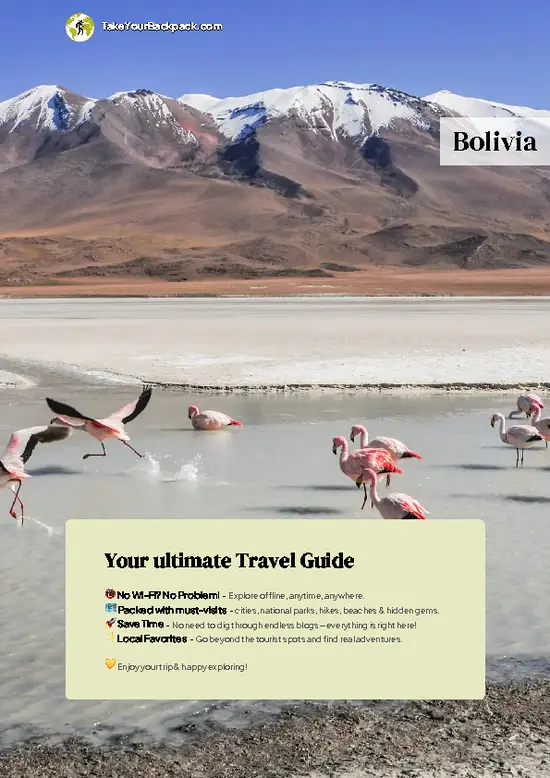
An offline-friendly backpacking guide with optimized travel routes, ranked highlights, transport advice, and the best areas to stay.
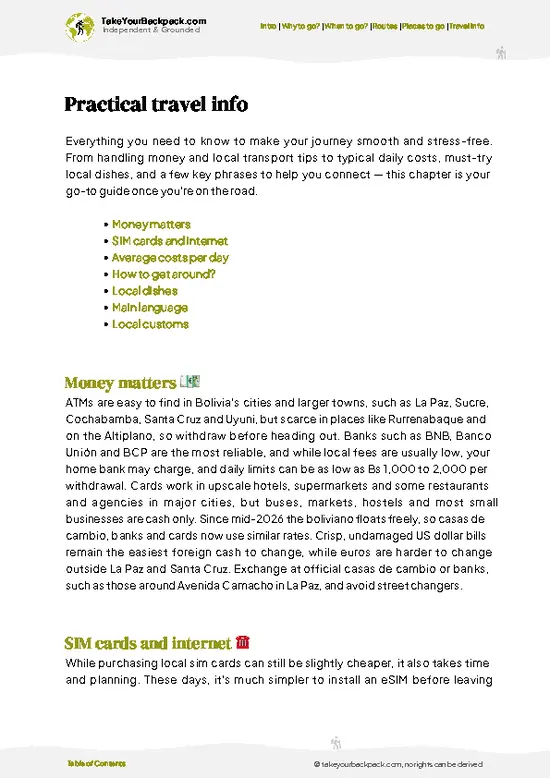
example page 0 from our offline Travel Guide for Boliviaexample page 1 from our offline Travel Guide for Boliviaexample page 2 from our offline Travel Guide for Boliviaexample page 3 from our offline Travel Guide for Boliviaexample page 4 from our offline Travel Guide for Boliviaexample page 5 from our offline Travel Guide for Boliviaexample page 6 from our offline Travel Guide for Boliviaexample page 7 from our offline Travel Guide for Bolivia
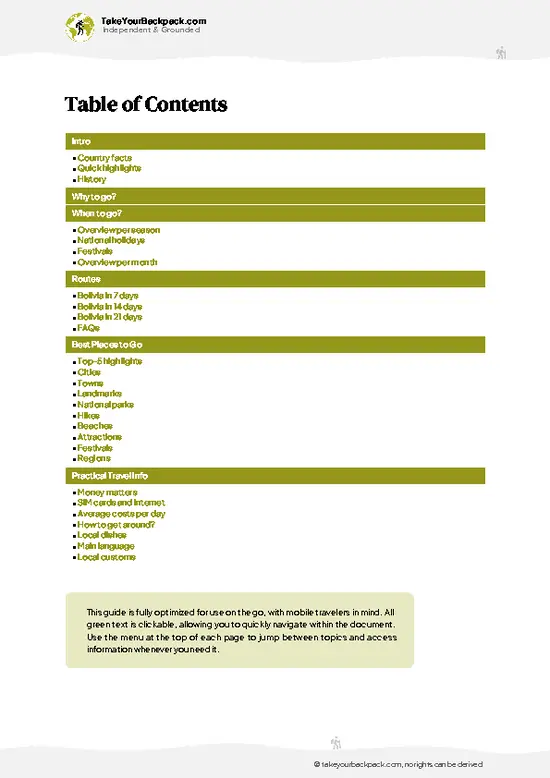
The digital guide (350 pages) contains:
82 highlights, ranked by travel appeal
Optimized 7, 14 & 21-day travel routes
Cities, national parks, landmarks, beaches
How to get around
Offline-friendly for travel without Wi-Fi
👉 Click to see all 30+ guide features

📅 Plan smarter in minutes, not weeks
Month by month travel advice
Festivals & national holidays
Budget expectations

🗺️ Go to the right places, skip the overrated ones
Honest pros & cons of destinations
Top hikes, parks & viewpoints
Lesser-known places most travelers miss
Clear “worth it vs skip it” guidance

🛏️ Travel smoothly without rookie mistakes
Best areas to stay
Transport systems explained simply
Common scams & safety advice
SIM cards, money & practical tips

🌍 Understand the country, not just visit it
Culture & traditions
52 Essential phrases & customs
Festivals worth planning around
Traveler-friendly historical context
Insights that make places more meaningful

📱 Built for real travel conditions
Fully downloadable PDF
Works completely offline
Optimized for phone use
Useful in remote areas & buses
Everything in one place
Save weeks of stressful planning
Get instant access to your full guide. 30‑day money-back guarantee.


By proceeding you agree to our terms.
Sent to your inbox immediately after payment • 100% Secure Checkout
Best Backpacking Travel Advisor 2025 tourism awardBest Backpacking
Travel Advisor
2025
What others say about Take Your Backpack Guides:
⭐⭐⭐⭐⭐
Fantastic, amazing amount of information!
⭐⭐⭐⭐⭐
My goodness this is amazing, it's what I've been looking for hats off too you!
⭐⭐⭐⭐⭐
I think this is absolutely BRILLIANT
⭐⭐⭐⭐
Very complete and informative. It's still missing places, but I gotta to commend you
⭐⭐⭐⭐⭐
This is truly amazing, thank you, can't wait to explore it with my kids!
⭐⭐⭐⭐⭐
Awesome resource, thank you!
⭐⭐⭐⭐⭐
This is amazing! Can't wait to explore the ones I haven't seen
⭐⭐⭐⭐
I love this! Well done, great idea.
⭐⭐⭐⭐⭐
Thanks for taking the time to make this gem!
⭐⭐⭐⭐⭐
This might be the best website I've ever seen.
⭐⭐⭐⭐⭐
Congratulations, and thank you so much for your work; it's incredibly valuable.
⭐⭐⭐⭐
In all seriousness I think you did a great job pointing out the important spots
⭐⭐⭐⭐⭐
10/10 very good
⭐⭐⭐⭐⭐
As someone who's only just starting to visit regularly this is awesome, thank you.
⭐⭐⭐⭐
Thank you very much! I'm going to visit my dad, it's going to be very useful!
⭐⭐⭐⭐⭐
This is really cool! We'll be travelling for the first time and this definitely come in handy.
⭐⭐⭐⭐⭐
You are now our minister of culture, congratulations 👨‍💼
⭐⭐⭐⭐⭐
Just wanted to tell you that this is a pearl! Going to follow your recommendations.
⭐⭐⭐⭐⭐
This is so cool. I'll definitely be using the resource for my travels soon.
⭐⭐⭐⭐⭐
This is very impressive! Good work.
⭐⭐⭐⭐⭐
This is an amazing and informative site. Very well done!

🛏️ Where to stay?Accommodation Highlights

Yes — Bolivia has plentiful hostels and budget accommodation across major tourist towns like La Paz, Sucre, Santa Cruz, Uyuni, Copacabana, Potosí and Cochabamba, with most options concentrated near city centers and popular plazas.
In La Paz prioritize Sopocachi for nightlife, mid-range safety and cafes, Centro/Plaza Murillo for closest access to markets and attractions but higher crowds and pickpocket risk, and Zona Sur for quieter, safer stays that are farther from main tourist sites.
Sucre’s Centro and Recoleta are walkable and historic yet sometimes pricier; Santa Cruz clusters budget options in Equipetrol (safer, better nightlife) and Centro (cheaper, busier); Uyuni and Copacabana put … read more 👉
Yes — Bolivia has plentiful hostels and budget accommodation across major tourist towns like La Paz, Sucre, Santa Cruz, Uyuni, Copacabana, Potosí and Cochabamba, with most options concentrated near city centers and popular plazas.
In La Paz prioritize Sopocachi for nightlife, mid-range safety and cafes, Centro/Plaza Murillo for closest access to markets and attractions but higher crowds and pickpocket risk, and Zona Sur for quieter, safer stays that are farther from main tourist sites.
Sucre’s Centro and Recoleta are walkable and historic yet sometimes pricier; Santa Cruz clusters budget options in Equipetrol (safer, better nightlife) and Centro (cheaper, busier); Uyuni and Copacabana put hostels steps from transport and highlights but often offer very basic facilities; Potosí and Cochabamba have central, inexpensive choices close to attractions but with fewer amenities and less frequent transport.

If you enjoy meeting fellow travelers, consider choosing hostels with high ratings for atmosphere. On the other hand, if you prefer having your own space, a hotel might be a better option.

BoliviaSee More of Bolivia

👋 Meet the founderWho’s Behind Take Your Backpack?

Johan, backpacker and founder of TakeYourBackpackHi, I’m Johan (Netherlands 🇳🇱), the creator of TakeYourBackpack. Over the past decade, I’ve backpacked through 80+ countries across six continents, gaining extensive experience with independent travel, long-term trips, and overland routes.

This site is built on a combination of firsthand travel experience and carefully curated insights from other backpackers. Many guides are based on places I’ve personally visited, while others bring together tips, observations, and practical advice shared by trusted travelers I’ve met along the way.

The goal is to provide realistic, experience-driven guidance — not generic itineraries — so you can explore destinations with better context, clearer expectations, and more confidence.

Get full Bolivia guide •
Instant download • 82 highlights • Full Offline guide