×

Bolivia🇧🇴 | national parksSerranía del Iñao National ParkGuaraní villages, Chaco-edge forest, ridge views | things to do and best time to go

Explore Otuquis National ParkExplore Tucavaca Valley Municipal Reserve

Backpacking in Serranía del Iñao
👀 For curious travelersnational park ranked #14
By Johan Kruseman 🇳🇱 | Updated October 19, 2026

Iñao National Park has no big tourist infrastructure, and a third of it overlaps the Guaraní territory of Itikaraparirenda, so you arrive through villages rather than a park gate. It sits in Bolivia’s Chuquisaca department, southeast of Sucre. Hikes cross dry Chaco-edge forest and ridges with big views, wildlife is shy, and crowds are close to zero. Roads are rough, so experienced travelers arrange a local driver instead of gambling on a lift. One thing threw me: the trail markers were hand-painted stones, not signs. Start early at a village, hire a guide, and finish with a ridge view.

Discover everything you want to know in the 📖 Bolivia Travel Guide.


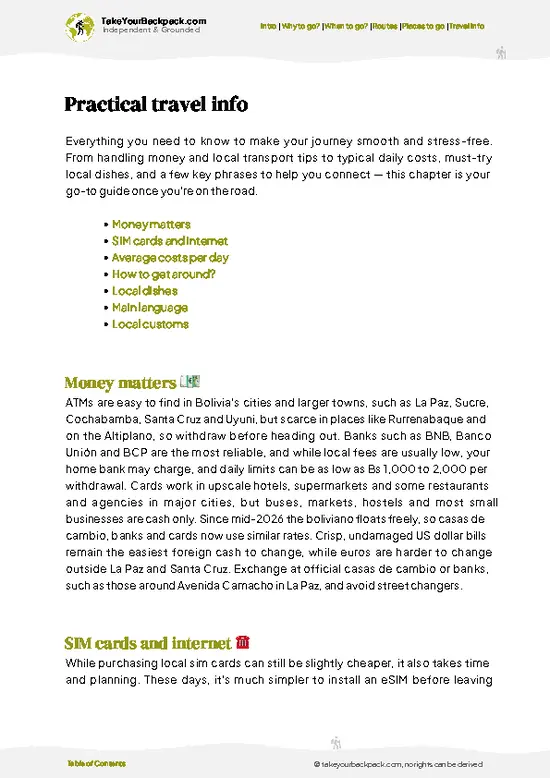
example page 0 from our offline Travel Guide for Bolivia
example page 1 from our offline Travel Guide for Bolivia
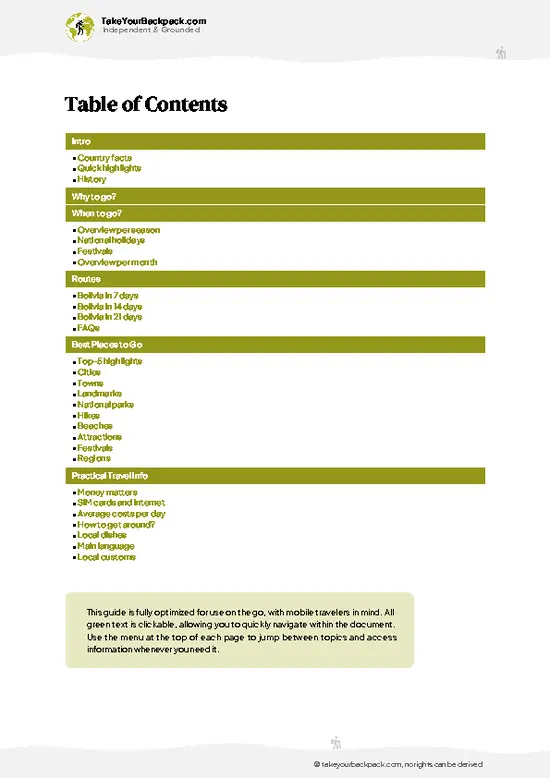
example page 2 from our offline Travel Guide for Bolivia
example page 3 from our offline Travel Guide for Bolivia
example page 4 from our offline Travel Guide for Bolivia
example page 5 from our offline Travel Guide for Bolivia
example page 6 from our offline Travel Guide for Bolivia
example page 7 from our offline Travel Guide for Bolivia
Loading the map 🌍
CLICK TO FILTER
cities
towns
landmarks
national parks
hikes
beaches
attractions
festivals
regions
SHOW COUNTRY’S BESTSHOW ALL

✨ Why go?
Ranked #14 national park in Bolivia
What makes this national park worth exploring

Iñao National Park suits travelers who want walking without a queue. The reserve’s value is its access to Guaraní communities, so you meet the people who steward the land, and a local guide turns an anonymous ridge into a place with names and stories. Independent exploration here means community-led routes rather than a ticketed circuit, and you can link villages on foot over several days. The terrain climbs through Chaco-edge dry forest before opening onto long ridge lines, so the variety packs a lot into a short distance. Self-guided trekking works only with local advice. If you like quiet trails and real conversations, go.

💡 HighlightsKey sights and experiences for travelers

  1. Iñao ridge viewpoints: Open ridge lines give wide views over folded valleys and dry forest toward the lowlands.
  2. Dry Chaco-edge forest: Thorny trees, cacti and bird calls make the lower slopes feel wild and quiet.
  3. Guaraní community villages: Small settlements that steward the land, where you can talk with families about local life.
  4. Birdwatching along the trails: Early walks reward you with parrots and other dry-forest birds in the trees.
  5. Mountain-to-lowland transition: The change in vegetation as you descend is one of the clearest in the region.
Together these fit comfortably into two to three days of walking.
Spotted a mistake or missing something? Contact us.

🌤️ When to go?Choosing the right time of year

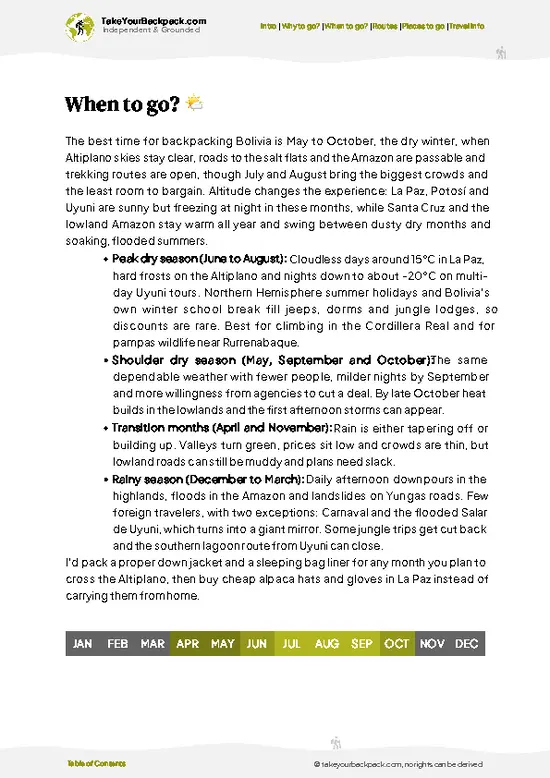
May to September is the window for Iñao National Park, when dirt tracks in the Chaco foothills stay passable and walking is comfortable.
  • Dry Season (May to Sept): Days run 22 to 30°C (72 to 86°F), nights can fall to 8 to 12°C (46 to 54°F) during cold fronts. Daylight lasts roughly 11 to 12 hours. Quietest and most reliable for hiking.
  • Hot Wet Season (Nov to Mar): Highs reach 32 to 38°C (90 to 100°F) with heavy downpours that turn roads to mud and swell streams. Insects thrive.
  • Shoulder (Apr, Oct): Warm, mostly dry, with sudden storms in October.
Visitor numbers are tiny year-round and lodging rates barely move, so choose by road conditions.

source: climatestotravel.comJANJanuary: fair for travelingFEBFebruary: fair for travelingMARMarch: fair for travelingAPRApril: fair for travelingMAYMay: highly recommended for travelingJUNJune: excellent for travelingJULJuly: excellent for travelingAUGAugust: excellent for travelingSEPSeptember: excellent for travelingOCTOctober: highly recommended for travelingNOVNovember: fair for travelingDECDecember: fair for traveling
when-to-go

✈️ The backpacker research shortcutBolivia Travel Guide

An offline-friendly backpacking guide with optimized travel routes, ranked highlights, transport advice, and the best areas to stay.
example page 0 from our offline Travel Guide for Bolivia
example page 1 from our offline Travel Guide for Bolivia
example page 2 from our offline Travel Guide for Bolivia
example page 3 from our offline Travel Guide for Bolivia
example page 4 from our offline Travel Guide for Bolivia
example page 5 from our offline Travel Guide for Bolivia
example page 6 from our offline Travel Guide for Bolivia
example page 7 from our offline Travel Guide for Bolivia
The digital guide (262 pages) contains:
✅ 76 highlights, ranked by travel appeal
✅ Optimized 7, 14 & 21-day travel routes
✅ Cities, national parks, landmarks, beaches
✅ How to get around
✅ Offline-friendly for travel without Wi-Fi
👉 Click to see all 30+ guide features

📅 Plan smarter in minutes, not weeks
✅ Month by month travel advice
✅ Festivals & national holidays
✅ Budget expectations

🗺️ Go to the right places, skip the overrated ones
✅ Honest pros & cons of destinations
✅ Top hikes, parks & viewpoints
✅ Lesser-known places most travelers miss
✅ Clear “worth it vs skip it” guidance

🛏️ Travel smoothly without rookie mistakes
✅ Best areas to stay
✅ Transport systems explained simply
✅ Common scams & safety advice
✅ SIM cards, money & practical tips

🌍 Understand the country, not just visit it
✅ Culture & traditions
✅ 52 Essential phrases & customs
✅ Festivals worth planning around
✅ Traveler-friendly historical context
✅ Insights that make places more meaningful

📱 Built for real travel conditions
✅ Fully downloadable PDF
✅ Works completely offline
✅ Optimized for phone use
✅ Useful in remote areas & buses
✅ Everything in one place
Stop searching, start planning
Get instant access to your full guide. 30‑day money-back guarantee.
+ Add another guide for just

By proceeding you agree to our terms.
Sent to your inbox immediately after payment • 100% Secure Checkout
Best Backpacking Travel Advisor 2025 tourism awardBest Backpacking
Travel Advisor
2025
What others say about Take Your Backpack Guides:
⭐⭐⭐⭐⭐
Fantastic, amazing amount of information!
⭐⭐⭐⭐⭐
My goodness this is amazing, it's what I've been looking for hats off too you!
⭐⭐⭐⭐⭐
I think this is absolutely BRILLIANT
⭐⭐⭐⭐
Very complete and informative. It's still missing places, but I gotta to commend you
⭐⭐⭐⭐⭐
This is truly amazing, thank you, can't wait to explore it with my kids!
⭐⭐⭐⭐⭐
Awesome resource, thank you!
⭐⭐⭐⭐⭐
This is amazing! Can't wait to explore the ones I haven't seen
⭐⭐⭐⭐
I love this! Well done, great idea.
⭐⭐⭐⭐⭐
Thanks for taking the time to make this gem!
⭐⭐⭐⭐⭐
This might be the best website I've ever seen.
⭐⭐⭐⭐⭐
Congratulations, and thank you so much for your work; it's incredibly valuable.
⭐⭐⭐⭐
In all seriousness I think you did a great job pointing out the important spots
⭐⭐⭐⭐⭐
10/10 very good
⭐⭐⭐⭐⭐
As someone who's only just starting to visit regularly this is awesome, thank you.
⭐⭐⭐⭐
Thank you very much! I'm going to visit my dad, it's going to be very useful!
⭐⭐⭐⭐⭐
This is really cool! We'll be travelling for the first time and this definitely come in handy.
⭐⭐⭐⭐⭐
You are now our minister of culture, congratulations 👨‍💼
⭐⭐⭐⭐⭐
Just wanted to tell you that this is a pearl! Going to follow your recommendations.
⭐⭐⭐⭐⭐
This is so cool. I'll definitely be using the resource for my travels soon.
⭐⭐⭐⭐⭐
This is very impressive! Good work.
⭐⭐⭐⭐⭐
This is an amazing and informative site. Very well done!

🛏️ Where to stay?Best areas to stay in Bolivia

Nobody stays inside Iñao National Park in formal lodging, so most backpackers sleep in Monteagudo, the nearest town, about 15 to 20 km away in Chuquisaca. Expect simple hostales and residenciales at US$8 to 20 a night for a private room with a fan and shared or basic private bath. A few slightly nicer hotels sit near the main plaza and run US$20 to 35. Monteagudo has a market, small restaurants and pharmacies, so you can stock up before heading out. Camping in the area is informal and usually arranged through local communities or the park contacts, so bring your own tent, stove and water treatment. … read more 👉
Nobody stays inside Iñao National Park in formal lodging, so most backpackers sleep in Monteagudo, the nearest town, about 15 to 20 km away in Chuquisaca. Expect simple hostales and residenciales at US$8 to 20 a night for a private room with a fan and shared or basic private bath. A few slightly nicer hotels sit near the main plaza and run US$20 to 35. Monteagudo has a market, small restaurants and pharmacies, so you can stock up before heading out. Camping in the area is informal and usually arranged through local communities or the park contacts, so bring your own tent, stove and water treatment. Camiri, farther east, is a larger option with more services if you pass through on the Chaco route.

👛 Costs (as of 19 October 2026)How expensive it really is

Plan on about US$38 a day for Iñao National Park, mostly covering a basic room, meals and a guide.
CategoryBudget RangeLocal Reality
Entrance/GuideUS$0 to 15Formal ticketing is minimal; a local guide is the main cost, paid in bolivianos.
Accommodation (high season)US$8 to 20Basic hostales in Monteagudo. Camping is cheaper but informal.
Local TransportUS$3 to 10Shared taxis or minibuses to the access area; private 4x4 hire costs far more.
Food and SuppliesUS$6 to 12Set lunches in Monteagudo cost US$2 to 4; stock up at the market for trail days.
Total Daily BudgetUS$38Per person, per day, in high season.
⚠️ Prices can change and everyone travels differently, so take this as a rough guide. Hope it helps you plan your adventure!

🥾 TrailsBest hikes in Serranía del Iñao national park

Iñao National Park offers community-guided hikes rather than a set of signed, measured trails, so plans are made with villagers.
  • Village-to-village walks: Routes link Guaraní communities over hills and dry forest, usually half a day to a full day on foot, moderate in difficulty.
  • Ridge walks: Climbs lead to open crests with long views, steady but not technical, best started early.
  • Forest paths: Lower trails pass thorny scrub and cacti on dusty, uneven ground, easy to moderate.
  • Wildlife: Expect birds most days, while larger animals are shy and rarely seen.
Public transport is limited, and reaching the … read more 👉
Iñao National Park offers community-guided hikes rather than a set of signed, measured trails, so plans are made with villagers.
  • Village-to-village walks: Routes link Guaraní communities over hills and dry forest, usually half a day to a full day on foot, moderate in difficulty.
  • Ridge walks: Climbs lead to open crests with long views, steady but not technical, best started early.
  • Forest paths: Lower trails pass thorny scrub and cacti on dusty, uneven ground, easy to moderate.
  • Wildlife: Expect birds most days, while larger animals are shy and rarely seen.
Public transport is limited, and reaching the trailheads usually means a shared ride toward the nearest town and then a hired local driver on rough roads. Crowds are minimal, and you may walk all day without meeting another visitor. Carry water, sun protection and snacks, since shops are scarce. Arrange guides locally and ask the community about any contribution for access, which is usually small and paid in cash.
⚠️ Hiking info can sometimes be outdated or inaccurate. Before you hit the trail, check the latest conditions with locals. If you do spot anything that's off, I'd love to hear from you, so I can update it for fellow travelers.

🛡️ SafetySafety Tips and Common Scams in Serranía del Iñao

Iñao National Park is remote and lightly managed, so the main risks come from isolation rather than crime. Trails are rough, often unmarked, and can vanish under vegetation, so hire a local guide through Monteagudo and carry offline maps. Summer heat and humidity are demanding; start early, carry at least 3 liters of water per person and treat all stream water. Rain makes clay slopes slick and rivers rise fast, so skip crossings after storms. Ticks, mosquitoes and snakes are present, so wear long trousers and watch your footing. Tell your hotel your route and expect no phone signal.

FAQTraveler FAQ

Two to three days is enough for Iñao National Park if you base yourself in Monteagudo. One day covers a guided walk in the forested foothills, and a second lets you reach quieter sections. Add a day for slow road travel, since tracks are rough and transport is infrequent.
Yes, Iñao National Park can be reached without a car, but it takes planning. Buses run from Sucre to Monteagudo in roughly 8 to 10 hours, then you need a local taxi or a pre-arranged guide with a vehicle for the last 15 to 20 km. Expect to pay roughly US$10 to 30 for that last leg.
Iñao National Park has no standard ticketing system like larger Bolivian parks, so costs are modest. You may be asked to register and pay a small local fee of a few dollars, and a community guide costs about US$10 to 15 a day. Ask in Monteagudo, where municipal and park contacts can confirm current requirements.
⚠️ Things can change over time, so always validate details locally before you go.

Other Bolivian national parks near Serranía del Iñao

Explore more nearby:


💡 Not sure where to go next?
Create a personalized itinerary for Bolivia including Serranía del Iñao and the places that fit your trip.

Generate my itinerary

👉 Discover all national parks

Or checkout all Bolivia has to offer (think cities, towns, villages, national parks, hikes, beaches, festivals)
Country photo of Bolivia

We 💚 feedbackSumming up the experience

Aim for the cooler dry months and set off at first light, when birds are loud and the ridge views are crisp before haze builds. Iñao National Park is remote, so I would bring extra water and a flexible plan, and let the villagers set the pace.

✈️ When did I visit Bolivia?
Bolivia I visited during my half year trip through South and Central America back in 2003

✍️ Help improve this page!
The information on this page is based on my own backpacking experience in Bolivia, supplemented with up-to-date research and feedback from other travelers. Travel details can change, so if you notice anything outdated or incomplete, feel free to let me know.


🙋‍♂️ Give feedback

👋 Meet the founderWho’s Behind Take Your Backpack?

Johan, backpacker and founder of TakeYourBackpackHi, I’m Johan (Netherlands 🇳🇱), the creator of TakeYourBackpack. Over the past 3 decades, I’ve backpacked through 90+ countries across six continents, gaining extensive experience with independent travel, long-term trips, and overland routes.

This site is built on a combination of firsthand travel experience and carefully curated insights from other backpackers. Many guides are based on places I’ve personally visited, while others bring together tips, observations, and practical advice shared by trusted travelers I’ve met along the way.

The goal is to provide realistic, experience-driven guidance — not generic itineraries — so you can explore destinations with better context, clearer expectations, and more confidence.