×

Bolivia🇧🇴 | festivalsTinkuritual combat, rural highlands, traditional attire | things to do and best time to go

Explore Oruro CarnivalExplore Virgen de Urkupiña

Backpacking in Tinku
👀 For curious travelersfestival ranked #5
By Johan Kruseman 🇳🇱 | Updated September 4, 2026

A fist whistles past your ear, missing by inches; chicha splashes your boots; a brass band hammers a relentless rhythm that you feel in your ribs more than you hear. Dust, sweat, blood, fireworks smoke—everything mixes into one thick, electric blur. This is Tinku, in the highlands of northern Potosí, Bolivia, around towns like Macha and Pocoata, where communities meet each year to fight in the name of Pachamama. As a backpacker, you’re not here for pretty folklore; you’re stepping into a ritualized street battle with pounding Andean brass, drums, and shrill pipes driving people into a trancey, confrontational march. It runs over a couple of intense days, draws mostly local campesino communities plus a few wide‑eyed travelers, and it’s raw, chaotic, and ethically complicated. Worth it if you respect distance and context; absolutely not if you want safe, spectator-friendly “culture.”

Discover everything you want to know in the 📖 Bolivia Travel Guide.


Get your Bolivia guide
82 ranked highlights, routes & tips, works offline (346 pages)
Loading the map 🌍
CLICK TO FILTER
cities
towns
landmarks
national parks
hikes
beaches
attractions
festivals
regions
SHOW COUNTRY’S BESTSHOW ALL

✨ Why go?
Ranked #5 festival in Bolivia
Why visitors keep coming back

Backpackers flock to Tinku in Bolivia for a reason. This festival isn’t just a date on the calendar; it’s a social energy explosion. Imagine a vibrant crowd, all united in a temporary community, where the air buzzes with excitement and tradition. You’re not just a spectator; you’re part of something bigger.

The cultural immersion is palpable. You’ll witness age-old rituals, colorful costumes, and the raw spirit of the Andes. It’s a chance to connect with locals, share stories, and maybe even join in the dance.

Affordability is another draw. Compared to similar events worldwide, Tinku offers a rich experience without draining your wallet. You can enjoy local food, music, and festivities without the tourist price tag.

Plus, it fits seamlessly into your travel plans. Whether you’re trekking … read more 👉
Backpackers flock to Tinku in Bolivia for a reason. This festival isn’t just a date on the calendar; it’s a social energy explosion. Imagine a vibrant crowd, all united in a temporary community, where the air buzzes with excitement and tradition. You’re not just a spectator; you’re part of something bigger.

The cultural immersion is palpable. You’ll witness age-old rituals, colorful costumes, and the raw spirit of the Andes. It’s a chance to connect with locals, share stories, and maybe even join in the dance.

Affordability is another draw. Compared to similar events worldwide, Tinku offers a rich experience without draining your wallet. You can enjoy local food, music, and festivities without the tourist price tag.

Plus, it fits seamlessly into your travel plans. Whether you’re trekking through the Salar de Uyuni or exploring La Paz, Tinku adds a unique layer to your journey. It’s not just about the destination; it’s about the adventure you create along the way. Don’t miss it!
Want to include Tinku in your Bolivia route?
Create a personalized Bolivia itinerary that includes Tinku and the places that fit your trip — based on your travel style, budget, and available time. Get your route in seconds.

Generate my trip

💡 HighlightsMust-see experiences and standout moments

  1. Ritual combat (the Tinku fights) — The core of the festival: organized fights between communities that are both confrontational and deeply symbolic. It’s not a tourist stunt — it’s a centuries-old ritual tied to fertility, debt, and community honor. The energy is visceral and raw, and the whole thing feels more like a shared release than a spectacle, which is what makes it unforgettable (and why you should watch with respect and space).
  2. Traditional dress and body painting — Everywhere you look there are vibrant polleras, handwoven mantles, feathered headdresses and painted faces. The costumes aren’t just pretty: they signal community identity, status and ritual purpose. For a visual learner, Tinku is like walking through a living textile museum — loud colors, intricate patterns and the
read more 👉
  1. Ritual combat (the Tinku fights) — The core of the festival: organized fights between communities that are both confrontational and deeply symbolic. It’s not a tourist stunt — it’s a centuries-old ritual tied to fertility, debt, and community honor. The energy is visceral and raw, and the whole thing feels more like a shared release than a spectacle, which is what makes it unforgettable (and why you should watch with respect and space).
  2. Traditional dress and body painting — Everywhere you look there are vibrant polleras, handwoven mantles, feathered headdresses and painted faces. The costumes aren’t just pretty: they signal community identity, status and ritual purpose. For a visual learner, Tinku is like walking through a living textile museum — loud colors, intricate patterns and the occasional splash of red paint that ties back into the festival’s symbolism.
  3. Music, drums and dance — The heartbeat of the day: relentless drums, wind instruments (sikus), charangos and call-and-response singing that push the tempo of everything else. Dancers stomp, shout and move in formations that flare the mood from celebratory to intense in seconds. This is my personal favorite — the rhythms grab you and suddenly you’re part of the crowd, not just watching it.
  4. Ritual offerings and spiritual ceremonies — Between fights there are prayers, coca rituals and offerings to Pachamama (Mother Earth), and sometimes animal sacrifices tied into agrarian beliefs. These ceremonies remind you that Tinku isn’t pure pageantry; it’s a living spiritual system where violence, blessing and community wellbeing are interwoven.
  5. Market, food and communal feasting — Tinku is also a massive social fair: food stalls selling empanadas, roasted meats, chicha; impromptu markets of textiles and crafts; and hours of socializing that turn strangers into friends. The mood after the formal parts is intimate and messy in the best way—people eating, bargaining, dancing—so don’t miss the street life around the arena.
Spotted a mistake or missing something? Contact us.

🌤️ When to go?When is the celebration of Tinku?


  • Topic: Weather – Tinku takes place in early May, right when Bolivia’s dry season is winding down. Expect crisp, clear skies but prepare for chilly nights that dip to around 5°C (41°F). Days hover near a comfortable 18°C (64°F), perfect for trekking and festival energy without sweating buckets.

  • Topic: Temperature – Daytime warmth is mild, but altitude bites. The festival sits over 3,500 meters (11,500 feet), so pack layers. Sun feels strong despite cool temps, so sunscreen and a hat are non-negotiable.

  • Topic: Daylight Hours – May offers roughly 11 to 12 hours of daylight. That’s enough time to soak in the festival’s raw energy and explore surrounding villages without rushing, but don’t expect long golden hours like summer.

  • Topic: Crowds – Tinku draws locals and adventurous travelers,
read more 👉

  • Topic: Weather – Tinku takes place in early May, right when Bolivia’s dry season is winding down. Expect crisp, clear skies but prepare for chilly nights that dip to around 5°C (41°F). Days hover near a comfortable 18°C (64°F), perfect for trekking and festival energy without sweating buckets.

  • Topic: Temperature – Daytime warmth is mild, but altitude bites. The festival sits over 3,500 meters (11,500 feet), so pack layers. Sun feels strong despite cool temps, so sunscreen and a hat are non-negotiable.

  • Topic: Daylight Hours – May offers roughly 11 to 12 hours of daylight. That’s enough time to soak in the festival’s raw energy and explore surrounding villages without rushing, but don’t expect long golden hours like summer.

  • Topic: Crowds – Tinku draws locals and adventurous travelers, but it’s not overrun. Arriving early in May means you’ll catch the authentic pulse before any weekend surge. Avoid late arrivals to dodge inflated prices and packed accommodations.

  • Topic: Seasonal Activities – Beyond Tinku’s ritual combat, May is prime for highland hikes and cultural immersion. The dry trails are firm, and markets brim with fresh produce and crafts, enriching your experience beyond the festival.

  • Topic: Price Fluctuations – Festival time nudges prices up, especially for lodging and transport. Booking weeks ahead locks in better rates. Avoid last-minute splurges by securing your spot early and budgeting for local meals over tourist traps.


Pro-tip: Arrive a day or two before the festival kicks off to acclimate, scout the scene, and dodge the initial price spikes—your stamina and wallet will thank you.


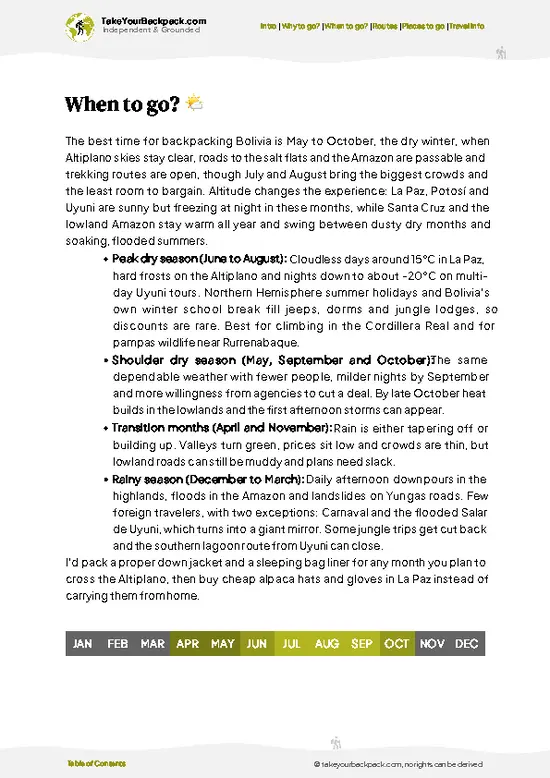
source: climatestotravel.comJANJanuary: not recommended for travelingFEBFebruary: not recommended for travelingMARMarch: not recommended for travelingAPRApril: not recommended for travelingMAYMay: excellent for travelingJUNJune: not recommended for travelingJULJuly: not recommended for travelingAUGAugust: not recommended for travelingSEPSeptember: not recommended for travelingOCTOctober: not recommended for travelingNOVNovember: not recommended for travelingDECDecember: not recommended for traveling

✈️ The backpacker research shortcutBolivia Travel Guide

An offline-friendly backpacking guide with optimized travel routes, ranked highlights, transport advice, and the best areas to stay.
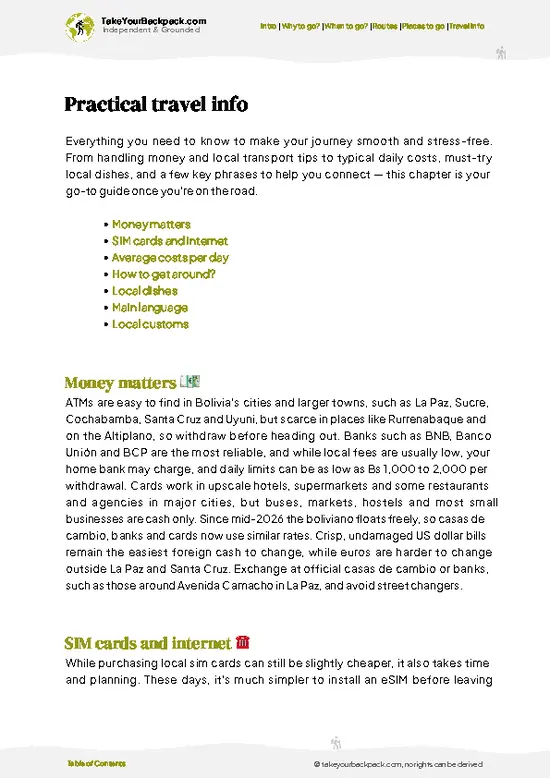
example page 0 from our offline Travel Guide for Bolivia
example page 1 from our offline Travel Guide for Bolivia
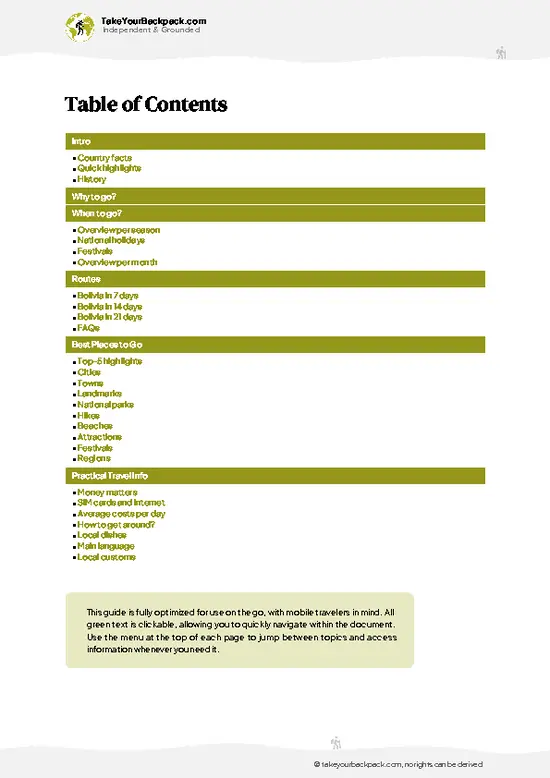
example page 2 from our offline Travel Guide for Bolivia
example page 3 from our offline Travel Guide for Bolivia
example page 4 from our offline Travel Guide for Bolivia
example page 5 from our offline Travel Guide for Bolivia
example page 6 from our offline Travel Guide for Bolivia
example page 7 from our offline Travel Guide for Bolivia
The digital guide (346 pages) contains:
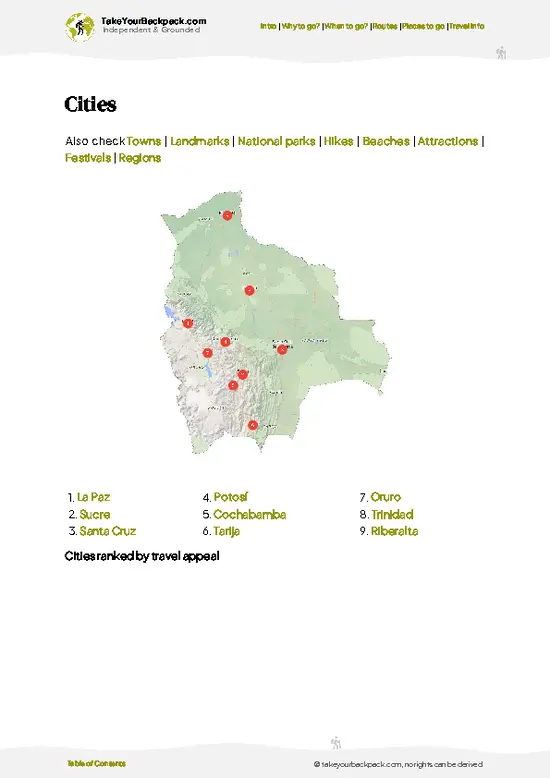
82 highlights, ranked by travel appeal
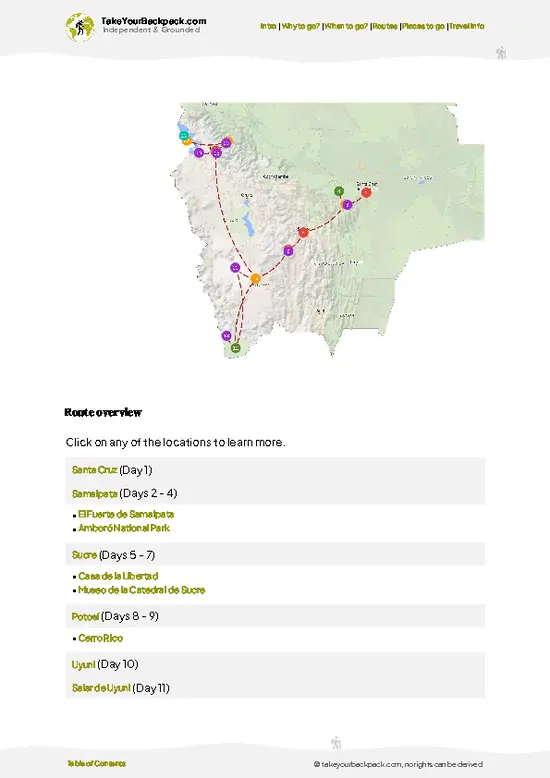
Optimized 7, 14 & 21-day travel routes
Cities, national parks, landmarks, beaches
How to get around
Offline-friendly for travel without Wi-Fi
👉 Click to see all 30+ guide features

📅 Plan smarter in minutes, not weeks
Month by month travel advice
Festivals & national holidays
Budget expectations

🗺️ Go to the right places, skip the overrated ones
Honest pros & cons of destinations
Top hikes, parks & viewpoints
Lesser-known places most travelers miss
Clear “worth it vs skip it” guidance

🛏️ Travel smoothly without rookie mistakes
Best areas to stay
Transport systems explained simply
Common scams & safety advice
SIM cards, money & practical tips

🌍 Understand the country, not just visit it
Culture & traditions
52 Essential phrases & customs
Festivals worth planning around
Traveler-friendly historical context
Insights that make places more meaningful

📱 Built for real travel conditions
Fully downloadable PDF
Works completely offline
Optimized for phone use
Useful in remote areas & buses
Everything in one place
Save weeks of stressful planning
Get instant access to your full guide. 30‑day money-back guarantee.
+ Add another guide for just A$12.35

By proceeding you agree to our terms.
Sent to your inbox immediately after payment • 100% Secure Checkout
Best Backpacking Travel Advisor 2025 tourism awardBest Backpacking
Travel Advisor
2025
What others say about Take Your Backpack Guides:
⭐⭐⭐⭐⭐
Fantastic, amazing amount of information!
⭐⭐⭐⭐⭐
My goodness this is amazing, it's what I've been looking for hats off too you!
⭐⭐⭐⭐⭐
I think this is absolutely BRILLIANT
⭐⭐⭐⭐
Very complete and informative. It's still missing places, but I gotta to commend you
⭐⭐⭐⭐⭐
This is truly amazing, thank you, can't wait to explore it with my kids!
⭐⭐⭐⭐⭐
Awesome resource, thank you!
⭐⭐⭐⭐⭐
This is amazing! Can't wait to explore the ones I haven't seen
⭐⭐⭐⭐
I love this! Well done, great idea.
⭐⭐⭐⭐⭐
Thanks for taking the time to make this gem!
⭐⭐⭐⭐⭐
This might be the best website I've ever seen.
⭐⭐⭐⭐⭐
Congratulations, and thank you so much for your work; it's incredibly valuable.
⭐⭐⭐⭐
In all seriousness I think you did a great job pointing out the important spots
⭐⭐⭐⭐⭐
10/10 very good
⭐⭐⭐⭐⭐
As someone who's only just starting to visit regularly this is awesome, thank you.
⭐⭐⭐⭐
Thank you very much! I'm going to visit my dad, it's going to be very useful!
⭐⭐⭐⭐⭐
This is really cool! We'll be travelling for the first time and this definitely come in handy.
⭐⭐⭐⭐⭐
You are now our minister of culture, congratulations 👨‍💼
⭐⭐⭐⭐⭐
Just wanted to tell you that this is a pearl! Going to follow your recommendations.
⭐⭐⭐⭐⭐
This is so cool. I'll definitely be using the resource for my travels soon.
⭐⭐⭐⭐⭐
This is very impressive! Good work.
⭐⭐⭐⭐⭐
This is an amazing and informative site. Very well done!

🛏️ Where to stay?Best areas to stay in Bolivia

When you’re gearing up for the Tinku festival in Bolivia, your choice of where to stay can make or break your experience. Head to Potosí, the festival’s heart. This city is steeped in history and energy, with a vibrant backpacker scene. The streets buzz with excitement, and you’ll find plenty of fellow travelers eager to share stories and tips.

Look for accommodations near the main square. This area is not just central; it’s alive with local culture. You’ll have easy access to food stalls serving hearty meals that won’t dent your wallet. Plus, being close to the action means you can dive into … read more 👉
When you’re gearing up for the Tinku festival in Bolivia, your choice of where to stay can make or break your experience. Head to Potosí, the festival’s heart. This city is steeped in history and energy, with a vibrant backpacker scene. The streets buzz with excitement, and you’ll find plenty of fellow travelers eager to share stories and tips.

Look for accommodations near the main square. This area is not just central; it’s alive with local culture. You’ll have easy access to food stalls serving hearty meals that won’t dent your wallet. Plus, being close to the action means you can dive into the festivities without wasting time on transport.

Another solid option is Sucre, a short bus ride away. It’s a charming city with a laid-back vibe, perfect for unwinding after a day of revelry. The hostels here are known for their social atmosphere, making it easy to connect with other backpackers.

Avoid the temptation of pricier tourist traps. Stick to these areas, where you can soak in the local spirit and keep your budget intact. This way, you’ll have more energy and funds for the real adventure: the Tinku festival itself.

👛 Costs (as of 4 September 2026)How expensive it really is

Tinku in Bolivia is a whirlwind of energy, tradition, and vibrant culture, but navigating the costs can feel like a maze. Here’s the breakdown to keep your budget intact while you dive into the festivities.
  • Festival Tickets: Expect to pay around $5 to $10 for entry. This gives you access to the heart of the action, where the real magic happens. Some special events might charge a bit more, but generally, this is your ticket to the experience.
  • Accommodation: Prices vary widely. Dormitory beds in hostels range from $10 to $20 per night. If you prefer a private room, budget $30 to $50. Book early, as places fill up fast during the festival. Camping is also an option, often free or with a small fee.
  • Local Transport: Getting around is straightforward. Local buses or shared taxis cost between $1 and
read more 👉
Tinku in Bolivia is a whirlwind of energy, tradition, and vibrant culture, but navigating the costs can feel like a maze. Here’s the breakdown to keep your budget intact while you dive into the festivities.
  • Festival Tickets: Expect to pay around $5 to $10 for entry. This gives you access to the heart of the action, where the real magic happens. Some special events might charge a bit more, but generally, this is your ticket to the experience.
  • Accommodation: Prices vary widely. Dormitory beds in hostels range from $10 to $20 per night. If you prefer a private room, budget $30 to $50. Book early, as places fill up fast during the festival. Camping is also an option, often free or with a small fee.
  • Local Transport: Getting around is straightforward. Local buses or shared taxis cost between $1 and $3 for short distances. If you’re venturing further, budget around $10 to $20 for longer rides. Always confirm prices before hopping in to avoid surprises.
  • Food & Drinks: Street food is your best friend here. You can feast on local dishes for as little as $2 to $5. Sit-down meals in local eateries might run you $5 to $15. Don’t forget to try the local beverages; a beer or soft drink will set you back about $1 to $3.
  • Miscellaneous Expenses: Factor in around $10 to $20 for souvenirs, snacks, or unexpected costs. It’s wise to have a little extra for any spontaneous adventures that come your way.

Stay sharp, plan ahead, and you’ll keep your energy and budget focused on the unforgettable moments that Tinku has to offer.
⚠️ Prices can change and everyone travels differently, so take this as a rough guide. Hope it helps you plan your adventure!

🍲 FoodEating & Drinking in Tinku

At the Tinku festival in Bolivia, food and drinks are as vibrant as the celebrations themselves. You’ll find stalls brimming with local specialties like salteñas, those savory pastries bursting with meat and spices. Grab a plate of pique macho, a hearty mix of beef, sausage, and potatoes, topped with a zesty sauce that’ll make your taste buds dance.

Don’t skip the chicha, a traditional fermented drink made from corn. It’s a staple at festivals and offers a refreshing kick. For something sweeter, try api, a warm, spiced drink made from corn and sugar, perfect for sipping while you soak in the atmosphere.

Festival etiquette is key here. Expect to share your food and drinks with friends and fellow festival-goers; it’s all about community. Lines can get long, so be patient and ready to engage … read more 👉
At the Tinku festival in Bolivia, food and drinks are as vibrant as the celebrations themselves. You’ll find stalls brimming with local specialties like salteñas, those savory pastries bursting with meat and spices. Grab a plate of pique macho, a hearty mix of beef, sausage, and potatoes, topped with a zesty sauce that’ll make your taste buds dance.

Don’t skip the chicha, a traditional fermented drink made from corn. It’s a staple at festivals and offers a refreshing kick. For something sweeter, try api, a warm, spiced drink made from corn and sugar, perfect for sipping while you soak in the atmosphere.

Festival etiquette is key here. Expect to share your food and drinks with friends and fellow festival-goers; it’s all about community. Lines can get long, so be patient and ready to engage with locals. Bring cash; many stalls don’t accept cards, and you’ll want to grab those delicious bites without hassle. Serving sizes can be generous, so consider splitting dishes to sample more flavors without overdoing it.

Immerse yourself in the experience, and let the energy of Tinku fuel your adventure!

FAQFrequently asked questions about Tinku

Tinku takes place annually on May 3rd, coinciding with the Feast of the Cross. The festival lasts for one day but related events and preparations can span several days before and after.
Attending Tinku is generally free as it is a traditional community festival. However, travelers should budget for transportation, accommodation, and food, which can vary but typically cost around $20-50 USD per day in the region.
No, you do not need tickets in advance to attend Tinku. It is an open public event held in the rural areas near Potosí, Bolivia, where visitors can join freely.
⚠️ Things can change over time, so always validate details locally before you go.

Other Bolivian festivals near Tinku

Explore more nearby:

  • Oruro Carnival—UNESCO heritage, massive processions, symbolic choreography| 363 km away
  • Diablada—devil masks, Andean mythology, ornate costumes| 427 km away
  • Virgen de Urkupiña—pilgrimage, Cochabamba, religious offerings| 430 km away

💡 Not sure where to go next?
Create a personalized itinerary for Bolivia including Tinku and the places that fit your trip.

Generate my itinerary

👉 Discover all festivals

Or checkout all Bolivia has to offer (think cities, towns, villages, national parks, hikes, beaches, festivals)
Country photo of Bolivia

We 💚 feedbackParting advice and final tips

Tinku is a wild celebration of culture and strength, where the energy of the crowd pulses like a heartbeat. You’ll feel the raw spirit of Bolivia as you join in the festivities. But brace yourself: altitude sickness can hit hard. Hydrate and acclimatize before diving into the chaos. It’s a challenge, but overcoming it means you’ll savor every moment of this unforgettable experience. Embrace the struggle; it’s part of the adventure.

✈️ When did I visit Bolivia?
Bolivia I visited during my half year trip through South and Central America back in 2003

✍️ Help improve this page!
The information on this page is based on my own backpacking experience in Bolivia, supplemented with up-to-date research and feedback from other travelers. Travel details can change, so if you notice anything outdated or incomplete, feel free to let me know.


🙋‍♂️ Give feedback

👋 Meet the founderWho’s Behind Take Your Backpack?

Johan, backpacker and founder of TakeYourBackpackHi, I’m Johan (Netherlands 🇳🇱), the creator of TakeYourBackpack. Over the past decade, I’ve backpacked through 80+ countries across six continents, gaining extensive experience with independent travel, long-term trips, and overland routes.

This site is built on a combination of firsthand travel experience and carefully curated insights from other backpackers. Many guides are based on places I’ve personally visited, while others bring together tips, observations, and practical advice shared by trusted travelers I’ve met along the way.

The goal is to provide realistic, experience-driven guidance — not generic itineraries — so you can explore destinations with better context, clearer expectations, and more confidence.

Get full Bolivia guide •
Instant download • 82 highlights • Full Offline guide