×

Bosnia and Herzegovina🇧🇦 | best landmarksThe Must-See 10 landmarks in Bosnia and Herzegovina

Landmarks in Bosnia and Herzegovina are layered: Ottoman stone bridges, minarets, Habsburg facades, medieval fortresses and war memorials often stand within a few hundred meters of each other. Sarajevo and Mostar deliver the densest cluster, with copper-hammering echoing through cobbled lanes and the smell of grilled ćevapi drifting over everything. They also bring summer crowds and rising prices. Inland towns and the Una and Drina valleys are quieter, cheaper and harder to reach by bus. Many sites cost only a few euros or nothing. Independent travelers manage well here, though steep climbs and uneven stone call for sturdy shoes.

By Johan Kruseman 🇳🇱 | Updated October 18, 2026
Explore the best national parks in Bosnia and Herzegovina

Why go?Key Factors That Shape the Experience

Few countries compress so much history into so little ground. The Ottoman, Austro-Hungarian and Yugoslav eras all left physical marks, and in places they sit on the same street: a mosque courtyard, an Orthodox church and a Catholic cathedral can share a single walk, with the call to prayer and church bells overlapping at midday. Mountains and river canyons shaped where fortresses and bridges were built, so many landmarks sit on gorges, ridgelines and old trade crossings rather than in neat city squares.

The 1992 to 1995 war is part of the story too. Bullet-pocked walls, rebuilt bridges and memorial sites stand beside restored monuments, and the atmosphere is often sober rather than festive. Visitors should expect to meet that history directly, and to dress and behave respectfully at religious … read more 👉
Few countries compress so much history into so little ground. The Ottoman, Austro-Hungarian and Yugoslav eras all left physical marks, and in places they sit on the same street: a mosque courtyard, an Orthodox church and a Catholic cathedral can share a single walk, with the call to prayer and church bells overlapping at midday. Mountains and river canyons shaped where fortresses and bridges were built, so many landmarks sit on gorges, ridgelines and old trade crossings rather than in neat city squares.

The 1992 to 1995 war is part of the story too. Bullet-pocked walls, rebuilt bridges and memorial sites stand beside restored monuments, and the atmosphere is often sober rather than festive. Visitors should expect to meet that history directly, and to dress and behave respectfully at religious and memorial sites.

Infrastructure is the main limit. Roads wind through mountains, buses are slow, and rural timetables thin out on weekends and in winter. Signage is patchy outside the big towns, and opening hours at smaller sites can be informal. Costs stay modest compared with western Europe, and the local currency is the convertible mark (KM), though cards are not accepted everywhere. Travelers who allow time and carry some cash find a country with real depth and far fewer crowds than its neighbors on the Adriatic.
Our Approach to Ranking
The list of best unique sites in Bosnia and Herzegovina is created based on history or culture, wow factor, atmosphere, quirks, and memorability. If you feel a unique site is missing in this list, please let us know.

When to go?Seasonal Guide to Visiting

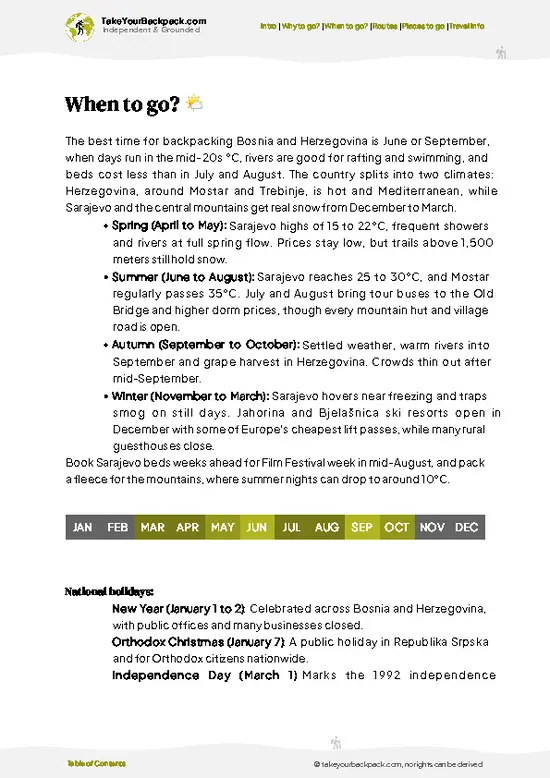
Best Months and Why: May, June, September and early October are the best months for landmarks in Bosnia and Herzegovina, with daytime highs of roughly 18 to 28°C, long light and none of the July and August heat. Stone lanes stay comfortable to walk, and the evenings smell of woodsmoke and linden.
Summer: July and August can push Mostar and the Herzegovina lowlands past 35°C, and the white limestone throws the heat back at you. Midday visits to exposed fortresses and old towns turn into slow, sweaty affairs, so early mornings and evenings work better. Crowds peak in Mostar and Sarajevo, and accommodation can run 20 to 40 percent above spring rates. Day-trip groups from the Croatian coast thin out after about 5 pm.
Autumn and Spring: Autumn brings golden light and clear air in the central mountains, … read more 👉
Best Months and Why: May, June, September and early October are the best months for landmarks in Bosnia and Herzegovina, with daytime highs of roughly 18 to 28°C, long light and none of the July and August heat. Stone lanes stay comfortable to walk, and the evenings smell of woodsmoke and linden.
Summer: July and August can push Mostar and the Herzegovina lowlands past 35°C, and the white limestone throws the heat back at you. Midday visits to exposed fortresses and old towns turn into slow, sweaty affairs, so early mornings and evenings work better. Crowds peak in Mostar and Sarajevo, and accommodation can run 20 to 40 percent above spring rates. Day-trip groups from the Croatian coast thin out after about 5 pm.
Autumn and Spring: Autumn brings golden light and clear air in the central mountains, with highs of 12 to 20°C. Spring is greener but wetter, with April and May rain making cobbles slick and river valleys loud with meltwater.
Winter: November to March is cold and often gray. Sarajevo averages around 0°C in January, with snow and inversion fog, and mountain roads can close briefly. Prices are lowest, crowds are minimal, and some small sites keep shorter hours, but coffeehouses with steaming copper pots make the cold part of the experience.

unique site hoppingPlanning Your Route Efficiently

How Many Days: A trip combining several landmarks in Bosnia and Herzegovina needs 7 to 10 days, and 5 days is the minimum if you stay to the central corridor. The country divides into a few clusters: Sarajevo and its surroundings, Herzegovina around Mostar, and the northwest or east for the quieter stops.
Direction and Transport: Moving from Sarajevo south to Mostar and onward toward the coast works well, because the Sarajevo to Mostar route is the best-served line, with trains and buses taking about 2.5 to 3 hours through the Neretva canyon. Starting in Sarajevo also lets you shake off jet lag in a compact, walkable center. Add the north (Banja Luka, Bihać) as a separate loop; Sarajevo to Banja Luka takes 4 to 5 hours by bus, and Bihać is further still. Eastern stops near the Drina need private … read more 👉
How Many Days: A trip combining several landmarks in Bosnia and Herzegovina needs 7 to 10 days, and 5 days is the minimum if you stay to the central corridor. The country divides into a few clusters: Sarajevo and its surroundings, Herzegovina around Mostar, and the northwest or east for the quieter stops.
Direction and Transport: Moving from Sarajevo south to Mostar and onward toward the coast works well, because the Sarajevo to Mostar route is the best-served line, with trains and buses taking about 2.5 to 3 hours through the Neretva canyon. Starting in Sarajevo also lets you shake off jet lag in a compact, walkable center. Add the north (Banja Luka, Bihać) as a separate loop; Sarajevo to Banja Luka takes 4 to 5 hours by bus, and Bihać is further still. Eastern stops near the Drina need private transport or patient local buses, with long gaps between departures.
Pacing and Mistakes: Allow half a day to a full day per major stop, and a full day for any town with a fortress and a valley around it. The usual mistake is cramming Mostar into a coastal day trip, which means arriving at midday in peak heat and crowds. Stay at least one night instead and see it at dawn or dusk. Another is trusting map-app drive times: mountain roads, border queues and single-lane tunnels often add 30 to 60 minutes. Build slack into every transfer.

The ListHighly Recommended landmarks of Bosnia and Herzegovina

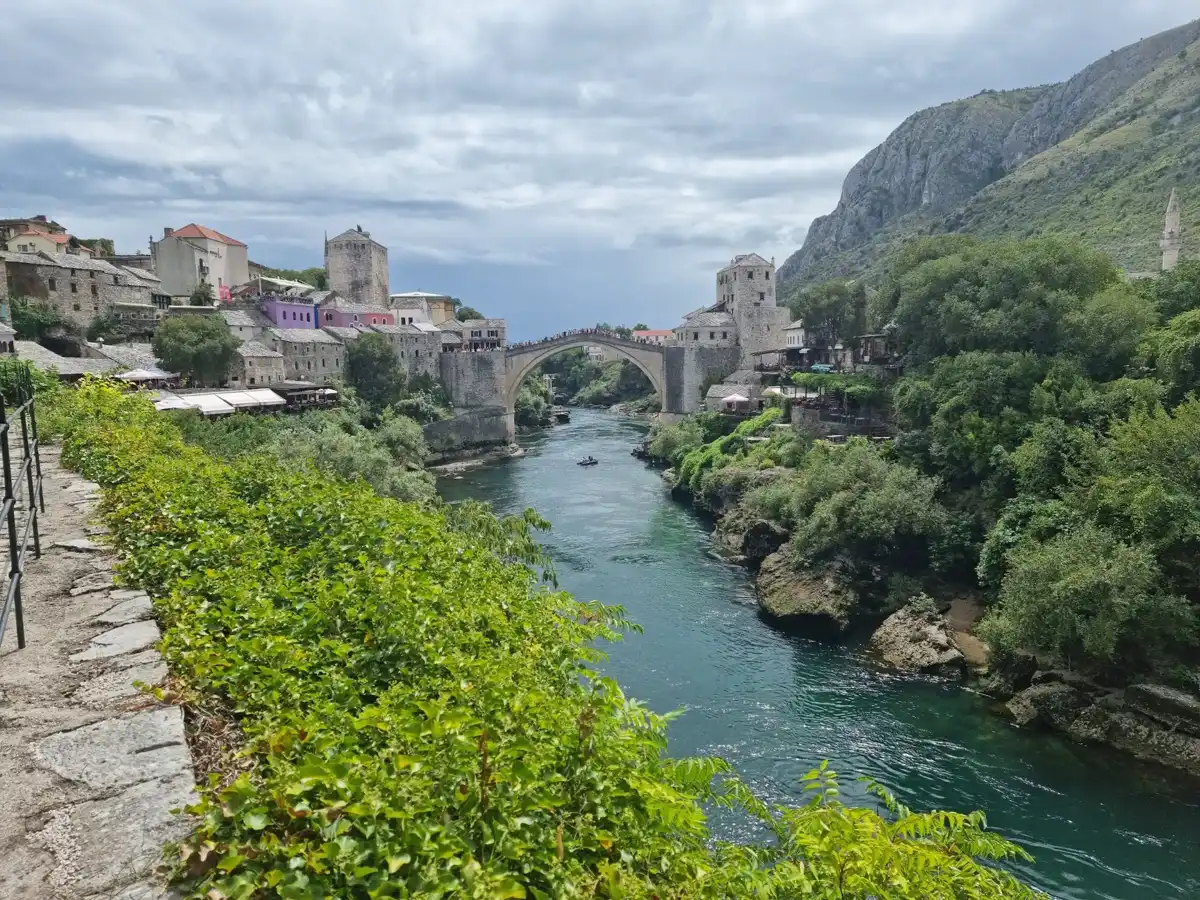
1 Stari Most

single-span arch, river crossing, reconstructed landmark

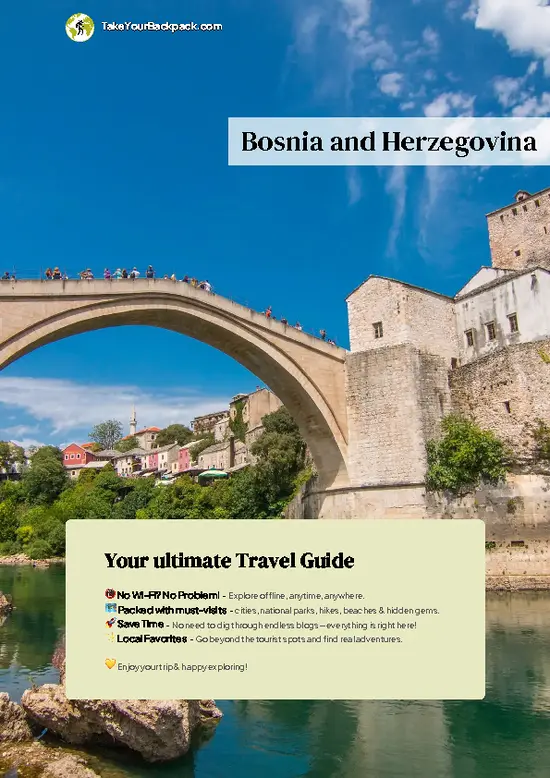
Cross a rebuilt stone bridge high above the Neretva, observing local divers and the contrasting architecture of the divided old town.

bosnia-and-herzegovina-unique-site-stari-most
© Google | Vladimir Uhlik

2 Kravice Waterfalls

natural pools, limestone cliffs, swimming spot

Swim or relax at the base of a wide, multi-tiered waterfall surrounded by forest, with picnic areas and seasonal refreshment stalls.

3 Jajce Waterfall

town-center cascade, river confluence, panoramic viewpoint

Watch water plunge dramatically where two rivers meet below the medieval town, with easy access to viewpoints and nearby historical ruins.

bosnia-and-herzegovina-unique-site-jajce-waterfall
© Google | Dario Jelcic

4 Blagaj Tekke

cliffside monastery, turquoise spring, Ottoman architecture

Stand at the base of a sheer cliff where a centuries-old dervish house meets the source of the Buna River in tranquil surroundings.

bosnia-and-herzegovina-unique-site-blagaj-tekke
© Google | Sonja Ilic

5 Vjetrenica Cave

karst cave system, underground lakes, endemic fauna

Descend into a vast cave network featuring rare animal species, subterranean streams, and striking limestone formations on guided tours.

bosnia-and-herzegovina-unique-site-vjetrenica-cave
© Google | Špilja Vjetrenica

6 Mehmed Paša Sokolović Bridge

stone arches, UNESCO site, Drina River crossing

Walk across a 16th-century bridge spanning the Drina, known for its elegant arches and literary associations with Balkan history.

7 Vrelo Bosne

river springs, tree-lined paths, swan ponds

Stroll shaded walkways beside clear springs that feed the Bosna River, with picnic spots and horse-drawn carriage rides in a park setting.

bosnia-and-herzegovina-unique-site-vrelo-bosne
© Google | Geza Komaromi

8 Ethno Village Stanišići

traditional wooden houses, watermills, folk museum

Wander among reconstructed rural dwellings and working mills that showcase regional crafts, customs, and rural life from past centuries.

9 Kastel Fortress

stone ramparts, riverbank setting, archaeological remains

Climb ancient walls overlooking the Vrbas River and explore layered ruins that reflect centuries of military and civic history.

bosnia-and-herzegovina-unique-site-kastel-fortress
© Google |

10 Srebrenik Fortress

hilltop stronghold, stone towers, wooden bridge

Ascend to a medieval fortress perched on a rocky outcrop, accessed by a wooden bridge and offering wide views of the surrounding hills.

bosnia-and-herzegovina-unique-site-srebrenik-fortress
© Google | Bojan Lukic

11 Rakitnica Canyon

deep gorge, hiking trails, remote wilderness

Trek along rugged paths above a narrow canyon, encountering rare plants and dramatic rock formations in a largely undeveloped landscape.

bosnia-and-herzegovina-unique-site-rakitnica-canyon
© Google | Haris A.

12 Mogorjelo

Roman villa ruins, mosaic floors, olive groves

Trace the outlines of a Roman estate complex set among Mediterranean vegetation, with preserved foundations and fragments of ancient decoration.

bosnia-and-herzegovina-unique-site-mogorjelo
© Google |

13 Visoko Pyramids

pyramid-shaped hill, excavation site, alternative archaeology

Join guided tours exploring a controversial site where excavations and theories about ancient structures attract curious visitors and researchers.

bosnia-and-herzegovina-unique-site-visoko-pyramids
© Google |

14 Kraljeva Sutjeska Monastery

Orthodox complex, forested valley, fresco interiors

Visit a centuries-old monastery nestled in a wooded gorge, known for its painted walls and peaceful natural setting.

Think you know Bosnia and Herzegovina?

Prove you’re a true local — uncover 4 lesser-known landmarks in Bosnia and Herzegovina that locals tend to keep to themselves.
Loading the map 🌍

Expert viewExpert Commentary on landmarks

How Many to Visit: Aim for six to eight landmarks across a week to ten days. That number keeps you out of the trap of rushing through every site, and each one needs time on its own: climbing stairs to a fortress, sitting in a courtyard as the call to prayer fades, or walking a memorial site slowly. More than two major stops a day leaves you with photos and no memory of the smell of the place.
Choosing Between Kinds: History-minded travelers should lean toward Ottoman old towns and war-related sites, which give the clearest picture of how the country got here. Hikers and photographers are better served by canyon, river and hilltop sites, where the reward is the view and the sound of water below. If you are short on time or budget, pick one old town, one fortress and one memorial, and leave the … read more 👉
How Many to Visit: Aim for six to eight landmarks across a week to ten days. That number keeps you out of the trap of rushing through every site, and each one needs time on its own: climbing stairs to a fortress, sitting in a courtyard as the call to prayer fades, or walking a memorial site slowly. More than two major stops a day leaves you with photos and no memory of the smell of the place.
Choosing Between Kinds: History-minded travelers should lean toward Ottoman old towns and war-related sites, which give the clearest picture of how the country got here. Hikers and photographers are better served by canyon, river and hilltop sites, where the reward is the view and the sound of water below. If you are short on time or budget, pick one old town, one fortress and one memorial, and leave the rest. Religious buildings add depth but are best visited outside prayer times.
What It Costs: Plan on roughly US$30 to 50 a day for a hostel bed, local food and a couple of entries. Individual entry fees tend to run about 2 to 10 KM (roughly US$1 to 6), with a few museums and towers at the higher end, and many outdoor sites are free. Local guides for a half-day cost about 50 to 120 KM, which is worth it for war history that is hard to read from a plaque. Taxis and buses between nearby sites add 5 to 25 KM per hop. Carry cash, since small ticket booths and cafes often skip cards.
Safety and Respect: Most sites are safe and easy. Stay on marked paths in countryside: landmines from the war remain in some rural areas, and trail signs with red mine warnings mean exactly that. In mosques and churches, cover shoulders and knees, and women should carry a scarf for mosques. Remove shoes where others do. Memorial sites call for quiet. Ask before photographing people, and avoid taking political sides in conversations about the war. Summer stone can burn bare feet and slick marble can send you sliding, so wear shoes with grip. The reward is a country where locals will often invite you to sit down for a coffee.

✈️ The backpacker research shortcutBosnia and Herzegovina Travel Guide

An offline-friendly backpacking guide with optimized travel routes, ranked highlights, transport advice, and the best areas to stay.
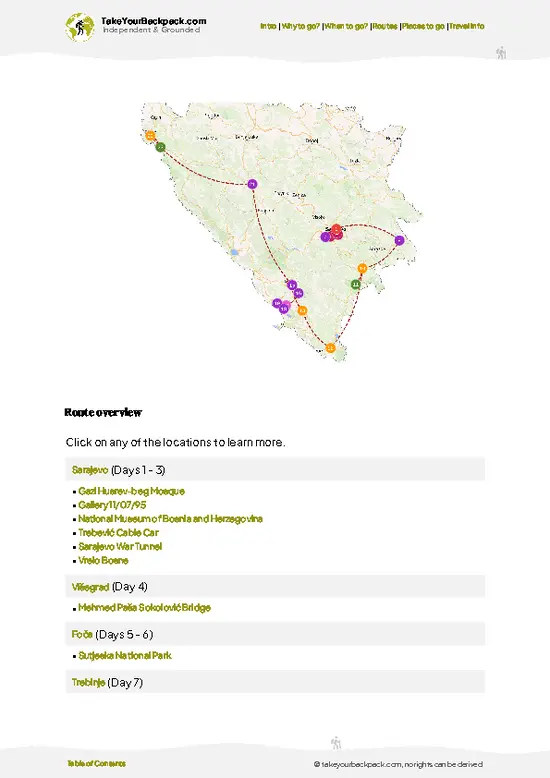
example page 0 from our offline Travel Guide for Bosnia and Herzegovina
example page 1 from our offline Travel Guide for Bosnia and Herzegovina
example page 2 from our offline Travel Guide for Bosnia and Herzegovina
example page 3 from our offline Travel Guide for Bosnia and Herzegovina
example page 4 from our offline Travel Guide for Bosnia and Herzegovina
example page 5 from our offline Travel Guide for Bosnia and Herzegovina
example page 6 from our offline Travel Guide for Bosnia and Herzegovina
example page 7 from our offline Travel Guide for Bosnia and Herzegovina
The digital guide (311 pages) contains:
✅ 82 highlights, ranked by travel appeal
✅ Optimized 5, 10 & 15-day travel routes
✅ Cities, national parks, landmarks, beaches
✅ How to get around
✅ Offline-friendly for travel without Wi-Fi
👉 Click to see all 30+ guide features

📅 Plan smarter in minutes, not weeks
✅ Month by month travel advice
✅ Festivals & national holidays
✅ Budget expectations

🗺️ Go to the right places, skip the overrated ones
✅ Honest pros & cons of destinations
✅ Top hikes, parks & viewpoints
✅ Lesser-known places most travelers miss
✅ Clear “worth it vs skip it” guidance

🛏️ Travel smoothly without rookie mistakes
✅ Best areas to stay
✅ Transport systems explained simply
✅ Common scams & safety advice
✅ SIM cards, money & practical tips

🌍 Understand the country, not just visit it
✅ Culture & traditions
✅ 52 Essential phrases & customs
✅ Festivals worth planning around
✅ Traveler-friendly historical context
✅ Insights that make places more meaningful

📱 Built for real travel conditions
✅ Fully downloadable PDF
✅ Works completely offline
✅ Optimized for phone use
✅ Useful in remote areas & buses
✅ Everything in one place
Stop searching, start planning
Get instant access to your full guide. 30‑day money-back guarantee.
+ Add another guide for just

By proceeding you agree to our terms.
Sent to your inbox immediately after payment • 100% Secure Checkout
Best Backpacking Travel Advisor 2025 tourism awardBest Backpacking
Travel Advisor
2025
What others say about Take Your Backpack Guides:
⭐⭐⭐⭐⭐
Fantastic, amazing amount of information!
⭐⭐⭐⭐⭐
My goodness this is amazing, it's what I've been looking for hats off too you!
⭐⭐⭐⭐⭐
I think this is absolutely BRILLIANT
⭐⭐⭐⭐
Very complete and informative. It's still missing places, but I gotta to commend you
⭐⭐⭐⭐⭐
This is truly amazing, thank you, can't wait to explore it with my kids!
⭐⭐⭐⭐⭐
Awesome resource, thank you!
⭐⭐⭐⭐⭐
This is amazing! Can't wait to explore the ones I haven't seen
⭐⭐⭐⭐
I love this! Well done, great idea.
⭐⭐⭐⭐⭐
Thanks for taking the time to make this gem!
⭐⭐⭐⭐⭐
This might be the best website I've ever seen.
⭐⭐⭐⭐⭐
Congratulations, and thank you so much for your work; it's incredibly valuable.
⭐⭐⭐⭐
In all seriousness I think you did a great job pointing out the important spots
⭐⭐⭐⭐⭐
10/10 very good
⭐⭐⭐⭐⭐
As someone who's only just starting to visit regularly this is awesome, thank you.
⭐⭐⭐⭐
Thank you very much! I'm going to visit my dad, it's going to be very useful!
⭐⭐⭐⭐⭐
This is really cool! We'll be travelling for the first time and this definitely come in handy.
⭐⭐⭐⭐⭐
You are now our minister of culture, congratulations 👨‍💼
⭐⭐⭐⭐⭐
Just wanted to tell you that this is a pearl! Going to follow your recommendations.
⭐⭐⭐⭐⭐
This is so cool. I'll definitely be using the resource for my travels soon.
⭐⭐⭐⭐⭐
This is very impressive! Good work.
⭐⭐⭐⭐⭐
This is an amazing and informative site. Very well done!

🛏️ Where to stay?Best Places to Stay in Bosnia and Herzegovina

Bosnia and Herzegovina has plenty of hostels and guesthouses, with dorm beds usually running 20 to 35 KM (about €10 to 18) and private rooms in family-run pansions from roughly 50 KM (about €25). In Sarajevo, Baščaršija and the surrounding Old Town hold the densest cluster of hostels, putting you within walking distance of the main sights and the bars, though the streets stay noisy late and the lanes climbing the hillsides are steep, while Marijin Dvor is calmer, better connected by tram and a 20-minute walk from the old center. In Mostar, the area around the Old Town near the bridge has the most budget beds and the liveliest evenings, but the quieter streets on the west bank often give you … read more 👉
Bosnia and Herzegovina has plenty of hostels and guesthouses, with dorm beds usually running 20 to 35 KM (about €10 to 18) and private rooms in family-run pansions from roughly 50 KM (about €25). In Sarajevo, Baščaršija and the surrounding Old Town hold the densest cluster of hostels, putting you within walking distance of the main sights and the bars, though the streets stay noisy late and the lanes climbing the hillsides are steep, while Marijin Dvor is calmer, better connected by tram and a 20-minute walk from the old center. In Mostar, the area around the Old Town near the bridge has the most budget beds and the liveliest evenings, but the quieter streets on the west bank often give you more space for the money and an easy 10 to 15-minute walk in.

If you enjoy meeting fellow travelers, consider choosing hostels with high ratings for atmosphere. On the other hand, if you prefer having your own space, a hotel might be a better option.

Bosnia and HerzegovinaExplore Bosnia and Herzegovina

👋 Meet the founderWho’s Behind Take Your Backpack?

Johan, backpacker and founder of TakeYourBackpackHi, I’m Johan (Netherlands 🇳🇱), the creator of TakeYourBackpack. Over the past 3 decades, I’ve backpacked through 90+ countries across six continents, gaining extensive experience with independent travel, long-term trips, and overland routes.

This site is built on a combination of firsthand travel experience and carefully curated insights from other backpackers. Many guides are based on places I’ve personally visited, while others bring together tips, observations, and practical advice shared by trusted travelers I’ve met along the way.

The goal is to provide realistic, experience-driven guidance — not generic itineraries — so you can explore destinations with better context, clearer expectations, and more confidence.