×

Botswana🇧🇼 | townsKasaneChobe riverfront, elephant crossings, boat cruises, park gateway | things to do and best time to go

Explore GhanziExplore Lobatse

Backpacking in Kasane
🌟 Highlighttown ranked #2
By Johan Kruseman 🇳🇱 | Updated October 22, 2026

Kasane is not inside Chobe National Park, though many travelers assume it is; the town sits just outside the park gate on the Chobe River, in the north of Botswana, close to where four countries nearly meet. Elephants do wander through town, but game viewing needs a park permit and a vehicle or boat. Distances are long and public transport is thin, so experienced travelers join shared boat or drive trips instead of hiring a private vehicle. Fuel and groceries are reliable here, so stock up before heading into the bush. The town itself is small and practical: a few supermarkets, riverside lodges, a handful of backpacker-friendly camps and bars. Evenings are quiet, and meeting other travelers is easy because most people book the same activities. Victoria Falls lies a short hop across the border. It suits wildlife lovers and overlanders with a flexible budget. It won't suit anyone wanting nightlife, cheap safaris or sights beyond the river.

Discover everything you want to know in the 📖 Botswana Travel Guide.


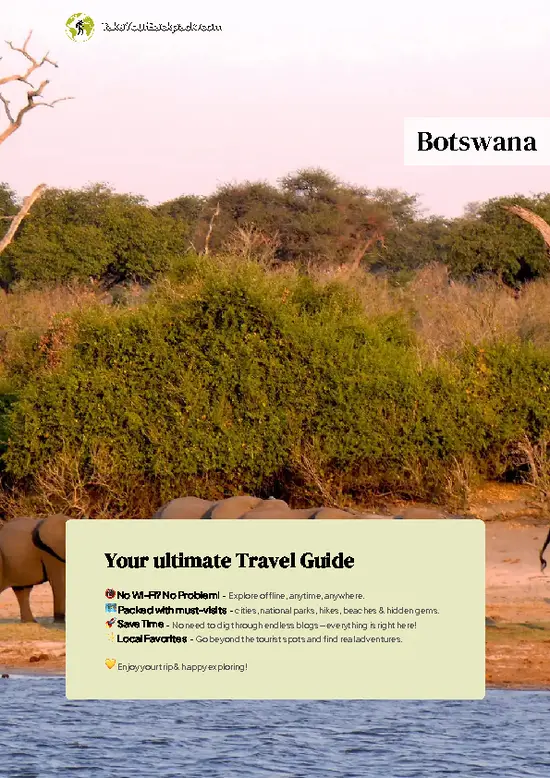
example page 0 from our offline Travel Guide for Botswana
example page 1 from our offline Travel Guide for Botswana
example page 2 from our offline Travel Guide for Botswana
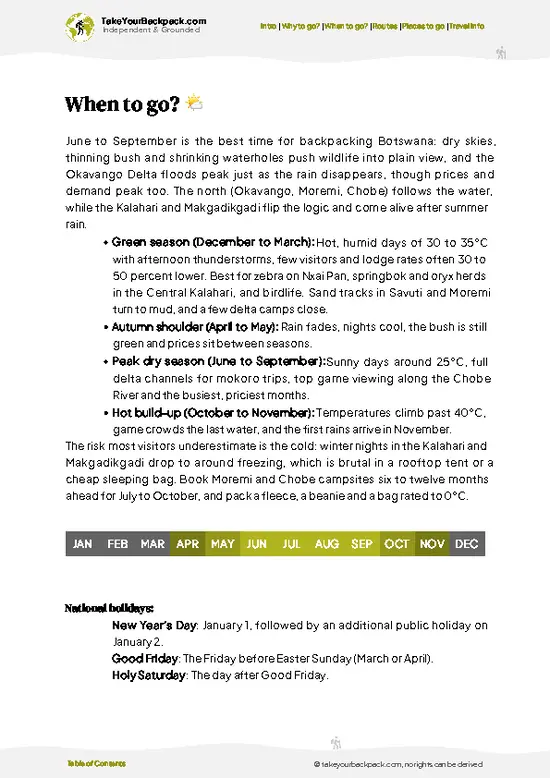
example page 3 from our offline Travel Guide for Botswana
example page 4 from our offline Travel Guide for Botswana
example page 5 from our offline Travel Guide for Botswana
example page 6 from our offline Travel Guide for Botswana
example page 7 from our offline Travel Guide for Botswana
Loading the map 🌍
CLICK TO FILTER
cities
towns
villages
landmarks
national parks
hikes
attractions
festivals
regions
SHOW COUNTRY’S BESTSHOW ALL

✨ Why go?
Ranked #2 town in Botswana
What makes this town worth visiting

Kasane works as a gateway for anyone who wants elephants without a fly-in budget. The Chobe River frontage has one of Africa's densest elephant populations, and you can see them from a boat in the afternoon and still sleep in a campsite or budget guesthouse that night. Most travelers stay two or three nights: one morning game drive, one river cruise, and a rest day for laundry, resupply and onward planning. The town is also a junction where four countries meet at the Kazungula crossing, so you will cross paths with overlanders heading to Zambia, Zimbabwe and Namibia, which makes it a good place to swap route advice. Kasane suits hikers tired of long walking days, wildlife photographers, and solo travelers who like easy company around a campfire. It is less suited to those who want walkable … read more 👉
Kasane works as a gateway for anyone who wants elephants without a fly-in budget. The Chobe River frontage has one of Africa's densest elephant populations, and you can see them from a boat in the afternoon and still sleep in a campsite or budget guesthouse that night. Most travelers stay two or three nights: one morning game drive, one river cruise, and a rest day for laundry, resupply and onward planning. The town is also a junction where four countries meet at the Kazungula crossing, so you will cross paths with overlanders heading to Zambia, Zimbabwe and Namibia, which makes it a good place to swap route advice. Kasane suits hikers tired of long walking days, wildlife photographers, and solo travelers who like easy company around a campfire. It is less suited to those who want walkable sights or lively nights. Treat it as a short, purposeful stop. The Chobe riverfront is the reason to come, and nothing else in town needs more than an afternoon.

💡 HighlightsTop highlights of Kasane

  1. Chobe National Park riverfront drive. The park gate is a few minutes from town, and the Serengeti Park Road along the water gives the best elephant, buffalo and hippo sightings. Go on a morning or late-afternoon drive of 3 to 4 hours. Park fees for foreign visitors run around US$30 to 45 per person, plus vehicle fees, and a shared game drive costs about US$50 to 90.
  2. Chobe River boat cruise. From the water you get close to elephants crossing channels, crocodiles and fish eagles. Afternoon cruises catch the herds coming to drink. Expect 2 to 3 hours and about US$40 to 70 shared, with a private boat costing more.
  3. Kasane Waterfront at the town's river edge. A short walk along the river shows birds, monitor lizards and sometimes elephants at dusk. It is free and takes about an hour. Visit near sundown
… read more 👉
  1. Chobe National Park riverfront drive. The park gate is a few minutes from town, and the Serengeti Park Road along the water gives the best elephant, buffalo and hippo sightings. Go on a morning or late-afternoon drive of 3 to 4 hours. Park fees for foreign visitors run around US$30 to 45 per person, plus vehicle fees, and a shared game drive costs about US$50 to 90.
  2. Chobe River boat cruise. From the water you get close to elephants crossing channels, crocodiles and fish eagles. Afternoon cruises catch the herds coming to drink. Expect 2 to 3 hours and about US$40 to 70 shared, with a private boat costing more.
  3. Kasane Waterfront at the town's river edge. A short walk along the river shows birds, monitor lizards and sometimes elephants at dusk. It is free and takes about an hour. Visit near sundown for the best light and fewer people.
  4. Chobe Safari Lodge area and riverside viewing decks. The riverside bar and deck let you watch the water over a cold drink without booking a tour. Allow an hour or two. It costs only what you order, roughly US$3 to 8 for a drink.
  5. Kasane Forest Reserve walk. The forest area near town holds birds and small game and suits those who want quiet. Go in the early cool hours, and allow 1 to 2 hours. Entry is typically free or very low cost, but keep alert for elephants and avoid walking alone at dusk.
For day trips from Kasane, Victoria Falls in Zimbabwe, Chobe's Savuti marsh and Kazuma Pan are the main options.
For a first visit, the afternoon Chobe River boat cruise gives the most elephants for the least effort.
Spotted a mistake or missing something? Contact us.

Things to do around Kasane

Ratings based on Tripadvisor reviews. When you book through this link, you support our work at no extra cost to you.

🏘️ NeighborhoodsKey areas and districts to know

Kasane is small enough that its areas run into each other, but they behave differently, and knowing why saves you wasted taxi fares.
  • Town center and Kasane Mall area: This is where the supermarkets, ATMs, banks, pharmacies and the main tour offices sit, so it is the place to stock up before any trip, because shops thin out fast once you leave for the park or the Zambezi. It is walkable in 15 minutes, though midday heat makes the walk slower than it looks.
  • Riverfront along the Chobe: Boat cruise jetties and lodges line the water here. Elephants and hippos graze on the floodplain, which is why the road is shared with wildlife at dusk. Walk in daylight and give animals room. Evening meals are at lodge restaurants and a few grill places, and nightlife is a quiet drink on a deck.
  • Kazungula Road and
… read more 👉
Kasane is small enough that its areas run into each other, but they behave differently, and knowing why saves you wasted taxi fares.
  • Town center and Kasane Mall area: This is where the supermarkets, ATMs, banks, pharmacies and the main tour offices sit, so it is the place to stock up before any trip, because shops thin out fast once you leave for the park or the Zambezi. It is walkable in 15 minutes, though midday heat makes the walk slower than it looks.
  • Riverfront along the Chobe: Boat cruise jetties and lodges line the water here. Elephants and hippos graze on the floodplain, which is why the road is shared with wildlife at dusk. Walk in daylight and give animals room. Evening meals are at lodge restaurants and a few grill places, and nightlife is a quiet drink on a deck.
  • Kazungula Road and the Chobe National Park gate: Spread out along the main road, this stretch holds the park entrance, campsites and fuel stations. Distances are too long to walk comfortably, and animals cross the road, so use a taxi or a shared transfer.
  • Kazungula: Around 10 kilometers west, this border village has the ferry and bridge crossing to Zambia. Come for logistics rather than sights. Change money only at banks, and expect trucks queuing along the approach road.

⌛️ 1 dayHow to make the most of one day

Kasane works best as a day split around the heat: a slow walk and short taxi hops in the morning, a long break from midday, then a boat in the cooler late afternoon.
7:00 AM, Kasane Main Road and Riverfront: Start with coffee and a pastry at one of the cafés along the main road, then walk down to the Chobe riverbank. Hornbills and monitor lizards are already moving, and the air is still cool enough to stroll comfortably.
8:30 AM, Kasane Rest Camp Grounds: Walk or take a short taxi ride (about US$3 to 5) to the green belt by the river, where warthogs graze on the lawns and baboons patrol the car parks. It is free to look around from the public edges, and the birdlife along the water is excellent.
10:00 AM, Kasane Forest Reserve Edge: Ask a taxi driver to run you to the reserve fringe on the road … read more 👉
Kasane works best as a day split around the heat: a slow walk and short taxi hops in the morning, a long break from midday, then a boat in the cooler late afternoon.
7:00 AM, Kasane Main Road and Riverfront: Start with coffee and a pastry at one of the cafés along the main road, then walk down to the Chobe riverbank. Hornbills and monitor lizards are already moving, and the air is still cool enough to stroll comfortably.
8:30 AM, Kasane Rest Camp Grounds: Walk or take a short taxi ride (about US$3 to 5) to the green belt by the river, where warthogs graze on the lawns and baboons patrol the car parks. It is free to look around from the public edges, and the birdlife along the water is excellent.
10:00 AM, Kasane Forest Reserve Edge: Ask a taxi driver to run you to the reserve fringe on the road out of town. Few visitors bother with it, but the dry woodland holds sable and roan antelope tracks, and a quiet half hour here shows you the Kalahari sand country that starts just behind the riverfront. Keep your distance from anything with horns or tusks, and stay near the vehicle.
12:00 PM, Lunch and Siesta: Head back to town for a grilled bream or a burger at a riverside restaurant (US$8 to 15), then retreat to your hostel or lodge. The midday sun is brutal, and the animals rest too.
3:30 PM, Chobe River Boat Cruise: Board a shared boat at one of the jetties for a two to three hour trip (US$45 to 70). Hippos, crocodiles and elephants crossing the channels are the main attraction, and the low light is kind to photographers. Bring a hat and a windbreaker, because the breeze on the water cools fast.
7:00 PM, Dinner on the Waterfront: Finish at a riverside restaurant or bar (US$10 to 20 for a meal), where you can swap stories with other backpackers over a cold Windhoek or a local Chibuku if you are brave. Take a taxi back to your bed, since walking in the dark is unwise with wildlife around.

🌤️ When to go?Choosing the right time of year

  • Dry season (May to October): Wildlife concentrates along the Chobe River because the bush has no other water, so this is the busiest and priciest period. Days run 25 to 32°C (77 to 90°F), and June to August nights can fall to 5 to 10°C (41 to 50°F). Daylight lasts roughly 11 to 12 hours.
  • Hot build-up (September to November): Afternoons climb to 35 to 40°C (95 to 104°F). Elephant numbers on the river peak, and lodge prices stay high until the first rains.
  • Green season (December to March): Heavy afternoon storms bring daytime highs of 30 to 35°C (86 to 95°F), humidity and muddy tracks. Animals scatter into the interior, birdlife is at its best, and rooms and cruises often cost 20 to 40 percent less.
  • Shoulder months (April and May): Water levels are high, crowds are thin and temperatures are mild.
… read more 👉
  • Dry season (May to October): Wildlife concentrates along the Chobe River because the bush has no other water, so this is the busiest and priciest period. Days run 25 to 32°C (77 to 90°F), and June to August nights can fall to 5 to 10°C (41 to 50°F). Daylight lasts roughly 11 to 12 hours.
  • Hot build-up (September to November): Afternoons climb to 35 to 40°C (95 to 104°F). Elephant numbers on the river peak, and lodge prices stay high until the first rains.
  • Green season (December to March): Heavy afternoon storms bring daytime highs of 30 to 35°C (86 to 95°F), humidity and muddy tracks. Animals scatter into the interior, birdlife is at its best, and rooms and cruises often cost 20 to 40 percent less.
  • Shoulder months (April and May): Water levels are high, crowds are thin and temperatures are mild.
Book August and September beds and park transfers several weeks ahead.


source: climatestotravel.comJANJanuary: fair for travelingFEBFebruary: fair for travelingMARMarch: fair for travelingAPRApril: good for travelingMAYMay: excellent for travelingJUNJune: excellent for travelingJULJuly: excellent for travelingAUGAugust: excellent for travelingSEPSeptember: excellent for travelingOCTOctober: highly recommended for travelingNOVNovember: fair for travelingDECDecember: fair for traveling
when-to-go

✈️ The backpacker research shortcutBotswana Travel Guide

An offline-friendly backpacking guide with optimized travel routes, ranked highlights, transport advice, and the best areas to stay.
example page 0 from our offline Travel Guide for Botswana
example page 1 from our offline Travel Guide for Botswana
example page 2 from our offline Travel Guide for Botswana
example page 3 from our offline Travel Guide for Botswana
example page 4 from our offline Travel Guide for Botswana
example page 5 from our offline Travel Guide for Botswana
example page 6 from our offline Travel Guide for Botswana
example page 7 from our offline Travel Guide for Botswana
The digital guide (172 pages) contains:
✅ 38 highlights, ranked by travel appeal
✅ Optimized 5, 10 & 15-day travel routes
✅ Cities, national parks, landmarks, beaches
✅ How to get around
✅ Offline-friendly for travel without Wi-Fi
👉 Click to see all 30+ guide features

📅 Plan smarter in minutes, not weeks
✅ Month by month travel advice
✅ Festivals & national holidays
✅ Budget expectations

🗺️ Go to the right places, skip the overrated ones
✅ Honest pros & cons of destinations
✅ Top hikes, parks & viewpoints
✅ Lesser-known places most travelers miss
✅ Clear “worth it vs skip it” guidance

🛏️ Travel smoothly without rookie mistakes
✅ Best areas to stay
✅ Transport systems explained simply
✅ Common scams & safety advice
✅ SIM cards, money & practical tips

🌍 Understand the country, not just visit it
✅ Culture & traditions
✅ 52 Essential phrases & customs
✅ Festivals worth planning around
✅ Traveler-friendly historical context
✅ Insights that make places more meaningful

📱 Built for real travel conditions
✅ Fully downloadable PDF
✅ Works completely offline
✅ Optimized for phone use
✅ Useful in remote areas & buses
✅ Everything in one place
Stop searching, start planning
Get instant access to your full guide. 30‑day money-back guarantee.
+ Add another guide for just

By proceeding you agree to our terms.
Sent to your inbox immediately after payment • 100% Secure Checkout
Best Backpacking Travel Advisor 2025 tourism awardBest Backpacking
Travel Advisor
2025
What others say about Take Your Backpack Guides:
⭐⭐⭐⭐⭐
Fantastic, amazing amount of information!
⭐⭐⭐⭐⭐
My goodness this is amazing, it's what I've been looking for hats off too you!
⭐⭐⭐⭐⭐
I think this is absolutely BRILLIANT
⭐⭐⭐⭐
Very complete and informative. It's still missing places, but I gotta to commend you
⭐⭐⭐⭐⭐
This is truly amazing, thank you, can't wait to explore it with my kids!
⭐⭐⭐⭐⭐
Awesome resource, thank you!
⭐⭐⭐⭐⭐
This is amazing! Can't wait to explore the ones I haven't seen
⭐⭐⭐⭐
I love this! Well done, great idea.
⭐⭐⭐⭐⭐
Thanks for taking the time to make this gem!
⭐⭐⭐⭐⭐
This might be the best website I've ever seen.
⭐⭐⭐⭐⭐
Congratulations, and thank you so much for your work; it's incredibly valuable.
⭐⭐⭐⭐
In all seriousness I think you did a great job pointing out the important spots
⭐⭐⭐⭐⭐
10/10 very good
⭐⭐⭐⭐⭐
As someone who's only just starting to visit regularly this is awesome, thank you.
⭐⭐⭐⭐
Thank you very much! I'm going to visit my dad, it's going to be very useful!
⭐⭐⭐⭐⭐
This is really cool! We'll be travelling for the first time and this definitely come in handy.
⭐⭐⭐⭐⭐
You are now our minister of culture, congratulations 👨‍💼
⭐⭐⭐⭐⭐
Just wanted to tell you that this is a pearl! Going to follow your recommendations.
⭐⭐⭐⭐⭐
This is so cool. I'll definitely be using the resource for my travels soon.
⭐⭐⭐⭐⭐
This is very impressive! Good work.
⭐⭐⭐⭐⭐
This is an amazing and informative site. Very well done!

🛏️ Where to stay?Choosing the right base

Stay in or within walking distance of central Kasane, because that is where hostel-style dorms, budget guesthouses and campsites cluster and where you can reach shops and restaurants on foot. Dorm beds and campsites typically cost US$15 to 30, while basic private rooms run US$40 to 70, with prices at their top from July to October. Most places offer pickup for boat cruises and park trips, which saves you taxi fares.

The second option is the road toward the Chobe park gate. Campsites here are cheaper for tents, and you wake up to birdsong and sometimes elephants walking past. The downside is distance: … read more 👉
Stay in or within walking distance of central Kasane, because that is where hostel-style dorms, budget guesthouses and campsites cluster and where you can reach shops and restaurants on foot. Dorm beds and campsites typically cost US$15 to 30, while basic private rooms run US$40 to 70, with prices at their top from July to October. Most places offer pickup for boat cruises and park trips, which saves you taxi fares.

The second option is the road toward the Chobe park gate. Campsites here are cheaper for tents, and you wake up to birdsong and sometimes elephants walking past. The downside is distance: you will rely on taxis for supplies and dinners, and walking after dark is not advisable because of wildlife. Noise is rarely a problem at either location, since Kasane is quiet after 9 p.m. Booking ahead matters during dry season, as the few dorm beds fill early. Self-catering kitchens help your budget, because restaurant meals add up fast.

🚌 Getting aroundGetting around like a local

Kasane has no metered city buses, so a short taxi ride costs about US$3 to 6, paid in cash in pula (US dollars are often accepted at a worse rate). Most backpackers walk around the compact center, then pay for shared taxis or tour transfers for anything toward the park gate, where distances are too long and elephants cross the road. Public transport is thin because the town is small and most visitors arrive on organized trips.
  • Walking: The center, supermarkets and riverside restaurants are close together. Walking is free and practical in daylight. After dark, avoid the riverfront edge and bush-lined streets, since elephants and hippos wander through, and take a taxi instead.
  • Taxis: Cabs wait outside the mall and at lodges, with no meter, so agree the fare first. Expect US$3 to 6 across town
… read more 👉
Kasane has no metered city buses, so a short taxi ride costs about US$3 to 6, paid in cash in pula (US dollars are often accepted at a worse rate). Most backpackers walk around the compact center, then pay for shared taxis or tour transfers for anything toward the park gate, where distances are too long and elephants cross the road. Public transport is thin because the town is small and most visitors arrive on organized trips.
  • Walking: The center, supermarkets and riverside restaurants are close together. Walking is free and practical in daylight. After dark, avoid the riverfront edge and bush-lined streets, since elephants and hippos wander through, and take a taxi instead.
  • Taxis: Cabs wait outside the mall and at lodges, with no meter, so agree the fare first. Expect US$3 to 6 across town and roughly US$10 to 20 to the Chobe park gate or Kazungula. Ask your accommodation to call a driver for early starts, since few are on the street before 6 a.m.
  • Shared minibuses (combis): These run along the main road toward Kazungula and Pandamatenga for around US$1 to 2. They leave when full, usually between early morning and late afternoon, so do not rely on them for tight connections.
  • Tour transfers and game drives: Park entry for self-drivers is impractical without a vehicle, so most backpackers join a boat cruise or game drive, typically US$40 to 80 for a half day, with hotel pickup included. This is also the cheapest way to see the park, because you share fuel and a guide.
  • Hitchhiking and border transfers: Crossing to Zambia means a short taxi to the Kazungula bridge, around US$10 to 15, then onward transport on the other side. Share rides with other travelers to split the cost.

👛 Costs (as of 22 October 2026)Typical daily expenses

Kasane costs around US$110 to 190 per day for a backpacker, and that is higher than elsewhere in Botswana because food and activities carry a tourist premium. Prices below are in US dollars, though you pay in pula.
CategoryBudget RangeLocal Reality
Dorm accommodationUS$15 to 30Dorms and campsites are few and fill in July to October. Low season is closer to US$15 to 20.
MealsUS$15 to 35Self-catering from supermarkets keeps costs low. Restaurant mains run US$8 to 15.
Local transportUS$5 to 20Taxis are unmetered, with short rides from US$3 to 6 and longer trips to the park gate costing more.
Basic activities/entry feesUS$40 to 90A shared river cruise costs US$40 to 60. Park fees and game drives add up quickly.
Miscellaneous expensesUS$5 to 15Water, snacks, SIM data and tips.
Total Daily BudgetUS$110Based
… read more 👉
Kasane costs around US$110 to 190 per day for a backpacker, and that is higher than elsewhere in Botswana because food and activities carry a tourist premium. Prices below are in US dollars, though you pay in pula.
CategoryBudget RangeLocal Reality
Dorm accommodationUS$15 to 30Dorms and campsites are few and fill in July to October. Low season is closer to US$15 to 20.
MealsUS$15 to 35Self-catering from supermarkets keeps costs low. Restaurant mains run US$8 to 15.
Local transportUS$5 to 20Taxis are unmetered, with short rides from US$3 to 6 and longer trips to the park gate costing more.
Basic activities/entry feesUS$40 to 90A shared river cruise costs US$40 to 60. Park fees and game drives add up quickly.
Miscellaneous expensesUS$5 to 15Water, snacks, SIM data and tips.
Total Daily BudgetUS$110Based on a typical day with one activity.
Split a game drive or cruise with other travelers from your accommodation, and shop at the supermarkets in the center rather than lodge shops.
⚠️ Prices can change and everyone travels differently, so take this as a rough guide. Hope it helps you plan your adventure!

🚌 Day tripsShort trips worth adding

Kasane works well as a base for day trips because the main draws are within an hour or two, and most operators collect you from your accommodation.
Chobe River Cruise:
A two to three hour boat trip on the Chobe puts you at eye level with hippos, crocodiles and elephants crossing the water. Expect US$40 to 60 for a shared cruise, more with a sunset or private option. Go from May to October when herds gather at the river. First-timers often book the cheapest midday cruise, but animals are most active in the late afternoon.

Chobe National Park Game Drive:
A half-day or full-day open-vehicle drive through the Serondela area, which has strong elephant and buffalo numbers and sightings of lions and leopards. Plan US$60 to 120 including park fees. Mornings are cooler and quieter. Many travelers underestimate … read more 👉
Kasane works well as a base for day trips because the main draws are within an hour or two, and most operators collect you from your accommodation.
Chobe River Cruise:
A two to three hour boat trip on the Chobe puts you at eye level with hippos, crocodiles and elephants crossing the water. Expect US$40 to 60 for a shared cruise, more with a sunset or private option. Go from May to October when herds gather at the river. First-timers often book the cheapest midday cruise, but animals are most active in the late afternoon.

Chobe National Park Game Drive:
A half-day or full-day open-vehicle drive through the Serondela area, which has strong elephant and buffalo numbers and sightings of lions and leopards. Plan US$60 to 120 including park fees. Mornings are cooler and quieter. Many travelers underestimate dust and sun, so bring a scarf and sunscreen.
👉 Explore Chobe National Park
Victoria Falls:
About 70 kilometers east, the falls are doable in a long day by combining a shared transfer (US$40 to 80 return) with the border crossing and entry fees of roughly US$20 to 50. Go from February to May when the volume is highest, and bring a rain jacket. Leave by 7 a.m. since border queues can add an hour or more.

Kazungula Border and Zambezi:
A short trip to the Kazungula bridge shows where four countries nearly meet. It is cheap at US$10 to 20 by taxi, but there is little to see beyond the crossing and river views.

🛡️ SafetyScams, Hazards, and Annoyances

Kasane is broadly safe, and the main risk is wildlife rather than crime. Elephants, hippos and sometimes lions move through town, particularly along the riverfront and at the edge of campsites, so walk in daylight, never between a hippo and the water, and take a taxi after dark. Never approach or feed animals, and keep food out of tents because baboons and monkeys raid them. Petty theft is uncommon but does happen, so keep valuables locked in your room and do not leave bags unattended in vehicles. Solo travelers, including women, generally report no problems in the center, though the quiet streets after 9 p.m. are best covered by car. The most common annoyance is touting for boat cruises and curio sales near the mall. A polite no is enough, and compare prices at your accommodation before booking. … read more 👉
Kasane is broadly safe, and the main risk is wildlife rather than crime. Elephants, hippos and sometimes lions move through town, particularly along the riverfront and at the edge of campsites, so walk in daylight, never between a hippo and the water, and take a taxi after dark. Never approach or feed animals, and keep food out of tents because baboons and monkeys raid them. Petty theft is uncommon but does happen, so keep valuables locked in your room and do not leave bags unattended in vehicles. Solo travelers, including women, generally report no problems in the center, though the quiet streets after 9 p.m. are best covered by car. The most common annoyance is touting for boat cruises and curio sales near the mall. A polite no is enough, and compare prices at your accommodation before booking. Use bank ATMs rather than street money changers.

FAQTraveler FAQ

Kasane is worth two or three nights, because it sits at the meeting point of Botswana, Namibia, Zambia and Zimbabwe and is the gateway to Chobe National Park. A morning boat cruise on the Chobe River (about US$40 to 60 shared) puts you beside elephants, hippos and buffalo at the waterline, and Victoria Falls lies roughly 80 km (about 1 to 1.5 hours) east across the border. Travelers who only pass through for a border crossing miss the best of it, which is the river light and the park itself.
Kasane needs two to three days to cover the essentials: one half-day Chobe River boat cruise, one half-day or full-day game drive in Chobe National Park (shared game drives run about US$50 to 80), and a day for Victoria Falls. Add a fourth day if you want a slower pace or a second river outing. Two days works if you skip the Falls and stay on the Botswana side.
Kasane works well as a day trip from Victoria Falls, Zimbabwe, since the town lies about 80 km away and transfers take around 1 to 1.5 hours plus border time at Kazungula. Organized Chobe day tours from Victoria Falls typically cost US$120 to 200 including transfers, a river cruise and lunch. Livingstone in Zambia is also close, around 65 km and 1 hour, but crossing the Zambezi at Kazungula is usually done by the bridge and adds queue time. Start early, carry your passport and any visa cash, and expect a full 12-hour day.
⚠️ Things can change over time, so always validate details locally before you go.

Other Botswanan towns near Kasane

Explore more nearby:

  • Maun—Delta flights, Thamalakane riverbank, safari outfitters, basket weaving| 306 km away
  • Serowe—Bangwato royal seat, kgotla grounds, rhino sanctuary, sandstone hill| 535 km away
  • Ghanzi—Trans-Kalahari fuel stop, San craft shop, tracker walks, ranch ridge| 569 km away

💡 Not sure where to go next?
Create a personalized itinerary for Botswana including Kasane and the places that fit your trip.

Generate my itinerary

👉 Discover all towns

Or checkout all Botswana has to offer (think cities, towns, villages, national parks, hikes, beaches, festivals)
Country photo of Botswana

We 💚 feedbackSumming up the experience

Kasane catches people out when they try to see the park on foot or without a booking, then end up stuck in town. Reserve your boat and game drive the day before through your camp, and keep a full tank if driving. I would also carry cash for park fees and small purchases.

✍️ Help improve this page!
The information on this page is based on in-depth research, insights shared by experienced travelers, and feedback from the local travel community in Botswana. While every effort is made to keep the information accurate and current, conditions can change — so if you spot anything incorrect or outdated, please get in touch.


🙋‍♂️ Give feedback

👋 Meet the founderWho’s Behind Take Your Backpack?

Johan, backpacker and founder of TakeYourBackpackHi, I’m Johan (Netherlands 🇳🇱), the creator of TakeYourBackpack. Over the past 3 decades, I’ve backpacked through 90+ countries across six continents, gaining extensive experience with independent travel, long-term trips, and overland routes.

This site is built on a combination of firsthand travel experience and carefully curated insights from other backpackers. Many guides are based on places I’ve personally visited, while others bring together tips, observations, and practical advice shared by trusted travelers I’ve met along the way.

The goal is to provide realistic, experience-driven guidance — not generic itineraries — so you can explore destinations with better context, clearer expectations, and more confidence.