×

Botswana🇧🇼 | townsMaunOkavango Delta gateway, safari operators, airstrips | things to do and best time to go

Explore LobatseExplore Serowe

Backpacking in Maun
🏆 Top picktown ranked #1
By Johan Kruseman 🇳🇱 | Updated June 20, 2026

Everyone lands in Maun with the Okavango Delta on their mind, picturing dugout canoes gliding past elephants at sunrise. But here’s the real trick: Maun isn’t the Delta—it’s the launchpad, the gear-up zone, the place where your boots get dusty and your plans get real. Sitting on the edge of northern Botswana, Maun is less a destination than a crossroads, humming with the low-key energy of travelers plotting safaris, swapping stories in hostel courtyards, and bargaining for last-minute seats on bush planes. The town itself is a sprawl of corrugated roofs, sandy roads, and the occasional donkey cart, with a river that sometimes looks more like a suggestion than a landmark. You won’t find a charming old town or a string of must-see sights, but you will find cheap guesthouses, a handful of lively bars, and a market where the air smells like woodsmoke and dried fish. It’s practical, not pretty—easier to reach by bus than by train, and you’ll need a taxi or your own feet to get around. Compared to Kasane’s tourist polish or Gaborone’s city buzz, Maun feels scruffier, more transient, but also more honest. It’s easy to meet other backpackers here, especially if you’re camping or staying in hostels, and costs are manageable if you skip the luxury lodges. Safety is mostly about common sense—watch your bag, walk with purpose after dark. Maun is where you trade comfort for proximity to wildness, and if you embrace the dust and the waiting, you’ll feel the anticipation build with every step closer to the Delta.

Discover everything you want to know in the 📖 Botswana Travel Guide.


Get your Botswana guide
58 ranked highlights, routes & tips, works offline (257 pages)
Loading the map 🌍
CLICK TO FILTER
cities
towns
villages
landmarks
national parks
hikes
attractions
festivals
regions
SHOW COUNTRY’S BESTSHOW ALL

✨ Why go?
Ranked #1 town in Botswana
Why visitors keep coming back

Maun is the gateway to Botswana’s wild heart, and backpackers flock here for its convenience as a base for exploring the Okavango Delta and surrounding parks. The walkable streets are lined with small-scale hostels and guesthouses, making it easy to find a cozy spot to rest your head after a day of adventure. You’ll find a mix of local food experiences—from street vendors serving up spicy biltong to small cafes dishing out hearty stews.

Most travelers tend to stay for a few days, soaking in the friendly social atmosphere that encourages connections among solo travelers and small groups. It’s not a party town, but the vibe is relaxed, perfect for those who appreciate a slower pace. The hiking trails nearby offer a chance to stretch your legs and immerse yourself in nature, while cultural … read more 👉
Maun is the gateway to Botswana’s wild heart, and backpackers flock here for its convenience as a base for exploring the Okavango Delta and surrounding parks. The walkable streets are lined with small-scale hostels and guesthouses, making it easy to find a cozy spot to rest your head after a day of adventure. You’ll find a mix of local food experiences—from street vendors serving up spicy biltong to small cafes dishing out hearty stews.

Most travelers tend to stay for a few days, soaking in the friendly social atmosphere that encourages connections among solo travelers and small groups. It’s not a party town, but the vibe is relaxed, perfect for those who appreciate a slower pace. The hiking trails nearby offer a chance to stretch your legs and immerse yourself in nature, while cultural sites provide a glimpse into local life.

If you’re a slow traveler or someone who enjoys the camaraderie of fellow adventurers, Maun will feel like a welcoming pit stop. It’s not just a place to pass through; it’s a chance to recharge and prepare for the next leg of your journey.
Want to include Maun in your Botswana route?
Create a personalized Botswana itinerary that includes Maun and the places that fit your trip — based on your travel style, budget, and available time. Get your route in seconds.

Generate my trip

💡 HighlightsDon't-miss highlights and experiences

  • Thamalakane Riverfront & bridge — The physical and social spine of Maun: great for sunset walks, birdwatching, watching mokoros and speedboats come and go, and seeing everyday river life up close.
  • Mokoro and boat launch points — Where Delta journeys actually begin. Even if you don’t head into the Okavango, watching (or joining) a mokoro trip from town gives a hands-on feel for the Delta experience and local guiding skills.
  • Maun Main (Central) Market — A chaotic, colorful place to watch local commerce: fresh produce, dried fish, household goods and lively bargaining. Real food, real people — the best place to see how locals live.
  • Maun Craft Market / Main Street artisans — Small stalls and shops selling hand-carved woodwork, woven baskets and beadwork. It’s where you can meet the makers,
read more 👉
  • Thamalakane Riverfront & bridge — The physical and social spine of Maun: great for sunset walks, birdwatching, watching mokoros and speedboats come and go, and seeing everyday river life up close.
  • Mokoro and boat launch points — Where Delta journeys actually begin. Even if you don’t head into the Okavango, watching (or joining) a mokoro trip from town gives a hands-on feel for the Delta experience and local guiding skills.
  • Maun Main (Central) Market — A chaotic, colorful place to watch local commerce: fresh produce, dried fish, household goods and lively bargaining. Real food, real people — the best place to see how locals live.
  • Maun Craft Market / Main Street artisans — Small stalls and shops selling hand-carved woodwork, woven baskets and beadwork. It’s where you can meet the makers, learn about materials, and buy souvenirs that actually support local craftspeople.
  • Nhabe Museum (Maun’s local museum) — Compact but useful for context: displays and photos about Ngamiland history, traditional life, and the development of Maun as the Delta’s gateway. Good preparation before you head into the bush.
  • Maun International Airport & charter hubs — Not just a place to catch a flight: the small charter terminals are buzzing with pilots, safari staff and last-minute packing. Plane-spotting and booking a scenic flight here is a proper Maun ritual.
  • The Kgotla (traditional meeting ground) — A functioning cultural institution where community meetings and customary matters are handled. If there’s a public meeting while you’re in town it’s a rare, direct window into Setswana civic life.
  • Riverside sundowner spots and local cafés — Low-key bars and cafés along the riverfront where guides, pilots and locals mingle. Best for people-watching, swapping trip stories, and tasting simple, honest food after a day of travel planning.
  • Town baobabs and green pockets — Scattered old baobabs and shady trees give Maun character and are great for a short stroll or photography. They’re a small, quiet reminder that you’re on the edge of a huge wild landscape.
  • Community craft workshops and cultural projects — Small, often run-by-locals spaces in town where you can see beadwork, basket-weaving or hear storytelling. They’re informal, hands-on, and connect you directly with local traditions.
A few great day-trip highlights just outside Maun are the Okavango Delta (mokoro and boat excursions), Moremi Game Reserve for classic game drives, and the Makgadikgadi/Nxai Pan region (including visits to Kubu Island) for stark pans and big-sky landscapes.
Spotted a mistake or missing something? Contact us.

Things to do around Maun

Ratings based on Tripadvisor reviews. When you book through this link, you support our work at no extra cost to you.

🏘️ NeighborhoodsNeighborhood guide to Maun

Maun is the gateway to the Okavango Delta, a bustling hub where adventure meets local culture. Each neighborhood offers a unique flavor, making it essential to choose wisely.

Maun Town Center
This is the heart of Maun, where the action is. You’ll find shops, restaurants, and local markets. The vibe is lively, with a mix of locals and travelers. Prices are reasonable, making it ideal for budget backpackers. Walkability is decent, but be prepared for some dust and uneven paths. Nightlife is low-key; a few bars offer a chance to mingle. Perfect for short stays, as you can easily access transport to the Delta.

Thamalakane River Area
A bit quieter, this area offers stunning riverside views. It’s a great spot for those seeking a more relaxed atmosphere. Accommodation ranges from budget hostels … read more 👉
Maun is the gateway to the Okavango Delta, a bustling hub where adventure meets local culture. Each neighborhood offers a unique flavor, making it essential to choose wisely.

Maun Town Center
This is the heart of Maun, where the action is. You’ll find shops, restaurants, and local markets. The vibe is lively, with a mix of locals and travelers. Prices are reasonable, making it ideal for budget backpackers. Walkability is decent, but be prepared for some dust and uneven paths. Nightlife is low-key; a few bars offer a chance to mingle. Perfect for short stays, as you can easily access transport to the Delta.

Thamalakane River Area
A bit quieter, this area offers stunning riverside views. It’s a great spot for those seeking a more relaxed atmosphere. Accommodation ranges from budget hostels to mid-range lodges. The walkability is good, especially for sunset strolls along the river. While nightlife is minimal, the tranquility makes it suitable for longer stays, especially if you want to recharge before your next adventure.

Maun West
This neighborhood is more residential, giving you a taste of local life. It’s less touristy, which means prices are lower. The vibe is laid-back, perfect for those who want to escape the hustle. Walkability is fair, but you might need a bike or taxi for longer distances. It’s ideal for longer stays, especially if you’re looking to immerse yourself in the community.

Maun Airport Area
Convenient for quick access to flights, this area is practical but lacks charm. Accommodation options are limited and often pricier. It’s not the best for nightlife or local culture, making it suitable for short stays only. If you’re just passing through, this is your best bet for a quick exit.

⌛️ 1 dayA smart one-day plan

Maun, Botswana, is often seen as the gateway to the Okavango Delta, but it’s a vibrant town in its own right, rich with culture and local flavor. The air buzzes with the sounds of life, and the scent of wood smoke mingles with the earthy aroma of the surrounding bush. Spending a day here can be a rewarding experience if you know where to look.

Start your morning at the Maun Market. The sun rises, casting a warm glow over the stalls filled with fresh produce, handmade crafts, and the chatter of locals. Grab a traditional breakfast of pap and boerewors from a vendor. The texture is hearty, and the spices dance on your tongue. This is where you’ll feel the pulse of the town, surrounded by the laughter of children and the rhythm of daily life.

In the afternoon, head to the Thamalakane River. … read more 👉
Maun, Botswana, is often seen as the gateway to the Okavango Delta, but it’s a vibrant town in its own right, rich with culture and local flavor. The air buzzes with the sounds of life, and the scent of wood smoke mingles with the earthy aroma of the surrounding bush. Spending a day here can be a rewarding experience if you know where to look.

Start your morning at the Maun Market. The sun rises, casting a warm glow over the stalls filled with fresh produce, handmade crafts, and the chatter of locals. Grab a traditional breakfast of pap and boerewors from a vendor. The texture is hearty, and the spices dance on your tongue. This is where you’ll feel the pulse of the town, surrounded by the laughter of children and the rhythm of daily life.

In the afternoon, head to the Thamalakane River. Rent a canoe for a few hours. Paddle gently along the water, where the light filters through the trees, creating a dappled effect on the surface. Keep your eyes peeled for birds—kingfishers and herons are common sights. This is a quieter, less touristy experience that allows you to connect with the landscape. The riverbanks are alive with the sounds of nature, a perfect backdrop for reflection.

As evening approaches, make your way to the Maun Lodge for dinner. The atmosphere is relaxed, with the scent of grilled meats wafting through the air. Order the local fish, fresh from the river, and pair it with a cold Castle Lager. As the sun sets, the sky transforms into a canvas of oranges and purples, and you can hear the distant calls of wildlife settling in for the night.

End your day with a stroll through the nearby neighborhoods, where you can see the local architecture and perhaps catch a glimpse of a traditional dance performance. Maun isn’t just a stopover; it’s a place that invites you to linger, to absorb, and to appreciate the beauty of Botswana.
Turn your Maun visit into an Botswana adventure
Build a complete Botswana route with Maun, hidden gems, must-see destinations, and realistic travel times included.

Generate my trip

🌤️ When to go?Seasonal considerations and timing


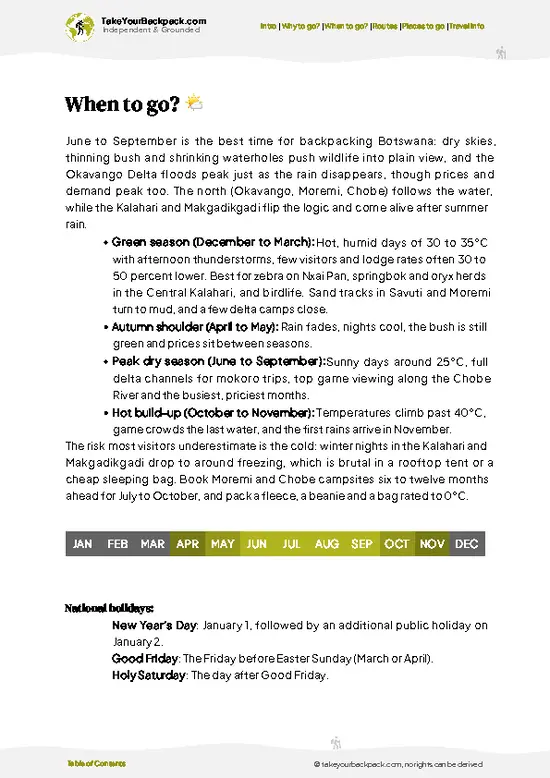
  • Weather: Maun’s dry season, from May to October, offers clear skies and minimal rain, making it ideal for exploring the Okavango Delta without the hassle of mud or flooded paths. The wet season (November to April) brings heavy rains, turning roads into slippery challenges and limiting access to some campsites.

  • Temperature: During the dry season, daytime highs hover around 25-30°C (77-86°F), with crisp, cool nights dropping to 5-10°C (41-50°F). The wet season heats up, often reaching 35°C (95°F) or more, with sticky humidity that can sap your energy on long treks.

  • Daylight Hours: Around June and July, daylight stretches to about 11 hours, giving you plenty of time for morning safaris and afternoon walks before dusk cools the air. The wet season offers slightly longer days but often clouded
read more 👉

  • Weather: Maun’s dry season, from May to October, offers clear skies and minimal rain, making it ideal for exploring the Okavango Delta without the hassle of mud or flooded paths. The wet season (November to April) brings heavy rains, turning roads into slippery challenges and limiting access to some campsites.

  • Temperature: During the dry season, daytime highs hover around 25-30°C (77-86°F), with crisp, cool nights dropping to 5-10°C (41-50°F). The wet season heats up, often reaching 35°C (95°F) or more, with sticky humidity that can sap your energy on long treks.

  • Daylight Hours: Around June and July, daylight stretches to about 11 hours, giving you plenty of time for morning safaris and afternoon walks before dusk cools the air. The wet season offers slightly longer days but often clouded skies that soften the light.

  • Crowds: Peak tourist influx aligns with the dry season, especially July and August, when wildlife congregates around waterholes. This means more vehicles on trails and higher prices, but also the best game-viewing opportunities.

  • Seasonal Activities: Dry months unlock classic safari experiences—walking safaris, mokoro rides, and boat trips—because water levels are manageable and animals are easier to spot. The wet season transforms the landscape into a lush, green haven for birdwatchers but limits some safari options.

  • Price Fluctuations: Expect accommodation and tour prices to peak during the dry season’s high months, reflecting demand. The wet season offers lower rates and quieter camps, perfect if you want to stretch your budget and don’t mind occasional downpours.


Pro-tip: Aim for the shoulder months of May or October to catch pleasant weather, fewer crowds, and better deals—Maun’s magic feels just right when the light softens and the air cools.


source: climatestotravel.comJANJanuary: fair for travelingFEBFebruary: fair for travelingMARMarch: fair for travelingAPRApril: good for travelingMAYMay: highly recommended for travelingJUNJune: excellent for travelingJULJuly: excellent for travelingAUGAugust: excellent for travelingSEPSeptember: highly recommended for travelingOCTOctober: highly recommended for travelingNOVNovember: fair for travelingDECDecember: fair for traveling
when-to-go

✈️ The backpacker research shortcutBotswana Travel Guide

An offline-friendly backpacking guide with optimized travel routes, ranked highlights, transport advice, and the best areas to stay.
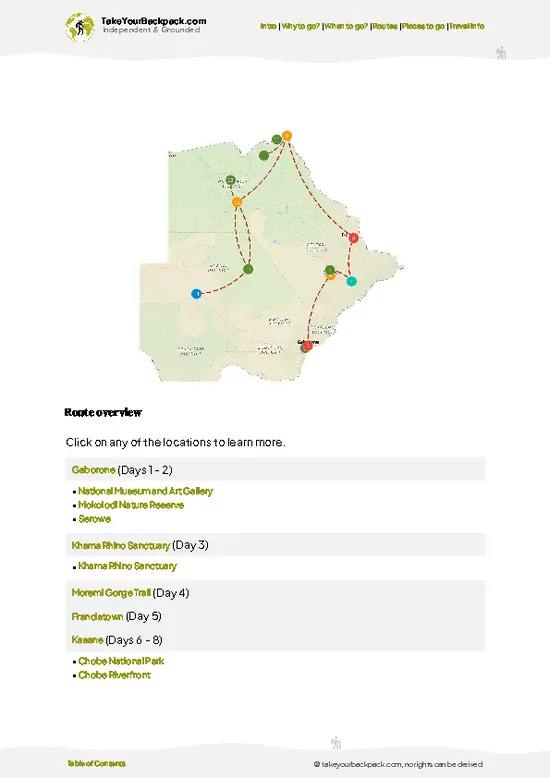
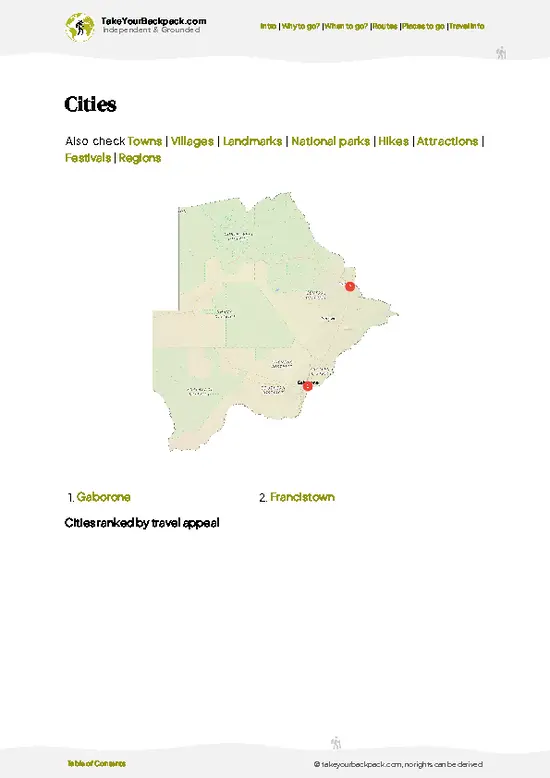
example page 0 from our offline Travel Guide for Botswana
example page 1 from our offline Travel Guide for Botswana
example page 2 from our offline Travel Guide for Botswana
example page 3 from our offline Travel Guide for Botswana
example page 4 from our offline Travel Guide for Botswana
example page 5 from our offline Travel Guide for Botswana
example page 6 from our offline Travel Guide for Botswana
example page 7 from our offline Travel Guide for Botswana
The digital guide (257 pages) contains:
58 highlights, ranked by travel appeal
Optimized 5, 10 & 15-day travel routes
Cities, national parks, landmarks, beaches
How to get around
Offline-friendly for travel without Wi-Fi
👉 Click to see all 30+ guide features

📅 Plan smarter in minutes, not weeks
Month by month travel advice
Festivals & national holidays
Budget expectations

🗺️ Go to the right places, skip the overrated ones
Honest pros & cons of destinations
Top hikes, parks & viewpoints
Lesser-known places most travelers miss
Clear “worth it vs skip it” guidance

🛏️ Travel smoothly without rookie mistakes
Best areas to stay
Transport systems explained simply
Common scams & safety advice
SIM cards, money & practical tips

🌍 Understand the country, not just visit it
Culture & traditions
52 Essential phrases & customs
Festivals worth planning around
Traveler-friendly historical context
Insights that make places more meaningful

📱 Built for real travel conditions
Fully downloadable PDF
Works completely offline
Optimized for phone use
Useful in remote areas & buses
Everything in one place
Save weeks of stressful planning
Get instant access to your full guide. 30‑day money-back guarantee.


By proceeding you agree to our terms.
Sent to your inbox immediately after payment • 100% Secure Checkout
Best Backpacking Travel Advisor 2025 tourism awardBest Backpacking
Travel Advisor
2025
What others say about Take Your Backpack Guides:
⭐⭐⭐⭐⭐
Fantastic, amazing amount of information!
⭐⭐⭐⭐⭐
My goodness this is amazing, it's what I've been looking for hats off too you!
⭐⭐⭐⭐⭐
I think this is absolutely BRILLIANT
⭐⭐⭐⭐
Very complete and informative. It's still missing places, but I gotta to commend you
⭐⭐⭐⭐⭐
This is truly amazing, thank you, can't wait to explore it with my kids!
⭐⭐⭐⭐⭐
Awesome resource, thank you!
⭐⭐⭐⭐⭐
This is amazing! Can't wait to explore the ones I haven't seen
⭐⭐⭐⭐
I love this! Well done, great idea.
⭐⭐⭐⭐⭐
Thanks for taking the time to make this gem!
⭐⭐⭐⭐⭐
This might be the best website I've ever seen.
⭐⭐⭐⭐⭐
Congratulations, and thank you so much for your work; it's incredibly valuable.
⭐⭐⭐⭐
In all seriousness I think you did a great job pointing out the important spots
⭐⭐⭐⭐⭐
10/10 very good
⭐⭐⭐⭐⭐
As someone who's only just starting to visit regularly this is awesome, thank you.
⭐⭐⭐⭐
Thank you very much! I'm going to visit my dad, it's going to be very useful!
⭐⭐⭐⭐⭐
This is really cool! We'll be travelling for the first time and this definitely come in handy.
⭐⭐⭐⭐⭐
You are now our minister of culture, congratulations 👨‍💼
⭐⭐⭐⭐⭐
Just wanted to tell you that this is a pearl! Going to follow your recommendations.
⭐⭐⭐⭐⭐
This is so cool. I'll definitely be using the resource for my travels soon.
⭐⭐⭐⭐⭐
This is very impressive! Good work.
⭐⭐⭐⭐⭐
This is an amazing and informative site. Very well done!

🛏️ Where to stay?Best areas to stay in Botswana

Maun’s heartbeat for backpackers pulses strongest around the town center, especially near the main road that slices through it. This area is your launchpad—safe, lively, and packed with budget-friendly hostels that double as social hubs. The streets here hum with the chatter of fellow travelers swapping stories over cheap beers and planning their next safari. It’s where you’ll find the pulse of Maun’s backpacker scene, a place that feels like a temporary home rather than just a stopover.

Why stick here? Because Maun’s charm isn’t just in the wildlife outside town—it’s in the ease of connecting … read more 👉
Maun’s heartbeat for backpackers pulses strongest around the town center, especially near the main road that slices through it. This area is your launchpad—safe, lively, and packed with budget-friendly hostels that double as social hubs. The streets here hum with the chatter of fellow travelers swapping stories over cheap beers and planning their next safari. It’s where you’ll find the pulse of Maun’s backpacker scene, a place that feels like a temporary home rather than just a stopover.

Why stick here? Because Maun’s charm isn’t just in the wildlife outside town—it’s in the ease of connecting with others before you head into the wild. The town center’s compact layout means everything you need is within walking distance: markets, eateries, and tour operators. This proximity saves you time and energy, letting you soak in the dusty, sun-warmed air and the scent of grilled meat wafting from street stalls without the hassle of long commutes.

Venture too far out, and you lose that buzz. The outskirts lean quieter, more residential, and less geared toward travelers. They might offer peace but at the cost of missing out on the spontaneous meetups and the practical convenience that backpackers crave. Staying central means you’re plugged into Maun’s rhythm—safe, social, and perfectly positioned to dive into Botswana’s wild heart.

🚌 Getting aroundHow to get around Maun

Maun moves at the pace of the Okavango itself—sometimes slow and deliberate, other times a burst of activity that feels almost improvised. The town’s rhythm is a blend of dusty streets where locals and travelers weave through markets and minibus taxis with a kind of chaotic intuition. It’s not about strict timetables here; it’s about catching the right moment, reading the mood, and rolling with the flow. The air carries a mix of dry earth, grilled meat from street vendors, and the faint scent of diesel from the ubiquitous taxis. This is a place where patience pays off, and understanding the local transit options unlocks a smoother, more confident way to explore without burning through your budget.


  • Walking: Maun’s compact center is best explored on foot. The main streets are flat and easy
read more 👉
Maun moves at the pace of the Okavango itself—sometimes slow and deliberate, other times a burst of activity that feels almost improvised. The town’s rhythm is a blend of dusty streets where locals and travelers weave through markets and minibus taxis with a kind of chaotic intuition. It’s not about strict timetables here; it’s about catching the right moment, reading the mood, and rolling with the flow. The air carries a mix of dry earth, grilled meat from street vendors, and the faint scent of diesel from the ubiquitous taxis. This is a place where patience pays off, and understanding the local transit options unlocks a smoother, more confident way to explore without burning through your budget.


  • Walking: Maun’s compact center is best explored on foot. The main streets are flat and easy to navigate, with plenty of shade trees offering relief from the midday sun. Walking costs nothing and lets you soak in the town’s pulse—listen for the chatter in Setswana, smell the spices at the market stalls, and spot the colorful crafts on display. It’s the most authentic way to move around, especially between guesthouses, shops, and eateries.


  • Minibus Taxis: These are the lifeblood of local transit. They run frequently from early morning (around 6 AM) until dusk (about 6 PM), though don’t expect a strict schedule—taxis leave when full. Fares are cheap, typically under 10 Botswana pula for short trips. The ride can be bumpy and crowded, but it’s a direct way to reach neighborhoods outside the center or the bus station. Flag one down on the street or at designated taxi ranks.


  • Shared 4x4 Safari Vans: For budget travelers aiming to get to nearby safari lodges or the Okavango Delta, shared safari vans offer a practical middle ground. They depart in the early morning and late afternoon to align with lodge check-in times. Prices vary but are generally reasonable when split among passengers. These rides are more comfortable than minibuses and often include luggage space, but booking ahead through your lodge or a local operator is essential.


  • Local Buses: Less frequent than minibuses, local buses connect Maun with surrounding villages and towns. They usually run once or twice a day, early morning and late afternoon, and cost slightly more than minibuses. The ride is slower but smoother, with stops along the way that offer a glimpse into rural life. Ideal if you’re not in a rush and want to travel like a local beyond Maun’s limits.


  • Bicycle Rentals: A growing option for the adventurous on a budget. Rentals are available at guesthouses and local shops, typically costing around 50-70 pula per day. Cycling gives you freedom to explore at your own pace, especially the quieter outskirts and river paths. The dry, dusty air and occasional breeze make for a refreshing ride, but be prepared for some rough patches and the midday heat.

👛 Costs (as of 14 April 2026)Typical daily expenses

Backpacking in Maun, Botswana, comes with a price tag that reflects its role as the gateway to the Okavango Delta and a hub for safari adventures. The costs are moderate but lean toward the higher side compared to many African towns, mainly because of the tourism infrastructure and the remote location.
  • Dorm Accommodation: Expect to pay around $15 to $30 per night for a bed in a basic backpacker hostel dorm. These places are simple but clean, often with mosquito nets and communal kitchens. The price can creep up during peak safari season.
  • Meals: Local eateries and markets offer meals for about $3 to $7. You can get a filling plate of pap (maize porridge) with meat or vegetables. Western-style cafes and restaurants will push that to $10 or more per meal, especially if you add a drink.
  • Local
read more 👉
Backpacking in Maun, Botswana, comes with a price tag that reflects its role as the gateway to the Okavango Delta and a hub for safari adventures. The costs are moderate but lean toward the higher side compared to many African towns, mainly because of the tourism infrastructure and the remote location.
  • Dorm Accommodation: Expect to pay around $15 to $30 per night for a bed in a basic backpacker hostel dorm. These places are simple but clean, often with mosquito nets and communal kitchens. The price can creep up during peak safari season.
  • Meals: Local eateries and markets offer meals for about $3 to $7. You can get a filling plate of pap (maize porridge) with meat or vegetables. Western-style cafes and restaurants will push that to $10 or more per meal, especially if you add a drink.
  • Local Transport: Minibus taxis are the main mode of transport within Maun, costing roughly $0.50 to $1 per trip. For short distances, walking is often the best way to soak in the dry, dusty air and the occasional scent of mopane trees burning in the distance.
  • Basic Activities/Entry Fees: Entry to local cultural sites or small museums can be around $5 to $10. However, most travelers spend more on safari-related activities, which are significantly pricier and usually booked separately.
  • Miscellaneous Expenses: Bottled water, snacks, and small essentials will add about $2 to $5 daily. Internet access is patchy and often comes with a premium price at lodges or cafes, so plan accordingly.

In total, a realistic daily budget for backpacking in Maun ranges from about $25 to $50 if you stick to the basics. This covers dorm stays, local meals, transport, and a few modest activities. It’s a practical baseline that lets you experience the town without skimping on comfort or missing out on the atmosphere that makes Maun the jumping-off point for Botswana’s wild heart.


source: botswanatourism.co.bw
⚠️ Prices can change and everyone travels differently, so take this as a rough guide. Hope it helps you plan your adventure!

🚌 Day tripsExploring the surroundings

Maun, Botswana, is your launchpad for adventure, a bustling hub that connects you to the wild heart of the Okavango Delta and beyond. With its laid-back vibe and essential amenities, it’s the perfect base for day trips that promise both thrill and authenticity.

Okavango Delta Day Trip
A day in the Okavango Delta is like stepping into a living postcard. Glide through the waterways in a mokoro (traditional canoe) as you soak in the sounds of nature—think birdsong and the rustle of reeds. The trip typically takes about an hour from Maun, and you can expect to spend around $50 for a guided experience, including lunch. The best time to visit is during the dry season, from May to October, when wildlife congregates around the water. A common rookie mistake? Forgetting to pack sunscreen and a hat; … read more 👉
Maun, Botswana, is your launchpad for adventure, a bustling hub that connects you to the wild heart of the Okavango Delta and beyond. With its laid-back vibe and essential amenities, it’s the perfect base for day trips that promise both thrill and authenticity.

Okavango Delta Day Trip
A day in the Okavango Delta is like stepping into a living postcard. Glide through the waterways in a mokoro (traditional canoe) as you soak in the sounds of nature—think birdsong and the rustle of reeds. The trip typically takes about an hour from Maun, and you can expect to spend around $50 for a guided experience, including lunch. The best time to visit is during the dry season, from May to October, when wildlife congregates around the water. A common rookie mistake? Forgetting to pack sunscreen and a hat; the sun can be relentless out there.
👉 Explore Okavango Delta

Moremi Game Reserve
If you’re itching for a taste of the wild, Moremi Game Reserve is your ticket. Just a two-hour drive from Maun, this reserve offers a chance to spot elephants, lions, and more in their natural habitat. A day trip can set you back about $100, including park fees and a packed lunch. The dry season is prime time for wildlife viewing, but be prepared for bumpy roads. First-timers often underestimate the reserve’s size; plan your route carefully to maximize your sightings.
👉 Explore Moremi Game Reserve

Makgadikgadi Pans
For a surreal landscape, head to the Makgadikgadi Pans. About a two-hour drive from Maun, these vast salt flats are mesmerizing, especially at sunset when the sky ignites with color. A day trip can cost around $60, including transport and a guide. The best time to visit is during the wet season (November to March) when the pans transform into a shimmering lake, attracting flamingos and other wildlife. Many travelers miss the chance to explore the ancient baobab trees nearby; don’t skip this detour.


Tsodilo Hills
Dive into history at Tsodilo Hills, a UNESCO World Heritage site about an hour and a half from Maun. Known for its rock art, this site is rich in cultural significance and offers stunning views. Expect to pay around $30 for entry and a guide. The cooler months from May to September are ideal for hiking. A common oversight is not allowing enough time to explore the art; plan for at least half a day to truly appreciate the stories etched in stone.
👉 Explore Tsodilo Hills

Each of these trips offers a unique slice of Botswana’s soul, making Maun not just a stopover, but a gateway to unforgettable experiences.
Want to know what more Botswana offers?
The Botswana Travel Guide describes 58 highlights, from cities to national parks, from beaches to hikes

Get the Travel Guide -

🛡️ SafetyTraveler Safety Guide

Maun is generally safe, but like any place, it has its nuances. The town buzzes with life, especially around the markets, where the scent of spices mingles with the chatter of locals. Keep your belongings close, especially in crowded areas. Pickpocketing isn’t rampant, but it can happen.

If you’re traveling solo, be mindful after dark. The streets can feel quiet, and while most locals are friendly, it’s wise to stick to well-lit areas. Consider joining a group for evening outings; it adds a layer of safety and camaraderie.

Scams are rare, but be cautious of overly eager guides offering tours at inflated prices. Always negotiate and ask for recommendations from fellow travelers or your accommodation.

Everyday annoyances might include persistent vendors, but a polite “no, thank you” usually … read more 👉
Maun is generally safe, but like any place, it has its nuances. The town buzzes with life, especially around the markets, where the scent of spices mingles with the chatter of locals. Keep your belongings close, especially in crowded areas. Pickpocketing isn’t rampant, but it can happen.

If you’re traveling solo, be mindful after dark. The streets can feel quiet, and while most locals are friendly, it’s wise to stick to well-lit areas. Consider joining a group for evening outings; it adds a layer of safety and camaraderie.

Scams are rare, but be cautious of overly eager guides offering tours at inflated prices. Always negotiate and ask for recommendations from fellow travelers or your accommodation.

Everyday annoyances might include persistent vendors, but a polite “no, thank you” usually suffices. Carry yourself with confidence and awareness; it’s the best way to blend in and enjoy the vibrant atmosphere without a hitch.

Other Botswanan towns near Maun

Explore more nearby:

  • Shakawe—panhandle location, river access, remote lodges| 246 km away
  • Orapa—closed mining town, security checkpoints, planned streets| 251 km away
  • Ghanzi—Kalahari gateway, cattle ranches, San communities| 264 km away

💡 Not sure where to go next?
Create a personalized itinerary for Botswana including Maun and the places that fit your trip.

Generate my itinerary

👉 Discover all towns

Or checkout all Botswana has to offer (think cities, towns, villages, national parks, hikes, beaches, festivals)
Country photo of Botswana

We 💚 feedbackSumming up the experience

Maun is a wild mix of adventure and laid-back charm. The air buzzes with the scent of earth after rain, and the sunsets? They’re a canvas of fiery oranges and deep purples. Don’t miss the local markets; they’re a sensory feast and a great way to connect with the community. Just a heads-up: the roads can be rough, so take your time. Embrace the bumps; they lead to unforgettable experiences. Trust me, the journey is part of the magic here.

✍️ Help improve this page!
The information on this page is based on in-depth research, insights shared by experienced travelers, and feedback from the local travel community in Botswana. While every effort is made to keep the information accurate and current, conditions can change — so if you spot anything incorrect or outdated, please get in touch.


🙋‍♂️ Give feedback

👋 Meet the founderWho’s Behind Take Your Backpack?

Johan, backpacker and founder of TakeYourBackpackHi, I’m Johan (Netherlands 🇳🇱), the creator of TakeYourBackpack. Over the past decade, I’ve backpacked through 80+ countries across six continents, gaining extensive experience with independent travel, long-term trips, and overland routes.

This site is built on a combination of firsthand travel experience and carefully curated insights from other backpackers. Many guides are based on places I’ve personally visited, while others bring together tips, observations, and practical advice shared by trusted travelers I’ve met along the way.

The goal is to provide realistic, experience-driven guidance — not generic itineraries — so you can explore destinations with better context, clearer expectations, and more confidence.

Get full Botswana guide •
Instant download • 58 highlights • Full Offline guide