×

Botswana🇧🇼 | townsLobatseRocky gorge, clay pots, cattle country, border stopover | things to do and best time to go

Explore KasaneExplore Maun

Backpacking in Lobatse
👀 For curious travelerstown ranked #5
By Johan Kruseman 🇳🇱 | Updated October 22, 2026

Lobatse suits travelers who like ordinary working towns and want a quiet night between Gaborone and the South African border. If you need hostel dorms, nightlife or a long list of sights, you will find it thin. Lobatse sits in the southeast of Botswana, close to the South African line, and it has long been known for cattle and the meat industry. Its setting among rocky hills and gorges is more interesting than the town center, which is mostly shops, banks and courts. Pottery and the cliffs deserve an hour or two, the rest can be skipped. Transport links are easy, but backpackers are few and evenings are calm. Compared with Gaborone, Lobatse is smaller, slower and far less social, with fewer places to meet other travelers.

Discover everything you want to know in the 📖 Botswana Travel Guide.


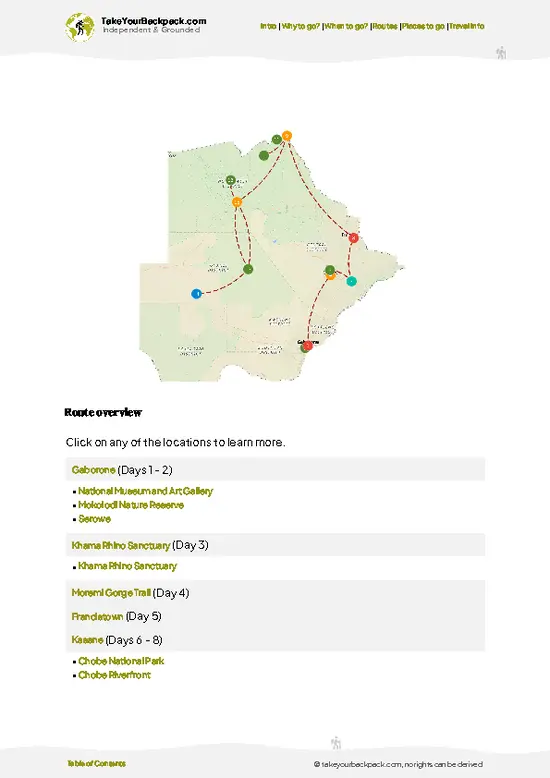
example page 0 from our offline Travel Guide for Botswana
example page 1 from our offline Travel Guide for Botswana
example page 2 from our offline Travel Guide for Botswana
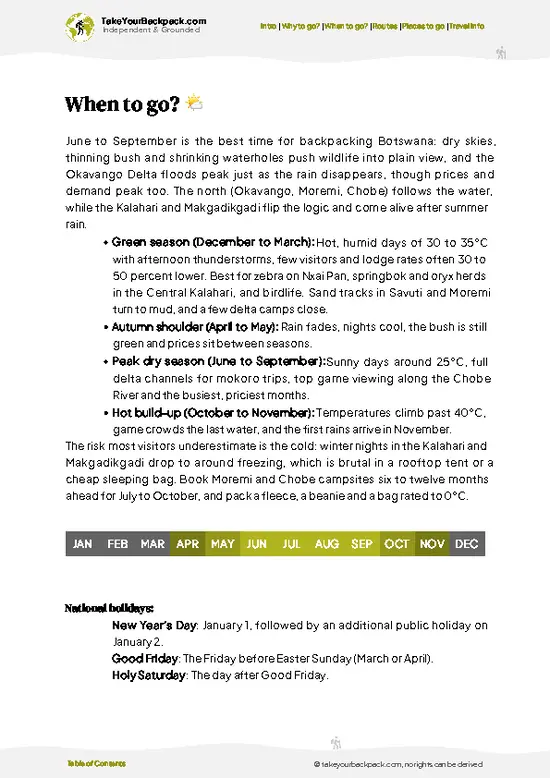
example page 3 from our offline Travel Guide for Botswana
example page 4 from our offline Travel Guide for Botswana
example page 5 from our offline Travel Guide for Botswana
example page 6 from our offline Travel Guide for Botswana
example page 7 from our offline Travel Guide for Botswana
Loading the map 🌍
CLICK TO FILTER
cities
towns
villages
landmarks
national parks
hikes
attractions
festivals
regions
SHOW COUNTRY’S BESTSHOW ALL

✨ Why go?
Ranked #5 town in Botswana
Why visitors keep coming back

Lobatse works as a practical, low-key stop on the road between Gaborone and the border, and it suits slow travelers who like seeing how a Botswana town actually runs. The town grew around the Botswana Meat Commission abattoir, so cattle country is part of daily life here, and you notice it in the trucks, the butchers and the braai smoke. The hills around town make a pleasant change from the flat country elsewhere in the south, and the Lobatse Clay Works gives you something handmade to look at and buy. Most people stay a night, a few linger for two. Solo travelers will find locals friendly and curious, though you will not meet many other backpackers. Pick it if you want a calm reset, a few local meals and a different angle on southeastern Botswana. Skip it if you are chasing wildlife or scenery on a tight schedule.

💡 HighlightsDon't-miss highlights and experiences

  1. Lobatse Clay Works: The town’s best-known craft site, where local clay is turned into pots, bowls and decorative pieces. Visit on a weekday morning when work is under way. Browsing is free, pieces cost roughly US$3 to 30, and an hour is plenty.
  2. Lobatse Gorge and hill viewpoints: Rocky ridges rise around the town, and the drive or walk along the gorge shows the broken, reddish terrain that sets Lobatse apart from flatter towns. Go in the cooler morning. It is free and takes 1 to 2 hours.
  3. Lobatse High Court: The building is a landmark of Botswana’s legal history and worth a look from outside as part of a short walk through the administrative center. It costs nothing and takes 15 to 30 minutes. Photograph it only from public ground.
  4. Lobatse town market and main street: The easiest place to see local
… read more 👉
  1. Lobatse Clay Works: The town’s best-known craft site, where local clay is turned into pots, bowls and decorative pieces. Visit on a weekday morning when work is under way. Browsing is free, pieces cost roughly US$3 to 30, and an hour is plenty.
  2. Lobatse Gorge and hill viewpoints: Rocky ridges rise around the town, and the drive or walk along the gorge shows the broken, reddish terrain that sets Lobatse apart from flatter towns. Go in the cooler morning. It is free and takes 1 to 2 hours.
  3. Lobatse High Court: The building is a landmark of Botswana’s legal history and worth a look from outside as part of a short walk through the administrative center. It costs nothing and takes 15 to 30 minutes. Photograph it only from public ground.
  4. Lobatse town market and main street: The easiest place to see local life, with stalls selling fruit, vegetables, airtime and cheap snacks. Go before midday, when it is busiest. Expect to spend US$2 to 6 on food and about an hour wandering.
  5. Lobatse Dam area: A quiet spot on the edge of town for a short walk and birdwatching when there is water. Late afternoon is cooler and the light is softer. Entry is usually free and a visit takes about an hour.
From Lobatse, good day trips include Gaborone for museums and malls, Kanye for a look at village life and Mokolodi Nature Reserve for easy wildlife viewing. None of the town items needs a ticket or advance booking.
Spotted a mistake or missing something? Contact us.

Things to do near Lobatse

Ratings based on Tripadvisor reviews. When you book through this link, you support our work at no extra cost to you.

🏘️ NeighborhoodsWhere things are and how it's laid out

Lobatse is small enough that its areas run into one another, and most of what matters sits within a few kilometers of the main road.
  • Town Centre (Main Mall area): Banks, supermarkets, a post office and the taxi and combi ranks cluster here. It is flat and walkable in twenty minutes end to end. There is little to see, but it is where you buy food, withdraw cash and sort out onward transport, so it deserves an hour, not a day.
  • Lobatse Clay Works area: The pottery workshop on the edge of town is the one stop with real character. You can watch clay being shaped and fired, and buy pieces at honest prices. Take a taxi out and back, since the walk is unshaded.
  • Peleng and Woodhall: These are residential neighborhoods where most locals live. Small shebeens and cookout stands serve grilled meat and pap
… read more 👉
Lobatse is small enough that its areas run into one another, and most of what matters sits within a few kilometers of the main road.
  • Town Centre (Main Mall area): Banks, supermarkets, a post office and the taxi and combi ranks cluster here. It is flat and walkable in twenty minutes end to end. There is little to see, but it is where you buy food, withdraw cash and sort out onward transport, so it deserves an hour, not a day.
  • Lobatse Clay Works area: The pottery workshop on the edge of town is the one stop with real character. You can watch clay being shaped and fired, and buy pieces at honest prices. Take a taxi out and back, since the walk is unshaded.
  • Peleng and Woodhall: These are residential neighborhoods where most locals live. Small shebeens and cookout stands serve grilled meat and pap in the evening. Walk in daylight, say hello, and the pace feels settled and friendly. Nightlife here is a cold beer on a plastic chair, not clubs.
  • Tswana Hill and the Lobatse Caves side: The limestone ridges south of town are the area worth leaving the center for. The Lobatse Cave system draws mostly specialist cavers, so check access before heading out. The hills are better for short scrambles with views over the Ngotwane valley.
  • Border road toward Pioneer Gate: Mostly transit, with fuel stations and traders. Skip lingering.

⌛️ 1 day1-day itinerary for Lobatse

8:30 AM, Lobatse Clay Works: Begin here, because it is the one stop in town that is truly local. Watch potters at work, ask about firing methods and buy a small piece that will survive a backpack. Allow about an hour, then walk or take a short taxi ride toward the center.
10:00 AM, Lobatse High Court and main street: Look at the court building from outside, then stroll the main road past banks, pharmacies and shops. The point is the feel of a working town, not any single sight. Keep to public pavements and take photos of the street rather than of officials.
11:30 AM, Town market: Wander the stalls, eat something simple and talk to vendors. Fresh fruit and grilled meat are easy to find, and midday is when the place is busiest. Carry small change in pula.
1:30 PM, Lunch break: Rest in a shaded … read more 👉
8:30 AM, Lobatse Clay Works: Begin here, because it is the one stop in town that is truly local. Watch potters at work, ask about firing methods and buy a small piece that will survive a backpack. Allow about an hour, then walk or take a short taxi ride toward the center.
10:00 AM, Lobatse High Court and main street: Look at the court building from outside, then stroll the main road past banks, pharmacies and shops. The point is the feel of a working town, not any single sight. Keep to public pavements and take photos of the street rather than of officials.
11:30 AM, Town market: Wander the stalls, eat something simple and talk to vendors. Fresh fruit and grilled meat are easy to find, and midday is when the place is busiest. Carry small change in pula.
1:30 PM, Lunch break: Rest in a shaded café, since the early afternoon heat can be heavy. Plan about an hour and recharge your phone.
3:00 PM, Lobatse Gorge viewpoints: Head out toward the rocky hills for views over the gorge and the broken ridges, the kind of landscape most travelers pass without stopping. A taxi is easiest, and walking along quieter roads is fine in daylight. Spend about 90 minutes.
5:00 PM, Lobatse Dam area: Finish at the water’s edge for a calm walk and birdlife. This is off the standard route and quiet. Head back before dark and have dinner in town.

🌤️ When to go?Seasonal considerations and timing

Lobatse is most comfortable from April to September, when days are dry and sunny and the sky stays open for hill walks.
  • Winter (May to August): Days reach 20 to 24°C (68 to 75°F). Nights drop to 0 to 5°C (32 to 41°F), with frost possible in July. Daylight runs about 10.5 to 11 hours. Crowds are nonexistent and prices stay flat.
  • Summer (November to March): Afternoons reach 30 to 35°C (86 to 95°F), and thunderstorms arrive in the late day. Daylight stretches to around 13.5 hours. Rain turns dirt roads to mud, but the hills turn green.
  • Shoulder months (April, September, October): Highs of 25 to 30°C (77 to 86°F) and gentle evenings make these the easiest months for walking.
  • Holidays (late December and Easter): Local travel rises, so shared transport fills sooner, though lodging prices barely move.
… read more 👉
Lobatse is most comfortable from April to September, when days are dry and sunny and the sky stays open for hill walks.
  • Winter (May to August): Days reach 20 to 24°C (68 to 75°F). Nights drop to 0 to 5°C (32 to 41°F), with frost possible in July. Daylight runs about 10.5 to 11 hours. Crowds are nonexistent and prices stay flat.
  • Summer (November to March): Afternoons reach 30 to 35°C (86 to 95°F), and thunderstorms arrive in the late day. Daylight stretches to around 13.5 hours. Rain turns dirt roads to mud, but the hills turn green.
  • Shoulder months (April, September, October): Highs of 25 to 30°C (77 to 86°F) and gentle evenings make these the easiest months for walking.
  • Holidays (late December and Easter): Local travel rises, so shared transport fills sooner, though lodging prices barely move.
Book onward buses a day ahead around public holidays.


source: climatestotravel.comJANJanuary: fair for travelingFEBFebruary: fair for travelingMARMarch: fair for travelingAPRApril: good for travelingMAYMay: highly recommended for travelingJUNJune: excellent for travelingJULJuly: excellent for travelingAUGAugust: excellent for travelingSEPSeptember: excellent for travelingOCTOctober: good for travelingNOVNovember: fair for travelingDECDecember: fair for traveling
when-to-go

✈️ The backpacker research shortcutBotswana Travel Guide

An offline-friendly backpacking guide with optimized travel routes, ranked highlights, transport advice, and the best areas to stay.
example page 0 from our offline Travel Guide for Botswana
example page 1 from our offline Travel Guide for Botswana
example page 2 from our offline Travel Guide for Botswana
example page 3 from our offline Travel Guide for Botswana
example page 4 from our offline Travel Guide for Botswana
example page 5 from our offline Travel Guide for Botswana
example page 6 from our offline Travel Guide for Botswana
example page 7 from our offline Travel Guide for Botswana
The digital guide (172 pages) contains:
✅ 38 highlights, ranked by travel appeal
✅ Optimized 5, 10 & 15-day travel routes
✅ Cities, national parks, landmarks, beaches
✅ How to get around
✅ Offline-friendly for travel without Wi-Fi
👉 Click to see all 30+ guide features

📅 Plan smarter in minutes, not weeks
✅ Month by month travel advice
✅ Festivals & national holidays
✅ Budget expectations

🗺️ Go to the right places, skip the overrated ones
✅ Honest pros & cons of destinations
✅ Top hikes, parks & viewpoints
✅ Lesser-known places most travelers miss
✅ Clear “worth it vs skip it” guidance

🛏️ Travel smoothly without rookie mistakes
✅ Best areas to stay
✅ Transport systems explained simply
✅ Common scams & safety advice
✅ SIM cards, money & practical tips

🌍 Understand the country, not just visit it
✅ Culture & traditions
✅ 52 Essential phrases & customs
✅ Festivals worth planning around
✅ Traveler-friendly historical context
✅ Insights that make places more meaningful

📱 Built for real travel conditions
✅ Fully downloadable PDF
✅ Works completely offline
✅ Optimized for phone use
✅ Useful in remote areas & buses
✅ Everything in one place
Stop searching, start planning
Get instant access to your full guide. 30‑day money-back guarantee.
+ Add another guide for just

By proceeding you agree to our terms.
Sent to your inbox immediately after payment • 100% Secure Checkout
Best Backpacking Travel Advisor 2025 tourism awardBest Backpacking
Travel Advisor
2025
What others say about Take Your Backpack Guides:
⭐⭐⭐⭐⭐
Fantastic, amazing amount of information!
⭐⭐⭐⭐⭐
My goodness this is amazing, it's what I've been looking for hats off too you!
⭐⭐⭐⭐⭐
I think this is absolutely BRILLIANT
⭐⭐⭐⭐
Very complete and informative. It's still missing places, but I gotta to commend you
⭐⭐⭐⭐⭐
This is truly amazing, thank you, can't wait to explore it with my kids!
⭐⭐⭐⭐⭐
Awesome resource, thank you!
⭐⭐⭐⭐⭐
This is amazing! Can't wait to explore the ones I haven't seen
⭐⭐⭐⭐
I love this! Well done, great idea.
⭐⭐⭐⭐⭐
Thanks for taking the time to make this gem!
⭐⭐⭐⭐⭐
This might be the best website I've ever seen.
⭐⭐⭐⭐⭐
Congratulations, and thank you so much for your work; it's incredibly valuable.
⭐⭐⭐⭐
In all seriousness I think you did a great job pointing out the important spots
⭐⭐⭐⭐⭐
10/10 very good
⭐⭐⭐⭐⭐
As someone who's only just starting to visit regularly this is awesome, thank you.
⭐⭐⭐⭐
Thank you very much! I'm going to visit my dad, it's going to be very useful!
⭐⭐⭐⭐⭐
This is really cool! We'll be travelling for the first time and this definitely come in handy.
⭐⭐⭐⭐⭐
You are now our minister of culture, congratulations 👨‍💼
⭐⭐⭐⭐⭐
Just wanted to tell you that this is a pearl! Going to follow your recommendations.
⭐⭐⭐⭐⭐
This is so cool. I'll definitely be using the resource for my travels soon.
⭐⭐⭐⭐⭐
This is very impressive! Good work.
⭐⭐⭐⭐⭐
This is an amazing and informative site. Very well done!

🛏️ Where to stay?Best areas and accommodation options

The town centre around the main road is the best area for a budget stay in Lobatse, because the shops, taxi rank and long-distance stops are all within a short walk. Budget beds here are limited. Expect guesthouses and simple lodges with private rooms at roughly US$25 to 50, with few formal dorms, so share a room if traveling with others.

Noise is mostly traffic and the occasional truck early in the morning, and nights are quiet after about 10 pm. Streets are lit along the main road, though walking long distances in the dark is not advisable. A short taxi ride covers the rest.

The second option … read more 👉
The town centre around the main road is the best area for a budget stay in Lobatse, because the shops, taxi rank and long-distance stops are all within a short walk. Budget beds here are limited. Expect guesthouses and simple lodges with private rooms at roughly US$25 to 50, with few formal dorms, so share a room if traveling with others.

Noise is mostly traffic and the occasional truck early in the morning, and nights are quiet after about 10 pm. Streets are lit along the main road, though walking long distances in the dark is not advisable. A short taxi ride covers the rest.

The second option is the quieter residential edge of town toward Peleng and Woodhall, where family-run guesthouses cost a little less and the streets are calm. Transport links are weaker, as combis thin out in the evening, so you will rely on taxis. Gaborone, an hour away, has a far wider choice of hostels and works better if you want dorms and a social crowd.

🚌 Getting aroundHow to get around Lobatse

Lobatse’s center is compact enough to cross on foot in twenty minutes, but walking stops making sense past the main road, where distances to the clay works, the caves and the border stretch beyond a comfortable, shadeless hike. Traffic is light, apart from trucks heading to and from the South African border. Public transport is functional and cheap, if unscheduled, and most backpackers combine walking with shared vehicles.
  • Walking: Free, and right for the center, the shops and the ranks. Carry water and a hat, as shade is scarce and summer afternoons are hot.
  • Combis (minibuses): These white minibuses run local routes for about US$0.40 to 0.80 and long routes to Gaborone for US$2.50 to 4, a ride of 1 to 1.5 hours. They leave when full, usually from early morning to late afternoon, and service
… read more 👉
Lobatse’s center is compact enough to cross on foot in twenty minutes, but walking stops making sense past the main road, where distances to the clay works, the caves and the border stretch beyond a comfortable, shadeless hike. Traffic is light, apart from trucks heading to and from the South African border. Public transport is functional and cheap, if unscheduled, and most backpackers combine walking with shared vehicles.
  • Walking: Free, and right for the center, the shops and the ranks. Carry water and a hat, as shade is scarce and summer afternoons are hot.
  • Combis (minibuses): These white minibuses run local routes for about US$0.40 to 0.80 and long routes to Gaborone for US$2.50 to 4, a ride of 1 to 1.5 hours. They leave when full, usually from early morning to late afternoon, and service thins out after dark.
  • Taxis: Shared and private taxis run around town for roughly US$1 to 3 per ride. Agree the fare before getting in, since meters are rare. Private hire to the clay works or hills costs US$5 to 12 round trip with waiting.
  • Long-distance coaches: Buses to Gaborone, Kanye and Francistown stop at the main rank, with fares from about US$3 for Gaborone to US$25 to 30 for Francistown. Morning departures are the most reliable.
  • Hitching and lifts: Locals do it on the main road, but I would stay with combis, which cost little and keep you on a known route.

👛 Costs (as of 22 October 2026)Travel costs and budget guide for Lobatse

Lobatse costs about US$40 to 84 a day for a backpacker, with accommodation as the largest expense because dorms are scarce.
CategoryBudget RangeLocal Reality
Dorm accommodationUS$25 to 45Few formal dorms exist, so most budget travelers take a basic guesthouse room. Prices change little between seasons.
MealsUS$8 to 15Street grills, pap with meat and takeaway chicken cost US$2 to 5. Supermarket groceries cut costs further.
Local transportUS$2 to 6Combis cost US$0.40 to 0.80 locally, and short taxi rides US$1 to 3.
Basic activities/entry feesUS$0 to 8Walking the hills is free, and the clay works visit is cheap or free if you buy a piece.
Miscellaneous expensesUS$5 to 10Water, SIM data, snacks and the odd beer, usually around US$1.50 to 3.
Total Daily BudgetUS$40 to 84Roughly US$65 in a typical high-season
… read more 👉
Lobatse costs about US$40 to 84 a day for a backpacker, with accommodation as the largest expense because dorms are scarce.
CategoryBudget RangeLocal Reality
Dorm accommodationUS$25 to 45Few formal dorms exist, so most budget travelers take a basic guesthouse room. Prices change little between seasons.
MealsUS$8 to 15Street grills, pap with meat and takeaway chicken cost US$2 to 5. Supermarket groceries cut costs further.
Local transportUS$2 to 6Combis cost US$0.40 to 0.80 locally, and short taxi rides US$1 to 3.
Basic activities/entry feesUS$0 to 8Walking the hills is free, and the clay works visit is cheap or free if you buy a piece.
Miscellaneous expensesUS$5 to 10Water, SIM data, snacks and the odd beer, usually around US$1.50 to 3.
Total Daily BudgetUS$40 to 84Roughly US$65 in a typical high-season day.
Buy lunch ingredients at the supermarkets in the center and cook at a guesthouse kitchen where one is offered.
⚠️ Prices can change and everyone travels differently, so take this as a rough guide. Hope it helps you plan your adventure!

🚌 Day tripsWhere to go beyond the main area

Lobatse sits on the main road and rail line south of Gaborone, so most day trips are easy return runs by combi or hired taxi.
Gaborone:
The capital is the obvious outing, with museums, markets and a bigger food scene. Combis take 1 to 1.5 hours and cost US$2.50 to 4 each way. Start early and leave by mid-afternoon, because late return rides are scarce. Budget US$15 to 25 with lunch.
👉 Explore Gaborone
Kanye:
This old Bangwaketse capital is a quiet place with a hilltop heritage feel and a pottery tradition. Reach it by combi in about 1.5 hours for US$3 to 5. Plan a morning visit, since onward vehicles back run thinner after midday. The dry months from April to September make the walking easier.

Mokolodi Nature Reserve:
Just south of Gaborone, this reserve offers short game drives and walks, with … read more 👉
Lobatse sits on the main road and rail line south of Gaborone, so most day trips are easy return runs by combi or hired taxi.
Gaborone:
The capital is the obvious outing, with museums, markets and a bigger food scene. Combis take 1 to 1.5 hours and cost US$2.50 to 4 each way. Start early and leave by mid-afternoon, because late return rides are scarce. Budget US$15 to 25 with lunch.
👉 Explore Gaborone
Kanye:
This old Bangwaketse capital is a quiet place with a hilltop heritage feel and a pottery tradition. Reach it by combi in about 1.5 hours for US$3 to 5. Plan a morning visit, since onward vehicles back run thinner after midday. The dry months from April to September make the walking easier.

Mokolodi Nature Reserve:
Just south of Gaborone, this reserve offers short game drives and walks, with giraffe, zebra and white rhino. Entry and activities cost US$10 to 35 depending on what you book. Getting there without a car means a combi to Gaborone, then a taxi, so first-timers often underestimate the total travel time of around 2 hours each way.
👉 Explore Mokolodi Nature Reserve
Ramotswa:
The small town on the Notwane River is known for its crocodile farm and the nearby Ramotswa Dam area. A day trip costs US$10 to 18 by combi via Gaborone, about 1.5 to 2 hours each way. Go outside the hottest months, as summer afternoons are draining.

🛡️ SafetyScams, Hazards, and Annoyances

Lobatse is a calm town, and most visitors face nothing worse than a pickpocket attempt in a crowded rank. Keep your phone and wallet in a front pocket in the combi queues and around the main shops, and avoid counting cash openly at ATMs. Walk in the center during the day without worry. After dark, take a taxi rather than walking between neighborhoods, since streets outside the main road are poorly lit and stray dogs are common. Solo travelers, women included, find people helpful, but should avoid empty back streets late in the evening. Taxi drivers sometimes quote inflated fares to visitors, so settle the price first. Hitching is best avoided. Keep valuables out of sight in parked vehicles, as break-ins happen near the border road.

FAQTraveler FAQ

Lobatse works better as a short stop than a destination. The clay works, the limestone hills and the quiet local eateries fill a half day, and the town is a convenient pause on the road between Gaborone (about 1 to 1.5 hours away) and the South African border. Travelers who want game parks or hostels will find more in Gaborone or further north.
Lobatse needs one day at most, and many travelers spend just a night. A morning at the clay works and a walk in the hills fills the time, with a few hours left for Kanye. Add a second day only if you want to explore the caves with a guide, and expect guesthouse beds at about US$25 to 50.
Lobatse is an easy day trip from Gaborone, about 70 kilometers away. Combis cost US$2.50 to 4 each way and take 1 to 1.5 hours, with the last reliable returns in the late afternoon. Start by 8 am to fit in the clay works and lunch before heading back.
⚠️ Things can change over time, so always validate details locally before you go.

Other Botswanan towns near Lobatse

Explore more nearby:

  • Serowe—Bangwato royal seat, kgotla grounds, rhino sanctuary, sandstone hill| 330 km away
  • Ghanzi—Trans-Kalahari fuel stop, San craft shop, tracker walks, ranch ridge| 567 km away
  • Maun—Delta flights, Thamalakane riverbank, safari outfitters, basket weaving| 624 km away

💡 Not sure where to go next?
Create a personalized itinerary for Botswana including Lobatse and the places that fit your trip.

Generate my itinerary

👉 Discover all towns

Or checkout all Botswana has to offer (think cities, towns, villages, national parks, hikes, beaches, festivals)
Country photo of Botswana

We 💚 feedbackSumming up the experience

Give Lobatse one night, two at most. Go to the clay works in the morning, spend the afternoon among the hills, then move on, because the town does not hold much more than that. I would bring cash for small purchases and leave the day for Gaborone or Kanye.

✍️ Help improve this page!
The information on this page is based on in-depth research, insights shared by experienced travelers, and feedback from the local travel community in Botswana. While every effort is made to keep the information accurate and current, conditions can change — so if you spot anything incorrect or outdated, please get in touch.


🙋‍♂️ Give feedback

👋 Meet the founderWho’s Behind Take Your Backpack?

Johan, backpacker and founder of TakeYourBackpackHi, I’m Johan (Netherlands 🇳🇱), the creator of TakeYourBackpack. Over the past 3 decades, I’ve backpacked through 90+ countries across six continents, gaining extensive experience with independent travel, long-term trips, and overland routes.

This site is built on a combination of firsthand travel experience and carefully curated insights from other backpackers. Many guides are based on places I’ve personally visited, while others bring together tips, observations, and practical advice shared by trusted travelers I’ve met along the way.

The goal is to provide realistic, experience-driven guidance — not generic itineraries — so you can explore destinations with better context, clearer expectations, and more confidence.