×

Brazil🇧🇷 | citiesAracajuCrab shacks, tapioca griddles, Atalaia promenade, sea turtle tanks | things to do and best time to go

Explore Cabo FrioExplore Caruaru

Backpacking in Aracaju
👀 For curious travelerscity ranked #28
By Johan Kruseman 🇳🇱 | Updated October 19, 2026

The tapioca woman flips a white disc onto the griddle on Orla de Atalaia, and it sets in seconds, which I did not expect from a city this quiet. Aracaju sits on the coast of Sergipe, in northeastern Brazil. Skip the city beaches for swimming; the water is murky near the river mouth. Go for the food, the orla and easy access to Sergipe’s best sights. Compared with Salvador, it is calmer and far less hectic.

Discover everything you want to know in the 📖 Brazil Travel Guide.


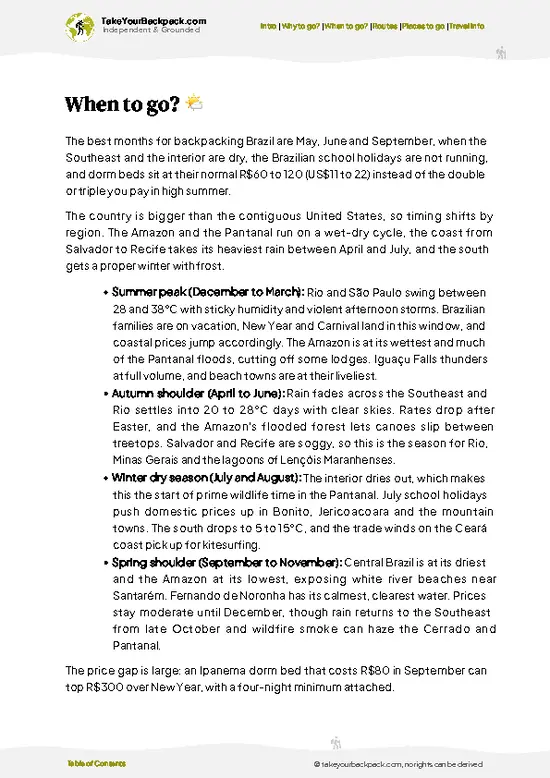
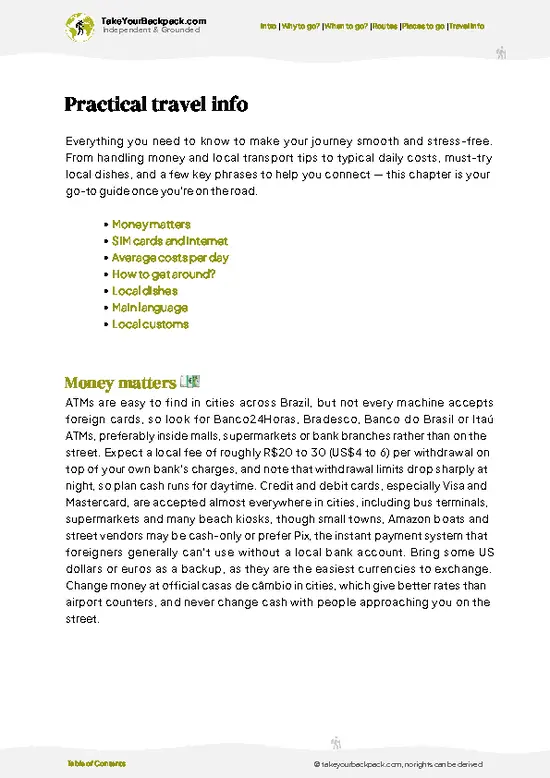
example page 0 from our offline Travel Guide for Brazil
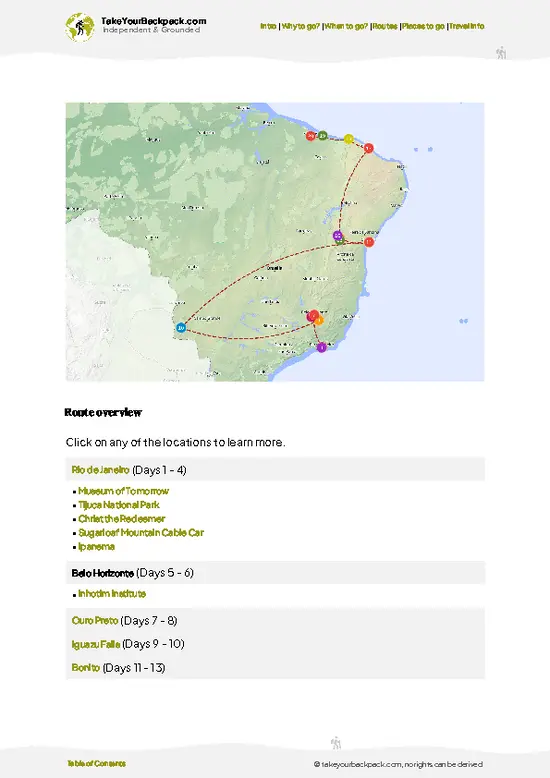
example page 1 from our offline Travel Guide for Brazil
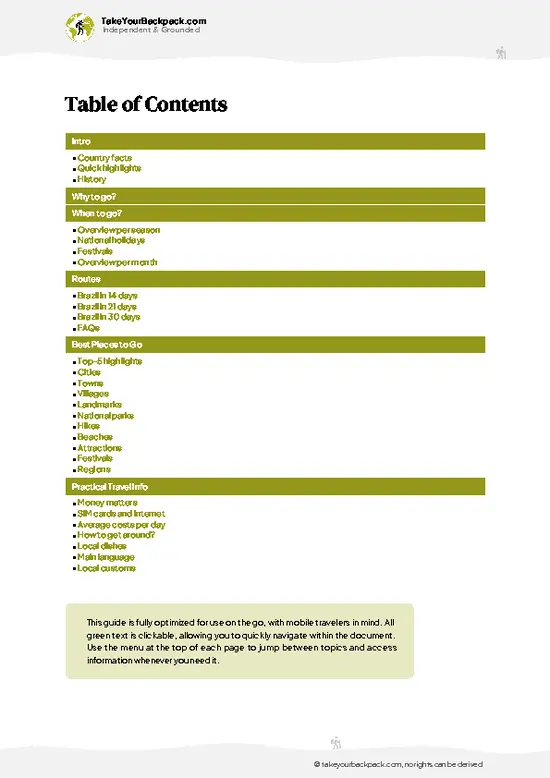
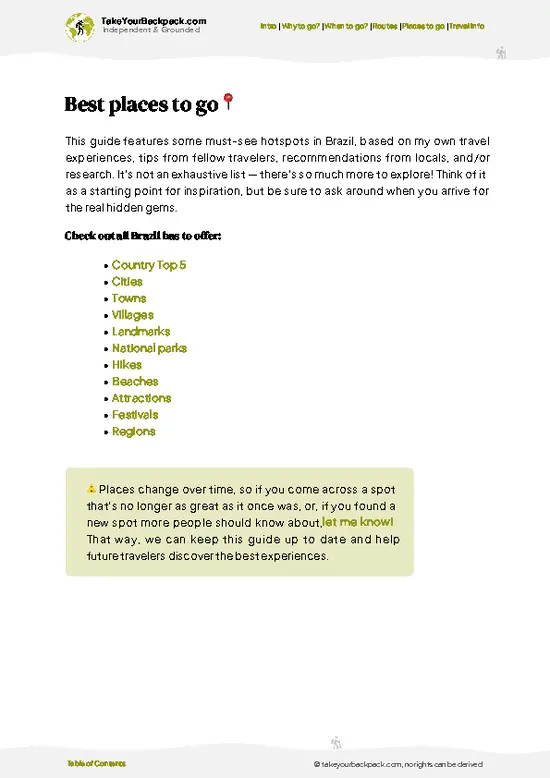
example page 2 from our offline Travel Guide for Brazil
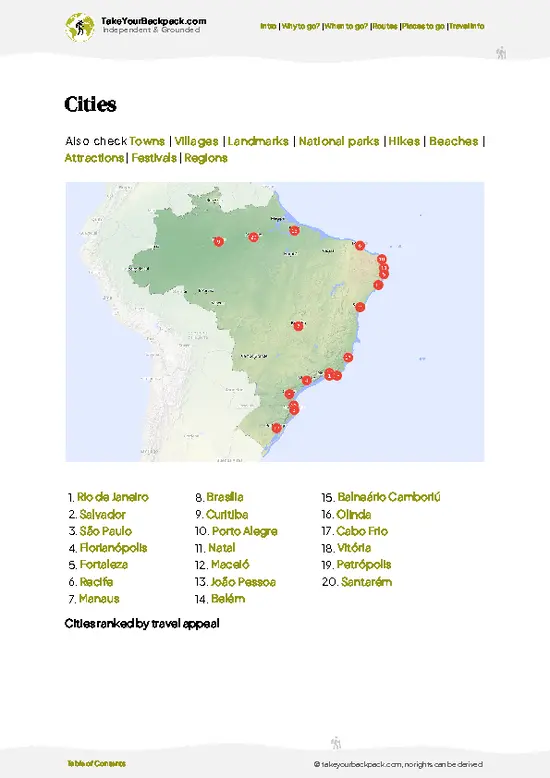
example page 3 from our offline Travel Guide for Brazil
example page 4 from our offline Travel Guide for Brazil
example page 5 from our offline Travel Guide for Brazil
example page 6 from our offline Travel Guide for Brazil
example page 7 from our offline Travel Guide for Brazil
Loading the map 🌍
CLICK TO FILTER
cities
towns
villages
landmarks
national parks
hikes
beaches
attractions
festivals
regions
SHOW COUNTRY’S BESTSHOW ALL

✨ Why go?
Ranked #28 city in Brazil
Why visitors keep coming back

Aracaju earns its place on a northeast route because it is flat, safe-feeling and easy to cover without a car. The riverfront and the long Atalaia strip hold most of the nightlife and eating, and the Passarela do Caranguejo serves crab late into the evening. It is a good place to rest between Salvador and Maceió, and a practical base for the Rio São Francisco canyons and colonial towns. It is not a beach-party stop, so two nights is plenty.

💡 HighlightsWhat this place is best known for

  1. Orla de Atalaia: Aracaju’s beachfront strip, with a wide promenade, kiosks and the Passarela do Caranguejo, a row of crab restaurants. Come in the late afternoon and stay for dinner. Free to stroll, allow 2 to 3 hours.
  2. Oceanarium of Projeto Tamar: Sea turtles, rays and sharks in tanks beside the beach, run by the conservation project. Go in the morning for fewer school groups. Entry is roughly US$7 to 10, allow 1 to 2 hours.
  3. Mercado Municipal Antônio Franco: Local produce, spices, leather goods, lace and regional sweets under one roof near the center. Visit in the morning when stalls are full. Free to enter, allow 1 hour.
  4. Praça Fausto Cardoso: The historic square facing the Sergipe River, framed by the old government palace and the Palácio Museu Olímpio Campos. Best in the morning light. Free,
… read more 👉
  1. Orla de Atalaia: Aracaju’s beachfront strip, with a wide promenade, kiosks and the Passarela do Caranguejo, a row of crab restaurants. Come in the late afternoon and stay for dinner. Free to stroll, allow 2 to 3 hours.
  2. Oceanarium of Projeto Tamar: Sea turtles, rays and sharks in tanks beside the beach, run by the conservation project. Go in the morning for fewer school groups. Entry is roughly US$7 to 10, allow 1 to 2 hours.
  3. Mercado Municipal Antônio Franco: Local produce, spices, leather goods, lace and regional sweets under one roof near the center. Visit in the morning when stalls are full. Free to enter, allow 1 hour.
  4. Praça Fausto Cardoso: The historic square facing the Sergipe River, framed by the old government palace and the Palácio Museu Olímpio Campos. Best in the morning light. Free, about 30 to 45 minutes.
  5. Catedral Metropolitana de Aracaju: A neo-Gothic cathedral with pointed arches and stained glass, sitting on the Praça Olímpio Campos. Go during daytime opening hours. Free, 20 to 30 minutes.
  6. Museu da Gente Sergipana: An interactive museum covering Sergipe’s food, music, crafts and traditions, with screens and recreated scenes. Allow 2 hours. Entry is free with an online booking, and mornings are calmer.
  7. Passarela do Caranguejo: Crab is the local specialty, served in a casual open-air row on the Orla de Atalaia. Dinner is the best time. Plan US$10 to 20 for a meal and 1 to 2 hours.
For day trips, head to the canyons and river cruises around Xingó, the colonial streets of São Cristóvão, and the dunes and beaches of Estância.
Spotted a mistake or missing something? Contact us.

🏘️ NeighborhoodsKey areas and districts to know

Aracaju is flat and compact, so you can cover the center on foot and use a short ride for the beaches.
  • Centro: Historic core around Praça Fausto Cardoso and the Mercado Municipal, where you can try regional sweets and crafts. Walk it in the morning, since shops shut by evening and the streets empty out. Skip it after dark.
  • Atalaia: The beach strip, with the Passarela do Caranguejo, a row of seafood bars, and the Oceanário (Projeto Tamar). Nightlife is here. It is long, so take a bus or ride-hail rather than walking it in heat.
  • Coroa do Meio: Quieter beachfront neighborhood with calm bars and a local feel. Good for an evening stroll, thin on sights.
  • Treze de Julho: Leafy, residential and safe, with relaxed cafés. Nothing to tick off, so just pass through.

⌛️ 1 day1-day itinerary for Aracaju

A slow coastal day with a market start and a seafood finish. 8:00 AM: Mercado Central. Browse spices, lace and sweets, and have a coffee with tapioca nearby. Walk on to the cathedral. 10:00 AM: Catedral Metropolitana. Admire the Gothic facade, then head to the museum by taxi or on foot. 11:00 AM: Museu da Gente Sergipana. Interactive, air-conditioned and a good primer on local culture. 1:30 PM: Parque da Sementeira. A less touristy green stop where locals exercise. 4:00 PM: Orla de Atalaia. Take a bus or ride-hailing car and walk the promenade toward sunset. 7:00 PM: Passarela do Caranguejo. Finish with crab and a cold beer.

🌤️ When to go?Best time to visit Aracaju

September to February is the driest and sunniest stretch, with highs of 29 to 32°C (84 to 90°F) and beach weather almost daily. March to August brings rain, mainly April to July, with 24 to 28°C (75 to 82°F) and more humidity. Daylight stays close to 11 to 13 hours all year. Crowds and prices peak around New Year, Carnival and the São João festival in June, when beds fill fast.
  • Festival Season: Late June brings forró parties and packed hostels.
Book São João beds a couple of months ahead.

source: climatestotravel.comJANJanuary: fair for travelingFEBFebruary: fair for travelingMARMarch: good for travelingAPRApril: good for travelingMAYMay: good for travelingJUNJune: good for travelingJULJuly: highly recommended for travelingAUGAugust: excellent for travelingSEPSeptember: excellent for travelingOCTOctober: excellent for travelingNOVNovember: excellent for travelingDECDecember: good for traveling
when-to-go

✈️ The backpacker research shortcutBrazil Travel Guide

An offline-friendly backpacking guide with optimized travel routes, ranked highlights, transport advice, and the best areas to stay.
example page 0 from our offline Travel Guide for Brazil
example page 1 from our offline Travel Guide for Brazil
example page 2 from our offline Travel Guide for Brazil
example page 3 from our offline Travel Guide for Brazil
example page 4 from our offline Travel Guide for Brazil
example page 5 from our offline Travel Guide for Brazil
example page 6 from our offline Travel Guide for Brazil
example page 7 from our offline Travel Guide for Brazil
The digital guide (410 pages) contains:
✅ 146 highlights, ranked by travel appeal
✅ Optimized 14, 21 & 30-day travel routes
✅ Cities, national parks, landmarks, beaches
✅ How to get around
✅ Offline-friendly for travel without Wi-Fi
👉 Click to see all 30+ guide features

📅 Plan smarter in minutes, not weeks
✅ Month by month travel advice
✅ Festivals & national holidays
✅ Budget expectations

🗺️ Go to the right places, skip the overrated ones
✅ Honest pros & cons of destinations
✅ Top hikes, parks & viewpoints
✅ Lesser-known places most travelers miss
✅ Clear “worth it vs skip it” guidance

🛏️ Travel smoothly without rookie mistakes
✅ Best areas to stay
✅ Transport systems explained simply
✅ Common scams & safety advice
✅ SIM cards, money & practical tips

🌍 Understand the country, not just visit it
✅ Culture & traditions
✅ 52 Essential phrases & customs
✅ Festivals worth planning around
✅ Traveler-friendly historical context
✅ Insights that make places more meaningful

📱 Built for real travel conditions
✅ Fully downloadable PDF
✅ Works completely offline
✅ Optimized for phone use
✅ Useful in remote areas & buses
✅ Everything in one place
Stop searching, start planning
Get instant access to your full guide. 30‑day money-back guarantee.
+ Add another guide for just

By proceeding you agree to our terms.
Sent to your inbox immediately after payment • 100% Secure Checkout
Best Backpacking Travel Advisor 2025 tourism awardBest Backpacking
Travel Advisor
2025
What others say about Take Your Backpack Guides:
⭐⭐⭐⭐⭐
Fantastic, amazing amount of information!
⭐⭐⭐⭐⭐
My goodness this is amazing, it's what I've been looking for hats off too you!
⭐⭐⭐⭐⭐
I think this is absolutely BRILLIANT
⭐⭐⭐⭐
Very complete and informative. It's still missing places, but I gotta to commend you
⭐⭐⭐⭐⭐
This is truly amazing, thank you, can't wait to explore it with my kids!
⭐⭐⭐⭐⭐
Awesome resource, thank you!
⭐⭐⭐⭐⭐
This is amazing! Can't wait to explore the ones I haven't seen
⭐⭐⭐⭐
I love this! Well done, great idea.
⭐⭐⭐⭐⭐
Thanks for taking the time to make this gem!
⭐⭐⭐⭐⭐
This might be the best website I've ever seen.
⭐⭐⭐⭐⭐
Congratulations, and thank you so much for your work; it's incredibly valuable.
⭐⭐⭐⭐
In all seriousness I think you did a great job pointing out the important spots
⭐⭐⭐⭐⭐
10/10 very good
⭐⭐⭐⭐⭐
As someone who's only just starting to visit regularly this is awesome, thank you.
⭐⭐⭐⭐
Thank you very much! I'm going to visit my dad, it's going to be very useful!
⭐⭐⭐⭐⭐
This is really cool! We'll be travelling for the first time and this definitely come in handy.
⭐⭐⭐⭐⭐
You are now our minister of culture, congratulations 👨‍💼
⭐⭐⭐⭐⭐
Just wanted to tell you that this is a pearl! Going to follow your recommendations.
⭐⭐⭐⭐⭐
This is so cool. I'll definitely be using the resource for my travels soon.
⭐⭐⭐⭐⭐
This is very impressive! Good work.
⭐⭐⭐⭐⭐
This is an amazing and informative site. Very well done!

🛏️ Where to stay?Choosing the right base

Atalaia is the best area for a budget bed, with hostels and cheap guesthouses a short walk from the sand and nightlife. Dorms run about US$10 to 20, and it is lively, so earplugs help on weekends. Buses and ride-hailing to Centro are easy, and the main strip is well lit and busy in the evening. Centro has a few cheaper rooms and good bus links, but it empties and feels deserted at night, so I would skip it for sleeping. Treze de Julho suits those wanting quiet and a calmer, safer feel.

🚌 Getting aroundTransportation options and practical tips

A city bus ride costs about US$0.80 to 1, paid in cash to the fare collector at the turnstile or with the local transit card. Aracaju is flat and the center is walkable, but distances between Centro and the Atalaia beaches are too long for comfortable walking in the heat. Ride-hailing is the smart choice at night.
  • Walking: Good for Centro and the Atalaia waterfront, free, and best before 10 a.m. or after 4 p.m. when the sun eases.
  • City buses: Frequent lines link Centro, the bus terminal and Atalaia, running roughly from 5 a.m. to 11 p.m. They get crowded at rush hour. Have small bills ready.
  • Ride-hailing apps: Uber and 99 cost about US$2 to 5 for most trips across town. They beat taxis, which rarely use fixed meters you can trust, and they are safer after dark.
  • Bicycle: Rental bikes along the
… read more 👉
A city bus ride costs about US$0.80 to 1, paid in cash to the fare collector at the turnstile or with the local transit card. Aracaju is flat and the center is walkable, but distances between Centro and the Atalaia beaches are too long for comfortable walking in the heat. Ride-hailing is the smart choice at night.
  • Walking: Good for Centro and the Atalaia waterfront, free, and best before 10 a.m. or after 4 p.m. when the sun eases.
  • City buses: Frequent lines link Centro, the bus terminal and Atalaia, running roughly from 5 a.m. to 11 p.m. They get crowded at rush hour. Have small bills ready.
  • Ride-hailing apps: Uber and 99 cost about US$2 to 5 for most trips across town. They beat taxis, which rarely use fixed meters you can trust, and they are safer after dark.
  • Bicycle: Rental bikes along the Atalaia seafront cost around US$2 to 4 an hour and suit the flat promenade. Skip them in midday sun.

👛 Costs (as of 19 October 2026)Travel costs and budget guide for Aracaju

Expect to spend about US$48 a day backpacking in Aracaju, with dorm beds in high season included.
CategoryBudget RangeLocal Reality
Dorm (high season)US$14 to 20Atalaia hostels, breakfast usually included
Dorm (off-season)US$10 to 14Easy to bargain on walk-ins
MealsUS$12 to 18Per-kilo lunch plus street snacks
Local transportUS$3 to 6Buses and the odd ride-hail
City transport passUS$2 to 4Transit card, top up as needed
Activities/entry feesUS$4 to 8Oceanário, museums, boat trips
MiscellaneousUS$3 to 6Water, sunscreen, drinks
Total Daily BudgetUS$48Based on high-season dorm
Eat lunch at a per-kilo restaurant, where you pay only for the weight of your plate.
⚠️ Prices can change and everyone travels differently, so take this as a rough guide. Hope it helps you plan your adventure!

🚌 Day tripsBest day trips from Aracaju

Aracaju works well for day trips because the best targets sit on the coast or river, within a few hours by road or boat.
Cânion do Xingó: Boat rides through a green-walled canyon on the São Francisco River, with swimming stops. It is about 3.5 to 4 hours each way by road, so join a tour (US$40 to 65) or leave very early. Go in the dry months for calmer conditions. First-timers often underestimate the drive.

Estância: Colonial town about 1 hour 15 minutes away by bus (US$4 to 6), known for its São João celebrations and old buildings. Visit in June for the big festivities, or any weekday for a quiet wander.

Mangue Seco: Dune-backed beach village across the border in Bahia, reached by road and a short boat crossing, around 3 hours each way. Budget about US$25 to 45 with transport. Many arrive too late and miss the light, so start early.

🍲 FoodLocal Cuisine & Drinks

Sergipe cooking leans on seafood from the river and sea. Try caranguejo (crab) at the Passarela do Caranguejo, cracked by hand over cold beer. Moqueca sergipana is lighter than the Bahian version, and carne de sol with pirão is a local staple. Sweet options include beiju (tapioca) and cocada. For cheap lunches, head to the Mercado Municipal in Centro, where stalls sell regional snacks and cashew products. Evenings revolve around beach kiosks and open-air bars in Atalaia.

🛡️ SafetyStaying Safe: What Travelers Should Know

Aracaju is reasonably safe in the tourist areas, but petty theft happens. Keep phones out of sight on the Atalaia promenade and beaches, and leave valuables at the hostel. Centro is empty after dark, so take a ride-hailing car instead of walking. Solo travelers are fine in Atalaia in the evening, sticking to busy stretches. Unofficial taxis quoting inflated prices are the usual annoyance, so use an app.

FAQFrequently asked questions about Aracaju

Two to three days is enough for Aracaju. Spend one day on Centro and the Atalaia beaches and the Oceanário, another on a trip to Estância or Mangue Seco, and add a third for the Cânion do Xingó, which is about 4 hours away by road.
Aracaju is considered one of the calmer Brazilian state capitals, and solo backpackers do well in Atalaia, where the waterfront stays busy into the evening. Avoid empty Centro streets after dark, use Uber or 99 (about US$2 to 5 per ride), and keep phones tucked away on the beach.
Aracaju is known for its long city beaches, the Passarela do Caranguejo seafood row and the huge São João forró festival in June. It is also the base for the Cânion do Xingó boat tours, about 4 hours away, and for visiting the sand village of Mangue Seco.
⚠️ Things can change over time, so always validate details locally before you go.

Other Brazilian cities near Aracaju

Explore more nearby:

  • Maceió—Reef pools, jangada rafts, lagoon mangroves, tide tables| 203 km away
  • Salvador—Pelourinho drums, gilded churches, Lacerda elevator, ribboned pilgrimage church| 276 km away
  • Caruaru—Forró capital, clay figurines, sprawling fair, São João grounds| 318 km away

💡 Not sure where to go next?
Create a personalized itinerary for Brazil including Aracaju and the places that fit your trip.

Generate my itinerary

👉 Discover all cities

Or checkout all Brazil has to offer (think cities, towns, villages, national parks, hikes, beaches, festivals)
Country photo of Brazil

We 💚 feedbackSumming up the experience

Aracaju suits food lovers and slow travelers who want a calm, walkable northeastern capital without crowds. If you crave surf or wild nightlife, skip it. I would stay two nights and eat crab on the Passarela.

✈️ When did I visit Brazil?
Call it good timing or luck, but I was able to celebrate Carnaval in Rio de Janeiro in February 2022, after a round trip in the north and east coast.

✍️ Help improve this page!
The information on this page is based on my own backpacking experience in Brazil, supplemented with up-to-date research and feedback from other travelers. Travel details can change, so if you notice anything outdated or incomplete, feel free to let me know.


🙋‍♂️ Give feedback

👋 Meet the founderWho’s Behind Take Your Backpack?

Johan, backpacker and founder of TakeYourBackpackHi, I’m Johan (Netherlands 🇳🇱), the creator of TakeYourBackpack. Over the past 3 decades, I’ve backpacked through 90+ countries across six continents, gaining extensive experience with independent travel, long-term trips, and overland routes.

This site is built on a combination of firsthand travel experience and carefully curated insights from other backpackers. Many guides are based on places I’ve personally visited, while others bring together tips, observations, and practical advice shared by trusted travelers I’ve met along the way.

The goal is to provide realistic, experience-driven guidance — not generic itineraries — so you can explore destinations with better context, clearer expectations, and more confidence.