×

Brazil🇧🇷 | landmarksGruta da Lapa DoceCalcite columns, Iraquara caves, caatinga | things to do and best time to go

Explore Iguazu FallsExplore Ruins of São Miguel das Missões

Backpacking in Gruta da Lapa Doce
👌 Worth visitingunique site ranked #6
By Johan Kruseman 🇳🇱 | Updated October 19, 2026

Lapa Doce is a cave system with more than 25 kilometers of mapped passages, and one of the first rooms you meet is a wide hall where dripping calcite has built columns taller than a house. The cave sits in Brazil’s Bahia state, in the Chapada Diamantina region near Iraquara, west of Salvador and Lençóis. Crowds stay thin, and the standard guided walk costs little, so money is not the issue. The issue is time: the easy route covers about 1 kilometer and skips most of the system, so don’t expect a deep expedition. I carried a small headlamp as a backup, and it let me read the guide’s pointing without squinting at formations in the shadows. Bring one too. Casual walkers and first-time cave visitors will like it most. Hardcore spelunkers and anyone wanting athletic challenge will find it tame.

Discover everything you want to know in the 📖 Brazil Travel Guide.


example page 0 from our offline Travel Guide for Brazil
example page 1 from our offline Travel Guide for Brazil
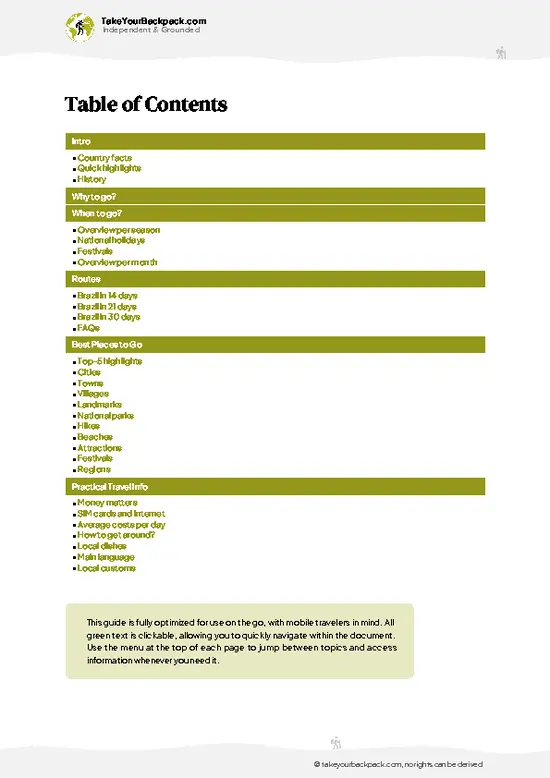
example page 2 from our offline Travel Guide for Brazil
example page 3 from our offline Travel Guide for Brazil
example page 4 from our offline Travel Guide for Brazil
example page 5 from our offline Travel Guide for Brazil
example page 6 from our offline Travel Guide for Brazil
example page 7 from our offline Travel Guide for Brazil
Loading the map 🌍
CLICK TO FILTER
cities
towns
villages
landmarks
national parks
hikes
beaches
attractions
festivals
regions
SHOW COUNTRY’S BESTSHOW ALL

✨ Why go?
Ranked #6 unique site in Brazil
Why visitors keep coming back

Gruta da Lapa Doce gives you a real cave without the effort of a long trek, which is rare in the Chapada Diamantina. A short, cheap guided walk takes you through huge chambers, so it works for tired legs after days of hiking the plateau. The formations are the draw: stalactite columns, glittering calcite crystals and rooms big enough that your headlamp barely reaches the ceiling. It also costs far less than the better-known water caves nearby, and the crowds are lighter. Its place on the map matters as well. Lapa Doce sits within easy reach of other Iraquara sites, such as the Gruta da Torrinha and the Pratinha area with its flooded Gruta Azul, so you can string several caves and swimming spots into one loop. Pair it with a trek around Lençóis or the Vale do Capão and you get a varied week that is not all waterfalls and ridges.

💡 HighlightsPlaces and moments you shouldn't skip

  1. The great hall: The chamber most people come for, where tall columns and hanging calcite fill a wide room along the main tourist path.
  2. The main guided walk: A short, easy route of about 1 kilometer over the natural cave floor, with guides explaining how the formations grew over very long periods.
  3. Calcite crystal formations: Close to the path, sparkling surfaces catch the guide’s light and show how varied the cave’s mineral growth is.
  4. Large collapse chambers: Huge rooms where the roof is lost in darkness, giving a clear sense of scale compared with smaller caves in the region.
  5. Cave entrance and surrounding caatinga: The dry scrubland around the opening is worth a look before you go underground, and shows how different the landscape is from the plateau’s wetter valleys.
  6. Neighboring caves of Iraquara:
… read more 👉
  1. The great hall: The chamber most people come for, where tall columns and hanging calcite fill a wide room along the main tourist path.
  2. The main guided walk: A short, easy route of about 1 kilometer over the natural cave floor, with guides explaining how the formations grew over very long periods.
  3. Calcite crystal formations: Close to the path, sparkling surfaces catch the guide’s light and show how varied the cave’s mineral growth is.
  4. Large collapse chambers: Huge rooms where the roof is lost in darkness, giving a clear sense of scale compared with smaller caves in the region.
  5. Cave entrance and surrounding caatinga: The dry scrubland around the opening is worth a look before you go underground, and shows how different the landscape is from the plateau’s wetter valleys.
  6. Neighboring caves of Iraquara: Gruta da Torrinha and the flooded Gruta Azul at Pratinha are close, so you can compare dry caves with flooded ones in a single outing.
Do the guided walk first, since it gives the best overview of the chambers and the guide will point out features you would otherwise miss.
Spotted a mistake or missing something? Contact us.

Things to do near Gruta da Lapa Doce

Ratings based on Tripadvisor reviews. When you book through this link, you support our work at no extra cost to you.

🌤️ When to go?Choosing the right time of year

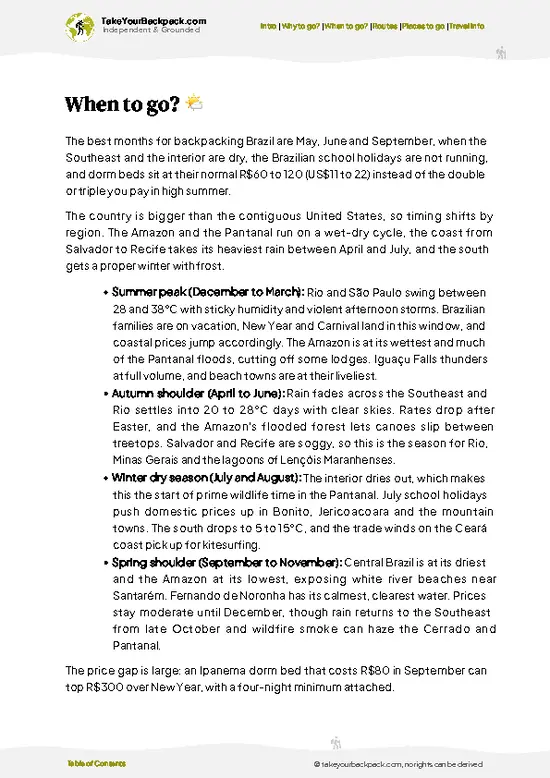
May to September is the window for Gruta da Lapa Doce, when the Chapada Diamantina around Iraquara and Lençóis stays dry and the cave floor is easiest to walk.
  • Dry Season (May to September): Days run 24 to 29°C (75 to 84°F), nights drop to 14 to 18°C (57 to 64°F). Rain is rare, daylight lasts roughly 11 to 12 hours, and the cave stays a steady, cool temperature inside.
  • Rainy Season (November to March): Hot, 28 to 34°C (82 to 93°F), with heavy afternoon storms. Access tracks turn muddy and guides may delay tours when water rises underground.
  • Shoulder Months (April and October): Mixed showers, lighter crowds, and easier bargains on rooms.
  • Holidays and July: Brazilian school holidays in July and the New Year week fill tours and lift prices by 20 to 40 percent.
Book a morning slot on a weekday in June … read more 👉
May to September is the window for Gruta da Lapa Doce, when the Chapada Diamantina around Iraquara and Lençóis stays dry and the cave floor is easiest to walk.
  • Dry Season (May to September): Days run 24 to 29°C (75 to 84°F), nights drop to 14 to 18°C (57 to 64°F). Rain is rare, daylight lasts roughly 11 to 12 hours, and the cave stays a steady, cool temperature inside.
  • Rainy Season (November to March): Hot, 28 to 34°C (82 to 93°F), with heavy afternoon storms. Access tracks turn muddy and guides may delay tours when water rises underground.
  • Shoulder Months (April and October): Mixed showers, lighter crowds, and easier bargains on rooms.
  • Holidays and July: Brazilian school holidays in July and the New Year week fill tours and lift prices by 20 to 40 percent.
Book a morning slot on a weekday in June and you will share the passages with very few people.


source: climatestotravel.comJANJanuary: fair for travelingFEBFebruary: fair for travelingMARMarch: fair for travelingAPRApril: good for travelingMAYMay: excellent for travelingJUNJune: excellent for travelingJULJuly: excellent for travelingAUGAugust: excellent for travelingSEPSeptember: highly recommended for travelingOCTOctober: good for travelingNOVNovember: good for travelingDECDecember: fair for traveling
when-to-go

✈️ The backpacker research shortcutBrazil Travel Guide

An offline-friendly backpacking guide with optimized travel routes, ranked highlights, transport advice, and the best areas to stay.
example page 0 from our offline Travel Guide for Brazil
example page 1 from our offline Travel Guide for Brazil
example page 2 from our offline Travel Guide for Brazil
example page 3 from our offline Travel Guide for Brazil
example page 4 from our offline Travel Guide for Brazil
example page 5 from our offline Travel Guide for Brazil
example page 6 from our offline Travel Guide for Brazil
example page 7 from our offline Travel Guide for Brazil
The digital guide (410 pages) contains:
✅ 146 highlights, ranked by travel appeal
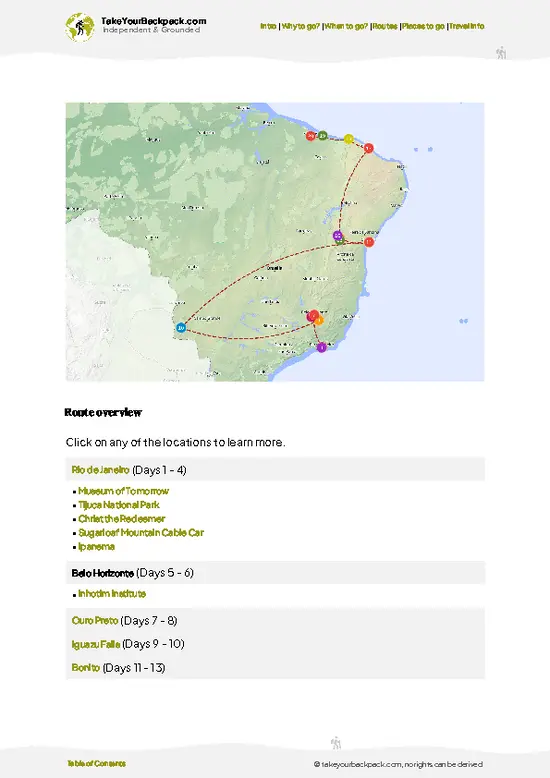
✅ Optimized 14, 21 & 30-day travel routes
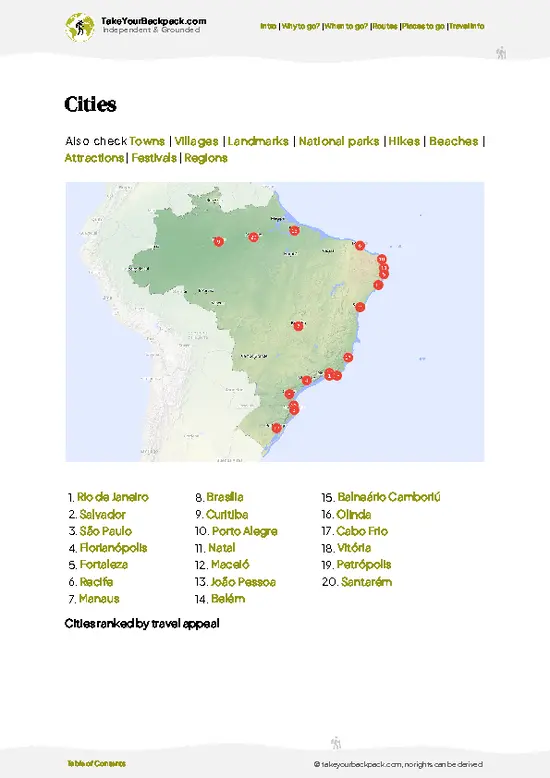
✅ Cities, national parks, landmarks, beaches
✅ How to get around
✅ Offline-friendly for travel without Wi-Fi
👉 Click to see all 30+ guide features

📅 Plan smarter in minutes, not weeks
✅ Month by month travel advice
✅ Festivals & national holidays
✅ Budget expectations

🗺️ Go to the right places, skip the overrated ones
✅ Honest pros & cons of destinations
✅ Top hikes, parks & viewpoints
✅ Lesser-known places most travelers miss
✅ Clear “worth it vs skip it” guidance

🛏️ Travel smoothly without rookie mistakes
✅ Best areas to stay
✅ Transport systems explained simply
✅ Common scams & safety advice
✅ SIM cards, money & practical tips

🌍 Understand the country, not just visit it
✅ Culture & traditions
✅ 52 Essential phrases & customs
✅ Festivals worth planning around
✅ Traveler-friendly historical context
✅ Insights that make places more meaningful

📱 Built for real travel conditions
✅ Fully downloadable PDF
✅ Works completely offline
✅ Optimized for phone use
✅ Useful in remote areas & buses
✅ Everything in one place
Stop searching, start planning
Get instant access to your full guide. 30‑day money-back guarantee.
+ Add another guide for just

By proceeding you agree to our terms.
Sent to your inbox immediately after payment • 100% Secure Checkout
Best Backpacking Travel Advisor 2025 tourism awardBest Backpacking
Travel Advisor
2025
What others say about Take Your Backpack Guides:
⭐⭐⭐⭐⭐
Fantastic, amazing amount of information!
⭐⭐⭐⭐⭐
My goodness this is amazing, it's what I've been looking for hats off too you!
⭐⭐⭐⭐⭐
I think this is absolutely BRILLIANT
⭐⭐⭐⭐
Very complete and informative. It's still missing places, but I gotta to commend you
⭐⭐⭐⭐⭐
This is truly amazing, thank you, can't wait to explore it with my kids!
⭐⭐⭐⭐⭐
Awesome resource, thank you!
⭐⭐⭐⭐⭐
This is amazing! Can't wait to explore the ones I haven't seen
⭐⭐⭐⭐
I love this! Well done, great idea.
⭐⭐⭐⭐⭐
Thanks for taking the time to make this gem!
⭐⭐⭐⭐⭐
This might be the best website I've ever seen.
⭐⭐⭐⭐⭐
Congratulations, and thank you so much for your work; it's incredibly valuable.
⭐⭐⭐⭐
In all seriousness I think you did a great job pointing out the important spots
⭐⭐⭐⭐⭐
10/10 very good
⭐⭐⭐⭐⭐
As someone who's only just starting to visit regularly this is awesome, thank you.
⭐⭐⭐⭐
Thank you very much! I'm going to visit my dad, it's going to be very useful!
⭐⭐⭐⭐⭐
This is really cool! We'll be travelling for the first time and this definitely come in handy.
⭐⭐⭐⭐⭐
You are now our minister of culture, congratulations 👨‍💼
⭐⭐⭐⭐⭐
Just wanted to tell you that this is a pearl! Going to follow your recommendations.
⭐⭐⭐⭐⭐
This is so cool. I'll definitely be using the resource for my travels soon.
⭐⭐⭐⭐⭐
This is very impressive! Good work.
⭐⭐⭐⭐⭐
This is an amazing and informative site. Very well done!

🛏️ Where to stay?Best areas to stay in Brazil

Lençóis is the best base for Gruta da Lapa Doce, with the most hostels, the easiest tour bookings, and a social scene built around the Chapada Diamantina trails. The town is small and walkable, its cobbled center is lively in the evening, and solo travelers meet hiking partners over dinner at the communal tables found in most budget places. Dorm beds here suit anyone planning several days of caves, waterfalls and plateau walks, and agencies on the main streets can pool you into shared vehicles to split costs.

Palmeiras and Vale do Capão offer quieter alternatives. Vale do Capão has a relaxed, … read more 👉
Lençóis is the best base for Gruta da Lapa Doce, with the most hostels, the easiest tour bookings, and a social scene built around the Chapada Diamantina trails. The town is small and walkable, its cobbled center is lively in the evening, and solo travelers meet hiking partners over dinner at the communal tables found in most budget places. Dorm beds here suit anyone planning several days of caves, waterfalls and plateau walks, and agencies on the main streets can pool you into shared vehicles to split costs.

Palmeiras and Vale do Capão offer quieter alternatives. Vale do Capão has a relaxed, hippie-leaning village feel, with guesthouses and campsites that appeal to long-stay hikers and people who prefer fewer crowds. It is calmer after dark, and you will usually need to arrange transfers in advance.

Safety is good in all three places. Stick to lit streets at night, keep valuables out of sight, and book dorms with lockers. Staying close to the cave itself means limited choices, so most backpackers sleep in town and go out for the day.

👛 Costs (as of 19 October 2026)Money, prices, and spending tips

A realistic budget for Gruta da Lapa Doce runs about US$43 to 85 per day for a backpacker, with the cave visit itself a small part of it.
CategoryBudget RangeLocal Reality
Accommodation (high season)US$12 to 25Dorm bed or basic private room in town, higher in July and at New Year
Cave entry and guideUS$10 to 20Guided visit is required, paid in reais, usually on the spot
Local transportUS$8 to 15Shared vehicle or taxi from town, cheaper when split between several people
FoodUS$10 to 18Self-service lunch by weight and simple dinners, with snacks from bakeries
ExtrasUS$3 to 7Water, snacks and tips for guides
Total Daily BudgetUS$43 to 85Midpoint about US$64 per day
⚠️ Prices can change and everyone travels differently, so take this as a rough guide. Hope it helps you plan your adventure!

FAQCommon questions from travelers

Gruta da Lapa Doce is a large limestone cave in Bahia’s Chapada Diamantina region, known for wide galleries and dramatic stalactites and stalagmites. It is reached from the town of Lençóis and is visited with a local guide. Entry and guiding generally cost US$10 to 20, and the cave stays cool inside year-round.
Gruta da Lapa Doce needs about half a day, with the guided walk itself lasting roughly 1.5 to 2 hours. Add 1 to 2 hours for travel from Lençóis. Most backpackers combine it with other nearby caves or waterfalls, making it a full day.
Gruta da Lapa Doce is reached by road from Lençóis, usually by taxi or tour vehicle in about 1 to 2 hours. Lençóis itself lies roughly 6 to 7 hours by bus from Salvador. A shared transfer from town costs about US$8 to 15 per person, and renting a car is possible but unnecessary.
⚠️ Things can change over time, so always validate details locally before you go.

Other Brazilian landmarks near Gruta da Lapa Doce

Explore more nearby:

  • Buda Gigante de Ibiraçu—Seated Buddha, hillside viewpoint, Italian-rooted town, coffee ridges| 848 km away
  • Convento da Penha—Franciscan sanctuary, 154-meter hilltop, bay panorama, Easter pilgrims| 901 km away
  • Christ the Redeemer—Soapstone Art Deco figure, Corcovado cog train, 710-meter lookout, timed tickets| 1193 km away

💡 Not sure where to go next?
Create a personalized itinerary for Brazil including Gruta da Lapa Doce and the places that fit your trip.

Generate my itinerary

👉 Discover all landmarks

Or checkout all Brazil has to offer (think cities, towns, villages, national parks, hikes, beaches, festivals)
Country photo of Brazil

We 💚 feedbackParting advice and final tips

Gruta da Lapa Doce trips go wrong when travelers treat it as a full-day expedition and arrive late, then rush the walk. Go in the morning, bring a headlamp as backup, and pair it with a nearby cave or pool in Iraquara so the day feels complete.

✈️ When did I visit Brazil?
Call it good timing or luck, but I was able to celebrate Carnaval in Rio de Janeiro in February 2022, after a round trip in the north and east coast.

✍️ Help improve this page!
The information on this page is based on my own backpacking experience in Brazil, supplemented with up-to-date research and feedback from other travelers. Travel details can change, so if you notice anything outdated or incomplete, feel free to let me know.


🙋‍♂️ Give feedback

👋 Meet the founderWho’s Behind Take Your Backpack?

Johan, backpacker and founder of TakeYourBackpackHi, I’m Johan (Netherlands 🇳🇱), the creator of TakeYourBackpack. Over the past 3 decades, I’ve backpacked through 90+ countries across six continents, gaining extensive experience with independent travel, long-term trips, and overland routes.

This site is built on a combination of firsthand travel experience and carefully curated insights from other backpackers. Many guides are based on places I’ve personally visited, while others bring together tips, observations, and practical advice shared by trusted travelers I’ve met along the way.

The goal is to provide realistic, experience-driven guidance — not generic itineraries — so you can explore destinations with better context, clearer expectations, and more confidence.