×

Brazil🇧🇷 | national parksItatiaia National ParkAgulhas Negras, highland plateau, lower waterfalls, granite needles | things to do and best time to go

Explore Emas National ParkExplore Lençóis Maranhenses National Park

Backpacking in Itatiaia
👌 Worth visitingnational park ranked #19
By Johan Kruseman 🇳🇱 | Updated October 19, 2026

Itatiaia is two parks in one, and most people only see half: the lower Parte Baixa with waterfalls and forest, while the high-altitude Parte Alta holds the real hiking. The park sits in Brazil, on the Rio de Janeiro and Minas Gerais border. Skip the lower falls if you want solitude; head for the highlands for rock needles and cloud-level ridges. A ranger at the gate told me, “Leave early, the mountain closes at noon.” Book your high-park entry ahead.

Discover everything you want to know in the 📖 Brazil Travel Guide.


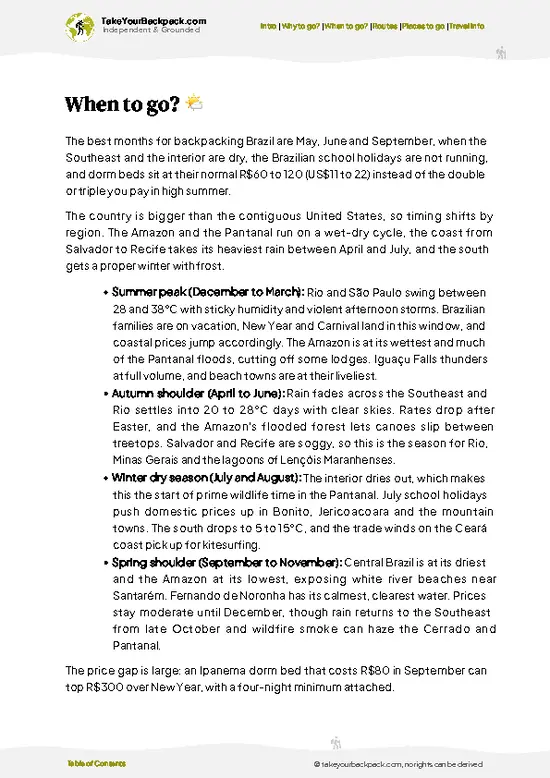
example page 0 from our offline Travel Guide for Brazil
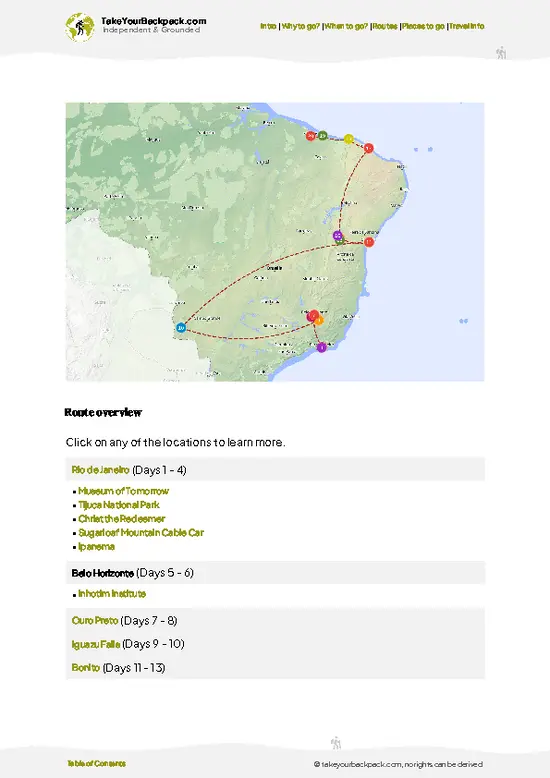
example page 1 from our offline Travel Guide for Brazil
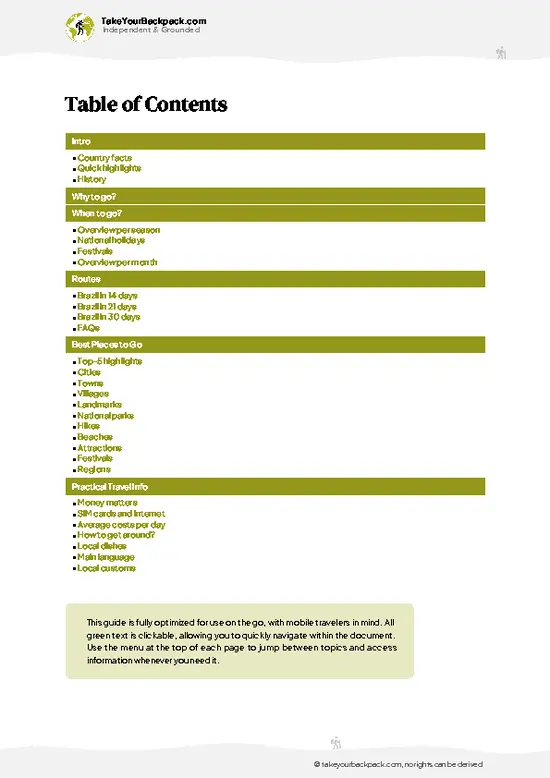
example page 2 from our offline Travel Guide for Brazil
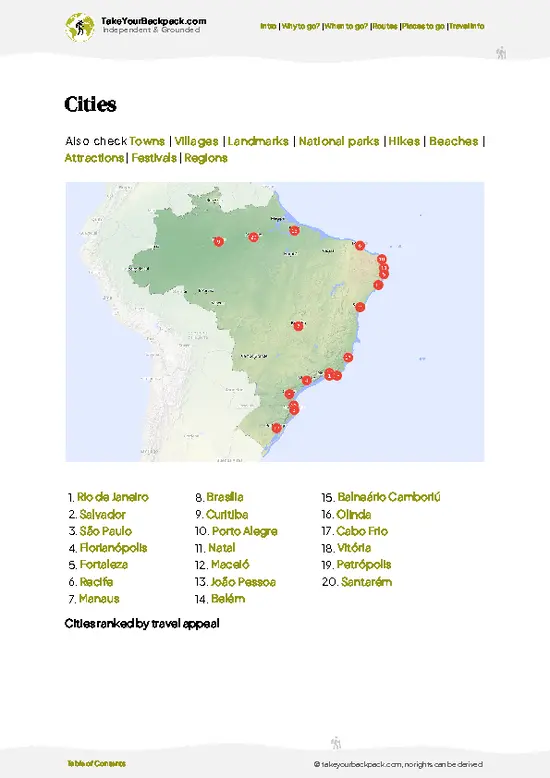
example page 3 from our offline Travel Guide for Brazil
example page 4 from our offline Travel Guide for Brazil
example page 5 from our offline Travel Guide for Brazil
example page 6 from our offline Travel Guide for Brazil
example page 7 from our offline Travel Guide for Brazil
Loading the map 🌍
CLICK TO FILTER
cities
towns
villages
landmarks
national parks
hikes
beaches
attractions
festivals
regions
SHOW COUNTRY’S BESTSHOW ALL

✨ Why go?
Ranked #19 national park in Brazil
What makes it a must-see national park

Itatiaia National Park, Brazil’s first national park, gives self-guided hikers something rare in this country: marked trails that climb from Atlantic forest to open highland without a guide on the easy routes. The big draw is the Agulhas Negras massif, at about 2,790 meters, with campsites and rock refuges that let you string multi-day walks together. Most trails in the lower sector need no tour. Serious summit routes reward careful planning, and the Pico das Prateleiras ridge suits experienced scramblers who like exposed rock and big views over the Mantiqueira range.

💡 HighlightsThe experiences that define the visit

  1. Agulhas Negras: At 2,791 meters, this is the park’s best-known summit and one of the highest points in the Serra da Mantiqueira. The granite needle is a serious scramble from the Abrigo Rebouças side, with exposed rock sections that need dry weather and a steady head.
  2. Pico das Prateleiras: Its stacked rock shelves give a skyline you can spot from the high plateau. The climb takes a full day and ends with views over ridgelines and the Rio de Janeiro state side.
  3. Maromba Waterfall (Cachoeira Maromba): A tiered cascade near the lower park area, reached by a short, easy walk. Deep pools below make it the most popular swim stop.
  4. Véu da Noiva: A thin, tall waterfall dropping about 40 meters in the lower section, reached on a gentle trail through Atlantic forest. Bring a camera for the mist and the mossy
… read more 👉
  1. Agulhas Negras: At 2,791 meters, this is the park’s best-known summit and one of the highest points in the Serra da Mantiqueira. The granite needle is a serious scramble from the Abrigo Rebouças side, with exposed rock sections that need dry weather and a steady head.
  2. Pico das Prateleiras: Its stacked rock shelves give a skyline you can spot from the high plateau. The climb takes a full day and ends with views over ridgelines and the Rio de Janeiro state side.
  3. Maromba Waterfall (Cachoeira Maromba): A tiered cascade near the lower park area, reached by a short, easy walk. Deep pools below make it the most popular swim stop.
  4. Véu da Noiva: A thin, tall waterfall dropping about 40 meters in the lower section, reached on a gentle trail through Atlantic forest. Bring a camera for the mist and the mossy rock face.
  5. Lago Azul: A small, clear pool in the forest along an easy path. Calm and shaded, it suits a quiet picnic or a rest after a longer hike.
  6. Planalto das Agulhas Negras: The high plateau above the tree line, with open grassland, boulders and wind-bent shrubs. Birders look for Itatiaia’s endemic highland species here, and the sunsets across the ridges are wide and clear.
  7. Mirante do Último Adeus: A short lookout walk with a wide view over the Paraíba valley. It makes a good half-hour stop for anyone with limited time.
The Lago Azul trail gets few visitors, yet its quiet forest is where you are most likely to hear toucans and see small primates.
Spotted a mistake or missing something? Contact us.

Things to do near Itatiaia National Park

Ratings based on Tripadvisor reviews. When you book through this link, you support our work at no extra cost to you.

🌤️ When to go?Seasonal considerations and timing

  • Dry Season (May to September): Clear mornings, cool days of 10 to 22°C (50 to 72°F) in the lower park, and nights near freezing (below 0°C/32°F) at Agulhas Negras. Best for hiking and views. Daylight runs about 11 hours.
  • Wet Season (December to March): Warm, 15 to 27°C (59 to 81°F), with afternoon storms, mist and slippery trails. Fewer hikers, but summits often hide in cloud.
  • Holidays and Weekends: Crowds and lodge prices rise around Carnival, Easter, July school break and long weekends.
Book midweek in June or August for cold, clear weather and the lowest crowds.

source: climatestotravel.comJANJanuary: fair for travelingFEBFebruary: fair for travelingMARMarch: fair for travelingAPRApril: good for travelingMAYMay: highly recommended for travelingJUNJune: highly recommended for travelingJULJuly: good for travelingAUGAugust: highly recommended for travelingSEPSeptember: highly recommended for travelingOCTOctober: good for travelingNOVNovember: fair for travelingDECDecember: fair for traveling
brazil-national-park-itatiaia-national-park
© Google | Marcos Pires

✈️ The backpacker research shortcutBrazil Travel Guide

An offline-friendly backpacking guide with optimized travel routes, ranked highlights, transport advice, and the best areas to stay.
example page 0 from our offline Travel Guide for Brazil
example page 1 from our offline Travel Guide for Brazil
example page 2 from our offline Travel Guide for Brazil
example page 3 from our offline Travel Guide for Brazil
example page 4 from our offline Travel Guide for Brazil
example page 5 from our offline Travel Guide for Brazil
example page 6 from our offline Travel Guide for Brazil
example page 7 from our offline Travel Guide for Brazil
The digital guide (410 pages) contains:
✅ 146 highlights, ranked by travel appeal
✅ Optimized 14, 21 & 30-day travel routes
✅ Cities, national parks, landmarks, beaches
✅ How to get around
✅ Offline-friendly for travel without Wi-Fi
👉 Click to see all 30+ guide features

📅 Plan smarter in minutes, not weeks
✅ Month by month travel advice
✅ Festivals & national holidays
✅ Budget expectations

🗺️ Go to the right places, skip the overrated ones
✅ Honest pros & cons of destinations
✅ Top hikes, parks & viewpoints
✅ Lesser-known places most travelers miss
✅ Clear “worth it vs skip it” guidance

🛏️ Travel smoothly without rookie mistakes
✅ Best areas to stay
✅ Transport systems explained simply
✅ Common scams & safety advice
✅ SIM cards, money & practical tips

🌍 Understand the country, not just visit it
✅ Culture & traditions
✅ 52 Essential phrases & customs
✅ Festivals worth planning around
✅ Traveler-friendly historical context
✅ Insights that make places more meaningful

📱 Built for real travel conditions
✅ Fully downloadable PDF
✅ Works completely offline
✅ Optimized for phone use
✅ Useful in remote areas & buses
✅ Everything in one place
Stop searching, start planning
Get instant access to your full guide. 30‑day money-back guarantee.
+ Add another guide for just

By proceeding you agree to our terms.
Sent to your inbox immediately after payment • 100% Secure Checkout
Best Backpacking Travel Advisor 2025 tourism awardBest Backpacking
Travel Advisor
2025
What others say about Take Your Backpack Guides:
⭐⭐⭐⭐⭐
Fantastic, amazing amount of information!
⭐⭐⭐⭐⭐
My goodness this is amazing, it's what I've been looking for hats off too you!
⭐⭐⭐⭐⭐
I think this is absolutely BRILLIANT
⭐⭐⭐⭐
Very complete and informative. It's still missing places, but I gotta to commend you
⭐⭐⭐⭐⭐
This is truly amazing, thank you, can't wait to explore it with my kids!
⭐⭐⭐⭐⭐
Awesome resource, thank you!
⭐⭐⭐⭐⭐
This is amazing! Can't wait to explore the ones I haven't seen
⭐⭐⭐⭐
I love this! Well done, great idea.
⭐⭐⭐⭐⭐
Thanks for taking the time to make this gem!
⭐⭐⭐⭐⭐
This might be the best website I've ever seen.
⭐⭐⭐⭐⭐
Congratulations, and thank you so much for your work; it's incredibly valuable.
⭐⭐⭐⭐
In all seriousness I think you did a great job pointing out the important spots
⭐⭐⭐⭐⭐
10/10 very good
⭐⭐⭐⭐⭐
As someone who's only just starting to visit regularly this is awesome, thank you.
⭐⭐⭐⭐
Thank you very much! I'm going to visit my dad, it's going to be very useful!
⭐⭐⭐⭐⭐
This is really cool! We'll be travelling for the first time and this definitely come in handy.
⭐⭐⭐⭐⭐
You are now our minister of culture, congratulations 👨‍💼
⭐⭐⭐⭐⭐
Just wanted to tell you that this is a pearl! Going to follow your recommendations.
⭐⭐⭐⭐⭐
This is so cool. I'll definitely be using the resource for my travels soon.
⭐⭐⭐⭐⭐
This is very impressive! Good work.
⭐⭐⭐⭐⭐
This is an amazing and informative site. Very well done!

🛏️ Where to stay?Best areas and accommodation options

Stay in Penedo or Visconde de Mauá for the best mix of hostels and guesthouses, or choose a base inside the park itself. The lower (Parte Baixa) entrance near Itatiaia town has a few pousadas and basic campsites close to the waterfalls. In the high part (Parte Alta), Abrigo Rebouças and the Macieiras campsite suit hikers heading for Agulhas Negras or Prateleiras, and reservations are needed. Penedo, a Finnish-settled village, has the most hostels, around US$15 to 30 a bed. Visconde de Mauá is quieter and better for waterfalls. Itatiaia town is practical for buses, but has less character.

👛 Costs (as of 19 October 2026)Travel costs and budget guide for Itatiaia

Expect to spend about US$50 a day backpacking Itatiaia National Park, including camping or a hostel bed, food and local transport.
CategoryBudget RangeLocal Reality
Entrance feeUS$5 to 8Charged per day at the gate; reduced rates for some groups
Accommodation (high season)US$15 to 30Hostel bed in Penedo or a park campsite; pousadas cost more
Local transportUS$3 to 10Buses from Itatiaia town, plus a taxi or shared transfer to the upper entrance
Food and suppliesUS$10 to 15Stock up in Itatiaia town before hiking; restaurants in Penedo are pricier
Total Daily BudgetUS$33 to 63About US$50 for a typical day


source: brazil.travel
⚠️ Prices can change and everyone travels differently, so take this as a rough guide. Hope it helps you plan your adventure!

🥾 TrailsPlan your hike in Itatiaia: routes, terrain, and sights

Itatiaia National Park offers walks from short forest strolls to serious high-altitude scrambles. The lower sector has gentle, signed paths, while the upper sector has rocky, exposed terrain where weather turns fast.
  • Véu da Noiva: Short, easy walk of about 1 kilometer on a forest path, roughly 30 minutes round trip, ending at a tall waterfall.
  • Lago Azul: Easy, flat trail through shaded Atlantic forest, about 1 hour, good for birds and quiet.
  • Maromba: Easy riverside walk to a waterfall with swimming spots, around 1 hour.
  • Pico das Prateleiras: Hard, rocky ascent of a full day with scrambling and exposure,
… read more 👉
Itatiaia National Park offers walks from short forest strolls to serious high-altitude scrambles. The lower sector has gentle, signed paths, while the upper sector has rocky, exposed terrain where weather turns fast.
  • Véu da Noiva: Short, easy walk of about 1 kilometer on a forest path, roughly 30 minutes round trip, ending at a tall waterfall.
  • Lago Azul: Easy, flat trail through shaded Atlantic forest, about 1 hour, good for birds and quiet.
  • Maromba: Easy riverside walk to a waterfall with swimming spots, around 1 hour.
  • Pico das Prateleiras: Hard, rocky ascent of a full day with scrambling and exposure, only for fit hikers.
  • Agulhas Negras: Very demanding, steep summit route best done with a guide or experience, typically a full day or an overnight.
You will see monkeys, hummingbirds, toucans and sometimes tapirs or small mammals in the forest sections. Public transport reaches the lower entrance via nearby towns, though the upper sector needs a transfer or your own vehicle. Crowds build on weekends and holidays, especially at the waterfalls, while the high trails stay quiet. Entrance fees apply, and the upper sector requires advance booking.
⚠️ Hiking info can sometimes be outdated or inaccurate. Before you hit the trail, check the latest conditions with locals. If you do spot anything that's off, I'd love to hear from you, so I can update it for fellow travelers.

🛡️ SafetyScams, Hazards, and Annoyances

Itatiaia National Park is well managed and straightforward on marked trails, but mountain weather turns fast. Fog, cold rain and near-freezing nights hit the high part even in summer, so carry a warm layer and a rain shell. Rock sections on Agulhas Negras and Prateleiras are slippery when wet, and guides are advised for scrambles. Start early to avoid afternoon storms. Wildlife is mostly monkeys, birds and the occasional snake, so keep your distance, never feed animals and watch your footing in the undergrowth. Register at the entrance for overnight trips.

FAQCommon questions from travelers

Plan on 2 to 3 days for Itatiaia National Park. One day covers the lower part with its waterfalls (Véu da Noiva, Poranga) and short trails, while a second day is needed for the high part. Add a third day if you want to climb Agulhas Negras (2,791 m) or hike the Prateleiras route.
Yes, Itatiaia National Park can be reached by public transport, though the high part is harder. Buses run from Rio de Janeiro or São Paulo to Resende, about 2.5 to 4 hours, then a local bus or taxi reaches Itatiaia town and the lower gate. Taxis or transfers to the upper entrance cost roughly US$20 to 40 each way, and many hikers share the fare.
Yes, Itatiaia National Park charges an entrance fee, roughly US$5 to 8 per person per day, paid at the gates. The lower and upper parts are ticketed separately, and the upper part has limited daily entries. Camping and mountain refuges such as Abrigo Rebouças need advance booking, and overnight hikes require registration.
⚠️ Things can change over time, so always validate details locally before you go.

Other Brazilian national parks near Itatiaia

Explore more nearby:


💡 Not sure where to go next?
Create a personalized itinerary for Brazil including Itatiaia and the places that fit your trip.

Generate my itinerary

👉 Discover all national parks

Or checkout all Brazil has to offer (think cities, towns, villages, national parks, hikes, beaches, festivals)
Country photo of Brazil

We 💚 feedbackFinal thoughts on exploring Itatiaia

Many visitors treat Itatiaia National Park as one quick waterfall stop and leave the highlands unseen. Give it at least two days, split between the lower forest and the upper sector. I would book the high park early and start walking at dawn, before clouds close in.

✈️ When did I visit Brazil?
Call it good timing or luck, but I was able to celebrate Carnaval in Rio de Janeiro in February 2022, after a round trip in the north and east coast.

✍️ Help improve this page!
The information on this page is based on my own backpacking experience in Brazil, supplemented with up-to-date research and feedback from other travelers. Travel details can change, so if you notice anything outdated or incomplete, feel free to let me know.


🙋‍♂️ Give feedback

👋 Meet the founderWho’s Behind Take Your Backpack?

Johan, backpacker and founder of TakeYourBackpackHi, I’m Johan (Netherlands 🇳🇱), the creator of TakeYourBackpack. Over the past 3 decades, I’ve backpacked through 90+ countries across six continents, gaining extensive experience with independent travel, long-term trips, and overland routes.

This site is built on a combination of firsthand travel experience and carefully curated insights from other backpackers. Many guides are based on places I’ve personally visited, while others bring together tips, observations, and practical advice shared by trusted travelers I’ve met along the way.

The goal is to provide realistic, experience-driven guidance — not generic itineraries — so you can explore destinations with better context, clearer expectations, and more confidence.