×

Brazil🇧🇷 | national parksTijuca National ParkUrban rainforest, granite outcrops, city overlooks | things to do and best time to go

Explore Serra dos Órgãos National ParkExplore Fernando de Noronha Marine National Park

Backpacking in Tijuca
🌟 Highlightnational park ranked #7
By Johan Kruseman 🇳🇱 | Updated May 21, 2026

A lot of people think Tijuca National Park is some remote jungle hours from Rio; it’s not. It’s basically Rio’s mountainous backyard, wrapped around the city in the state of Rio de Janeiro, and that’s both its strength and its trap. As a backpacker, you get steep, sweaty hikes like Pico da Tijuca and Bico do Papagaio, dense Atlantic Forest, monkeys, coatis, waterfalls, and city-and-sea views that feel wildly out of proportion to the short approach and low entrance fees. The flip side: easy access means weekend crowds, confusing trailheads, and the occasional sketchy corner if you wander off established routes. Wild camping is not really an option, so you’re basing in the city, not the forest, which keeps costs manageable but kills the “deep wilderness” vibe you’d find in places like Serra dos Órgãos or Itatiaia.

Discover everything you want to know in the 📖 Brazil Travel Guide.


Get your Brazil guide
152 ranked highlights, routes & tips, works offline (515 pages)
Loading the map 🌍
CLICK TO FILTER
cities
towns
villages
landmarks
national parks
hikes
beaches
attractions
festivals
regions
SHOW COUNTRY’S BESTSHOW ALL

✨ Why go?
Ranked #7 national park in Brazil
The unique appeal for travelers

Tijuca National Park is a top choice for backpackers seeking independent exploration. With over 30 kilometers of trails, it offers a variety that caters to all skill levels. You can hike to the iconic Christ the Redeemer statue or tackle the more challenging paths leading to hidden waterfalls.

Budget-conscious travelers will appreciate the camping options and affordable hostels nearby. This makes it easy to stretch your funds while still enjoying the park’s beauty.

Tijuca is particularly suited for self-guided travelers. The well-marked trails allow you to navigate without needing a tour guide, giving you the freedom to set your own pace. Just be mindful of the weather; sudden rain can turn trails slippery.

By choosing Tijuca, you’re not just saving money; you’re also preserving your … read more 👉
Tijuca National Park is a top choice for backpackers seeking independent exploration. With over 30 kilometers of trails, it offers a variety that caters to all skill levels. You can hike to the iconic Christ the Redeemer statue or tackle the more challenging paths leading to hidden waterfalls.

Budget-conscious travelers will appreciate the camping options and affordable hostels nearby. This makes it easy to stretch your funds while still enjoying the park’s beauty.

Tijuca is particularly suited for self-guided travelers. The well-marked trails allow you to navigate without needing a tour guide, giving you the freedom to set your own pace. Just be mindful of the weather; sudden rain can turn trails slippery.

By choosing Tijuca, you’re not just saving money; you’re also preserving your energy for the moments that truly matter—like soaking in the views from a mountain summit or enjoying a quiet moment by a waterfall.
Get the complete Travel Guide for Brazil
Everything organized for offline planning — routes, highlights, costs & tips

See what’s inside 👉

Get the Travel Guide -

💡 HighlightsMust-see experiences and standout moments

  • Cristo Redentor (Corcovado): The park’s most iconic landmark — a giant statue perched on Corcovado with sweeping views over Rio, Guanabara Bay and the forested slopes below. You can hike up through the rainforest for a quieter approach or take the train; either way the vantage point is unbeatable for photos and for feeling how the city and nature meet.
  • Pico da Tijuca: The park’s highest peak (around 1,020 m) and my personal favorite. It’s a proper hike through dense Atlantic Forest with rocky steps and short scrambles, then a 360° payoff: mountains, city, and ocean on a clear day. Great for people who want wilderness and a real summit moment without leaving Rio.
  • Pedra Bonita: Short, punchy trail that finishes at a broad rocky platform used as a hang-glider launch. The view drops straight
read more 👉
  • Cristo Redentor (Corcovado): The park’s most iconic landmark — a giant statue perched on Corcovado with sweeping views over Rio, Guanabara Bay and the forested slopes below. You can hike up through the rainforest for a quieter approach or take the train; either way the vantage point is unbeatable for photos and for feeling how the city and nature meet.
  • Pico da Tijuca: The park’s highest peak (around 1,020 m) and my personal favorite. It’s a proper hike through dense Atlantic Forest with rocky steps and short scrambles, then a 360° payoff: mountains, city, and ocean on a clear day. Great for people who want wilderness and a real summit moment without leaving Rio.
  • Pedra Bonita: Short, punchy trail that finishes at a broad rocky platform used as a hang-glider launch. The view drops straight to São Conrado beach and shows the city’s coastline like a postcard. Easy access makes it perfect for sunrise or quick outings with big views for little effort.
  • Pedra da Gávea: A dramatic granite monolith with a steep, adventurous climb and one of the wildest skyline views in Rio. The final section is exposed and sometimes needs ropes; this one’s for experienced hikers who want technical scrambling and serious drama over the ocean and forest below.
  • Vista Chinesa: A charming oriental-style gazebo set into the forest with a classic lookout over Tijuca and Corcovado. It’s an easy stop on many trails and offers a peaceful place to take in layered views of greens and cityscape — perfect for a photo break away from the busiest spots.
  • Floresta da Tijuca (the rainforest and wildlife): The restored Atlantic Forest here isn’t just scenery — it’s alive. Expect howler and capuchin monkeys, coatis, toucans and lots of hummingbirds among lush ferns and waterfalls. The trail network lets you experience real canopy, shady streams and the park’s impressive reforestation history up close.
  • Mirante Dona Marta: A compact viewpoint that gives one of the best angles on Christ the Redeemer, Sugarloaf and the bay all in one frame. It’s easy to reach and worth timing for sunrise or sunset when the light turns the whole city into color — crowded sometimes, but it’s for good reason.
Spotted a mistake or missing something? Contact us.

Things to do around Tijuca National Park

Ratings based on Tripadvisor reviews. When you book through this link, you support our work at no extra cost to you.

🌤️ When to go?When to go for the best experience


  • Weather: Tijuca National Park sits in a tropical zone, so expect high humidity and frequent rain showers, especially from December to March. These months can turn trails slippery and views misty, which drains energy fast.

  • Temperature: Average highs hover around 25-28°C (77-82°F) year-round, but nights can dip to 18°C (64°F). The cooler months, June to August, offer more comfortable trekking conditions without the stifling heat.

  • Daylight Hours: Near the equator, daylight is fairly consistent, roughly 11-12 hours daily. This means you won’t lose much hiking time seasonally, but starting early is still key to avoid afternoon rains.

  • Crowds: Peak tourist season aligns with Brazil’s summer holidays (December to February) and July vacations. Trails and viewpoints get busy, which can dilute
read more 👉

  • Weather: Tijuca National Park sits in a tropical zone, so expect high humidity and frequent rain showers, especially from December to March. These months can turn trails slippery and views misty, which drains energy fast.

  • Temperature: Average highs hover around 25-28°C (77-82°F) year-round, but nights can dip to 18°C (64°F). The cooler months, June to August, offer more comfortable trekking conditions without the stifling heat.

  • Daylight Hours: Near the equator, daylight is fairly consistent, roughly 11-12 hours daily. This means you won’t lose much hiking time seasonally, but starting early is still key to avoid afternoon rains.

  • Crowds: Peak tourist season aligns with Brazil’s summer holidays (December to February) and July vacations. Trails and viewpoints get busy, which can dilute the natural experience and slow your pace.

  • Seasonal Activities: Birdwatching and waterfall visits peak in the wetter months, but if you want clear vistas and dry trails, aim for the drier season from May to September.

  • Price Fluctuations: Accommodation and guided tours spike during summer holidays and local festivals. Booking outside these windows can save you a solid chunk of your budget.


Pro-tip: Visit Tijuca between May and September to dodge rain, crowds, and inflated prices—this window preserves your stamina and wallet for the park’s best moments.


source: climatestotravel.comJANJanuary: fair for travelingFEBFebruary: fair for travelingMARMarch: good for travelingAPRApril: good for travelingMAYMay: excellent for travelingJUNJune: excellent for travelingJULJuly: highly recommended for travelingAUGAugust: excellent for travelingSEPSeptember: excellent for travelingOCTOctober: highly recommended for travelingNOVNovember: good for travelingDECDecember: fair for traveling
brazil-national-park-tijuca-national-park
© Google | Davide Perucci

✈️ The backpacker research shortcutBrazil Travel Guide

An offline-friendly backpacking guide with optimized travel routes, ranked highlights, transport advice, and the best areas to stay.
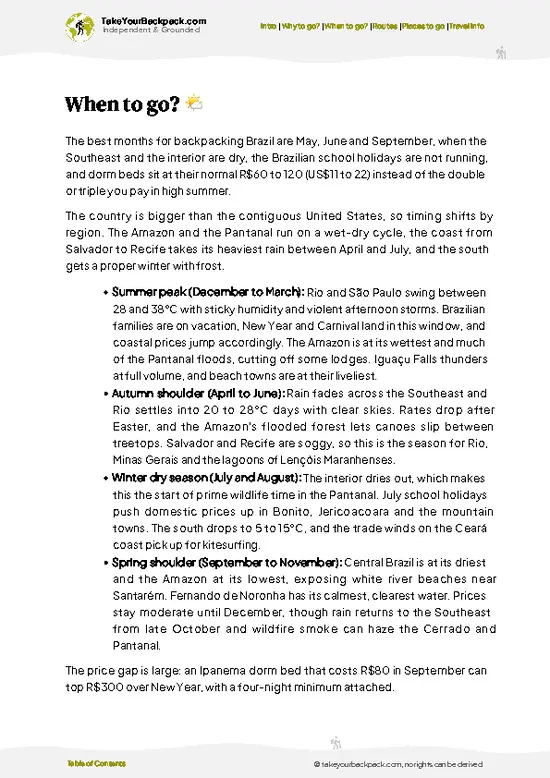
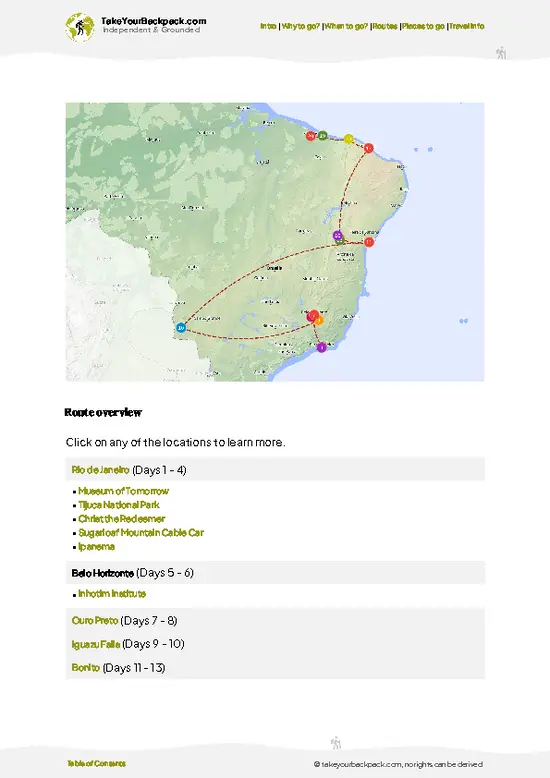
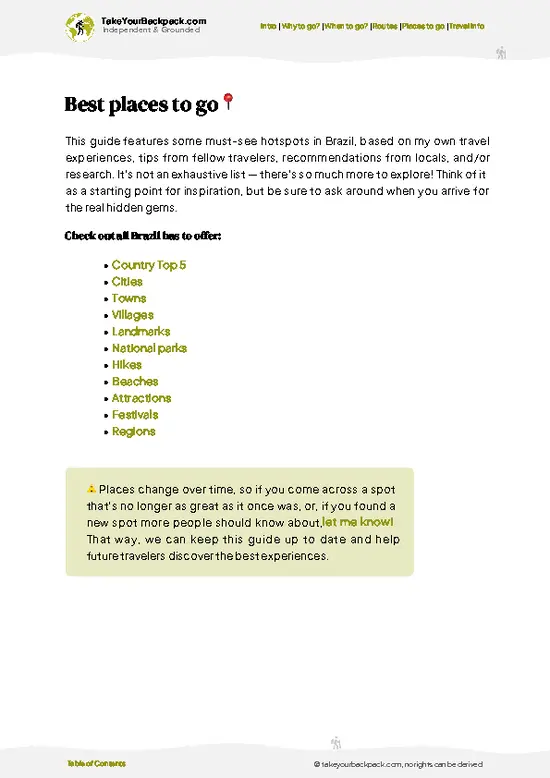
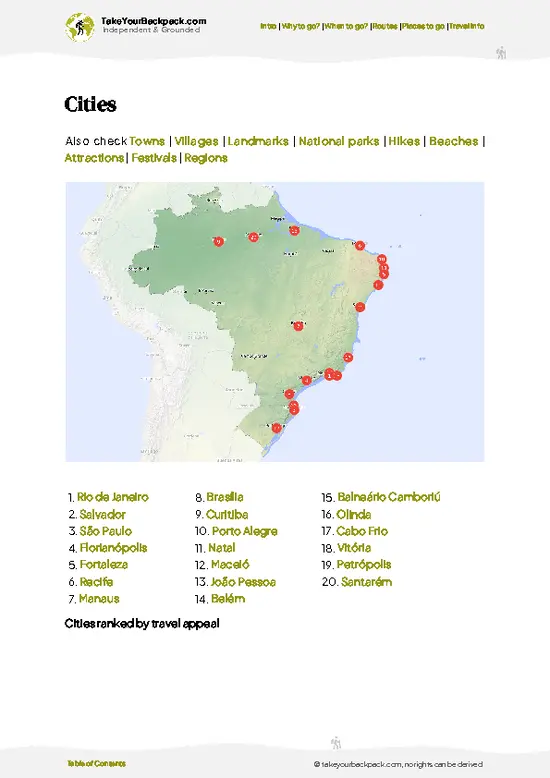
example page 0 from our offline Travel Guide for Brazilexample page 1 from our offline Travel Guide for Brazilexample page 2 from our offline Travel Guide for Brazilexample page 3 from our offline Travel Guide for Brazilexample page 4 from our offline Travel Guide for Brazilexample page 5 from our offline Travel Guide for Brazilexample page 6 from our offline Travel Guide for Brazilexample page 7 from our offline Travel Guide for Brazil
The digital guide (515 pages) contains:
152 highlights, ranked by travel appeal
Optimized 14, 21 & 30-day travel routes
Cities, national parks, beaches, historical sites, ...
How to get around
Offline-friendly for travel without Wi-Fi
👉 Click to see all 30+ guide features

📅 Plan smarter in minutes, not weeks
Month by month travel advice
Festivals & national holidays
Budget expectations

🗺️ Go to the right places, skip the overrated ones
Honest pros & cons of destinations
Top hikes, parks & viewpoints
Lesser-known places most travelers miss
Clear “worth it vs skip it” guidance

🛏️ Travel smoothly without rookie mistakes
Best areas to stay
Transport systems explained simply
Common scams & safety advice
SIM cards, money & practical tips

🌍 Understand the country, not just visit it
Culture & traditions
52 Essential phrases & customs
Festivals worth planning around
Traveler-friendly historical context
Insights that make places more meaningful

📱 Built for real travel conditions
Fully downloadable PDF
Works completely offline
Optimized for phone use
Useful in remote areas & buses
Everything in one place
Save weeks of stressful planning
Get instant access to the full guide directly. 30-day money-back guarantee.


Sent to your inbox immediately after payment • 100% Secure Checkout
Best Backpacking Travel Advisor 2025 tourism awardBest Backpacking
Travel Advisor
2025
What others say about Take Your Backpack Guides:
⭐⭐⭐⭐⭐
Fantastic, amazing amount of information!
⭐⭐⭐⭐⭐
My goodness this is amazing, it's what I've been looking for hats off too you!
⭐⭐⭐⭐⭐
I think this is absolutely BRILLIANT
⭐⭐⭐⭐
Very complete and informative. It's still missing places, but I gotta to commend you
⭐⭐⭐⭐⭐
This is truly amazing, thank you, can't wait to explore it with my kids!
⭐⭐⭐⭐⭐
Awesome resource, thank you!
⭐⭐⭐⭐⭐
This is amazing! Can't wait to explore the ones I haven't seen
⭐⭐⭐⭐
I love this! Well done, great idea.
⭐⭐⭐⭐⭐
Thanks for taking the time to make this gem!
⭐⭐⭐⭐⭐
This might be the best website I've ever seen.
⭐⭐⭐⭐⭐
Congratulations, and thank you so much for your work; it's incredibly valuable.
⭐⭐⭐⭐
In all seriousness I think you did a great job pointing out the important spots
⭐⭐⭐⭐⭐
10/10 very good
⭐⭐⭐⭐⭐
As someone who's only just starting to visit regularly this is awesome, thank you.
⭐⭐⭐⭐
Thank you very much! I'm going to visit my dad, it's going to be very useful!
⭐⭐⭐⭐⭐
This is really cool! We'll be travelling for the first time and this definitely come in handy.
⭐⭐⭐⭐⭐
You are now our minister of culture, congratulations 👨‍💼
⭐⭐⭐⭐⭐
Just wanted to tell you that this is a pearl! Going to follow your recommendations.
⭐⭐⭐⭐⭐
This is so cool. I'll definitely be using the resource for my travels soon.
⭐⭐⭐⭐⭐
This is very impressive! Good work.
⭐⭐⭐⭐⭐
This is an amazing and informative site. Very well done!

🛏️ Where to stay?How to pick the right area

Tijuca National Park is a sprawling urban rainforest in Rio de Janeiro, and while it’s a haven for nature lovers, accommodation options within the park itself are limited. There are no designated lodges or hotels inside the park, which means you’ll need to look at nearby neighborhoods for a good base.

Consider staying in the neighborhoods of Santa Teresa or Botafogo. Santa Teresa offers a bohemian vibe with charming guesthouses and hostels, perfect for backpackers who appreciate a local feel. Botafogo, on the other hand, has more modern amenities and easy access to public transport, making it … read more 👉
Tijuca National Park is a sprawling urban rainforest in Rio de Janeiro, and while it’s a haven for nature lovers, accommodation options within the park itself are limited. There are no designated lodges or hotels inside the park, which means you’ll need to look at nearby neighborhoods for a good base.

Consider staying in the neighborhoods of Santa Teresa or Botafogo. Santa Teresa offers a bohemian vibe with charming guesthouses and hostels, perfect for backpackers who appreciate a local feel. Botafogo, on the other hand, has more modern amenities and easy access to public transport, making it a practical choice.

If you’re looking for budget-friendly options, check out hostels like Mellow Yellow or Che Lagarto. Both provide a social atmosphere and are well-reviewed for cleanliness and location.

Be aware of transportation costs; the park is best explored on foot, but getting there can add up if you rely on taxis or rideshares. Plan your hikes wisely to maximize your time in the park and minimize unnecessary travel expenses.

👛 Costs (as of 17 May 2026)Money, prices, and spending tips

Tijuca National Park in Brazil is a treasure, but it’s essential to navigate the costs wisely. Entry to the park is free, which is a huge plus. However, if you plan to join guided tours, expect to pay between $30 and $100 USD, depending on the length and inclusions.

Transportation can add up. If you’re using public transport, budget around $3 to $5 USD for a bus ride from central Rio de Janeiro. Taxis or rideshares will cost more, typically between $15 and $30 USD, depending on your starting point.

Food and drink options vary. If you’re packing a lunch, you can keep costs low. But if you decide to eat at nearby restaurants, expect to spend around $10 to $20 USD for a meal.

Lastly, consider gear rentals if you need them. Mountain bikes or hiking equipment can range from $10 to $50 USD … read more 👉
Tijuca National Park in Brazil is a treasure, but it’s essential to navigate the costs wisely. Entry to the park is free, which is a huge plus. However, if you plan to join guided tours, expect to pay between $30 and $100 USD, depending on the length and inclusions.

Transportation can add up. If you’re using public transport, budget around $3 to $5 USD for a bus ride from central Rio de Janeiro. Taxis or rideshares will cost more, typically between $15 and $30 USD, depending on your starting point.

Food and drink options vary. If you’re packing a lunch, you can keep costs low. But if you decide to eat at nearby restaurants, expect to spend around $10 to $20 USD for a meal.

Lastly, consider gear rentals if you need them. Mountain bikes or hiking equipment can range from $10 to $50 USD per day.

Keep these costs in mind to preserve your energy and budget for the experiences that truly matter in Tijuca National Park.
⚠️ Prices can change and everyone travels differently, so take this as a rough guide. Hope it helps you plan your adventure!

🥾 TrailsTrail guide for Tijuca national park

Tijuca National Park is a gem tucked away in Rio de Janeiro, offering a mix of lush rainforests, stunning viewpoints, and a bit of urban escape. The park has a variety of trails, each with its own charm. You can immerse yourself in vibrant wildlife, from colorful birds to playful monkeys, while navigating through diverse terrains that range from easy paths to more challenging climbs. The views from the higher points, like the famous Vista Chinesa, are well worth the effort.

One standout trail is Trilha do Pico da Tijuca:
  • Length: 3.5 km
  • Estimated Duration: 2-3 hours
  • Difficulty Level: Moderate
read more 👉
Tijuca National Park is a gem tucked away in Rio de Janeiro, offering a mix of lush rainforests, stunning viewpoints, and a bit of urban escape. The park has a variety of trails, each with its own charm. You can immerse yourself in vibrant wildlife, from colorful birds to playful monkeys, while navigating through diverse terrains that range from easy paths to more challenging climbs. The views from the higher points, like the famous Vista Chinesa, are well worth the effort.

One standout trail is Trilha do Pico da Tijuca:
  • Length: 3.5 km
  • Estimated Duration: 2-3 hours
  • Difficulty Level: Moderate to Challenging
  • Key Features: Highest peak in the park, panoramic views of the city
  • Terrain: Steep sections, rocky paths, some scrambling required

Another great option is Trilha da Cachoeira das Almas:
  • Length: 1.5 km
  • Estimated Duration: 1-2 hours
  • Difficulty Level: Easy
  • Key Features: Beautiful waterfall, great for a refreshing dip
  • Terrain: Gentle slopes, well-marked paths

Getting to Tijuca is pretty straightforward. You can hop on a bus from various points in the city, and it drops you off near the park entrance. Just be prepared for some crowds, especially on weekends when locals and tourists alike flock to enjoy the nature. As for the entrance fee, good news: it’s free! So, pack your water, lace up your boots, and enjoy the lush escape without breaking the bank.
⚠️ Hiking info can sometimes be outdated or inaccurate. Before you hit the trail, check the latest conditions with locals. If you do spot anything that's off, I'd love to hear from you, so I can update it for fellow travelers.

🛡️ SafetySafety Tips and Common Scams in Tijuca

Tijuca National Park is generally accessible, but a few realities can enhance your experience. Weather can shift quickly; afternoon rains are common, so pack a lightweight, waterproof jacket. The trails vary in steepness, with some sections requiring careful footing, especially after rain when they can become slippery.

Navigation is straightforward, but a map or GPS app can help you stay oriented. Be mindful of your pace; the humid climate can sap your energy faster than you expect.

Wildlife encounters are rare but possible. If you see a snake or other animals, give them space and don’t provoke them.

Lastly, remember to carry enough water and snacks. Many first-timers underestimate their needs, leading to fatigue. With these tips, you’ll preserve your energy and budget for the moments that truly matter.

Other Brazilian national parks near Tijuca

Explore more nearby:


👉 Discover all national parks

Or checkout all Brazil has to offer (think cities, towns, villages, national parks, hikes, beaches, festivals)
Country photo of Brazil

We 💚 feedbackWhat to keep in mind

Tijuca National Park is a breath of fresh air in the heart of Rio. The lush trails and vibrant wildlife offer a refreshing escape from the city’s chaos. But be ready for the humidity—it can sap your energy fast. Bring plenty of water and plan your hikes for early morning or late afternoon. Embrace the sweat; it’s part of the experience. Just don’t let it catch you off guard.

✈️ When did I visit Brazil?
Call it good timing or luck, but I was able to celebrate Carnaval in Rio de Janeiro in February 2022, after a round trip in the north and east coast.

✍️ Help improve this page!
The information on this page is based on my own backpacking experience in Brazil, supplemented with up-to-date research and feedback from other travelers. Travel details can change, so if you notice anything outdated or incomplete, feel free to let me know.


🙋‍♂️ Give feedback

👋 Meet the founderWho’s Behind Take Your Backpack?

Johan, backpacker and founder of TakeYourBackpackHi, I’m Johan (Netherlands 🇳🇱), the creator of TakeYourBackpack. Over the past decade, I’ve backpacked through 80+ countries across six continents, gaining extensive experience with independent travel, long-term trips, and overland routes.

This site is built on a combination of firsthand travel experience and carefully curated insights from other backpackers. Many guides are based on places I’ve personally visited, while others bring together tips, observations, and practical advice shared by trusted travelers I’ve met along the way.

The goal is to provide realistic, experience-driven guidance — not generic itineraries — so you can explore destinations with better context, clearer expectations, and more confidence.

Get full Brazil guide •
Instant download • 152 highlights • Full Offline guide