×
Museum of Tomorrow

Brazil🇧🇷 | attractionsMuseum of Tomorrowfuturistic design, science exhibits, sustainable technology, Guanabara Bay | things to do and best time to go

Explore São Tomé das LetrasExplore Amazon Theatre

Backpacking in Museum of Tomorrow
🏆 Top pickattraction ranked #3
By Johan Kruseman 🇳🇱 | Updated June 8, 2026

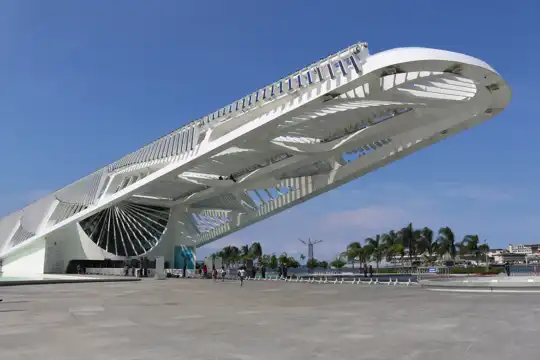
Forget the Instagram fantasy: the Museum of Tomorrow isn’t some serene sci-fi temple where you’ll meditate on the future in peace. It’s a magnet for school groups, selfie armies, and anyone who wants to say they’ve “done” Rio’s modern side. You’ll find it jutting out over the water in Rio de Janeiro’s revitalized Porto Maravilha district—a spaceship dropped into the old port, all sharp angles and solar panels. Here’s the truth: if you’re backpacking Brazil for wild nature or colonial history, this place is a curveball. The wow-factor is real, especially if you’re into architecture or want to see Brazil flex its creative muscles beyond samba and soccer. The exhibits are slick, interactive, and sometimes a bit preachy, but they do spark real conversations about climate, tech, and humanity’s next steps. It’s not cheap by Brazilian standards, and the lines can be brutal on weekends. Still, if you want to see Brazil thinking big, not just partying hard, this is where the future feels tangible—crowds and all.

Discover everything you want to know in the 📖 Brazil Travel Guide.


Get your Brazil guide
152 ranked highlights, routes & tips, works offline (516 pages)
Loading the map 🌍
CLICK TO FILTER
cities
towns
villages
landmarks
national parks
hikes
beaches
attractions
festivals
regions
SHOW COUNTRY’S BESTSHOW ALL

✨ Why go?
Ranked #3 attraction in Brazil
What makes it a must-see attraction

The Museum of Tomorrow in Rio de Janeiro is often hyped as a sleek, futuristic icon, and yes, it’s a crowd magnet. Expect lines and selfie sticks—this isn’t a secret hideaway. But here’s the real deal: it’s not just about the shiny architecture or the Instagram shots. This museum punches way above its weight in cultural significance. It’s a bold experiment in how science, technology, and society collide, asking hard questions about sustainability and humanity’s future. For backpackers, it’s a rare spot where you can feel the pulse of Brazil’s urgent conversations about climate change and innovation, all wrapped in a visually arresting package.

Sure, the entry fee isn’t dirt cheap by local standards, but the payoff is a deep dive into Brazil’s role on the global stage—a perspective you won’t … read more 👉
The Museum of Tomorrow in Rio de Janeiro is often hyped as a sleek, futuristic icon, and yes, it’s a crowd magnet. Expect lines and selfie sticks—this isn’t a secret hideaway. But here’s the real deal: it’s not just about the shiny architecture or the Instagram shots. This museum punches way above its weight in cultural significance. It’s a bold experiment in how science, technology, and society collide, asking hard questions about sustainability and humanity’s future. For backpackers, it’s a rare spot where you can feel the pulse of Brazil’s urgent conversations about climate change and innovation, all wrapped in a visually arresting package.

Sure, the entry fee isn’t dirt cheap by local standards, but the payoff is a deep dive into Brazil’s role on the global stage—a perspective you won’t get from typical tourist stops. It’s a milestone on any South American route because it challenges you to think beyond the usual samba and beaches. The Museum of Tomorrow is where you catch a glimpse of Brazil’s brainpower and ambition, making it a must-see for travelers who want more than just postcards. It’s an adrenaline rush for your mind, not your legs, and that’s a rare kind of reward.
Want to include Museum of Tomorrow in your Brazil route?
Create a personalized Brazil itinerary that includes Museum of Tomorrow and the places that fit your trip — based on your travel style, budget, and available time. Get your route in seconds.

Generate my trip

💡 HighlightsEssential experiences to have while visiting Museum of Tomorrow

The Building Itself
Let’s get real: the Museum of Tomorrow’s architecture is the first thing that’ll punch you in the senses. Santiago Calatrava’s design looks like a spaceship crash-landed on Rio’s waterfront—jagged, white, and almost predatory. It’s not just a backdrop for selfies; it’s a statement about the future, and you feel it before you even step inside. Yes, you’ll be jostling with crowds angling for the same shot, but it’s one of the rare places where the hype matches the physical experience. If you’re a fan of bold design, this is your playground.


The Cosmos Theater
This isn’t your average planetarium. The Cosmos Theater is a 360-degree immersive dome that launches you through the birth of the universe, the formation of Earth, and the rise of life—all in about eight minutes. The … read more 👉
The Building Itself
Let’s get real: the Museum of Tomorrow’s architecture is the first thing that’ll punch you in the senses. Santiago Calatrava’s design looks like a spaceship crash-landed on Rio’s waterfront—jagged, white, and almost predatory. It’s not just a backdrop for selfies; it’s a statement about the future, and you feel it before you even step inside. Yes, you’ll be jostling with crowds angling for the same shot, but it’s one of the rare places where the hype matches the physical experience. If you’re a fan of bold design, this is your playground.


The Cosmos Theater
This isn’t your average planetarium. The Cosmos Theater is a 360-degree immersive dome that launches you through the birth of the universe, the formation of Earth, and the rise of life—all in about eight minutes. The visuals are cinematic, the sound is chest-thumping, and the science is delivered with a sense of drama that makes you forget you’re technically learning. If you’ve ever rolled your eyes at dry museum exhibits, this one will recalibrate your expectations.


The Anthropocene Gallery
Here’s where the Museum of Tomorrow throws down the gauntlet: this gallery doesn’t sugarcoat humanity’s impact on the planet. You’ll see real-time data visualizations—deforestation, CO2 emissions, population booms—projected on massive screens. It’s blunt, sometimes uncomfortable, and absolutely necessary. The gallery doesn’t just wag a finger; it challenges you to think about your own footprint. It’s not Instagram bait, but it’s the kind of wake-up call that sticks with you.


The “Tomorrow” Hall
This is the museum’s wild card. Instead of dusty artifacts, you get interactive installations that ask you to imagine—and even vote on—possible futures. AI, genetic engineering, climate adaptation: the big questions are all here, and you’re not just a spectator. The tech is slick, but the real magic is how it makes you feel like a participant in the future, not just a bystander. If you’re traveling with friends, expect some heated debates after this one.


The Living Laboratory
This is my personal favorite. Tucked away from the main crowds, the Living Laboratory is where the museum’s eco-credentials get real. It’s not a greenwashing gimmick; you’ll see solar panels, water recycling systems, and urban gardens in action. The staff are genuinely passionate and will talk your ear off about sustainable tech if you show the slightest interest. It’s proof that the museum isn’t just preaching—it’s experimenting, failing, and trying again, right in front of you.


The Reflecting Pool and Plaza
Outside, the museum’s reflecting pool and plaza are where you catch your breath and process what you’ve seen. The water mirrors the building’s wild geometry, and the view of Rio’s bay is a reminder that the future isn’t just about tech—it’s about place, community, and the choices we make together. It’s a rare spot in Rio where you can sit, decompress, and watch the city move around you. If you’re lucky, you’ll catch a street performance or a spontaneous protest—Rio doesn’t do boring.
Spotted a mistake or missing something? Contact us.

Things to do around Museum of Tomorrow

Ratings based on Tripadvisor reviews. When you book through this link, you support our work at no extra cost to you.

🌤️ When to go?Choosing the right time of year


  • Weather: Rio de Janeiro’s summer (December to March) is hot and humid, with temps often hitting 30-35°C (86-95°F). It’s also the rainy season, so expect sudden downpours that can put a damper on your outdoor museum stroll. The shoulder months, April and November, offer milder weather and less rain, making them more comfortable for exploring.

  • Temperature: Winter months (June to August) bring cooler, drier air with temps around 18-24°C (64-75°F). This is the most pleasant time for walking around without sweating buckets, but it’s not cold enough to require heavy gear—just a light jacket for evenings.

  • Daylight Hours: Daylight stretches from about 12 to 13 hours year-round, but in winter, the sun sets earlier around 5:30 PM, limiting your time for late afternoon visits. Summer sunsets linger
read more 👉

  • Weather: Rio de Janeiro’s summer (December to March) is hot and humid, with temps often hitting 30-35°C (86-95°F). It’s also the rainy season, so expect sudden downpours that can put a damper on your outdoor museum stroll. The shoulder months, April and November, offer milder weather and less rain, making them more comfortable for exploring.

  • Temperature: Winter months (June to August) bring cooler, drier air with temps around 18-24°C (64-75°F). This is the most pleasant time for walking around without sweating buckets, but it’s not cold enough to require heavy gear—just a light jacket for evenings.

  • Daylight Hours: Daylight stretches from about 12 to 13 hours year-round, but in winter, the sun sets earlier around 5:30 PM, limiting your time for late afternoon visits. Summer sunsets linger closer to 7 PM, giving you more daylight to soak in the futuristic architecture.

  • Crowds: The Museum of Tomorrow is a hotspot for tourists year-round, but expect the heaviest crowds during Brazilian summer holidays (December to February) and around Carnival (February or March). Weekdays outside these peak times are your best bet for a quieter experience.

  • Seasonal Activities: The museum often hosts special exhibitions and events aligned with Rio’s cultural calendar, especially during summer and Carnival season. If you want to catch these, plan accordingly, but be ready for the crowds and higher prices.

  • Price Fluctuations: Ticket prices remain fairly stable, but accommodation and flights spike during summer and Carnival. Booking in shoulder seasons like April or September can save you a bundle and still offer great weather.


Pro-tip: Aim for April or September—cooler temps, fewer crowds, and better deals. You’ll get the Museum of Tomorrow’s mind-bending exhibits without the sweat and stampede.


source: climatestotravel.comJANJanuary: fair for travelingFEBFebruary: fair for travelingMARMarch: good for travelingAPRApril: excellent for travelingMAYMay: highly recommended for travelingJUNJune: highly recommended for travelingJULJuly: highly recommended for travelingAUGAugust: highly recommended for travelingSEPSeptember: excellent for travelingOCTOctober: highly recommended for travelingNOVNovember: excellent for travelingDECDecember: fair for traveling
Brazil - Museum of Tomorrow

✈️ The backpacker research shortcutBrazil Travel Guide

An offline-friendly backpacking guide with optimized travel routes, ranked highlights, transport advice, and the best areas to stay.
example page 0 from our offline Travel Guide for Brazil
example page 1 from our offline Travel Guide for Brazil
example page 2 from our offline Travel Guide for Brazil
example page 3 from our offline Travel Guide for Brazil
example page 4 from our offline Travel Guide for Brazil
example page 5 from our offline Travel Guide for Brazil
example page 6 from our offline Travel Guide for Brazil
example page 7 from our offline Travel Guide for Brazil
The digital guide (516 pages) contains:
152 highlights, ranked by travel appeal
Optimized 14, 21 & 30-day travel routes
Cities, national parks, landmarks, beaches
How to get around
Offline-friendly for travel without Wi-Fi
👉 Click to see all 30+ guide features

📅 Plan smarter in minutes, not weeks
Month by month travel advice
Festivals & national holidays
Budget expectations

🗺️ Go to the right places, skip the overrated ones
Honest pros & cons of destinations
Top hikes, parks & viewpoints
Lesser-known places most travelers miss
Clear “worth it vs skip it” guidance

🛏️ Travel smoothly without rookie mistakes
Best areas to stay
Transport systems explained simply
Common scams & safety advice
SIM cards, money & practical tips

🌍 Understand the country, not just visit it
Culture & traditions
52 Essential phrases & customs
Festivals worth planning around
Traveler-friendly historical context
Insights that make places more meaningful

📱 Built for real travel conditions
Fully downloadable PDF
Works completely offline
Optimized for phone use
Useful in remote areas & buses
Everything in one place
Save weeks of stressful planning
Get instant access to your full guide. 30‑day money-back guarantee.


By proceeding you agree to our terms.
Sent to your inbox immediately after payment • 100% Secure Checkout
Best Backpacking Travel Advisor 2025 tourism awardBest Backpacking
Travel Advisor
2025
What others say about Take Your Backpack Guides:
⭐⭐⭐⭐⭐
Fantastic, amazing amount of information!
⭐⭐⭐⭐⭐
My goodness this is amazing, it's what I've been looking for hats off too you!
⭐⭐⭐⭐⭐
I think this is absolutely BRILLIANT
⭐⭐⭐⭐
Very complete and informative. It's still missing places, but I gotta to commend you
⭐⭐⭐⭐⭐
This is truly amazing, thank you, can't wait to explore it with my kids!
⭐⭐⭐⭐⭐
Awesome resource, thank you!
⭐⭐⭐⭐⭐
This is amazing! Can't wait to explore the ones I haven't seen
⭐⭐⭐⭐
I love this! Well done, great idea.
⭐⭐⭐⭐⭐
Thanks for taking the time to make this gem!
⭐⭐⭐⭐⭐
This might be the best website I've ever seen.
⭐⭐⭐⭐⭐
Congratulations, and thank you so much for your work; it's incredibly valuable.
⭐⭐⭐⭐
In all seriousness I think you did a great job pointing out the important spots
⭐⭐⭐⭐⭐
10/10 very good
⭐⭐⭐⭐⭐
As someone who's only just starting to visit regularly this is awesome, thank you.
⭐⭐⭐⭐
Thank you very much! I'm going to visit my dad, it's going to be very useful!
⭐⭐⭐⭐⭐
This is really cool! We'll be travelling for the first time and this definitely come in handy.
⭐⭐⭐⭐⭐
You are now our minister of culture, congratulations 👨‍💼
⭐⭐⭐⭐⭐
Just wanted to tell you that this is a pearl! Going to follow your recommendations.
⭐⭐⭐⭐⭐
This is so cool. I'll definitely be using the resource for my travels soon.
⭐⭐⭐⭐⭐
This is very impressive! Good work.
⭐⭐⭐⭐⭐
This is an amazing and informative site. Very well done!

🛏️ Where to stay?Where staying makes the most sense

The Museum of Tomorrow in Rio de Janeiro is a magnet for tourists, and yes, it gets busy—especially midday and weekends. Forget the postcard-perfect, crowd-free shots you see on Instagram. The reality? Swarms of selfie-stick wielders and tour groups. But here’s the kicker: the real magic isn’t just inside the museum; it’s in where you land your backpack afterward.

If you want to be close, look no further than the neighborhoods of Praça Mauá and Saúde. These areas have shaken off their rough-around-the-edges reputation and are now buzzing with a gritty, authentic vibe that budget travelers crave. … read more 👉
The Museum of Tomorrow in Rio de Janeiro is a magnet for tourists, and yes, it gets busy—especially midday and weekends. Forget the postcard-perfect, crowd-free shots you see on Instagram. The reality? Swarms of selfie-stick wielders and tour groups. But here’s the kicker: the real magic isn’t just inside the museum; it’s in where you land your backpack afterward.

If you want to be close, look no further than the neighborhoods of Praça Mauá and Saúde. These areas have shaken off their rough-around-the-edges reputation and are now buzzing with a gritty, authentic vibe that budget travelers crave. Safety has improved thanks to increased police presence and community projects, but stay alert after dark—this isn’t a polished resort strip.

What makes these spots stand out is the social scene. You’ll find plenty of hostels and guesthouses where solo backpackers swap stories over caipirinhas on rooftop terraces or communal kitchens. The streets pulse with street art, local bars, and food stalls serving up real Brazilian flavors without the tourist markup. Plus, you’re a short walk or quick tram ride from the museum and the waterfront, where locals jog, fish, and hang out.

If you want to experience Rio beyond the sanitized tourist bubble, these neighborhoods offer a raw, real slice of city life that’s worth every minute.

👛 Costs (as of 19 May 2026)How expensive it really is

As of the most recent estimates, the Museum of Tomorrow in Rio de Janeiro charges a full price of R$40 (approximately €8) and a half-price admission of R$20 (approximately €4). Free admission is available for children aged 5 and under, seniors aged 60 and over, and residents of Rio de Janeiro. The museum is open from Thursday to Tuesday, 10 a.m. to 6 p.m., and is closed on Wednesdays.

source: museudoamanha.org.br
⚠️ Prices can change and everyone travels differently, so take this as a rough guide. Hope it helps you plan your adventure!

Other Brazilian attractions near Museum of Tomorrow

Explore more nearby:


💡 Not sure where to go next?
Create a personalized itinerary for Brazil including Museum of Tomorrow and the places that fit your trip.

Generate my itinerary

👉 Discover all attractions

Or checkout all Brazil has to offer (think cities, towns, villages, national parks, hikes, beaches, festivals)
Country photo of Brazil

We 💚 feedbackIs it worth it?

The Museum of Tomorrow is a bold experiment in blending science, art, and future-thinking that actually sparks curiosity beyond the usual museum snooze. It’s worth the ticket for the way it challenges you to rethink humanity’s impact on the planet—no sugarcoating. But brace yourself: weekends and holidays turn it into a packed, selfie-driven circus. If you want the full effect, go early or midweek to dodge the crowd crush and soak in the ideas instead of the noise.

✈️ When did I visit Brazil?
Call it good timing or luck, but I was able to celebrate Carnaval in Rio de Janeiro in February 2022, after a round trip in the north and east coast.

✍️ Help improve this page!
The information on this page is based on my own backpacking experience in Brazil, supplemented with up-to-date research and feedback from other travelers. Travel details can change, so if you notice anything outdated or incomplete, feel free to let me know.


🙋‍♂️ Give feedback

👋 Meet the founderWho’s Behind Take Your Backpack?

Johan, backpacker and founder of TakeYourBackpackHi, I’m Johan (Netherlands 🇳🇱), the creator of TakeYourBackpack. Over the past decade, I’ve backpacked through 80+ countries across six continents, gaining extensive experience with independent travel, long-term trips, and overland routes.

This site is built on a combination of firsthand travel experience and carefully curated insights from other backpackers. Many guides are based on places I’ve personally visited, while others bring together tips, observations, and practical advice shared by trusted travelers I’ve met along the way.

The goal is to provide realistic, experience-driven guidance — not generic itineraries — so you can explore destinations with better context, clearer expectations, and more confidence.

Get full Brazil guide •
Instant download • 152 highlights • Full Offline guide