×

Brazil🇧🇷 | best attractionsTop-Rated 10 attractions in Brazil

Attractions in Brazil come in four very different kinds, and the country is large enough that mixing them carelessly costs you days. The Atlantic coast (Rio de Janeiro, Salvador, Florianópolis) packs beaches, urban viewpoints and historic centers into easy day trips, with the highest prices and the biggest crowds. The Northeast is cheaper and slower, with long dune-and-lagoon coastlines where reaching the good stretches means buggies, boats or rough bus rides.

The Amazon and the Pantanal are wildlife destinations. They are not cheap, because lodges, guides and river transport carry the cost, and independent travel here means booking ahead. The interior highlands (Chapada Diamantina, Minas Gerais colonial towns, Iguaçu) sit between the two: moderate cost, good trails, and fewer people outside holidays.

For a backpacker, the coast is the easy win. Hostels are plentiful, buses run constantly, and many sights need no tour. Skip anything sold as a one-day “Amazon experience” from a city hotel; it delivers a boat ride and little else. Back multi-day stays at lodges or in national parks instead, where the distances are the whole point and the wildlife is real.

By Johan Kruseman 🇳🇱 | Updated October 20, 2026
Explore the best festivals in Brazil

Why go?Key Factors That Shape the Experience

Brazil is the fifth-largest country on earth, and that single fact shapes everything about its attractions. The country spans tropical rainforest, wetlands, semi-arid highlands, subtropical waterfalls and 7,400 kilometers of coastline. No European or Asian neighbor offers that range inside one border, and few other countries let you see a rainforest river system, a flooded savanna and a colonial gold-rush town on one visa.

The history adds a second layer. Portuguese colonization, the sugar and gold economies and a long slave trade left baroque churches, fortified ports and Afro-Brazilian traditions concentrated in Salvador, Minas Gerais and the old coastal cities. These are living cultures, not museum pieces, and they shape food, music and religion in ways that matter more than any single … read more 👉
Brazil is the fifth-largest country on earth, and that single fact shapes everything about its attractions. The country spans tropical rainforest, wetlands, semi-arid highlands, subtropical waterfalls and 7,400 kilometers of coastline. No European or Asian neighbor offers that range inside one border, and few other countries let you see a rainforest river system, a flooded savanna and a colonial gold-rush town on one visa.

The history adds a second layer. Portuguese colonization, the sugar and gold economies and a long slave trade left baroque churches, fortified ports and Afro-Brazilian traditions concentrated in Salvador, Minas Gerais and the old coastal cities. These are living cultures, not museum pieces, and they shape food, music and religion in ways that matter more than any single monument.

Before choosing Brazil, understand the cost of distance. Domestic flights are often the only sensible way between regions, and they can cost more than the bus fares you budgeted for the whole month. Long-distance buses are comfortable, but a 20 to 30 hour ride eats days. Pick two or three regions, not six.

Infrastructure is uneven. The southeast and south have good roads, clear signage and reliable tour operators. The north and parts of the northeast depend on boats, unpaved tracks and seasonal access, so a flooded road can cancel a plan. English is limited outside tourist hubs, and a few weeks of basic Portuguese changes how smoothly everything works, from buying tickets to negotiating a boat price.

Prices in reais are fair for most of the country but climb sharply in Rio, Fernando de Noronha and anywhere in the Amazon sold through lodges. Park entries are often modest, yet transfers to remote entrances are where costs hide. Skip the generic city tours that bundle three stops into a rushed day; independent travel with public transport is cheaper and shows more.

Finally, Brazil rewards planning around seasons and holidays. Carnival, New Year and school vacations push prices up and fill the best places. Choose Brazil if you want variety and are willing to accept long transfers. Choose somewhere smaller if you want everything within a day’s ride.
How the List Was Created
The list of best attractions in Brazil is created based on cultural significance or entertainment value. If you feel a attraction is missing in this list, please let us know.

When to go?Seasonal Guide to Visiting

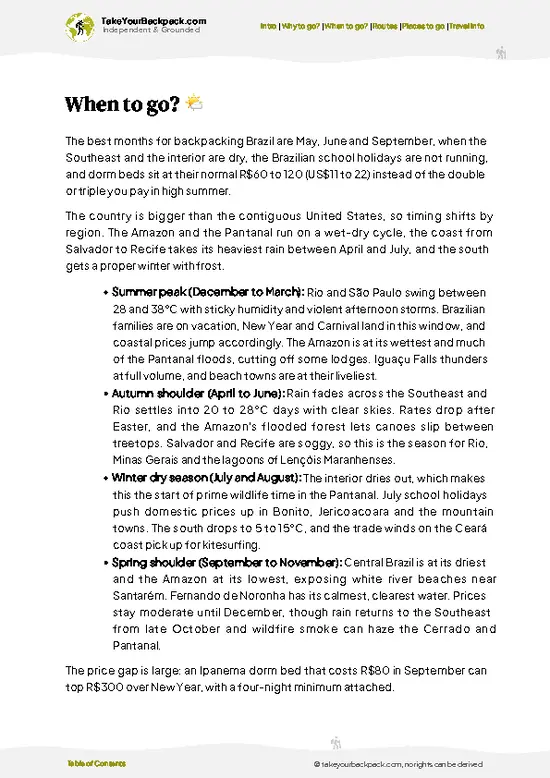
Best months for attractions in Brazil: May to September is the best window for most of Brazil, because it is the dry season across the Pantanal, the Amazon’s drier months, the Chapada Diamantina and the Center-West, with lower humidity and clear trails. Pantanal wildlife viewing peaks from June to October when water recedes and animals gather at remaining pools.

Region by region: The southeast (Rio, São Paulo, Minas Gerais) is pleasant from April to October, with Rio daytime highs around 24 to 28°C and far less rain than in summer. December to March brings 30 to 40°C heat, heavy afternoon storms and humidity that makes steep hikes miserable.

The northeast coast is different. Salvador and the coast north of it get most rain from April to July, though showers are short and temperatures stay … read more 👉
Best months for attractions in Brazil: May to September is the best window for most of Brazil, because it is the dry season across the Pantanal, the Amazon’s drier months, the Chapada Diamantina and the Center-West, with lower humidity and clear trails. Pantanal wildlife viewing peaks from June to October when water recedes and animals gather at remaining pools.

Region by region: The southeast (Rio, São Paulo, Minas Gerais) is pleasant from April to October, with Rio daytime highs around 24 to 28°C and far less rain than in summer. December to March brings 30 to 40°C heat, heavy afternoon storms and humidity that makes steep hikes miserable.

The northeast coast is different. Salvador and the coast north of it get most rain from April to July, though showers are short and temperatures stay near 27 to 30°C. September to February is the dependable beach season there. The Lençóis Maranhenses lagoons are fullest from June to September, and are mostly dry from October to December, so skip a late-year visit if the lagoons are the reason for going.

The Amazon has high water roughly from March to June and low water from August to November. Rain is possible year-round, and 80 to 90 percent humidity is normal. High water suits boat travel into flooded forest, while low water exposes beaches and trails. Neither is wrong, but pick based on what you want to do.

The south, including Iguaçu Falls, is mild to cool in winter (June to August, 10 to 20°C) and hot in summer. The falls are at their most powerful from November to March, but crowds are heavy then. Shoulder months of April, May and September deliver strong flow with thinner crowds.

Peak periods and prices: Carnival (February or early March), Christmas through New Year, and July school holidays are the dates that matter. Accommodation in Rio, Salvador and Olinda can double or triple during Carnival, and hostels often require multi-night minimums booked months ahead. Flights spike in the same windows.

Skip Carnival unless it is the point of the trip; the crowds make sightseeing slow and expensive. For value, target April to early June or September to early November. Rates in these months run roughly 20 to 40 percent below peak, trails are quieter, and most parks and lodges are fully open. Many Amazon and Pantanal lodges shorten operations or close access roads in the wettest weeks, so confirm before booking.

attraction hoppingTips for Visiting Multiple Destinations

How many days you need: A trip combining several attractions in Brazil needs 14 to 28 days, and 3 weeks is the realistic minimum for covering two distant regions without exhausting yourself. Fewer than 10 days should mean one region only.

Which regions pair well: The southeast and south group neatly: Rio de Janeiro, the Costa Verde coast, São Paulo and Foz do Iguaçu connect by frequent buses and short flights. Rio to São Paulo takes about 6 hours by bus, and São Paulo to Foz do Iguaçu is roughly 1.5 hours by air or 15 to 17 hours by road. The northeast pairs with itself: Salvador, the Chapada Diamantina and the coast to the north link by overnight or day buses of 6 to 8 hours per leg.

The Pantanal fits with Campo Grande or Cuiabá as gateways and combines awkwardly with anything else by land. … read more 👉
How many days you need: A trip combining several attractions in Brazil needs 14 to 28 days, and 3 weeks is the realistic minimum for covering two distant regions without exhausting yourself. Fewer than 10 days should mean one region only.

Which regions pair well: The southeast and south group neatly: Rio de Janeiro, the Costa Verde coast, São Paulo and Foz do Iguaçu connect by frequent buses and short flights. Rio to São Paulo takes about 6 hours by bus, and São Paulo to Foz do Iguaçu is roughly 1.5 hours by air or 15 to 17 hours by road. The northeast pairs with itself: Salvador, the Chapada Diamantina and the coast to the north link by overnight or day buses of 6 to 8 hours per leg.

The Pantanal fits with Campo Grande or Cuiabá as gateways and combines awkwardly with anything else by land. The Amazon, via Manaus or Belém, is a flight away from everything. Treat each as its own hub and fly in and out.

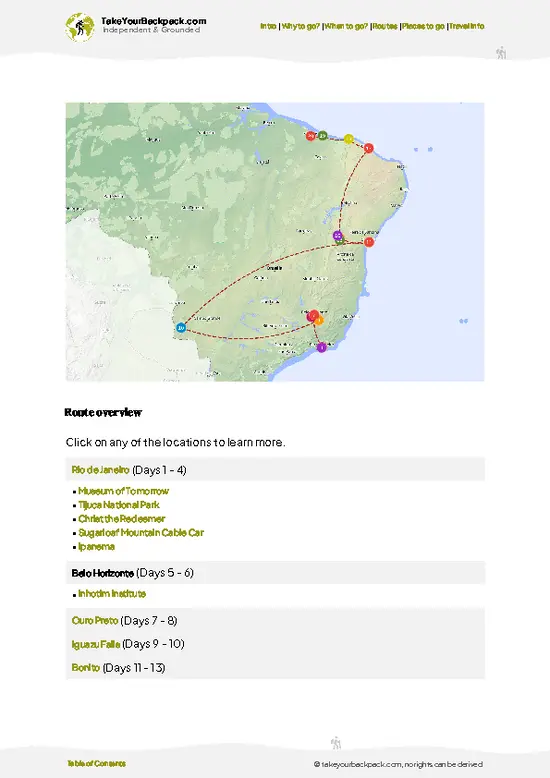
Direction and pacing: Travel from south to north, or the reverse, but avoid zigzagging. A sensible loop starts in Rio, heads south to Iguaçu, then flies north to Salvador and onward. Budget 3 to 5 days in a major city region, 2 to 4 days at Iguaçu, 4 to 7 days in Chapada Diamantina or the Pantanal, and 3 to 5 days for an Amazon stay, since lodge trips lose value if shorter than that.

Travel between regions by air usually takes 2 to 4 hours, but add airport time. Buses between neighboring states run 6 to 14 hours, and the longest crossings can reach 24 to 36 hours.

Planning mistakes: The most common error is treating Brazil like a small country. Rio to Manaus is nearly 3,000 kilometers. Pricing a bus trip across it wastes two days, so book flights early; fares are best 6 to 8 weeks out.

The second mistake is packing in one new town every night. Anything under 2 nights in a place leaves you in transit more than in the destination. Cut the list instead, and keep one rest day every week.

The third is ignoring seasons when linking regions. A northeast beach week in April meets rain, and a Pantanal visit in the wet months limits access. Check each region’s season before locking the order.

Finally, avoid booking tight connections around overnight buses; delays are common, and a missed lodge transfer can cost a full day’s fee.

The ListMust-Visit attractions in Brazil

1 Sugarloaf Mountain Cable Car

Two-stage cable car, 396-meter summit, Morro da Urca deck, Praia Vermelha

Ride glass cable cars over Guanabara Bay to a granite summit, with a 220-meter first stop, marmosets and the city lighting up after dark.

brazil-attraction-sugarloaf-mountain-cable-car
© Google |

2 Pelourinho

Cobbled Largo, Olodum drums, Afro-Brazilian heritage, Lacerda elevator

Climb sloping streets of colonial mansions, hear percussion rehearsals in the evening, and visit churches built by and for Black Brazilians.

brazil-attraction-pelourinho
© Google |

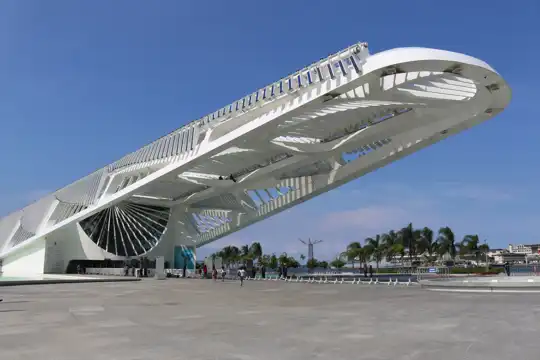
3 Museum of Tomorrow

Calatrava solar fins, Cosmos dome, Anthropocene screens, Pier Mauá

Follow a screen-led story from the origins of the universe to climate projections, inside a skeletal pier building facing Guanabara Bay.

Brazil - Museum of Tomorrow

4 Inhotim Institute

Open-air pavilions, Sonic borehole, palm gardens, Minas Gerais art park

Wander lakeside paths between dozens of installations, from the earth-sound pavilion to a red-filled room, across a botanical garden that needs more than one day.

brazil-attraction-inhotim-institute
© Google |

5 Pinacoteca do Estado de São Paulo

Octagonal gallery, Tarsila canvases, brick-and-steel renovation, Luz garden

Cross steel footbridges through nineteenth-century brick halls to see Brazilian modernists, then rest across the street in the Jardim da Luz.

brazil-attraction-pinacoteca-do-estado-de-sao-paulo
© Google |

6 São Paulo Museum of Art

Glass easels, 74-meter free span, European masters, Sunday antiques fair

Look at paintings by Raphael to Van Gogh mounted in glass, then browse the Sunday antiques stalls beneath the suspended concrete span.

brazil-attraction-sao-paulo-museum-of-art
© Google |

7 Oscar Niemeyer Museum

Eye-shaped gallery, Curitiba concrete, underground tunnel, architecture models

Cross a curved tunnel into a raised concrete eye, then browse Niemeyer's models and changing exhibitions beside a sculpture garden and reflecting pond.

brazil-attraction-oscar-niemeyer-museum
© Google |

8 Rio de Janeiro Botanical Garden

Imperial palm avenue, giant water lilies, orchid house, Atlantic Forest trails

Stroll shaded flat paths past carnivorous plants and a sensory garden, then climb toward forest where marmosets call overhead.

brazil-attraction-rio-de-janeiro-botanical-garden
© Google |

9 Municipal Theatre of Rio de Janeiro

Cinelândia facade, gilded foyer, Assyrian Room, Belle Époque stage

Climb the marble staircase and join a guided tour through mirrored rooms, then book a cheaper upper seat for opera or ballet beneath the chandelier.

brazil-attraction-municipal-theatre-of-rio-de-janeiro
© Google |

10 Municipal Theatre of São Paulo

Stained glass, Anhangabaú steps, free concerts, tiered balconies

Catch a free concert to see the gilded auditorium and its stained glass, or return in the evening for opera and ballet.

11 Amazon Theatre

Alsace-tile dome, rubber-baron opera house, Meeting of the Waters curtain, wavy plaza

Tour a working opera house in Manaus, then return for an evening concert to hear the acoustics beneath the painted Eiffel Tower ceiling.

Brazil - Amazon Theatre

12 Paço Imperial

Praça XV facade, colonial courtyard, exhibition rooms, courtyard café

Slip from the harbor-side square into a calm courtyard, then view temporary art shows and pause over coffee or a light lunch.

13 São Bento Monastery

Gregorian chant, gold-leaf nave, hilltop lift, working Benedictines

Ride a small lift above the port to a sober facade, then sit inside a gilded nave while monks sing at set hours.

14 São Francisco Church and Convent

Carved stone façade, Cruzeiro square, azulejo cloister, gilded interior (closed)

Stop by the carved stone doorway and the shaded cross-topped square, where drummers and local life fill the churchyard while the gilded interior stays closed for restoration.

15 São Paulo Museum of Modern Art

Ibirapuera modernism, covered terrace, bronze lawn, works on paper

Trace Brazil's modern art through Tarsila and Portinari, then slow down among bronze figures on the lawn and a quiet café terrace.

16 Catavento Museum

Hands-on physics, 1920s palace, school-group crowds, dome projections

Test levers, gears and giant bubbles in a neoclassical palace, where space, biology and society exhibits are built for touching rather than reading.

17 IMS Paulista

Photography archive, free entry, Paulista tower, rooftop terrace

Browse rotating photography shows drawn from a deep Brazilian archive, then read in the photography library or climb to the rooftop for the avenue skyline.

18 Centro Cultural Tom Jobim (Artur Nogueira)

Municipal arts venue, bossa nova nights, Artur Nogueira, local recitals

Check the schedule for a concert or theater night, then pair it with a walk through a small interior São Paulo town.

19 AquaRio

Glass tunnel, sand tiger sharks, port-zone aquarium, ray tanks

Walk beneath a huge oceanic tank where rays, sea turtles and sharks pass overhead, then compare it with the marine life of Guanabara Bay.

20 São Paulo Zoological Park

Jaguar trails, muriqui monkeys, walk-in aviary, drive-through safari

Follow shaded paths past jaguars, maned wolves and giant otters, then duck into a flight aviary where macaws and toucans fly at head height.

21 Parque Ecológico do Janauari

Giant water lilies, rubber tapper trail, Rio Negro channels, Manaus day trip

Take a boat across from Manaus to canoe among huge lily pads, walk a rubber trail and look for river dolphins.

Think you know Brazil?

Prove you’re a true local — uncover 11 lesser-known attractions in Brazil that locals tend to keep to themselves.
Loading the map 🌍

Expert viewExpert Commentary on attractions

How many attractions to visit: Plan on 8 to 12 major attractions in a 3 to 4 week trip, and no more than one significant sight per day. Brazil’s distances and heat mean that each outing consumes a half day in transit, and more than that turns the trip into a checklist. Fewer, longer stays cost less per attraction and leave energy for the unplanned days that often become the best ones.

Prioritizing by travel style: Budget travelers should lean toward free or cheap sights: beaches, city viewpoints, historic centers, public hiking trails and waterfalls reached by local bus. These give the most return per real. Nature-focused travelers should spend their money on one good multi-day Pantanal or Amazon stay rather than three short ones; the wildlife depends on time and a competent guide, and brief … read more 👉
How many attractions to visit: Plan on 8 to 12 major attractions in a 3 to 4 week trip, and no more than one significant sight per day. Brazil’s distances and heat mean that each outing consumes a half day in transit, and more than that turns the trip into a checklist. Fewer, longer stays cost less per attraction and leave energy for the unplanned days that often become the best ones.

Prioritizing by travel style: Budget travelers should lean toward free or cheap sights: beaches, city viewpoints, historic centers, public hiking trails and waterfalls reached by local bus. These give the most return per real. Nature-focused travelers should spend their money on one good multi-day Pantanal or Amazon stay rather than three short ones; the wildlife depends on time and a competent guide, and brief visits mostly show boat decks. Culture-focused travelers should favor Salvador, Minas Gerais towns and São Luís, where music, food and architecture cost little. Adventure travelers get the best value in Chapada Diamantina and the south, where guided trekking is affordable.

Skip the helicopter flights, sunset cruises with open bars and anything sold on the beach as a “VIP” package. They cost R$300 to 800 (about US$55 to 150) and deliver what a free viewpoint or a R$30 ferry already offers.

What it costs: A backpacker spending sensibly needs about R$250 to 400 (US$45 to 75) per day in most of the country, with dorm beds at R$60 to 120, meals at R$30 to 60 and local transport at R$5 to 15 per ride. Rio, São Paulo and Fernando de Noronha run higher, often R$450 to 700 (US$80 to 125).

Per visit, expect these ranges. National park entry runs R$30 to 100 (US$5 to 18). Iguaçu on the Brazilian side costs roughly R$100 to 150. Guides for day treks in Chapada Diamantina cost R$150 to 300 per group or person depending on route. Pantanal and Amazon lodge stays typically run R$600 to 1,500 (US$110 to 275) per person per night, full board included, and that is where most budgets break.

Costs that catch travelers out: Transfers are the first trap. Many parks sit 20 to 80 kilometers from the nearest town, and taxis or shared vans can cost more than the entry ticket. Ask hostels about shared rides the day before, and book transfers before arriving, not at the gate.

Second, foreign-card fees and currency exchange. Pay with a no-fee card where accepted and withdraw larger sums rarely; ATM charges per withdrawal add up. Brazil’s instant payment system, Pix, is everywhere, but requires a local setup, so carry cash for small vendors.

Third, peak-day crowding. Popular sights, especially in Rio and at Iguaçu, are far better on weekday mornings. Arriving at midday in summer means queues and heat. Buy timed tickets online where offered.

Fourth, weather delays. Heavy rain closes trails and cancels boats. Leave a spare day before any flight home so a lost day does not cost a rebooking fee.

Safety on the ground: Petty theft, mainly phone snatching, is the main risk in Rio, Salvador and São Paulo. Carry only a phone, one card and small cash, and leave passports in the room, using a photo copy. Skip walking empty streets at night and use ride apps over street taxis. Avoid beaches after dark.

At nature sites, the risks are practical: strong sun, dehydration, riptides and slippery trails. Carry 2 to 3 liters of water on hikes, swim only where lifeguards are posted, and never go on jungle or wetland routes without a licensed guide. Vaccination against yellow fever is recommended for Amazon, Pantanal and many inland areas, and should be done at least 10 days before arrival.

Cultural considerations: Dress is casual, but cover up in churches and avoid beachwear in town centers. Ask before photographing people, especially at religious ceremonies such as Candomblé, where access depends on invitation. Visits to Indigenous communities should go through a recognized community-run or licensed operator; unannounced visits are not welcome. Tip 10 percent where service is not already included, and learn basic Portuguese greetings. Staff in smaller towns respond to that effort with real help, and it often saves money.

✈️ The backpacker research shortcutBrazil Travel Guide

An offline-friendly backpacking guide with optimized travel routes, ranked highlights, transport advice, and the best areas to stay.
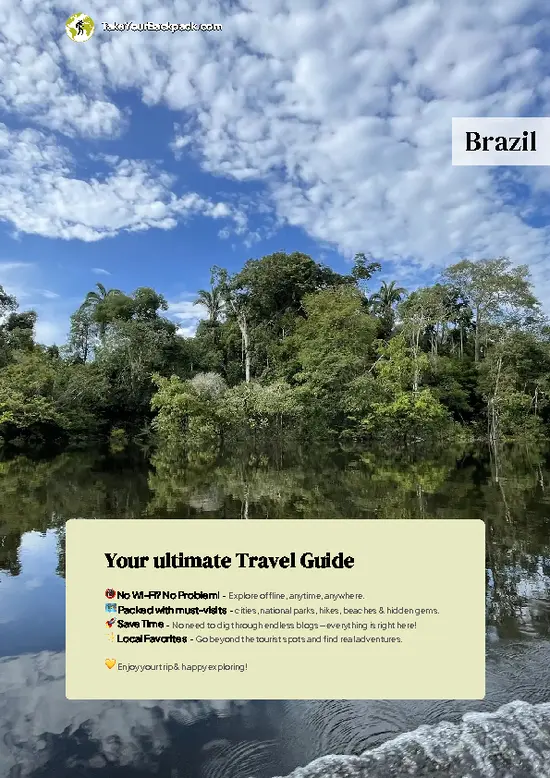
example page 0 from our offline Travel Guide for Brazil
example page 1 from our offline Travel Guide for Brazil
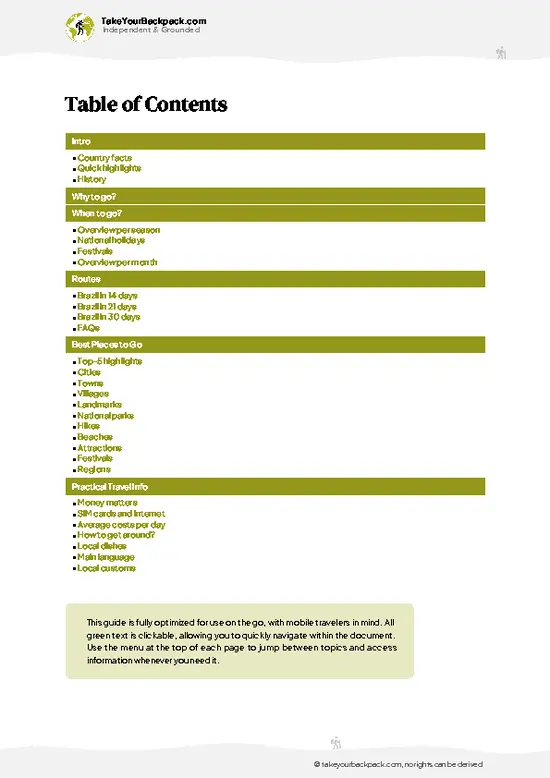
example page 2 from our offline Travel Guide for Brazil
example page 3 from our offline Travel Guide for Brazil
example page 4 from our offline Travel Guide for Brazil
example page 5 from our offline Travel Guide for Brazil
example page 6 from our offline Travel Guide for Brazil
example page 7 from our offline Travel Guide for Brazil
The digital guide (410 pages) contains:
✅ 146 highlights, ranked by travel appeal
✅ Optimized 14, 21 & 30-day travel routes
✅ Cities, national parks, landmarks, beaches
✅ How to get around
✅ Offline-friendly for travel without Wi-Fi
👉 Click to see all 30+ guide features

📅 Plan smarter in minutes, not weeks
✅ Month by month travel advice
✅ Festivals & national holidays
✅ Budget expectations

🗺️ Go to the right places, skip the overrated ones
✅ Honest pros & cons of destinations
✅ Top hikes, parks & viewpoints
✅ Lesser-known places most travelers miss
✅ Clear “worth it vs skip it” guidance

🛏️ Travel smoothly without rookie mistakes
✅ Best areas to stay
✅ Transport systems explained simply
✅ Common scams & safety advice
✅ SIM cards, money & practical tips

🌍 Understand the country, not just visit it
✅ Culture & traditions
✅ 52 Essential phrases & customs
✅ Festivals worth planning around
✅ Traveler-friendly historical context
✅ Insights that make places more meaningful

📱 Built for real travel conditions
✅ Fully downloadable PDF
✅ Works completely offline
✅ Optimized for phone use
✅ Useful in remote areas & buses
✅ Everything in one place
Stop searching, start planning
Get instant access to your full guide. 30‑day money-back guarantee.
+ Add another guide for just

By proceeding you agree to our terms.
Sent to your inbox immediately after payment • 100% Secure Checkout
Best Backpacking Travel Advisor 2025 tourism awardBest Backpacking
Travel Advisor
2025
What others say about Take Your Backpack Guides:
⭐⭐⭐⭐⭐
Fantastic, amazing amount of information!
⭐⭐⭐⭐⭐
My goodness this is amazing, it's what I've been looking for hats off too you!
⭐⭐⭐⭐⭐
I think this is absolutely BRILLIANT
⭐⭐⭐⭐
Very complete and informative. It's still missing places, but I gotta to commend you
⭐⭐⭐⭐⭐
This is truly amazing, thank you, can't wait to explore it with my kids!
⭐⭐⭐⭐⭐
Awesome resource, thank you!
⭐⭐⭐⭐⭐
This is amazing! Can't wait to explore the ones I haven't seen
⭐⭐⭐⭐
I love this! Well done, great idea.
⭐⭐⭐⭐⭐
Thanks for taking the time to make this gem!
⭐⭐⭐⭐⭐
This might be the best website I've ever seen.
⭐⭐⭐⭐⭐
Congratulations, and thank you so much for your work; it's incredibly valuable.
⭐⭐⭐⭐
In all seriousness I think you did a great job pointing out the important spots
⭐⭐⭐⭐⭐
10/10 very good
⭐⭐⭐⭐⭐
As someone who's only just starting to visit regularly this is awesome, thank you.
⭐⭐⭐⭐
Thank you very much! I'm going to visit my dad, it's going to be very useful!
⭐⭐⭐⭐⭐
This is really cool! We'll be travelling for the first time and this definitely come in handy.
⭐⭐⭐⭐⭐
You are now our minister of culture, congratulations 👨‍💼
⭐⭐⭐⭐⭐
Just wanted to tell you that this is a pearl! Going to follow your recommendations.
⭐⭐⭐⭐⭐
This is so cool. I'll definitely be using the resource for my travels soon.
⭐⭐⭐⭐⭐
This is very impressive! Good work.
⭐⭐⭐⭐⭐
This is an amazing and informative site. Very well done!

🛏️ Where to stay?Best Stay Options in Brazil

Brazil has plenty of hostels, with dorm beds typically running R$50 to 120 (about US$9 to 22) a night and private rooms in simple guesthouses (pousadas) from roughly R$150 (US$27). In Rio de Janeiro, Ipanema and Copacabana put you a short walk from the beach and metro with decent street safety, while Botafogo is cheaper and full of bars, and Santa Teresa and Lapa trade easy beach access for hillside character and loud weekend nightlife that gets sketchy on empty streets after dark. In São Paulo, Vila Madalena and Pinheiros offer the best mix of bars, street art and safety near the metro, and in Salvador the Pelourinho is atmospheric but deserted and risky at night, so many travelers pick seafront … read more 👉
Brazil has plenty of hostels, with dorm beds typically running R$50 to 120 (about US$9 to 22) a night and private rooms in simple guesthouses (pousadas) from roughly R$150 (US$27). In Rio de Janeiro, Ipanema and Copacabana put you a short walk from the beach and metro with decent street safety, while Botafogo is cheaper and full of bars, and Santa Teresa and Lapa trade easy beach access for hillside character and loud weekend nightlife that gets sketchy on empty streets after dark. In São Paulo, Vila Madalena and Pinheiros offer the best mix of bars, street art and safety near the metro, and in Salvador the Pelourinho is atmospheric but deserted and risky at night, so many travelers pick seafront Barra for quieter, safer streets.

If you enjoy meeting fellow travelers, consider choosing hostels with high ratings for atmosphere. On the other hand, if you prefer having your own space, a hotel might be a better option.

BrazilWhere to Go Next

👋 Meet the founderWho’s Behind Take Your Backpack?

Johan, backpacker and founder of TakeYourBackpackHi, I’m Johan (Netherlands 🇳🇱), the creator of TakeYourBackpack. Over the past 3 decades, I’ve backpacked through 90+ countries across six continents, gaining extensive experience with independent travel, long-term trips, and overland routes.

This site is built on a combination of firsthand travel experience and carefully curated insights from other backpackers. Many guides are based on places I’ve personally visited, while others bring together tips, observations, and practical advice shared by trusted travelers I’ve met along the way.

The goal is to provide realistic, experience-driven guidance — not generic itineraries — so you can explore destinations with better context, clearer expectations, and more confidence.