×

Brazil🇧🇷 | citiesNatalStar-shaped fort, Careca dune, buggy tracks, giant cashew tree | things to do and best time to go

Explore Porto AlegreExplore João Pessoa

Backpacking in Natal
🌟 Highlightcity ranked #11
By Johan Kruseman 🇳🇱 | Updated October 19, 2026

Natal sits on the Atlantic, not the Caribbean, and the city beaches are not the postcard dunes people picture; those lie outside town. It is in the north-east of Brazil, the capital of Rio Grande do Norte. I stepped off the bus at dusk, and the first thing I noticed was the smell of grilled cheese on sticks drifting from a beach cart while kite-surf sails hung over the water. That is how Natal works: the city is functional, the good stuff is on its edges. Base yourself in Ponta Negra, since downtown has little to hold you, and book dune buggy rides with licensed drivers rather than street touts, because only licensed drivers may take visitors onto the protected dunes. Unlike Fortaleza, Natal feels calmer and more beach-town than metropolis.

Discover everything you want to know in the 📖 Brazil Travel Guide.


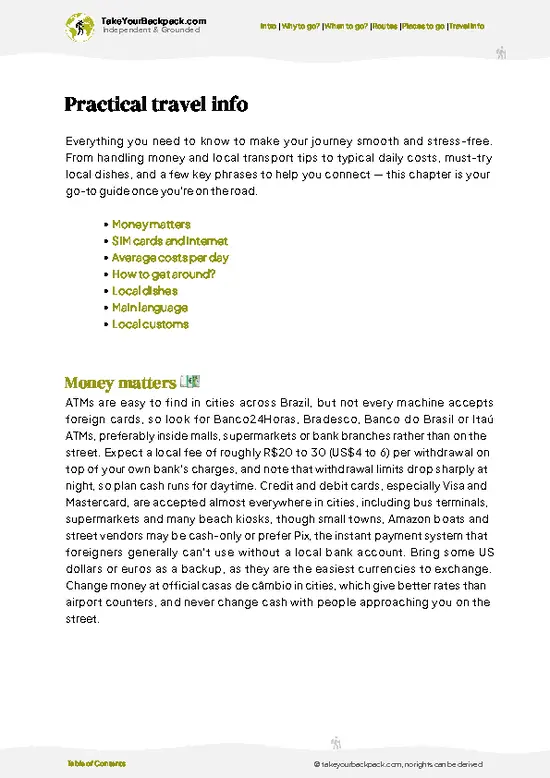
example page 0 from our offline Travel Guide for Brazil
example page 1 from our offline Travel Guide for Brazil
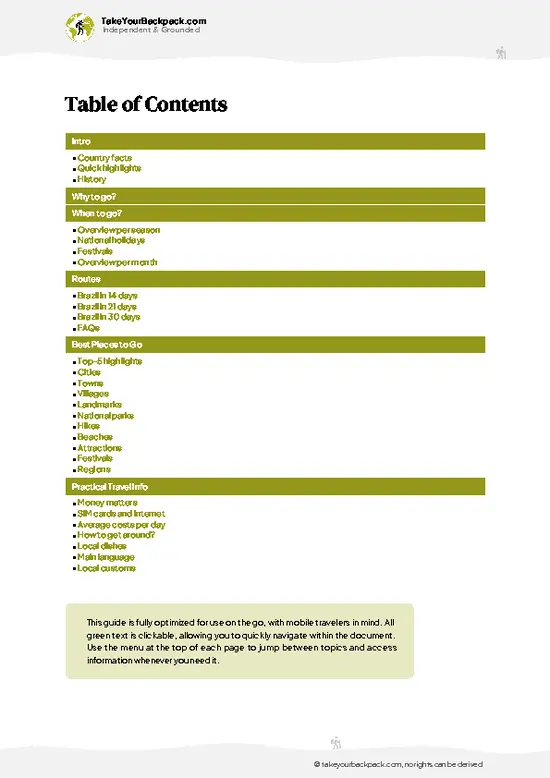
example page 2 from our offline Travel Guide for Brazil
example page 3 from our offline Travel Guide for Brazil
example page 4 from our offline Travel Guide for Brazil
example page 5 from our offline Travel Guide for Brazil
example page 6 from our offline Travel Guide for Brazil
example page 7 from our offline Travel Guide for Brazil
Loading the map 🌍
CLICK TO FILTER
cities
towns
villages
landmarks
national parks
hikes
beaches
attractions
festivals
regions
SHOW COUNTRY’S BESTSHOW ALL

✨ Why go?
Ranked #11 city in Brazil
Why Natal should be on your travel list

Natal earns a place on a north-east Brazil route because it puts dunes, warm ocean and a walkable beach strip within reach of one cheap hostel bed. Ponta Negra has a dense run of hostels, restaurants and bars, so you can sort laundry, food and tours on foot without a taxi. The city also works as a jumping-off point, with beaches and fishing villages along the coast in both directions. Its buggy culture is the hook: drivers roar across the sand and drop you at lagoons for a swim. Natal is fun for a few days, but it is not a place for big culture. Spend two or three nights, then keep moving along the coast toward Pipa or Fortaleza.

💡 HighlightsPlaces and moments you shouldn't skip

  1. Forte dos Reis Magos: a star-shaped fort from the late 1500s at the river mouth, the city’s founding site. Go in the morning for cooler walls and good views. Entry is around US$1 to 2, and 1 hour is enough.
  2. Ponta Negra Beach and Morro do Careca: the iconic dune that drops to the sea. Climbing it is banned to protect it, so view it from the beach at golden hour. Free, 1 to 2 hours.
  3. Dune buggy ride to Genipabu: a half-day of sand-surfing and lagoon stops with a driver. Go in the morning. Around US$40 to 70 per buggy, 4 to 5 hours.
  4. Natal Cashew Tree (Cajueiro de Pirangi): one of the world’s largest cashew trees, spreading over roughly 8,000 square meters. Fruit season runs from September to January. Entry is about US$2 to 3, and 45 minutes works.
  5. Praia do Meio and Praia dos Artistas: city beaches
… read more 👉
  1. Forte dos Reis Magos: a star-shaped fort from the late 1500s at the river mouth, the city’s founding site. Go in the morning for cooler walls and good views. Entry is around US$1 to 2, and 1 hour is enough.
  2. Ponta Negra Beach and Morro do Careca: the iconic dune that drops to the sea. Climbing it is banned to protect it, so view it from the beach at golden hour. Free, 1 to 2 hours.
  3. Dune buggy ride to Genipabu: a half-day of sand-surfing and lagoon stops with a driver. Go in the morning. Around US$40 to 70 per buggy, 4 to 5 hours.
  4. Natal Cashew Tree (Cajueiro de Pirangi): one of the world’s largest cashew trees, spreading over roughly 8,000 square meters. Fruit season runs from September to January. Entry is about US$2 to 3, and 45 minutes works.
  5. Praia do Meio and Praia dos Artistas: city beaches with a calm local feel and cheap beach food, best for an early-evening stroll. Free, 1 to 2 hours.
  6. Câmara Cascudo Museum: an anthropology and folklore museum of the region with a good collection on local traditions. It is quiet and cool on hot afternoons. About US$2, 1 to 2 hours.
  7. Artesanato Centre (Centro de Turismo): a converted prison housing craft shops selling sand bottles, lace and leather. Go mid-morning. Entry is free, and 1 hour is plenty.
Beyond the city, Praia da Pipa, Maracajaú reef pools and the Genipabu coast make good day trips. If time is short, skip the Artesanato Centre.
Spotted a mistake or missing something? Contact us.

Things to do in Natal

Ratings based on Tripadvisor reviews. When you book through this link, you support our work at no extra cost to you.

🏘️ NeighborhoodsHow different areas shape the experience

Natal splits into a few zones, and the beach strip matters most for a short stay. Distances are bigger than they look on the map, so pick your zone and stay in it.
  • Ponta Negra: The backpacker hub, with a long city beach, the Morro do Careca dune at its south end and a boardwalk packed with tapioca stands, bars and live forró. Walkable end to end. Go at low tide for the dune view, and skip the overpriced beachfront restaurants for the side streets one block back.
  • Via Costeira: A highway lined with big resort hotels between Ponta Negra and the center. Nothing to do on foot, so skip it unless you are passing through.
  • Petrópolis and Tirol: Calm, leafy, upscale areas with the Câmara Cascudo Museum and the Newton Navarro bridge views. Fine for a half-day walk, but dead at night.
  • Ribeira and Cidade Alta:
… read more 👉
Natal splits into a few zones, and the beach strip matters most for a short stay. Distances are bigger than they look on the map, so pick your zone and stay in it.
  • Ponta Negra: The backpacker hub, with a long city beach, the Morro do Careca dune at its south end and a boardwalk packed with tapioca stands, bars and live forró. Walkable end to end. Go at low tide for the dune view, and skip the overpriced beachfront restaurants for the side streets one block back.
  • Via Costeira: A highway lined with big resort hotels between Ponta Negra and the center. Nothing to do on foot, so skip it unless you are passing through.
  • Petrópolis and Tirol: Calm, leafy, upscale areas with the Câmara Cascudo Museum and the Newton Navarro bridge views. Fine for a half-day walk, but dead at night.
  • Ribeira and Cidade Alta: The old center, with colonial buildings, the Teatro Alberto Maranhão and a few quiet riverside bars. Visit by day only, since streets empty after dark.
  • Redinha and the north: Local beaches and the Forte dos Reis Magos at the river mouth. Worth a morning for the fort and a simple fish lunch, not a full day.

⌛️ 1 day1-day itinerary for Natal

Walk or hop in short taxi rides, and split the day around a siesta when the midday sun is strongest. Spread out like this, the pace stays easy.
8:00 AM: Forte dos Reis Magos
Start at the fort while it is cool. Walk the star-shaped ramparts and look at the river mouth where the city began. Take a taxi afterward to the central beaches.
10:00 AM: Praia do Meio
Walk the sand, grab fresh coconut water and watch fishermen mend nets. It is local, quiet and cheap.
12:30 PM: Lunch in Ponta Negra
Try carne de sol with tapioca at a casual restaurant near the beach. Rest here through the hottest hours.
3:30 PM: Câmara Cascudo Museum
A cool indoor stop with local folklore and archaeology. It is often empty, which makes it a pleasant off-route find.
5:00 PM: Morro do Careca
Back on Ponta Negra, walk to the dune viewpoint … read more 👉
Walk or hop in short taxi rides, and split the day around a siesta when the midday sun is strongest. Spread out like this, the pace stays easy.
8:00 AM: Forte dos Reis Magos
Start at the fort while it is cool. Walk the star-shaped ramparts and look at the river mouth where the city began. Take a taxi afterward to the central beaches.
10:00 AM: Praia do Meio
Walk the sand, grab fresh coconut water and watch fishermen mend nets. It is local, quiet and cheap.
12:30 PM: Lunch in Ponta Negra
Try carne de sol with tapioca at a casual restaurant near the beach. Rest here through the hottest hours.
3:30 PM: Câmara Cascudo Museum
A cool indoor stop with local folklore and archaeology. It is often empty, which makes it a pleasant off-route find.
5:00 PM: Morro do Careca
Back on Ponta Negra, walk to the dune viewpoint as the light softens. Linger on the promenade.
7:30 PM: Dinner on Ponta Negra
Finish with seafood and a caipirinha near the beach strip, then catch live forró if you want a late night.

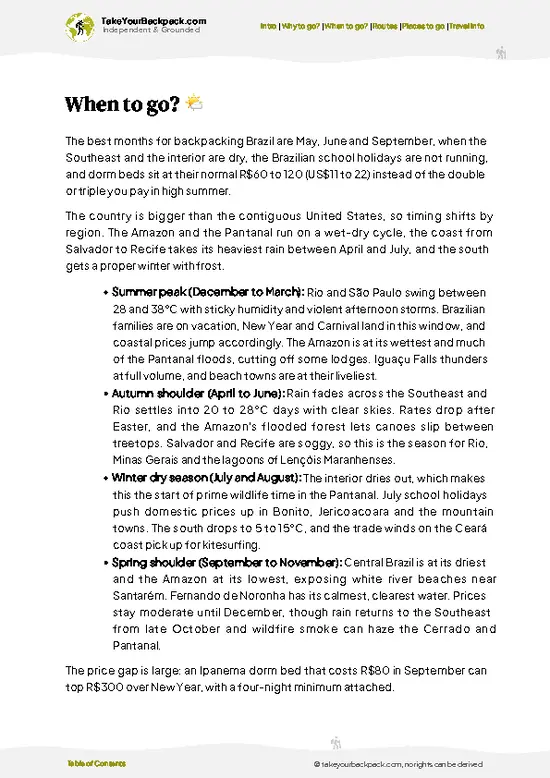
🌤️ When to go?Weather, crowds, and seasonal trade-offs

September to February is the sweet spot, with sunshine on almost every day and a steady sea breeze.
  • Dry Season (Sep to Feb): Highs of 29 to 31°C (84 to 88°F), little rain, and dune buggy rides at their best. Daylight stays near 12 hours all year.
  • Rainy Season (Mar to Jul): Heavy but short downpours, 26 to 30°C (79 to 86°F), with April to June the wettest. Beds are cheaper and beaches emptier.
  • Holidays: Christmas to Carnival and July school holidays bring Brazilian families, full hostels and higher prices.
Book Christmas and New Year beds at least two months ahead, or come in late January for the same weather and lower rates.

source: climatestotravel.comJANJanuary: highly recommended for travelingFEBFebruary: highly recommended for travelingMARMarch: fair for travelingAPRApril: fair for travelingMAYMay: fair for travelingJUNJune: fair for travelingJULJuly: fair for travelingAUGAugust: good for travelingSEPSeptember: excellent for travelingOCTOctober: excellent for travelingNOVNovember: excellent for travelingDECDecember: good for traveling
when-to-go

✈️ The backpacker research shortcutBrazil Travel Guide

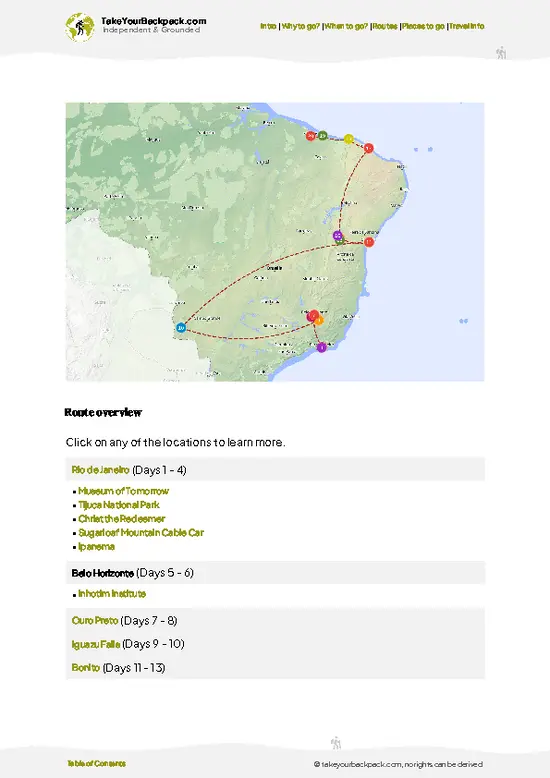
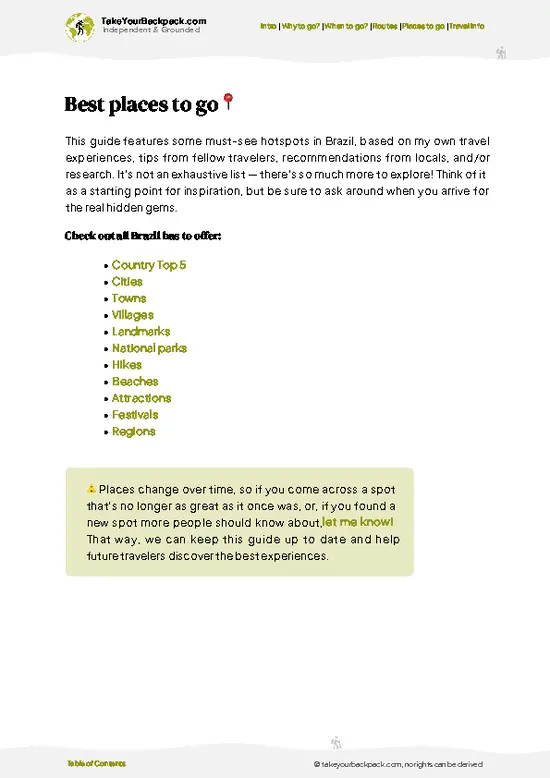
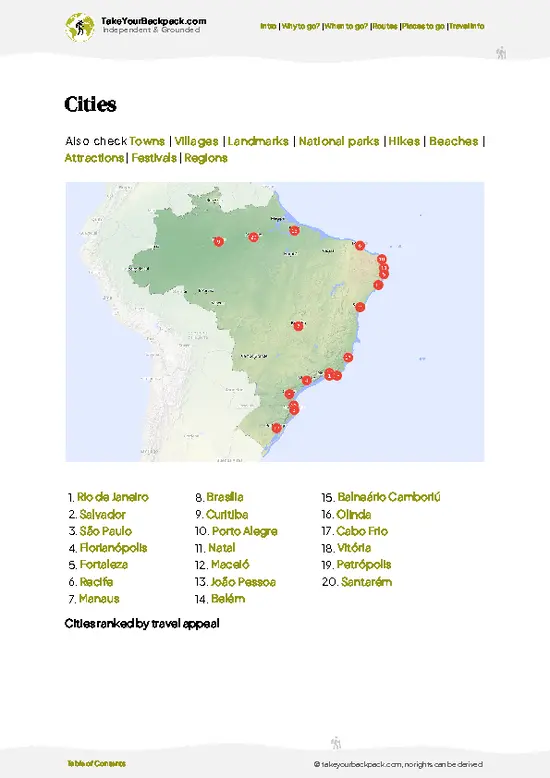
An offline-friendly backpacking guide with optimized travel routes, ranked highlights, transport advice, and the best areas to stay.
example page 0 from our offline Travel Guide for Brazil
example page 1 from our offline Travel Guide for Brazil
example page 2 from our offline Travel Guide for Brazil
example page 3 from our offline Travel Guide for Brazil
example page 4 from our offline Travel Guide for Brazil
example page 5 from our offline Travel Guide for Brazil
example page 6 from our offline Travel Guide for Brazil
example page 7 from our offline Travel Guide for Brazil
The digital guide (410 pages) contains:
✅ 146 highlights, ranked by travel appeal
✅ Optimized 14, 21 & 30-day travel routes
✅ Cities, national parks, landmarks, beaches
✅ How to get around
✅ Offline-friendly for travel without Wi-Fi
👉 Click to see all 30+ guide features

📅 Plan smarter in minutes, not weeks
✅ Month by month travel advice
✅ Festivals & national holidays
✅ Budget expectations

🗺️ Go to the right places, skip the overrated ones
✅ Honest pros & cons of destinations
✅ Top hikes, parks & viewpoints
✅ Lesser-known places most travelers miss
✅ Clear “worth it vs skip it” guidance

🛏️ Travel smoothly without rookie mistakes
✅ Best areas to stay
✅ Transport systems explained simply
✅ Common scams & safety advice
✅ SIM cards, money & practical tips

🌍 Understand the country, not just visit it
✅ Culture & traditions
✅ 52 Essential phrases & customs
✅ Festivals worth planning around
✅ Traveler-friendly historical context
✅ Insights that make places more meaningful

📱 Built for real travel conditions
✅ Fully downloadable PDF
✅ Works completely offline
✅ Optimized for phone use
✅ Useful in remote areas & buses
✅ Everything in one place
Stop searching, start planning
Get instant access to your full guide. 30‑day money-back guarantee.
+ Add another guide for just

By proceeding you agree to our terms.
Sent to your inbox immediately after payment • 100% Secure Checkout
Best Backpacking Travel Advisor 2025 tourism awardBest Backpacking
Travel Advisor
2025
What others say about Take Your Backpack Guides:
⭐⭐⭐⭐⭐
Fantastic, amazing amount of information!
⭐⭐⭐⭐⭐
My goodness this is amazing, it's what I've been looking for hats off too you!
⭐⭐⭐⭐⭐
I think this is absolutely BRILLIANT
⭐⭐⭐⭐
Very complete and informative. It's still missing places, but I gotta to commend you
⭐⭐⭐⭐⭐
This is truly amazing, thank you, can't wait to explore it with my kids!
⭐⭐⭐⭐⭐
Awesome resource, thank you!
⭐⭐⭐⭐⭐
This is amazing! Can't wait to explore the ones I haven't seen
⭐⭐⭐⭐
I love this! Well done, great idea.
⭐⭐⭐⭐⭐
Thanks for taking the time to make this gem!
⭐⭐⭐⭐⭐
This might be the best website I've ever seen.
⭐⭐⭐⭐⭐
Congratulations, and thank you so much for your work; it's incredibly valuable.
⭐⭐⭐⭐
In all seriousness I think you did a great job pointing out the important spots
⭐⭐⭐⭐⭐
10/10 very good
⭐⭐⭐⭐⭐
As someone who's only just starting to visit regularly this is awesome, thank you.
⭐⭐⭐⭐
Thank you very much! I'm going to visit my dad, it's going to be very useful!
⭐⭐⭐⭐⭐
This is really cool! We'll be travelling for the first time and this definitely come in handy.
⭐⭐⭐⭐⭐
You are now our minister of culture, congratulations 👨‍💼
⭐⭐⭐⭐⭐
Just wanted to tell you that this is a pearl! Going to follow your recommendations.
⭐⭐⭐⭐⭐
This is so cool. I'll definitely be using the resource for my travels soon.
⭐⭐⭐⭐⭐
This is very impressive! Good work.
⭐⭐⭐⭐⭐
This is an amazing and informative site. Very well done!

🛏️ Where to stay?Where staying makes the most sense

Ponta Negra is the one area to pick, because almost every hostel and budget guesthouse in Natal sits within a few blocks of its beach.
Dorm beds are easy to find here, and many hostels have pools, kitchens and group tours. The streets around the boardwalk stay busy and well lit until late, so walking back after dinner is comfortable, though the main strip can be noisy on weekends with live music until the early hours. For quiet, choose a hostel a few blocks inland on the side streets.
App rides to the center and bus station are easy, and tour operators pick up from the door. A second option is Petrópolis, … read more 👉
Ponta Negra is the one area to pick, because almost every hostel and budget guesthouse in Natal sits within a few blocks of its beach.
Dorm beds are easy to find here, and many hostels have pools, kitchens and group tours. The streets around the boardwalk stay busy and well lit until late, so walking back after dinner is comfortable, though the main strip can be noisy on weekends with live music until the early hours. For quiet, choose a hostel a few blocks inland on the side streets.
App rides to the center and bus station are easy, and tour operators pick up from the door. A second option is Petrópolis, where you find a few cheaper guesthouses, calmer streets and less nightlife, but you will be spending more on rides to reach the beach and food. For a short stay, Ponta Negra is better value.

🚌 Getting aroundMoving around without the hassle

From the Rodoviária (long-distance bus station) in Nossa Senhora de Nazaré, the center is about 15 minutes by taxi or app ride for US$4 to 7, and Ponta Negra takes 25 to 40 minutes for US$7 to 12. City buses run from the terminal, but luggage and confusing routes make a ride-hailing car the smarter choice with a backpack.
Natal is spread out and hot, and traffic jams build on the Via Costeira at rush hour. Public transport exists but is slow and unreliable for tourists.
  • Uber and 99 apps: The best option for most trips, with fixed prices, typically US$2 to 6 within Ponta Negra and toward the center. Cheaper than street taxis, which often add extras for visitors.
  • City buses: Fares are around US$0.80 to 1. Services run from roughly 5am to 11pm, but routes are hard to read and buses to Ponta Negra
… read more 👉
From the Rodoviária (long-distance bus station) in Nossa Senhora de Nazaré, the center is about 15 minutes by taxi or app ride for US$4 to 7, and Ponta Negra takes 25 to 40 minutes for US$7 to 12. City buses run from the terminal, but luggage and confusing routes make a ride-hailing car the smarter choice with a backpack.
Natal is spread out and hot, and traffic jams build on the Via Costeira at rush hour. Public transport exists but is slow and unreliable for tourists.
  • Uber and 99 apps: The best option for most trips, with fixed prices, typically US$2 to 6 within Ponta Negra and toward the center. Cheaper than street taxis, which often add extras for visitors.
  • City buses: Fares are around US$0.80 to 1. Services run from roughly 5am to 11pm, but routes are hard to read and buses to Ponta Negra can crawl. Worth it only if you know the line number.
  • Walking: Good in Ponta Negra, where the beach, bars and food are all within 2 km. Not worth attempting between districts, since the heat and highways make it miserable.
  • Buggy and tour transfers: Dune buggies to Genipabu or the southern beaches cost about US$50 to 100 per buggy. Skip the street touts and book through a hostel for better prices.
  • Rental scooters and cars: Cars run US$30 to 50 a day. Only useful for the coast, so skip them if you plan to stay in town.

👛 Costs (as of 19 October 2026)Typical daily expenses

A backpacker in Natal spends about US$34 to 67 a day, based on US$55 in high season.
CategoryBudget RangeLocal Reality
Dorm (high season)US$12 to 20Ponta Negra hostels with breakfast, pool and air conditioning are common.
Dorm (off-season)US$8 to 14Rates drop from April to June.
MealsUS$10 to 18Tapioca breakfast, a per-kilo lunch and a simple dinner.
Local transportUS$4 to 8A few app rides or bus fares per day.
City transport passUS$0 to 3No tourist pass, you pay per bus ride.
Activities and entry feesUS$5 to 12Museums and the fort are cheap, while buggy tours cost much more.
MiscellaneousUS$3 to 6Sunscreen, water and drinks.
Total Daily BudgetUS$34 to 67About US$55 as a mid-point in high season.
Share buggy tours and app rides with other hostel guests to split the cost.
⚠️ Prices can change and everyone travels differently, so take this as a rough guide. Hope it helps you plan your adventure!

🚌 Day tripsWhere to go beyond the main area

Natal's coast offers several easy day trips, mostly by buggy, bus or shared tour.
Genipabu Dunes:
Huge sand dunes with buggy rides, sandboarding and camel rides, about 30 minutes north across the Potengi river. Shared tours cost roughly US$30 to 50, while a private buggy is US$60 to 100. Go in the morning when the sand is cooler. First-timers often forget a hat and water.

Pipa:
A beach town with cliffs, dolphins at Baía dos Golfinhos and a lively evening scene, about 1.5 to 2 hours south by bus or van for US$5 to 10 each way. A full day is tight, so leave early and keep the last return in mind. Visit between September and February for calm seas.

Maracajaú Reef:
Snorkeling in natural pools on a reef offshore, about 1 hour north. Tours cost roughly US$40 to 70 and include a boat and gear. Low … read more 👉
Natal's coast offers several easy day trips, mostly by buggy, bus or shared tour.
Genipabu Dunes:
Huge sand dunes with buggy rides, sandboarding and camel rides, about 30 minutes north across the Potengi river. Shared tours cost roughly US$30 to 50, while a private buggy is US$60 to 100. Go in the morning when the sand is cooler. First-timers often forget a hat and water.

Pipa:
A beach town with cliffs, dolphins at Baía dos Golfinhos and a lively evening scene, about 1.5 to 2 hours south by bus or van for US$5 to 10 each way. A full day is tight, so leave early and keep the last return in mind. Visit between September and February for calm seas.

Maracajaú Reef:
Snorkeling in natural pools on a reef offshore, about 1 hour north. Tours cost roughly US$40 to 70 and include a boat and gear. Low tide gives the clearest water, so check the tide schedule before booking.

Baía Formosa:
A quiet fishing town with empty beaches, about 2 hours south by road. Budget around US$15 to 25 for bus transport and lunch, and expect fewer services than Pipa.

🍲 FoodLocal Cuisine & Drinks

Natal's coast means seafood first. Try camarão (shrimp) from the nearby Rio Grande do Norte coast, often grilled or in moqueca, and the local carne de sol served with macaxeira (cassava) and cheese. The region is also known for queijo coalho, grilled on sticks at the beach and brushed with oregano.
For breakfast, the tapioca stands in Ponta Negra fill crepes with cheese, coconut or shredded beef for US$2 to 4. Cold caldo de cana (sugarcane juice) and fresh coconut water are everywhere on the sand.
Backpackers eat at casual beach barracas, side-street self-service restaurants, which charge by weight for lunch, and the Ponta Negra boardwalk stalls. Skip the beachfront tables with printed English menus, since prices run 30 to 50 percent higher. In the evening, locals gather at bars for cold beer and live forró music.

🛡️ SafetyScams, Hazards, and Annoyances

Natal is a relaxed beach city, and most problems are petty theft. Phones and cameras vanish from beach towels and from hands near the Ponta Negra boardwalk, so carry only what you need and keep your phone out of sight on the street. Avoid walking empty streets in Ribeira and Cidade Alta after dark, and use an app ride for late returns. Solo travelers, including women, find Ponta Negra comfortable at night, but should avoid the dark stretches of beach. Beach touts and unlicensed taxi drivers can overcharge, so agree on a price or use an app. Watch the strong currents and swim near lifeguard posts.

FAQCommon questions from travelers

Three days is enough for Natal, with one day for Ponta Negra and the Morro do Careca, one for the Genipabu dunes and one for the old center and Forte dos Reis Magos. Add two more days if you want Pipa, which is 1.5 to 2 hours south by bus or van. Dorm beds in Ponta Negra start around US$12 to 20 a night.
Natal is reasonably safe for solo backpackers, especially around the busy Ponta Negra boardwalk, where hostels and bars stay active until late. Petty theft on the beach is the main risk, so carry little and use app rides at night, which cost US$2 to 6 within town. Avoid the empty streets of Ribeira and Cidade Alta after dark.
Natal is known for its sand dunes, warm beaches and sunshine for around 300 days a year. Highlights include the Morro do Careca dune at Ponta Negra, buggy rides at Genipabu and the Forte dos Reis Magos, built in 1598. It is also the gateway to Pipa and the northeast coast.
⚠️ Things can change over time, so always validate details locally before you go.

Other Brazilian cities near Natal

Explore more nearby:

  • João Pessoa—Easternmost cliff, lighthouse, sunset saxophone, tide-pool reef| 153 km away
  • Olinda—Hilltop churches, pastel lanes, puppet museum, craft studios| 249 km away
  • Recife—Oldest synagogue, Marco Zero, frevo museum, ceramic sculpture park| 254 km away

💡 Not sure where to go next?
Create a personalized itinerary for Brazil including Natal and the places that fit your trip.

Generate my itinerary

👉 Discover all cities

Or checkout all Brazil has to offer (think cities, towns, villages, national parks, hikes, beaches, festivals)
Country photo of Brazil

We 💚 feedbackWhat to keep in mind

I would pair Natal with Pipa to the south and Fortaleza or the Lençóis Maranhenses to the north, so the route stays beach-focused with dunes at both ends. Skip the city center, and give Natal two or three nights. Bring reef-safe sunscreen and a hat.

✈️ When did I visit Brazil?
Call it good timing or luck, but I was able to celebrate Carnaval in Rio de Janeiro in February 2022, after a round trip in the north and east coast.

✍️ Help improve this page!
The information on this page is based on my own backpacking experience in Brazil, supplemented with up-to-date research and feedback from other travelers. Travel details can change, so if you notice anything outdated or incomplete, feel free to let me know.


🙋‍♂️ Give feedback

👋 Meet the founderWho’s Behind Take Your Backpack?

Johan, backpacker and founder of TakeYourBackpackHi, I’m Johan (Netherlands 🇳🇱), the creator of TakeYourBackpack. Over the past 3 decades, I’ve backpacked through 90+ countries across six continents, gaining extensive experience with independent travel, long-term trips, and overland routes.

This site is built on a combination of firsthand travel experience and carefully curated insights from other backpackers. Many guides are based on places I’ve personally visited, while others bring together tips, observations, and practical advice shared by trusted travelers I’ve met along the way.

The goal is to provide realistic, experience-driven guidance — not generic itineraries — so you can explore destinations with better context, clearer expectations, and more confidence.