
×

Brazil🇧🇷 | attractionsRio de Janeiro Botanical GardenImperial palm avenue, giant water lilies, orchid house, Atlantic Forest trails | things to do and best time to go

Explore Centro Cultural Tom Jobim (Artur Nogueira)Explore São Paulo Zoological Park

Backpacking in Rio de Janeiro Botanical Garden
🌟 Highlightattraction ranked #9
By Johan Kruseman 🇳🇱 | Updated October 19, 2026

The first thing that hit me at the main gate was the smell: wet bark and fallen fruit, with the road noise of Jardim Botânico cut off by a wall of Imperial palms. Rio de Janeiro Botanical Garden sits in the South Zone of Rio de Janeiro, Brazil, at the foot of Corcovado, a short ride from Ipanema. Go on foot and skip the golf-cart tour, because paths are flat and shaded. The reason is simple: the best parts cluster near the entrance. Experienced travelers enter by the main gate, then loop back. The wow-factor is quiet, not adrenaline. Crowds thin on weekdays, and the fee is modest. Skip the gift shop. Marmosets in the bamboo are the detail that stays.

Discover everything you want to know in the 📖 Brazil Travel Guide.


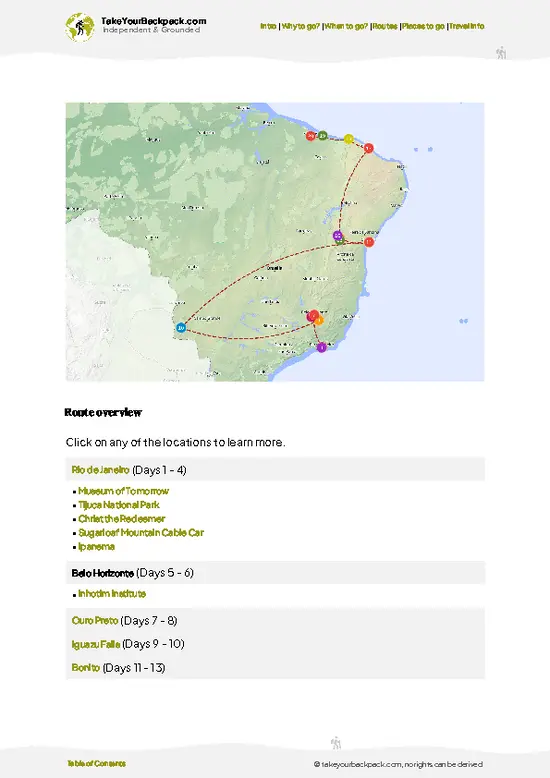
example page 0 from our offline Travel Guide for Brazil
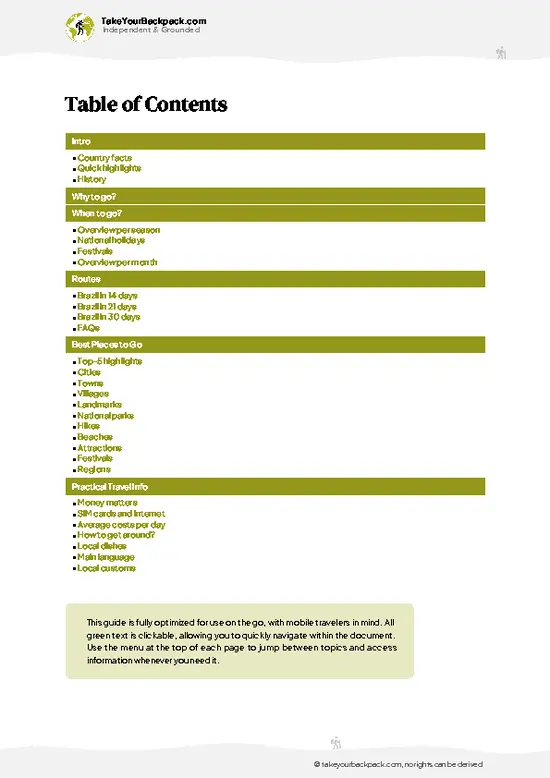
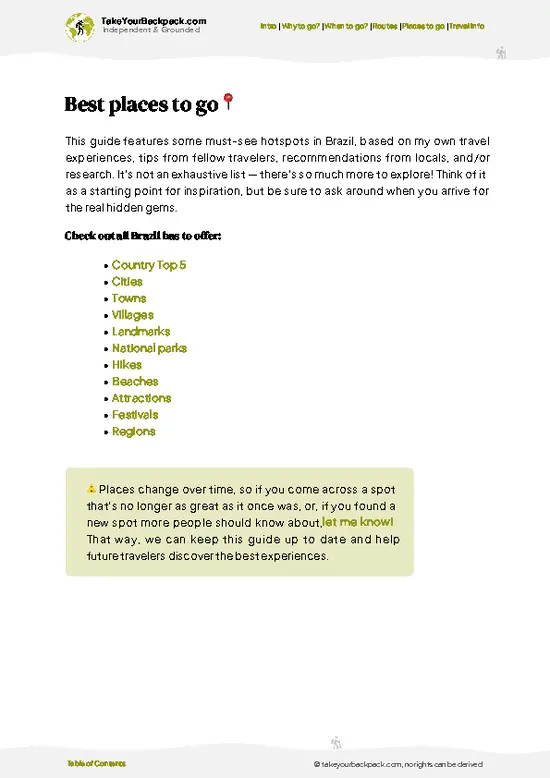
example page 1 from our offline Travel Guide for Brazil
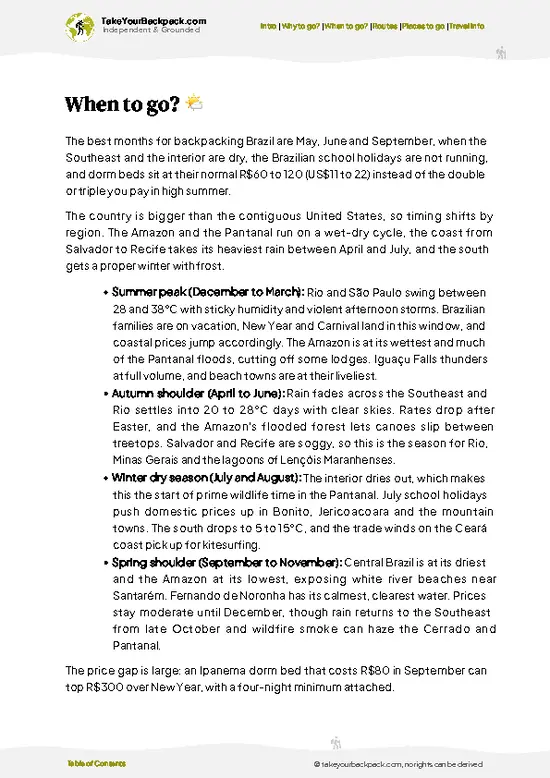
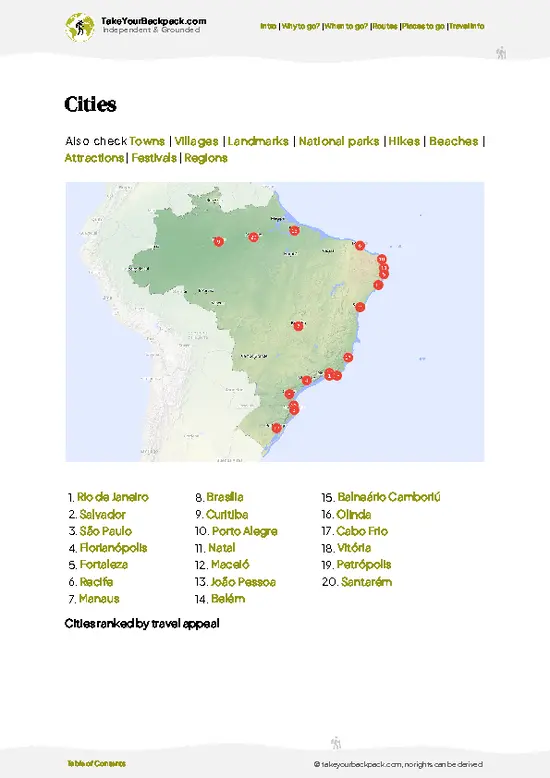
example page 2 from our offline Travel Guide for Brazil
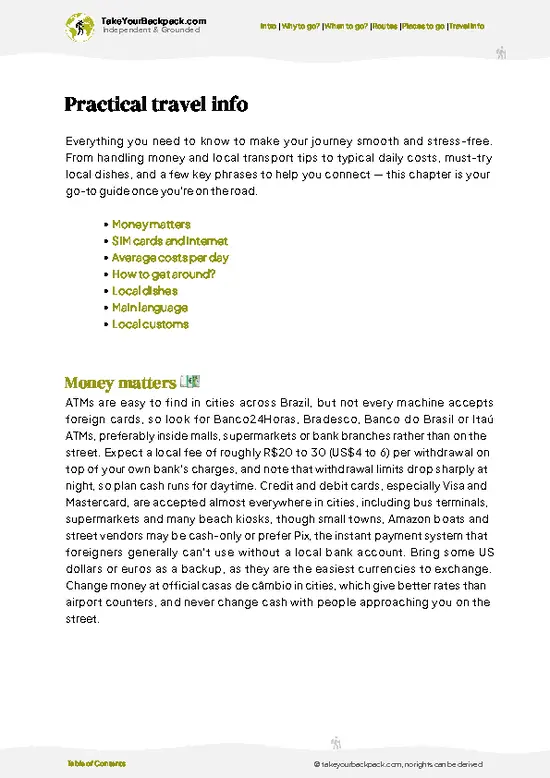
example page 3 from our offline Travel Guide for Brazil
example page 4 from our offline Travel Guide for Brazil
example page 5 from our offline Travel Guide for Brazil
example page 6 from our offline Travel Guide for Brazil
example page 7 from our offline Travel Guide for Brazil
Loading the map 🌍
CLICK TO FILTER
cities
towns
villages
landmarks
national parks
hikes
beaches
attractions
festivals
regions
SHOW COUNTRY’S BESTSHOW ALL

✨ Why go?
Ranked #9 attraction in Brazil
Why Rio de Janeiro Botanical Garden should be on your travel list

Rio de Janeiro Botanical Garden gives you the calmest, greenest hours in a city that rarely slows down. The reason to go is the Avenue of Imperial Palms, a row of royal palms over 30 meters tall that anchors the main entrance and makes for a photo no Rio postcard replaces. The second is scale: more than 6,000 plant species sit on slopes of Atlantic Forest, so you can walk from orchids to carnivorous plants to tree canopies within minutes. Wildlife is the bonus. Toucans, capuchin monkeys and marmosets turn up without a guide, and that matters when a rainforest trek feels out of reach on a short city stay. Because it sits beside Corcovado and the Lagoa, it fits easily between Christ the Redeemer and a beach afternoon, giving your Rio route a gentler midpoint.

💡 HighlightsDon't-miss highlights and experiences

  1. Avenue of Imperial Palms: Around 134 royal palms line the central path, all descended from a single tree planted in 1809. It is the garden’s signature view and the photo everyone searches for.
  2. Orchidarium: A small shaded house of Brazilian orchids, best when flowering seasons overlap. The cool, damp air is a relief.
  3. Victoria Regia Lake: Giant Amazon water lilies with platter-sized leaves that float on a quiet pond. Look closely and you may see turtles.
  4. Carnivorous Plant Greenhouse: Pitcher plants and sundews in a compact space. Kids and adults both linger here.
  5. Japanese Garden: Bonsai, a pond and a small bridge create a still corner, away from the main paths.
  6. Sensory Garden: Herbs and textured plants meant to be touched and smelled, with Braille labels. It is one of the few places in Rio designed
… read more 👉
  1. Avenue of Imperial Palms: Around 134 royal palms line the central path, all descended from a single tree planted in 1809. It is the garden’s signature view and the photo everyone searches for.
  2. Orchidarium: A small shaded house of Brazilian orchids, best when flowering seasons overlap. The cool, damp air is a relief.
  3. Victoria Regia Lake: Giant Amazon water lilies with platter-sized leaves that float on a quiet pond. Look closely and you may see turtles.
  4. Carnivorous Plant Greenhouse: Pitcher plants and sundews in a compact space. Kids and adults both linger here.
  5. Japanese Garden: Bonsai, a pond and a small bridge create a still corner, away from the main paths.
  6. Sensory Garden: Herbs and textured plants meant to be touched and smelled, with Braille labels. It is one of the few places in Rio designed for blind visitors.
  7. Trails to the Atlantic Forest edge: Shaded paths rise toward the forest, where you hear marmosets and birds above you.
  8. Royal Gunpowder Factory ruins: Old stone buildings from the early 1800s sit by a stream, a hint of the garden’s origins.
If time is short, skip the Japanese Garden and spend it on the palms and the lily lake.
Spotted a mistake or missing something? Contact us.

Things to do around Rio de Janeiro Botanical Garden

Ratings based on Tripadvisor reviews. When you book through this link, you support our work at no extra cost to you.

🌤️ When to go?Weather, crowds, and seasonal trade-offs

  • Winter (June to August): Mornings are crisp and dry at 17 to 25°C (63 to 77°F), ideal for the long shaded paths. Daylight runs roughly 11 hours, so arrive at opening.
  • Summer (December to March): Hot, humid and stormy at 24 to 32°C (75 to 90°F), with afternoon downpours that fill the lily ponds. The garden stays green but sticky, and midday walking is draining.
  • Shoulder (April to May, September to November): Highs of 23 to 29°C (73 to 84°F), fewer storms and lighter crowds. September and October bring flowering trees.
  • Crowds and prices: Weekends and Brazilian school holidays (July, late December to February) fill the lawns with families. Beds in nearby neighborhoods jump sharply around New Year and Carnival.
Go on a weekday morning, then ride up to Christ the Redeemer afterward.

source: climatestotravel.comJANJanuary: fair for travelingFEBFebruary: fair for travelingMARMarch: fair for travelingAPRApril: highly recommended for travelingMAYMay: excellent for travelingJUNJune: highly recommended for travelingJULJuly: highly recommended for travelingAUGAugust: excellent for travelingSEPSeptember: excellent for travelingOCTOctober: highly recommended for travelingNOVNovember: highly recommended for travelingDECDecember: fair for traveling
brazil-attraction-rio-de-janeiro-botanical-garden
© Google |

✈️ The backpacker research shortcutBrazil Travel Guide

An offline-friendly backpacking guide with optimized travel routes, ranked highlights, transport advice, and the best areas to stay.
example page 0 from our offline Travel Guide for Brazil
example page 1 from our offline Travel Guide for Brazil
example page 2 from our offline Travel Guide for Brazil
example page 3 from our offline Travel Guide for Brazil
example page 4 from our offline Travel Guide for Brazil
example page 5 from our offline Travel Guide for Brazil
example page 6 from our offline Travel Guide for Brazil
example page 7 from our offline Travel Guide for Brazil
The digital guide (410 pages) contains:
✅ 146 highlights, ranked by travel appeal
✅ Optimized 14, 21 & 30-day travel routes
✅ Cities, national parks, landmarks, beaches
✅ How to get around
✅ Offline-friendly for travel without Wi-Fi
👉 Click to see all 30+ guide features

📅 Plan smarter in minutes, not weeks
✅ Month by month travel advice
✅ Festivals & national holidays
✅ Budget expectations

🗺️ Go to the right places, skip the overrated ones
✅ Honest pros & cons of destinations
✅ Top hikes, parks & viewpoints
✅ Lesser-known places most travelers miss
✅ Clear “worth it vs skip it” guidance

🛏️ Travel smoothly without rookie mistakes
✅ Best areas to stay
✅ Transport systems explained simply
✅ Common scams & safety advice
✅ SIM cards, money & practical tips

🌍 Understand the country, not just visit it
✅ Culture & traditions
✅ 52 Essential phrases & customs
✅ Festivals worth planning around
✅ Traveler-friendly historical context
✅ Insights that make places more meaningful

📱 Built for real travel conditions
✅ Fully downloadable PDF
✅ Works completely offline
✅ Optimized for phone use
✅ Useful in remote areas & buses
✅ Everything in one place
Stop searching, start planning
Get instant access to your full guide. 30‑day money-back guarantee.
+ Add another guide for just

By proceeding you agree to our terms.
Sent to your inbox immediately after payment • 100% Secure Checkout
Best Backpacking Travel Advisor 2025 tourism awardBest Backpacking
Travel Advisor
2025
What others say about Take Your Backpack Guides:
⭐⭐⭐⭐⭐
Fantastic, amazing amount of information!
⭐⭐⭐⭐⭐
My goodness this is amazing, it's what I've been looking for hats off too you!
⭐⭐⭐⭐⭐
I think this is absolutely BRILLIANT
⭐⭐⭐⭐
Very complete and informative. It's still missing places, but I gotta to commend you
⭐⭐⭐⭐⭐
This is truly amazing, thank you, can't wait to explore it with my kids!
⭐⭐⭐⭐⭐
Awesome resource, thank you!
⭐⭐⭐⭐⭐
This is amazing! Can't wait to explore the ones I haven't seen
⭐⭐⭐⭐
I love this! Well done, great idea.
⭐⭐⭐⭐⭐
Thanks for taking the time to make this gem!
⭐⭐⭐⭐⭐
This might be the best website I've ever seen.
⭐⭐⭐⭐⭐
Congratulations, and thank you so much for your work; it's incredibly valuable.
⭐⭐⭐⭐
In all seriousness I think you did a great job pointing out the important spots
⭐⭐⭐⭐⭐
10/10 very good
⭐⭐⭐⭐⭐
As someone who's only just starting to visit regularly this is awesome, thank you.
⭐⭐⭐⭐
Thank you very much! I'm going to visit my dad, it's going to be very useful!
⭐⭐⭐⭐⭐
This is really cool! We'll be travelling for the first time and this definitely come in handy.
⭐⭐⭐⭐⭐
You are now our minister of culture, congratulations 👨‍💼
⭐⭐⭐⭐⭐
Just wanted to tell you that this is a pearl! Going to follow your recommendations.
⭐⭐⭐⭐⭐
This is so cool. I'll definitely be using the resource for my travels soon.
⭐⭐⭐⭐⭐
This is very impressive! Good work.
⭐⭐⭐⭐⭐
This is an amazing and informative site. Very well done!

🛏️ Where to stay?Choosing the right base

Botafogo is the strongest choice for backpackers, about a 15 to 20 minute bus or ride-share trip from the garden, with the densest cluster of hostels, cheap bakeries and bars in the zone. It is lively but residential, and the metro station keeps you connected to the rest of the city. Copacabana and Ipanema suit travelers who want the beach at the door. Both are roughly 20 to 30 minutes away by bus, and the streets stay busy and well lit into the evening. Leblon is quieter and pricier. Lagoa and Jardim Botânico, the neighborhood around the garden itself, are leafy and calm, with few hostels but … read more 👉
Botafogo is the strongest choice for backpackers, about a 15 to 20 minute bus or ride-share trip from the garden, with the densest cluster of hostels, cheap bakeries and bars in the zone. It is lively but residential, and the metro station keeps you connected to the rest of the city. Copacabana and Ipanema suit travelers who want the beach at the door. Both are roughly 20 to 30 minutes away by bus, and the streets stay busy and well lit into the evening. Leblon is quieter and pricier. Lagoa and Jardim Botânico, the neighborhood around the garden itself, are leafy and calm, with few hostels but pleasant guesthouses and short walks to the entrance. They suit those who prefer sleep to nightlife. Lapa and Santa Teresa are the social, party-heavy options, though they call for more care at night. Stick to taxis or ride-shares after dark there, and keep phones tucked away on the street.

👛 Costs (as of 19 October 2026)Money, prices, and spending tips

A day around Rio de Janeiro Botanical Garden runs about US$62 for a backpacker in high season, with the US$15 foreign-visitor entry as the single fixed cost. Brazilians pay half that rate, but foreigners pay the full price, and you settle everything in reais.
CategoryBudget RangeLocal Reality
Entry ticketUS$15Foreign rate at the gate, paid by card or cash. The garden covers about 54 hectares, so one ticket covers a long wander.
Dorm bed (high season)US$15 to 25Jardim Botânico and nearby Botafogo and Ipanema have dorms. Rates climb around Christmas and Carnival. Counted at US$20.
Dorm bed (low season)US$11 to 18Not counted in the daily total.
TransportUS$2 to 6City buses and the metro cost under US$1.50 a ride. Add a rideshare back at night if you want one.
FoodUS$10 to 18Self-service per-kilo lunch
… read more 👉
A day around Rio de Janeiro Botanical Garden runs about US$62 for a backpacker in high season, with the US$15 foreign-visitor entry as the single fixed cost. Brazilians pay half that rate, but foreigners pay the full price, and you settle everything in reais.
CategoryBudget RangeLocal Reality
Entry ticketUS$15Foreign rate at the gate, paid by card or cash. The garden covers about 54 hectares, so one ticket covers a long wander.
Dorm bed (high season)US$15 to 25Jardim Botânico and nearby Botafogo and Ipanema have dorms. Rates climb around Christmas and Carnival. Counted at US$20.
Dorm bed (low season)US$11 to 18Not counted in the daily total.
TransportUS$2 to 6City buses and the metro cost under US$1.50 a ride. Add a rideshare back at night if you want one.
FoodUS$10 to 18Self-service per-kilo lunch spots in the neighborhood charge by weight. Café snacks inside the garden cost more.
Extras insideUS$0 to 5Drinks, a small guided walk or a souvenir. Lockers and bag storage are not a major expense.
Nearby add-onsUS$0 to 20Corcovado and the Christ statue are close by, with a separate ticket and transport. Skipping them keeps the budget low.
Total Daily BudgetUS$62Entry US$15, bed US$20, transport US$4, food US$15, extras US$3, plus a small buffer for water and snacks (US$5).
⚠️ Prices can change and everyone travels differently, so take this as a rough guide. Hope it helps you plan your adventure!

FAQTraveler FAQ

Plan 2 to 3 hours at Rio de Janeiro Botanical Garden for a relaxed loop. The grounds cover about 54 hectares, so keep half a day free if you like photography or birdwatching. The Imperial Palm Avenue and the lily ponds take about 30 minutes alone, and the orchid house adds another 20.
Yes, Rio de Janeiro Botanical Garden is good value at about US$15 for foreign visitors. You get over 6,000 plant species, shaded paths and a cool break from the beach heat. Wild marmosets and toucans often appear for free, which beats most paid attractions in the city.
Take the metro to Botafogo or Ipanema and continue by bus for 10 to 20 minutes to Rua Jardim Botânico. Ride-shares from Copacabana or Ipanema cost about US$4 to 8 and take 15 to 25 minutes. Walkers can reach the entrance from Lagoa in around 20 minutes along flat streets.
⚠️ Things can change over time, so always validate details locally before you go.

Other Brazilian attractions near Rio de Janeiro Botanical Garden

Explore more nearby:


💡 Not sure where to go next?
Create a personalized itinerary for Brazil including Rio de Janeiro Botanical Garden and the places that fit your trip.

Generate my itinerary

👉 Discover all attractions

Or checkout all Brazil has to offer (think cities, towns, villages, national parks, hikes, beaches, festivals)
Country photo of Brazil

We 💚 feedbackWhat to keep in mind

Go on a weekday morning, soon after the gates open, when the air is cool, the paths are empty and the marmosets are active. Rio de Janeiro Botanical Garden is at its best from the dry months of May to September, when the light is clear. I would bring water and skip lunch inside.

✈️ When did I visit Brazil?
Call it good timing or luck, but I was able to celebrate Carnaval in Rio de Janeiro in February 2022, after a round trip in the north and east coast.

✍️ Help improve this page!
The information on this page is based on my own backpacking experience in Brazil, supplemented with up-to-date research and feedback from other travelers. Travel details can change, so if you notice anything outdated or incomplete, feel free to let me know.


🙋‍♂️ Give feedback

👋 Meet the founderWho’s Behind Take Your Backpack?

Johan, backpacker and founder of TakeYourBackpackHi, I’m Johan (Netherlands 🇳🇱), the creator of TakeYourBackpack. Over the past 3 decades, I’ve backpacked through 90+ countries across six continents, gaining extensive experience with independent travel, long-term trips, and overland routes.

This site is built on a combination of firsthand travel experience and carefully curated insights from other backpackers. Many guides are based on places I’ve personally visited, while others bring together tips, observations, and practical advice shared by trusted travelers I’ve met along the way.

The goal is to provide realistic, experience-driven guidance — not generic itineraries — so you can explore destinations with better context, clearer expectations, and more confidence.