×
São Paulo

Brazil🇧🇷 | citiesSão PauloPaulista museums, pastel stalls, mural lanes, rooftop grid views | things to do and best time to go

Explore SalvadorExplore São Luís

Backpacking in São Paulo
🏆 Top pickcity ranked #3
By Johan Kruseman 🇳🇱 | Updated October 19, 2026

The cook at the feira stall slaps a pastel onto a paper plate, steam fogging the glass, and asks if I want caldo de cana with it. “Sempre,” he says, answering for me, and the press clanks while the fryer hisses and the lane fills with hot oil and lime. That is São Paulo at its most useful: loud, unfussy and generous if you arrive hungry. The city sits inland from the Atlantic in southeastern Brazil, and it pays off appetite and curiosity far more than a sightseeing checklist. Spend your time on food, museums and the mural lanes of Vila Madalena. Skip the shopping malls, and don’t expect beaches or pretty skylines, because the center is gritty and the traffic is relentless. It suits eaters and culture seekers, not anyone after a slow resort pace. Before you go, book a bed within walking distance of a Metro station, because that saves you hours.

Discover everything you want to know in the 📖 Brazil Travel Guide.


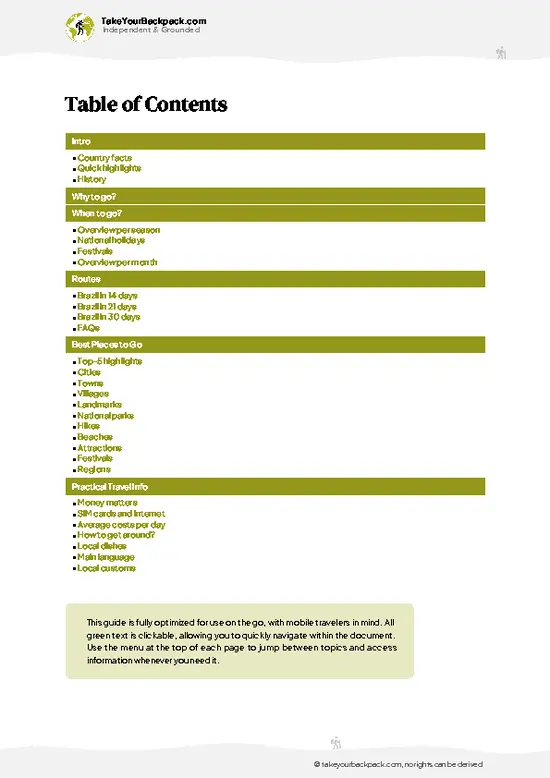
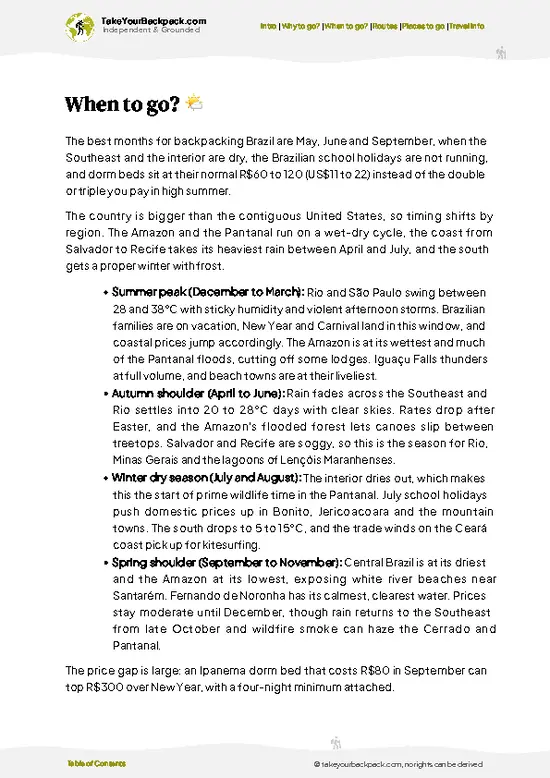
example page 0 from our offline Travel Guide for Brazil
example page 1 from our offline Travel Guide for Brazil
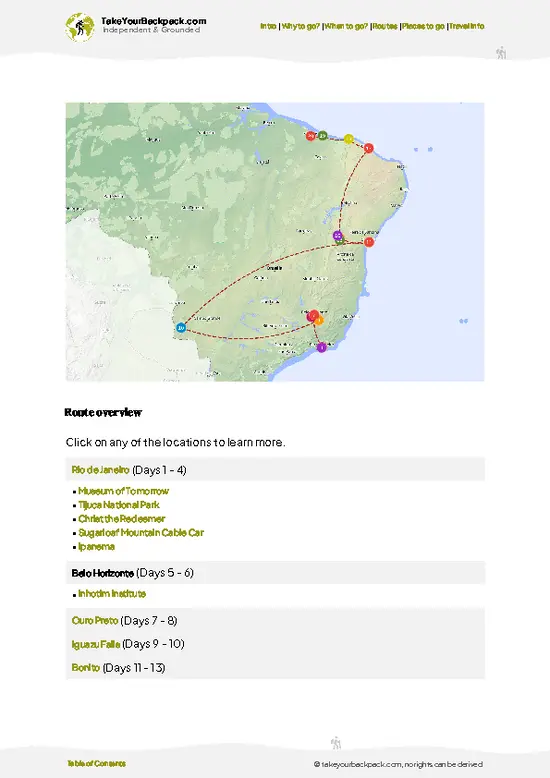
example page 2 from our offline Travel Guide for Brazil
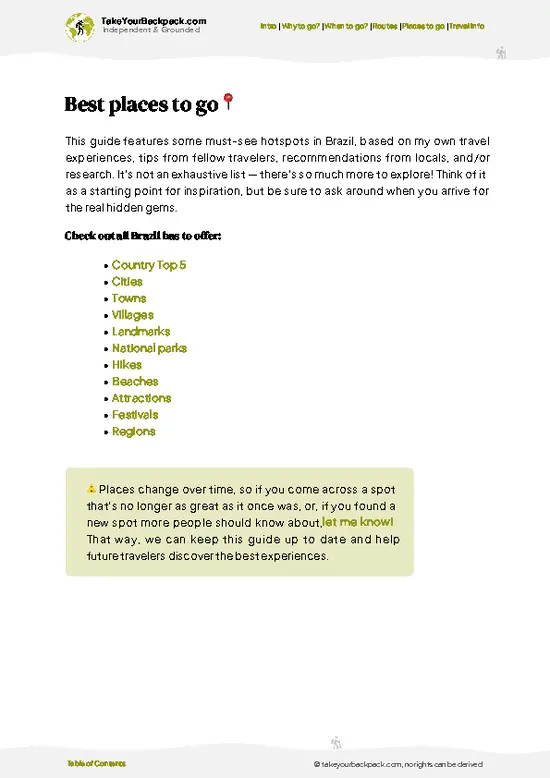
example page 3 from our offline Travel Guide for Brazil
example page 4 from our offline Travel Guide for Brazil
example page 5 from our offline Travel Guide for Brazil
example page 6 from our offline Travel Guide for Brazil
example page 7 from our offline Travel Guide for Brazil
Loading the map 🌍
CLICK TO FILTER
cities
towns
villages
landmarks
national parks
hikes
beaches
attractions
festivals
regions
SHOW COUNTRY’S BESTSHOW ALL

✨ Why go?
Ranked #3 city in Brazil
What makes this city worth visiting

São Paulo earns a place on a Brazil route because nowhere else in the country packs this much eating and culture into one place. The city holds the largest Japanese community outside Japan, plus deep Italian, Lebanese and northeastern Brazilian roots, so a single day can run from a ramen counter to a pizza oven to a forró bar. Museums, galleries and live music venues are dense enough that rainy days cost you nothing. Hostels cluster around Vila Madalena, Consolação and Liberdade, and the Metro makes it realistic to skip taxis entirely if you pick your neighborhood well. Onward travel is easy: the Tietê bus terminal has long-distance coaches to Rio, Paraty and the south, and Guarulhos airport is Brazil’s busiest international hub. Beaches and nature are not the draw here. Two or three nights … read more 👉
São Paulo earns a place on a Brazil route because nowhere else in the country packs this much eating and culture into one place. The city holds the largest Japanese community outside Japan, plus deep Italian, Lebanese and northeastern Brazilian roots, so a single day can run from a ramen counter to a pizza oven to a forró bar. Museums, galleries and live music venues are dense enough that rainy days cost you nothing. Hostels cluster around Vila Madalena, Consolação and Liberdade, and the Metro makes it realistic to skip taxis entirely if you pick your neighborhood well. Onward travel is easy: the Tietê bus terminal has long-distance coaches to Rio, Paraty and the south, and Guarulhos airport is Brazil’s busiest international hub. Beaches and nature are not the draw here. Two or three nights is the right dose for most people, and a fourth only makes sense if you are chasing music, markets or football.

💡 HighlightsDon't-miss highlights and experiences

  1. Avenida Paulista and MASP: The city’s main boulevard is where São Paulo shows off, and the Museu de Arte de São Paulo, lifted on its red concrete frame, holds Latin America’s strongest Western art collection (Van Gogh, Renoir, Velázquez). Go Tuesday, when entry is free (book ahead), or any weekday afternoon. Tickets run about US$10 to 12, allow 2 to 3 hours. On Sundays the avenue closes to cars and fills with buskers and stalls.
  2. Mercado Municipal (Mercadão): A 1930s hall with stained-glass panels and stacks of tropical fruit you will not recognize. Eat the mortadella sandwich and a pastel de bacalhau, both big enough to share. Come before 11 AM to beat the lunch crush. Entry is free, food costs US$8 to 15, plan 1 to 1.5 hours.
  3. Beco do Batman: A lane in Vila Madalena where the walls are layered
… read more 👉
  1. Avenida Paulista and MASP: The city’s main boulevard is where São Paulo shows off, and the Museu de Arte de São Paulo, lifted on its red concrete frame, holds Latin America’s strongest Western art collection (Van Gogh, Renoir, Velázquez). Go Tuesday, when entry is free (book ahead), or any weekday afternoon. Tickets run about US$10 to 12, allow 2 to 3 hours. On Sundays the avenue closes to cars and fills with buskers and stalls.
  2. Mercado Municipal (Mercadão): A 1930s hall with stained-glass panels and stacks of tropical fruit you will not recognize. Eat the mortadella sandwich and a pastel de bacalhau, both big enough to share. Come before 11 AM to beat the lunch crush. Entry is free, food costs US$8 to 15, plan 1 to 1.5 hours.
  3. Beco do Batman: A lane in Vila Madalena where the walls are layered with street art that gets repainted often. Late afternoon light is best, and the galleries and bars nearby fill up after 6 PM. Free, 45 minutes to 1 hour.
  4. Pinacoteca do Estado: A brick-and-steel building from the 1900s with a skylit courtyard, hosting a deep collection of Brazilian art, from academic painters to modernists. It is quieter than MASP, and Saturdays are free. Tickets about US$4 to 5, allow 1.5 to 2 hours.
  5. Catedral da Sé and Praça da Sé: A neo-Gothic cathedral with a big dome, holding up to 8,000 people, standing at the city’s zero kilometer marker. Visit on a weekday morning, since the square gets rough after dark. Free, 30 to 45 minutes.
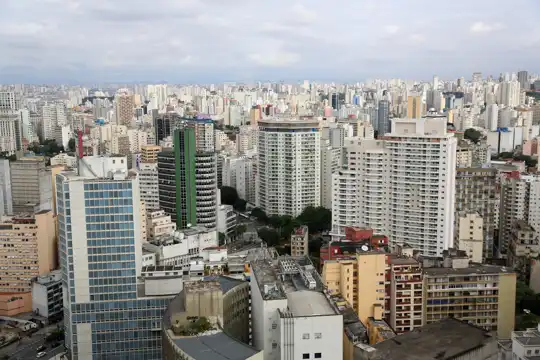
  6. Edifício Itália Terraço: A rooftop at 165 meters with a 360-degree view of the endless concrete grid, best at dusk when the lights come on. Entry to the viewing terrace costs about US$6, including a drink. Plan 1 hour.
  7. Parque Ibirapuera: The city’s big green lung, with Oscar Niemeyer buildings, a lake and cyclists everywhere. Go on a weekday morning to avoid weekend crowds. Free, rent a bike for about US$3 to 5 an hour, and give it 2 to 3 hours.
  8. Museu do Ipiranga: The restored palace on the hill where independence was declared, with a collection of everyday objects from Brazilian history and formal gardens out front. Aim for a weekday morning. Tickets cost about US$4 to 6, allow 2 hours.
For day trips, Santos with its beach and coffee museum, the colonial town of Embu das Artes with its weekend craft fair, and the hills of Paranapiacaba are all within reach.
Spotted a mistake or missing something? Contact us.

Things to do in São Paulo

Ratings based on Tripadvisor reviews. When you book through this link, you support our work at no extra cost to you.

🏘️ NeighborhoodsHow different areas shape the experience

Skip trying to see all of São Paulo and pick three or four areas, because the city is enormous and the good parts are scattered.
  • Vila Madalena: Worth a full afternoon and evening. Street murals fill Beco do Batman, the bars spill onto the sidewalks after 8 pm, and it is the city’s best place for a casual night out. Very walkable, though the streets are steep.
  • Avenida Paulista and Consolação: The center of gravity. MASP, the Japanese-Brazilian cafés, bookstores and the Sunday car-free street make this an easy base for a first day. Walk it, but the avenue itself is more office towers than charm.
  • Liberdade: The largest Japanese community outside Japan. Come for the Sunday street fair, ramen and gyoza, and the lantern-lit streets. Two hours is enough.
  • Centro (Sé, República, Luz): Historic and gritty.
… read more 👉
Skip trying to see all of São Paulo and pick three or four areas, because the city is enormous and the good parts are scattered.
  • Vila Madalena: Worth a full afternoon and evening. Street murals fill Beco do Batman, the bars spill onto the sidewalks after 8 pm, and it is the city’s best place for a casual night out. Very walkable, though the streets are steep.
  • Avenida Paulista and Consolação: The center of gravity. MASP, the Japanese-Brazilian cafés, bookstores and the Sunday car-free street make this an easy base for a first day. Walk it, but the avenue itself is more office towers than charm.
  • Liberdade: The largest Japanese community outside Japan. Come for the Sunday street fair, ramen and gyoza, and the lantern-lit streets. Two hours is enough.
  • Centro (Sé, República, Luz): Historic and gritty. The Mercado Municipal, Pinacoteca and Edifício Copan are worth a morning by day. Skip it after dark, when the streets empty out.
  • Pinheiros: Less polished than Vila Madalena, with good food, live music and a Saturday market. Pleasant on foot, and cheaper to eat in.
  • Jardins and Ibirapuera: Jardins is upscale shopping and not worth your time on a budget. Ibirapuera Park, a short ride away, is the best free half-day in the city.

⌛️ 1 dayHow to make the most of one day

8:00 AM, Mercado Municipal: Begin here because the hall is at its calmest before 10 AM, and breakfast of a mortadella sandwich and a fried cod pastel keeps you going for hours. Walk toward the old center afterward.
10:00 AM, Pátio do Colégio and Praça da Sé: The reconstructed Jesuit courtyard marks where the city began in 1554. The big neo-Gothic cathedral in Sé is a short walk away and worth ten minutes inside.
11:30 AM, Pinacoteca do Estado: Take the Metro to Luz and spend two hours with Brazilian art, finishing in the sculpture garden. This is where the old center feels most relaxed.
2:00 PM, Liberdade: Have lunch at a ramen or yakisoba counter, then browse the Japanese grocery shops and sweet stalls along the lanterned streets.
4:00 PM, MASP and Casa das Rosas: Ride the Metro to Paulista, … read more 👉
8:00 AM, Mercado Municipal: Begin here because the hall is at its calmest before 10 AM, and breakfast of a mortadella sandwich and a fried cod pastel keeps you going for hours. Walk toward the old center afterward.
10:00 AM, Pátio do Colégio and Praça da Sé: The reconstructed Jesuit courtyard marks where the city began in 1554. The big neo-Gothic cathedral in Sé is a short walk away and worth ten minutes inside.
11:30 AM, Pinacoteca do Estado: Take the Metro to Luz and spend two hours with Brazilian art, finishing in the sculpture garden. This is where the old center feels most relaxed.
2:00 PM, Liberdade: Have lunch at a ramen or yakisoba counter, then browse the Japanese grocery shops and sweet stalls along the lanterned streets.
4:00 PM, MASP and Casa das Rosas: Ride the Metro to Paulista, see the glass-easel galleries at MASP, then walk a few minutes to Casa das Rosas, a quiet 1930s mansion turned poetry house with free entry and a garden almost nobody includes on a first visit.
6:30 PM, Beco do Batman: Take the Metro to Vila Madalena and wander the murals as the light drops. The side streets fill with locals and music.
8:00 PM, Vila Madalena dinner: Choose a botequim for petiscos and a cold beer. It is a lively, easy place to end the day, and many hostels sit nearby.

🌤️ When to go?Seasonal considerations and timing

March to May and September to November give São Paulo its most comfortable weather, with daytime highs around 22 to 27°C (72 to 81°F) and fewer downpours.
  • Summer (December to February): Hot and humid, 23 to 30°C (73 to 86°F), with near-daily afternoon thunderstorms. Days are long, with around 13 hours of light. Carnival in February brings street parties (blocos) and higher hostel prices.
  • Autumn (March to May): Warm, drier, and calm. Good for walking, with light crowds and normal prices.
  • Winter (June to August): Dry and sunny but cool, 11 to 22°C (52 to 72°F), with chilly mornings and about 10.5 hours of daylight. Hostels are cheapest, apart from July school holidays.
  • Spring (September to November): Warming up, 15 to 27°C (59 to 81°F), with rain building again. Pride in June and the Formula 1 weekend
… read more 👉
March to May and September to November give São Paulo its most comfortable weather, with daytime highs around 22 to 27°C (72 to 81°F) and fewer downpours.
  • Summer (December to February): Hot and humid, 23 to 30°C (73 to 86°F), with near-daily afternoon thunderstorms. Days are long, with around 13 hours of light. Carnival in February brings street parties (blocos) and higher hostel prices.
  • Autumn (March to May): Warm, drier, and calm. Good for walking, with light crowds and normal prices.
  • Winter (June to August): Dry and sunny but cool, 11 to 22°C (52 to 72°F), with chilly mornings and about 10.5 hours of daylight. Hostels are cheapest, apart from July school holidays.
  • Spring (September to November): Warming up, 15 to 27°C (59 to 81°F), with rain building again. Pride in June and the Formula 1 weekend in November push beds up sharply.
Book at least a month ahead if your dates overlap with Carnival, Pride or the Grand Prix.


source: climatestotravel.comJANJanuary: fair for travelingFEBFebruary: fair for travelingMARMarch: good for travelingAPRApril: highly recommended for travelingMAYMay: excellent for travelingJUNJune: excellent for travelingJULJuly: excellent for travelingAUGAugust: excellent for travelingSEPSeptember: highly recommended for travelingOCTOctober: fair for travelingNOVNovember: fair for travelingDECDecember: fair for traveling
Brazil - São Paulo

✈️ The backpacker research shortcutBrazil Travel Guide

An offline-friendly backpacking guide with optimized travel routes, ranked highlights, transport advice, and the best areas to stay.
example page 0 from our offline Travel Guide for Brazil
example page 1 from our offline Travel Guide for Brazil
example page 2 from our offline Travel Guide for Brazil
example page 3 from our offline Travel Guide for Brazil
example page 4 from our offline Travel Guide for Brazil
example page 5 from our offline Travel Guide for Brazil
example page 6 from our offline Travel Guide for Brazil
example page 7 from our offline Travel Guide for Brazil
The digital guide (410 pages) contains:
✅ 146 highlights, ranked by travel appeal
✅ Optimized 14, 21 & 30-day travel routes
✅ Cities, national parks, landmarks, beaches
✅ How to get around
✅ Offline-friendly for travel without Wi-Fi
👉 Click to see all 30+ guide features

📅 Plan smarter in minutes, not weeks
✅ Month by month travel advice
✅ Festivals & national holidays
✅ Budget expectations

🗺️ Go to the right places, skip the overrated ones
✅ Honest pros & cons of destinations
✅ Top hikes, parks & viewpoints
✅ Lesser-known places most travelers miss
✅ Clear “worth it vs skip it” guidance

🛏️ Travel smoothly without rookie mistakes
✅ Best areas to stay
✅ Transport systems explained simply
✅ Common scams & safety advice
✅ SIM cards, money & practical tips

🌍 Understand the country, not just visit it
✅ Culture & traditions
✅ 52 Essential phrases & customs
✅ Festivals worth planning around
✅ Traveler-friendly historical context
✅ Insights that make places more meaningful

📱 Built for real travel conditions
✅ Fully downloadable PDF
✅ Works completely offline
✅ Optimized for phone use
✅ Useful in remote areas & buses
✅ Everything in one place
Stop searching, start planning
Get instant access to your full guide. 30‑day money-back guarantee.
+ Add another guide for just

By proceeding you agree to our terms.
Sent to your inbox immediately after payment • 100% Secure Checkout
Best Backpacking Travel Advisor 2025 tourism awardBest Backpacking
Travel Advisor
2025
What others say about Take Your Backpack Guides:
⭐⭐⭐⭐⭐
Fantastic, amazing amount of information!
⭐⭐⭐⭐⭐
My goodness this is amazing, it's what I've been looking for hats off too you!
⭐⭐⭐⭐⭐
I think this is absolutely BRILLIANT
⭐⭐⭐⭐
Very complete and informative. It's still missing places, but I gotta to commend you
⭐⭐⭐⭐⭐
This is truly amazing, thank you, can't wait to explore it with my kids!
⭐⭐⭐⭐⭐
Awesome resource, thank you!
⭐⭐⭐⭐⭐
This is amazing! Can't wait to explore the ones I haven't seen
⭐⭐⭐⭐
I love this! Well done, great idea.
⭐⭐⭐⭐⭐
Thanks for taking the time to make this gem!
⭐⭐⭐⭐⭐
This might be the best website I've ever seen.
⭐⭐⭐⭐⭐
Congratulations, and thank you so much for your work; it's incredibly valuable.
⭐⭐⭐⭐
In all seriousness I think you did a great job pointing out the important spots
⭐⭐⭐⭐⭐
10/10 very good
⭐⭐⭐⭐⭐
As someone who's only just starting to visit regularly this is awesome, thank you.
⭐⭐⭐⭐
Thank you very much! I'm going to visit my dad, it's going to be very useful!
⭐⭐⭐⭐⭐
This is really cool! We'll be travelling for the first time and this definitely come in handy.
⭐⭐⭐⭐⭐
You are now our minister of culture, congratulations 👨‍💼
⭐⭐⭐⭐⭐
Just wanted to tell you that this is a pearl! Going to follow your recommendations.
⭐⭐⭐⭐⭐
This is so cool. I'll definitely be using the resource for my travels soon.
⭐⭐⭐⭐⭐
This is very impressive! Good work.
⭐⭐⭐⭐⭐
This is an amazing and informative site. Very well done!

🛏️ Where to stay?How to pick the right area

Vila Madalena and the Paulista and Consolação area are the two best places for a budget bed in São Paulo, with dorm beds starting around US$12 to 25 a night.
Vila Madalena has the highest concentration of hostels, plus lively streets full of bars, so it suits you if you want to meet people. Noise on weekend nights is part of the deal, so bring earplugs if you sleep lightly. It is safe to walk at night in the busy blocks, and a rideshare home is cheap. The metro station (Vila Madalena) sits on the Green Line, which connects to Paulista in about 10 minutes.
Paulista and Consolação is better if you … read more 👉
Vila Madalena and the Paulista and Consolação area are the two best places for a budget bed in São Paulo, with dorm beds starting around US$12 to 25 a night.
Vila Madalena has the highest concentration of hostels, plus lively streets full of bars, so it suits you if you want to meet people. Noise on weekend nights is part of the deal, so bring earplugs if you sleep lightly. It is safe to walk at night in the busy blocks, and a rideshare home is cheap. The metro station (Vila Madalena) sits on the Green Line, which connects to Paulista in about 10 minutes.
Paulista and Consolação is better if you prefer transport links over nightlife. Several metro lines meet here, buses run through the night, and you can reach the airport buses and the long-distance bus terminal with one or two changes. Streets are well lit and busy until late, and pharmacies and supermarkets stay open long hours. Prices are a little higher than Vila Madalena, but you save on transit.
Avoid sleeping in the Centro around Luz and República. Beds are cheap, but the streets are quiet and edgy at night.

🚌 Getting aroundHow to get around São Paulo

Taking a taxi or rideshare across the city at rush hour is the mistake that burns the most time and cash, because traffic can turn a 10 km trip into over an hour. The metro is the answer. It is fast, clean and covers most of what backpackers want to see, and the trains and buses run on one integrated system.
  • Metro and CPTM trains: The best option by far. A single ride costs about US$1, and transfers to buses within a few hours are discounted with the Bilhete Único card. Service runs roughly 4:40 am to midnight. Avoid 7 to 9 am and 5 to 7 pm, when carriages are packed.
  • City buses: Cheap at about the same fare, and useful for the parts of Vila Madalena and Pinheiros farther from a station. They are slower and confusing without Google Maps or Moovit, so use them only when the metro does not reach.
… read more 👉
Taking a taxi or rideshare across the city at rush hour is the mistake that burns the most time and cash, because traffic can turn a 10 km trip into over an hour. The metro is the answer. It is fast, clean and covers most of what backpackers want to see, and the trains and buses run on one integrated system.
  • Metro and CPTM trains: The best option by far. A single ride costs about US$1, and transfers to buses within a few hours are discounted with the Bilhete Único card. Service runs roughly 4:40 am to midnight. Avoid 7 to 9 am and 5 to 7 pm, when carriages are packed.
  • City buses: Cheap at about the same fare, and useful for the parts of Vila Madalena and Pinheiros farther from a station. They are slower and confusing without Google Maps or Moovit, so use them only when the metro does not reach.
  • Uber and 99: Worth it late at night or for a group of three or four. Most rides in the center run US$3 to 8, and the app is safer than hailing a street cab. Do not use them during peak hours.
  • Walking: Ideal inside Paulista, Consolação, Liberdade and Vila Madalena. Hills are steep, so wear proper shoes. Sidewalks are uneven in the center.
  • Bikes: Rental bikes are handy for Ibirapuera Park and the Paulista Sunday closure, but not for general travel. Traffic elsewhere is fierce.
Get a Bilhete Único or use a contactless card or phone at the turnstiles where accepted. Skip the tourist bus, which charges much more than local transit and covers the same sights.

👛 Costs (as of 19 October 2026)What things cost and how to budget

Budget backpackers in São Paulo spend about US$50 to 60 a day, and the high-season total below comes to US$58.
CategoryBudget RangeLocal Reality
Dorm bed (high season)US$15 to 25Vila Madalena and Paulista hostels, higher around Carnival and Grand Prix weekends. Estimate: US$20.
Dorm bed (off-season)US$11 to 18Winter and mid-week months are cheaper, usually with breakfast included.
MealsUS$12 to 22Per-kilo lunch US$5 to 9, pastel or padaria snacks US$2 to 4. Estimate: US$17.
Local transportUS$2 to 6Metro and bus rides cost about US$1 each. Estimate: US$4.
City transport passUS$1 to 3The Bilhete Único card is cheap to buy and top up, and transfers are discounted. Estimate: US$2.
Activities and entry feesUS$0 to 12Ibirapuera Park is free, MASP has a free day each week, other museums US$3 to 8. Estimate:
… read more 👉
Budget backpackers in São Paulo spend about US$50 to 60 a day, and the high-season total below comes to US$58.
CategoryBudget RangeLocal Reality
Dorm bed (high season)US$15 to 25Vila Madalena and Paulista hostels, higher around Carnival and Grand Prix weekends. Estimate: US$20.
Dorm bed (off-season)US$11 to 18Winter and mid-week months are cheaper, usually with breakfast included.
MealsUS$12 to 22Per-kilo lunch US$5 to 9, pastel or padaria snacks US$2 to 4. Estimate: US$17.
Local transportUS$2 to 6Metro and bus rides cost about US$1 each. Estimate: US$4.
City transport passUS$1 to 3The Bilhete Único card is cheap to buy and top up, and transfers are discounted. Estimate: US$2.
Activities and entry feesUS$0 to 12Ibirapuera Park is free, MASP has a free day each week, other museums US$3 to 8. Estimate: US$8.
MiscellaneousUS$4 to 10Beers at US$2 to 4, SIM card, laundry. Estimate: US$7.
Total Daily BudgetUS$58High-season dorm plus average spending.
Eat your main meal at a per-kilo restaurant at lunch and keep dinner light, since weighed lunches cost far less than evening plates.


source: numbeo.com
⚠️ Prices can change and everyone travels differently, so take this as a rough guide. Hope it helps you plan your adventure!

🚌 Day tripsBest day trips from São Paulo

São Paulo is a workable base for day trips by bus, though the traffic out of the city means starting early.Santos and Guarujá: Beaches, a coffee museum and a historic tram are the draw. Buses leave Jabaquara terminal every 15 to 30 minutes, taking about 1 hour 15 minutes, and cost around US$6 to 9 each way. Go on a weekday between December and March, since Friday evenings and Sundays jam the Imigrantes highway for hours.
Paranapiacaba: A preserved Victorian-era English railway village in the hills, usually wrapped in mist. Take a train to Rio Grande da Serra and a connecting bus, around 2 hours each way and about US$4 to 6 total. Plan on a dry weekend from April to September. Many first-timers arrive on rainy days and spend it indoors.
Embu das Artes: A small colonial town with a weekend craft … read more 👉
São Paulo is a workable base for day trips by bus, though the traffic out of the city means starting early.Santos and Guarujá: Beaches, a coffee museum and a historic tram are the draw. Buses leave Jabaquara terminal every 15 to 30 minutes, taking about 1 hour 15 minutes, and cost around US$6 to 9 each way. Go on a weekday between December and March, since Friday evenings and Sundays jam the Imigrantes highway for hours.
Paranapiacaba: A preserved Victorian-era English railway village in the hills, usually wrapped in mist. Take a train to Rio Grande da Serra and a connecting bus, around 2 hours each way and about US$4 to 6 total. Plan on a dry weekend from April to September. Many first-timers arrive on rainy days and spend it indoors.
Embu das Artes: A small colonial town with a weekend craft and antiques fair. Take the metro to Vila Sônia (Line 4) or Campo Limpo (Line 5), then an EMTU bus to the center, for about US$2 to 3 in all. Go on a Saturday or Sunday morning, before the lunchtime crowds.
Campos do Jordão: A mountain town with Swiss-style chalets, chocolate and crisp air. The bus from Tietê terminal takes about 3 hours each way and costs US$12 to 20 return. Go in June to August for the cool climate, but start at dawn to leave enough time.
👉 Explore Campos do Jordão

🍲 FoodLocal Cuisine & Drinks

São Paulo’s food is defined by its immigrants, so eat what the city does best: pastel with sugarcane juice at a feira (street market), the mortadela sandwich at the Mercado Municipal, and pizza, thanks to the city’s Italian roots, usually thin and eaten on Sunday evenings. Liberdade serves ramen, yakisoba and sushi from Japanese families who have been here for generations, and the Bixiga area is the place for Italian cantinas. Virado à paulista (beans, pork chop, rice, collard greens, egg and banana) is the local lunch plate. Order the prato feito or a per-kilo restaurant at midday for filling meals at modest prices, around US$5 to 9. In Vila Madalena and Pinheiros, cheap bars serve chopp (draft beer) and bolinho de bacalhau. Coffee culture is serious here, so stop at a padaria in the morning … read more 👉
São Paulo’s food is defined by its immigrants, so eat what the city does best: pastel with sugarcane juice at a feira (street market), the mortadela sandwich at the Mercado Municipal, and pizza, thanks to the city’s Italian roots, usually thin and eaten on Sunday evenings. Liberdade serves ramen, yakisoba and sushi from Japanese families who have been here for generations, and the Bixiga area is the place for Italian cantinas. Virado à paulista (beans, pork chop, rice, collard greens, egg and banana) is the local lunch plate. Order the prato feito or a per-kilo restaurant at midday for filling meals at modest prices, around US$5 to 9. In Vila Madalena and Pinheiros, cheap bars serve chopp (draft beer) and bolinho de bacalhau. Coffee culture is serious here, so stop at a padaria in the morning for pão na chapa and a café com leite. Feiras livres run daily in different neighborhoods, and the Saturday Pinheiros market is a good one to browse.

🛡️ SafetyStaying Safe: What Travelers Should Know

São Paulo is a large, busy city where petty theft is the real issue, not violence. Phones are the usual target, so keep yours in a front pocket or bag when walking along Avenida Paulista, in Centro, and near metro entrances, and don’t hold it up at curbs, where snatchers on bikes or scooters work. Centro, particularly around Luz, República and the Cracolândia area, feels rough after dark and is best crossed by rideshare. Avoid walking alone late at night anywhere outside Vila Madalena, Pinheiros and Paulista, where people are around until late. Solo travelers, women included, manage fine by using Uber or 99 after dark and ordering the car inside a venue. Overpriced taxis from the airport are the main scam, so use the app or an official counter. Carry only the cash you need, and leave your passport at the hostel with a photocopy.

FAQCommon questions from travelers

Three full days is enough to see São Paulo’s main sights. Spend one day on Paulista, Liberdade and Centro, one on Vila Madalena, Pinheiros and Ibirapuera Park, and one on a trip such as Santos (about 1 hour 15 minutes by bus) or Embu das Artes. Add a fourth day if you want museums and nightlife at a relaxed pace.
Yes, São Paulo works for solo backpackers who use common sense. Stay in Vila Madalena or near Paulista, keep your phone out of sight on the street, and use Uber or 99 (about US$3 to 8 for most rides) after dark. Avoid walking alone through Centro near Luz and República at night.
São Paulo is known for its food scene, from Italian cantinas in Bixiga to Japanese ramen in Liberdade, which hosts the largest Japanese community outside Japan. It is also famous for street art in Beco do Batman, museums like MASP on Avenida Paulista, and for a huge nightlife scene in Vila Madalena. As South America’s largest city, it also hosts the Brazilian Formula 1 Grand Prix and one of the world’s largest Pride parades.
⚠️ Things can change over time, so always validate details locally before you go.

Other Brazilian cities near São Paulo

Explore more nearby:

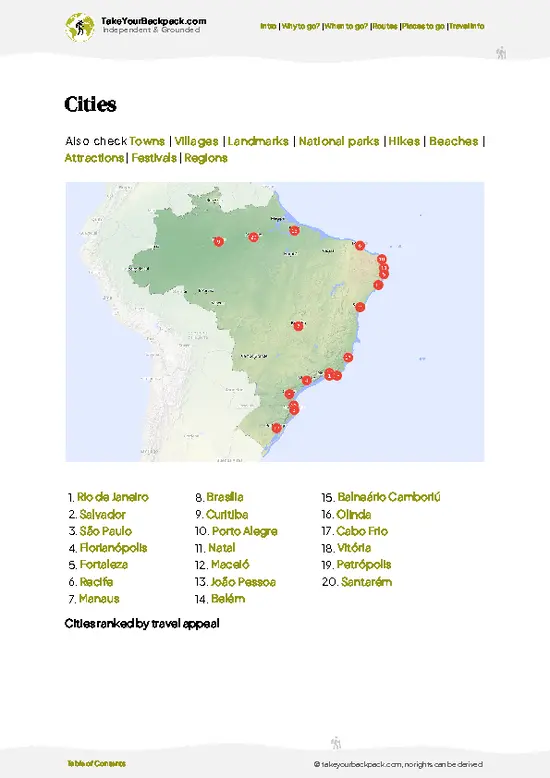
  • Curitiba—Botanical greenhouse, eye-shaped museum, tube stations, Ukrainian cabins| 339 km away
  • Rio de Janeiro—Corcovado statue, Sugarloaf cable cars, Ipanema sunsets, tiled steps| 361 km away
  • Petrópolis—Emperor's summer palace, mountain fog, iron greenhouse, aviator's house| 373 km away

💡 Not sure where to go next?
Create a personalized itinerary for Brazil including São Paulo and the places that fit your trip.

Generate my itinerary

👉 Discover all cities

Or checkout all Brazil has to offer (think cities, towns, villages, national parks, hikes, beaches, festivals)
Country photo of Brazil

We 💚 feedbackWhat to keep in mind

São Paulo’s best-kept habit is Sunday on Avenida Paulista, when the road closes to cars and fills with musicians, skaters and food carts. I would plan MASP and a long walk for that day and save the markets for weekdays. Rest assured, you will not see everything, and that is the right way to do it.

✈️ When did I visit Brazil?
Call it good timing or luck, but I was able to celebrate Carnaval in Rio de Janeiro in February 2022, after a round trip in the north and east coast.

✍️ Help improve this page!
The information on this page is based on my own backpacking experience in Brazil, supplemented with up-to-date research and feedback from other travelers. Travel details can change, so if you notice anything outdated or incomplete, feel free to let me know.


🙋‍♂️ Give feedback

👋 Meet the founderWho’s Behind Take Your Backpack?

Johan, backpacker and founder of TakeYourBackpackHi, I’m Johan (Netherlands 🇳🇱), the creator of TakeYourBackpack. Over the past 3 decades, I’ve backpacked through 90+ countries across six continents, gaining extensive experience with independent travel, long-term trips, and overland routes.

This site is built on a combination of firsthand travel experience and carefully curated insights from other backpackers. Many guides are based on places I’ve personally visited, while others bring together tips, observations, and practical advice shared by trusted travelers I’ve met along the way.

The goal is to provide realistic, experience-driven guidance — not generic itineraries — so you can explore destinations with better context, clearer expectations, and more confidence.