×

Cabo Verde🇨🇻 | regionsSalSalt crater floats, Santa Maria pier, kitesurf wind, flat desert interior | things to do and best time to go

Explore Cova-Paul-Ribeira da Torre Natural ParkExplore Santo Antão

Backpacking in Sal
🏆 Top pickregion ranked #1
By Johan Kruseman 🇳🇱 | Updated October 22, 2026

A hand-dug tunnel leads into the crater of Pedra de Lume, where rusting cable-car pylons still stand from the days when salt was lifted out to the shore. Sal sits in the northeast of Cabo Verde, a flat, treeless, wind-scoured island that is mostly known for its long beaches. The good side is obvious: warm water, steady wind for kitesurfers, turtles that nest on the sand in summer, and a salt lake you float in like a cork. The downside is just as plain. Santa Maria leans on all-inclusive resorts, the interior is dusty brown, and you will hear a lot of tout banter on the main street. Walk the pier at Santa Maria in the afternoon, when fishermen sell the catch, and you get the island as locals live it. For a first day, settle into Santa Maria, wander the pier, then wait for the late light on the beach before a grilled-fish dinner.

Discover everything you want to know in the 📖 Cabo Verde Travel Guide.


example page 0 from our offline Travel Guide for Cabo Verde
example page 1 from our offline Travel Guide for Cabo Verde
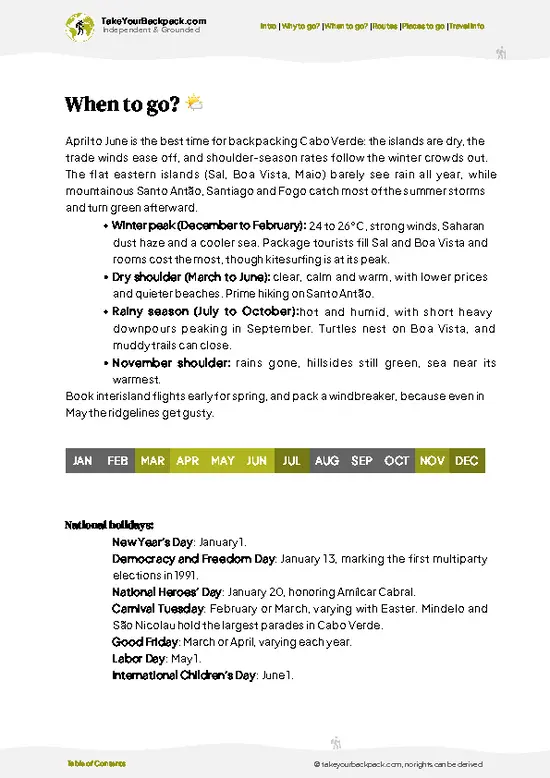
example page 2 from our offline Travel Guide for Cabo Verde
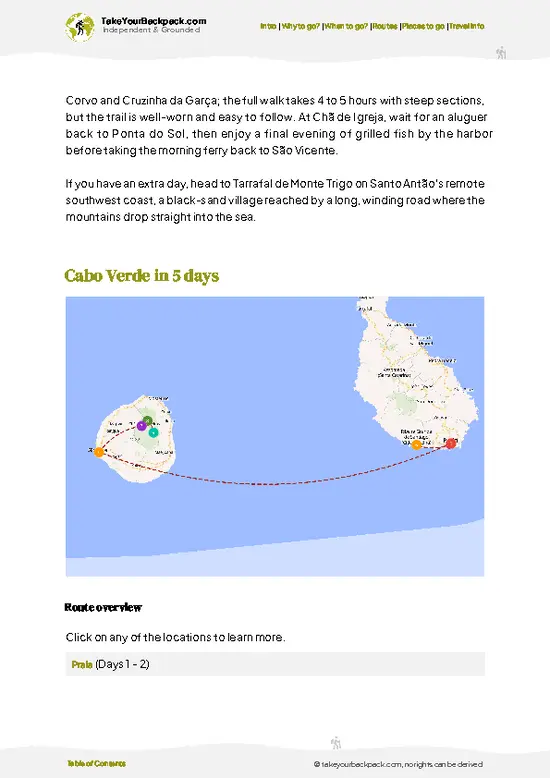
example page 3 from our offline Travel Guide for Cabo Verde
example page 4 from our offline Travel Guide for Cabo Verde
example page 5 from our offline Travel Guide for Cabo Verde
example page 6 from our offline Travel Guide for Cabo Verde
example page 7 from our offline Travel Guide for Cabo Verde
Loading the map 🌍
CLICK TO FILTER
cities
towns
villages
landmarks
national parks
hikes
beaches
attractions
festivals
regions
SHOW COUNTRY’S BESTSHOW ALL

✨ Why go?
Ranked #1 region in Cabo Verde
Why visitors keep coming back

Sal rewards backpackers who want a lot of variety without packing a bag every morning. The island is small and flat, so one base lets you swing from the Pedra de Lume salt crater to the lava pools of Buracona and the black-sand mirage flats of Terra Boa. You never need to commit to a long transfer. Shared pickups run between the capital and Santa Maria, and taxis or a rented quad cover the dirt tracks to the north and west. The other draw is the mix of landscapes. Beach days, volcanic cones like Monte Leão, and fishing ports such as Palmeira sit within a short ride of each other, which suits slow travel. Wind sports are the third reason. Kite Beach at Ponta Preta has reliable breezes and a wave break, so you can learn, rent gear, or just watch from the sand. Pair that with a quiet evening … read more 👉
Sal rewards backpackers who want a lot of variety without packing a bag every morning. The island is small and flat, so one base lets you swing from the Pedra de Lume salt crater to the lava pools of Buracona and the black-sand mirage flats of Terra Boa. You never need to commit to a long transfer. Shared pickups run between the capital and Santa Maria, and taxis or a rented quad cover the dirt tracks to the north and west. The other draw is the mix of landscapes. Beach days, volcanic cones like Monte Leão, and fishing ports such as Palmeira sit within a short ride of each other, which suits slow travel. Wind sports are the third reason. Kite Beach at Ponta Preta has reliable breezes and a wave break, so you can learn, rent gear, or just watch from the sand. Pair that with a quiet evening on the Santa Maria pier and you get a trip that feels active without being rushed.

💡 HighlightsTop highlights of Sal

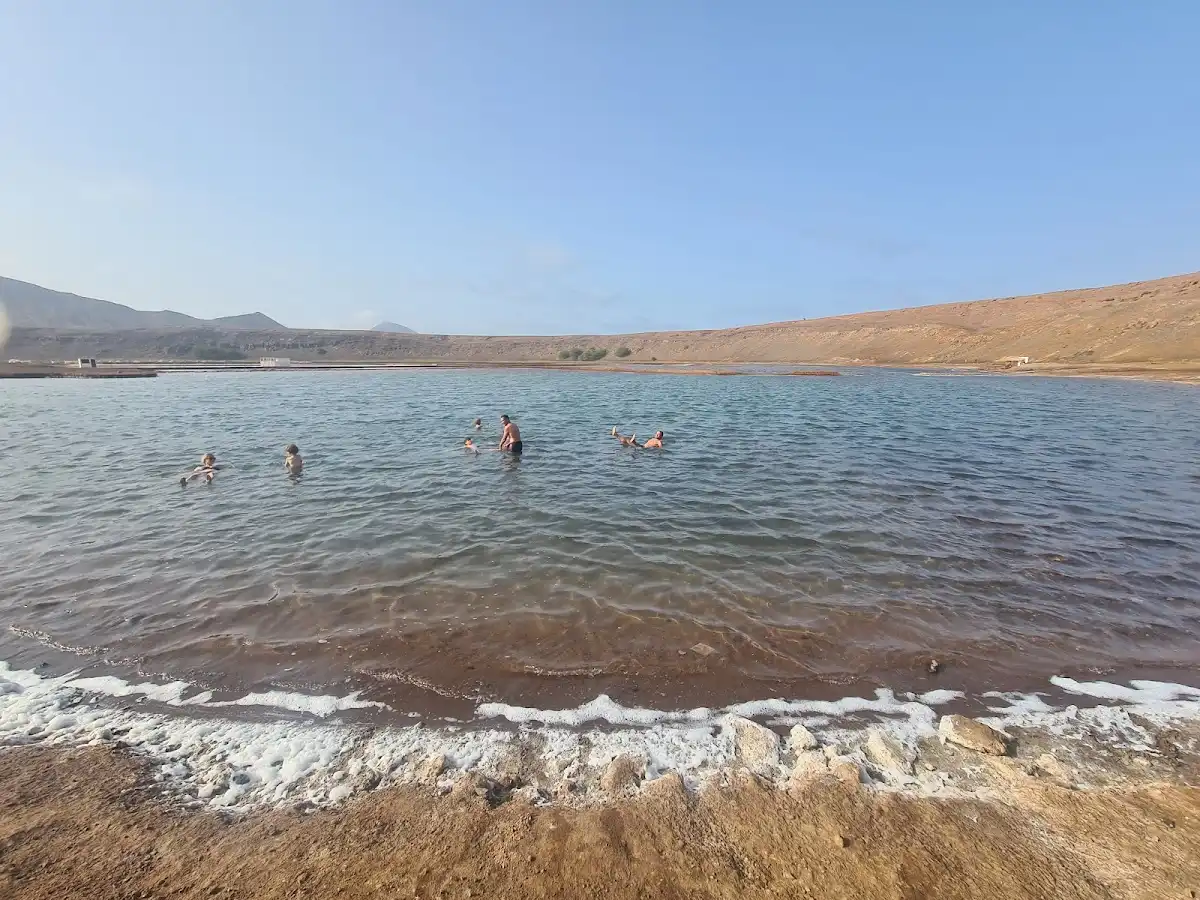
  1. Pedra de Lume Salt Crater: A volcanic crater turned saltworks, reached through a hand-dug tunnel. The brine is dense enough that you float without effort, and the old salt-loading structures still stand. There is a small entry fee, and an hour or two is enough.
  2. Santa Maria Beach and Pier: The long southern beach is soft, pale and wide, and the wooden pier at its center is where fishermen haul in the catch and kids jump off the end in the afternoon.
  3. Buracona and the Blue Eye (Olho Azul): Lava rock pools and a sea cave where midday light turns the water an intense blue. Go around noon to see it properly.
  4. Terra Boa: A flat, dark plain near the center where heat shimmer creates a mirage of a lake. It looks odd and lonely, so give it a short stop.
  5. Kite Beach, Ponta Preta: Windsurfers and kitesurfers
… read more 👉
  1. Pedra de Lume Salt Crater: A volcanic crater turned saltworks, reached through a hand-dug tunnel. The brine is dense enough that you float without effort, and the old salt-loading structures still stand. There is a small entry fee, and an hour or two is enough.
  2. Santa Maria Beach and Pier: The long southern beach is soft, pale and wide, and the wooden pier at its center is where fishermen haul in the catch and kids jump off the end in the afternoon.
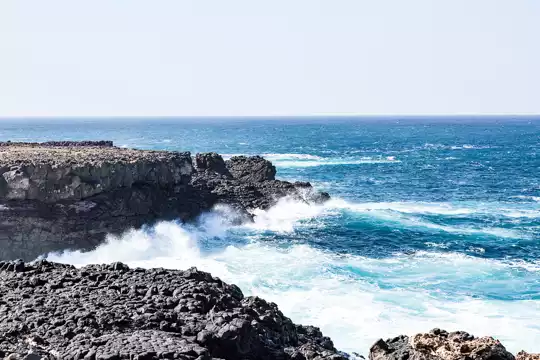
  3. Buracona and the Blue Eye (Olho Azul): Lava rock pools and a sea cave where midday light turns the water an intense blue. Go around noon to see it properly.
  4. Terra Boa: A flat, dark plain near the center where heat shimmer creates a mirage of a lake. It looks odd and lonely, so give it a short stop.
  5. Kite Beach, Ponta Preta: Windsurfers and kitesurfers use the wind and wave here, and it is a good place to watch or try a lesson.
  6. Monte Leão: An extinct volcanic cone near the west coast that you can climb for a wide view of the coastline and sea.
  7. Shark Bay (Baía da Parda): A shallow cove where lemon sharks cruise close to shore and you can snorkel with them in calm conditions.
  8. Palmeira: A small fishing port on the west coast, quieter than Santa Maria, where boats come in and locals gather at the dock.
  9. Espargos Town: The island capital is plain and workaday, with a daily market, cafés and everyday life that the resort strip lacks.
  10. Mordeira Bay: A remote stretch of coast with a cluster of low dunes and wind-bent plants, mostly visited by locals on weekends.
Sal pairs the salt crater with Shark Bay well in a single day, since both sit on the same northwest side and you can float in the morning and snorkel in the afternoon.
Spotted a mistake or missing something? Contact us.

Things to do around Sal

Ratings based on Tripadvisor reviews. When you book through this link, you support our work at no extra cost to you.

⌛️ 5 daysWhat you can realistically do in a week

Day 1: Santa Maria: Start in Santa Maria early, before the beach fills and the wind picks up, so you get your bearings on foot. The town is compact, and the pier at its center is the best place to see the island at work. Spend the afternoon on the sand and let your body adjust to the heat. Sal runs on shared pickups and taxis, so the town is the easiest place to sort out transport for the rest of the week.Day 2: Kite Beach: Head to Ponta Preta, where the wind is strongest, to watch or take a lesson. Mornings tend to be calmer, so book your session early. Return to Santa Maria in the evening, since the dirt road beyond the coast gets slow after dark.Day 3: Pedra de Lume: This is the day that justifies the whole trip. Take a taxi or rented quad to the salt crater, walk through the tunnel and … read more 👉
Day 1: Santa Maria: Start in Santa Maria early, before the beach fills and the wind picks up, so you get your bearings on foot. The town is compact, and the pier at its center is the best place to see the island at work. Spend the afternoon on the sand and let your body adjust to the heat. Sal runs on shared pickups and taxis, so the town is the easiest place to sort out transport for the rest of the week.Day 2: Kite Beach: Head to Ponta Preta, where the wind is strongest, to watch or take a lesson. Mornings tend to be calmer, so book your session early. Return to Santa Maria in the evening, since the dirt road beyond the coast gets slow after dark.Day 3: Pedra de Lume: This is the day that justifies the whole trip. Take a taxi or rented quad to the salt crater, walk through the tunnel and float in the brine, then eat nearby. The silence inside the crater, broken only by gulls and wind, feels like nowhere else in Cabo Verde. After that, stop in Espargos for lunch among locals.Day 4: Buracona and Shark Bay: Time your visit to Buracona for noon so the Blue Eye is lit. Then continue to Shark Bay for snorkeling while the water is calm. The tracks here are rough, so a driver or a sturdy quad makes the day easy.Day 5: Monte Leão: Use the last day for a detour to Monte Leão and the quiet coast around Mordeira. Climb in the morning for the view, then loop back through Palmeira for a seafood lunch before your onward flight or ferry.

🌤️ When to go?When to go for the best experience

Sal is dry almost all year, so timing comes down to wind, water temperature and your budget.
  • Winter and Early Spring (December to March): Days run 24 to 26°C (75 to 79°F), nights 18 to 20°C (64 to 68°F). Wind is strong and steady, which kitesurfers and windsurfers love at Santa Maria and Ponta Preta. Sea is cool at about 22°C (72°F). Expect the highest prices and fullest hostels around Christmas and New Year.
  • Spring Shoulder (April to May): Highs of 26 to 28°C (79 to 82°F), calmer wind and thinner crowds. Beds are easier to find and rates ease.
  • Summer and Early Autumn (June to October): Hot at 29 to 32°C (84 to 90°F), humid, with a little rain mostly in August and September. The sea reaches 26 to 28°C (79 to 82°F). Sea turtles nest and hatch on the beaches from about June to October, with nesting
… read more 👉
Sal is dry almost all year, so timing comes down to wind, water temperature and your budget.
  • Winter and Early Spring (December to March): Days run 24 to 26°C (75 to 79°F), nights 18 to 20°C (64 to 68°F). Wind is strong and steady, which kitesurfers and windsurfers love at Santa Maria and Ponta Preta. Sea is cool at about 22°C (72°F). Expect the highest prices and fullest hostels around Christmas and New Year.
  • Spring Shoulder (April to May): Highs of 26 to 28°C (79 to 82°F), calmer wind and thinner crowds. Beds are easier to find and rates ease.
  • Summer and Early Autumn (June to October): Hot at 29 to 32°C (84 to 90°F), humid, with a little rain mostly in August and September. The sea reaches 26 to 28°C (79 to 82°F). Sea turtles nest and hatch on the beaches from about June to October, with nesting at its peak in August and September, and prices are lowest. Daylight stays at roughly 11 to 13 hours all year.
  • November: Warm, mostly calm and quiet, with good rates before the winter rush.
Book Sal for late April or November if you want warm water without winter wind or winter prices.


source: climatestotravel.comJANJanuary: highly recommended for travelingFEBFebruary: highly recommended for travelingMARMarch: highly recommended for travelingAPRApril: excellent for travelingMAYMay: excellent for travelingJUNJune: excellent for travelingJULJuly: highly recommended for travelingAUGAugust: fair for travelingSEPSeptember: fair for travelingOCTOctober: good for travelingNOVNovember: excellent for travelingDECDecember: highly recommended for traveling
cabo-verde-region-sal v1
© Google |

✈️ The backpacker research shortcutCabo Verde Travel Guide

An offline-friendly backpacking guide with optimized travel routes, ranked highlights, transport advice, and the best areas to stay.
example page 0 from our offline Travel Guide for Cabo Verde
example page 1 from our offline Travel Guide for Cabo Verde
example page 2 from our offline Travel Guide for Cabo Verde
example page 3 from our offline Travel Guide for Cabo Verde
example page 4 from our offline Travel Guide for Cabo Verde
example page 5 from our offline Travel Guide for Cabo Verde
example page 6 from our offline Travel Guide for Cabo Verde
example page 7 from our offline Travel Guide for Cabo Verde
The digital guide (234 pages) contains:
✅ 57 highlights, ranked by travel appeal
✅ Optimized 2, 3 & 5-day travel routes
✅ Cities, national parks, landmarks, beaches
✅ How to get around
✅ Offline-friendly for travel without Wi-Fi
👉 Click to see all 30+ guide features

📅 Plan smarter in minutes, not weeks
✅ Month by month travel advice
✅ Festivals & national holidays
✅ Budget expectations

🗺️ Go to the right places, skip the overrated ones
✅ Honest pros & cons of destinations
✅ Top hikes, parks & viewpoints
✅ Lesser-known places most travelers miss
✅ Clear “worth it vs skip it” guidance

🛏️ Travel smoothly without rookie mistakes
✅ Best areas to stay
✅ Transport systems explained simply
✅ Common scams & safety advice
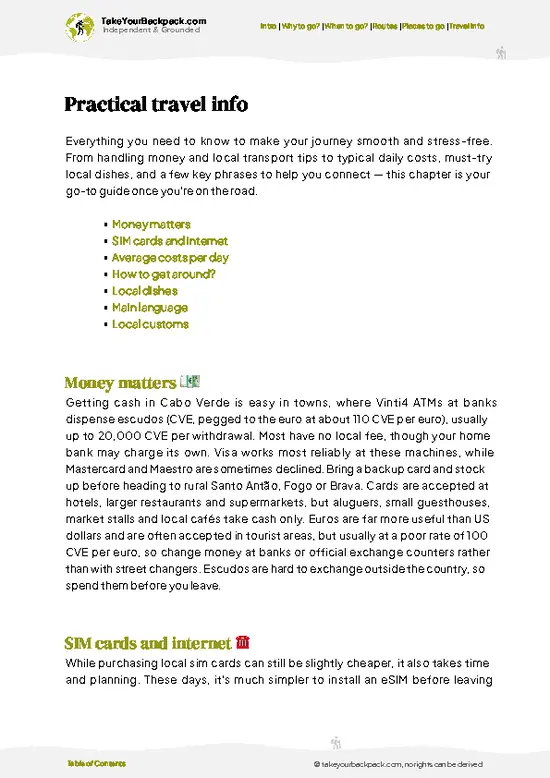
✅ SIM cards, money & practical tips

🌍 Understand the country, not just visit it
✅ Culture & traditions
✅ 52 Essential phrases & customs
✅ Festivals worth planning around
✅ Traveler-friendly historical context
✅ Insights that make places more meaningful

📱 Built for real travel conditions
✅ Fully downloadable PDF
✅ Works completely offline
✅ Optimized for phone use
✅ Useful in remote areas & buses
✅ Everything in one place
Stop searching, start planning
Get instant access to your full guide. 30‑day money-back guarantee.
+ Add another guide for just

By proceeding you agree to our terms.
Sent to your inbox immediately after payment • 100% Secure Checkout
Best Backpacking Travel Advisor 2025 tourism awardBest Backpacking
Travel Advisor
2025
What others say about Take Your Backpack Guides:
⭐⭐⭐⭐⭐
Fantastic, amazing amount of information!
⭐⭐⭐⭐⭐
My goodness this is amazing, it's what I've been looking for hats off too you!
⭐⭐⭐⭐⭐
I think this is absolutely BRILLIANT
⭐⭐⭐⭐
Very complete and informative. It's still missing places, but I gotta to commend you
⭐⭐⭐⭐⭐
This is truly amazing, thank you, can't wait to explore it with my kids!
⭐⭐⭐⭐⭐
Awesome resource, thank you!
⭐⭐⭐⭐⭐
This is amazing! Can't wait to explore the ones I haven't seen
⭐⭐⭐⭐
I love this! Well done, great idea.
⭐⭐⭐⭐⭐
Thanks for taking the time to make this gem!
⭐⭐⭐⭐⭐
This might be the best website I've ever seen.
⭐⭐⭐⭐⭐
Congratulations, and thank you so much for your work; it's incredibly valuable.
⭐⭐⭐⭐
In all seriousness I think you did a great job pointing out the important spots
⭐⭐⭐⭐⭐
10/10 very good
⭐⭐⭐⭐⭐
As someone who's only just starting to visit regularly this is awesome, thank you.
⭐⭐⭐⭐
Thank you very much! I'm going to visit my dad, it's going to be very useful!
⭐⭐⭐⭐⭐
This is really cool! We'll be travelling for the first time and this definitely come in handy.
⭐⭐⭐⭐⭐
You are now our minister of culture, congratulations 👨‍💼
⭐⭐⭐⭐⭐
Just wanted to tell you that this is a pearl! Going to follow your recommendations.
⭐⭐⭐⭐⭐
This is so cool. I'll definitely be using the resource for my travels soon.
⭐⭐⭐⭐⭐
This is very impressive! Good work.
⭐⭐⭐⭐⭐
This is an amazing and informative site. Very well done!

🛏️ Where to stay?Choosing the right base

Santa Maria is the place to stay on Sal, since it holds nearly all the island’s hostels, guesthouses, bars and restaurants, and everything is within walking distance. Dorm beds usually cost about €15 to 25 a night, private rooms €35 to 60, with prices climbing around Christmas and New Year.
The town is compact and relaxed. Streets near the pier fill in the evening with live funaná and morna, and solo travelers have no trouble meeting people on the beach, at the kite schools or on group excursions. Walking around after dark is generally fine, though keep valuables out of sight on the sand and watch … read more 👉
Santa Maria is the place to stay on Sal, since it holds nearly all the island’s hostels, guesthouses, bars and restaurants, and everything is within walking distance. Dorm beds usually cost about €15 to 25 a night, private rooms €35 to 60, with prices climbing around Christmas and New Year.
The town is compact and relaxed. Streets near the pier fill in the evening with live funaná and morna, and solo travelers have no trouble meeting people on the beach, at the kite schools or on group excursions. Walking around after dark is generally fine, though keep valuables out of sight on the sand and watch your bag in crowded bars.
The quieter streets a few blocks back from the sea suit light sleepers, while rooms near the pier put you close to the music and the fishing boats. Kitesurfers often prefer the western edge of town, nearer the wind-swept stretch of beach.
Espargos, the island’s administrative center, is cheaper and more local, and the airport is only a few minutes away. It has little going on at night, so it works for a late arrival or early flight rather than a longer stay.
Palmeira, a small port village, is occasionally used for a quiet night, but it has very little accommodation and almost no nightlife. Most backpackers simply stay in Santa Maria and make day trips from there.

🚌 Getting aroundGetting around like a local

Sal runs on aluguer minibuses and shared taxis, and a ride between Espargos and Santa Maria costs about €1.50 to 2 per person, paid in cash to the driver in escudos or sometimes euros, so carry small coins. The island is flat, small (about 30 km long) and easy, though schedules are loose and vehicles leave when full.
  • Aluguer minibus: The cheapest way between Santa Maria and Espargos, roughly 25 to 30 minutes. They run from early morning to early evening and fill fast near the airport. Squeeze in beside locals and you get free commentary on where to eat that night.
  • Shared taxi: Wave one down in Santa Maria and agree on the price before you climb in. A trip to Espargos or the airport is around €8 to 12 for the whole car, and splitting it with hostel mates makes it cheaper than the bus. You arrive
… read more 👉
Sal runs on aluguer minibuses and shared taxis, and a ride between Espargos and Santa Maria costs about €1.50 to 2 per person, paid in cash to the driver in escudos or sometimes euros, so carry small coins. The island is flat, small (about 30 km long) and easy, though schedules are loose and vehicles leave when full.
  • Aluguer minibus: The cheapest way between Santa Maria and Espargos, roughly 25 to 30 minutes. They run from early morning to early evening and fill fast near the airport. Squeeze in beside locals and you get free commentary on where to eat that night.
  • Shared taxi: Wave one down in Santa Maria and agree on the price before you climb in. A trip to Espargos or the airport is around €8 to 12 for the whole car, and splitting it with hostel mates makes it cheaper than the bus. You arrive with your bags and your sanity intact.
  • Private taxi tour: A half-day circuit to Pedra de Lume salt crater, Buracona’s Blue Eye and Shark Bay costs roughly €45 to 70 for the car. Go for the late-afternoon slot, when the light hits the Blue Eye and the dusty roads quiet down.
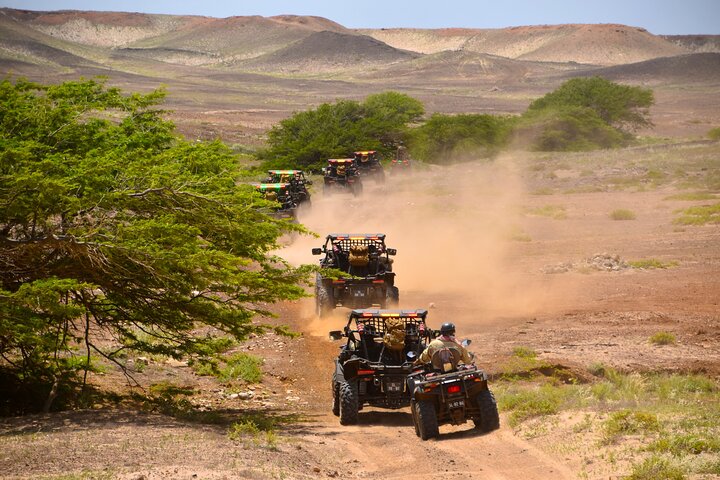
  • Quad, scooter or bike rental: Quads cost about €45 to 70 a day, bicycles €10 to 15. Tracks north are sandy and washboarded, and the wind pushes back on the way home. You get the empty coast of Ponta Preta and Murdeira all to yourself.
  • Walking: Santa Maria’s center and the long beach are fully walkable. The pier at sunrise, with fishermen unloading their catch, is a lovely morning stroll.
Start day trips early and ask your driver for a return pickup time, since taxis in the north are scarce after mid-afternoon.

🍲 FoodLocal Flavors for Backpackers

Sal’s food is built on fresh Atlantic fish, and the local classic is cachupa, a slow-cooked stew of hominy corn, beans and pork or fish. Order it cachupa rica at lunch, then ask for the leftovers fried with an egg for breakfast, called cachupa frita. Grilled wahoo, tuna and lobster come off the pier-side grills with a squeeze of lime and a smoky char, usually served with rice and fried plantain.
Snack on pastel, a crisp fried pastry stuffed with tuna, and xerém, a corn porridge. For a drink, grogue, a raw sugarcane spirit, comes neat or mixed as ponche with honey and lime. Cold Strela beer is the usual choice on the beach.
Eating is casual. Pier-side stalls and small family restaurants in Santa Maria serve a plate of the day for about €6 to 10, while grilled lobster costs more. Bakeries sell … read more 👉
Sal’s food is built on fresh Atlantic fish, and the local classic is cachupa, a slow-cooked stew of hominy corn, beans and pork or fish. Order it cachupa rica at lunch, then ask for the leftovers fried with an egg for breakfast, called cachupa frita. Grilled wahoo, tuna and lobster come off the pier-side grills with a squeeze of lime and a smoky char, usually served with rice and fried plantain.
Snack on pastel, a crisp fried pastry stuffed with tuna, and xerém, a corn porridge. For a drink, grogue, a raw sugarcane spirit, comes neat or mixed as ponche with honey and lime. Cold Strela beer is the usual choice on the beach.
Eating is casual. Pier-side stalls and small family restaurants in Santa Maria serve a plate of the day for about €6 to 10, while grilled lobster costs more. Bakeries sell fresh bread and coffee for under €2, and supermarkets stock budget picnic food.
Meals arrive slowly, and nobody hurries you to leave. Say bom apetite when joining a table, and expect to ask for the bill, since it will not come on its own. Tips of around 10 percent are appreciated. Evening live music often pairs with dinner, so linger over a final ponche.

FAQCommon questions from travelers

Three to five days is enough for Sal, and five if you want to kitesurf or dive. Santa Maria’s beaches fill a day or two, while a taxi loop to Pedra de Lume salt crater, the Blue Eye at Buracona and Shark Bay takes half a day. Many travelers combine Sal with a short flight or ferry to Boa Vista or São Vicente.
Taxis and aluguer minibuses cover Sal without a car. A shared minibus between Santa Maria and Espargos costs about €1.50 to 2 and takes 25 to 30 minutes, while a taxi to the airport is around €8 to 12. For sights in the north, hire a taxi for a half day at roughly €45 to 70, or rent a bicycle for about €10 to 15 a day.
Sal is known for its long white sand beaches, steady winds that draw kitesurfers and windsurfers, and the salt crater at Pedra de Lume, where you can float in dense brine for around €4 to 5 entry. Santa Maria is the main base, with live morna and funaná in the evenings. Loggerhead turtles nest on the beaches from about June to October, and the Blue Eye at Buracona is a popular sunset stop.
⚠️ Things can change over time, so always validate details locally before you go.

Other Cape Verdean regions near Sal

Explore more nearby:

  • Santiago—mountain villages, local markets, independence history, agricultural valleys| 192 km away
  • São Vicente—harbor city, music venues, colonial squares, dry plains| 219 km away
  • Santo Antão—green canyons, cliffside trails, remote hamlets, terraced hills| 241 km away

💡 Not sure where to go next?
Create a personalized itinerary for Cabo Verde including Sal and the places that fit your trip.

Generate my itinerary

👉 Discover all regions

Or checkout all Cabo Verde has to offer (think cities, towns, villages, national parks, hikes, beaches, festivals)
Country photo of Cabo Verde

We 💚 feedbackSumming up the experience

Sal looks bare from the airport, and many first-timers write it off before leaving the resort strip. Look instead at the fishing pier in Santa Maria late in the afternoon, when boats land and the fish is sold on the spot. I would eat there at least once, and skip the stand-alone beach lunch deals. Bring a windbreaker, because the breeze never really stops.

✍️ Help improve this page!
The information on this page is based on in-depth research, insights shared by experienced travelers, and feedback from the local travel community in Cabo Verde. While every effort is made to keep the information accurate and current, conditions can change — so if you spot anything incorrect or outdated, please get in touch.


🙋‍♂️ Give feedback

👋 Meet the founderWho’s Behind Take Your Backpack?

Johan, backpacker and founder of TakeYourBackpackHi, I’m Johan (Netherlands 🇳🇱), the creator of TakeYourBackpack. Over the past 3 decades, I’ve backpacked through 90+ countries across six continents, gaining extensive experience with independent travel, long-term trips, and overland routes.

This site is built on a combination of firsthand travel experience and carefully curated insights from other backpackers. Many guides are based on places I’ve personally visited, while others bring together tips, observations, and practical advice shared by trusted travelers I’ve met along the way.

The goal is to provide realistic, experience-driven guidance — not generic itineraries — so you can explore destinations with better context, clearer expectations, and more confidence.