×

Cambodia🇰🇭 | landmarksAngkor Boreiarchaeological mounds, ancient canal, pre-Angkor ruins | things to do and best time to go

Explore SamraongExplore Angkor Wat

Backpacking in Angkor Borei
👌 Worth visitingunique site ranked #6
By Johan Kruseman 🇳🇱 | Updated May 30, 2026

Your sandals crunch on broken pottery as a warm, muddy breeze comes off the canal, and somewhere behind you a radio hisses old Khmer pop through blown-out speakers. A kid pedals past with a basket of fish, not caring that you’re standing on what used to be a capital of an ancient kingdom. This is Angkor Borei, tucked in Cambodia’s far south near the Vietnam border, a quiet archaeological zone reached from Takeo by road or longtail boat. As a backpacker destination, it’s low on instant wow and high on slow-burn significance: no towering Angkor-style temples, just moats, mounds, a small museum, and the feeling you’ve slipped behind the curtain. It’s cheap, uncrowded, and culturally dense, but transport can be awkward, English is limited, and the photo payoff is subtle—more “field notes of empire” than postcard showstopper.

Discover everything you want to know in the 📖 Cambodia Travel Guide.


Get your Cambodia guide
90 ranked highlights, routes & tips, works offline (345 pages)
Loading the map 🌍
CLICK TO FILTER
cities
towns
villages
landmarks
national parks
hikes
beaches
attractions
festivals
regions
SHOW COUNTRY’S BESTSHOW ALL

✨ Why go?
Ranked #6 unique site in Cambodia
The unique appeal for travelers

Angkor Borei isn’t just another stop on the tourist trail; it’s a raw slice of history that often gets overshadowed by its flashier neighbors. Yes, the crowds flock to Angkor Wat, but here, you’ll find authenticity without the selfie sticks. This ancient site is where the Khmer Empire began, and it’s packed with archaeological treasures that tell stories of a civilization long gone.

The cost? Minimal. You can explore the ruins and local villages without breaking the bank. Plus, it’s conveniently located near Takeo, making it a perfect addition to your route if you’re heading south toward the coast or Siem Reap.

What truly sets Angkor Borei apart is its tranquility. You can wander through the remnants of temples and soak in the atmosphere without feeling rushed. It’s a chance to connect … read more 👉
Angkor Borei isn’t just another stop on the tourist trail; it’s a raw slice of history that often gets overshadowed by its flashier neighbors. Yes, the crowds flock to Angkor Wat, but here, you’ll find authenticity without the selfie sticks. This ancient site is where the Khmer Empire began, and it’s packed with archaeological treasures that tell stories of a civilization long gone.

The cost? Minimal. You can explore the ruins and local villages without breaking the bank. Plus, it’s conveniently located near Takeo, making it a perfect addition to your route if you’re heading south toward the coast or Siem Reap.

What truly sets Angkor Borei apart is its tranquility. You can wander through the remnants of temples and soak in the atmosphere without feeling rushed. It’s a chance to connect with the local culture and see how history shapes life today. Don’t skip this gem; it’s where the real magic of Cambodia unfolds.
Want to include Angkor Borei in your Cambodia route?
Create a personalized Cambodia itinerary that includes Angkor Borei and the places that fit your trip — based on your travel style, budget, and available time. Get your route in seconds.

Generate my trip

💡 HighlightsThe experiences that define the visit

  • The moated citadel and earthen embankments — Walk the low, grassy ramparts that once marked the town’s defensive and ceremonial core; they still show the scale of early urban planning here and give a surprising, open view over fields and waterways that helps you picture life a thousand years ago.
  • Brick mounds and temple ruins — Scattered piles of carved and plain brick reveal pre-Angkorian building methods; the weathered brickwork is tactile and intimate in a way big stone temples aren’t, so you can really see construction details up close.
  • The ancient canal network and a boat ride — Angkor Borei sits on an old water-management grid. Jump in a local boat to glide past embankments and flooded rice paddies and understand why waterways were the lifeblood of this settlement.
  • Angkor Borei
read more 👉
  • The moated citadel and earthen embankments — Walk the low, grassy ramparts that once marked the town’s defensive and ceremonial core; they still show the scale of early urban planning here and give a surprising, open view over fields and waterways that helps you picture life a thousand years ago.
  • Brick mounds and temple ruins — Scattered piles of carved and plain brick reveal pre-Angkorian building methods; the weathered brickwork is tactile and intimate in a way big stone temples aren’t, so you can really see construction details up close.
  • The ancient canal network and a boat ride — Angkor Borei sits on an old water-management grid. Jump in a local boat to glide past embankments and flooded rice paddies and understand why waterways were the lifeblood of this settlement.
  • Angkor Borei Museum — Small but sharp: ceramics, beads, and stone fragments pulled from local digs explain who lived here and how they traded. It’s the context you need after roaming the ruins.
  • Archaeological trenches and tells — Ongoing digs and exposed stratigraphy let you see layers of occupation stacked up through centuries; it’s a rare chance to watch archaeology in action and imagine the site’s slow build-up.
  • Living village life and continuity — The village around the site is active and unchanged in many ways: farmers, boatmen, and craftsmen keep local traditions alive. It’s a good spot to glimpse modern Cambodian rural life connected to ancient roots.
  • Wetland birding and sunsets — The low-lying landscape floods seasonally and attracts birds; evenings here are quiet and wide, with great light for photos and a peaceful sunset that contrasts sharply with the busier Angkor circuit.
Spotted a mistake or missing something? Contact us.

Things to do near Angkor Borei

Ratings based on Tripadvisor reviews. When you book through this link, you support our work at no extra cost to you.

🌤️ When to go?Weather, crowds, and seasonal trade-offs


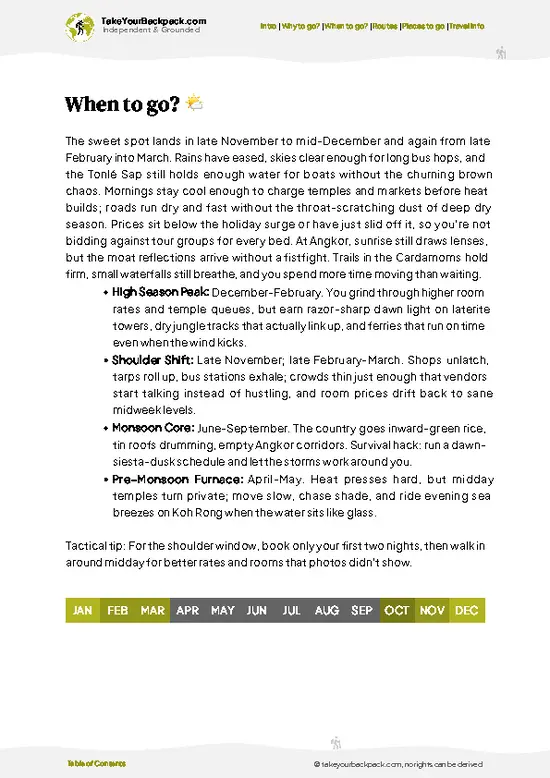
  • Weather: The dry season from November to February is your best bet—less mud, fewer mosquitoes, and clearer skies. The wet season (May to October) turns the site into a slippery mess, but the landscape is lush if you don’t mind the rain.

  • Temperature: Expect highs around 30-35°C (86-95°F) in the dry months, which is hot but manageable early morning or late afternoon. The wet season cools things down slightly but brings humidity that can sap your energy fast.

  • Daylight Hours: Cambodia enjoys roughly 11-12 hours of daylight year-round. Sunrise is around 6 AM, so starting early is key to beating the heat and crowds.

  • Crowds: Angkor Borei isn’t overrun like Angkor Wat, but weekends and holidays see a spike in local visitors. Weekdays in the dry season offer a quieter, more contemplative experience.
read more 👉

  • Weather: The dry season from November to February is your best bet—less mud, fewer mosquitoes, and clearer skies. The wet season (May to October) turns the site into a slippery mess, but the landscape is lush if you don’t mind the rain.

  • Temperature: Expect highs around 30-35°C (86-95°F) in the dry months, which is hot but manageable early morning or late afternoon. The wet season cools things down slightly but brings humidity that can sap your energy fast.

  • Daylight Hours: Cambodia enjoys roughly 11-12 hours of daylight year-round. Sunrise is around 6 AM, so starting early is key to beating the heat and crowds.

  • Crowds: Angkor Borei isn’t overrun like Angkor Wat, but weekends and holidays see a spike in local visitors. Weekdays in the dry season offer a quieter, more contemplative experience.

  • Seasonal Activities: The dry season aligns with local festivals and boat races on the nearby Tonle Sap, adding cultural depth to your visit. The wet season’s flooding transforms the landscape but limits access to some areas.

  • Price Fluctuations: Accommodation and transport costs rise during the dry season’s peak tourist months. Off-season offers better deals but expect some services to be less reliable or closed.


Pro-tip: Aim for late November to early December—cooler mornings, manageable crowds, and a chance to catch local life in full swing without the tourist circus.


source: climatestotravel.comJANJanuary: excellent for travelingFEBFebruary: excellent for travelingMARMarch: highly recommended for travelingAPRApril: good for travelingMAYMay: fair for travelingJUNJune: fair for travelingJULJuly: fair for travelingAUGAugust: fair for travelingSEPSeptember: fair for travelingOCTOctober: fair for travelingNOVNovember: excellent for travelingDECDecember: excellent for traveling
when-to-go

✈️ The backpacker research shortcutCambodia Travel Guide

An offline-friendly backpacking guide with optimized travel routes, ranked highlights, transport advice, and the best areas to stay.
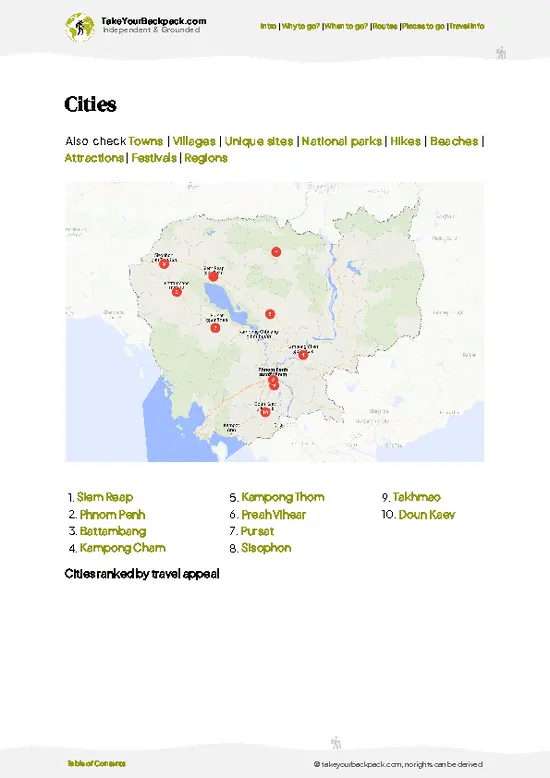
example page 0 from our offline Travel Guide for Cambodiaexample page 1 from our offline Travel Guide for Cambodiaexample page 2 from our offline Travel Guide for Cambodiaexample page 3 from our offline Travel Guide for Cambodiaexample page 4 from our offline Travel Guide for Cambodiaexample page 5 from our offline Travel Guide for Cambodiaexample page 6 from our offline Travel Guide for Cambodiaexample page 7 from our offline Travel Guide for Cambodia
The digital guide (345 pages) contains:
90 highlights, ranked by travel appeal
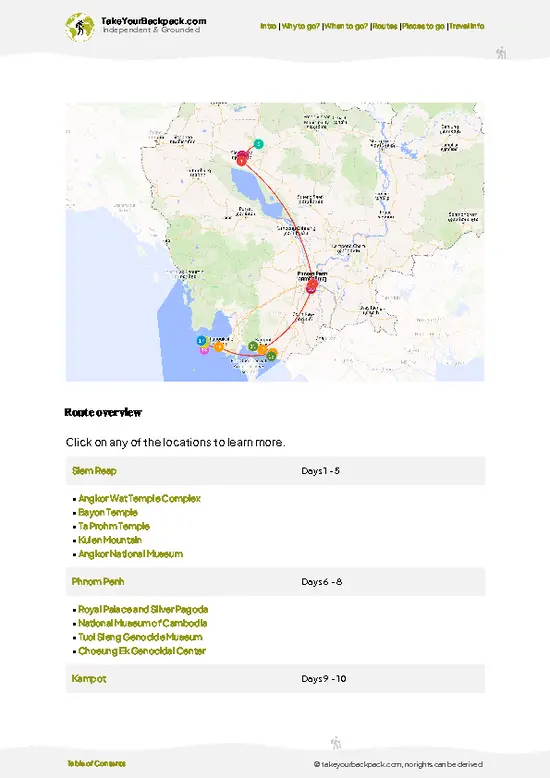
Optimized 5, 10 & 15-day travel routes
Cities, national parks, landmarks, beaches
How to get around
Offline-friendly for travel without Wi-Fi
👉 Click to see all 30+ guide features

📅 Plan smarter in minutes, not weeks
Month by month travel advice
Festivals & national holidays
Budget expectations

🗺️ Go to the right places, skip the overrated ones
Honest pros & cons of destinations
Top hikes, parks & viewpoints
Lesser-known places most travelers miss
Clear “worth it vs skip it” guidance

🛏️ Travel smoothly without rookie mistakes
Best areas to stay
Transport systems explained simply
Common scams & safety advice
SIM cards, money & practical tips

🌍 Understand the country, not just visit it
Culture & traditions
52 Essential phrases & customs
Festivals worth planning around
Traveler-friendly historical context
Insights that make places more meaningful

📱 Built for real travel conditions
Fully downloadable PDF
Works completely offline
Optimized for phone use
Useful in remote areas & buses
Everything in one place
Save weeks of stressful planning
Get instant access to your full guide. 30‑day money-back guarantee.


By proceeding you agree to our terms.
Sent to your inbox immediately after payment • 100% Secure Checkout
Best Backpacking Travel Advisor 2025 tourism awardBest Backpacking
Travel Advisor
2025
What others say about Take Your Backpack Guides:
⭐⭐⭐⭐⭐
Fantastic, amazing amount of information!
⭐⭐⭐⭐⭐
My goodness this is amazing, it's what I've been looking for hats off too you!
⭐⭐⭐⭐⭐
I think this is absolutely BRILLIANT
⭐⭐⭐⭐
Very complete and informative. It's still missing places, but I gotta to commend you
⭐⭐⭐⭐⭐
This is truly amazing, thank you, can't wait to explore it with my kids!
⭐⭐⭐⭐⭐
Awesome resource, thank you!
⭐⭐⭐⭐⭐
This is amazing! Can't wait to explore the ones I haven't seen
⭐⭐⭐⭐
I love this! Well done, great idea.
⭐⭐⭐⭐⭐
Thanks for taking the time to make this gem!
⭐⭐⭐⭐⭐
This might be the best website I've ever seen.
⭐⭐⭐⭐⭐
Congratulations, and thank you so much for your work; it's incredibly valuable.
⭐⭐⭐⭐
In all seriousness I think you did a great job pointing out the important spots
⭐⭐⭐⭐⭐
10/10 very good
⭐⭐⭐⭐⭐
As someone who's only just starting to visit regularly this is awesome, thank you.
⭐⭐⭐⭐
Thank you very much! I'm going to visit my dad, it's going to be very useful!
⭐⭐⭐⭐⭐
This is really cool! We'll be travelling for the first time and this definitely come in handy.
⭐⭐⭐⭐⭐
You are now our minister of culture, congratulations 👨‍💼
⭐⭐⭐⭐⭐
Just wanted to tell you that this is a pearl! Going to follow your recommendations.
⭐⭐⭐⭐⭐
This is so cool. I'll definitely be using the resource for my travels soon.
⭐⭐⭐⭐⭐
This is very impressive! Good work.
⭐⭐⭐⭐⭐
This is an amazing and informative site. Very well done!

🛏️ Where to stay?Best areas to stay in Cambodia

Stay close to Angkor Borei, and you’ll find a mix of local charm and backpacker camaraderie. The area around the village itself is your best bet. It’s not overrun with tourists, which means you can soak in the authentic vibe.

Look for guesthouses that cater to budget travelers. They often have communal spaces where you can swap stories with fellow adventurers. The locals are friendly, and you’ll find plenty of opportunities to dive into Cambodian culture—think street food stalls and small markets.

Another option is to base yourself in nearby Takeo. It’s a short ride from Angkor Borei and offers … read more 👉
Stay close to Angkor Borei, and you’ll find a mix of local charm and backpacker camaraderie. The area around the village itself is your best bet. It’s not overrun with tourists, which means you can soak in the authentic vibe.

Look for guesthouses that cater to budget travelers. They often have communal spaces where you can swap stories with fellow adventurers. The locals are friendly, and you’ll find plenty of opportunities to dive into Cambodian culture—think street food stalls and small markets.

Another option is to base yourself in nearby Takeo. It’s a short ride from Angkor Borei and offers a few more amenities while still keeping that laid-back feel. You’ll find a mix of budget accommodations and a chance to connect with other solo travelers.

Safety is generally good, but stick to well-lit areas at night. Embrace the simplicity of the surroundings; it’s the perfect backdrop for exploring the ancient ruins without the Instagram hype. The real magic lies in the stories you’ll gather along the way.

👛 Costs (as of 12 March 2025)Travel costs and budget guide for Angkor Borei

Visiting Angkor Borei in Cambodia can be a rewarding experience, but it’s essential to know what to expect in terms of costs. Here’s the breakdown:
  • Entrance Fees: The entrance fee for Angkor Borei is typically around $5 to $10 USD. This is a small price for access to a site rich in history and culture. Keep in mind that this fee might not include guided tours or additional attractions in the area.
  • Transportation: Getting to Angkor Borei can vary. A tuk-tuk ride from nearby towns like Takeo can cost between $10 to $15 USD for a round trip. If you’re coming from Phnom Penh, expect to pay around $30 to $50 USD for a private taxi. Public transport is cheaper but less convenient.
  • Food and Drink: Local eateries offer meals for as low as $2 to $5 USD. If you’re looking for something more upscale, expect
read more 👉
Visiting Angkor Borei in Cambodia can be a rewarding experience, but it’s essential to know what to expect in terms of costs. Here’s the breakdown:
  • Entrance Fees: The entrance fee for Angkor Borei is typically around $5 to $10 USD. This is a small price for access to a site rich in history and culture. Keep in mind that this fee might not include guided tours or additional attractions in the area.
  • Transportation: Getting to Angkor Borei can vary. A tuk-tuk ride from nearby towns like Takeo can cost between $10 to $15 USD for a round trip. If you’re coming from Phnom Penh, expect to pay around $30 to $50 USD for a private taxi. Public transport is cheaper but less convenient.
  • Food and Drink: Local eateries offer meals for as low as $2 to $5 USD. If you’re looking for something more upscale, expect to pay around $10 to $20 USD for a meal at a nicer restaurant. Bottled water is usually around $0.50 USD, so stay hydrated without breaking the bank.
  • Guided Tours: Hiring a local guide can enhance your experience significantly. Prices range from $15 to $30 USD for a half-day tour. This investment can provide insights that you won’t get from guidebooks or signs.
  • Accommodation: Options vary widely. Budget hostels can be found for $5 to $15 USD per night, while mid-range hotels typically charge between $20 to $50 USD. For a more luxurious stay, expect to pay upwards of $100 USD.

Understanding these costs helps you plan better and enjoy the real magic of Angkor Borei without any surprises.


source: tourismcambodia.org
⚠️ Prices can change and everyone travels differently, so take this as a rough guide. Hope it helps you plan your adventure!

Other Cambodian landmarks near Angkor Borei

Explore more nearby:


💡 Not sure where to go next?
Create a personalized itinerary for Cambodia including Angkor Borei and the places that fit your trip.

Generate my itinerary

👉 Discover all landmarks

Or checkout all Cambodia has to offer (think cities, towns, villages, national parks, hikes, beaches, festivals)
Country photo of Cambodia

We 💚 feedbackSumming up the experience

Angkor Borei isn’t the Instagram darling you might expect. Crowds? Minimal. Costs? Refreshingly low. The real magic lies in the raw, unpolished vibe. Stroll through the village, and you’ll catch locals crafting pottery or fishing in the Mekong. The best surprise? The ancient temple ruins, often overlooked, whisper stories of a time long past. Just a heads-up: bring bug spray. The mosquitoes can be relentless. Embrace the authenticity, and you’ll leave with a piece of Cambodia in your heart.

✍️ Help improve this page!
The information on this page is based on in-depth research, insights shared by experienced travelers, and feedback from the local travel community in Cambodia. While every effort is made to keep the information accurate and current, conditions can change — so if you spot anything incorrect or outdated, please get in touch.


🙋‍♂️ Give feedback

👋 Meet the founderWho’s Behind Take Your Backpack?

Johan, backpacker and founder of TakeYourBackpackHi, I’m Johan (Netherlands 🇳🇱), the creator of TakeYourBackpack. Over the past decade, I’ve backpacked through 80+ countries across six continents, gaining extensive experience with independent travel, long-term trips, and overland routes.

This site is built on a combination of firsthand travel experience and carefully curated insights from other backpackers. Many guides are based on places I’ve personally visited, while others bring together tips, observations, and practical advice shared by trusted travelers I’ve met along the way.

The goal is to provide realistic, experience-driven guidance — not generic itineraries — so you can explore destinations with better context, clearer expectations, and more confidence.

Get full Cambodia guide •
Instant download • 90 highlights • Full Offline guide