×

Cambodia🇰🇭 | best landmarksBest 7 landmarks in Cambodia

In Cambodia, unique sites pulse with cultural, historical, and natural significance, each offering a distinct experience that shapes your journey. From the ancient temples of Angkor Wat to the serene landscapes of the Cardamom Mountains, these sites vary in scale and accessibility, impacting your backpacking adventure.

Consider the regional nuances: the bustling crowds at Siem Reap contrast sharply with the tranquil beauty of rural villages. Seasonal factors, like the monsoon rains, can affect accessibility and vibe. Choosing the right site not only influences your budget but also your level of cultural immersion and safety. Dive into Cambodia’s rich tapestry, and let each unique site guide your exploration.

By Johan Kruseman 🇳🇱 | Updated June 10, 2026
Explore the best national parks in Cambodia

Why go?Why These unique site Stand Out

Cambodia’s unique sites matter because they serve as profound windows into a rich tapestry of cultural heritage and historical significance. Unlike many countries, Cambodia’s landscape is punctuated by remnants of the Khmer Empire, which flourished from the 9th to the 15th centuries. This legacy is not just about ancient temples; it’s about understanding a civilization that mastered architecture, art, and agriculture in a way that still resonates today.

However, the journey to these sites often comes with trade-offs. Accessibility can be challenging; some locations are remote, requiring time and effort to reach. This can deter casual tourists but rewards those who venture deeper with a more immersive experience. The climatic conditions also play a role, with the monsoon season creating muddy … read more 👉
Cambodia’s unique sites matter because they serve as profound windows into a rich tapestry of cultural heritage and historical significance. Unlike many countries, Cambodia’s landscape is punctuated by remnants of the Khmer Empire, which flourished from the 9th to the 15th centuries. This legacy is not just about ancient temples; it’s about understanding a civilization that mastered architecture, art, and agriculture in a way that still resonates today.

However, the journey to these sites often comes with trade-offs. Accessibility can be challenging; some locations are remote, requiring time and effort to reach. This can deter casual tourists but rewards those who venture deeper with a more immersive experience. The climatic conditions also play a role, with the monsoon season creating muddy paths and limiting access during certain months.

Moreover, the influx of visitors during peak seasons can dilute the experience, making it essential to plan visits during quieter times for a more authentic connection. Cambodia’s infrastructure is improving, yet travelers should be prepared for bumpy roads and limited amenities in less commercialized areas.

Ultimately, the unique sites of Cambodia are not just destinations; they are invitations to engage with a living history that demands patience and respect, offering rewards that far exceed the challenges encountered along the way.
Our Approach to Ranking
The list of best unique sites in Cambodia is created based on history or culture, wow factor, atmosphere, quirks, and memorability. If you feel a unique site is missing in this list, please let us know.

When to go?Seasonal Guide to Visiting

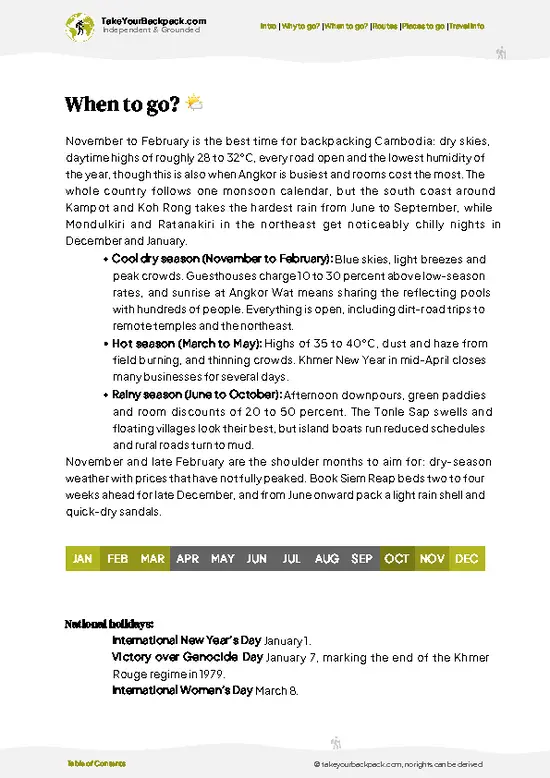
Seasonality plays a crucial role in experiencing the unique sites of Cambodia. The country has a tropical climate, characterized by a wet season and a dry season. The dry season, typically from November to April, offers the most favorable weather. Expect clear skies and lower humidity, making exploration more enjoyable. This period attracts the highest number of visitors, leading to crowded sites and increased prices.

Optimal months for visiting fall within this dry season. December and January are particularly popular, but be prepared for bustling crowds. The trade-off for visiting during peak months is the vibrant atmosphere, where cultural events often coincide with the influx of tourists.

Shoulder seasons, like late October and early November or late April to early June, present a different … read more 👉
Seasonality plays a crucial role in experiencing the unique sites of Cambodia. The country has a tropical climate, characterized by a wet season and a dry season. The dry season, typically from November to April, offers the most favorable weather. Expect clear skies and lower humidity, making exploration more enjoyable. This period attracts the highest number of visitors, leading to crowded sites and increased prices.

Optimal months for visiting fall within this dry season. December and January are particularly popular, but be prepared for bustling crowds. The trade-off for visiting during peak months is the vibrant atmosphere, where cultural events often coincide with the influx of tourists.

Shoulder seasons, like late October and early November or late April to early June, present a different experience. These months can offer fewer crowds and lower costs, but the weather may be less predictable. Rain can still occur, especially in the early wet season, which might limit access to certain sites.

Seasonal constraints also include the impact of festivals and local events. These can enhance the experience but may also lead to logistical challenges. Understanding these patterns is essential for planning an effective trip, ensuring that the journey through Cambodia’s unique sites is both rewarding and manageable.

unique site hoppingPlanning Your Route Efficiently

Traveling through Cambodia requires a strategic approach to maximize the unique sites while minimizing time spent in transit. Start in the capital, Phnom Penh, where the Royal Palace and the sobering Tuol Sleng Genocide Museum offer a deep dive into the country’s history. Allocate half a day for each, allowing for reflection and exploration.

Next, head northwest to Siem Reap, the gateway to Angkor Wat. This region is rich in ancient temples, so cluster your visits. Spend a full day at Angkor Wat, then tackle nearby sites like Ta Prohm and Bayon over the next two days. Early mornings are ideal to avoid crowds and heat, enhancing the experience.

Travelers often overlook the southern coast, where Kampot and Kep provide a refreshing contrast. A day or two here allows for a taste of local life, … read more 👉
Traveling through Cambodia requires a strategic approach to maximize the unique sites while minimizing time spent in transit. Start in the capital, Phnom Penh, where the Royal Palace and the sobering Tuol Sleng Genocide Museum offer a deep dive into the country’s history. Allocate half a day for each, allowing for reflection and exploration.

Next, head northwest to Siem Reap, the gateway to Angkor Wat. This region is rich in ancient temples, so cluster your visits. Spend a full day at Angkor Wat, then tackle nearby sites like Ta Prohm and Bayon over the next two days. Early mornings are ideal to avoid crowds and heat, enhancing the experience.

Travelers often overlook the southern coast, where Kampot and Kep provide a refreshing contrast. A day or two here allows for a taste of local life, peppered with visits to pepper plantations and the serene Kep National Park.

Common mistakes include trying to cram too many sites into a short timeframe, leading to burnout. Prioritize depth over speed; savoring a few locations will yield richer experiences. Flexibility is key—allow for spontaneous detours or longer stays at places that resonate.

Budget considerations also play a role. While some sites may have entrance fees, local markets and street food offer affordable dining options, balancing comfort with cost. Embrace the journey, and let the rhythm of Cambodia unfold at your pace.

The ListHighly Recommended landmarks of Cambodia

1 Angkor Wat

bas-reliefs, lotus towers, sunrise reflection

Witness intricate stone carvings and shifting light as you move through galleries and courtyards that reveal the scale of Khmer ambition.

Cambodia - Angkor Wat

2 Preah Vihear Temple

clifftop sanctuary, border views, stone causeways

Walk along elevated walkways to a temple perched above the plains, where shifting borders and dramatic vistas define the experience.

cambodia-unique-site-preah-vihear-temple
© Google |

3 Banteay Chhmar

jungle ruins, enigmatic faces, remote moat

Navigate toppled corridors and overgrown walls where sculpted visages emerge from the forest, far from the crowds of more accessible temples.

4 Koh Ker (Ancient Lingapura or Chok Gargyar)

pyramid temple, forested plateau, sandstone sanctuaries

Climb steep steps to a solitary summit and explore scattered shrines surrounded by dense woodland, revealing a brief royal capital’s legacy.

cambodia-unique-site-koh-ker-ancient-lingapura-or-chok-gargyar
© Google |

5 Temple Zone of Sambor Prei Kuk (Ancient Ishanapura)

octagonal towers, forest temples, brick carvings

Wander shaded trails linking clusters of pre-Angkorian shrines, where tree roots and brickwork intertwine in a quiet woodland setting.

6 Angkor Borei

archaeological mounds, ancient canal, pre-Angkor ruins

Trace the remnants of early Khmer civilization by wandering through scattered brick foundations, museum relics, and a landscape shaped by centuries-old waterways.

7 Phnom Sampeau

limestone caves, hilltop shrines, bat exodus

Ascend winding paths to Buddhist monuments and memorials, then watch thousands of bats stream from cave mouths at dusk over the plains.

cambodia-unique-site-phnom-sampeau
© Google |
Loading the map 🌍

Expert viewInsights from Locals and Experts

Unique Sites Overview
Cambodia is a treasure trove of unique sites, but the reality is that many of them come with crowds and costs that can dampen the experience. You’ll want to prioritize wisely. Aim for about three to five unique sites per trip. This allows you to soak in the essence of each location without feeling rushed.

Crowd Patterns
Expect the most popular sites to be swarming with tourists, especially during peak season. Mornings are your best bet for fewer crowds, but even then, you’ll find that the allure of these places attracts many. If you can, visit during the shoulder seasons—late rainy or early dry months—when the weather is still decent, and the crowds thin out. This is when you can truly connect with the local culture and history without feeling like you’re in a human … read more 👉
Unique Sites Overview
Cambodia is a treasure trove of unique sites, but the reality is that many of them come with crowds and costs that can dampen the experience. You’ll want to prioritize wisely. Aim for about three to five unique sites per trip. This allows you to soak in the essence of each location without feeling rushed.

Crowd Patterns
Expect the most popular sites to be swarming with tourists, especially during peak season. Mornings are your best bet for fewer crowds, but even then, you’ll find that the allure of these places attracts many. If you can, visit during the shoulder seasons—late rainy or early dry months—when the weather is still decent, and the crowds thin out. This is when you can truly connect with the local culture and history without feeling like you’re in a human traffic jam.

Access Constraints
Infrastructure varies widely across Cambodia. Some sites are easily accessible via well-maintained roads, while others require a trek through less-traveled paths. Be prepared for varying levels of comfort. For instance, while some areas boast decent accommodations, others may have limited options. Factor in travel time; a site that looks close on a map might take longer to reach due to road conditions. Always have a backup plan, as transport can be unpredictable.

Budget Considerations
Costs can range significantly. Entrance fees for major sites can add up, and while some places are worth the splurge, others might not deliver the same value. Local eateries often provide authentic flavors at a fraction of the cost of tourist traps. Allocate your budget wisely; consider splurging on a guided tour for a unique site that offers rich context, while saving on meals or accommodations elsewhere.

Planning and Prioritizing
When planning, think about the stories you want to bring back. Focus on sites that resonate with you personally, whether it’s ancient temples, vibrant markets, or natural wonders. Research local festivals or events that might coincide with your visit; these can offer a deeper understanding of Cambodian culture.

Combine sites that are geographically close to minimize travel time. For example, if you’re visiting a temple complex, check for lesser-known temples nearby that often get overlooked. These spots can provide a more intimate experience and a chance to engage with locals.

Safety and Cultural Considerations
Safety is generally good, but always stay aware of your surroundings. Respect local customs, especially in sacred spaces. Dress modestly and be mindful of photography rules. Engaging with locals can enrich your experience, but approach with genuine curiosity rather than as a tourist.

Real Magic
The real magic of Cambodia lies in the stories behind the sites. It’s not just about the destination; it’s about the journey. Take the time to wander, to engage, and to absorb the atmosphere. The physical act of exploring, the sweat on your brow, and the laughter shared with fellow travelers will create memories that far outweigh any Instagram post. Embrace the challenge, and you’ll find that the true essence of Cambodia is waiting just beyond the crowds.

✈️ The backpacker research shortcutCambodia Travel Guide

An offline-friendly backpacking guide with optimized travel routes, ranked highlights, transport advice, and the best areas to stay.
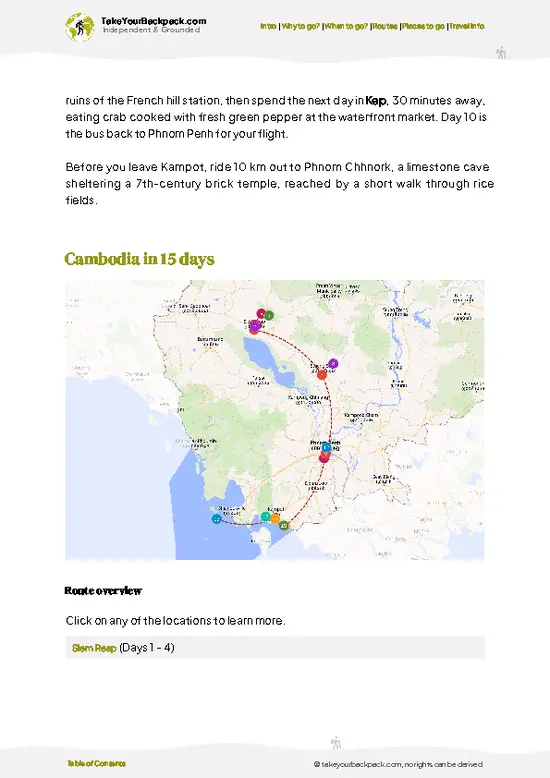
example page 0 from our offline Travel Guide for Cambodia
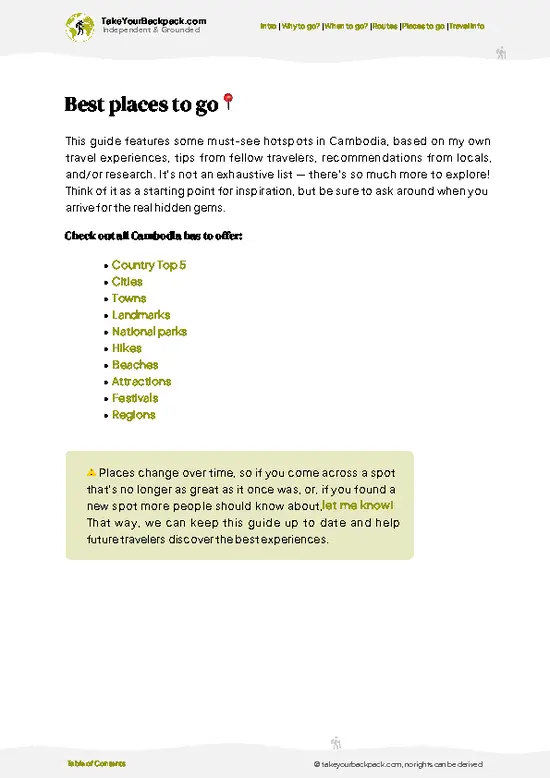
example page 1 from our offline Travel Guide for Cambodia
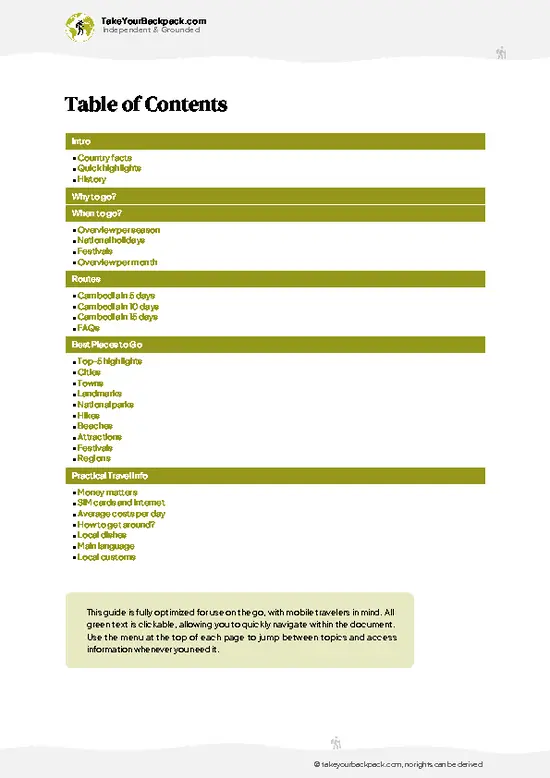
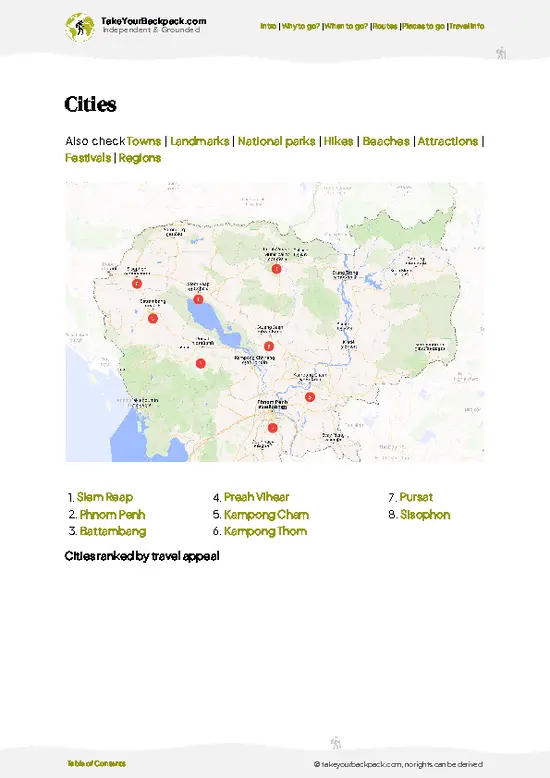
example page 2 from our offline Travel Guide for Cambodia
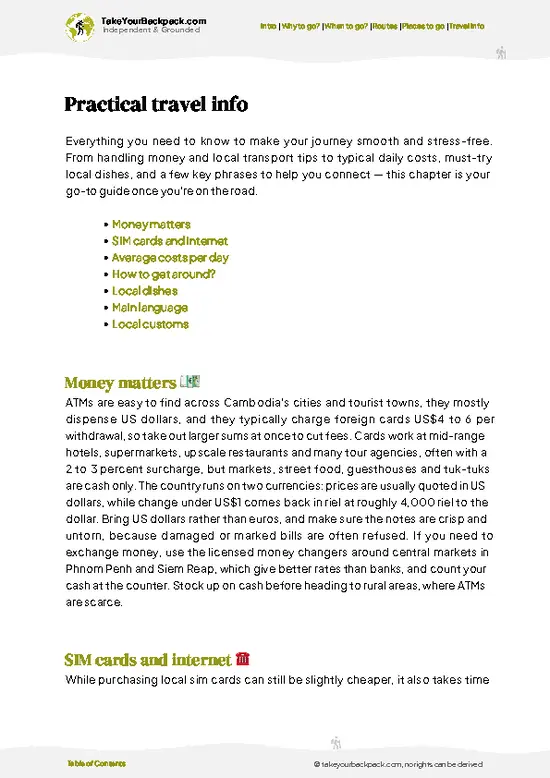
example page 3 from our offline Travel Guide for Cambodia
example page 4 from our offline Travel Guide for Cambodia
example page 5 from our offline Travel Guide for Cambodia
example page 6 from our offline Travel Guide for Cambodia
example page 7 from our offline Travel Guide for Cambodia
The digital guide (345 pages) contains:
90 highlights, ranked by travel appeal
Optimized 5, 10 & 15-day travel routes
Cities, national parks, landmarks, beaches
How to get around
Offline-friendly for travel without Wi-Fi
👉 Click to see all 30+ guide features

📅 Plan smarter in minutes, not weeks
Month by month travel advice
Festivals & national holidays
Budget expectations

🗺️ Go to the right places, skip the overrated ones
Honest pros & cons of destinations
Top hikes, parks & viewpoints
Lesser-known places most travelers miss
Clear “worth it vs skip it” guidance

🛏️ Travel smoothly without rookie mistakes
Best areas to stay
Transport systems explained simply
Common scams & safety advice
SIM cards, money & practical tips

🌍 Understand the country, not just visit it
Culture & traditions
52 Essential phrases & customs
Festivals worth planning around
Traveler-friendly historical context
Insights that make places more meaningful

📱 Built for real travel conditions
Fully downloadable PDF
Works completely offline
Optimized for phone use
Useful in remote areas & buses
Everything in one place
Save weeks of stressful planning
Get instant access to your full guide. 30‑day money-back guarantee.


By proceeding you agree to our terms.
Sent to your inbox immediately after payment • 100% Secure Checkout
Best Backpacking Travel Advisor 2025 tourism awardBest Backpacking
Travel Advisor
2025
What others say about Take Your Backpack Guides:
⭐⭐⭐⭐⭐
Fantastic, amazing amount of information!
⭐⭐⭐⭐⭐
My goodness this is amazing, it's what I've been looking for hats off too you!
⭐⭐⭐⭐⭐
I think this is absolutely BRILLIANT
⭐⭐⭐⭐
Very complete and informative. It's still missing places, but I gotta to commend you
⭐⭐⭐⭐⭐
This is truly amazing, thank you, can't wait to explore it with my kids!
⭐⭐⭐⭐⭐
Awesome resource, thank you!
⭐⭐⭐⭐⭐
This is amazing! Can't wait to explore the ones I haven't seen
⭐⭐⭐⭐
I love this! Well done, great idea.
⭐⭐⭐⭐⭐
Thanks for taking the time to make this gem!
⭐⭐⭐⭐⭐
This might be the best website I've ever seen.
⭐⭐⭐⭐⭐
Congratulations, and thank you so much for your work; it's incredibly valuable.
⭐⭐⭐⭐
In all seriousness I think you did a great job pointing out the important spots
⭐⭐⭐⭐⭐
10/10 very good
⭐⭐⭐⭐⭐
As someone who's only just starting to visit regularly this is awesome, thank you.
⭐⭐⭐⭐
Thank you very much! I'm going to visit my dad, it's going to be very useful!
⭐⭐⭐⭐⭐
This is really cool! We'll be travelling for the first time and this definitely come in handy.
⭐⭐⭐⭐⭐
You are now our minister of culture, congratulations 👨‍💼
⭐⭐⭐⭐⭐
Just wanted to tell you that this is a pearl! Going to follow your recommendations.
⭐⭐⭐⭐⭐
This is so cool. I'll definitely be using the resource for my travels soon.
⭐⭐⭐⭐⭐
This is very impressive! Good work.
⭐⭐⭐⭐⭐
This is an amazing and informative site. Very well done!

🛏️ Where to stay?Best Places to Stay in Cambodia

Yes — hostels and budget guesthouses are widespread across Cambodia, concentrated in traveler hubs: Siem Reap (Old Market/Wat Bo), Phnom Penh (Riverside, BKK1), Sihanoukville (Serendipity Beach strip and ferry area), island options on Koh Rong, and quieter small-town clusters in Kampot and Kep.

Siem Reap is ideal for Angkor access and lively nightlife but rooms fill fast; Phnom Penh Riverside and BKK1 offer safer, more comfortable budget stays near cafes and attractions; Sihanoukville gives cheap party accommodation but can be noisy with patchy infrastructure and more scams, while Koh Rong has calmer beaches with limited facilities and higher transport costs; Kampot and Kep are quiet, safer … read more 👉
Yes — hostels and budget guesthouses are widespread across Cambodia, concentrated in traveler hubs: Siem Reap (Old Market/Wat Bo), Phnom Penh (Riverside, BKK1), Sihanoukville (Serendipity Beach strip and ferry area), island options on Koh Rong, and quieter small-town clusters in Kampot and Kep.

Siem Reap is ideal for Angkor access and lively nightlife but rooms fill fast; Phnom Penh Riverside and BKK1 offer safer, more comfortable budget stays near cafes and attractions; Sihanoukville gives cheap party accommodation but can be noisy with patchy infrastructure and more scams, while Koh Rong has calmer beaches with limited facilities and higher transport costs; Kampot and Kep are quiet, safer and great for day trips but have fewer hostel choices — expect basic facilities, fan dorms are common and AC or hot water may cost extra, so book ahead in high season.

If you enjoy meeting fellow travelers, consider choosing hostels with high ratings for atmosphere. On the other hand, if you prefer having your own space, a hotel might be a better option.

CambodiaExplore Cambodia

👋 Meet the founderWho’s Behind Take Your Backpack?

Johan, backpacker and founder of TakeYourBackpackHi, I’m Johan (Netherlands 🇳🇱), the creator of TakeYourBackpack. Over the past decade, I’ve backpacked through 80+ countries across six continents, gaining extensive experience with independent travel, long-term trips, and overland routes.

This site is built on a combination of firsthand travel experience and carefully curated insights from other backpackers. Many guides are based on places I’ve personally visited, while others bring together tips, observations, and practical advice shared by trusted travelers I’ve met along the way.

The goal is to provide realistic, experience-driven guidance — not generic itineraries — so you can explore destinations with better context, clearer expectations, and more confidence.

Get full Cambodia guide •
Instant download • 90 highlights • Full Offline guide