×

Cambodia🇰🇭 | landmarksTemple Zone of Sambor Prei Kuk (Ancient Ishanapura)octagonal towers, forest temples, brick carvings | things to do and best time to go

Explore Preah Vihear TempleExplore Koh Rong Sanloem

Backpacking in Temple Zone of Sambor Prei Kuk (Ancient Ishanapura)
UNESCO World Heritage site
👍 Recommendedunique site ranked #5
By Johan Kruseman 🇳🇱 | Updated April 26, 2026

Most people assume Cambodia begins and ends with Angkor, and that anything else is just a B‑side. That’s lazy thinking, and Sambor Prei Kuk proves it.

Temple Zone of Sambor Prei Kuk (Ancient Ishanapura) sits in central Cambodia, in Kampong Thom province, roughly halfway between Phnom Penh and Siem Reap. For backpackers, it’s a low-key heavyweight: pre-Angkorian brick temples scattered through quiet forest, with hardly anyone around. The wow-factor is subtle, not skyscraper-temple dramatic; it’s the “I’m walking through a 7th‑century capital almost alone” kind of hit. Costs are low, guesthouses nearby are basic but friendly, and you can bike or moto out without much hassle, though public transport connections can be clumsy. Crowds are rare, which is gold, but facilities are minimal and the site can feel a bit under-interpreted. Photos lean more toward moody jungle and crumbling detail than postcard grandeur—and that’s exactly the charm.

Discover everything you want to know in the 📖 Cambodia Travel Guide.


Get your Cambodia guide
90 ranked highlights, routes & tips, works offline (345 pages)
Loading the map 🌍
CLICK TO FILTER
cities
towns
villages
landmarks
national parks
hikes
beaches
attractions
festivals
regions
SHOW COUNTRY’S BESTSHOW ALL

✨ Why go?
Ranked #5 unique site in Cambodia
Reasons people choose to visit here

The Temple Zone of Sambor Prei Kuk is a must-see for backpackers who crave authenticity over Instagram likes. Sure, it’s not Angkor Wat, but that’s the beauty of it. You’ll dodge the crowds and soak in the history of this ancient city, once the capital of the Chenla Kingdom.

The cost is a steal—entry fees are minimal, and the surrounding area is ripe for exploration without breaking the bank. You can rent a bike and cruise through the lush landscapes, feeling the pulse of Cambodia away from the tourist traps.

What sets Sambor Prei Kuk apart is its uniqueness. The temples, with their intricate carvings and crumbling brickwork, tell stories of a time long past. You can almost hear the whispers of history as you wander through the ruins.

Plus, it fits perfectly into a broader route. If … read more 👉
The Temple Zone of Sambor Prei Kuk is a must-see for backpackers who crave authenticity over Instagram likes. Sure, it’s not Angkor Wat, but that’s the beauty of it. You’ll dodge the crowds and soak in the history of this ancient city, once the capital of the Chenla Kingdom.

The cost is a steal—entry fees are minimal, and the surrounding area is ripe for exploration without breaking the bank. You can rent a bike and cruise through the lush landscapes, feeling the pulse of Cambodia away from the tourist traps.

What sets Sambor Prei Kuk apart is its uniqueness. The temples, with their intricate carvings and crumbling brickwork, tell stories of a time long past. You can almost hear the whispers of history as you wander through the ruins.

Plus, it fits perfectly into a broader route. If you’re heading to Kampong Thom or making your way to Siem Reap, this site is a natural stop. It’s not just a detour; it’s a chance to connect with Cambodia’s rich heritage.
Want to include Temple Zone of Sambor Prei Kuk (Ancient Ishanapura) in your Cambodia route?
Create a personalized Cambodia itinerary that includes Temple Zone of Sambor Prei Kuk (Ancient Ishanapura) and the places that fit your trip — based on your travel style, budget, and available time. Get your route in seconds.

Generate my trip

💡 HighlightsKey sights and experiences for travelers

  • The three temple clusters (Groups A, B and C) — Sambor Prei Kuk isn’t one big ruin but a scatter of more than a hundred brick sanctuaries across three main clusters, so you get different scales and moods as you walk from one group to the next rather than a single, crowded monument.
  • Pre-Angkorian Chenla architecture — these are 7th-century structures that predate Angkor, so you can see early Khmer building techniques in raw brick and laterite that influenced everything that followed; it’s like seeing the blueprints of Angkor’s future glory.
  • Intricate lintels and bas-reliefs — look up: many doorways still have finely carved lintels and pediments showing kala faces, mythic creatures and Hindu deities, giving a clear window into early Khmer iconography without the heavy restoration of bigger
read more 👉
  • The three temple clusters (Groups A, B and C) — Sambor Prei Kuk isn’t one big ruin but a scatter of more than a hundred brick sanctuaries across three main clusters, so you get different scales and moods as you walk from one group to the next rather than a single, crowded monument.
  • Pre-Angkorian Chenla architecture — these are 7th-century structures that predate Angkor, so you can see early Khmer building techniques in raw brick and laterite that influenced everything that followed; it’s like seeing the blueprints of Angkor’s future glory.
  • Intricate lintels and bas-reliefs — look up: many doorways still have finely carved lintels and pediments showing kala faces, mythic creatures and Hindu deities, giving a clear window into early Khmer iconography without the heavy restoration of bigger sites.
  • Compact prasats and inner sanctums — the little brick towers and inner chambers are surprisingly intimate; you can get close, study the brick bonding and niches, and imagine the small ceremonies that once filled them.
  • Forest setting and seasonal water features — trees and undergrowth weave through the ruins, and in the wet season small moats and ponds reflect the temples, making for atmospheric photos and a real sense of discovery (bugs and mud included).
  • Quiet, off-beat visitor experience — unlike Siem Reap’s crowds, Sambor Prei Kuk stays low-key; you can explore at your own pace, findquiet corners, and get face-to-face with history without a tour group hovering.
  • Living cultural threads — locals still use parts of the site for offerings and small rituals; seeing those modern practices beside ancient shrines highlights the continuous spiritual importance of the place.
Spotted a mistake or missing something? Contact us.

Things to do near Temple Zone of Sambor Prei Kuk (Ancient Ishanapura)

Ratings based on Tripadvisor reviews. When you book through this link, you support our work at no extra cost to you.

🌤️ When to go?Choosing the right time of year


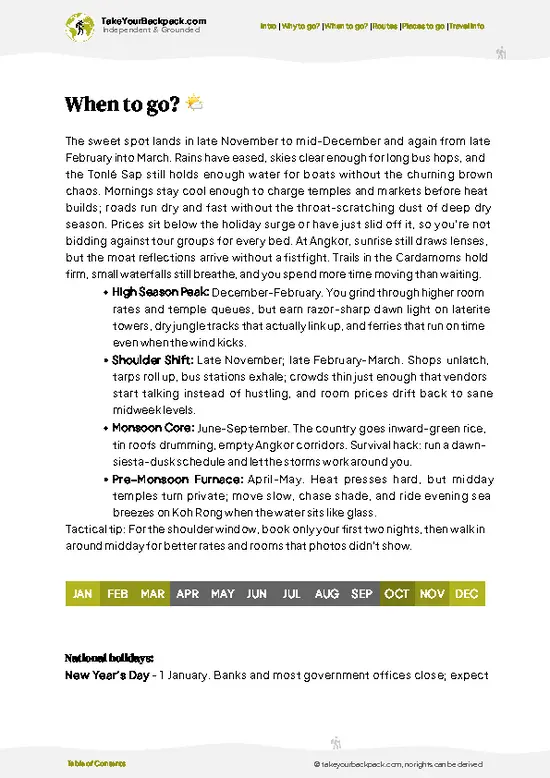
  • Weather: The dry season from November to April is your best bet. Expect little rain, which means easier trekking and clearer temple views. The wet season (May to October) brings heavy downpours that can turn paths into mud traps and obscure the ruins.

  • Temperature: Daytime highs hover around 30-35°C (86-95°F) in the dry season, which is hot but manageable with early starts. The wet season cools things down slightly but adds humidity that can sap your energy fast.

  • Daylight Hours: Cambodia enjoys roughly 11-12 hours of daylight year-round. Early mornings and late afternoons offer the best light for photos and cooler exploration.

  • Crowds: Sambor Prei Kuk isn’t overrun like Angkor Wat, but the dry season draws more visitors. If you want near solitude, aim for the shoulder months of November
read more 👉

  • Weather: The dry season from November to April is your best bet. Expect little rain, which means easier trekking and clearer temple views. The wet season (May to October) brings heavy downpours that can turn paths into mud traps and obscure the ruins.

  • Temperature: Daytime highs hover around 30-35°C (86-95°F) in the dry season, which is hot but manageable with early starts. The wet season cools things down slightly but adds humidity that can sap your energy fast.

  • Daylight Hours: Cambodia enjoys roughly 11-12 hours of daylight year-round. Early mornings and late afternoons offer the best light for photos and cooler exploration.

  • Crowds: Sambor Prei Kuk isn’t overrun like Angkor Wat, but the dry season draws more visitors. If you want near solitude, aim for the shoulder months of November or April.

  • Seasonal Activities: The dry season aligns with local festivals and agricultural cycles, adding cultural layers to your visit. The wet season’s lush greenery can make the ruins feel like a jungle adventure, but expect slippery trails.

  • Price Fluctuations: Entrance fees and local prices stay fairly stable year-round. However, accommodation rates near the site can spike during peak dry months due to higher demand.


Pro-tip: Visit early in the dry season to dodge crowds, enjoy manageable heat, and catch local life just as the landscape shakes off the wet season’s grip.


source: climatestotravel.comJANJanuary: excellent for travelingFEBFebruary: excellent for travelingMARMarch: excellent for travelingAPRApril: highly recommended for travelingMAYMay: fair for travelingJUNJune: fair for travelingJULJuly: fair for travelingAUGAugust: fair for travelingSEPSeptember: fair for travelingOCTOctober: fair for travelingNOVNovember: highly recommended for travelingDECDecember: excellent for traveling
when-to-go

✈️ The backpacker research shortcutCambodia Travel Guide

An offline-friendly backpacking guide with optimized travel routes, ranked highlights, transport advice, and the best areas to stay.
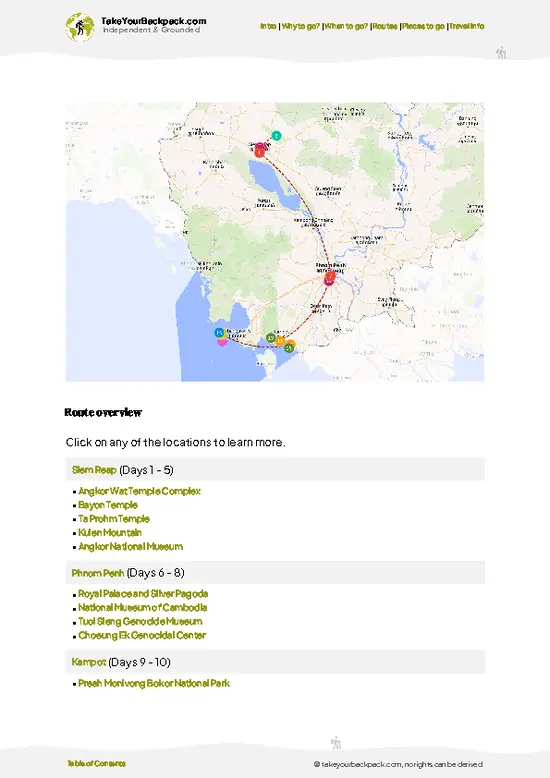
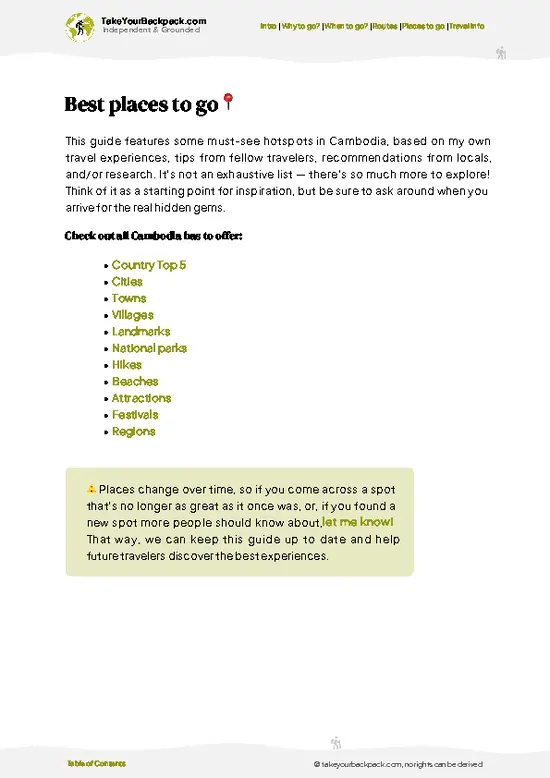
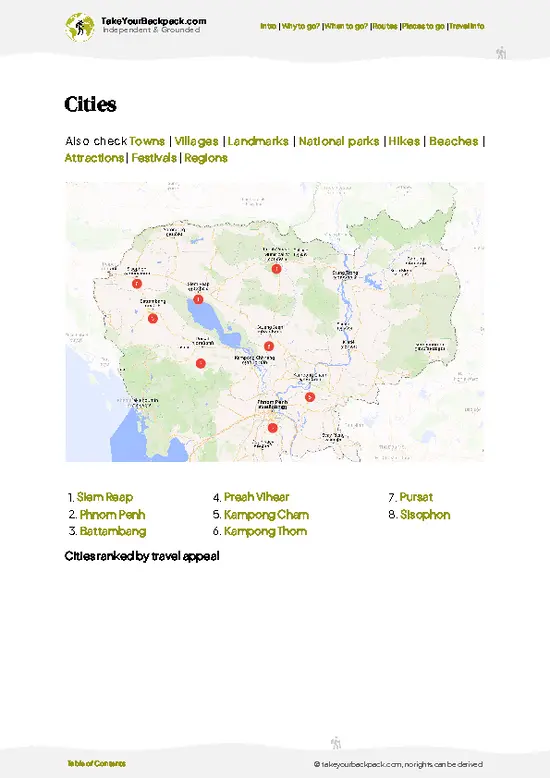
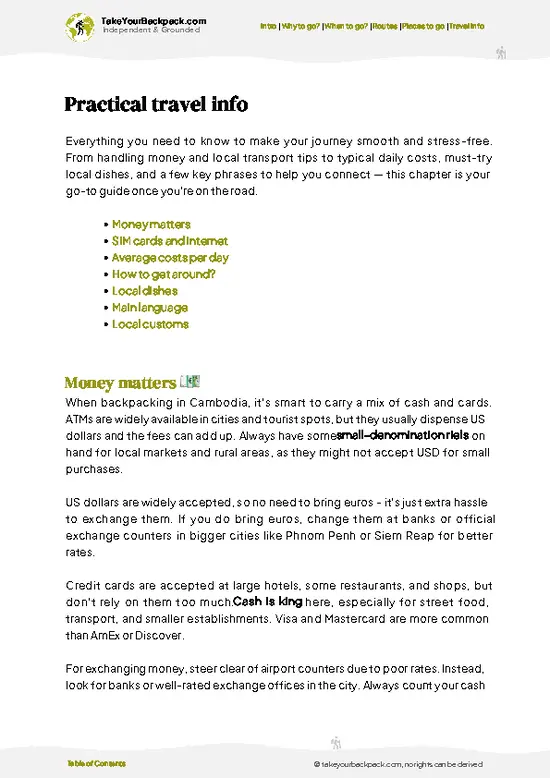
example page 0 from our offline Travel Guide for Cambodia
example page 1 from our offline Travel Guide for Cambodia
example page 2 from our offline Travel Guide for Cambodia
example page 3 from our offline Travel Guide for Cambodia
example page 4 from our offline Travel Guide for Cambodia
example page 5 from our offline Travel Guide for Cambodia
example page 6 from our offline Travel Guide for Cambodia
example page 7 from our offline Travel Guide for Cambodia
The digital guide (345 pages) contains:
90 highlights, ranked by travel appeal
Optimized 5, 10 & 15-day travel routes
Cities, national parks, landmarks, beaches
How to get around
Offline-friendly for travel without Wi-Fi
👉 Click to see all 30+ guide features

📅 Plan smarter in minutes, not weeks
Month by month travel advice
Festivals & national holidays
Budget expectations

🗺️ Go to the right places, skip the overrated ones
Honest pros & cons of destinations
Top hikes, parks & viewpoints
Lesser-known places most travelers miss
Clear “worth it vs skip it” guidance

🛏️ Travel smoothly without rookie mistakes
Best areas to stay
Transport systems explained simply
Common scams & safety advice
SIM cards, money & practical tips

🌍 Understand the country, not just visit it
Culture & traditions
52 Essential phrases & customs
Festivals worth planning around
Traveler-friendly historical context
Insights that make places more meaningful

📱 Built for real travel conditions
Fully downloadable PDF
Works completely offline
Optimized for phone use
Useful in remote areas & buses
Everything in one place
Save weeks of stressful planning
Get instant access to your full guide. 30‑day money-back guarantee.


By proceeding you agree to our terms.
Sent to your inbox immediately after payment • 100% Secure Checkout
Best Backpacking Travel Advisor 2025 tourism awardBest Backpacking
Travel Advisor
2025
What others say about Take Your Backpack Guides:
⭐⭐⭐⭐⭐
Fantastic, amazing amount of information!
⭐⭐⭐⭐⭐
My goodness this is amazing, it's what I've been looking for hats off too you!
⭐⭐⭐⭐⭐
I think this is absolutely BRILLIANT
⭐⭐⭐⭐
Very complete and informative. It's still missing places, but I gotta to commend you
⭐⭐⭐⭐⭐
This is truly amazing, thank you, can't wait to explore it with my kids!
⭐⭐⭐⭐⭐
Awesome resource, thank you!
⭐⭐⭐⭐⭐
This is amazing! Can't wait to explore the ones I haven't seen
⭐⭐⭐⭐
I love this! Well done, great idea.
⭐⭐⭐⭐⭐
Thanks for taking the time to make this gem!
⭐⭐⭐⭐⭐
This might be the best website I've ever seen.
⭐⭐⭐⭐⭐
Congratulations, and thank you so much for your work; it's incredibly valuable.
⭐⭐⭐⭐
In all seriousness I think you did a great job pointing out the important spots
⭐⭐⭐⭐⭐
10/10 very good
⭐⭐⭐⭐⭐
As someone who's only just starting to visit regularly this is awesome, thank you.
⭐⭐⭐⭐
Thank you very much! I'm going to visit my dad, it's going to be very useful!
⭐⭐⭐⭐⭐
This is really cool! We'll be travelling for the first time and this definitely come in handy.
⭐⭐⭐⭐⭐
You are now our minister of culture, congratulations 👨‍💼
⭐⭐⭐⭐⭐
Just wanted to tell you that this is a pearl! Going to follow your recommendations.
⭐⭐⭐⭐⭐
This is so cool. I'll definitely be using the resource for my travels soon.
⭐⭐⭐⭐⭐
This is very impressive! Good work.
⭐⭐⭐⭐⭐
This is an amazing and informative site. Very well done!

🛏️ Where to stay?Best areas and accommodation options

The Temple Zone of Sambor Prei Kuk is a treasure, but let’s cut through the Instagram haze. Crowds can be thick, and the costs of getting there can add up. Yet, the real magic lies in the surrounding areas where backpackers can find a home base.

Look to the nearby town of Kampong Thom. It’s not just a pit stop; it’s a vibrant hub for budget travelers. You’ll find a mix of guesthouses and budget lodges that cater to solo adventurers and groups alike. The atmosphere is friendly, and you can easily strike up conversations with fellow travelers over a cold Angkor beer.

Another option is to stay … read more 👉
The Temple Zone of Sambor Prei Kuk is a treasure, but let’s cut through the Instagram haze. Crowds can be thick, and the costs of getting there can add up. Yet, the real magic lies in the surrounding areas where backpackers can find a home base.

Look to the nearby town of Kampong Thom. It’s not just a pit stop; it’s a vibrant hub for budget travelers. You’ll find a mix of guesthouses and budget lodges that cater to solo adventurers and groups alike. The atmosphere is friendly, and you can easily strike up conversations with fellow travelers over a cold Angkor beer.

Another option is to stay closer to the temples themselves. There are basic accommodations that offer a more rustic experience. Here, you can wake up to the sounds of nature and the distant echoes of ancient history.

Both areas provide easy access to the temples, and you can rent a bike or hop on a tuk-tuk to explore. The key is to embrace the local vibe, share stories with other backpackers, and soak in the authenticity of this remarkable site.

👛 Costs (as of 3 February 2025)Travel costs and budget guide for Temple Zone of Sambor Prei Kuk (Ancient Ishanapura)

Visiting the Temple Zone of Sambor Prei Kuk is a journey into Cambodia’s ancient past, but it comes with its own set of costs. Here’s the real deal on what you can expect to spend.
  • Entrance Fee: The entrance fee is around $5 USD. This gives you access to the temple complex, which is a steal considering the historical significance. Just be prepared for the crowds; it can get busy, especially during peak tourist season.
  • Transportation: Getting there can vary. A tuk-tuk ride from Kampong Thom will set you back about $10-15 USD each way. If you’re feeling adventurous, renting a bicycle for around $2-5 USD is a great way to soak in the scenery, but be ready for some sweat.
  • Guided Tours: If you want to dive deeper into the history, consider a guided tour. Prices range from $15-30 USD, depending on
read more 👉
Visiting the Temple Zone of Sambor Prei Kuk is a journey into Cambodia’s ancient past, but it comes with its own set of costs. Here’s the real deal on what you can expect to spend.
  • Entrance Fee: The entrance fee is around $5 USD. This gives you access to the temple complex, which is a steal considering the historical significance. Just be prepared for the crowds; it can get busy, especially during peak tourist season.
  • Transportation: Getting there can vary. A tuk-tuk ride from Kampong Thom will set you back about $10-15 USD each way. If you’re feeling adventurous, renting a bicycle for around $2-5 USD is a great way to soak in the scenery, but be ready for some sweat.
  • Guided Tours: If you want to dive deeper into the history, consider a guided tour. Prices range from $15-30 USD, depending on the depth of the tour and the guide’s expertise. A good guide can really bring the ruins to life, so it’s worth the investment.
  • Food and Drink: There are a few local eateries nearby. Expect to spend about $3-7 USD for a meal. Street food is also an option, and it’s delicious and cheap—just be cautious about hygiene.
  • Souvenirs: If you’re looking to take a piece of the experience home, budget around $5-20 USD for local crafts. Just remember, haggling is part of the game, so don’t shy away from negotiating.

The Temple Zone of Sambor Prei Kuk is not just about the price tags; it’s about the stories etched in stone. The costs are reasonable, but the experience? That’s priceless.


source: tourismcambodia.org
⚠️ Prices can change and everyone travels differently, so take this as a rough guide. Hope it helps you plan your adventure!

Other Cambodian landmarks near Temple Zone of Sambor Prei Kuk (Ancient Ishanapura)

Explore more nearby:


💡 Not sure where to go next?
Create a personalized itinerary for Cambodia including Temple Zone of Sambor Prei Kuk (Ancient Ishanapura) and the places that fit your trip.

Generate my itinerary

👉 Discover all landmarks

Or checkout all Cambodia has to offer (think cities, towns, villages, national parks, hikes, beaches, festivals)
Country photo of Cambodia

We 💚 feedbackFinal thoughts on visiting Temple Zone of Sambor Prei Kuk (Ancient Ishanapura)

The Temple Zone of Sambor Prei Kuk is a breath of fresh air compared to the usual tourist traps. Expect fewer crowds and a vibe that feels like stepping back in time. The best surprise? The intricate carvings that tell stories you won’t find in guidebooks. Just a heads-up: the roads can be rough, so don’t rush. Embrace the journey; it’s part of the experience. This place isn’t just about temples; it’s about connecting with history in a way that feels real.

✍️ Help improve this page!
The information on this page is based on in-depth research, insights shared by experienced travelers, and feedback from the local travel community in Cambodia. While every effort is made to keep the information accurate and current, conditions can change — so if you spot anything incorrect or outdated, please get in touch.


🙋‍♂️ Give feedback

👋 Meet the founderWho’s Behind Take Your Backpack?

Johan, backpacker and founder of TakeYourBackpackHi, I’m Johan (Netherlands 🇳🇱), the creator of TakeYourBackpack. Over the past decade, I’ve backpacked through 80+ countries across six continents, gaining extensive experience with independent travel, long-term trips, and overland routes.

This site is built on a combination of firsthand travel experience and carefully curated insights from other backpackers. Many guides are based on places I’ve personally visited, while others bring together tips, observations, and practical advice shared by trusted travelers I’ve met along the way.

The goal is to provide realistic, experience-driven guidance — not generic itineraries — so you can explore destinations with better context, clearer expectations, and more confidence.

Get full Cambodia guide •
Instant download • 90 highlights • Full Offline guide