×

Cambodia🇰🇭 | landmarksBanteay Chhmarjungle ruins, enigmatic faces, remote moat | things to do and best time to go

Explore Angkor WatExplore Koh Ker (Ancient Lingapura or Chok Gargyar)

Backpacking in Banteay Chhmar
🌟 Highlightunique site ranked #3
By Johan Kruseman 🇳🇱 | Updated May 31, 2026

Your sandal scrapes on loose laterite, a cicada drills the air, and for a second it’s just you, a headless stone Buddha, and a wall of jungle humming in the heat. No selfie sticks. No bus engines. Just the dry smell of dust and old leaves in your throat. This is Banteay Chhmar, way out in Cambodia’s northwest near the Thai border, and it feels like someone forgot to finish turning it into an attraction.

For backpackers, it’s a trade-off. The wow-factor is quiet, not explosive: collapsed galleries, face towers half-eaten by roots, bas-reliefs you can study without a crowd breathing on your neck. Getting here is a hassle, transport is patchy, and there’s no cheap party strip or polished café scene. Costs stay reasonable but options are limited. Culturally and historically, though, it’s heavyweight Angkor-era stuff with a raw, half-lost vibe that makes your photos—and your memories—feel earned.

Discover everything you want to know in the 📖 Cambodia Travel Guide.


Get your Cambodia guide
90 ranked highlights, routes & tips, works offline (345 pages)
Loading the map 🌍
CLICK TO FILTER
cities
towns
villages
landmarks
national parks
hikes
beaches
attractions
festivals
regions
SHOW COUNTRY’S BESTSHOW ALL

✨ Why go?
Ranked #3 unique site in Cambodia
The unique appeal for travelers

Banteay Chhmar is a must-see for backpackers who crave authenticity over Instagram filters. Unlike the crowded temples of Angkor Wat, this site offers a raw, unpolished experience. You’ll find massive stone carvings and sprawling ruins, all set against a backdrop of jungle that feels like a scene from an adventure movie.

The effort-to-reward ratio is off the charts. Getting there requires a bit of planning—think bumpy roads and maybe a night in a nearby town—but the low cost makes it worth every ounce of effort. Entrance fees are minimal, and you won’t be shelling out for overpriced guides.

Banteay Chhmar fits perfectly into a broader route through Cambodia. Pair it with a visit to Siem Reap or the lesser-known temples around Battambang. This isn’t just a stop; it’s a journey into history. … read more 👉
Banteay Chhmar is a must-see for backpackers who crave authenticity over Instagram filters. Unlike the crowded temples of Angkor Wat, this site offers a raw, unpolished experience. You’ll find massive stone carvings and sprawling ruins, all set against a backdrop of jungle that feels like a scene from an adventure movie.

The effort-to-reward ratio is off the charts. Getting there requires a bit of planning—think bumpy roads and maybe a night in a nearby town—but the low cost makes it worth every ounce of effort. Entrance fees are minimal, and you won’t be shelling out for overpriced guides.

Banteay Chhmar fits perfectly into a broader route through Cambodia. Pair it with a visit to Siem Reap or the lesser-known temples around Battambang. This isn’t just a stop; it’s a journey into history. You’ll leave with stories that go beyond the typical tourist chatter. It’s about feeling the pulse of a place that’s still alive with culture and history, far from the commercialized chaos.
Want to include Banteay Chhmar in your Cambodia route?
Create a personalized Cambodia itinerary that includes Banteay Chhmar and the places that fit your trip — based on your travel style, budget, and available time. Get your route in seconds.

Generate my trip

💡 HighlightsThe experiences that define the visit

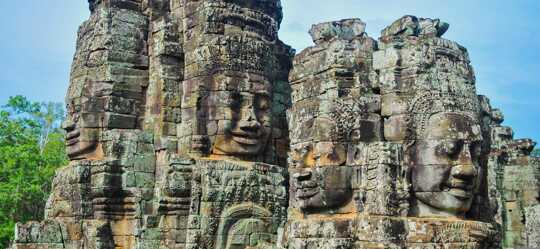
  • Face towers (the Jayavarman VII faces) — Huge, serene stone faces carved into several towers around the site, Bayon-style but wilder and less restored. Seeing those giant, weathered faces up close gives a real sense of the Khmer kingly-Buddhist vision that built Banteay Chhmar.
  • Narrative bas-relief galleries — Long, well-carved friezes showing battle scenes, royal processions and everyday life. They’re among the most extensive story-reliefs outside Angkor and tell the political and social story of the late 12th-13th centuries.
  • Massive enclosure, moats and ruined galleries — The scale is impressive: huge walls, a broad moat and collapsed galleries with enormous sandstone blocks. The ruins feel raw and half-forgotten, which makes exploring more atmospheric than the heavily restored sites.
read more 👉
  • Face towers (the Jayavarman VII faces) — Huge, serene stone faces carved into several towers around the site, Bayon-style but wilder and less restored. Seeing those giant, weathered faces up close gives a real sense of the Khmer kingly-Buddhist vision that built Banteay Chhmar.
  • Narrative bas-relief galleries — Long, well-carved friezes showing battle scenes, royal processions and everyday life. They’re among the most extensive story-reliefs outside Angkor and tell the political and social story of the late 12th-13th centuries.
  • Massive enclosure, moats and ruined galleries — The scale is impressive: huge walls, a broad moat and collapsed galleries with enormous sandstone blocks. The ruins feel raw and half-forgotten, which makes exploring more atmospheric than the heavily restored sites.
  • Devata and sculptural details — Plenty of delicate devata (female deity) carvings, lintels and column capitals that survive in situ. The level of detail on faces, jewelry and textiles is a great stop for anyone who likes close-up stonework.
  • Visible archaeology and conservation story — You’ll see places where the temple is being studied, patched or left to settle — useful for understanding how these monuments are conserved (and the limits of money and politics in a remote spot).
  • Rice-field and village approach — The walk or bike ride from the nearby village across paddies and ox carts is part of the experience. It’s a real rural Cambodia scene, with homestays and friendly villagers who keep the place alive.
  • Sunrise/sunset solitude and photo ops — With far fewer tourists than Angkor, you can get quiet light on the faces and reliefs. Early morning or late afternoon delivers the best colors and the chance to enjoy the site with hardly anyone else around.
Spotted a mistake or missing something? Contact us.

🌤️ When to go?Choosing the right time of year


  • Weather: The dry season from November to April is your best bet. Expect clear skies and minimal rain, which means easier trekking and less mud. The wet season (May to October) turns the trails into a slippery mess and can wash out some paths entirely.

  • Temperature: Daytime temps hover around 28-35°C (82-95°F) in the dry season, which is hot but manageable if you start early. The wet season cools things down slightly but brings humidity that can sap your energy fast.

  • Daylight Hours: Cambodia enjoys roughly 11-12 hours of daylight year-round. Sunrise is around 6 AM, so plan to hit the temple early to avoid the heat and crowds.

  • Crowds: Banteay Chhmar is off the beaten path, so it never gets slammed like Angkor Wat. Still, the dry season sees a modest uptick in visitors, especially December
read more 👉

  • Weather: The dry season from November to April is your best bet. Expect clear skies and minimal rain, which means easier trekking and less mud. The wet season (May to October) turns the trails into a slippery mess and can wash out some paths entirely.

  • Temperature: Daytime temps hover around 28-35°C (82-95°F) in the dry season, which is hot but manageable if you start early. The wet season cools things down slightly but brings humidity that can sap your energy fast.

  • Daylight Hours: Cambodia enjoys roughly 11-12 hours of daylight year-round. Sunrise is around 6 AM, so plan to hit the temple early to avoid the heat and crowds.

  • Crowds: Banteay Chhmar is off the beaten path, so it never gets slammed like Angkor Wat. Still, the dry season sees a modest uptick in visitors, especially December and January. If you want near solitude, aim for November or February.

  • Seasonal Activities: The dry season is perfect for exploring on foot or bike. The wet season can flood surrounding rice paddies, which looks cool but limits access and comfort.

  • Price Fluctuations: Expect slightly higher prices for local guides and accommodation during the dry season peak months. The wet season offers better deals but at the cost of comfort and accessibility.


Pro-tip: Visit just after the peak dry season in February or March for the sweet spot of manageable heat, fewer crowds, and still-dry trails.


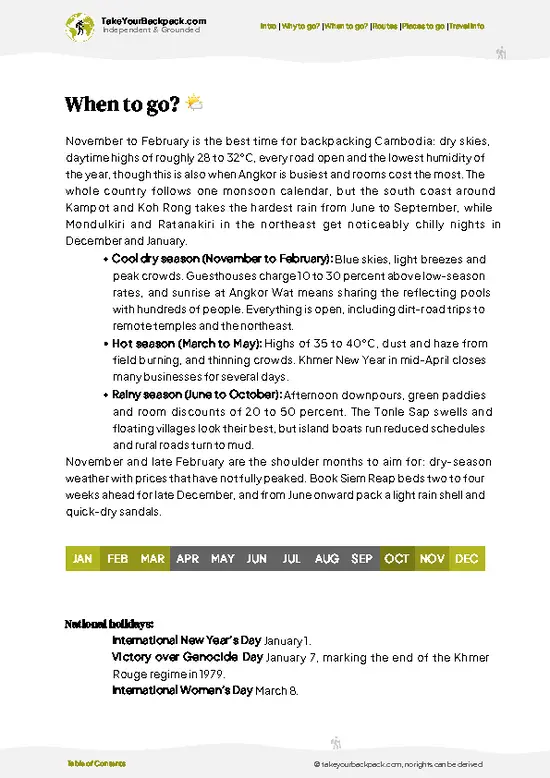
source: climatestotravel.comJANJanuary: highly recommended for travelingFEBFebruary: excellent for travelingMARMarch: excellent for travelingAPRApril: highly recommended for travelingMAYMay: fair for travelingJUNJune: fair for travelingJULJuly: below average for travelingAUGAugust: below average for travelingSEPSeptember: fair for travelingOCTOctober: fair for travelingNOVNovember: excellent for travelingDECDecember: highly recommended for traveling
when-to-go

✈️ The backpacker research shortcutCambodia Travel Guide

An offline-friendly backpacking guide with optimized travel routes, ranked highlights, transport advice, and the best areas to stay.
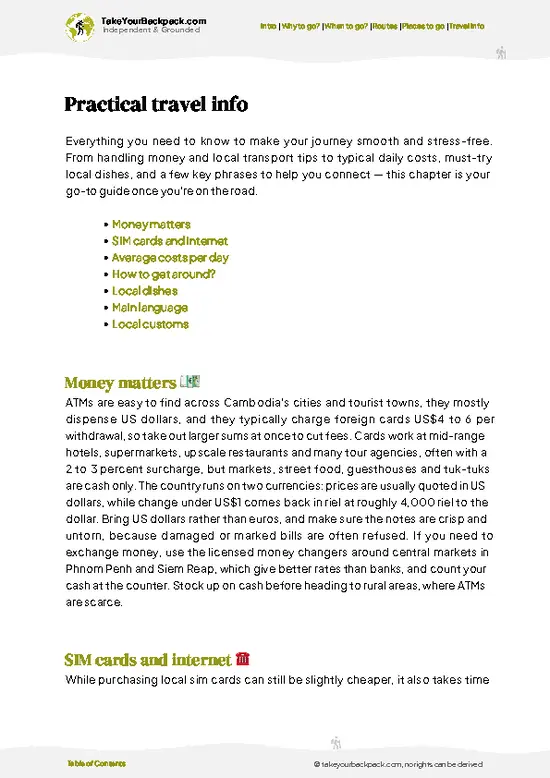
example page 0 from our offline Travel Guide for Cambodia
example page 1 from our offline Travel Guide for Cambodia
example page 2 from our offline Travel Guide for Cambodia
example page 3 from our offline Travel Guide for Cambodia
example page 4 from our offline Travel Guide for Cambodia
example page 5 from our offline Travel Guide for Cambodia
example page 6 from our offline Travel Guide for Cambodia
example page 7 from our offline Travel Guide for Cambodia
The digital guide (345 pages) contains:
90 highlights, ranked by travel appeal
Optimized 5, 10 & 15-day travel routes
Cities, national parks, landmarks, beaches
How to get around
Offline-friendly for travel without Wi-Fi
👉 Click to see all 30+ guide features

📅 Plan smarter in minutes, not weeks
Month by month travel advice
Festivals & national holidays
Budget expectations

🗺️ Go to the right places, skip the overrated ones
Honest pros & cons of destinations
Top hikes, parks & viewpoints
Lesser-known places most travelers miss
Clear “worth it vs skip it” guidance

🛏️ Travel smoothly without rookie mistakes
Best areas to stay
Transport systems explained simply
Common scams & safety advice
SIM cards, money & practical tips

🌍 Understand the country, not just visit it
Culture & traditions
52 Essential phrases & customs
Festivals worth planning around
Traveler-friendly historical context
Insights that make places more meaningful

📱 Built for real travel conditions
Fully downloadable PDF
Works completely offline
Optimized for phone use
Useful in remote areas & buses
Everything in one place
Save weeks of stressful planning
Get instant access to your full guide. 30‑day money-back guarantee.


By proceeding you agree to our terms.
Sent to your inbox immediately after payment • 100% Secure Checkout
Best Backpacking Travel Advisor 2025 tourism awardBest Backpacking
Travel Advisor
2025
What others say about Take Your Backpack Guides:
⭐⭐⭐⭐⭐
Fantastic, amazing amount of information!
⭐⭐⭐⭐⭐
My goodness this is amazing, it's what I've been looking for hats off too you!
⭐⭐⭐⭐⭐
I think this is absolutely BRILLIANT
⭐⭐⭐⭐
Very complete and informative. It's still missing places, but I gotta to commend you
⭐⭐⭐⭐⭐
This is truly amazing, thank you, can't wait to explore it with my kids!
⭐⭐⭐⭐⭐
Awesome resource, thank you!
⭐⭐⭐⭐⭐
This is amazing! Can't wait to explore the ones I haven't seen
⭐⭐⭐⭐
I love this! Well done, great idea.
⭐⭐⭐⭐⭐
Thanks for taking the time to make this gem!
⭐⭐⭐⭐⭐
This might be the best website I've ever seen.
⭐⭐⭐⭐⭐
Congratulations, and thank you so much for your work; it's incredibly valuable.
⭐⭐⭐⭐
In all seriousness I think you did a great job pointing out the important spots
⭐⭐⭐⭐⭐
10/10 very good
⭐⭐⭐⭐⭐
As someone who's only just starting to visit regularly this is awesome, thank you.
⭐⭐⭐⭐
Thank you very much! I'm going to visit my dad, it's going to be very useful!
⭐⭐⭐⭐⭐
This is really cool! We'll be travelling for the first time and this definitely come in handy.
⭐⭐⭐⭐⭐
You are now our minister of culture, congratulations 👨‍💼
⭐⭐⭐⭐⭐
Just wanted to tell you that this is a pearl! Going to follow your recommendations.
⭐⭐⭐⭐⭐
This is so cool. I'll definitely be using the resource for my travels soon.
⭐⭐⭐⭐⭐
This is very impressive! Good work.
⭐⭐⭐⭐⭐
This is an amazing and informative site. Very well done!

🛏️ Where to stay?Choosing the right base

Banteay Chhmar is a treasure, but let’s get real: it’s not the easiest place to reach. The crowds? Sparse. The costs? Refreshingly low. But finding a good spot to stay nearby can be tricky.

Head to the village of Banteay Chhmar itself. It’s small, but that’s part of its charm. You’ll find guesthouses run by locals who are eager to share stories over a cup of strong Cambodian coffee. This area is safe, and you’ll likely meet fellow backpackers who are just as keen to explore the ruins and swap tales of their travels.

If you’re looking for a bit more social buzz, consider staying in the nearby … read more 👉
Banteay Chhmar is a treasure, but let’s get real: it’s not the easiest place to reach. The crowds? Sparse. The costs? Refreshingly low. But finding a good spot to stay nearby can be tricky.

Head to the village of Banteay Chhmar itself. It’s small, but that’s part of its charm. You’ll find guesthouses run by locals who are eager to share stories over a cup of strong Cambodian coffee. This area is safe, and you’ll likely meet fellow backpackers who are just as keen to explore the ruins and swap tales of their travels.

If you’re looking for a bit more social buzz, consider staying in the nearby town of Sisophon. It’s a bit larger, with more options for food and a lively market scene. You’ll find budget-friendly accommodations here, and the vibe is welcoming. Plus, it’s a great jumping-off point for day trips to the temple complex.

Both areas offer a genuine slice of Cambodian life. You won’t find luxury, but you will find warmth, community, and the kind of stories that make your journey worthwhile. Embrace the simplicity; it’s where the real magic happens.

👛 Costs (as of 10 March 2025)Money, prices, and spending tips

Visiting Banteay Chhmar in Cambodia is a journey that offers a raw glimpse into the country’s history, but it comes with its own set of costs.
  • Entrance Fee: Expect to pay around $5 to $10 USD. This fee grants you access to the temple complex, which is less crowded than Angkor Wat but equally captivating. The ticket is valid for a day, so take your time exploring.
  • Transportation: Getting to Banteay Chhmar can be a bit of a trek. A tuk-tuk from Siem Reap will set you back about $50 to $70 USD for a round trip. If you’re feeling adventurous, consider renting a motorbike for around $10 to $15 USD per day. Just be prepared for some bumpy roads.
  • Accommodation: Options near Banteay Chhmar are limited. Budget guesthouses start at about $10 to $20 USD per night. For a more comfortable stay, expect to
read more 👉
Visiting Banteay Chhmar in Cambodia is a journey that offers a raw glimpse into the country’s history, but it comes with its own set of costs.
  • Entrance Fee: Expect to pay around $5 to $10 USD. This fee grants you access to the temple complex, which is less crowded than Angkor Wat but equally captivating. The ticket is valid for a day, so take your time exploring.
  • Transportation: Getting to Banteay Chhmar can be a bit of a trek. A tuk-tuk from Siem Reap will set you back about $50 to $70 USD for a round trip. If you’re feeling adventurous, consider renting a motorbike for around $10 to $15 USD per day. Just be prepared for some bumpy roads.
  • Accommodation: Options near Banteay Chhmar are limited. Budget guesthouses start at about $10 to $20 USD per night. For a more comfortable stay, expect to pay $30 to $50 USD at mid-range hotels. Booking in advance is wise, especially during peak seasons.
  • Food: Local eateries offer meals for as little as $2 to $5 USD. You can enjoy traditional Khmer dishes without breaking the bank. If you prefer dining at your hotel or a more upscale restaurant, budget around $10 to $20 USD per meal.
  • Guided Tours: Hiring a local guide can enhance your experience. Expect to pay around $15 to $30 USD for a half-day tour. A knowledgeable guide can provide insights into the history and significance of the site that you might miss on your own.

Be prepared for a more rugged experience than the polished tourist spots. The real magic lies in the stories etched into the stones and the quiet moments you’ll find away from the crowds.


source: tourismcambodia.org
⚠️ Prices can change and everyone travels differently, so take this as a rough guide. Hope it helps you plan your adventure!

Other Cambodian landmarks near Banteay Chhmar

Explore more nearby:


💡 Not sure where to go next?
Create a personalized itinerary for Cambodia including Banteay Chhmar and the places that fit your trip.

Generate my itinerary

👉 Discover all landmarks

Or checkout all Cambodia has to offer (think cities, towns, villages, national parks, hikes, beaches, festivals)
Country photo of Cambodia

We 💚 feedbackParting advice and final tips

Banteay Chhmar is a breath of fresh air in a country often overshadowed by Angkor Wat. Expect fewer crowds, but don’t let that fool you; this place is rich with history and mystery. The real magic? The locals. They’re eager to share stories that no guidebook covers. Just a heads-up: the roads can be rough, so brace yourself for a bumpy ride. But trust me, the serenity and authenticity you’ll find here make every jolt worth it.

✍️ Help improve this page!
The information on this page is based on in-depth research, insights shared by experienced travelers, and feedback from the local travel community in Cambodia. While every effort is made to keep the information accurate and current, conditions can change — so if you spot anything incorrect or outdated, please get in touch.


🙋‍♂️ Give feedback

👋 Meet the founderWho’s Behind Take Your Backpack?

Johan, backpacker and founder of TakeYourBackpackHi, I’m Johan (Netherlands 🇳🇱), the creator of TakeYourBackpack. Over the past decade, I’ve backpacked through 80+ countries across six continents, gaining extensive experience with independent travel, long-term trips, and overland routes.

This site is built on a combination of firsthand travel experience and carefully curated insights from other backpackers. Many guides are based on places I’ve personally visited, while others bring together tips, observations, and practical advice shared by trusted travelers I’ve met along the way.

The goal is to provide realistic, experience-driven guidance — not generic itineraries — so you can explore destinations with better context, clearer expectations, and more confidence.

Get full Cambodia guide •
Instant download • 90 highlights • Full Offline guide