×

Cambodia🇰🇭 | landmarksKoh Ker (Ancient Lingapura or Chok Gargyar)pyramid temple, forested plateau, sandstone sanctuaries | things to do and best time to go

Explore Banteay ChhmarExplore Phnom Sampeau

Backpacking in Koh Ker (Ancient Lingapura or Chok Gargyar)
UNESCO World Heritage site
👍 Recommendedunique site ranked #4
By Johan Kruseman 🇳🇱 | Updated May 7, 2026

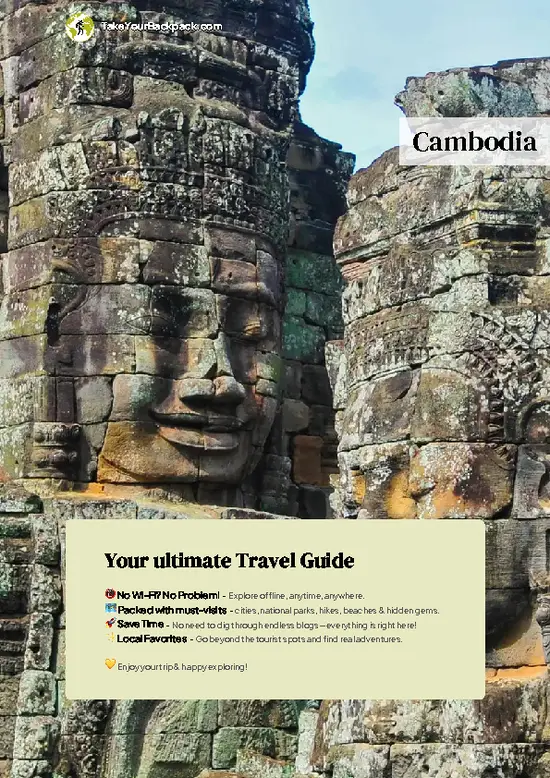
Everyone shows up to Koh Ker for the “jungle pyramid” money shot, then realizes pretty fast that the real magic isn’t one epic staircase selfie, it’s wandering an abandoned capital that still feels half-forgotten. Koh Ker, also known as Ancient Lingapura or Chok Gargyar, sits in northern Cambodia, about 2–3 hours northeast of Siem Reap, out in proper countryside. For backpackers, it’s a trade-off: the seven‑tiered pyramid is a genuine wow, the crowds are a fraction of Angkor’s, and the silence plus forested ruins give you room to actually think about the 10th‑century kingdom that built this place. On the flip side, transport and tickets add up, there’s limited shade, basic facilities, and you’ll burn a full day getting here. Photos are fantastic but harsh light is brutal, and the vibe is more contemplative outpost than social hostel stop.

Discover everything you want to know in the 📖 Cambodia Travel Guide.


Get your Cambodia guide
90 ranked highlights, routes & tips, works offline (345 pages)
Loading the map 🌍
CLICK TO FILTER
cities
towns
villages
landmarks
national parks
hikes
beaches
attractions
festivals
regions
SHOW COUNTRY’S BESTSHOW ALL

✨ Why go?
Ranked #4 unique site in Cambodia
Why Koh Ker (Ancient Lingapura or Chok Gargyar) should be on your travel list

Koh Ker is a must-visit for backpackers seeking the real deal in Cambodia. Forget the Instagram hype of Angkor Wat; Koh Ker offers a raw, unfiltered experience. You’ll find fewer crowds, which means you can explore the ancient temples without feeling like you’re in a human traffic jam.

The cost is a steal. Entry fees are low, and you can easily navigate the site on a budget. The unique architecture here, with its towering pyramids and intricate carvings, feels like stepping back in time. It’s a living history lesson without the tourist traps.

Koh Ker fits perfectly into a broader route through Cambodia. If you’re heading to Siem Reap or Preah Vihear, it’s a natural stop that adds depth to your journey. The effort-to-reward ratio is solid; a bit of travel gets you a whole lot of authenticity. … read more 👉
Koh Ker is a must-visit for backpackers seeking the real deal in Cambodia. Forget the Instagram hype of Angkor Wat; Koh Ker offers a raw, unfiltered experience. You’ll find fewer crowds, which means you can explore the ancient temples without feeling like you’re in a human traffic jam.

The cost is a steal. Entry fees are low, and you can easily navigate the site on a budget. The unique architecture here, with its towering pyramids and intricate carvings, feels like stepping back in time. It’s a living history lesson without the tourist traps.

Koh Ker fits perfectly into a broader route through Cambodia. If you’re heading to Siem Reap or Preah Vihear, it’s a natural stop that adds depth to your journey. The effort-to-reward ratio is solid; a bit of travel gets you a whole lot of authenticity.

In a world of polished attractions, Koh Ker stands out as a raw masterpiece that deserves your time. Don’t miss it.
Want to include Koh Ker (Ancient Lingapura or Chok Gargyar) in your Cambodia route?
Create a personalized Cambodia itinerary that includes Koh Ker (Ancient Lingapura or Chok Gargyar) and the places that fit your trip — based on your travel style, budget, and available time. Get your route in seconds.

Generate my trip

💡 HighlightsDon't-miss highlights and experiences

  • Prasat Thom (the stepped pyramid): The centerpiece — a tall, stepped pyramid that feels almost Mesoamerican in a Khmer context. Climbing it gives a rare 360° view over the forest and scattered temple ruins, and the shape itself is unusual for Khmer architecture, which makes it memorable.
  • The giant sandstone lingam: A massive Shiva lingam sits in the main sanctuary and is one of the most striking single objects at Koh Ker. It speaks to the site’s role as a short-lived royal capital with strong Shaivite devotion and feels powerful in that lonely, open setting.
  • Prasat Krahom (the red towers): Built from distinctive red brick and sandstone, these towers stand out visually from the more common laterite and sandstone structures elsewhere in Cambodia. The color and compact cluster make for great
read more 👉
  • Prasat Thom (the stepped pyramid): The centerpiece — a tall, stepped pyramid that feels almost Mesoamerican in a Khmer context. Climbing it gives a rare 360° view over the forest and scattered temple ruins, and the shape itself is unusual for Khmer architecture, which makes it memorable.
  • The giant sandstone lingam: A massive Shiva lingam sits in the main sanctuary and is one of the most striking single objects at Koh Ker. It speaks to the site’s role as a short-lived royal capital with strong Shaivite devotion and feels powerful in that lonely, open setting.
  • Prasat Krahom (the red towers): Built from distinctive red brick and sandstone, these towers stand out visually from the more common laterite and sandstone structures elsewhere in Cambodia. The color and compact cluster make for great photos and instant recognition.
  • Carved lintels and unusual iconography: Koh Ker’s lintels, bas-reliefs and sculptural fragments show a bold, sometimes experimental style from the 10th-11th centuries — different proportions and mythological scenes than later Angkor work. Art-lovers will spot motifs that you don’t see on the classic Angkor circuit.
  • Scattered satellite temples and the sense of discovery: Instead of one big complex, Koh Ker is a series of small temples, shrines and platforms spread through the jungle. Walking between them feels like exploring — not just sightseeing — and you can often have individual ruins to yourself.
  • Raw, off-the-beaten-track atmosphere: Far fewer visitors than Angkor Wat means silence, dust, a few curious locals and a real frontier feel. It’s a proper backpacker highlight if you like places that still feel a bit wild and unpolished.
  • Sunset and light on the ruins: The low, open skyline and the reddish stones make for beautiful late-afternoon light. Timing your visit for sunset (or golden hour) transforms ordinary carvings into warm, cinematic scenes — worth the wait after a hot day of walking.
Spotted a mistake or missing something? Contact us.

Things to do near Koh Ker (Ancient Lingapura or Chok Gargyar)

Ratings based on Tripadvisor reviews. When you book through this link, you support our work at no extra cost to you.

🌤️ When to go?Best time to visit Koh Ker (Ancient Lingapura or Chok Gargyar)


  • Weather: The dry season from November to February is your best bet—less mud, fewer mosquitoes, and clearer skies. The wet season (May to October) turns the site into a slippery mess, with heavy rains often washing out trails.

  • Temperature: Expect highs around 28-32°C (82-90°F) in the dry season, which is warm but manageable. The hot season (March to May) can scorch you with temps hitting 35-40°C (95-104°F), making midday exploration brutal.

  • Daylight Hours: Cambodia enjoys roughly 11-12 hours of daylight year-round, so early starts and late afternoons are perfect for avoiding the heat and crowds.

  • Crowds: Koh Ker is off the beaten path, but the dry season sees a modest uptick in visitors. Still, you’ll rarely feel overwhelmed—this isn’t Angkor Wat. The wet season keeps most tourists
read more 👉

  • Weather: The dry season from November to February is your best bet—less mud, fewer mosquitoes, and clearer skies. The wet season (May to October) turns the site into a slippery mess, with heavy rains often washing out trails.

  • Temperature: Expect highs around 28-32°C (82-90°F) in the dry season, which is warm but manageable. The hot season (March to May) can scorch you with temps hitting 35-40°C (95-104°F), making midday exploration brutal.

  • Daylight Hours: Cambodia enjoys roughly 11-12 hours of daylight year-round, so early starts and late afternoons are perfect for avoiding the heat and crowds.

  • Crowds: Koh Ker is off the beaten path, but the dry season sees a modest uptick in visitors. Still, you’ll rarely feel overwhelmed—this isn’t Angkor Wat. The wet season keeps most tourists away, but at the cost of accessibility.

  • Seasonal Activities: Dry season allows for full exploration of temples and surrounding jungle. Wet season floods limit access to some ruins, and the jungle’s lushness comes at the price of slippery paths and leeches.

  • Price Fluctuations: Accommodation and transport prices stay relatively stable year-round, but expect slightly higher rates during the dry season when demand peaks.


Pro-tip: Aim for the shoulder months of November or February—cooler, drier, and quieter—so you get the best of both worlds without the crowds or the heat.


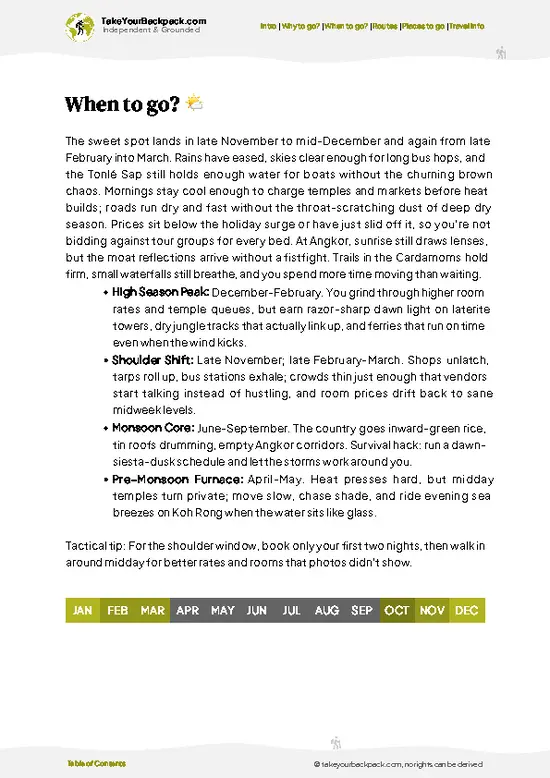
source: climatestotravel.comJANJanuary: excellent for travelingFEBFebruary: excellent for travelingMARMarch: fair for travelingAPRApril: fair for travelingMAYMay: below average for travelingJUNJune: below average for travelingJULJuly: below average for travelingAUGAugust: below average for travelingSEPSeptember: below average for travelingOCTOctober: below average for travelingNOVNovember: excellent for travelingDECDecember: excellent for traveling
cambodia-unique-site-koh-ker-ancient-lingapura-or-chok-gargyar
© Google |

✈️ The backpacker research shortcutCambodia Travel Guide

An offline-friendly backpacking guide with optimized travel routes, ranked highlights, transport advice, and the best areas to stay.
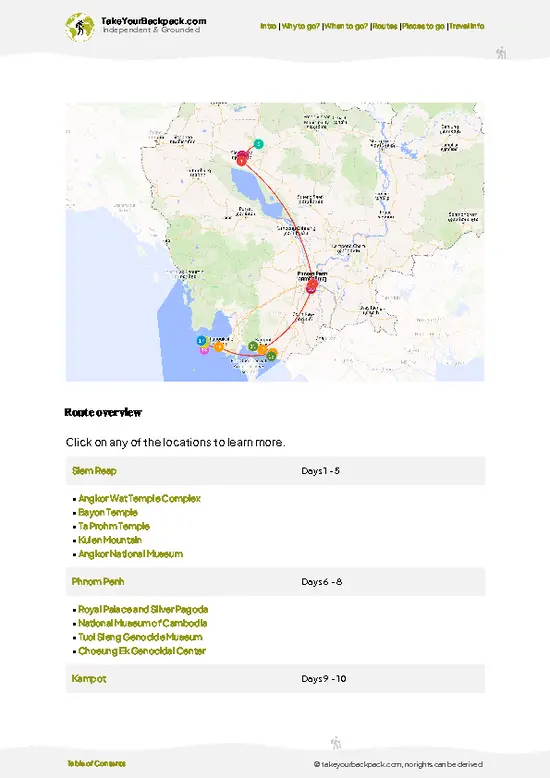
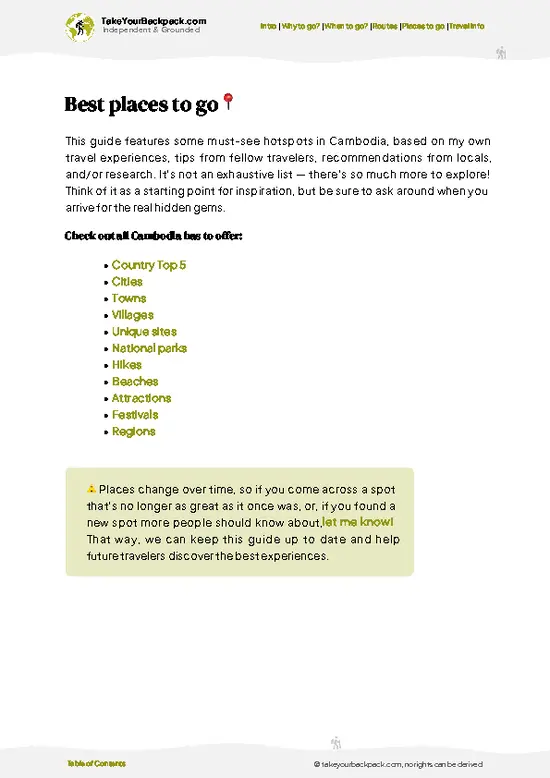
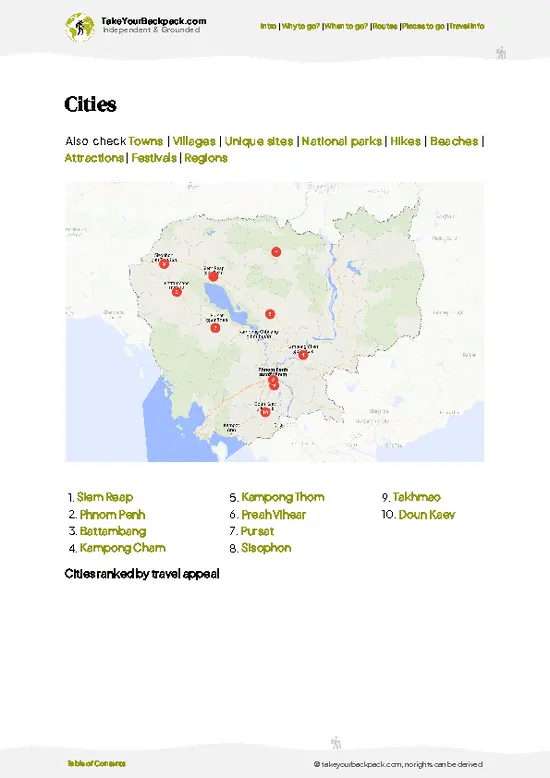
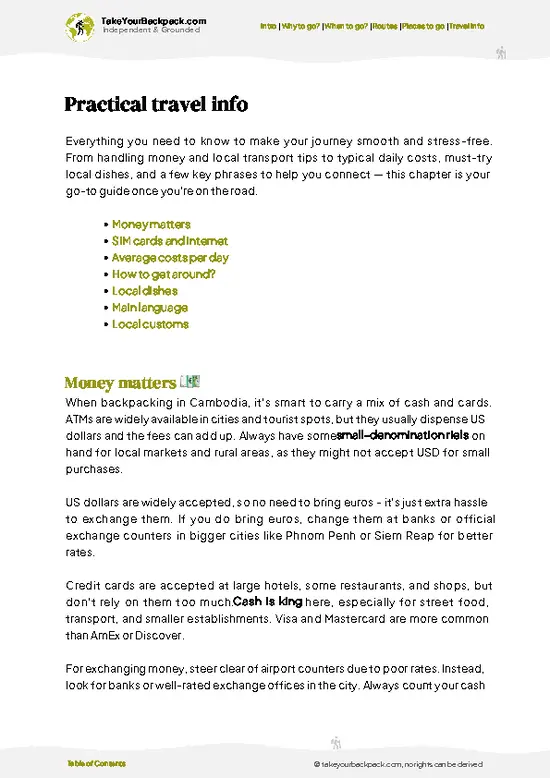
example page 0 from our offline Travel Guide for Cambodia
example page 1 from our offline Travel Guide for Cambodia
example page 2 from our offline Travel Guide for Cambodia
example page 3 from our offline Travel Guide for Cambodia
example page 4 from our offline Travel Guide for Cambodia
example page 5 from our offline Travel Guide for Cambodia
example page 6 from our offline Travel Guide for Cambodia
example page 7 from our offline Travel Guide for Cambodia
The digital guide (345 pages) contains:
90 highlights, ranked by travel appeal
Optimized 5, 10 & 15-day travel routes
Cities, national parks, landmarks, beaches
How to get around
Offline-friendly for travel without Wi-Fi
👉 Click to see all 30+ guide features

📅 Plan smarter in minutes, not weeks
Month by month travel advice
Festivals & national holidays
Budget expectations

🗺️ Go to the right places, skip the overrated ones
Honest pros & cons of destinations
Top hikes, parks & viewpoints
Lesser-known places most travelers miss
Clear “worth it vs skip it” guidance

🛏️ Travel smoothly without rookie mistakes
Best areas to stay
Transport systems explained simply
Common scams & safety advice
SIM cards, money & practical tips

🌍 Understand the country, not just visit it
Culture & traditions
52 Essential phrases & customs
Festivals worth planning around
Traveler-friendly historical context
Insights that make places more meaningful

📱 Built for real travel conditions
Fully downloadable PDF
Works completely offline
Optimized for phone use
Useful in remote areas & buses
Everything in one place
Save weeks of stressful planning
Get instant access to your full guide. 30‑day money-back guarantee.


By proceeding you agree to our terms.
Sent to your inbox immediately after payment • 100% Secure Checkout
Best Backpacking Travel Advisor 2025 tourism awardBest Backpacking
Travel Advisor
2025
What others say about Take Your Backpack Guides:
⭐⭐⭐⭐⭐
Fantastic, amazing amount of information!
⭐⭐⭐⭐⭐
My goodness this is amazing, it's what I've been looking for hats off too you!
⭐⭐⭐⭐⭐
I think this is absolutely BRILLIANT
⭐⭐⭐⭐
Very complete and informative. It's still missing places, but I gotta to commend you
⭐⭐⭐⭐⭐
This is truly amazing, thank you, can't wait to explore it with my kids!
⭐⭐⭐⭐⭐
Awesome resource, thank you!
⭐⭐⭐⭐⭐
This is amazing! Can't wait to explore the ones I haven't seen
⭐⭐⭐⭐
I love this! Well done, great idea.
⭐⭐⭐⭐⭐
Thanks for taking the time to make this gem!
⭐⭐⭐⭐⭐
This might be the best website I've ever seen.
⭐⭐⭐⭐⭐
Congratulations, and thank you so much for your work; it's incredibly valuable.
⭐⭐⭐⭐
In all seriousness I think you did a great job pointing out the important spots
⭐⭐⭐⭐⭐
10/10 very good
⭐⭐⭐⭐⭐
As someone who's only just starting to visit regularly this is awesome, thank you.
⭐⭐⭐⭐
Thank you very much! I'm going to visit my dad, it's going to be very useful!
⭐⭐⭐⭐⭐
This is really cool! We'll be travelling for the first time and this definitely come in handy.
⭐⭐⭐⭐⭐
You are now our minister of culture, congratulations 👨‍💼
⭐⭐⭐⭐⭐
Just wanted to tell you that this is a pearl! Going to follow your recommendations.
⭐⭐⭐⭐⭐
This is so cool. I'll definitely be using the resource for my travels soon.
⭐⭐⭐⭐⭐
This is very impressive! Good work.
⭐⭐⭐⭐⭐
This is an amazing and informative site. Very well done!

🛏️ Where to stay?Choosing the right base

Koh Ker isn’t just another stop on the Angkor circuit; it’s a sprawling, ancient wonder that feels like a secret waiting to be discovered. But let’s get real—this isn’t a place where you’ll find five-star resorts or bustling nightlife. Instead, you’ll want to set up camp in the nearby town of Preah Vihear or the village of Koh Ker itself.

Preah Vihear is your best bet for a social vibe. It’s a small town with a handful of guesthouses that cater to budget travelers. You’ll find fellow backpackers swapping stories over cheap meals, and the atmosphere is friendly. Plus, it’s a solid base for day … read more 👉
Koh Ker isn’t just another stop on the Angkor circuit; it’s a sprawling, ancient wonder that feels like a secret waiting to be discovered. But let’s get real—this isn’t a place where you’ll find five-star resorts or bustling nightlife. Instead, you’ll want to set up camp in the nearby town of Preah Vihear or the village of Koh Ker itself.

Preah Vihear is your best bet for a social vibe. It’s a small town with a handful of guesthouses that cater to budget travelers. You’ll find fellow backpackers swapping stories over cheap meals, and the atmosphere is friendly. Plus, it’s a solid base for day trips to Koh Ker, which is about an hour away.

Koh Ker village is quieter but offers a more immersive experience. Here, you can connect with locals and explore the ruins without the tourist crowds. The accommodations are basic but safe, and you’ll get a genuine feel for rural Cambodian life.

Both areas keep you close to the magic of Koh Ker while providing a sense of community. Just remember, this isn’t about luxury; it’s about the adventure and the stories you’ll collect along the way.

👛 Costs (as of 11 February 2025)What things cost and how to budget

Visiting Koh Ker is a journey into Cambodia’s ancient past, but it comes with its own set of costs. Here’s the breakdown:
  • Entrance Fee: Expect to pay around $10 to $20 USD for a ticket. This fee grants you access to the site, which is less crowded than Angkor Wat but still rich in history. Keep in mind that prices can vary based on whether you’re visiting as part of a guided tour.
  • Transportation: Getting to Koh Ker can be a bit of an adventure. If you’re traveling from Siem Reap, a private taxi might cost you between $50 to $70 USD for a round trip. Alternatively, you can opt for a shared minivan, which typically runs about $10 to $15 USD per person. Just be prepared for a bumpy ride on rural roads.
  • Guided Tours: Hiring a local guide can enhance your experience significantly. Expect to pay around
read more 👉
Visiting Koh Ker is a journey into Cambodia’s ancient past, but it comes with its own set of costs. Here’s the breakdown:
  • Entrance Fee: Expect to pay around $10 to $20 USD for a ticket. This fee grants you access to the site, which is less crowded than Angkor Wat but still rich in history. Keep in mind that prices can vary based on whether you’re visiting as part of a guided tour.
  • Transportation: Getting to Koh Ker can be a bit of an adventure. If you’re traveling from Siem Reap, a private taxi might cost you between $50 to $70 USD for a round trip. Alternatively, you can opt for a shared minivan, which typically runs about $10 to $15 USD per person. Just be prepared for a bumpy ride on rural roads.
  • Guided Tours: Hiring a local guide can enhance your experience significantly. Expect to pay around $20 to $40 USD for a half-day tour. A knowledgeable guide can provide insights that you won’t find in guidebooks, making the ancient ruins come alive.
  • Food and Drink: There are limited dining options near Koh Ker. Budget around $5 to $15 USD for a meal at a local eatery. Bring snacks and water, as prices can be inflated at tourist spots. A bottle of water might cost you $1 USD, while a local dish could be around $3 to $5 USD.
  • Accommodation: If you plan to stay overnight, options are sparse but available. Guesthouses in the nearby area range from $10 to $30 USD per night. For a more comfortable stay, consider heading back to Siem Reap, where prices can vary widely based on your preferences.

Koh Ker is worth the effort and expense. The tranquility and the chance to explore ancient temples without the throngs of tourists make it a unique experience.


source: tourismcambodia.org
⚠️ Prices can change and everyone travels differently, so take this as a rough guide. Hope it helps you plan your adventure!

Other Cambodian landmarks near Koh Ker (Ancient Lingapura or Chok Gargyar)

Explore more nearby:


💡 Not sure where to go next?
Create a personalized itinerary for Cambodia including Koh Ker (Ancient Lingapura or Chok Gargyar) and the places that fit your trip.

Generate my itinerary

👉 Discover all landmarks

Or checkout all Cambodia has to offer (think cities, towns, villages, national parks, hikes, beaches, festivals)
Country photo of Cambodia

We 💚 feedbackIs it worth it?

Koh Ker isn’t the Instagram paradise you might expect. It’s raw, rugged, and often overrun with tourists, especially during peak season. But here’s the kicker: the moment you step away from the main temples, you’ll find a haunting stillness that’s pure magic. The jungle swallows you whole, and the crumbling ruins whisper stories of a lost civilization. Just be ready for the heat and bring plenty of water. Trust me, the quiet moments here are worth every bead of sweat.

✍️ Help improve this page!
The information on this page is based on in-depth research, insights shared by experienced travelers, and feedback from the local travel community in Cambodia. While every effort is made to keep the information accurate and current, conditions can change — so if you spot anything incorrect or outdated, please get in touch.


🙋‍♂️ Give feedback

👋 Meet the founderWho’s Behind Take Your Backpack?

Johan, backpacker and founder of TakeYourBackpackHi, I’m Johan (Netherlands 🇳🇱), the creator of TakeYourBackpack. Over the past decade, I’ve backpacked through 80+ countries across six continents, gaining extensive experience with independent travel, long-term trips, and overland routes.

This site is built on a combination of firsthand travel experience and carefully curated insights from other backpackers. Many guides are based on places I’ve personally visited, while others bring together tips, observations, and practical advice shared by trusted travelers I’ve met along the way.

The goal is to provide realistic, experience-driven guidance — not generic itineraries — so you can explore destinations with better context, clearer expectations, and more confidence.

Get full Cambodia guide •
Instant download • 90 highlights • Full Offline guide