×

Cambodia🇰🇭 | citiesPhnom PenhRoyal Palace, riverside promenade, urban markets | things to do and best time to go

Explore Kampong ChamExplore Siem Reap

Backpacking in Phnom Penh
🏆 Top pickcity ranked #2
By Johan Kruseman 🇳🇱 | Updated June 1, 2026

Ten years ago Phnom Penh felt raw: patchy power cuts, chaotic riverside bars, tuk-tuks with no meters, and a backpacker scene that ran on rumor and word of mouth. Today it’s sharper and more organized, but still rough-edged in a way Siem Reap and Kampot no longer are. Sitting at the junction of the Mekong and Tonlé Sap in south-central Cambodia, it’s the country’s political and emotional core. For backpackers, it’s intense but important: the Killing Fields and Tuol Sleng are heavy, the Royal Palace and riverside promenade soften the blow, and the café scene is surprisingly good. It’s cheap, transport is easy, and you’ll meet other travelers in hostels and rooftop bars without trying. Traffic is wild, petty theft exists, and the nightlife can slide seedy if you wander blindly, but stay switched on and it’s manageable. Phnom Penh isn’t charming; it’s confronting, energetic, and very real.

Discover everything you want to know in the 📖 Cambodia Travel Guide.


Get your Cambodia guide
90 ranked highlights, routes & tips, works offline (345 pages)
Loading the map 🌍
CLICK TO FILTER
cities
towns
villages
landmarks
national parks
hikes
beaches
attractions
festivals
regions
SHOW COUNTRY’S BESTSHOW ALL

✨ Why go?
Ranked #2 city in Cambodia
Why visitors keep coming back

Phnom Penh is a strategic hub for backpackers navigating Southeast Asia. It offers a unique blend of affordability and vibrancy that makes it a worthy stop. The hostel scene is robust, with plenty of options that cater to budget-conscious travelers while fostering a social atmosphere. You can easily find a place to crash that’s both comfortable and lively, perfect for meeting fellow adventurers.

The city’s walkability enhances its charm. You can stroll along the riverside, soak in the local culture, and grab a bite from street vendors without breaking the bank. Speaking of food, the culinary scene is a delightful mix of local flavors and international cuisine, ensuring you won’t go hungry.

Phnom Penh also serves as an excellent basecamp for day trips to nearby attractions, making it easy … read more 👉
Phnom Penh is a strategic hub for backpackers navigating Southeast Asia. It offers a unique blend of affordability and vibrancy that makes it a worthy stop. The hostel scene is robust, with plenty of options that cater to budget-conscious travelers while fostering a social atmosphere. You can easily find a place to crash that’s both comfortable and lively, perfect for meeting fellow adventurers.

The city’s walkability enhances its charm. You can stroll along the riverside, soak in the local culture, and grab a bite from street vendors without breaking the bank. Speaking of food, the culinary scene is a delightful mix of local flavors and international cuisine, ensuring you won’t go hungry.

Phnom Penh also serves as an excellent basecamp for day trips to nearby attractions, making it easy to explore the surrounding areas without the hassle of constant travel. Plus, the nightlife is buzzing, offering everything from laid-back bars to vibrant clubs, ensuring your evenings are just as engaging as your days.

In short, if you’re looking for a city that balances high-value experiences with a rich cultural tapestry, Phnom Penh is a solid choice, whether for a longer stay or a brief stopover.
Want to include Phnom Penh in your Cambodia route?
Create a personalized Cambodia itinerary that includes Phnom Penh and the places that fit your trip — based on your travel style, budget, and available time. Get your route in seconds.

Generate my trip

💡 HighlightsEssential experiences to have while visiting Phnom Penh

  • Royal Palace & Silver Pagoda — The glittery heart of Phnom Penh: elegant Khmer-roofed halls, the Silver Pagoda with its dazzling Emerald Buddha replica and silver-tiled floor, and manicured grounds that reveal royal history and living ceremonial life.
  • National Museum of Cambodia — A peaceful red-brick building with the best concentrated collection of Khmer sculpture and carvings; great for anyone who wants context before heading to Angkor or to appreciate local craftsmanship up close.
  • Tuol Sleng Genocide Museum (S-21) — Housed in a grim former school, the museum is raw and heavy but essential for understanding Cambodia’s recent past; the photographic exhibits and preserved cells are powerful and sobering.
  • Wat Phnom — The small hill and temple that gave the city its name; visit for the
read more 👉
  • Royal Palace & Silver Pagoda — The glittery heart of Phnom Penh: elegant Khmer-roofed halls, the Silver Pagoda with its dazzling Emerald Buddha replica and silver-tiled floor, and manicured grounds that reveal royal history and living ceremonial life.
  • National Museum of Cambodia — A peaceful red-brick building with the best concentrated collection of Khmer sculpture and carvings; great for anyone who wants context before heading to Angkor or to appreciate local craftsmanship up close.
  • Tuol Sleng Genocide Museum (S-21) — Housed in a grim former school, the museum is raw and heavy but essential for understanding Cambodia’s recent past; the photographic exhibits and preserved cells are powerful and sobering.
  • Wat Phnom — The small hill and temple that gave the city its name; visit for the views over the surrounding streets, the local shrine rituals, and a quick, atmospheric slice of everyday Phnom Penh devotion.
  • Phsar Thmei (Central Market) — An art-deco landmark and working market under a giant domed roof: cheap goods, fresh snacks, cameras and jewelry stalls — excellent for photos, bargain hunting, and people-watching.
  • Tuol Tom Poung (Russian Market) — Less touristy than Central Market, this labyrinth of stalls is where you’ll find fabrics, secondhand electronics, craft bargains and excellent street food; good for hand-made souvenirs and local flavor.
  • Independence Monument & Norodom Park — A striking Khmer-style stupa set on a busy roundabout that lights up at night; the surrounding park is where locals jog, gather and watch ceremonial events — a good spot for evening atmosphere.
  • Sisowath Quay (Riverside) — The riverside promenade is Phnom Penh’s social spine: cafés, sunset views over the Tonlé Sap-Mekong confluence, weekend markets and riverboat trips — ideal for slow evenings and people-watching.
  • Wat Ounalom — One of Cambodia’s most important Buddhist temples, close to the river; its ornate shrines, resident monks and quiet courtyards offer a more reflective, less-touristy temple experience than the palace grounds.
  • Bassac Lane & Street Food Alleys — A tiny lane-packed neighborhood where local cafés, microbars and street-food stalls cluster; great for an evening crawl to sample modern Phnom Penh life beyond the big sights.
A few excellent day trips outside the city: the Choeung Ek Killing Fields memorial, the peaceful silk-weaving island Koh Dach (Silk Island), and the old royal capital Phnom Oudong — all easily reachable from Phnom Penh.
Spotted a mistake or missing something? Contact us.

Things to do in Phnom Penh

Ratings based on Tripadvisor reviews. When you book through this link, you support our work at no extra cost to you.

🏘️ NeighborhoodsHow different areas shape the experience

Phnom Penh is a city where history and modernity collide, offering backpackers a rich tapestry of experiences. Here’s a breakdown of key neighborhoods to help you navigate your stay.

Kandal Market: This area buzzes with local life. Street food stalls and markets are everywhere, making it a budget-friendly choice. The vibe is lively, perfect for those who thrive on energy. Walkability is excellent, and you can easily hop on a tuk-tuk for further adventures. Ideal for short stays, as you’ll want to explore the nearby attractions.

Boeung Kak Lake: Once a backpacker hotspot, this area still retains its charm. It’s quieter now but offers a laid-back atmosphere with cafes and guesthouses lining the lake. Prices are reasonable, and you can stroll along the water for a peaceful experience. Great … read more 👉
Phnom Penh is a city where history and modernity collide, offering backpackers a rich tapestry of experiences. Here’s a breakdown of key neighborhoods to help you navigate your stay.

Kandal Market: This area buzzes with local life. Street food stalls and markets are everywhere, making it a budget-friendly choice. The vibe is lively, perfect for those who thrive on energy. Walkability is excellent, and you can easily hop on a tuk-tuk for further adventures. Ideal for short stays, as you’ll want to explore the nearby attractions.

Boeung Kak Lake: Once a backpacker hotspot, this area still retains its charm. It’s quieter now but offers a laid-back atmosphere with cafes and guesthouses lining the lake. Prices are reasonable, and you can stroll along the water for a peaceful experience. Great for longer stays if you want to unwind and soak in the local culture.

Riverside: This is the heart of Phnom Penh’s nightlife. Bars and restaurants line the waterfront, making it vibrant after dark. It’s a bit pricier, but the views are worth it. Walkability is high, and you can easily access major attractions. Perfect for those looking to mix relaxation with socializing, suitable for both short and longer stays.

Russian Market (Toul Tom Poung): A treasure trove of local goods and street food. The vibe is bustling yet manageable. Prices are low, and it’s a great spot for souvenirs. While not as walkable as others, it’s easily reachable by tuk-tuk. Best for short visits to grab unique finds and experience local life.

⌛️ 1 day1-day itinerary for Phnom Penh

Phnom Penh pulses with a unique blend of history and modernity. The city’s streets hum with the energy of motorbikes, street vendors, and the scent of sizzling street food. It’s a place where ancient temples stand shoulder to shoulder with bustling markets, and every corner tells a story.

Start your morning in the Riverside area, where the Mekong River flows gracefully. Grab a strong cup of Cambodian coffee at a local café, then stroll along the riverfront promenade. The sun rises over the water, casting a golden hue that makes the day feel full of promise. After your caffeine fix, head to the Royal Palace. This iconic landmark is a feast for the eyes, with its intricate architecture and lush gardens. Take your time wandering through the grounds, soaking in the serenity before the crowds … read more 👉
Phnom Penh pulses with a unique blend of history and modernity. The city’s streets hum with the energy of motorbikes, street vendors, and the scent of sizzling street food. It’s a place where ancient temples stand shoulder to shoulder with bustling markets, and every corner tells a story.

Start your morning in the Riverside area, where the Mekong River flows gracefully. Grab a strong cup of Cambodian coffee at a local café, then stroll along the riverfront promenade. The sun rises over the water, casting a golden hue that makes the day feel full of promise. After your caffeine fix, head to the Royal Palace. This iconic landmark is a feast for the eyes, with its intricate architecture and lush gardens. Take your time wandering through the grounds, soaking in the serenity before the crowds arrive.

As the afternoon rolls in, make your way to the bustling Central Market in the heart of the city. This Art Deco structure is a sensory overload—vendors hawking everything from fresh produce to handmade crafts. Dive into the local cuisine by sampling some street food; try a bowl of kuy teav, a fragrant noodle soup that’s a staple here. Afterward, take a short tuk-tuk ride to the Tuol Sleng Genocide Museum. This site, though heavy with history, offers a crucial perspective on Cambodia’s past. It’s a sobering experience, but one that deepens your understanding of the resilience of the Cambodian people.

As evening approaches, head to the lively neighborhood of BKK1. Here, you’ll find a mix of expats and locals enjoying the vibrant nightlife. Grab dinner at a local restaurant like Friends, where you can savor delicious Khmer dishes while supporting a social enterprise that trains at-risk youth. Afterward, unwind at a rooftop bar, sipping a cocktail as you watch the city light up below.

In just one day, you’ve navigated the heart of Phnom Penh, balancing the rich history with the vibrant present. Each choice you made—whether to linger at the Royal Palace or dive into the market—crafted a unique experience, making your visit truly worthwhile.
Turn your Phnom Penh visit into an Cambodia adventure
Build a complete Cambodia route with Phnom Penh, hidden gems, must-see destinations, and realistic travel times included.

Generate my trip

🌤️ When to go?Seasonal considerations and timing


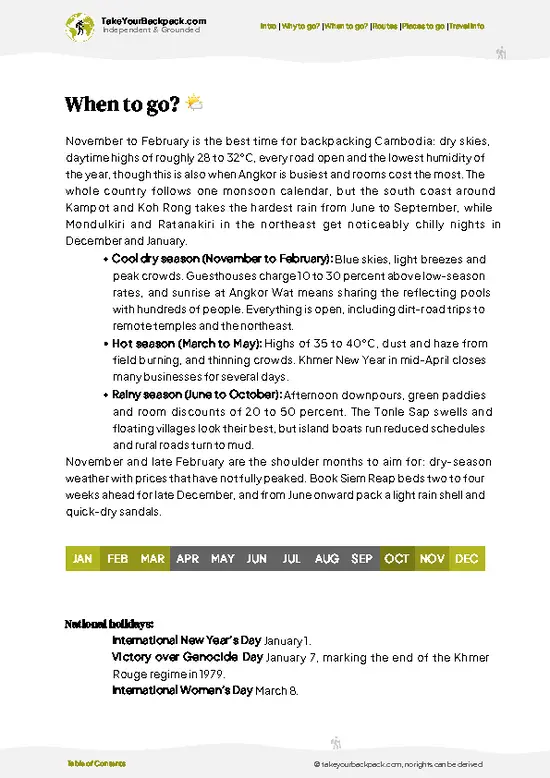
  • Topic: Weather – Phnom Penh’s climate swings between a hot, wet season and a cooler dry season. The dry months from November to February offer the most comfortable conditions, with less humidity and almost no rain, making trekking and city exploration far more pleasant.

  • Topic: Temperature – During the dry season, expect highs around 30°C (86°F) and lows near 20°C (68°F). The wet season, from May to October, cranks up the heat and humidity, pushing highs above 35°C (95°F), which can drain your energy fast.

  • Topic: Daylight Hours – Daylight remains fairly consistent year-round, roughly 11 to 12 hours daily. This steadiness means you can plan your days without worrying about early sunsets cutting your adventures short.

  • Topic: Crowds – Tourist numbers peak during the dry season, especially
read more 👉

  • Topic: Weather – Phnom Penh’s climate swings between a hot, wet season and a cooler dry season. The dry months from November to February offer the most comfortable conditions, with less humidity and almost no rain, making trekking and city exploration far more pleasant.

  • Topic: Temperature – During the dry season, expect highs around 30°C (86°F) and lows near 20°C (68°F). The wet season, from May to October, cranks up the heat and humidity, pushing highs above 35°C (95°F), which can drain your energy fast.

  • Topic: Daylight Hours – Daylight remains fairly consistent year-round, roughly 11 to 12 hours daily. This steadiness means you can plan your days without worrying about early sunsets cutting your adventures short.

  • Topic: Crowds – Tourist numbers peak during the dry season, especially December and January, which means busier sites and higher prices. The wet season sees fewer travelers, offering a quieter, more local vibe but with the trade-off of unpredictable downpours.

  • Topic: Seasonal Activities – The dry season aligns with cultural festivals like the Water Festival (usually November), a spectacle worth timing your visit for. The wet season, while less festival-heavy, brings lush landscapes and fewer tourists, ideal if you prefer solitude over spectacle.

  • Topic: Price Fluctuations – Accommodation and flights spike during the dry season’s peak months. Booking ahead can save you a bundle. The wet season offers significant discounts but factor in the inconvenience of rain and potential travel delays.


Pro-tip: Aim for the shoulder months of November or February to balance pleasant weather, manageable crowds, and better prices—your sweet spot for smart backpacking in Phnom Penh.


source: climatestotravel.comJANJanuary: highly recommended for travelingFEBFebruary: excellent for travelingMARMarch: good for travelingAPRApril: fair for travelingMAYMay: fair for travelingJUNJune: fair for travelingJULJuly: fair for travelingAUGAugust: fair for travelingSEPSeptember: fair for travelingOCTOctober: good for travelingNOVNovember: excellent for travelingDECDecember: highly recommended for traveling
when-to-go

✈️ The backpacker research shortcutCambodia Travel Guide

An offline-friendly backpacking guide with optimized travel routes, ranked highlights, transport advice, and the best areas to stay.
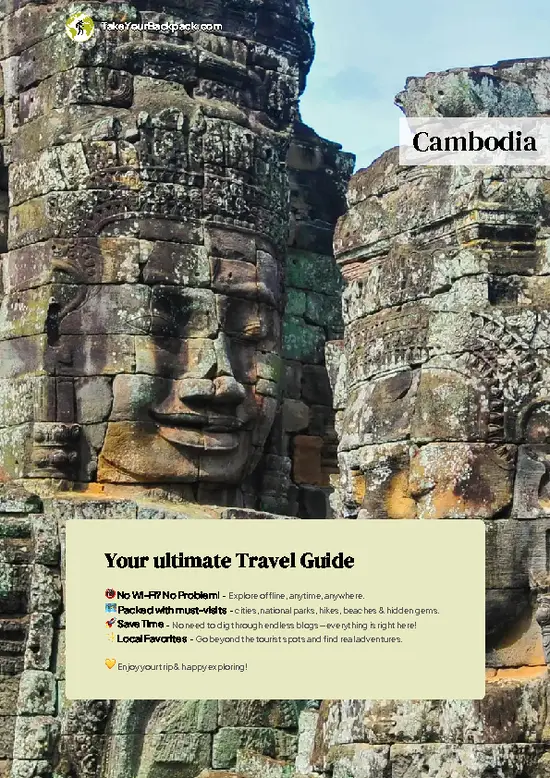
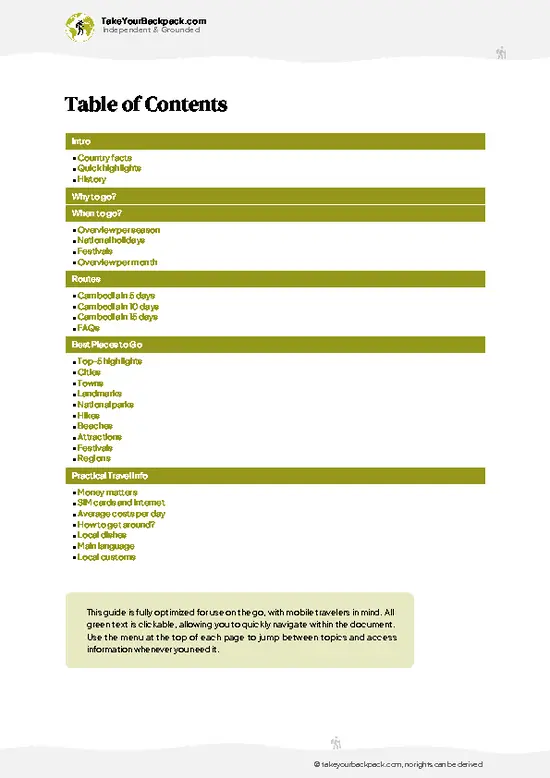
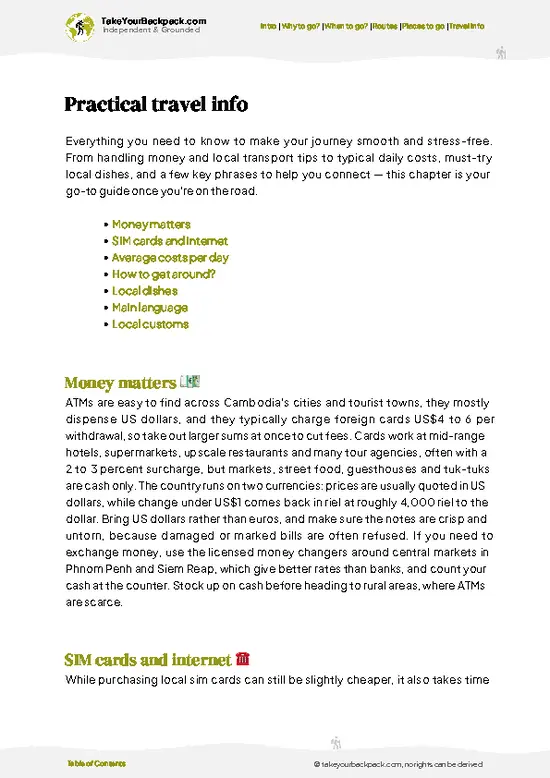
example page 0 from our offline Travel Guide for Cambodiaexample page 1 from our offline Travel Guide for Cambodiaexample page 2 from our offline Travel Guide for Cambodiaexample page 3 from our offline Travel Guide for Cambodiaexample page 4 from our offline Travel Guide for Cambodiaexample page 5 from our offline Travel Guide for Cambodiaexample page 6 from our offline Travel Guide for Cambodiaexample page 7 from our offline Travel Guide for Cambodia
The digital guide (345 pages) contains:
90 highlights, ranked by travel appeal
Optimized 5, 10 & 15-day travel routes
Cities, national parks, landmarks, beaches
How to get around
Offline-friendly for travel without Wi-Fi
👉 Click to see all 30+ guide features

📅 Plan smarter in minutes, not weeks
Month by month travel advice
Festivals & national holidays
Budget expectations

🗺️ Go to the right places, skip the overrated ones
Honest pros & cons of destinations
Top hikes, parks & viewpoints
Lesser-known places most travelers miss
Clear “worth it vs skip it” guidance

🛏️ Travel smoothly without rookie mistakes
Best areas to stay
Transport systems explained simply
Common scams & safety advice
SIM cards, money & practical tips

🌍 Understand the country, not just visit it
Culture & traditions
52 Essential phrases & customs
Festivals worth planning around
Traveler-friendly historical context
Insights that make places more meaningful

📱 Built for real travel conditions
Fully downloadable PDF
Works completely offline
Optimized for phone use
Useful in remote areas & buses
Everything in one place
Save weeks of stressful planning
Get instant access to your full guide. 30‑day money-back guarantee.


By proceeding you agree to our terms.
Sent to your inbox immediately after payment • 100% Secure Checkout
Best Backpacking Travel Advisor 2025 tourism awardBest Backpacking
Travel Advisor
2025
What others say about Take Your Backpack Guides:
⭐⭐⭐⭐⭐
Fantastic, amazing amount of information!
⭐⭐⭐⭐⭐
My goodness this is amazing, it's what I've been looking for hats off too you!
⭐⭐⭐⭐⭐
I think this is absolutely BRILLIANT
⭐⭐⭐⭐
Very complete and informative. It's still missing places, but I gotta to commend you
⭐⭐⭐⭐⭐
This is truly amazing, thank you, can't wait to explore it with my kids!
⭐⭐⭐⭐⭐
Awesome resource, thank you!
⭐⭐⭐⭐⭐
This is amazing! Can't wait to explore the ones I haven't seen
⭐⭐⭐⭐
I love this! Well done, great idea.
⭐⭐⭐⭐⭐
Thanks for taking the time to make this gem!
⭐⭐⭐⭐⭐
This might be the best website I've ever seen.
⭐⭐⭐⭐⭐
Congratulations, and thank you so much for your work; it's incredibly valuable.
⭐⭐⭐⭐
In all seriousness I think you did a great job pointing out the important spots
⭐⭐⭐⭐⭐
10/10 very good
⭐⭐⭐⭐⭐
As someone who's only just starting to visit regularly this is awesome, thank you.
⭐⭐⭐⭐
Thank you very much! I'm going to visit my dad, it's going to be very useful!
⭐⭐⭐⭐⭐
This is really cool! We'll be travelling for the first time and this definitely come in handy.
⭐⭐⭐⭐⭐
You are now our minister of culture, congratulations 👨‍💼
⭐⭐⭐⭐⭐
Just wanted to tell you that this is a pearl! Going to follow your recommendations.
⭐⭐⭐⭐⭐
This is so cool. I'll definitely be using the resource for my travels soon.
⭐⭐⭐⭐⭐
This is very impressive! Good work.
⭐⭐⭐⭐⭐
This is an amazing and informative site. Very well done!

🛏️ Where to stay?Choosing the right base

Phnom Penh’s backpacker scene gravitates toward two main neighborhoods that balance safety, social buzz, and budget options: Riverside (Sisowath Quay) and BKK1.

Riverside is the classic choice. It’s where the city’s pulse meets the river’s calm, offering a compact area packed with hostels, street food stalls, and bars. You’re never far from fellow travelers, making it easy to strike up conversations or join group outings. The vibe here is lively but manageable, with plenty of people around well into the night, which adds a layer of safety. The trade-off? Riverside can be a bit touristy and pricier … read more 👉
Phnom Penh’s backpacker scene gravitates toward two main neighborhoods that balance safety, social buzz, and budget options: Riverside (Sisowath Quay) and BKK1.

Riverside is the classic choice. It’s where the city’s pulse meets the river’s calm, offering a compact area packed with hostels, street food stalls, and bars. You’re never far from fellow travelers, making it easy to strike up conversations or join group outings. The vibe here is lively but manageable, with plenty of people around well into the night, which adds a layer of safety. The trade-off? Riverside can be a bit touristy and pricier than other parts, but the convenience and social opportunities often justify the premium for solo backpackers.

BKK1, on the other hand, is quieter and more residential but still loaded with affordable guesthouses and a growing number of hostels. It’s a bit more laid-back, attracting travelers who want a break from the Riverside hustle without sacrificing access to cafes, markets, and nightlife. The streets feel safer for wandering solo, especially after dark, and the local vibe is more authentic, less tourist-driven. You’ll spend a little more time getting to the riverfront or main attractions, but the comfort and calm can be worth it.

Other areas in Phnom Penh tend to lack the social infrastructure or safety that backpackers need. So, Riverside and BKK1 form a strategic duo: one for high-energy socializing, the other for relaxed, budget-friendly comfort. Choose based on whether you want to trade a bit of quiet for instant connection or vice versa.

🚌 Getting aroundTransportation options and practical tips

Phnom Penh moves at a pace that’s part methodical, part improvisational jazz. The city’s pulse isn’t dictated by strict timetables but by a rhythm of honking tuk-tuks, weaving motorbikes, and pedestrians carving their own paths. It’s a place where schedules exist mostly in theory, and your best bet is to read the street’s flow rather than fight it. This means your transit choices aren’t just about getting from A to B—they’re about syncing with the city’s tempo, balancing your time, money, and comfort like a savvy player in a game where every move counts.


  • Walking: The ultimate zero-cost option and the best way to absorb Phnom Penh’s street-level energy. Ideal for short distances in the central districts, walking lets you dodge traffic snarls and discover unexpected street food stalls or
read more 👉
Phnom Penh moves at a pace that’s part methodical, part improvisational jazz. The city’s pulse isn’t dictated by strict timetables but by a rhythm of honking tuk-tuks, weaving motorbikes, and pedestrians carving their own paths. It’s a place where schedules exist mostly in theory, and your best bet is to read the street’s flow rather than fight it. This means your transit choices aren’t just about getting from A to B—they’re about syncing with the city’s tempo, balancing your time, money, and comfort like a savvy player in a game where every move counts.


  • Walking: The ultimate zero-cost option and the best way to absorb Phnom Penh’s street-level energy. Ideal for short distances in the central districts, walking lets you dodge traffic snarls and discover unexpected street food stalls or local markets. It’s slow but free, and your comfort depends entirely on weather and stamina.


  • Tuk-Tuk: The iconic, open-air three-wheeler is Phnom Penh’s go-to for quick, flexible rides. Expect to pay around $1–$3 for most trips within the city center. No fixed schedules—just flag one down and negotiate a price. It’s faster than walking but can be bumpy and noisy, with little protection from the elements. Great for short to medium distances when you want to save time but keep costs low.


  • Motorbike Taxi (Moto): The fastest and cheapest motorized option, usually costing less than a tuk-tuk for the same distance. You’ll find motos everywhere, and they’re perfect for weaving through traffic jams. Comfort is minimal—helmet provided, but expect wind, dust, and close calls. Best for solo travelers who prioritize speed and budget over comfort.


  • City Bus: Phnom Penh’s public bus system is a recent addition and still growing. Routes cover major corridors with fares typically under $0.50. Buses run roughly from 6:00 AM to 8:00 PM but can be slow due to traffic and frequent stops. Comfort is basic, and schedules are approximate, so allow extra time. This is the best choice if you want to stretch your budget and don’t mind sacrificing speed.


  • Ride-Hailing Apps (PassApp, Grab): These apps offer car or motorbike rides with upfront pricing, usually slightly higher than street-negotiated tuk-tuks but with more predictability. Cars provide air conditioning and comfort, costing around $3–$6 for typical city trips. Available 24/7, they’re a solid middle ground if you want to save time and avoid haggling, but they do eat into your budget.


Understanding Phnom Penh’s transit options is about recognizing the trade-offs: walking costs nothing but takes time and energy; tuk-tuks and motos save time but vary in comfort and price negotiation; buses are cheap but slow and unpredictable; ride-hailing apps offer convenience at a premium. Your winning move is to mix and match these modes depending on your priorities for each leg of your journey—turning the city’s chaotic flow into your personal advantage.

👛 Costs (as of 14 March 2025)What things cost and how to budget

Backpacking in Phnom Penh offers a clear trade-off map between cost, convenience, and comfort, letting you tailor your experience with precision.
  • Dorm Accommodation (High Season): Expect to pay around $6 to $10 per night in popular hostels. These spots fill up quickly during peak months (November to February), so prices edge higher due to demand.
  • Dorm Accommodation (Off-Season): From May to October, prices dip to about $4 to $7. The quieter vibe means you can snag better deals, but be ready for occasional rain and fewer social buzz spots.
  • Meals: Street food dominates here, with meals typically costing between $1.50 and $3.50. For a sit-down local restaurant, budget around $3 to $6. Western-style cafes push the price up to $5-$8 per meal.
  • Local Transport: Tuk-tuks are the go-to, usually
read more 👉
Backpacking in Phnom Penh offers a clear trade-off map between cost, convenience, and comfort, letting you tailor your experience with precision.
  • Dorm Accommodation (High Season): Expect to pay around $6 to $10 per night in popular hostels. These spots fill up quickly during peak months (November to February), so prices edge higher due to demand.
  • Dorm Accommodation (Off-Season): From May to October, prices dip to about $4 to $7. The quieter vibe means you can snag better deals, but be ready for occasional rain and fewer social buzz spots.
  • Meals: Street food dominates here, with meals typically costing between $1.50 and $3.50. For a sit-down local restaurant, budget around $3 to $6. Western-style cafes push the price up to $5-$8 per meal.
  • Local Transport: Tuk-tuks are the go-to, usually $1 to $3 per short ride within the city center. Negotiate upfront to avoid surprises. Motorcycle taxis hover around $1 to $2 for similar distances.
  • City Transport Pass: Phnom Penh doesn’t have a formal city transport pass system. Instead, daily tuk-tuk or moto rides are your flexible, pay-as-you-go option.
  • Basic Activities/Entry Fees: Museums and cultural sites typically charge $3 to $5. The Royal Palace and National Museum fall in this range. Budget a bit more if you want guided tours or boat trips on the Mekong.
  • Miscellaneous Expenses: Bottled water runs about $0.50, internet cafes or SIM cards for data cost around $5 to $10 for a decent package. Laundry services are cheap, roughly $1 to $2 per load.

Phnom Penh’s daily budget for backpackers usually lands between $12 and $25. You can lean into the lower end by sticking to street food and off-season dorms or push toward comfort with private rooms and occasional splurges on tours. The key is knowing where your money goes and what you’re trading off—time, comfort, or cash—to make your trip truly yours.


source: tourismcambodia.org
⚠️ Prices can change and everyone travels differently, so take this as a rough guide. Hope it helps you plan your adventure!

🚌 Day tripsBest day trips from Phnom Penh

Phnom Penh is a fantastic launchpad for day trips that blend culture, history, and adventure. You can easily escape the city’s hustle and bustle while still keeping your backpack light. Here are some top picks that pack a punch without draining your wallet.

Killing Fields and S21 Museum
A trip to the Killing Fields and the S21 Museum is essential for understanding Cambodia’s recent history. It’s a somber but enlightening experience that takes about 30 minutes to reach from the city. Expect to spend around $10 for entrance fees and transport. The best time to visit is during the cooler months from November to February. A common mistake is underestimating the emotional weight of these sites; prepare yourself for a heavy but necessary reflection on the past.


Koh Dach (Silk Island)
Just … read more 👉
Phnom Penh is a fantastic launchpad for day trips that blend culture, history, and adventure. You can easily escape the city’s hustle and bustle while still keeping your backpack light. Here are some top picks that pack a punch without draining your wallet.

Killing Fields and S21 Museum
A trip to the Killing Fields and the S21 Museum is essential for understanding Cambodia’s recent history. It’s a somber but enlightening experience that takes about 30 minutes to reach from the city. Expect to spend around $10 for entrance fees and transport. The best time to visit is during the cooler months from November to February. A common mistake is underestimating the emotional weight of these sites; prepare yourself for a heavy but necessary reflection on the past.


Koh Dach (Silk Island)
Just a short boat ride away, Koh Dach offers a serene escape where you can cycle through lush landscapes and witness traditional silk weaving. The journey takes about 45 minutes, and you can budget around $5 for the boat and bike rental. The dry season, from November to April, is ideal for this trip. Many first-timers miss the chance to interact with local artisans; don’t just observe—ask questions and engage.


Tonle Sap Lake
A visit to Tonle Sap Lake is a must for nature lovers. You can reach the lake in about an hour, and a day trip will cost around $15, including a boat ride through the floating villages. The best time to go is during the dry season when the water levels are lower, revealing unique ecosystems. A common pitfall is sticking to the touristy spots; venture into the lesser-known villages for a more authentic experience.
👉 Explore Tonle Sap Lake

Battambang
For a taste of rural Cambodia, Battambang is a charming destination about 3 hours from Phnom Penh. The bus fare is roughly $6, and you’ll find plenty of budget-friendly eateries. The dry season is best for exploring the countryside. Many backpackers overlook the bamboo train experience; it’s quirky and a fun way to see the landscape.
👉 Explore Battambang

Each of these trips offers a unique slice of Cambodia, making it easy to enrich your journey while keeping your budget intact.
Want to know what more Cambodia offers?
The Cambodia Travel Guide describes 90 highlights, from cities to national parks, from beaches to hikes

Get the Travel Guide -

🍲 FoodLocal Cuisine & Drinks

In Phnom Penh, the food scene is a vibrant tapestry of flavors that beckons every backpacker. Start with amok, a fragrant curry steamed in banana leaves, where coconut milk dances with spices and fish. Then there’s lok lak, a stir-fried beef dish served with a tangy lime-pepper sauce that’s a must-try. Don’t skip the nom banh chok, a breakfast noodle dish that’s a local favorite, topped with fresh herbs and a rich fish gravy.

Street food is where the magic happens. Vendors line the bustling streets, offering everything from skewered meats to crispy fried insects. The Russian Market is a hotspot for sampling local snacks while mingling with locals. Grab a bowl of kuy teav, a noodle soup that’s as comforting as it is flavorful, and watch the world go by.

When it comes to drinks, sugarcane read more 👉
In Phnom Penh, the food scene is a vibrant tapestry of flavors that beckons every backpacker. Start with amok, a fragrant curry steamed in banana leaves, where coconut milk dances with spices and fish. Then there’s lok lak, a stir-fried beef dish served with a tangy lime-pepper sauce that’s a must-try. Don’t skip the nom banh chok, a breakfast noodle dish that’s a local favorite, topped with fresh herbs and a rich fish gravy.

Street food is where the magic happens. Vendors line the bustling streets, offering everything from skewered meats to crispy fried insects. The Russian Market is a hotspot for sampling local snacks while mingling with locals. Grab a bowl of kuy teav, a noodle soup that’s as comforting as it is flavorful, and watch the world go by.

When it comes to drinks, sugarcane juice is a refreshing choice, especially in the heat. As the sun sets, the city comes alive with casual bars where you can sip on Angkor beer or try a local cocktail infused with tropical fruits.

Etiquette is relaxed; sharing food is common, and don’t be surprised if you’re invited to join a table. Embrace the chaos, savor the flavors, and let the city’s culinary heartbeat guide you.

🛡️ SafetyScams, Hazards, and Annoyances

Phnom Penh is generally safe for backpackers, but a few areas require extra awareness. Stick to well-lit streets in the city center after dark. The riverside area is lively, but avoid quieter alleys where you might feel isolated.

Solo travelers should trust their instincts. If something feels off, it probably is. When using tuk-tuks, agree on a fare beforehand to avoid surprises. Common scams include overcharging for rides or food, so keep an eye on menus and prices.

Watch out for the “friendly local” who offers to show you around; they might expect a hefty tip or lead you to shops where they get a commission. Everyday annoyances like aggressive street vendors can be managed with a polite but firm “no, thank you.”

Stay aware, keep your belongings close, and engage with locals when it … read more 👉
Phnom Penh is generally safe for backpackers, but a few areas require extra awareness. Stick to well-lit streets in the city center after dark. The riverside area is lively, but avoid quieter alleys where you might feel isolated.

Solo travelers should trust their instincts. If something feels off, it probably is. When using tuk-tuks, agree on a fare beforehand to avoid surprises. Common scams include overcharging for rides or food, so keep an eye on menus and prices.

Watch out for the “friendly local” who offers to show you around; they might expect a hefty tip or lead you to shops where they get a commission. Everyday annoyances like aggressive street vendors can be managed with a polite but firm “no, thank you.”

Stay aware, keep your belongings close, and engage with locals when it feels right. This approach will help you navigate the city confidently, turning potential pitfalls into mere bumps on your adventure.

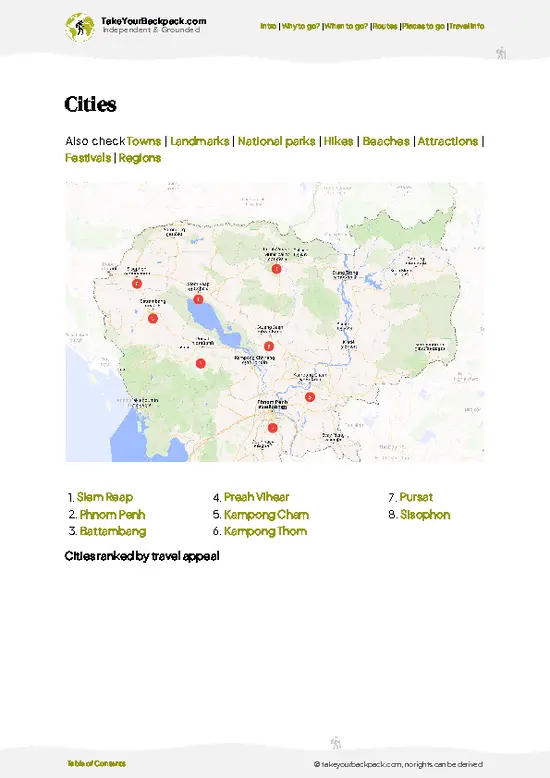
Other Cambodian cities near Phnom Penh

Explore more nearby:

  • Takhmao—urban sprawl, garment factories, commuter traffic| 11 km away
  • Doun Kaev—silk weaving, lotus ponds, provincial capital| 65 km away
  • Kampong Cham—Mekong bridges, island villages, faded architecture| 76 km away

💡 Not sure where to go next?
Create a personalized itinerary for Cambodia including Phnom Penh and the places that fit your trip.

Generate my itinerary

👉 Discover all cities

Or checkout all Cambodia has to offer (think cities, towns, villages, national parks, hikes, beaches, festivals)
Country photo of Cambodia

We 💚 feedbackIs it worth it?

Phnom Penh has a raw energy that’s both captivating and humbling. The best surprise? The local markets, where you can taste street food that’s bursting with flavor and authenticity. But a heads-up: the traffic can be chaotic. Cross streets like a pro—don’t just wait for a green light. Embrace the hustle, and you’ll find a city that’s alive with stories. It’s a place that challenges you, but the rewards are worth every step.

✍️ Help improve this page!
The information on this page is based on in-depth research, insights shared by experienced travelers, and feedback from the local travel community in Cambodia. While every effort is made to keep the information accurate and current, conditions can change — so if you spot anything incorrect or outdated, please get in touch.


🙋‍♂️ Give feedback

👋 Meet the founderWho’s Behind Take Your Backpack?

Johan, backpacker and founder of TakeYourBackpackHi, I’m Johan (Netherlands 🇳🇱), the creator of TakeYourBackpack. Over the past decade, I’ve backpacked through 80+ countries across six continents, gaining extensive experience with independent travel, long-term trips, and overland routes.

This site is built on a combination of firsthand travel experience and carefully curated insights from other backpackers. Many guides are based on places I’ve personally visited, while others bring together tips, observations, and practical advice shared by trusted travelers I’ve met along the way.

The goal is to provide realistic, experience-driven guidance — not generic itineraries — so you can explore destinations with better context, clearer expectations, and more confidence.

Get full Cambodia guide •
Instant download • 90 highlights • Full Offline guide