×

Cambodia🇰🇭 | citiesSiem ReapAngkor temples, night markets, creative cafés | things to do and best time to go

Explore Phnom PenhExplore Preah Vihear

Backpacking in Siem Reap
🏆 Top pickcity ranked #1
By Johan Kruseman 🇳🇱 | Updated June 6, 2026

Everyone says they’re going to Siem Reap “for Angkor Wat,” but the real game is how you trade time, money, and comfort around that one goal. The temples are fixed; your experience isn’t. Siem Reap, in northwest Cambodia near Tonlé Sap Lake, is the staging ground where those trade-offs actually play out.

As a backpacker base, it’s easy-mode Southeast Asia: compact center, cheap guesthouses, endless tuk-tuks, and a social circuit that runs from hostel rooftops to the chaos of Pub Street. You get world-class ruins, a solid museum (Angkor National Museum), decent cafés, and surprisingly good food for the price. It’s cheaper and more relaxed than Phnom Penh, less cool-kid than Kampot, but far more focused: everything orbits Angkor. Downsides: aggressive touts, temple fatigue, and a nightlife strip that can feel like a budget frat party. Safety is generally fine if you watch your bag and your late-night decisions. The vibe: temple pilgrim meets party layover, with just enough local life around Psar Chaa Market to remind you this isn’t a theme park.

Discover everything you want to know in the 📖 Cambodia Travel Guide.


Get your Cambodia guide
90 ranked highlights, routes & tips, works offline (345 pages)
Loading the map 🌍
CLICK TO FILTER
cities
towns
villages
landmarks
national parks
hikes
beaches
attractions
festivals
regions
SHOW COUNTRY’S BESTSHOW ALL

✨ Why go?
Ranked #1 city in Cambodia
Reasons people choose to visit here

Siem Reap is a backpacker’s hub that strikes a balance between affordability and adventure. It’s not just a gateway to the temples; it’s a vibrant basecamp for your travels. The hostel scene is thriving, offering budget-friendly options where you can meet fellow travelers and swap stories. The food is a delightful mix of local flavors and international cuisine, with street vendors serving up cheap eats that fuel your explorations.

The city is walkable, making it easy to navigate between markets, cafes, and bars. You can soak in the local culture without breaking a sweat. When the sun sets, the nightlife kicks in, with everything from laid-back bars to lively clubs, ensuring you can unwind after a day of exploration.

Siem Reap also serves as a strategic point for day trips to nearby attractions, … read more 👉
Siem Reap is a backpacker’s hub that strikes a balance between affordability and adventure. It’s not just a gateway to the temples; it’s a vibrant basecamp for your travels. The hostel scene is thriving, offering budget-friendly options where you can meet fellow travelers and swap stories. The food is a delightful mix of local flavors and international cuisine, with street vendors serving up cheap eats that fuel your explorations.

The city is walkable, making it easy to navigate between markets, cafes, and bars. You can soak in the local culture without breaking a sweat. When the sun sets, the nightlife kicks in, with everything from laid-back bars to lively clubs, ensuring you can unwind after a day of exploration.

Siem Reap also serves as a strategic point for day trips to nearby attractions, maximizing your time without the hassle of constant travel. With easy onward connections to other parts of Cambodia and Southeast Asia, you can decide whether to linger or move on. This city is perfect for those who want a mix of high-value experiences and a comfortable atmosphere, making it more than just a stopover.
Want to include Siem Reap in your Cambodia route?
Create a personalized Cambodia itinerary that includes Siem Reap and the places that fit your trip — based on your travel style, budget, and available time. Get your route in seconds.

Generate my trip

💡 HighlightsThe experiences that define the visit

  • Pub Street & Psar Chas (Old Market) — The heartbeat of town: chaotic stalls, cheap Khmer street food, cheap tailoring, and sweaty lantern-lit nights where locals and travelers collide. Great for people-watching and getting a feel for everyday Siem Reap life.
  • Angkor National Museum — Compact, air-conditioned history that gives real context to the temples you’ll see elsewhere: excellent displays of Angkorian sculpture, multimedia timelines, and explanations that make the stones make sense.
  • Artisans Angkor (workshops & carving school) — Watch skilled artisans carve stone, inlay wood, and weave silk; it’s a practical way to support traditional crafts and see how Khmer art is taught and preserved today.
  • Phare, The Cambodian Circus — A high-energy evening show that mixes modern circus with
read more 👉
  • Pub Street & Psar Chas (Old Market) — The heartbeat of town: chaotic stalls, cheap Khmer street food, cheap tailoring, and sweaty lantern-lit nights where locals and travelers collide. Great for people-watching and getting a feel for everyday Siem Reap life.
  • Angkor National Museum — Compact, air-conditioned history that gives real context to the temples you’ll see elsewhere: excellent displays of Angkorian sculpture, multimedia timelines, and explanations that make the stones make sense.
  • Artisans Angkor (workshops & carving school) — Watch skilled artisans carve stone, inlay wood, and weave silk; it’s a practical way to support traditional crafts and see how Khmer art is taught and preserved today.
  • Phare, The Cambodian Circus — A high-energy evening show that mixes modern circus with Cambodian storytelling, run by a social enterprise that trains disadvantaged youth; impressive acrobatics with a very strong local purpose.
  • Wat Preah Prom Rath — One of the town’s most important pagodas, alive with monks, daily rituals, murals and community events; good for seeing living Buddhism in the middle of the city.
  • Wat Bo Temple — An intimate, centuries-old temple tucked into the French Quarter, known for detailed murals and authentic local worship—quieter and more atmospheric than many tourist-heavy spots.
  • Old French Quarter (Wat Damnak area) — Tree-lined streets, shuttered colonial villas, independent galleries and cafés; wander here for architecture, relaxed coffee stops, and a different, calmer side of Siem Reap.
  • Siem Reap Riverfront & The Bridge — Short riverside walks, sunset photo ops, and neighborhood life along the water; simple but very local, with vendors, kids playing, and good cafés for a slow hour.
  • Made in Cambodia Market — A social-enterprise indoor market selling locally-made crafts, textiles and useful souvenirs—less pushy than the tourist night markets and better for finding quality, ethical items.
  • Theam’s House (contemporary Khmer art museum) — A small, lovingly curated private museum showcasing modern Cambodian artists and craft—unexpected, intimate, and a good counterpoint to the ancient history on most postcards.
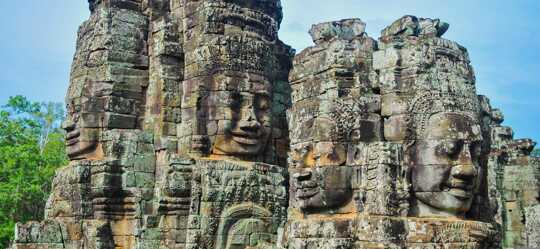
If you’ve got a day to spare, head outside town to the Angkor Archaeological Park (Angkor Wat, Bayon, Ta Prohm), take a boat trip to the Tonlé Sap floating villages (Kompong Phluk/Chong Kneas), or push further to Banteay Srei and the Kulen foothills for temples and waterfalls—classic day trips from Siem Reap.
Spotted a mistake or missing something? Contact us.

Things to do around Siem Reap

Ratings based on Tripadvisor reviews. When you book through this link, you support our work at no extra cost to you.

🏘️ NeighborhoodsNeighborhood guide to Siem Reap

Siem Reap is a backpacker’s playground, balancing ancient wonders with a lively atmosphere. Here’s how the neighborhoods stack up:

Pub Street: The heart of Siem Reap’s nightlife. Expect a buzzing vibe with bars, restaurants, and street food. It’s walkable, making it easy to hop from one spot to another. Prices can be higher here, especially for drinks. Ideal for short stays where you want to soak up the energy, but it can get noisy at night.

Old Market Area: A blend of local culture and tourist convenience. You’ll find shops, food stalls, and a more authentic feel. It’s budget-friendly, with plenty of affordable eats. Walkability is excellent, and you’re close to transport options for Angkor Wat. Great for longer stays if you want to immerse yourself in local life.

Wat Bo: A quieter neighborhood … read more 👉
Siem Reap is a backpacker’s playground, balancing ancient wonders with a lively atmosphere. Here’s how the neighborhoods stack up:

Pub Street: The heart of Siem Reap’s nightlife. Expect a buzzing vibe with bars, restaurants, and street food. It’s walkable, making it easy to hop from one spot to another. Prices can be higher here, especially for drinks. Ideal for short stays where you want to soak up the energy, but it can get noisy at night.

Old Market Area: A blend of local culture and tourist convenience. You’ll find shops, food stalls, and a more authentic feel. It’s budget-friendly, with plenty of affordable eats. Walkability is excellent, and you’re close to transport options for Angkor Wat. Great for longer stays if you want to immerse yourself in local life.

Wat Bo: A quieter neighborhood with a laid-back vibe. It’s less touristy, offering a more relaxed atmosphere. Accommodations here range from budget hostels to mid-range guesthouses. Walkability is decent, but you might need a bike or tuk-tuk for longer distances. Perfect for those looking to recharge after a day of exploring.

Siem Reap Riverside: A scenic area along the river, ideal for leisurely strolls. It’s a bit pricier, especially for riverside dining. The nightlife is more subdued, making it suitable for those who prefer a calm environment. Great for both short and longer stays, especially if you enjoy a picturesque setting.

Each area offers a unique flavor of Siem Reap, allowing you to choose what fits your travel style and budget.

⌛️ 1 day1-day itinerary for Siem Reap

Siem Reap is a vibrant hub that serves as the gateway to the ancient wonders of Angkor Wat, but it’s more than just a launchpad for temple-hopping. The city pulses with a mix of rich history, local culture, and a burgeoning food scene that invites exploration.

Start your morning with a visit to the Angkor National Museum. It’s a fantastic primer on the Khmer Empire, setting the stage for your temple adventures. Spend an hour or two absorbing the artifacts and stories that shaped this region. Afterward, grab a traditional breakfast at a local café in the Old Market area. Try some nom banh chok, a rice noodle dish topped with a fragrant green curry.

As the sun climbs higher, make your way to the iconic Angkor Wat. Arrive early to beat the crowds and soak in the majesty of the sunrise illuminating … read more 👉
Siem Reap is a vibrant hub that serves as the gateway to the ancient wonders of Angkor Wat, but it’s more than just a launchpad for temple-hopping. The city pulses with a mix of rich history, local culture, and a burgeoning food scene that invites exploration.

Start your morning with a visit to the Angkor National Museum. It’s a fantastic primer on the Khmer Empire, setting the stage for your temple adventures. Spend an hour or two absorbing the artifacts and stories that shaped this region. Afterward, grab a traditional breakfast at a local café in the Old Market area. Try some nom banh chok, a rice noodle dish topped with a fragrant green curry.

As the sun climbs higher, make your way to the iconic Angkor Wat. Arrive early to beat the crowds and soak in the majesty of the sunrise illuminating the temple’s intricate carvings. Spend a couple of hours wandering through the sprawling grounds, marveling at the architecture and the surrounding moat.

In the afternoon, head to the less-traveled neighborhood of Wat Bo. Here, you can explore the serene Wat Bo temple, which often flies under the radar. The peaceful atmosphere and beautiful murals offer a refreshing contrast to the busier tourist spots. Afterward, stroll through the nearby streets, where you’ll find charming local shops and art galleries.

As evening approaches, return to the city center for dinner at a local eatery. Sample some Khmer barbecue or fresh spring rolls. Finally, cap off your day with a visit to Pub Street. While it’s touristy, the lively atmosphere and street performances create a perfect backdrop for unwinding.

By balancing iconic sights with local experiences, you’ll leave Siem Reap with a deeper understanding of its culture and history, all while enjoying the thrill of discovery.
Turn your Siem Reap visit into an Cambodia adventure
Build a complete Cambodia route with Siem Reap, hidden gems, must-see destinations, and realistic travel times included.

Generate my trip

🌤️ When to go?Weather, crowds, and seasonal trade-offs


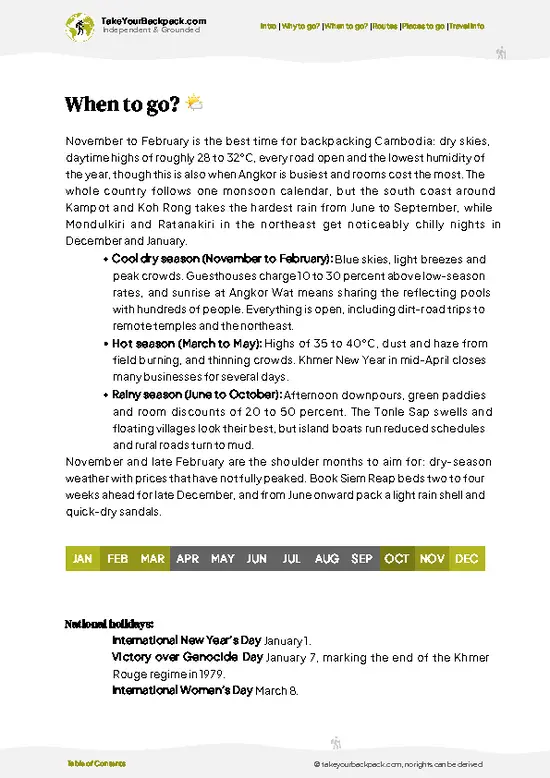
  • Topic: Weather – The dry season from November to February offers the most reliable weather, with minimal rain and clear skies. Temperatures hover between 20-30°C (68-86°F), making outdoor exploration comfortable without the oppressive humidity of the wet season.

  • Topic: Temperature – March to May is the hottest stretch, with highs often hitting 35-38°C (95-100°F). If you’re not a fan of heat that saps your energy, avoid these months. Early mornings and evenings are cooler but still sticky.

  • Topic: Daylight Hours – Daylight remains fairly consistent year-round, around 11-12 hours daily. This steadiness means you can plan your temple visits and market strolls without worrying about early nightfall cutting your day short.

  • Topic: Crowds – Peak tourist season aligns with the dry months,
read more 👉

  • Topic: Weather – The dry season from November to February offers the most reliable weather, with minimal rain and clear skies. Temperatures hover between 20-30°C (68-86°F), making outdoor exploration comfortable without the oppressive humidity of the wet season.

  • Topic: Temperature – March to May is the hottest stretch, with highs often hitting 35-38°C (95-100°F). If you’re not a fan of heat that saps your energy, avoid these months. Early mornings and evenings are cooler but still sticky.

  • Topic: Daylight Hours – Daylight remains fairly consistent year-round, around 11-12 hours daily. This steadiness means you can plan your temple visits and market strolls without worrying about early nightfall cutting your day short.

  • Topic: Crowds – Peak tourist season aligns with the dry months, especially December and January, when Angkor Wat and surrounding sites get busy. If you want fewer people, shoulder months like November or February offer a quieter experience without sacrificing weather quality.

  • Topic: Seasonal Activities – The Water Festival in November is a cultural highlight, drawing locals and visitors alike. It’s a lively time but expect higher prices and packed accommodations.

  • Topic: Price Fluctuations – Accommodation and flights spike during the dry season and festival periods. The wet season (June to October) sees significant discounts but comes with the trade-off of heavy rains and muddy trails.


Pro-tip: Aim for late November or early February to balance pleasant weather, manageable crowds, and better prices—this sweet spot lets you experience Siem Reap’s magic without the usual trade-offs.


source: climatestotravel.comJANJanuary: excellent for travelingFEBFebruary: highly recommended for travelingMARMarch: fair for travelingAPRApril: fair for travelingMAYMay: fair for travelingJUNJune: below average for travelingJULJuly: below average for travelingAUGAugust: below average for travelingSEPSeptember: below average for travelingOCTOctober: fair for travelingNOVNovember: highly recommended for travelingDECDecember: excellent for traveling
when-to-go

✈️ The backpacker research shortcutCambodia Travel Guide

An offline-friendly backpacking guide with optimized travel routes, ranked highlights, transport advice, and the best areas to stay.
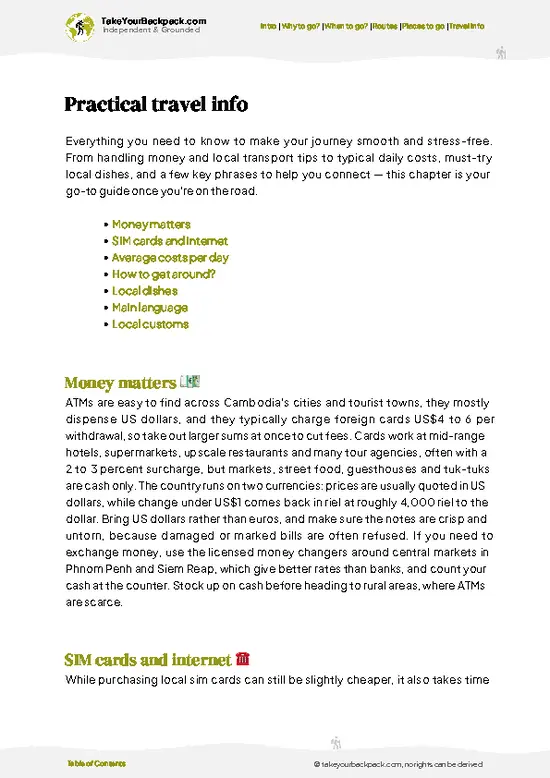
example page 0 from our offline Travel Guide for Cambodia
example page 1 from our offline Travel Guide for Cambodia
example page 2 from our offline Travel Guide for Cambodia
example page 3 from our offline Travel Guide for Cambodia
example page 4 from our offline Travel Guide for Cambodia
example page 5 from our offline Travel Guide for Cambodia
example page 6 from our offline Travel Guide for Cambodia
example page 7 from our offline Travel Guide for Cambodia
The digital guide (345 pages) contains:
90 highlights, ranked by travel appeal
Optimized 5, 10 & 15-day travel routes
Cities, national parks, landmarks, beaches
How to get around
Offline-friendly for travel without Wi-Fi
👉 Click to see all 30+ guide features

📅 Plan smarter in minutes, not weeks
Month by month travel advice
Festivals & national holidays
Budget expectations

🗺️ Go to the right places, skip the overrated ones
Honest pros & cons of destinations
Top hikes, parks & viewpoints
Lesser-known places most travelers miss
Clear “worth it vs skip it” guidance

🛏️ Travel smoothly without rookie mistakes
Best areas to stay
Transport systems explained simply
Common scams & safety advice
SIM cards, money & practical tips

🌍 Understand the country, not just visit it
Culture & traditions
52 Essential phrases & customs
Festivals worth planning around
Traveler-friendly historical context
Insights that make places more meaningful

📱 Built for real travel conditions
Fully downloadable PDF
Works completely offline
Optimized for phone use
Useful in remote areas & buses
Everything in one place
Save weeks of stressful planning
Get instant access to your full guide. 30‑day money-back guarantee.


By proceeding you agree to our terms.
Sent to your inbox immediately after payment • 100% Secure Checkout
Best Backpacking Travel Advisor 2025 tourism awardBest Backpacking
Travel Advisor
2025
What others say about Take Your Backpack Guides:
⭐⭐⭐⭐⭐
Fantastic, amazing amount of information!
⭐⭐⭐⭐⭐
My goodness this is amazing, it's what I've been looking for hats off too you!
⭐⭐⭐⭐⭐
I think this is absolutely BRILLIANT
⭐⭐⭐⭐
Very complete and informative. It's still missing places, but I gotta to commend you
⭐⭐⭐⭐⭐
This is truly amazing, thank you, can't wait to explore it with my kids!
⭐⭐⭐⭐⭐
Awesome resource, thank you!
⭐⭐⭐⭐⭐
This is amazing! Can't wait to explore the ones I haven't seen
⭐⭐⭐⭐
I love this! Well done, great idea.
⭐⭐⭐⭐⭐
Thanks for taking the time to make this gem!
⭐⭐⭐⭐⭐
This might be the best website I've ever seen.
⭐⭐⭐⭐⭐
Congratulations, and thank you so much for your work; it's incredibly valuable.
⭐⭐⭐⭐
In all seriousness I think you did a great job pointing out the important spots
⭐⭐⭐⭐⭐
10/10 very good
⭐⭐⭐⭐⭐
As someone who's only just starting to visit regularly this is awesome, thank you.
⭐⭐⭐⭐
Thank you very much! I'm going to visit my dad, it's going to be very useful!
⭐⭐⭐⭐⭐
This is really cool! We'll be travelling for the first time and this definitely come in handy.
⭐⭐⭐⭐⭐
You are now our minister of culture, congratulations 👨‍💼
⭐⭐⭐⭐⭐
Just wanted to tell you that this is a pearl! Going to follow your recommendations.
⭐⭐⭐⭐⭐
This is so cool. I'll definitely be using the resource for my travels soon.
⭐⭐⭐⭐⭐
This is very impressive! Good work.
⭐⭐⭐⭐⭐
This is an amazing and informative site. Very well done!

🛏️ Where to stay?How to pick the right area

Siem Reap’s backpacker scene orbits primarily around two key areas: the Old Market (Psar Chaa) district and the Pub Street vicinity. Both zones offer a solid balance of safety, social buzz, and budget-friendly lodging, but they serve slightly different vibes and trade-offs.

The Old Market area is the backpacker’s playground for immersion and convenience. It’s a compact grid of streets buzzing with street food stalls, markets, and affordable hostels packed with fellow travelers. Staying here means you’re steps away from the pulse of local life and the cheapest eats, but it can get noisy and crowded. … read more 👉
Siem Reap’s backpacker scene orbits primarily around two key areas: the Old Market (Psar Chaa) district and the Pub Street vicinity. Both zones offer a solid balance of safety, social buzz, and budget-friendly lodging, but they serve slightly different vibes and trade-offs.

The Old Market area is the backpacker’s playground for immersion and convenience. It’s a compact grid of streets buzzing with street food stalls, markets, and affordable hostels packed with fellow travelers. Staying here means you’re steps away from the pulse of local life and the cheapest eats, but it can get noisy and crowded. The trade-off is clear: you sacrifice some quiet and comfort for maximum social energy and wallet-friendly options. Hostels here often have communal spaces that make meeting other solo travelers effortless.

Pub Street, just a short walk from Old Market, leans more into the nightlife and social scene. It’s where the party spills out onto the streets, with bars and clubs that keep the night alive. Hostels here tend to be a bit pricier but offer a livelier atmosphere and more polished facilities. If you want to trade a bit of budget for comfort and a guaranteed social scene, this is your spot.

Other parts of Siem Reap, like the quieter outskirts or newer developments, offer more comfort and calm but at the cost of social opportunities and longer transit times to the temples and city center. For backpackers, the Old Market and Pub Street areas hit the sweet spot: safe, social, and wallet-wise, with hostels that cater to the communal spirit of solo travel.

🚌 Getting aroundTransportation options and practical tips

Siem Reap moves at its own rhythm—a blend of laid-back charm and bursts of bustling energy. It’s not a city where you’ll find strict timetables or a relentless rush. Instead, it’s a place where intuition and local know-how guide your journey. The flow here is more about reading the street, catching the right tuk-tuk driver, or deciding if a short walk under the sun is worth the savings. Time, money, and comfort don’t line up neatly; they play a constant game of trade-offs. Mastering this balance is your ticket to squeezing the most out of your trip without feeling like you’re settling for less.


  • Walking: The ultimate budget option and the best way to soak in the city’s atmosphere. It’s free, obviously, but factor in the tropical heat and uneven sidewalks—comfort dips as the sun climbs.
read more 👉
Siem Reap moves at its own rhythm—a blend of laid-back charm and bursts of bustling energy. It’s not a city where you’ll find strict timetables or a relentless rush. Instead, it’s a place where intuition and local know-how guide your journey. The flow here is more about reading the street, catching the right tuk-tuk driver, or deciding if a short walk under the sun is worth the savings. Time, money, and comfort don’t line up neatly; they play a constant game of trade-offs. Mastering this balance is your ticket to squeezing the most out of your trip without feeling like you’re settling for less.


  • Walking: The ultimate budget option and the best way to soak in the city’s atmosphere. It’s free, obviously, but factor in the tropical heat and uneven sidewalks—comfort dips as the sun climbs. Walking is perfect for short hops around the Old Market or between guesthouses and cafes, but less so if you’re hauling gear or aiming for speed.


  • Tuk-Tuk: The iconic Siem Reap ride. Prices start around $2 for short trips, but expect to negotiate hard—drivers know tourists want convenience, and they price accordingly. Tuk-tuks offer a decent balance of speed and comfort, especially compared to walking, but they’re open-air and can get hot or dusty. They run all day until about 10 pm, so timing isn’t rigid but depends on driver availability.


  • Shared Minivan: A step up in comfort and speed for longer distances, like trips to Angkor Wat or the airport. Costs hover around $5-$7 per person. These vans run on a loose schedule, often leaving once full rather than at fixed times, so you might wait a bit. They’re air-conditioned, which is a big plus in the heat, but less flexible than tuk-tuks for spontaneous stops.


  • Bicycle Rental: For the adventurous and budget-conscious, renting a bike costs about $1-$3 per day. It’s a low-cost way to cover more ground than walking, with the added bonus of exercise and freedom. Comfort depends on your stamina and the bike’s condition—roads can be bumpy, and the sun is relentless. It’s a trade-off between physical effort and saving money while maintaining a decent pace.


  • Motorbike Taxi: Faster and cheaper than tuk-tuks for solo travelers, with fares starting around $1-$2 for short rides. It’s less comfortable and less safe, especially if you’re not used to chaotic traffic. Available throughout the day and night, motorbike taxis are a gamble between speed and risk, but they can be a clever hack when time is tight and you’re traveling light.

👛 Costs (as of 15 March 2025)Money, prices, and spending tips

Backpacking in Siem Reap, Cambodia, offers a clear trade-off between cost and comfort, with prices that let you tailor your experience precisely.
  • Dorm Accommodation (High Season): Expect to pay around $6 to $10 per night. High season pushes prices up due to demand, but you still get clean, basic dorms with air conditioning if you hunt carefully.
  • Dorm Accommodation (Off-Season): Prices drop to about $4 to $7 per night. The off-season is quieter, so you can snag better deals and sometimes even upgrades for less.
  • Meals: Street food and local eateries cost between $1 and $3 per meal. Western-style cafes and restaurants bump that to $4-$8. If you want to splurge on a nicer dinner, budget $10-$15.
  • Local Transport: Tuk-tuks dominate and cost roughly $2 to $5 for short rides within town. Negotiate
read more 👉
Backpacking in Siem Reap, Cambodia, offers a clear trade-off between cost and comfort, with prices that let you tailor your experience precisely.
  • Dorm Accommodation (High Season): Expect to pay around $6 to $10 per night. High season pushes prices up due to demand, but you still get clean, basic dorms with air conditioning if you hunt carefully.
  • Dorm Accommodation (Off-Season): Prices drop to about $4 to $7 per night. The off-season is quieter, so you can snag better deals and sometimes even upgrades for less.
  • Meals: Street food and local eateries cost between $1 and $3 per meal. Western-style cafes and restaurants bump that to $4-$8. If you want to splurge on a nicer dinner, budget $10-$15.
  • Local Transport: Tuk-tuks dominate and cost roughly $2 to $5 for short rides within town. Negotiate upfront; it’s part of the game.
  • City Transport Pass: Siem Reap doesn’t have a formal city transport pass. Instead, daily tuk-tuk rentals for $15 to $20 give you freedom and convenience, especially if you’re hitting multiple sites.
  • Basic Activities/Entry Fees: Entry to Angkor Wat and the main temples is the biggest expense, around $37 for a one-day pass. Smaller museums and cultural sites range from $2 to $10.
  • Miscellaneous Expenses: Bottled water, snacks, and occasional tips add up to about $2 to $5 daily. Internet cafes or SIM cards are cheap, around $1 to $3 for basic data.

Siem Reap’s daily budget swings widely depending on your choices. At the bare minimum, you can get by on $15 to $20 a day if you stick to dorms, street food, and minimal transport. But if you want a bit more comfort, flexibility, and to explore the temples properly, $40 to $60 daily is a realistic range. Understanding these trade-offs lets you decide where to save and where to invest in your experience.


source: tourismcambodia.org
⚠️ Prices can change and everyone travels differently, so take this as a rough guide. Hope it helps you plan your adventure!

🚌 Day tripsWhere to go beyond the main area

Siem Reap is a fantastic launchpad for day trips that blend adventure, culture, and a touch of the unexpected. Let’s dive into some high-value excursions that will enrich your experience without draining your wallet.

Angkor Wat Sunrise
Start your day before dawn to catch the sunrise over Angkor Wat. The early morning light casts a magical glow on the ancient stones, making it a photographer’s dream. Arrive around 5 AM, and you’ll have the place nearly to yourself. Entry costs about $37 for a day pass, and you can rent a bike for around $2. The best time to visit is from November to February when the weather is cooler. A common mistake? Many first-timers skip the early wake-up call, missing the serene beauty of the temple before the crowds arrive.
👉 Explore Angkor Wat

Banteay Srei
Just … read more 👉
Siem Reap is a fantastic launchpad for day trips that blend adventure, culture, and a touch of the unexpected. Let’s dive into some high-value excursions that will enrich your experience without draining your wallet.

Angkor Wat Sunrise
Start your day before dawn to catch the sunrise over Angkor Wat. The early morning light casts a magical glow on the ancient stones, making it a photographer’s dream. Arrive around 5 AM, and you’ll have the place nearly to yourself. Entry costs about $37 for a day pass, and you can rent a bike for around $2. The best time to visit is from November to February when the weather is cooler. A common mistake? Many first-timers skip the early wake-up call, missing the serene beauty of the temple before the crowds arrive.
👉 Explore Angkor Wat

Banteay Srei
Just a short drive from Siem Reap, Banteay Srei is known for its intricate carvings and pink sandstone. The journey takes about 30 minutes, and the entrance fee is around $10. This temple is less crowded than Angkor Wat, allowing you to soak in the artistry without feeling rushed. Aim for a visit in the morning to avoid the heat. A common pitfall is underestimating the time needed to explore; take your time here, as the details are worth lingering over.


Tonle Sap Lake
Experience the floating villages on Tonle Sap Lake, a unique glimpse into local life. The boat ride takes about 30 minutes from Siem Reap, and expect to pay around $20 for a tour. The best months to visit are during the dry season, from November to April. Many travelers overlook the cultural significance of this area, focusing solely on the scenery. Engage with locals to truly appreciate their way of life.
👉 Explore Tonle Sap Lake

Kulen Mountain
For a bit of nature, head to Kulen Mountain, about an hour’s drive from Siem Reap. This sacred site features waterfalls, ancient temples, and stunning views. The entrance fee is around $20, and it’s best visited during the dry season. Many backpackers underestimate the hike; wear sturdy shoes and bring water. The waterfalls are a perfect spot for a refreshing dip after your trek.
👉 Explore Kulen Mountain

Phnom Kulen National Park
Another gem is Phnom Kulen National Park, where you can explore lush landscapes and historical sites. It’s about an hour from Siem Reap, with a similar entrance fee to Kulen Mountain. The park is best visited in the cooler months. A common mistake is to rush through; take your time to enjoy the scenery and the local wildlife.
Want to know what more Cambodia offers?
The Cambodia Travel Guide describes 90 highlights, from cities to national parks, from beaches to hikes

Get the Travel Guide -

🍲 FoodWhat to Eat & Drink

In Siem Reap, food is a vibrant tapestry of flavors that tells the story of Cambodia. Dive into amok, a fragrant curry steamed in banana leaves, where the richness of coconut milk dances with the zest of lemongrass. Don’t miss lok lak, tender beef stir-fried with a tangy lime-pepper sauce, served with rice and a side of fresh vegetables. Street vendors serve these delights, filling the air with mouthwatering aromas that pull you in.

The markets are the heartbeat of the culinary scene. Here, you’ll find stalls brimming with fresh fruits, like juicy mangoes and rambutan, and snacks like bai sach chrouk—grilled pork over rice, often enjoyed for breakfast. Grab a seat on a low plastic stool and soak in the bustling atmosphere.

As for drinks, try sugarcane juice or a refreshing coconut shakeread more 👉
In Siem Reap, food is a vibrant tapestry of flavors that tells the story of Cambodia. Dive into amok, a fragrant curry steamed in banana leaves, where the richness of coconut milk dances with the zest of lemongrass. Don’t miss lok lak, tender beef stir-fried with a tangy lime-pepper sauce, served with rice and a side of fresh vegetables. Street vendors serve these delights, filling the air with mouthwatering aromas that pull you in.

The markets are the heartbeat of the culinary scene. Here, you’ll find stalls brimming with fresh fruits, like juicy mangoes and rambutan, and snacks like bai sach chrouk—grilled pork over rice, often enjoyed for breakfast. Grab a seat on a low plastic stool and soak in the bustling atmosphere.

As for drinks, try sugarcane juice or a refreshing coconut shake to cool off from the heat. In the evenings, the bars come alive with Angkor beer and cocktails made from local spirits.

Etiquette is relaxed; sharing food is common, and it’s polite to accept offerings with both hands. Embrace the communal spirit, and you’ll find that every meal is a chance to connect with locals and fellow travelers alike.

🛡️ SafetyTraveler Safety Guide

Siem Reap is generally safe for backpackers, but a few situational awareness tips can enhance your experience. Stick to well-lit areas at night, especially if you’re solo. The main streets are lively, but quieter alleys can feel a bit sketchy after dark.

When it comes to scams, the most common involve tuk-tuk drivers. They might quote a low fare but then add unexpected fees. Always agree on a price before hopping in. Be wary of overly friendly locals who might offer unsolicited help; they often expect a tip.

Another annoyance is the persistent street vendors. While their goods can be tempting, it’s easy to get caught up in haggling. A polite but firm “no, thank you” usually does the trick.

Overall, carry yourself confidently, stay aware of your surroundings, and you’ll navigate Siem … read more 👉
Siem Reap is generally safe for backpackers, but a few situational awareness tips can enhance your experience. Stick to well-lit areas at night, especially if you’re solo. The main streets are lively, but quieter alleys can feel a bit sketchy after dark.

When it comes to scams, the most common involve tuk-tuk drivers. They might quote a low fare but then add unexpected fees. Always agree on a price before hopping in. Be wary of overly friendly locals who might offer unsolicited help; they often expect a tip.

Another annoyance is the persistent street vendors. While their goods can be tempting, it’s easy to get caught up in haggling. A polite but firm “no, thank you” usually does the trick.

Overall, carry yourself confidently, stay aware of your surroundings, and you’ll navigate Siem Reap like a pro. Embrace the local vibe, and you’ll find the city welcoming rather than daunting.

Other Cambodian cities near Siem Reap

Explore more nearby:

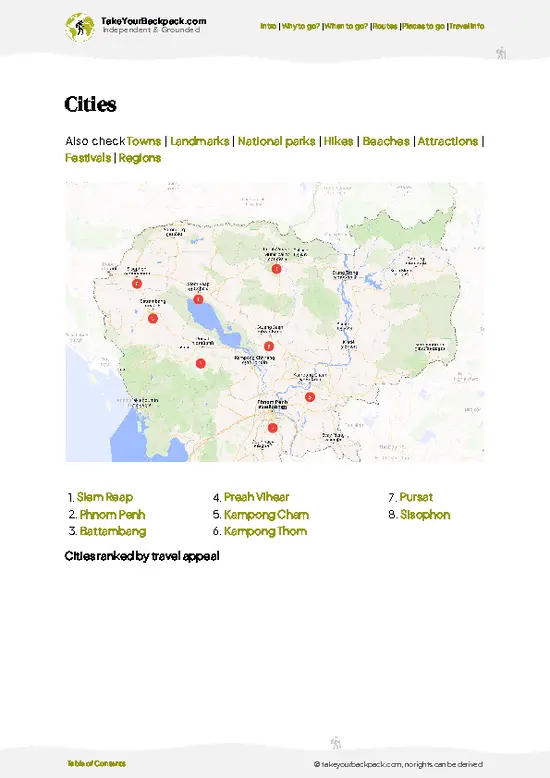
  • Battambang—colonial facades, bamboo train, riverside market| 77 km away
  • Sisophon—railway stop, crossroads town, local eateries| 99 km away
  • Pursat—marble workshops, Tonle Sap access, provincial market| 100 km away

💡 Not sure where to go next?
Create a personalized itinerary for Cambodia including Siem Reap and the places that fit your trip.

Generate my itinerary

👉 Discover all cities

Or checkout all Cambodia has to offer (think cities, towns, villages, national parks, hikes, beaches, festivals)
Country photo of Cambodia

We 💚 feedbackIs it worth it?

Siem Reap pulses with a unique energy that’s hard to shake off. The best surprise? The night markets. They’re a feast for the senses—think sizzling street food and handcrafted souvenirs. But here’s the kicker: don’t underestimate the heat. Hydrate like it’s your job, especially if you’re temple-hopping. Embrace the chaos of tuk-tuks; they’re part of the charm. Just remember, the real magic lies in the moments between the temples, where local life unfolds. That’s where you’ll find the heart of Cambodia.

✍️ Help improve this page!
The information on this page is based on in-depth research, insights shared by experienced travelers, and feedback from the local travel community in Cambodia. While every effort is made to keep the information accurate and current, conditions can change — so if you spot anything incorrect or outdated, please get in touch.


🙋‍♂️ Give feedback

👋 Meet the founderWho’s Behind Take Your Backpack?

Johan, backpacker and founder of TakeYourBackpackHi, I’m Johan (Netherlands 🇳🇱), the creator of TakeYourBackpack. Over the past decade, I’ve backpacked through 80+ countries across six continents, gaining extensive experience with independent travel, long-term trips, and overland routes.

This site is built on a combination of firsthand travel experience and carefully curated insights from other backpackers. Many guides are based on places I’ve personally visited, while others bring together tips, observations, and practical advice shared by trusted travelers I’ve met along the way.

The goal is to provide realistic, experience-driven guidance — not generic itineraries — so you can explore destinations with better context, clearer expectations, and more confidence.

Get full Cambodia guide •
Instant download • 90 highlights • Full Offline guide