×

Cameroon🇨🇲 | townsMbalmayoPirogue ferry, timber-reserve trees, Yaoundé rail line | things to do and best time to go

Explore TibatiExplore Mamfe

Backpacking in Mbalmayo
👌 Worth visitingtown ranked #18
By Johan Kruseman 🇳🇱 | Updated October 22, 2026

Mbalmayo sits on the Nyong River, and the sound you hear first near the water is the slap of paddles from pirogues crossing to the far bank. The town lies in southern Cameroon, about an hour’s drive south of Yaoundé. Come for the river, the forest edge and the red-dust market; skip anything resembling a sightseeing list, because there isn’t one. Buses are frequent, hostels are absent, and meeting other backpackers is rare. Unlike Yaoundé, it is calm, humid and slow.

Discover everything you want to know in the 📖 Cameroon Travel Guide.


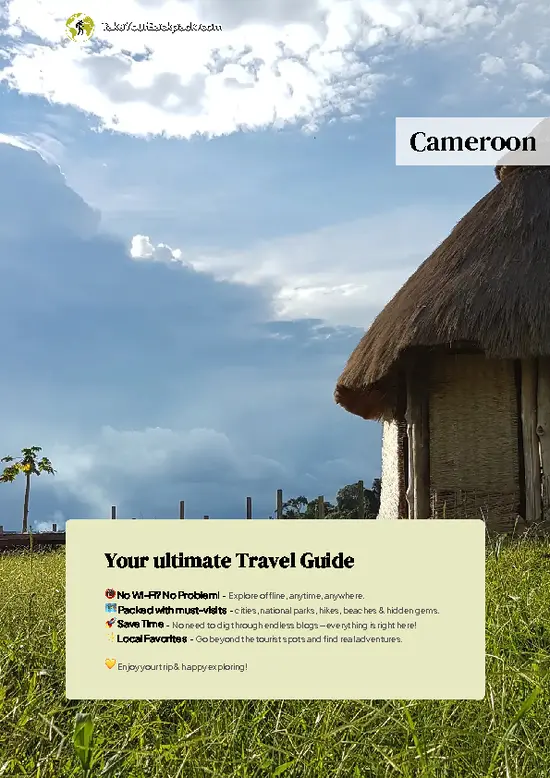
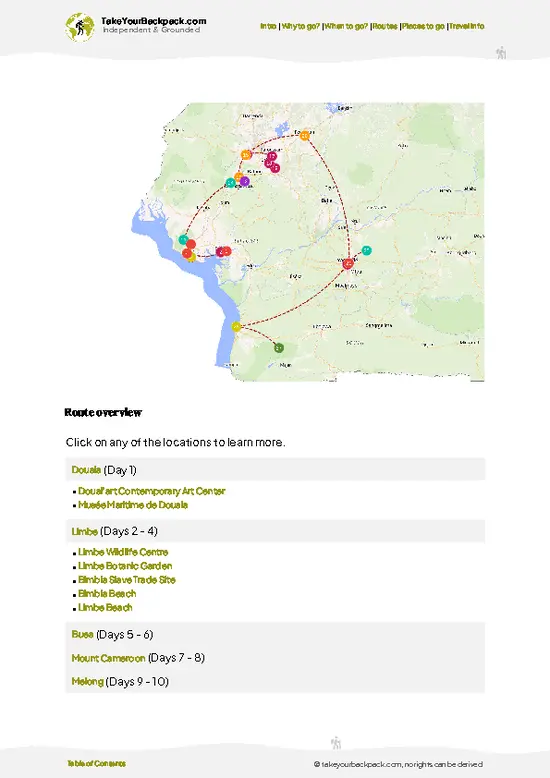
example page 0 from our offline Travel Guide for Cameroon
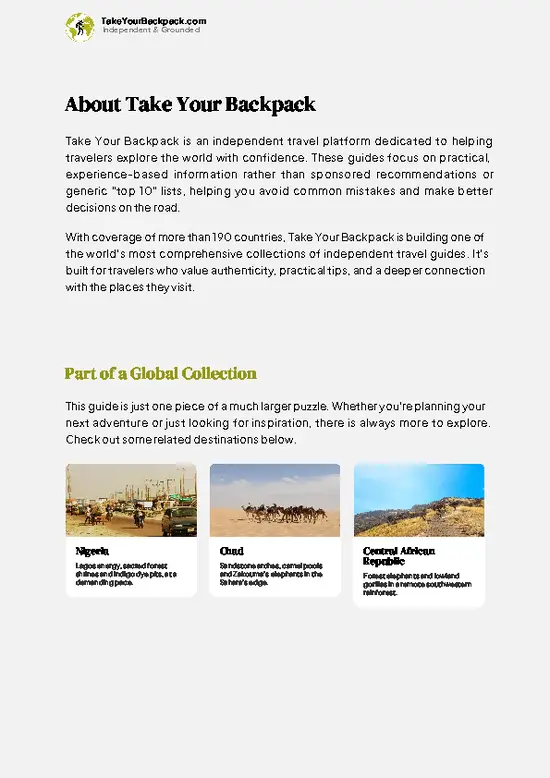
example page 1 from our offline Travel Guide for Cameroon
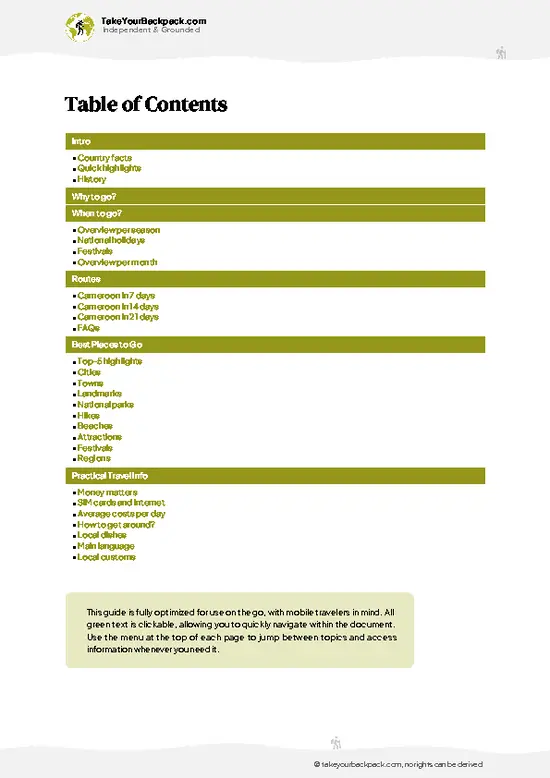
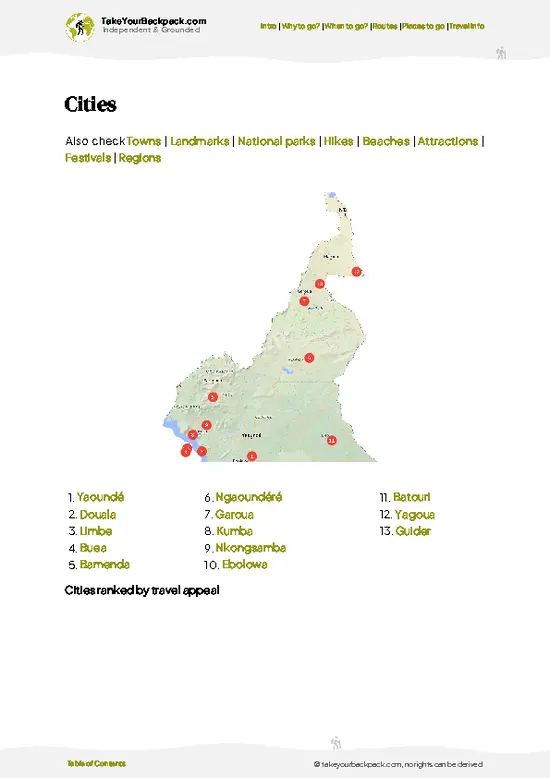
example page 2 from our offline Travel Guide for Cameroon
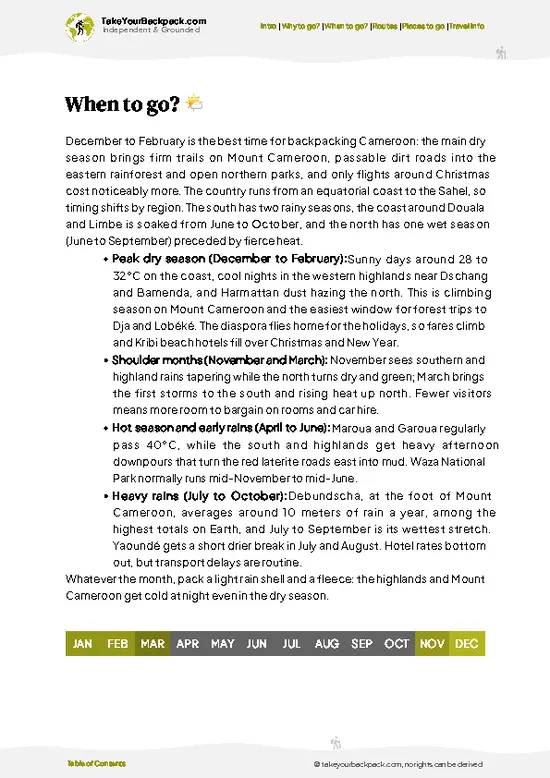
example page 3 from our offline Travel Guide for Cameroon
example page 4 from our offline Travel Guide for Cameroon
example page 5 from our offline Travel Guide for Cameroon
example page 6 from our offline Travel Guide for Cameroon
example page 7 from our offline Travel Guide for Cameroon
Loading the map 🌍
CLICK TO FILTER
cities
towns
landmarks
national parks
hikes
beaches
attractions
festivals
regions
SHOW COUNTRY’S BESTSHOW ALL

✨ Why go?
Ranked #18 town in Cameroon
What makes it a must-see town

Mbalmayo works for travelers who want forest and river without a long haul from the capital. The Nyong River gives you pirogue crossings and quiet banks, and the Mbalmayo Forest Reserve on the outskirts offers shaded walks among old timber trees. Food is simple and local: grilled fish, plantains and cassava sticks sold from roadside stalls. Most people stay one night or pass through in an afternoon, and a second night suits slow travelers who like to wander. Solo travelers will be greeted often, but nightlife is a few bars with loud music. Expect guesthouses, not hostels, and a social scene made of locals rather than other backpackers.

💡 HighlightsPlaces and moments you shouldn't skip

  1. Nyong River banks: The town’s defining landscape, with fishermen and pirogues working the brown water. Go early morning or late afternoon for cooler air. Free, about 1 hour.
  2. Mbalmayo Forest Reserve: A former timber plantation on the edge of town, with tall trees, birdsong and insects loud at dusk. Go in the morning. Entry is usually free or a few euros (€1 to 3) if a guide is needed, 2 to 3 hours.
  3. Central market: Piles of cassava, plantains, smoked fish, bushmeat-free produce stalls and cheap fabric. Mornings are busiest and freshest. Free, about 1 hour.
  4. Pirogue crossing: A short paddle across the Nyong to see village life on the far bank. Best in the morning. Expect about €0.30 to 1, 30 minutes.
  5. Railway station area: The line between Yaoundé and the south passes here, and the platform gives a
… read more 👉
  1. Nyong River banks: The town’s defining landscape, with fishermen and pirogues working the brown water. Go early morning or late afternoon for cooler air. Free, about 1 hour.
  2. Mbalmayo Forest Reserve: A former timber plantation on the edge of town, with tall trees, birdsong and insects loud at dusk. Go in the morning. Entry is usually free or a few euros (€1 to 3) if a guide is needed, 2 to 3 hours.
  3. Central market: Piles of cassava, plantains, smoked fish, bushmeat-free produce stalls and cheap fabric. Mornings are busiest and freshest. Free, about 1 hour.
  4. Pirogue crossing: A short paddle across the Nyong to see village life on the far bank. Best in the morning. Expect about €0.30 to 1, 30 minutes.
  5. Railway station area: The line between Yaoundé and the south passes here, and the platform gives a feel for town life when a train arrives. Check the timetable locally. Free, 30 minutes.
For day trips, Mbalmayo makes a handy jumping-off point toward Akonolinga, the forest villages of the Nyong valley and the Ottotomo forest area near Yaoundé. The river banks are the best first stop, since they show the town at its most characteristic.
Spotted a mistake or missing something? Contact us.

Things to do near Mbalmayo

Ratings based on Tripadvisor reviews. When you book through this link, you support our work at no extra cost to you.

🏘️ NeighborhoodsUnderstanding the local layout

Mbalmayo is small enough that three areas cover everything, and only two are worth real time. Wear shoes you don’t mind dusting red.
  • Central market and Avenue area: This is where to spend your mornings. Stalls stack cassava, plantains, smoked fish and peppery bush meat, motorbike taxis whine past, and the air smells of charcoal and fried beignets. Grilled fish with bobolo (cassava sticks) at plastic-table eateries is the meal to find. Fully walkable.
  • Nyong riverfront and the port zone: Pirogues slide under a heavy, humid light, and the old timber-trade history shows in rusted yards. Quiet by evening, so go in daylight and expect mud after rain. Worth an hour.
  • Outer quarters toward the Yaoundé road: Spread-out, dusty, and mostly bars and garages. Skip them by day. After dark, bars here pump loud
… read more 👉
Mbalmayo is small enough that three areas cover everything, and only two are worth real time. Wear shoes you don’t mind dusting red.
  • Central market and Avenue area: This is where to spend your mornings. Stalls stack cassava, plantains, smoked fish and peppery bush meat, motorbike taxis whine past, and the air smells of charcoal and fried beignets. Grilled fish with bobolo (cassava sticks) at plastic-table eateries is the meal to find. Fully walkable.
  • Nyong riverfront and the port zone: Pirogues slide under a heavy, humid light, and the old timber-trade history shows in rusted yards. Quiet by evening, so go in daylight and expect mud after rain. Worth an hour.
  • Outer quarters toward the Yaoundé road: Spread-out, dusty, and mostly bars and garages. Skip them by day. After dark, bars here pump loud Congolese rumba and are the only real nightlife, best reached by moto.

⌛️ 1 daySeeing the highlights in 24 hours

7:30 AM, Central market: Start among cassava, plantains and smoked fish while the stalls are fresh. Buy a grilled plantain for breakfast, then walk downhill toward the river.
9:30 AM, Nyong River banks: Watch fishermen and washing groups from the bank. Take a pirogue across to the far side for a short wander through the village paths, which most travelers never see.
12:00 PM, Roadside lunch: Walk back and eat grilled fish with bobolo (cassava sticks) at a simple stall near the center.
2:00 PM, Mbalmayo Forest Reserve: Take a moto-taxi to the reserve edge and walk shaded tracks among tall trees. Rest during the hottest hour under the canopy.
5:00 PM, Railway station: Return by moto-taxi and wait for the evening bustle on the platform. Finish with a cold drink at a local bar as the dusk insects start.

🌤️ When to go?Weather, crowds, and seasonal trade-offs

The long dry spell from December to February is easiest for backpacking, with sunny days of 29 to 32°C (84 to 90°F), dusty roads and daylight of roughly 12 hours all year.
  • Long dry season (Dec to Feb): Firm roads, easy river trips, and slightly higher transport prices around holidays.
  • Short rains (Mar to Jun): Humid afternoon downpours, 24 to 30°C (75 to 86°F), and cheaper rooms.
  • Short dry season (Jul to Aug): Cloudy and cooler, around 22 to 27°C (72 to 81°F), and quiet.
  • Heavy rains (Sep to Nov): Muddy tracks, slow buses, and riverside paths often flooded.
Start day trips before 8 am to beat the afternoon rain.

source: climatestotravel.comJANJanuary: excellent for travelingFEBFebruary: excellent for travelingMARMarch: fair for travelingAPRApril: fair for travelingMAYMay: fair for travelingJUNJune: fair for travelingJULJuly: fair for travelingAUGAugust: fair for travelingSEPSeptember: fair for travelingOCTOctober: fair for travelingNOVNovember: highly recommended for travelingDECDecember: excellent for traveling
when-to-go

✈️ The backpacker research shortcutCameroon Travel Guide

An offline-friendly backpacking guide with optimized travel routes, ranked highlights, transport advice, and the best areas to stay.
example page 0 from our offline Travel Guide for Cameroon
example page 1 from our offline Travel Guide for Cameroon
example page 2 from our offline Travel Guide for Cameroon
example page 3 from our offline Travel Guide for Cameroon
example page 4 from our offline Travel Guide for Cameroon
example page 5 from our offline Travel Guide for Cameroon
example page 6 from our offline Travel Guide for Cameroon
example page 7 from our offline Travel Guide for Cameroon
The digital guide (351 pages) contains:
✅ 84 highlights, ranked by travel appeal
✅ Optimized 7, 14 & 21-day travel routes
✅ Cities, national parks, landmarks, beaches
✅ How to get around
✅ Offline-friendly for travel without Wi-Fi
👉 Click to see all 30+ guide features

📅 Plan smarter in minutes, not weeks
✅ Month by month travel advice
✅ Festivals & national holidays
✅ Budget expectations

🗺️ Go to the right places, skip the overrated ones
✅ Honest pros & cons of destinations
✅ Top hikes, parks & viewpoints
✅ Lesser-known places most travelers miss
✅ Clear “worth it vs skip it” guidance

🛏️ Travel smoothly without rookie mistakes
✅ Best areas to stay
✅ Transport systems explained simply
✅ Common scams & safety advice
✅ SIM cards, money & practical tips

🌍 Understand the country, not just visit it
✅ Culture & traditions
✅ 52 Essential phrases & customs
✅ Festivals worth planning around
✅ Traveler-friendly historical context
✅ Insights that make places more meaningful

📱 Built for real travel conditions
✅ Fully downloadable PDF
✅ Works completely offline
✅ Optimized for phone use
✅ Useful in remote areas & buses
✅ Everything in one place
Stop searching, start planning
Get instant access to your full guide. 30‑day money-back guarantee.
+ Add another guide for just

By proceeding you agree to our terms.
Sent to your inbox immediately after payment • 100% Secure Checkout
Best Backpacking Travel Advisor 2025 tourism awardBest Backpacking
Travel Advisor
2025
What others say about Take Your Backpack Guides:
⭐⭐⭐⭐⭐
Fantastic, amazing amount of information!
⭐⭐⭐⭐⭐
My goodness this is amazing, it's what I've been looking for hats off too you!
⭐⭐⭐⭐⭐
I think this is absolutely BRILLIANT
⭐⭐⭐⭐
Very complete and informative. It's still missing places, but I gotta to commend you
⭐⭐⭐⭐⭐
This is truly amazing, thank you, can't wait to explore it with my kids!
⭐⭐⭐⭐⭐
Awesome resource, thank you!
⭐⭐⭐⭐⭐
This is amazing! Can't wait to explore the ones I haven't seen
⭐⭐⭐⭐
I love this! Well done, great idea.
⭐⭐⭐⭐⭐
Thanks for taking the time to make this gem!
⭐⭐⭐⭐⭐
This might be the best website I've ever seen.
⭐⭐⭐⭐⭐
Congratulations, and thank you so much for your work; it's incredibly valuable.
⭐⭐⭐⭐
In all seriousness I think you did a great job pointing out the important spots
⭐⭐⭐⭐⭐
10/10 very good
⭐⭐⭐⭐⭐
As someone who's only just starting to visit regularly this is awesome, thank you.
⭐⭐⭐⭐
Thank you very much! I'm going to visit my dad, it's going to be very useful!
⭐⭐⭐⭐⭐
This is really cool! We'll be travelling for the first time and this definitely come in handy.
⭐⭐⭐⭐⭐
You are now our minister of culture, congratulations 👨‍💼
⭐⭐⭐⭐⭐
Just wanted to tell you that this is a pearl! Going to follow your recommendations.
⭐⭐⭐⭐⭐
This is so cool. I'll definitely be using the resource for my travels soon.
⭐⭐⭐⭐⭐
This is very impressive! Good work.
⭐⭐⭐⭐⭐
This is an amazing and informative site. Very well done!

🛏️ Where to stay?Best areas and accommodation options

Stay near the central market and main avenue, where cheap guesthouses and simple budget rooms (roughly €10 to 20 a night) are concentrated and dedicated hostels are scarce. Everything is in walking distance, and shared taxis and the motor park for Yaoundé are close. Street life continues until about 9 pm, so it feels safe enough, though rooms facing the road get early moto noise and market racket from 5 am. Ask for a back room and a working fan or net. The riverside quarter is quieter but has few beds and dim streets after dark, so it suits only travelers with their own transport. Book ahead on market days.

🚌 Getting aroundTransportation options and practical tips

Mbalmayo’s center is walkable end to end in about 20 minutes, and walking stops making sense once you head to the river port, the arboretum, or the outskirts, where heat and red dust wear you down fast. Traffic is mostly motorbikes and battered shared taxis, loud and constant but slow. There is no formal city bus service, so everything runs on informal vehicles.
  • Walking: Free, and the best way through the market and main avenue. Carry water, since midday heat sits around 30°C (86°F).
  • Moto-taxis: The fastest local option, usually €0.20 to 0.50 per ride. Agree the price first, and ask for a helmet, which is not always supplied.
  • City shared taxis: Cars along fixed routes cost about €0.25 to 0.40 a seat, crammed with four passengers in the back. They run from early morning until roughly 7 pm.
  • Intercity
… read more 👉
Mbalmayo’s center is walkable end to end in about 20 minutes, and walking stops making sense once you head to the river port, the arboretum, or the outskirts, where heat and red dust wear you down fast. Traffic is mostly motorbikes and battered shared taxis, loud and constant but slow. There is no formal city bus service, so everything runs on informal vehicles.
  • Walking: Free, and the best way through the market and main avenue. Carry water, since midday heat sits around 30°C (86°F).
  • Moto-taxis: The fastest local option, usually €0.20 to 0.50 per ride. Agree the price first, and ask for a helmet, which is not always supplied.
  • City shared taxis: Cars along fixed routes cost about €0.25 to 0.40 a seat, crammed with four passengers in the back. They run from early morning until roughly 7 pm.
  • Intercity minibuses and taxis: Services to Yaoundé, about 45 to 60 km away, take 1 to 1.5 hours and cost €1.50 to 3, leaving when full from the main motor park. Trains on the Yaoundé line also stop here, and the fare is similar but the schedule is erratic.

👛 Costs (as of 22 October 2026)Typical daily expenses

Mbalmayo costs about €25 to 40 a day for a backpacker, with a total of €33 as a realistic high-season figure. Payment is in cash (CFA francs), and cards are rarely accepted.
CategoryBudget RangeLocal Reality
Dorm accommodation€10 to 15No true dorms, so a basic private guesthouse room with a fan is the norm.
Meals€6 to 10Grilled fish with bobolo or street beignets and beans cost €1 to 3 each.
Local transport€2 to 4Moto and shared taxi rides run €0.25 to 0.50 each.
Basic activities/entry fees€3 to 8Forest guide and small site fees, plus pirogue hire.
Miscellaneous expenses€2 to 4Water, SIM data, small tips.
Total Daily Budget€33Comfortable for one person.
Eat where locals queue at lunchtime, and keep small bills handy, since drivers rarely have change.
⚠️ Prices can change and everyone travels differently, so take this as a rough guide. Hope it helps you plan your adventure!

🚌 Day tripsBest day trips from Mbalmayo

Mbalmayo works well as a quiet, cheap base for forest and river outings, all doable between breakfast and dinner.
Mbalmayo Forest Reserve and Arboretum: Primary forest edge and old plantation trails sit just outside town, with birds and monkeys most active early. A moto there costs €1 to 2 each way, and paths are slick from September to November. Go with a local guide, around €5 to 10, since trails are poorly marked.

Yaoundé: The capital is 1 to 1.5 hours away by shared taxi (€1.50 to 3). Hit the Mvog-Betsi zoo and the National Museum, then return before dusk, as the evening road is crowded and slow. Total spend runs about €10 to 18 with lunch.
👉 Explore Yaoundé
Akonolinga: This river town along the Nyong lies roughly an hour away by minibus (€2 to 3). Visit for the Saturday market and canoe-side … read more 👉
Mbalmayo works well as a quiet, cheap base for forest and river outings, all doable between breakfast and dinner.
Mbalmayo Forest Reserve and Arboretum: Primary forest edge and old plantation trails sit just outside town, with birds and monkeys most active early. A moto there costs €1 to 2 each way, and paths are slick from September to November. Go with a local guide, around €5 to 10, since trails are poorly marked.

Yaoundé: The capital is 1 to 1.5 hours away by shared taxi (€1.50 to 3). Hit the Mvog-Betsi zoo and the National Museum, then return before dusk, as the evening road is crowded and slow. Total spend runs about €10 to 18 with lunch.
👉 Explore Yaoundé
Akonolinga: This river town along the Nyong lies roughly an hour away by minibus (€2 to 3). Visit for the Saturday market and canoe-side life. Many first-timers arrive late and find transport back thin, so leave by mid-afternoon.
👉 Explore Akonolinga

🛡️ SafetySafety Tips and Common Scams in Mbalmayo

Mbalmayo is broadly calm, and most trouble is petty. Keep phones and cash out of sight at the market, where pickpocketing in crowds happens. After dark, take a moto instead of walking the unlit outer roads, and avoid drinking alone in far-flung bars. Police checkpoints on the Yaoundé road are routine, so carry a passport copy and stay polite. Drivers and moto riders may quote foreigner prices, so settle fares before moving. Women traveling solo usually face only persistent greetings, handled with a firm, friendly no.

FAQFrequently asked questions about Mbalmayo

Mbalmayo is a decent short stop rather than a headline destination. Its appeal is the Nyong river, the nearby forest reserve and arboretum, and a market with almost no tourists, all within a day. Most travelers pair it with Yaoundé, about 45 to 60 km north.
Mbalmayo needs one to two days. One day covers the market, river port and a guided forest walk (€5 to 10 for a guide), and a second lets you add Akonolinga or a slower riverside afternoon. Longer only makes sense if you use it as a calm base while working or resting.
Mbalmayo is easy to reach from Yaoundé in a day. Shared taxis and minibuses take 1 to 1.5 hours and cost €1.50 to 3, and you can see the market and forest edge before heading back. Leave the town by about 4 pm, because evening traffic and fewer departures can stretch the return.
⚠️ Things can change over time, so always validate details locally before you go.

Other Cameroonian towns near Mbalmayo

Explore more nearby:

  • Ngoumou—Ewondo produce market, farm-track loop, midday grills| 23 km away
  • Sangmélima—Ntem forest belt, mission cathedral, palm-wine quarter| 84 km away
  • Akonolinga—Slow brown Nyong, dugout launches, Beti side streets| 88 km away

💡 Not sure where to go next?
Create a personalized itinerary for Cameroon including Mbalmayo and the places that fit your trip.

Generate my itinerary

👉 Discover all towns

Or checkout all Cameroon has to offer (think cities, towns, villages, national parks, hikes, beaches, festivals)
Country photo of Cameroon

We 💚 feedbackSumming up the experience

Mbalmayo suits slow travelers, forest walkers and anyone who prefers a river and a plate of fish to a checklist. Bring insect repellent and small bills. I would stay one night and spend the second morning crossing the Nyong.

✍️ Help improve this page!
The information on this page is based on in-depth research, insights shared by experienced travelers, and feedback from the local travel community in Cameroon. While every effort is made to keep the information accurate and current, conditions can change — so if you spot anything incorrect or outdated, please get in touch.


🙋‍♂️ Give feedback

👋 Meet the founderWho’s Behind Take Your Backpack?

Johan, backpacker and founder of TakeYourBackpackHi, I’m Johan (Netherlands 🇳🇱), the creator of TakeYourBackpack. Over the past 3 decades, I’ve backpacked through 90+ countries across six continents, gaining extensive experience with independent travel, long-term trips, and overland routes.

This site is built on a combination of firsthand travel experience and carefully curated insights from other backpackers. Many guides are based on places I’ve personally visited, while others bring together tips, observations, and practical advice shared by trusted travelers I’ve met along the way.

The goal is to provide realistic, experience-driven guidance — not generic itineraries — so you can explore destinations with better context, clearer expectations, and more confidence.