×

Cameroon🇨🇲 | townsMokolomountain escarpment, weekly market, Mafa culture | things to do and best time to go

Explore MoraExplore Bafut Palace

Backpacking in Mokolo
🏆 Top picktown ranked #4
By Johan Kruseman 🇳🇱 | Updated September 3, 2026

Forget the idea that Mokolo is just a dusty crossroads on the way to somewhere else. That’s the lazy version. Mokolo sits in Cameroon’s Far North, a few hours west of Maroua, pressed up against the Mandara Mountains where the air tastes faintly of earth and woodsmoke. For backpackers, Mokolo isn’t a destination that dazzles on arrival, but it’s a real working town with a pulse—market days are a riot of color and chatter, and the scent of grilled meat drifts through the alleys. The main draw is its role as a launchpad: you’re here for the access to the Mandara’s jagged hiking trails, the Kapsiki villages, and the kind of landscapes that make your boots earn their keep. The town itself is practical, not pretty, and you’ll need moto-taxis or shared cars to get anywhere interesting. Social life is low-key—think tea stalls and slow evenings, not hostels or backpacker bars. Costs are low, safety is reasonable if you keep your wits, and compared to Maroua, Mokolo feels less hectic but also less cosmopolitan. It’s a place for travelers who want to trade comfort for proximity to the raw, sculpted north.

Discover everything you want to know in the 📖 Cameroon Travel Guide.


Get your Cameroon guide
95 ranked highlights, routes & tips, works offline (374 pages)
Loading the map 🌍
CLICK TO FILTER
cities
towns
landmarks
national parks
hikes
beaches
attractions
festivals
regions
SHOW COUNTRY’S BESTSHOW ALL

✨ Why go?
Ranked #4 town in Cameroon
What makes this town worth visiting

Mokolo is a gateway for backpackers seeking the rugged beauty of Cameroon. Its proximity to stunning hikes in the nearby Mount Faro National Park makes it a strategic stop for those craving adventure. The local guesthouses offer a cozy, authentic experience, often run by friendly families eager to share their culture. You can savor traditional dishes at small eateries, where the aroma of spices fills the air, inviting you to linger over a meal. The walkable streets create a relaxed atmosphere, perfect for solo travelers or small groups looking to connect. Most backpackers stay a few days, soaking in the community vibe and planning their next moves. If you’re a slow traveler or a hiker, Mokolo’s charm lies in its balance of exploration and rest, making it a worthwhile stop on your journey.
Want to include Mokolo in your Cameroon route?
Create a personalized Cameroon itinerary that includes Mokolo and the places that fit your trip — based on your travel style, budget, and available time. Get your route in seconds.

Generate my trip

💡 HighlightsEssential experiences to have while visiting Mokolo

  • Mokolo Central Market (Grand Marché): The beating heart of the town — a chaotic, colorful market where Mafa, Fulani and other local traders sell grain, spices, fresh produce, fabrics and household goods. Perfect for people-watching, tasting street food and buying locally woven cloths and beads.
  • Mafa traditional quarter and vernacular architecture: Scattered neighborhoods in town where you can see classic Mafa mud-brick compounds, decorative granaries and courtyard layouts that illustrate local building techniques and daily life. Walking these streets gives a real sense of the town’s cultural backbone.
  • Mandara foothills viewpoint (town edge): Mokolo sits at the foot of the Mandara Mountains; short walks from the town edge lead to easy viewpoints that give panoramic views over the valley
read more 👉
  • Mokolo Central Market (Grand Marché): The beating heart of the town — a chaotic, colorful market where Mafa, Fulani and other local traders sell grain, spices, fresh produce, fabrics and household goods. Perfect for people-watching, tasting street food and buying locally woven cloths and beads.
  • Mafa traditional quarter and vernacular architecture: Scattered neighborhoods in town where you can see classic Mafa mud-brick compounds, decorative granaries and courtyard layouts that illustrate local building techniques and daily life. Walking these streets gives a real sense of the town’s cultural backbone.
  • Mandara foothills viewpoint (town edge): Mokolo sits at the foot of the Mandara Mountains; short walks from the town edge lead to easy viewpoints that give panoramic views over the valley and surrounding villages and are the launch point for longer hikes into the range.
A few excellent day trips just outside Mokolo are the villages and trails of the Mandara Mountains, the historic town of Mora, and wildlife outings to Waza National Park.
Spotted a mistake or missing something? Contact us.

🏘️ NeighborhoodsKey areas and districts to know

Mokolo is a vibrant hub that offers a unique blend of local culture and accessibility for backpackers. Here’s how to navigate its neighborhoods:

Centre Ville: This is the heartbeat of Mokolo. Bustling markets and street vendors fill the air with the scent of grilled plantains and spices. It’s walkable, with affordable accommodations and plenty of eateries. Nightlife is lively but not overwhelming, making it ideal for short stays.

Ngong: A quieter area, Ngong is perfect for those seeking a more laid-back vibe. The streets are lined with trees, and you can find cozy guesthouses. It’s less touristy, offering a genuine feel of local life. Transport options are available, but you might need to walk a bit more. Great for longer stays.

Waza: Known for its proximity to the national park, Waza is … read more 👉
Mokolo is a vibrant hub that offers a unique blend of local culture and accessibility for backpackers. Here’s how to navigate its neighborhoods:

Centre Ville: This is the heartbeat of Mokolo. Bustling markets and street vendors fill the air with the scent of grilled plantains and spices. It’s walkable, with affordable accommodations and plenty of eateries. Nightlife is lively but not overwhelming, making it ideal for short stays.

Ngong: A quieter area, Ngong is perfect for those seeking a more laid-back vibe. The streets are lined with trees, and you can find cozy guesthouses. It’s less touristy, offering a genuine feel of local life. Transport options are available, but you might need to walk a bit more. Great for longer stays.

Waza: Known for its proximity to the national park, Waza is a must for nature lovers. The atmosphere is serene, with stunning views. Accommodations can be pricier here, but the experience is worth it. It’s best suited for those planning extended adventures, as transport can be sporadic.

Maroua Road: This area is a mix of residential and commercial. It’s bustling during the day, with shops and cafes. While it’s not the most walkable, it offers easy access to transport. Ideal for short stays if you want to be close to the action without the chaos.

⌛️ 1 dayA smart one-day plan

Mokolo, Cameroon, is a vibrant tapestry of culture and daily life, where the rhythm of the market pulses with energy and the scent of spices fills the air. This town, often overlooked by travelers, offers a genuine glimpse into local life, making it a rewarding stop.

Start your morning at the bustling Mokolo Market. The sun filters through the awnings, casting playful shadows as vendors call out their wares. Dive into the sensory overload: the bright colors of fresh produce, the earthy aroma of spices, and the chatter of locals bartering. Grab a warm, flaky *pâté* from a street vendor for breakfast. It’s a simple pleasure that sets the tone for the day.

In the afternoon, head to the nearby hills for a hike. The trails are less traveled, offering a chance to connect with nature and spot local … read more 👉
Mokolo, Cameroon, is a vibrant tapestry of culture and daily life, where the rhythm of the market pulses with energy and the scent of spices fills the air. This town, often overlooked by travelers, offers a genuine glimpse into local life, making it a rewarding stop.

Start your morning at the bustling Mokolo Market. The sun filters through the awnings, casting playful shadows as vendors call out their wares. Dive into the sensory overload: the bright colors of fresh produce, the earthy aroma of spices, and the chatter of locals bartering. Grab a warm, flaky *pâté* from a street vendor for breakfast. It’s a simple pleasure that sets the tone for the day.

In the afternoon, head to the nearby hills for a hike. The trails are less traveled, offering a chance to connect with nature and spot local wildlife. The panoramic views of the surrounding landscape are worth the effort, revealing the beauty of the region. After your hike, visit the lesser-known neighborhood of Goulfey. Here, you can interact with artisans crafting traditional goods, providing a unique insight into local craftsmanship.

As evening approaches, return to the town center. Find a local eatery and savor a bowl of *ndolé*, a traditional dish that encapsulates the flavors of Cameroon. The atmosphere is lively, filled with laughter and conversation. This day in Mokolo isn’t just about sights; it’s about immersing yourself in the heart of a community, making every moment feel earned and meaningful.
Turn your Mokolo visit into an Cameroon adventure
Build a complete Cameroon route with Mokolo, hidden gems, must-see destinations, and realistic travel times included.

Generate my trip

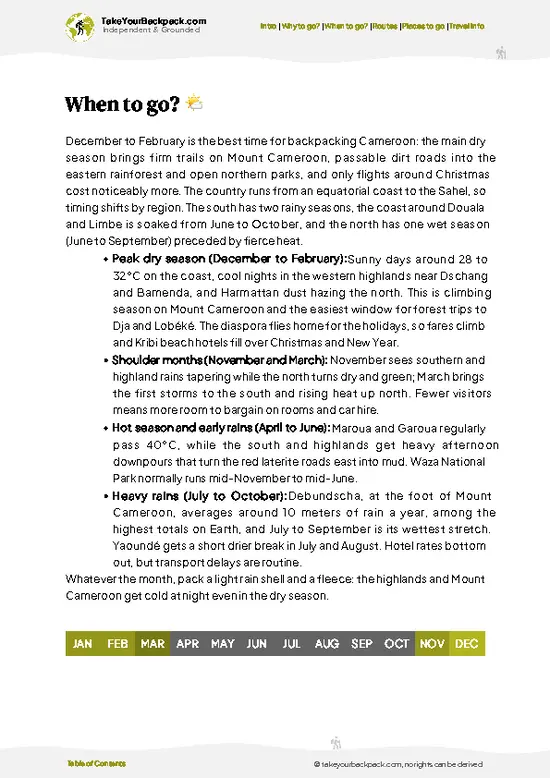
🌤️ When to go?Weather, crowds, and seasonal trade-offs


  • Topic: Weather – Mokolo’s climate swings between a wet season from May to October and a dry season from November to April. The dry months offer clearer skies and less mud, making trails easier and the air crisper. Rain can turn paths slick and obscure views, so aim for dry months if you want reliable footing and open vistas.

  • Topic: Temperature – Expect daytime highs around 28–32°C (82–90°F) during the dry season, cooling to 20–24°C (68–75°F) at night. Wet season days hover slightly cooler but come with humidity that can sap your energy. The dry season’s warmth feels steady and manageable, perfect for long hikes without overheating.

  • Topic: Daylight Hours – Near the equator, Mokolo enjoys roughly 12 hours of daylight year-round, with sunrise around 6:00 AM and sunset near 6:00 PM. This
read more 👉

  • Topic: Weather – Mokolo’s climate swings between a wet season from May to October and a dry season from November to April. The dry months offer clearer skies and less mud, making trails easier and the air crisper. Rain can turn paths slick and obscure views, so aim for dry months if you want reliable footing and open vistas.

  • Topic: Temperature – Expect daytime highs around 28–32°C (82–90°F) during the dry season, cooling to 20–24°C (68–75°F) at night. Wet season days hover slightly cooler but come with humidity that can sap your energy. The dry season’s warmth feels steady and manageable, perfect for long hikes without overheating.

  • Topic: Daylight Hours – Near the equator, Mokolo enjoys roughly 12 hours of daylight year-round, with sunrise around 6:00 AM and sunset near 6:00 PM. This steady rhythm means you can plan your days confidently without worrying about early darkness cutting your adventures short.

  • Topic: Crowds – Mokolo isn’t a tourist hotspot, but local festivals in December and January draw regional visitors. Traveling just outside these months means quieter trails and more authentic interactions with locals, letting you soak in the atmosphere without the buzz of event crowds.

  • Topic: Seasonal Activities – The dry season is prime for trekking and exploring the Mandara Mountains’ rugged landscapes. During the wet season, rivers swell, and waterfalls roar, offering dramatic scenery but limited access to some trails. Choose your season based on whether you want adventure or spectacle.

  • Topic: Price Fluctuations – Prices for lodging and guides tend to rise slightly during festival periods and the dry season’s peak months (December to February). Visiting just before or after these peaks can save money while still enjoying favorable weather and fewer crowds.


Pro-tip: Aim for late November or early March to catch dry trails, manageable temperatures, and avoid festival crowds—this sweet spot balances comfort, cost, and authentic local vibes.


source: climatestotravel.comJANJanuary: highly recommended for travelingFEBFebruary: highly recommended for travelingMARMarch: highly recommended for travelingAPRApril: good for travelingMAYMay: fair for travelingJUNJune: fair for travelingJULJuly: fair for travelingAUGAugust: fair for travelingSEPSeptember: fair for travelingOCTOctober: fair for travelingNOVNovember: highly recommended for travelingDECDecember: highly recommended for traveling
cameroon-city-mokolo
© Google |

✈️ The backpacker research shortcutCameroon Travel Guide

An offline-friendly backpacking guide with optimized travel routes, ranked highlights, transport advice, and the best areas to stay.
example page 0 from our offline Travel Guide for Cameroon
example page 1 from our offline Travel Guide for Cameroon
example page 2 from our offline Travel Guide for Cameroon
example page 3 from our offline Travel Guide for Cameroon
example page 4 from our offline Travel Guide for Cameroon
example page 5 from our offline Travel Guide for Cameroon
example page 6 from our offline Travel Guide for Cameroon
example page 7 from our offline Travel Guide for Cameroon
The digital guide (374 pages) contains:
95 highlights, ranked by travel appeal
Optimized 7, 14 & 21-day travel routes
Cities, national parks, landmarks, beaches
How to get around
Offline-friendly for travel without Wi-Fi
👉 Click to see all 30+ guide features

📅 Plan smarter in minutes, not weeks
Month by month travel advice
Festivals & national holidays
Budget expectations

🗺️ Go to the right places, skip the overrated ones
Honest pros & cons of destinations
Top hikes, parks & viewpoints
Lesser-known places most travelers miss
Clear “worth it vs skip it” guidance

🛏️ Travel smoothly without rookie mistakes
Best areas to stay
Transport systems explained simply
Common scams & safety advice
SIM cards, money & practical tips

🌍 Understand the country, not just visit it
Culture & traditions
52 Essential phrases & customs
Festivals worth planning around
Traveler-friendly historical context
Insights that make places more meaningful

📱 Built for real travel conditions
Fully downloadable PDF
Works completely offline
Optimized for phone use
Useful in remote areas & buses
Everything in one place
Save weeks of stressful planning
Get instant access to your full guide. 30‑day money-back guarantee.
+ Add another guide for just US$7.80

By proceeding you agree to our terms.
Sent to your inbox immediately after payment • 100% Secure Checkout
Best Backpacking Travel Advisor 2025 tourism awardBest Backpacking
Travel Advisor
2025
What others say about Take Your Backpack Guides:
⭐⭐⭐⭐⭐
Fantastic, amazing amount of information!
⭐⭐⭐⭐⭐
My goodness this is amazing, it's what I've been looking for hats off too you!
⭐⭐⭐⭐⭐
I think this is absolutely BRILLIANT
⭐⭐⭐⭐
Very complete and informative. It's still missing places, but I gotta to commend you
⭐⭐⭐⭐⭐
This is truly amazing, thank you, can't wait to explore it with my kids!
⭐⭐⭐⭐⭐
Awesome resource, thank you!
⭐⭐⭐⭐⭐
This is amazing! Can't wait to explore the ones I haven't seen
⭐⭐⭐⭐
I love this! Well done, great idea.
⭐⭐⭐⭐⭐
Thanks for taking the time to make this gem!
⭐⭐⭐⭐⭐
This might be the best website I've ever seen.
⭐⭐⭐⭐⭐
Congratulations, and thank you so much for your work; it's incredibly valuable.
⭐⭐⭐⭐
In all seriousness I think you did a great job pointing out the important spots
⭐⭐⭐⭐⭐
10/10 very good
⭐⭐⭐⭐⭐
As someone who's only just starting to visit regularly this is awesome, thank you.
⭐⭐⭐⭐
Thank you very much! I'm going to visit my dad, it's going to be very useful!
⭐⭐⭐⭐⭐
This is really cool! We'll be travelling for the first time and this definitely come in handy.
⭐⭐⭐⭐⭐
You are now our minister of culture, congratulations 👨‍💼
⭐⭐⭐⭐⭐
Just wanted to tell you that this is a pearl! Going to follow your recommendations.
⭐⭐⭐⭐⭐
This is so cool. I'll definitely be using the resource for my travels soon.
⭐⭐⭐⭐⭐
This is very impressive! Good work.
⭐⭐⭐⭐⭐
This is an amazing and informative site. Very well done!

🛏️ Where to stay?Where staying makes the most sense

In Mokolo, the best spot for backpackers is the central district around the main market and the town square. This area hums with life from dawn to dusk—the scent of grilled meat mingles with fresh spices, and the chatter of vendors creates a lively soundtrack. It’s where locals gather, making it easy to strike up conversations and get a real feel for the town’s pulse. Safety here is noticeably better than in the outskirts, thanks to the steady flow of people and a visible police presence.

Compared to quieter, more residential neighborhoods, staying near the market means you’re never far from … read more 👉
In Mokolo, the best spot for backpackers is the central district around the main market and the town square. This area hums with life from dawn to dusk—the scent of grilled meat mingles with fresh spices, and the chatter of vendors creates a lively soundtrack. It’s where locals gather, making it easy to strike up conversations and get a real feel for the town’s pulse. Safety here is noticeably better than in the outskirts, thanks to the steady flow of people and a visible police presence.

Compared to quieter, more residential neighborhoods, staying near the market means you’re never far from affordable street food, small shops, and basic amenities—key for budget travelers. Hostels and guesthouses cluster around this hub, offering simple, clean rooms with communal spaces that encourage socializing. You’ll find other solo backpackers here, which naturally builds a friendly vibe without the forced atmosphere of tourist traps.

Venture too far out, and you lose that sense of connection and convenience. The streets get quieter, and services thin out, making it harder to navigate without a local guide. So, for a blend of safety, social energy, and wallet-friendly options, the heart of Mokolo is where you want to drop your pack. It’s not just about avoiding trouble—it’s about stepping into the town’s rhythm and making your stay part of the story.

🚌 Getting aroundGetting around like a local

Mokolo moves at its own rhythm—neither frantic nor slow, but a pulse you feel in the dust swirling around the market stalls and the chatter spilling from roadside cafés. The town’s flow is a blend of deliberate routine and bursts of spontaneous energy, where the sun’s angle marks the day more than any clock. You’ll notice how locals navigate the streets with a practiced ease, balancing between the predictability of scheduled buses and the improvisation of shared taxis. This is a place where timing is flexible but not absent, and understanding that balance is your key to moving like a local rather than a lost tourist.


  • Walking: Mokolo’s compact center is best explored on foot. The streets are mostly flat, with a mix of paved and dirt paths that carry the scent of fresh bread from bakeries
read more 👉
Mokolo moves at its own rhythm—neither frantic nor slow, but a pulse you feel in the dust swirling around the market stalls and the chatter spilling from roadside cafés. The town’s flow is a blend of deliberate routine and bursts of spontaneous energy, where the sun’s angle marks the day more than any clock. You’ll notice how locals navigate the streets with a practiced ease, balancing between the predictability of scheduled buses and the improvisation of shared taxis. This is a place where timing is flexible but not absent, and understanding that balance is your key to moving like a local rather than a lost tourist.


  • Walking: Mokolo’s compact center is best explored on foot. The streets are mostly flat, with a mix of paved and dirt paths that carry the scent of fresh bread from bakeries and the occasional waft of grilled meat. Walking lets you absorb the town’s textures and sounds—early morning is cooler and quieter, while late afternoon brings a lively buzz. It’s free, obviously, and the best way to catch the small details missed by faster transport.


  • Shared Taxis (Taxi-Brousse): These minibuses are the backbone of local transit, running from dawn until early evening. Expect to pay around 200-400 CFA francs for short trips within town or to nearby villages. They don’t run on a strict schedule but leave when full, so timing requires patience and a readiness to jump in when the opportunity arises. The ride is bumpy but fast, and you’ll get a real feel for local life packed shoulder-to-shoulder with residents.


  • Motorcycle Taxis (Benskin): For quicker, more flexible travel, motorcycle taxis zip through traffic and narrow alleys. They operate from sunrise to sunset, with fares negotiated upfront—usually 100-300 CFA francs depending on distance. The wind and dust hit your face, so bring a scarf or bandana. It’s the fastest way to cover short distances, especially when the sun is high and the heat presses down.


  • Local Buses: Mokolo has a few larger buses connecting to outlying areas, running mainly in the morning and late afternoon. Tickets cost between 500-1000 CFA francs depending on the route. These are slower but more comfortable than shared taxis, with fixed stops and a rough timetable posted at main stations. They’re ideal if you want a predictable schedule and a seat, but less flexible for spontaneous detours.


  • Bicycle Rentals: Not widespread but available through a handful of local shops, renting a bike gives you control over your pace and route. Prices hover around 1000 CFA francs per day. The terrain is mostly flat but can get dusty, so a sturdy bike and a water bottle are musts. This option blends freedom with exercise and lets you chase the light as it shifts across the landscape.

👛 Costs (as of 3 September 2026)Typical daily expenses

Backpacking in Mokolo, Cameroon, offers a raw, unfiltered experience where every dollar counts and the local rhythm sets your pace. Here’s what you can expect to spend daily as an independent traveler navigating this town.
  • Dorm Accommodation: Options are limited and basic. Expect simple guesthouses or shared rooms with minimal amenities. Prices hover around €5 to €10 per night. The rooms often have a fan rather than air conditioning, and the walls might be thin, so pack earplugs if you’re sensitive to noise.
  • Meals: Street food and local eateries dominate. A hearty meal of grilled meat, rice, or beans with local vegetables will cost between €1.50 and €3.50. Fresh fruit and snacks are cheap but watch for hygiene standards. Western-style meals or imported goods will push the price higher, so
read more 👉
Backpacking in Mokolo, Cameroon, offers a raw, unfiltered experience where every dollar counts and the local rhythm sets your pace. Here’s what you can expect to spend daily as an independent traveler navigating this town.
  • Dorm Accommodation: Options are limited and basic. Expect simple guesthouses or shared rooms with minimal amenities. Prices hover around €5 to €10 per night. The rooms often have a fan rather than air conditioning, and the walls might be thin, so pack earplugs if you’re sensitive to noise.
  • Meals: Street food and local eateries dominate. A hearty meal of grilled meat, rice, or beans with local vegetables will cost between €1.50 and €3.50. Fresh fruit and snacks are cheap but watch for hygiene standards. Western-style meals or imported goods will push the price higher, so stick to local fare for the best value and authentic taste.
  • Local Transport: Transport is mostly by shared taxis or motorbike taxis. Short rides within town typically cost around €0.50 to €1.50. If you’re heading to nearby villages or markets, budget up to €3. The roads can be rough, so expect a bumpy ride and plan extra time.
  • Basic Activities/Entry Fees: Mokolo’s attractions are mostly natural and cultural, with low or no entry fees. Visiting local markets, hiking nearby hills, or exploring traditional villages might cost nothing or just a small tip (€0.50 to €2) if a guide is involved. Organized tours are rare and usually more expensive.
  • Miscellaneous Expenses: This covers bottled water, phone credit, and small purchases. Bottled water is essential and costs about €0.50 per liter. Mobile data packages are affordable, around €2 to €5 for a decent amount of data. Budget a few euros for occasional extras like snacks or souvenirs.

All told, a realistic daily budget for Mokolo ranges from about €10 to €20. This keeps you comfortable without cutting corners on essentials like water and transport. The modest costs reflect the town’s simplicity and the straightforward, grounded experience it offers.
⚠️ Prices can change and everyone travels differently, so take this as a rough guide. Hope it helps you plan your adventure!

🚌 Day tripsWhere to go beyond the main area

Mokolo, Cameroon, is a backpacker’s dream base for exploring the surrounding wonders. With its vibrant local life and easy access to stunning landscapes, you can dive into authentic experiences without the hassle.

Mount Koupé Trek
This trek is a must for those who crave a challenge. The trail winds through lush forests, where the air is thick with the scent of damp earth and wildflowers. Expect to spend about 4-5 hours hiking to the summit, where the panoramic views of the surrounding valleys will make every drop of sweat worth it. The round trip costs around 2,000 CFA for transport, and the best time to go is during the dry season from November to March. A common mistake? Underestimating the trail’s difficulty; bring plenty of water and snacks to keep your energy up.


Lake Nyos
A … read more 👉
Mokolo, Cameroon, is a backpacker’s dream base for exploring the surrounding wonders. With its vibrant local life and easy access to stunning landscapes, you can dive into authentic experiences without the hassle.

Mount Koupé Trek
This trek is a must for those who crave a challenge. The trail winds through lush forests, where the air is thick with the scent of damp earth and wildflowers. Expect to spend about 4-5 hours hiking to the summit, where the panoramic views of the surrounding valleys will make every drop of sweat worth it. The round trip costs around 2,000 CFA for transport, and the best time to go is during the dry season from November to March. A common mistake? Underestimating the trail’s difficulty; bring plenty of water and snacks to keep your energy up.


Lake Nyos
A trip to Lake Nyos is like stepping into a surreal painting. The lake’s turquoise waters are framed by steep cliffs, and the eerie history of its volcanic origins adds a layer of intrigue. It takes about 2 hours to reach the lake, and you can expect to spend around 3,000 CFA for transport. The dry season is ideal, as the roads can get muddy during the rains. Many first-timers miss the chance to swim; don’t forget your swimsuit!


Waza National Park
For wildlife enthusiasts, Waza National Park is a gem. Just a 3-hour drive from Mokolo, you can spot elephants, lions, and a variety of birds. A day trip will cost around 5,000 CFA, including park fees. The best time to visit is during the dry season when animals gather around water sources. A rookie mistake is not hiring a local guide; they know the best spots and enhance your experience with their knowledge.
👉 Explore Waza National Park

Maroua Market
Dive into the bustling atmosphere of Maroua’s market, where the colors and sounds create a sensory overload. It’s about an hour’s ride from Mokolo, costing around 1,500 CFA. The market is best visited early in the morning when vendors are setting up and the air is filled with the aroma of spices and fresh produce. First-timers often overlook the chance to haggle; don’t be shy—bargaining is part of the fun!
Want to know what more Cameroon offers?
The Cameroon Travel Guide describes 95 highlights, from cities to national parks, from beaches to hikes

Get the Travel Guide -

🛡️ SafetyStaying Safe: What Travelers Should Know

Mokolo is generally safe, but a few practical tips can enhance your experience. Stay aware in crowded markets; pickpockets can be sneaky. When wandering solo, especially after dark, stick to well-lit areas and avoid empty streets. The atmosphere shifts at night, and it’s best to have a local companion if you’re unfamiliar with the layout.

Common scams include overly friendly locals offering unsolicited help, often with a price tag attached. Politely decline and keep your plans close to your chest. Everyday annoyances like aggressive street vendors can be managed with a firm but friendly “no, thank you.” Carry yourself confidently, and you’ll navigate Mokolo like a pro.

FAQFrequently asked questions about Mokolo

Mokolo is worth visiting for its unique cultural experience and proximity to the Mandara Mountains, not just a stopover. It offers insight into the local Fulani culture and traditional markets. The town is a gateway to exploring the surrounding natural and cultural attractions.
You need about 2 to 3 days in Mokolo to explore the town, visit local markets, and take short hikes in the nearby Mandara Mountains. This timeframe allows for cultural immersion and some outdoor activities without rushing.
Yes, Mokolo can be visited as a day trip from Garoua, which is approximately 150 kilometers away. However, the travel time is around 3 to 4 hours each way by road, so an early start is essential to make the most of the day.
⚠️ Things can change over time, so always validate details locally before you go.

Other Cameroonian towns near Mokolo

Explore more nearby:

  • Mora—Mandara Mountains, market town, crossroads to Nigeria| 50 km away
  • Maraoua—Sahelian city, craft markets, Islamic architecture| 59 km away
  • Kousseri—Logone River, border crossing, Chadian influence, arid landscapes| 199 km away

💡 Not sure where to go next?
Create a personalized itinerary for Cameroon including Mokolo and the places that fit your trip.

Generate my itinerary

👉 Discover all towns

Or checkout all Cameroon has to offer (think cities, towns, villages, national parks, hikes, beaches, festivals)
Country photo of Cameroon

We 💚 feedbackWhat to keep in mind

Mokolo has a raw, electric vibe that pulses with life. The market’s aroma of spices and fresh produce is a sensory overload, but the real surprise? The warmth of the locals. They’ll share stories over a cup of strong coffee. Just be ready for the heat; it can be relentless. Embrace it, and you’ll find the heart of Cameroon right here.

✍️ Help improve this page!
The information on this page is based on in-depth research, insights shared by experienced travelers, and feedback from the local travel community in Cameroon. While every effort is made to keep the information accurate and current, conditions can change — so if you spot anything incorrect or outdated, please get in touch.


🙋‍♂️ Give feedback

👋 Meet the founderWho’s Behind Take Your Backpack?

Johan, backpacker and founder of TakeYourBackpackHi, I’m Johan (Netherlands 🇳🇱), the creator of TakeYourBackpack. Over the past decade, I’ve backpacked through 80+ countries across six continents, gaining extensive experience with independent travel, long-term trips, and overland routes.

This site is built on a combination of firsthand travel experience and carefully curated insights from other backpackers. Many guides are based on places I’ve personally visited, while others bring together tips, observations, and practical advice shared by trusted travelers I’ve met along the way.

The goal is to provide realistic, experience-driven guidance — not generic itineraries — so you can explore destinations with better context, clearer expectations, and more confidence.

Get full Cameroon guide •
Instant download • 95 highlights • Full Offline guide