×

Cameroon🇨🇲 | townsFoumbanBamoun Sultanate, palace complex, artisan workshops, Islamic heritage | things to do and best time to go

Explore BafangExplore Maraoua

Backpacking in Foumban
🌟 Highlighttown ranked #6
By Johan Kruseman 🇳🇱 | Updated June 4, 2026

Most travelers only realize after leaving: Foumban is one of the rare places in Cameroon where you can walk almost everywhere—saving you hours and a surprising amount of cash on taxis. Tucked in the grassy highlands of western Cameroon, Foumban is the cultural heart of the Bamoun people and a city that feels both lived-in and layered. The Sultan’s Palace, with its fortress-like walls and museum packed with royal regalia, is the main draw, but the real magic is in the streets: brass workshops clanging late into the night, mask carvers at work, and a market that’s more social club than tourist trap. It’s affordable, especially compared to Douala or Yaoundé, and while you won’t find a backpacker bar on every corner, the locals are genuinely curious and open. Foumban is safe by Cameroonian standards, but it’s not polished—think more ‘intriguing chaos’ than ‘easy comfort.’

Discover everything you want to know in the 📖 Cameroon Travel Guide.


Get your Cameroon guide
95 ranked highlights, routes & tips, works offline (383 pages)
Loading the map 🌍
CLICK TO FILTER
cities
towns
landmarks
national parks
hikes
beaches
attractions
festivals
regions
SHOW COUNTRY’S BESTSHOW ALL

✨ Why go?
Ranked #6 town in Cameroon
The unique appeal for travelers

Foumban, Cameroon, is a strategic stop for backpackers weaving through Central Africa. It’s not just about the highlights; it’s the basecamp value that draws many. You’ll find affordable hostels that offer a cozy atmosphere, perfect for recharging after a day of exploration. The walkability of the city makes it easy to navigate, allowing you to soak in the local culture without the hassle of transport.

Food options are diverse and budget-friendly, from street vendors to local eateries, giving you a taste of authentic Cameroonian cuisine. As night falls, the nightlife buzzes with energy, offering a chance to mingle with locals and fellow travelers alike. Plus, it’s a convenient launchpad for day trips to nearby attractions, making it easy to maximize your time. If you’re looking for a place … read more 👉
Foumban, Cameroon, is a strategic stop for backpackers weaving through Central Africa. It’s not just about the highlights; it’s the basecamp value that draws many. You’ll find affordable hostels that offer a cozy atmosphere, perfect for recharging after a day of exploration. The walkability of the city makes it easy to navigate, allowing you to soak in the local culture without the hassle of transport.

Food options are diverse and budget-friendly, from street vendors to local eateries, giving you a taste of authentic Cameroonian cuisine. As night falls, the nightlife buzzes with energy, offering a chance to mingle with locals and fellow travelers alike. Plus, it’s a convenient launchpad for day trips to nearby attractions, making it easy to maximize your time. If you’re looking for a place that balances comfort and affordability while fitting seamlessly into your travel route, Foumban is worth your time.
Want to include Foumban in your Cameroon route?
Create a personalized Cameroon itinerary that includes Foumban and the places that fit your trip — based on your travel style, budget, and available time. Get your route in seconds.

Generate my trip

💡 HighlightsTop highlights of Foumban

  • Palais Royal (Palais des Sultans) — The beating heart of Foumban: an active royal compound with carved woodwork, painted courtyards and the throne rooms of the Bamoun sultanate. Even a quick walk around the grounds gives you direct contact with living royal tradition and architecture you won’t see elsewhere in Cameroon.
  • Musée des Arts et Traditions Bamoun — The palace museum that explains the Bamoun kingdom: royal regalia, masks, ritual objects and displays about Sultan Njoya and the Bamum script. It’s where the history and identity of the town get put into proper context.
  • Quartier des Artisans (Artisan Quarter) — Cluster of small workshops where bronze casters, woodcarvers, leatherworkers and sculptors actually work. Watching a piece being hammered, cast or carved is the closest thing
read more 👉
  • Palais Royal (Palais des Sultans) — The beating heart of Foumban: an active royal compound with carved woodwork, painted courtyards and the throne rooms of the Bamoun sultanate. Even a quick walk around the grounds gives you direct contact with living royal tradition and architecture you won’t see elsewhere in Cameroon.
  • Musée des Arts et Traditions Bamoun — The palace museum that explains the Bamoun kingdom: royal regalia, masks, ritual objects and displays about Sultan Njoya and the Bamum script. It’s where the history and identity of the town get put into proper context.
  • Quartier des Artisans (Artisan Quarter) — Cluster of small workshops where bronze casters, woodcarvers, leatherworkers and sculptors actually work. Watching a piece being hammered, cast or carved is the closest thing to a hands-on lesson in Bamoun craft.
  • Grand Marché de Foumban (Central Craft Market) — A sensory overload of textiles, brassware, carved masks, jewelry and everyday goods. Best place to haggle for souvenirs, see local trade in action and sample street food while people-watching.
  • Bronze Foundries (local fondeurs) — Small-scale foundries dotted through town where traditional lost-wax casting is still practiced. Seeing molten metal poured into moulds and the finishing work on a brass piece is memorable and photo-worthy (ask first).
  • Weaving and Tapestry Workshops — Bamoun textiles are distinctive; visiting a small weaving studio or rug-maker gives insight into patterns, dyes and the time-honoured techniques behind the rugs and embroidered panels sold in town.
  • Cultural Centre and Performance Spaces — Spots where you can catch traditional Bamoun music, dance and storytelling during festivals or scheduled shows. Even when there’s no performance, staff often point you to local musicians or explain upcoming events.
  • Small Contemporary Galleries and Artist Studios — Foumban isn’t only heritage crafts: a handful of galleries and studios showcase modern painters and sculptors who reinterpret Bamoun themes. Good for picking up unique, locally produced art.
  • Old Town Streets and Royal Quarter Walk — Narrow lanes around the palace filled with painted houses, carved gates and everyday life. A slow stroll reveals details—murals, household altars, small workshops—that don’t readly appear in guidebooks.
  • Noun River Banks and Viewpoints — The river that runs by Foumban shapes local life; the banks offer easy walks, sunset views, and glimpses of fishermen and riverside markets. Simple, peaceful, and good for cooling off after a museum-heavy day.
For day trips outside the city, explore nearby Bandjoun (its palace and Bandjoun museum), the Bamendjing reservoir/lake for birdlife and boat views, and the market town of Foumbot—each makes a practical half-day or full-day outing from Foumban.
Spotted a mistake or missing something? Contact us.

🏘️ NeighborhoodsNeighborhood guide to Foumban

Foumban is a vibrant hub of culture and history in Cameroon, perfect for backpackers seeking authentic experiences. Here’s how the neighborhoods stack up:

Centre Ville: This is the heart of Foumban. You’ll find bustling markets and local eateries. It’s walkable, making it easy to explore on foot. Costs are moderate, and you can enjoy a lively atmosphere with plenty of nightlife options. Perfect for short stays where you want to soak in the local vibe quickly.

Quartier Bafoussam: A quieter area, ideal for those looking to escape the hustle. It’s less touristy, offering a more genuine feel of daily life. Accommodation here is cheaper, but you’ll need to rely on public transport or taxis to get to the main attractions. Great for longer stays if you want to immerse yourself in the local culture. … read more 👉
Foumban is a vibrant hub of culture and history in Cameroon, perfect for backpackers seeking authentic experiences. Here’s how the neighborhoods stack up:

Centre Ville: This is the heart of Foumban. You’ll find bustling markets and local eateries. It’s walkable, making it easy to explore on foot. Costs are moderate, and you can enjoy a lively atmosphere with plenty of nightlife options. Perfect for short stays where you want to soak in the local vibe quickly.

Quartier Bafoussam: A quieter area, ideal for those looking to escape the hustle. It’s less touristy, offering a more genuine feel of daily life. Accommodation here is cheaper, but you’ll need to rely on public transport or taxis to get to the main attractions. Great for longer stays if you want to immerse yourself in the local culture.

Quartier Ngouache: This neighborhood strikes a balance between the two. It’s lively but not overwhelming. You’ll find a mix of budget and mid-range accommodations. Walkability is decent, and there are some local bars for a relaxed evening. Suitable for both short and longer visits, especially if you want a taste of local nightlife without the chaos.

Quartier Mbandjock: A bit further out, this area is more residential. It’s less accessible but offers a unique glimpse into everyday life. Costs are lower, making it a good option for budget travelers willing to trade convenience for authenticity. Best for longer stays where you can settle in and explore at your own pace.

⌛️ 1 dayHow to make the most of one day

Foumban, Cameroon, is a vibrant tapestry of culture and history, known for its rich craftsmanship and the royal palace that stands as a testament to its past. The city pulses with life, offering a unique blend of tradition and modernity that invites exploration.

Start your morning at the bustling **Foumban Market**. The aromas of spices and fresh produce fill the air as you weave through stalls brimming with colorful textiles and handcrafted goods. Engage with local vendors; their stories add depth to your experience. After soaking in the market’s energy, head to the **Palais Royal**, the royal palace of the Sultan. The intricate architecture and the surrounding gardens provide a serene backdrop for reflection. Don’t rush; take time to appreciate the craftsmanship that defines this city.
read more 👉
Foumban, Cameroon, is a vibrant tapestry of culture and history, known for its rich craftsmanship and the royal palace that stands as a testament to its past. The city pulses with life, offering a unique blend of tradition and modernity that invites exploration.

Start your morning at the bustling **Foumban Market**. The aromas of spices and fresh produce fill the air as you weave through stalls brimming with colorful textiles and handcrafted goods. Engage with local vendors; their stories add depth to your experience. After soaking in the market’s energy, head to the **Palais Royal**, the royal palace of the Sultan. The intricate architecture and the surrounding gardens provide a serene backdrop for reflection. Don’t rush; take time to appreciate the craftsmanship that defines this city.

In the afternoon, stroll through the **Artisan Quarter**. Here, you’ll find skilled artisans crafting traditional masks and pottery. This area is often overlooked by tourists, but it’s a goldmine for authentic souvenirs and a chance to witness age-old techniques in action. Grab lunch at a nearby eatery, where you can savor local dishes like **Ndole** or **Ekwang**—a culinary adventure that’s as rich as the city itself.

As evening approaches, make your way to **Place de la République**. This lively square is perfect for people-watching as locals gather to unwind. Enjoy a drink from a nearby café while soaking in the vibrant atmosphere. The day wraps up beautifully, leaving you with a deeper appreciation for Foumban’s unique charm and the stories etched into its streets.
Turn your Foumban visit into an Cameroon adventure
Build a complete Cameroon route with Foumban, hidden gems, must-see destinations, and realistic travel times included.

Generate my trip

🌤️ When to go?When to go for the best experience


  • Topic: Weather – Foumban’s dry season from November to February offers clear skies and minimal rain, making it ideal for trekking and exploring without soggy boots. The rainy season, March to October, brings heavy downpours that can turn trails into mudslides and slow your pace.

  • Topic: Temperature – Expect daytime highs around 28-32°C (82-90°F) during the dry months, cooling off at night to a comfortable 18-20°C (64-68°F). The wet season is slightly cooler but more humid, which can sap your energy faster.

  • Topic: Daylight Hours – Near the equator, daylight remains steady year-round, roughly 12 hours daily. This consistency means you can plan hikes and visits without worrying about early nightfall.

  • Topic: Crowds – Tourist numbers peak during the dry season, especially around local festivals.
read more 👉

  • Topic: Weather – Foumban’s dry season from November to February offers clear skies and minimal rain, making it ideal for trekking and exploring without soggy boots. The rainy season, March to October, brings heavy downpours that can turn trails into mudslides and slow your pace.

  • Topic: Temperature – Expect daytime highs around 28-32°C (82-90°F) during the dry months, cooling off at night to a comfortable 18-20°C (64-68°F). The wet season is slightly cooler but more humid, which can sap your energy faster.

  • Topic: Daylight Hours – Near the equator, daylight remains steady year-round, roughly 12 hours daily. This consistency means you can plan hikes and visits without worrying about early nightfall.

  • Topic: Crowds – Tourist numbers peak during the dry season, especially around local festivals. If you want fewer people, shoulder months like November or February offer a quieter experience without sacrificing weather quality.

  • Topic: Seasonal Activities – The dry season aligns with cultural events and markets bursting with crafts and performances, giving you a richer cultural immersion. The rainy season limits outdoor events but offers lush landscapes for photography.

  • Topic: Price Fluctuations – Accommodation and transport costs rise during the dry season due to demand. Traveling just before or after this peak can save money while still enjoying decent weather.


Pro-tip: Aim for late November or early February to balance good weather, manageable crowds, and better prices—turning your timing into a tactical win.


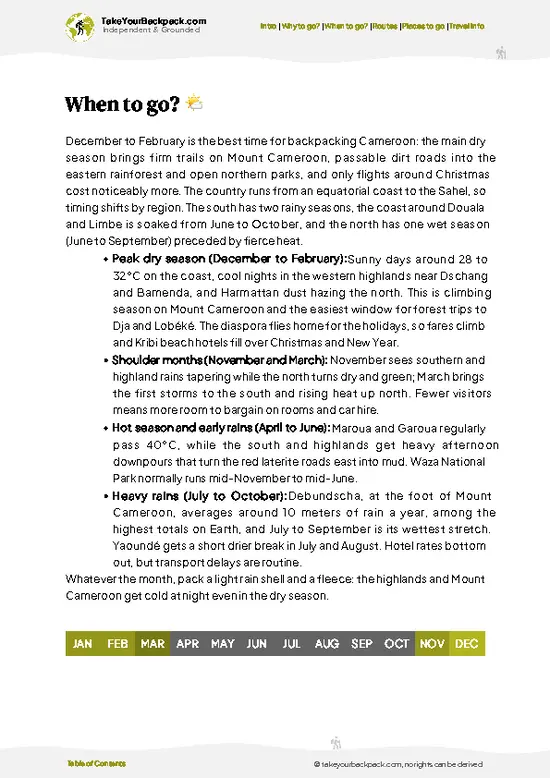
source: climatestotravel.comJANJanuary: excellent for travelingFEBFebruary: highly recommended for travelingMARMarch: fair for travelingAPRApril: fair for travelingMAYMay: fair for travelingJUNJune: fair for travelingJULJuly: fair for travelingAUGAugust: fair for travelingSEPSeptember: fair for travelingOCTOctober: fair for travelingNOVNovember: highly recommended for travelingDECDecember: excellent for traveling
when-to-go

✈️ The backpacker research shortcutCameroon Travel Guide

An offline-friendly backpacking guide with optimized travel routes, ranked highlights, transport advice, and the best areas to stay.
example page 0 from our offline Travel Guide for Cameroonexample page 1 from our offline Travel Guide for Cameroonexample page 2 from our offline Travel Guide for Cameroonexample page 3 from our offline Travel Guide for Cameroonexample page 4 from our offline Travel Guide for Cameroonexample page 5 from our offline Travel Guide for Cameroonexample page 6 from our offline Travel Guide for Cameroonexample page 7 from our offline Travel Guide for Cameroon
The digital guide (383 pages) contains:
95 highlights, ranked by travel appeal
Optimized 7, 14 & 21-day travel routes
Cities, national parks, landmarks, beaches
How to get around
Offline-friendly for travel without Wi-Fi
👉 Click to see all 30+ guide features

📅 Plan smarter in minutes, not weeks
Month by month travel advice
Festivals & national holidays
Budget expectations

🗺️ Go to the right places, skip the overrated ones
Honest pros & cons of destinations
Top hikes, parks & viewpoints
Lesser-known places most travelers miss
Clear “worth it vs skip it” guidance

🛏️ Travel smoothly without rookie mistakes
Best areas to stay
Transport systems explained simply
Common scams & safety advice
SIM cards, money & practical tips

🌍 Understand the country, not just visit it
Culture & traditions
52 Essential phrases & customs
Festivals worth planning around
Traveler-friendly historical context
Insights that make places more meaningful

📱 Built for real travel conditions
Fully downloadable PDF
Works completely offline
Optimized for phone use
Useful in remote areas & buses
Everything in one place
Save weeks of stressful planning
Get instant access to your full guide. 30‑day money-back guarantee.


By proceeding you agree to our terms.
Sent to your inbox immediately after payment • 100% Secure Checkout
Best Backpacking Travel Advisor 2025 tourism awardBest Backpacking
Travel Advisor
2025
What others say about Take Your Backpack Guides:
⭐⭐⭐⭐⭐
Fantastic, amazing amount of information!
⭐⭐⭐⭐⭐
My goodness this is amazing, it's what I've been looking for hats off too you!
⭐⭐⭐⭐⭐
I think this is absolutely BRILLIANT
⭐⭐⭐⭐
Very complete and informative. It's still missing places, but I gotta to commend you
⭐⭐⭐⭐⭐
This is truly amazing, thank you, can't wait to explore it with my kids!
⭐⭐⭐⭐⭐
Awesome resource, thank you!
⭐⭐⭐⭐⭐
This is amazing! Can't wait to explore the ones I haven't seen
⭐⭐⭐⭐
I love this! Well done, great idea.
⭐⭐⭐⭐⭐
Thanks for taking the time to make this gem!
⭐⭐⭐⭐⭐
This might be the best website I've ever seen.
⭐⭐⭐⭐⭐
Congratulations, and thank you so much for your work; it's incredibly valuable.
⭐⭐⭐⭐
In all seriousness I think you did a great job pointing out the important spots
⭐⭐⭐⭐⭐
10/10 very good
⭐⭐⭐⭐⭐
As someone who's only just starting to visit regularly this is awesome, thank you.
⭐⭐⭐⭐
Thank you very much! I'm going to visit my dad, it's going to be very useful!
⭐⭐⭐⭐⭐
This is really cool! We'll be travelling for the first time and this definitely come in handy.
⭐⭐⭐⭐⭐
You are now our minister of culture, congratulations 👨‍💼
⭐⭐⭐⭐⭐
Just wanted to tell you that this is a pearl! Going to follow your recommendations.
⭐⭐⭐⭐⭐
This is so cool. I'll definitely be using the resource for my travels soon.
⭐⭐⭐⭐⭐
This is very impressive! Good work.
⭐⭐⭐⭐⭐
This is an amazing and informative site. Very well done!

🛏️ Where to stay?Best areas to stay in Cameroon

In Foumban, the best spot for backpackers is the area around the central market and the old town. This neighborhood strikes a smart balance between safety, social buzz, and budget-friendly options. It’s where you’ll find the pulse of daily life—street vendors, artisans, and locals mingling—which means you’re never far from authentic interactions. The vibe here is lively but manageable, not overwhelming like a big city’s chaos.

Hostel options are limited but tend to cluster near this zone, making it a natural hub for solo travelers and budget seekers. Staying here means you’re close to the main … read more 👉
In Foumban, the best spot for backpackers is the area around the central market and the old town. This neighborhood strikes a smart balance between safety, social buzz, and budget-friendly options. It’s where you’ll find the pulse of daily life—street vendors, artisans, and locals mingling—which means you’re never far from authentic interactions. The vibe here is lively but manageable, not overwhelming like a big city’s chaos.

Hostel options are limited but tend to cluster near this zone, making it a natural hub for solo travelers and budget seekers. Staying here means you’re close to the main cultural sites without paying a premium for convenience. You sacrifice some luxury and quiet for accessibility and atmosphere, but that trade-off is exactly what makes the experience rich.

Other parts of Foumban lean more residential or commercial, lacking the social energy or traveler infrastructure you want. Venturing too far out means fewer fellow backpackers and more logistical headaches. So, if you want to maximize your time and social opportunities without blowing your budget, the central market and old town area is your winning move.

🚌 Getting aroundMoving around without the hassle

Foumban moves at its own rhythm—less a clock-driven city and more a place where time bends to the flow of daily life. Here, schedules are loose suggestions, not ironclad rules. The market buzzes from dawn, but the pace is set by the sun and the people, not by timetables. You’ll find that getting around isn’t about catching the next bus on a strict schedule; it’s about reading the street, spotting the right ride, and knowing when to walk. This city rewards patience and a bit of street smarts, turning transit into a game of timing and choice.


  • Walking: The ultimate budget option. Foumban’s compact center makes walking not just feasible but often faster than any vehicle during market hours. No cost, full control over your pace, and the best way to soak in the city’s textures and sounds.

read more 👉
Foumban moves at its own rhythm—less a clock-driven city and more a place where time bends to the flow of daily life. Here, schedules are loose suggestions, not ironclad rules. The market buzzes from dawn, but the pace is set by the sun and the people, not by timetables. You’ll find that getting around isn’t about catching the next bus on a strict schedule; it’s about reading the street, spotting the right ride, and knowing when to walk. This city rewards patience and a bit of street smarts, turning transit into a game of timing and choice.


  • Walking: The ultimate budget option. Foumban’s compact center makes walking not just feasible but often faster than any vehicle during market hours. No cost, full control over your pace, and the best way to soak in the city’s textures and sounds.


  • Shared Taxis (Taxi Collectif): These minibuses or vans run on flexible routes between major points like the market, the palace, and bus station. They start rolling around 6:30 AM and taper off by 7 PM. Fares hover around 200-300 CFA francs ($0.35-$0.50). They’re cheap and relatively quick but expect crowding and no fixed schedule—departures happen when full, so timing is a gamble.


  • Motorcycle Taxis (Benskin): For speed and door-to-door service, these are unbeatable. Available all day and night, prices vary by distance but generally start at 300 CFA francs ($0.50). They’re faster than shared taxis but less comfortable and riskier, especially on uneven roads. Ideal if you want to save time and don’t mind a bit of adrenaline.


  • Private Taxis: More expensive, around 2,000-3,000 CFA francs ($3.50-$5), but they offer comfort and flexibility. They don’t run on fixed routes or schedules, so you can negotiate a price and timing. Best for groups or when you want to avoid the unpredictability of shared options.


Understanding these options means you’re not just moving through Foumban—you’re choosing how to spend your time, money, and comfort. Want to save cash and soak in the city’s pulse? Walk or hop on a shared taxi. Need to get somewhere fast and don’t mind a bit of chaos? Motorcycle taxis are your go-to. And if comfort trumps cost, private taxis deliver. Each choice is a trade-off, and mastering them turns transit into a strategic win.

👛 Costs (as of 3 April 2025)How expensive it really is

Backpacking in Foumban, Cameroon, offers a clear trade-off between cost and comfort, with prices reflecting the city’s modest tourism infrastructure and local economy. Here’s a breakdown of what you’re likely to spend daily as an independent traveler:
  • Dorm Accommodation (High Season): Expect to pay around €8 to €12 per night. High season drives prices up slightly due to demand, but options remain basic, often with shared facilities and simple amenities.
  • Dorm Accommodation (Off-Season): Prices drop to about €5 to €8 per night. Off-season travelers can find quieter, cheaper stays, though some places may have limited availability or reduced services.
  • Meals: Local eateries serve filling meals for €2 to €4 each. Street food and small restaurants dominate, offering traditional dishes that are
read more 👉
Backpacking in Foumban, Cameroon, offers a clear trade-off between cost and comfort, with prices reflecting the city’s modest tourism infrastructure and local economy. Here’s a breakdown of what you’re likely to spend daily as an independent traveler:
  • Dorm Accommodation (High Season): Expect to pay around €8 to €12 per night. High season drives prices up slightly due to demand, but options remain basic, often with shared facilities and simple amenities.
  • Dorm Accommodation (Off-Season): Prices drop to about €5 to €8 per night. Off-season travelers can find quieter, cheaper stays, though some places may have limited availability or reduced services.
  • Meals: Local eateries serve filling meals for €2 to €4 each. Street food and small restaurants dominate, offering traditional dishes that are both affordable and authentic. Western-style or tourist-targeted meals will cost more, around €5 to €7.
  • Local Transport: Short rides on motorbike taxis or minibuses typically cost €0.30 to €0.60. These are the backbone of getting around town quickly but expect a bit of hustle and negotiation.
  • City Transport Pass: There is no formal city transport pass in Foumban. Budget travelers rely on individual fares or walking, which is often the best way to soak in the city’s atmosphere.
  • Basic Activities/Entry Fees: Visiting cultural sites like the Foumban Royal Palace or local museums costs around €1 to €3. These fees support preservation efforts and offer deep insight into the region’s rich history.
  • Miscellaneous Expenses: Budget €1 to €3 for essentials like bottled water, snacks, or small tips. Internet access and phone credit are inexpensive but can add up if you rely heavily on connectivity.

In total, a realistic daily budget for backpacking in Foumban ranges from about €12 to €25. This covers basic lodging, meals, transport, and entry fees, giving you a solid foundation to plan your spending without surprises. The key trade-off here is simplicity and immersion versus comfort and convenience—knowing this lets you pick the experience that fits your style and wallet.
⚠️ Prices can change and everyone travels differently, so take this as a rough guide. Hope it helps you plan your adventure!

🚌 Day tripsShort trips worth adding

Foumban, Cameroon, is a fantastic launchpad for day trips that immerse you in the region’s rich culture and stunning landscapes. Here’s how to make the most of your time.

Foumban Royal Palace and Museum
Just a short walk from the center, the Royal Palace is a treasure trove of Bamoun history. You’ll find intricate carvings and artifacts that tell the story of the local monarchy. A guided tour is a must; it brings the history to life. Expect to spend around 2-3 hours here, and entry fees are minimal—think less than $5. The best time to visit is in the morning to avoid the heat and crowds. A common mistake is rushing through without taking the time to chat with the guides; they have stories that will enrich your understanding of the culture.


Mount Koupé
A 45-minute drive from Foumban, … read more 👉
Foumban, Cameroon, is a fantastic launchpad for day trips that immerse you in the region’s rich culture and stunning landscapes. Here’s how to make the most of your time.

Foumban Royal Palace and Museum
Just a short walk from the center, the Royal Palace is a treasure trove of Bamoun history. You’ll find intricate carvings and artifacts that tell the story of the local monarchy. A guided tour is a must; it brings the history to life. Expect to spend around 2-3 hours here, and entry fees are minimal—think less than $5. The best time to visit is in the morning to avoid the heat and crowds. A common mistake is rushing through without taking the time to chat with the guides; they have stories that will enrich your understanding of the culture.


Mount Koupé
A 45-minute drive from Foumban, Mount Koupé offers a refreshing escape into nature. The hike is moderate, taking about 3-4 hours round trip, and rewards you with breathtaking views of the surrounding valleys. Bring snacks and plenty of water; you’ll want to linger at the summit. Budget around $10 for transport and snacks. The dry season, from November to February, is ideal for hiking. First-timers often underestimate the trail’s difficulty, so wear sturdy shoes and pace yourself.


Dschang
About an hour away, Dschang is known for its vibrant market and the stunning Lake Baleng. Spend your morning exploring local crafts and sampling street food, then head to the lake for a peaceful afternoon. Total costs should be around $15, including transport and food. The best time to visit is during the weekly market days, typically on Wednesdays. A common pitfall is not trying the local dishes; they’re a highlight of the experience.
👉 Explore Dschang

Bafoussam
Just over an hour from Foumban, Bafoussam is a bustling city with a unique blend of urban and rural life. Visit the local handicraft market and the nearby waterfalls for a refreshing dip. Expect to spend around $20 for transport and lunch. The dry season is best for clear skies and pleasant temperatures. Many first-timers miss the chance to engage with local artisans; don’t hesitate to ask questions and learn about their crafts.
👉 Explore Bafoussam
Want to know what more Cameroon offers?
The Cameroon Travel Guide describes 95 highlights, from cities to national parks, from beaches to hikes

Get the Travel Guide -

🍲 FoodEating & Drinking in Foumban

In Foumban, the culinary scene is a vibrant tapestry of flavors that beckons you to dive in. Start with fufu, a starchy staple made from cassava or plantains, often paired with a rich sauce like groundnut or palm nut. The texture is a comforting contrast to the boldness of the sauce, making it a must-try.

Street food is where the magic happens. Vendors line the bustling markets, serving up grilled meats and spicy kebabs that sizzle with flavor. The aroma of pepper soup wafts through the air, inviting you to sample its warming spices. Don’t miss out on akara, deep-fried bean cakes that are crispy on the outside and soft inside, perfect for a quick snack.

When it comes to drinks, palm wine is a local favorite, often enjoyed in a communal setting. It’s sweet, slightly effervescent, and best … read more 👉
In Foumban, the culinary scene is a vibrant tapestry of flavors that beckons you to dive in. Start with fufu, a starchy staple made from cassava or plantains, often paired with a rich sauce like groundnut or palm nut. The texture is a comforting contrast to the boldness of the sauce, making it a must-try.

Street food is where the magic happens. Vendors line the bustling markets, serving up grilled meats and spicy kebabs that sizzle with flavor. The aroma of pepper soup wafts through the air, inviting you to sample its warming spices. Don’t miss out on akara, deep-fried bean cakes that are crispy on the outside and soft inside, perfect for a quick snack.

When it comes to drinks, palm wine is a local favorite, often enjoyed in a communal setting. It’s sweet, slightly effervescent, and best shared with new friends. Embrace the custom of toasting before sipping; it’s a sign of respect and camaraderie.

Dining here is casual and communal, so don’t hesitate to join a table or share a meal. The experience is as rich as the food itself, making every bite a connection to the heart of Foumban.

🛡️ SafetyTraveler Safety Guide

Foumban is generally safe, but a few situational awareness tips can enhance your experience. Stick to well-lit areas at night, especially around the market and main square, where the energy is vibrant but can attract opportunists.

Solo travelers should blend in; avoid flashy attire or excessive gear that screams “tourist.” Keep your belongings close, especially in crowded spots.

Common scams include overly friendly locals who might offer unsolicited guidance, expecting a tip. Politely decline if you’re not interested.

Annoyances like persistent vendors can be managed with a friendly smile and a firm “no.” This isn’t a high-risk zone, but being aware of your surroundings and maintaining a confident demeanor will help you navigate smoothly. Enjoy the rich culture without unnecessary stress.

Other Cameroonian towns near Foumban

Explore more nearby:

  • Kumbo—Nso palace, highland views, religious centers| 61 km away
  • Mbouda—hilly terrain, roadside stalls, Bamileke culture| 72 km away
  • Fundong—Kom chiefdom, terraced hills, rural markets| 92 km away

💡 Not sure where to go next?
Create a personalized itinerary for Cameroon including Foumban and the places that fit your trip.

Generate my itinerary

👉 Discover all towns

Or checkout all Cameroon has to offer (think cities, towns, villages, national parks, hikes, beaches, festivals)
Country photo of Cameroon

We 💚 feedbackSumming up the experience

Foumban has a pulse that’s hard to ignore. The vibrant markets buzz with life, and the local artisans are genuinely proud of their craft. The best surprise? Stumbling upon a traditional dance performance that feels like stepping into a living history book. Just a heads-up: the roads can be rough, so brace yourself for a bumpy ride. Embrace it; that’s part of the adventure. You’ll leave with stories that linger long after you’ve returned home.

✍️ Help improve this page!
The information on this page is based on in-depth research, insights shared by experienced travelers, and feedback from the local travel community in Cameroon. While every effort is made to keep the information accurate and current, conditions can change — so if you spot anything incorrect or outdated, please get in touch.


🙋‍♂️ Give feedback

👋 Meet the founderWho’s Behind Take Your Backpack?

Johan, backpacker and founder of TakeYourBackpackHi, I’m Johan (Netherlands 🇳🇱), the creator of TakeYourBackpack. Over the past decade, I’ve backpacked through 80+ countries across six continents, gaining extensive experience with independent travel, long-term trips, and overland routes.

This site is built on a combination of firsthand travel experience and carefully curated insights from other backpackers. Many guides are based on places I’ve personally visited, while others bring together tips, observations, and practical advice shared by trusted travelers I’ve met along the way.

The goal is to provide realistic, experience-driven guidance — not generic itineraries — so you can explore destinations with better context, clearer expectations, and more confidence.

Get full Cameroon guide •
Instant download • 95 highlights • Full Offline guide