×

Cameroon🇨🇲 | townsKumboNso palace, highland views, religious centers | things to do and best time to go

Explore WumExplore Nanga Eboko

Backpacking in Kumbo
🏆 Top picktown ranked #3
By Johan Kruseman 🇳🇱 | Updated June 9, 2026

Most travelers only realize after arriving: Kumbo’s altitude is your secret weapon. The air is cool and pine-scented, a relief after the muggy lowlands of Cameroon. Kumbo sits in the Northwest Region, perched in the hills between Bamenda and the Nigerian border. It’s not a city that dazzles on arrival—no grand plazas or Instagrammable skylines—but it’s the kind of place where the rhythm of daily life is the main attraction. For backpackers, Kumbo is a crossroads: a practical base for exploring the rolling Nso highlands, with footpaths that wind through eucalyptus groves and villages where the market is still the social heart. The town itself is compact, walkable, and feels more like a cluster of neighborhoods than a bustling hub. You won’t find a party hostel scene here; evenings are slow, with the clink of bottles in corner bars and the smell of grilled corn drifting through the dusk. Costs are low, but so is anonymity—expect curious stares and genuine conversation. Compared to Bamenda, Kumbo is quieter, more rural, and less polished, but that’s exactly why it works: it’s a place to catch your breath, not chase the crowd. Transport is basic—bush taxis and moto rides rule—but that’s part of the adventure. Safety is generally good, though you’ll want to keep your wits about you after dark. If you’re looking for a launchpad to the mountains or a pause between bigger cities, Kumbo earns its place on the route.

Discover everything you want to know in the 📖 Cameroon Travel Guide.


Get your Cameroon guide
95 ranked highlights, routes & tips, works offline (383 pages)
Loading the map 🌍
CLICK TO FILTER
cities
towns
landmarks
national parks
hikes
beaches
attractions
festivals
regions
SHOW COUNTRY’S BESTSHOW ALL

✨ Why go?
Ranked #3 town in Cameroon
The unique appeal for travelers

Kumbo, Cameroon, serves as a gateway for backpackers seeking both adventure and culture. Its proximity to stunning hikes in the surrounding hills makes it a prime stop for those eager to explore. The local guesthouses offer a cozy atmosphere, where you can swap stories with fellow travelers over a bowl of spicy ndole or a plate of jollof rice. The streets are walkable, inviting you to meander through markets filled with vibrant fabrics and the scent of street food wafting through the air.

Backpackers often find themselves lingering here for a few days, soaking in the friendly social vibe. It’s a place where solo travelers and small groups can connect easily, sharing tips and plans for nearby attractions. While Kumbo isn’t a nightlife hub, its charm lies in the community feel and the chance … read more 👉
Kumbo, Cameroon, serves as a gateway for backpackers seeking both adventure and culture. Its proximity to stunning hikes in the surrounding hills makes it a prime stop for those eager to explore. The local guesthouses offer a cozy atmosphere, where you can swap stories with fellow travelers over a bowl of spicy ndole or a plate of jollof rice. The streets are walkable, inviting you to meander through markets filled with vibrant fabrics and the scent of street food wafting through the air.

Backpackers often find themselves lingering here for a few days, soaking in the friendly social vibe. It’s a place where solo travelers and small groups can connect easily, sharing tips and plans for nearby attractions. While Kumbo isn’t a nightlife hub, its charm lies in the community feel and the chance to engage with local culture. If you’re a slow traveler or a hiker, this town is a perfect blend of convenience and character, making it more than just a pit stop.
Want to include Kumbo in your Cameroon route?
Create a personalized Cameroon itinerary that includes Kumbo and the places that fit your trip — based on your travel style, budget, and available time. Get your route in seconds.

Generate my trip

💡 HighlightsTop highlights of Kumbo

  • Fon’s Palace (the Nso Palace) — The living heart of Kumbo: traditional royal compound where the Fon’s regalia, carved stools and drums are kept and where public ceremonies happen. You’ll get the best sense of Nso authority, history and pageantry here (ask locally for visiting times).
  • Kumbo Grand Market — A chaotic, colorful market that’s the town’s social engine: fresh produce, smoked fish, textiles and a huge selection of locally woven grass baskets. Great for people-watching, bargaining and picking up authentic souvenirs.
  • Nso Cultural Centre / Kumbo Museum — Small but important: local artefacts, traditional costumes, royal objects and photo displays that explain the Nso kingdom and everyday culture. It’s compact and gives useful context before you wander the palace and neighborhoods.
read more 👉
  • Fon’s Palace (the Nso Palace) — The living heart of Kumbo: traditional royal compound where the Fon’s regalia, carved stools and drums are kept and where public ceremonies happen. You’ll get the best sense of Nso authority, history and pageantry here (ask locally for visiting times).
  • Kumbo Grand Market — A chaotic, colorful market that’s the town’s social engine: fresh produce, smoked fish, textiles and a huge selection of locally woven grass baskets. Great for people-watching, bargaining and picking up authentic souvenirs.
  • Nso Cultural Centre / Kumbo Museum — Small but important: local artefacts, traditional costumes, royal objects and photo displays that explain the Nso kingdom and everyday culture. It’s compact and gives useful context before you wander the palace and neighborhoods.
  • Diocese of Kumbo Cathedral — The main Catholic cathedral is both an architectural and community landmark. Attend a mass if you can — the choirs and local devotion give a clear window into contemporary life in town.
  • Basket-weavers’ quarters — Not a single building but a real downtown cluster of workshops where women weave the famous Kumbo baskets (and other straw goods). Watch the process, ask to try, and buy directly from makers — cheaper and more rewarding than a shop.
  • Woodcarvers’ and sculptors’ street — Small workshops around the town center where traditional woodcarvers turn out masks, stools and statues. It’s hands-on: you can watch carving, commission a piece or learn about the symbolism behind masks and motifs.
  • Palace Compounds & Traditional Houses — Walk the older quarters around the Fon’s compound to see the roundhouses, decorated compounds and family shrines. These clusters of homes show classic Nso architecture and social layout in a way museums can’t replicate.
  • Kumbo Hill viewpoints / short town hikes — Simple walks up the ridges that frame the town give excellent panoramas over Kumbo’s patchwork of fields, red roofs and surrounding highlands. Early morning or late afternoon light is best for photos and local life passing below.
  • Local food stalls & roadside “bukas” — The culinary highlights are humble: grilled goat, achu (yellow soup) and roadside coffee that you won’t find on menus elsewhere. Eat where the locals do for the most honest tastes of Kumbo.
  • Community meeting squares and evening drum spots — By dusk several public squares or the palace forecourt host drumming, talk and impromptu dances. These are the best places to catch living culture — chat with elders and you’ll hear local histories and songs.
For nearby day trips, look into Lake Oku and the Kilum-Ijim forest (Mount Oku area), the waterfalls and valleys around Ndu/Menchum, and traditional villages around Bali Nyonga — all are visitable from Kumbo as full-day outings.
Spotted a mistake or missing something? Contact us.

🏘️ NeighborhoodsHow different areas shape the experience

Kumbo is a vibrant hub in Cameroon, rich in culture and community. Each neighborhood offers a unique flavor, making it essential for backpackers to choose wisely.

Town Center: This is the heartbeat of Kumbo. Bustling markets and street vendors fill the air with the scent of grilled plantains and spices. It’s walkable, with plenty of budget-friendly accommodations. Nightlife here is lively, with local bars where you can sip on palm wine. Perfect for short stays, but the noise might wear on you if you linger too long.

Ngwa: A quieter area, Ngwa is ideal for those seeking a more relaxed vibe. The streets are lined with lush trees, and you can hear the distant sounds of children playing. It’s less touristy, making it a great spot for longer stays. Transport options are limited, but the peace … read more 👉
Kumbo is a vibrant hub in Cameroon, rich in culture and community. Each neighborhood offers a unique flavor, making it essential for backpackers to choose wisely.

Town Center: This is the heartbeat of Kumbo. Bustling markets and street vendors fill the air with the scent of grilled plantains and spices. It’s walkable, with plenty of budget-friendly accommodations. Nightlife here is lively, with local bars where you can sip on palm wine. Perfect for short stays, but the noise might wear on you if you linger too long.

Ngwa: A quieter area, Ngwa is ideal for those seeking a more relaxed vibe. The streets are lined with lush trees, and you can hear the distant sounds of children playing. It’s less touristy, making it a great spot for longer stays. Transport options are limited, but the peace is worth it.

Chere: Known for its artistic community, Chere is where creativity thrives. Street art adorns the walls, and local artisans sell their crafts. It’s a bit pricier, but the unique atmosphere makes it worthwhile. Walkability is decent, and you’ll find cozy cafes perfect for unwinding after a day of exploration.

Mbingo: Just outside the main town, Mbingo offers stunning views and a more rural experience. It’s less accessible, requiring a bit of effort to reach, but the tranquility is unmatched. Ideal for longer stays if you want to immerse yourself in nature and local life.

⌛️ 1 dayA smart one-day plan

Kumbo, a vibrant town in the Northwest Region of Cameroon, pulses with the rhythm of local life. It’s a place where the air is rich with the scent of fresh plantains and the sounds of laughter echo through the bustling markets. This town isn’t on every tourist’s radar, but that’s part of its charm. You’ll find a blend of culture, community, and stunning landscapes that make it worth your while.

Start your day at the lively Kumbo Market. The early morning light filters through the stalls, illuminating vibrant fabrics and fresh produce. Grab a warm, flaky meat pie from a local vendor—it’s a breakfast staple that packs a punch. As you wander through the market, take in the chatter of vendors and the colorful displays of spices and crafts. This is where you’ll feel the heartbeat of Kumbo.

In … read more 👉
Kumbo, a vibrant town in the Northwest Region of Cameroon, pulses with the rhythm of local life. It’s a place where the air is rich with the scent of fresh plantains and the sounds of laughter echo through the bustling markets. This town isn’t on every tourist’s radar, but that’s part of its charm. You’ll find a blend of culture, community, and stunning landscapes that make it worth your while.

Start your day at the lively Kumbo Market. The early morning light filters through the stalls, illuminating vibrant fabrics and fresh produce. Grab a warm, flaky meat pie from a local vendor—it’s a breakfast staple that packs a punch. As you wander through the market, take in the chatter of vendors and the colorful displays of spices and crafts. This is where you’ll feel the heartbeat of Kumbo.

In the afternoon, head to the nearby Bui National Park. It’s not just a scenic escape; it’s a chance to connect with nature. The trails here are less traveled, offering a sense of solitude as you hike through lush greenery. Keep an eye out for the unique wildlife, like the elusive black-casqued hornbill. The fresh, earthy scent of the forest will invigorate you, making the effort worthwhile.

As evening approaches, return to town and settle into a local eatery. Try the fufu and eru, a traditional dish that embodies the flavors of the region. The atmosphere is warm, filled with the sounds of conversation and laughter. After dinner, stroll through the neighborhoods, where you might catch a glimpse of local artisans at work. This is Kumbo—authentic, welcoming, and full of life.
Turn your Kumbo visit into an Cameroon adventure
Build a complete Cameroon route with Kumbo, hidden gems, must-see destinations, and realistic travel times included.

Generate my trip

🌤️ When to go?Best time to visit Kumbo


  • Topic: Weather – Kumbo’s climate swings between a wet season from March to October and a dry season from November to February. The rains can be relentless, turning trails into mudslides and making outdoor plans tricky. Aim for the dry months when the air clears, and the landscape sharpens under bright skies.

  • Topic: Temperature – Expect daytime highs around 25-28°C (77-82°F) during the dry season, cooling off to 15-18°C (59-64°F) at night. The wet season is slightly warmer but muggy, which can sap your energy on long hikes.

  • Topic: Daylight Hours – Near the equator, Kumbo enjoys roughly 12 hours of daylight year-round. This steady rhythm means you can plan your days confidently without worrying about early sunsets cutting your adventures short.

  • Topic: Crowds – Kumbo isn’t a tourist
read more 👉

  • Topic: Weather – Kumbo’s climate swings between a wet season from March to October and a dry season from November to February. The rains can be relentless, turning trails into mudslides and making outdoor plans tricky. Aim for the dry months when the air clears, and the landscape sharpens under bright skies.

  • Topic: Temperature – Expect daytime highs around 25-28°C (77-82°F) during the dry season, cooling off to 15-18°C (59-64°F) at night. The wet season is slightly warmer but muggy, which can sap your energy on long hikes.

  • Topic: Daylight Hours – Near the equator, Kumbo enjoys roughly 12 hours of daylight year-round. This steady rhythm means you can plan your days confidently without worrying about early sunsets cutting your adventures short.

  • Topic: Crowds – Kumbo isn’t a tourist hotspot, but the dry season draws more local visitors and traders. You’ll find a livelier market scene and more social buzz, which adds texture to your experience without overwhelming the town’s laid-back vibe.

  • Topic: Seasonal Activities – The dry season is prime for trekking the nearby Bamenda Highlands and exploring cultural festivals, which often happen between November and February. The wet season limits access to trails but brings lush greenery and fewer people.

  • Topic: Price Fluctuations – Accommodation and transport costs dip during the wet season due to lower demand, but the trade-off is dealing with slippery roads and fewer open services. The dry season commands a slight premium but rewards you with smoother logistics and fuller experiences.


Pro-tip: Visit Kumbo between November and February to balance pleasant weather, vibrant local life, and reliable trail conditions—making every step outside feel like a well-earned reward.


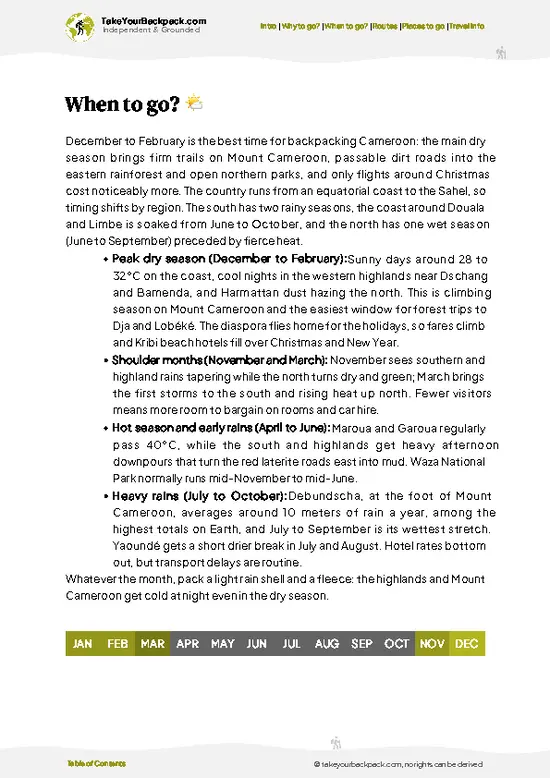
source: climatestotravel.comJANJanuary: excellent for travelingFEBFebruary: excellent for travelingMARMarch: fair for travelingAPRApril: fair for travelingMAYMay: fair for travelingJUNJune: fair for travelingJULJuly: fair for travelingAUGAugust: fair for travelingSEPSeptember: fair for travelingOCTOctober: good for travelingNOVNovember: excellent for travelingDECDecember: excellent for traveling
when-to-go

✈️ The backpacker research shortcutCameroon Travel Guide

An offline-friendly backpacking guide with optimized travel routes, ranked highlights, transport advice, and the best areas to stay.
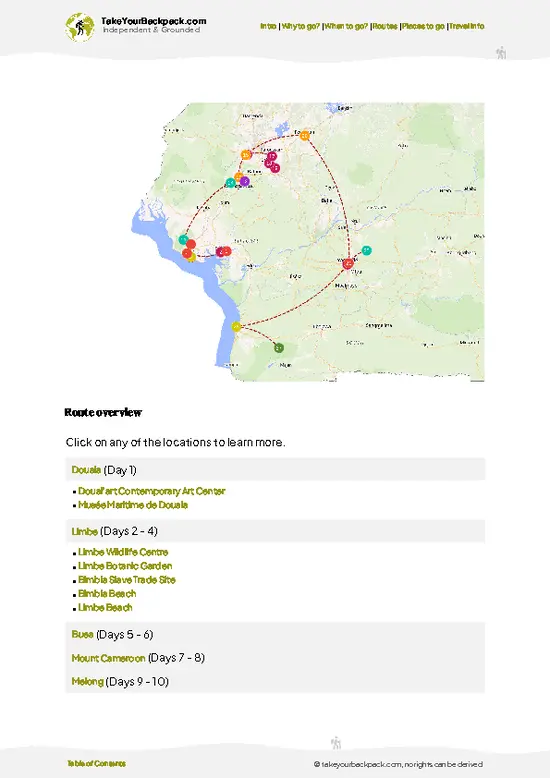
example page 0 from our offline Travel Guide for Cameroon
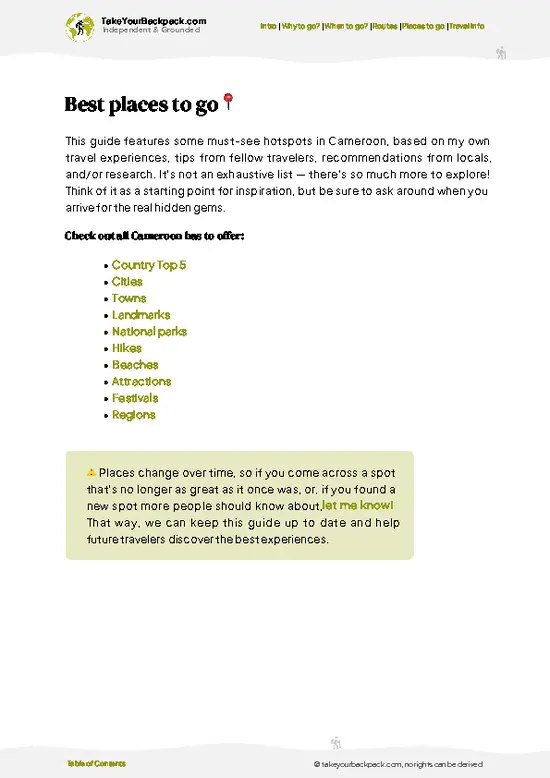
example page 1 from our offline Travel Guide for Cameroon
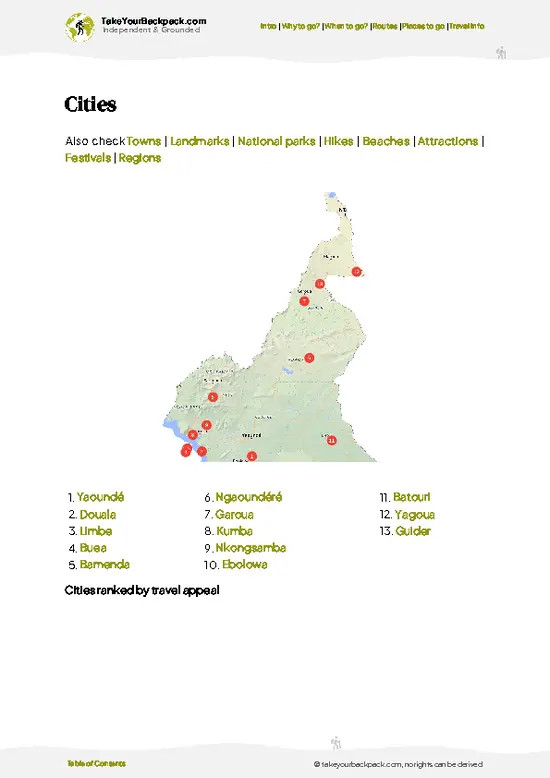
example page 2 from our offline Travel Guide for Cameroon
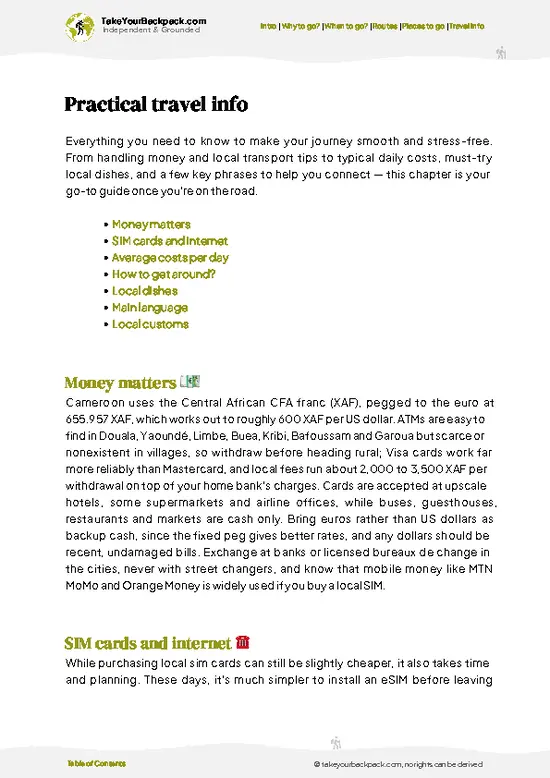
example page 3 from our offline Travel Guide for Cameroon
example page 4 from our offline Travel Guide for Cameroon
example page 5 from our offline Travel Guide for Cameroon
example page 6 from our offline Travel Guide for Cameroon
example page 7 from our offline Travel Guide for Cameroon
The digital guide (383 pages) contains:
95 highlights, ranked by travel appeal
Optimized 7, 14 & 21-day travel routes
Cities, national parks, landmarks, beaches
How to get around
Offline-friendly for travel without Wi-Fi
👉 Click to see all 30+ guide features

📅 Plan smarter in minutes, not weeks
Month by month travel advice
Festivals & national holidays
Budget expectations

🗺️ Go to the right places, skip the overrated ones
Honest pros & cons of destinations
Top hikes, parks & viewpoints
Lesser-known places most travelers miss
Clear “worth it vs skip it” guidance

🛏️ Travel smoothly without rookie mistakes
Best areas to stay
Transport systems explained simply
Common scams & safety advice
SIM cards, money & practical tips

🌍 Understand the country, not just visit it
Culture & traditions
52 Essential phrases & customs
Festivals worth planning around
Traveler-friendly historical context
Insights that make places more meaningful

📱 Built for real travel conditions
Fully downloadable PDF
Works completely offline
Optimized for phone use
Useful in remote areas & buses
Everything in one place
Save weeks of stressful planning
Get instant access to your full guide. 30‑day money-back guarantee.


By proceeding you agree to our terms.
Sent to your inbox immediately after payment • 100% Secure Checkout
Best Backpacking Travel Advisor 2025 tourism awardBest Backpacking
Travel Advisor
2025
What others say about Take Your Backpack Guides:
⭐⭐⭐⭐⭐
Fantastic, amazing amount of information!
⭐⭐⭐⭐⭐
My goodness this is amazing, it's what I've been looking for hats off too you!
⭐⭐⭐⭐⭐
I think this is absolutely BRILLIANT
⭐⭐⭐⭐
Very complete and informative. It's still missing places, but I gotta to commend you
⭐⭐⭐⭐⭐
This is truly amazing, thank you, can't wait to explore it with my kids!
⭐⭐⭐⭐⭐
Awesome resource, thank you!
⭐⭐⭐⭐⭐
This is amazing! Can't wait to explore the ones I haven't seen
⭐⭐⭐⭐
I love this! Well done, great idea.
⭐⭐⭐⭐⭐
Thanks for taking the time to make this gem!
⭐⭐⭐⭐⭐
This might be the best website I've ever seen.
⭐⭐⭐⭐⭐
Congratulations, and thank you so much for your work; it's incredibly valuable.
⭐⭐⭐⭐
In all seriousness I think you did a great job pointing out the important spots
⭐⭐⭐⭐⭐
10/10 very good
⭐⭐⭐⭐⭐
As someone who's only just starting to visit regularly this is awesome, thank you.
⭐⭐⭐⭐
Thank you very much! I'm going to visit my dad, it's going to be very useful!
⭐⭐⭐⭐⭐
This is really cool! We'll be travelling for the first time and this definitely come in handy.
⭐⭐⭐⭐⭐
You are now our minister of culture, congratulations 👨‍💼
⭐⭐⭐⭐⭐
Just wanted to tell you that this is a pearl! Going to follow your recommendations.
⭐⭐⭐⭐⭐
This is so cool. I'll definitely be using the resource for my travels soon.
⭐⭐⭐⭐⭐
This is very impressive! Good work.
⭐⭐⭐⭐⭐
This is an amazing and informative site. Very well done!

🛏️ Where to stay?Choosing the right base

In Kumbo, the best spot for backpackers is the town center around the main market and the nearby neighborhoods. This area pulses with life from dawn till dusk—vendors shouting over the scent of fresh spices and roasted maize, locals weaving through narrow streets lined with colorful stalls. Staying here means you’re in the thick of it, where the town’s rhythm is loud and clear, and you’re never far from a shared meal or a chance to swap stories with fellow travelers or friendly locals.

Why this area? Safety leans on visibility and community presence. The market district is bustling enough that … read more 👉
In Kumbo, the best spot for backpackers is the town center around the main market and the nearby neighborhoods. This area pulses with life from dawn till dusk—vendors shouting over the scent of fresh spices and roasted maize, locals weaving through narrow streets lined with colorful stalls. Staying here means you’re in the thick of it, where the town’s rhythm is loud and clear, and you’re never far from a shared meal or a chance to swap stories with fellow travelers or friendly locals.

Why this area? Safety leans on visibility and community presence. The market district is bustling enough that petty crime is less common, and the steady flow of people means you’re rarely isolated. For solo backpackers, this is gold—there’s a natural social vibe, with informal hangouts popping up around street food vendors and small cafés where you can plug in and plan your next move.

Hostels and budget guesthouses cluster here, offering basic but clean accommodations that fit a backpacker’s wallet. Compared to quieter, more residential parts of Kumbo, this zone feels alive and accessible, cutting down on taxi rides and giving you a front-row seat to the town’s everyday pulse. It’s gritty, real, and exactly where you want to be if you’re after connection over comfort.

🚌 Getting aroundHow to get around Kumbo

Kumbo moves at its own rhythm, a pulse that’s neither frantic nor slow but somewhere in between—like a heartbeat syncing with the sun’s climb and fall. The air carries a mix of earth and wood smoke, punctuated by the chatter of market vendors and the occasional honk of a motorbike weaving through narrow streets. Time here isn’t dictated by clocks but by the flow of daily life: when the market stalls fill, when the sun hits just right to cast long shadows on the hills, when the local bus finally rumbles in after a stretch of silence. You’ll find that patience isn’t just a virtue—it’s your best tool for unlocking the town’s rhythm. The payoff? A genuine connection to a place where every step feels earned, every interaction real.


  • Walking: The most reliable and immersive way to get around
read more 👉
Kumbo moves at its own rhythm, a pulse that’s neither frantic nor slow but somewhere in between—like a heartbeat syncing with the sun’s climb and fall. The air carries a mix of earth and wood smoke, punctuated by the chatter of market vendors and the occasional honk of a motorbike weaving through narrow streets. Time here isn’t dictated by clocks but by the flow of daily life: when the market stalls fill, when the sun hits just right to cast long shadows on the hills, when the local bus finally rumbles in after a stretch of silence. You’ll find that patience isn’t just a virtue—it’s your best tool for unlocking the town’s rhythm. The payoff? A genuine connection to a place where every step feels earned, every interaction real.


  • Walking: The most reliable and immersive way to get around Kumbo. Streets are compact but uneven, so sturdy shoes are a must. Walking lets you soak in the scent of fresh coffee roasting and catch the vibrant colors of woven baskets displayed in open-air shops. Expect to cover most of the town center within 30-45 minutes on foot.


  • Motorbike Taxis (Benskins): These are the town’s unofficial lifeline, darting through traffic with surprising agility. Fares are negotiable but generally hover around 200-500 CFA francs for short trips. They operate from dawn until dusk, though after dark, availability drops sharply. Use them for quick hops to the outskirts or when you’re carrying heavy gear.


  • Shared Minibuses: Known locally as “Ndi,” these minibuses run fixed routes connecting Kumbo to nearby villages and markets. They leave when full, so timing is flexible but unpredictable—plan for waits of 10-30 minutes. Tickets cost between 300-700 CFA francs depending on distance. They’re slower but offer a window into local life, packed with chatter and the occasional burst of music.


  • Bicycle Rentals: A budget-friendly option for those wanting to explore beyond the town’s core. Rentals run about 1,000 CFA francs per day. Roads can be rough, so a sturdy bike with good tires is essential. Early morning rides are best to avoid midday heat and catch the soft, golden light spilling over the hills.

👛 Costs (as of 5 April 2025)Travel costs and budget guide for Kumbo

Backpacking in Kumbo, Cameroon, means embracing a pace where every dollar stretches and every experience feels grounded in local life. Here’s how your daily costs typically break down:
  • Dorm Accommodation: Expect to pay around €5 to €10 per night for a basic dorm bed. Options are limited and simple, often family-run guesthouses with shared bathrooms. The rooms are modest but clean, with the occasional breeze slipping through open windows to cut the tropical heat.
  • Meals: Street food and local eateries dominate here. A hearty plate of Ndolé or roasted plantains with grilled fish will set you back about €1.50 to €3. Meals are fresh, often cooked over charcoal fires, filling the air with smoky, earthy aromas that make every bite feel like a small celebration.
  • Local Transport: Getting around
read more 👉
Backpacking in Kumbo, Cameroon, means embracing a pace where every dollar stretches and every experience feels grounded in local life. Here’s how your daily costs typically break down:
  • Dorm Accommodation: Expect to pay around €5 to €10 per night for a basic dorm bed. Options are limited and simple, often family-run guesthouses with shared bathrooms. The rooms are modest but clean, with the occasional breeze slipping through open windows to cut the tropical heat.
  • Meals: Street food and local eateries dominate here. A hearty plate of Ndolé or roasted plantains with grilled fish will set you back about €1.50 to €3. Meals are fresh, often cooked over charcoal fires, filling the air with smoky, earthy aromas that make every bite feel like a small celebration.
  • Local Transport: Getting around means hopping on motorbike taxis or shared minibuses. Fares usually range from €0.30 to €1 per trip, depending on distance. The rides are bumpy but quick, with the scent of dust and diesel mixing in the air as you weave through the town’s lively streets.
  • Basic Activities/Entry Fees: Cultural sites and local markets rarely charge more than €1 to €2 for entry. Exploring traditional crafts or visiting nearby villages might cost a bit more if you hire a guide, around €5 to €10, but it’s worth it for the stories and access you gain.
  • Miscellaneous Expenses: This covers essentials like bottled water (€0.50), occasional snacks, or phone credit for staying connected (€1 to €2). Small but necessary, these add up quietly but keep your trip smooth and safe.

In total, you’re looking at roughly €8 to €20 per day to backpack comfortably in Kumbo. It’s a place where the modest price tags reflect a slower rhythm, inviting you to savor the textures, smells, and sounds that make the experience uniquely local.
⚠️ Prices can change and everyone travels differently, so take this as a rough guide. Hope it helps you plan your adventure!

🚌 Day tripsExploring the surroundings

Kumbo, Cameroon, is a backpacker’s dream base, surrounded by rich culture and stunning landscapes. Here’s how to make the most of your day trips from this vibrant town.

Mount Oku Adventure
A trek up Mount Oku is a must. The air gets cooler as you ascend, and the scent of pine fills your lungs. This hike takes about 3-4 hours to reach the summit, where you’re rewarded with breathtaking views of the crater lake. Expect to spend around 1,500 CFA for transport and a small fee for the guide. The best time to go is during the dry season, from November to March. A common mistake? Underestimating the chill at the top; pack a light jacket.


Lake Awing Exploration
Just a short ride from Kumbo, Lake Awing offers a serene escape. The water glistens under the sun, and the surrounding hills create … read more 👉
Kumbo, Cameroon, is a backpacker’s dream base, surrounded by rich culture and stunning landscapes. Here’s how to make the most of your day trips from this vibrant town.

Mount Oku Adventure
A trek up Mount Oku is a must. The air gets cooler as you ascend, and the scent of pine fills your lungs. This hike takes about 3-4 hours to reach the summit, where you’re rewarded with breathtaking views of the crater lake. Expect to spend around 1,500 CFA for transport and a small fee for the guide. The best time to go is during the dry season, from November to March. A common mistake? Underestimating the chill at the top; pack a light jacket.


Lake Awing Exploration
Just a short ride from Kumbo, Lake Awing offers a serene escape. The water glistens under the sun, and the surrounding hills create a peaceful backdrop. You can get there in about 30 minutes, and it’s usually free to explore. Bring a packed lunch to enjoy by the lakeside. The dry season is ideal, but avoid weekends when locals flock to the area. Many first-timers miss the chance to interact with local fishermen; don’t be shy to ask about their catch!


Fumban Cultural Experience
Fumban, known for its rich history and crafts, is about an hour away. The vibrant markets buzz with life, and the aroma of local spices fills the air. You’ll want to budget around 2,000 CFA for transport and a few extra for souvenirs. Visit during the week to avoid the weekend crowds. A rookie mistake is rushing through the market; take your time to soak in the atmosphere and chat with artisans.


Ngemba Waterfalls Hike
The Ngemba Waterfalls are a hidden treasure, about 45 minutes from Kumbo. The sound of rushing water and the lush greenery create a refreshing escape. The hike to the falls takes about an hour, and you’ll spend around 1,000 CFA on transport. The rainy season, from April to October, makes the falls more spectacular, but be cautious of slippery paths. Many overlook the trailhead; make sure to ask locals for directions.
Want to know what more Cameroon offers?
The Cameroon Travel Guide describes 95 highlights, from cities to national parks, from beaches to hikes

Get the Travel Guide -

🛡️ SafetyStaying Safe: What Travelers Should Know

Kumbo is generally safe, but like any vibrant town, it has its quirks. Stay aware in crowded markets, especially around the bustling central area. Keep your belongings close; pickpockets can be a nuisance.

If you’re traveling solo, avoid wandering too far after dark. The streets can feel different at night, and it’s best to stick to well-lit areas.

Scams are rare, but be cautious with overly friendly locals who might offer unsolicited help. They may expect a tip, so trust your instincts.

Annoyances can include aggressive taxi drivers; negotiate fares before getting in. Carry small bills for easier transactions, and don’t hesitate to assert yourself. With a little awareness and confidence, you’ll navigate Kumbo like a pro, soaking in its rich culture without a hitch.

Other Cameroonian towns near Kumbo

Explore more nearby:

  • Fundong—Kom chiefdom, terraced hills, rural markets| 44 km away
  • Foumban—Bamoun Sultanate, palace complex, artisan workshops, Islamic heritage| 61 km away
  • Wum—crater lakes, grassfields, Fulani settlements| 69 km away

💡 Not sure where to go next?
Create a personalized itinerary for Cameroon including Kumbo and the places that fit your trip.

Generate my itinerary

👉 Discover all towns

Or checkout all Cameroon has to offer (think cities, towns, villages, national parks, hikes, beaches, festivals)
Country photo of Cameroon

We 💚 feedbackKey takeaways before you go

Kumbo has a pulse that’s hard to ignore. The cool mountain air carries the scent of fresh earth after rain, and the laughter of locals fills the streets. Don’t miss the vibrant market; it’s a sensory overload in the best way. Just be ready for the occasional power outage—bring a flashlight. Embrace the unpredictability; it’s part of the charm. You’ll leave with stories that linger long after the trip ends.

✍️ Help improve this page!
The information on this page is based on in-depth research, insights shared by experienced travelers, and feedback from the local travel community in Cameroon. While every effort is made to keep the information accurate and current, conditions can change — so if you spot anything incorrect or outdated, please get in touch.


🙋‍♂️ Give feedback

👋 Meet the founderWho’s Behind Take Your Backpack?

Johan, backpacker and founder of TakeYourBackpackHi, I’m Johan (Netherlands 🇳🇱), the creator of TakeYourBackpack. Over the past decade, I’ve backpacked through 80+ countries across six continents, gaining extensive experience with independent travel, long-term trips, and overland routes.

This site is built on a combination of firsthand travel experience and carefully curated insights from other backpackers. Many guides are based on places I’ve personally visited, while others bring together tips, observations, and practical advice shared by trusted travelers I’ve met along the way.

The goal is to provide realistic, experience-driven guidance — not generic itineraries — so you can explore destinations with better context, clearer expectations, and more confidence.

Get full Cameroon guide •
Instant download • 95 highlights • Full Offline guide