×

Cameroon🇨🇲 | townsWumcrater lakes, grassfields, Fulani settlements | things to do and best time to go

Explore KousseriExplore Kumbo

Backpacking in Wum
👀 For curious travelerstown ranked #27
By Johan Kruseman 🇳🇱 | Updated June 13, 2026

Wum isn’t the sleepy backwater you’ll read about online—on market days, the air is thick with the scent of roasting maize and the chatter of traders from half a dozen villages. Tucked in Cameroon’s Northwest, Wum is more crossroads than destination: a practical launchpad for Lake Wum or the Menchum Falls, but rarely a place to linger. The town’s rough roads and patchy transport mean you’ll need patience, but the payoff is real: misty mornings, honest food, and a pace that makes Bamenda feel frantic. Social scenes are low-key—think tea stalls, not hostels—so expect quiet evenings and few fellow backpackers. Costs are low, safety is decent if you keep your wits, and the vibe is more rural than touristy. Wum works best as a base for nature, not nightlife.

Discover everything you want to know in the 📖 Cameroon Travel Guide.


Get your Cameroon guide
95 ranked highlights, routes & tips, works offline (383 pages)
Loading the map 🌍
CLICK TO FILTER
cities
towns
landmarks
national parks
hikes
beaches
attractions
festivals
regions
SHOW COUNTRY’S BESTSHOW ALL

✨ Why go?
Ranked #27 town in Cameroon
What sets this place apart

Wum, Cameroon, is a backpacker’s waypoint that strikes a balance between adventure and comfort. Nestled in the Northwest Region, it serves as a launchpad for nearby hikes, including the Bafut and Limbe trails, where the air is thick with the scent of pine and earth. The local guesthouses offer a cozy, intimate vibe, perfect for solo travelers or small groups looking to connect. You’ll find affordable meals that showcase the region’s flavors, from spicy stews to fresh plantains, all served with a side of warm smiles.

The streets are walkable, inviting you to explore local markets and engage with friendly faces. Most backpackers stay a few days, soaking in the cultural richness and the slower pace of life. It’s not a party town, but rather a place where hikers and slow travelers can recharge … read more 👉
Wum, Cameroon, is a backpacker’s waypoint that strikes a balance between adventure and comfort. Nestled in the Northwest Region, it serves as a launchpad for nearby hikes, including the Bafut and Limbe trails, where the air is thick with the scent of pine and earth. The local guesthouses offer a cozy, intimate vibe, perfect for solo travelers or small groups looking to connect. You’ll find affordable meals that showcase the region’s flavors, from spicy stews to fresh plantains, all served with a side of warm smiles.

The streets are walkable, inviting you to explore local markets and engage with friendly faces. Most backpackers stay a few days, soaking in the cultural richness and the slower pace of life. It’s not a party town, but rather a place where hikers and slow travelers can recharge before heading to the next adventure. If you appreciate a blend of nature and community, Wum is more than just a stop; it’s a meaningful chapter in your journey.
Want to include Wum in your Cameroon route?
Create a personalized Cameroon itinerary that includes Wum and the places that fit your trip — based on your travel style, budget, and available time. Get your route in seconds.

Generate my trip

💡 HighlightsEssential experiences to have while visiting Wum

  1. Wum Crater Lakes — A cluster of small volcanic crater lakes just around town that deliver dramatic, quiet scenery, easy walks between rim viewpoints and close-up encounters with water birds and local fishermen; the lakes are the single most distinctive natural feature tied to Wum’s identity.
  2. Wum Central Market — The town’s bustling market where you’ll find fresh local produce, smoked fish, spices, crafts and a lively cross-section of local life; great for seeing daily commerce, tasting street food and picking up inexpensive local textiles or handicrafts.
  3. Fon’s Palace (Traditional Chief’s Compound) — The traditional ruler’s compound in Wum, where cultural ceremonies, drumming and royal regalia are kept; visiting gives a direct feel for local governance, customs and pageantry when events
read more 👉
  1. Wum Crater Lakes — A cluster of small volcanic crater lakes just around town that deliver dramatic, quiet scenery, easy walks between rim viewpoints and close-up encounters with water birds and local fishermen; the lakes are the single most distinctive natural feature tied to Wum’s identity.
  2. Wum Central Market — The town’s bustling market where you’ll find fresh local produce, smoked fish, spices, crafts and a lively cross-section of local life; great for seeing daily commerce, tasting street food and picking up inexpensive local textiles or handicrafts.
  3. Fon’s Palace (Traditional Chief’s Compound) — The traditional ruler’s compound in Wum, where cultural ceremonies, drumming and royal regalia are kept; visiting gives a direct feel for local governance, customs and pageantry when events are taking place.
A few excellent day trips nearby are Mount Oku and its Kilum-Ijim forest, the crater lakes around Lake Nyos, and the scenic Menchum Falls.
Spotted a mistake or missing something? Contact us.

🏘️ NeighborhoodsUnderstanding the local layout

Wum, a charming town in Cameroon, offers a unique blend of culture and nature, perfect for backpackers seeking authentic experiences. Here’s how to navigate its neighborhoods:

Downtown Wum: This is the heart of the town, buzzing with local markets and street vendors. The vibe is lively, especially in the evenings when the aromas of grilled plantains fill the air. It’s walkable, with most amenities close by. Perfect for short stays, you’ll find budget-friendly accommodations here, but nightlife is limited to local hangouts rather than clubs.

Wum Village: A quieter area, ideal for those wanting a more laid-back experience. The atmosphere is serene, with lush greenery and traditional homes. It’s a bit further from the main action, so transport is essential. This area suits longer stays, allowing … read more 👉
Wum, a charming town in Cameroon, offers a unique blend of culture and nature, perfect for backpackers seeking authentic experiences. Here’s how to navigate its neighborhoods:

Downtown Wum: This is the heart of the town, buzzing with local markets and street vendors. The vibe is lively, especially in the evenings when the aromas of grilled plantains fill the air. It’s walkable, with most amenities close by. Perfect for short stays, you’ll find budget-friendly accommodations here, but nightlife is limited to local hangouts rather than clubs.

Wum Village: A quieter area, ideal for those wanting a more laid-back experience. The atmosphere is serene, with lush greenery and traditional homes. It’s a bit further from the main action, so transport is essential. This area suits longer stays, allowing you to immerse yourself in local life. Expect a slower pace and the chance to connect with residents.

Ngwa: Located on the outskirts, Ngwa is where you’ll find stunning views and hiking trails. The vibe is adventurous, attracting nature lovers. While it’s less walkable, shared taxis are readily available. This area is great for both short and longer stays, especially if you’re keen on exploring the surrounding landscapes. The evenings are peaceful, perfect for unwinding after a day of trekking.

⌛️ 1 day1-day itinerary for Wum

Wum, Cameroon, is a charming town that feels like a well-kept secret. Nestled in the lush hills of the Northwest Region, it’s a place where the air is thick with the scent of pine and earth, and the rhythm of daily life unfolds at a leisurely pace. Here, you can experience the warmth of local culture while surrounded by stunning landscapes.

Start your morning at the bustling Wum Market. The vibrant colors of fresh produce and the lively chatter of vendors create an electric atmosphere. Grab a steaming bowl of “kwacoco,” a local dish made from cassava, and savor the rich, nutty flavor. This is not just breakfast; it’s a taste of community. Afterward, take a stroll through the nearby neighborhoods, where you can admire traditional mud houses adorned with intricate patterns. The light filtering … read more 👉
Wum, Cameroon, is a charming town that feels like a well-kept secret. Nestled in the lush hills of the Northwest Region, it’s a place where the air is thick with the scent of pine and earth, and the rhythm of daily life unfolds at a leisurely pace. Here, you can experience the warmth of local culture while surrounded by stunning landscapes.

Start your morning at the bustling Wum Market. The vibrant colors of fresh produce and the lively chatter of vendors create an electric atmosphere. Grab a steaming bowl of “kwacoco,” a local dish made from cassava, and savor the rich, nutty flavor. This is not just breakfast; it’s a taste of community. Afterward, take a stroll through the nearby neighborhoods, where you can admire traditional mud houses adorned with intricate patterns. The light filtering through the trees casts playful shadows, making every corner a photo opportunity.

In the afternoon, head to the nearby Lake Wum. The tranquil waters reflect the surrounding hills, creating a serene backdrop for a leisurely walk. You might spot local fishermen casting their nets or families enjoying a picnic by the shore. This is a perfect spot to unwind and soak in the natural beauty. If you’re feeling adventurous, consider a short hike to the nearby waterfalls, where the sound of cascading water adds a refreshing soundtrack to your exploration.

As evening falls, return to town and visit a local eatery for dinner. Try the grilled tilapia, seasoned to perfection, and pair it with a local beer. The atmosphere is lively, filled with laughter and the sounds of traditional music. This is where you’ll feel the heart of Wum—its people, its flavors, and its stories. You may even find yourself joining in a dance, surrounded by new friends.
Turn your Wum visit into an Cameroon adventure
Build a complete Cameroon route with Wum, hidden gems, must-see destinations, and realistic travel times included.

Generate my trip

🌤️ When to go?Seasonal considerations and timing


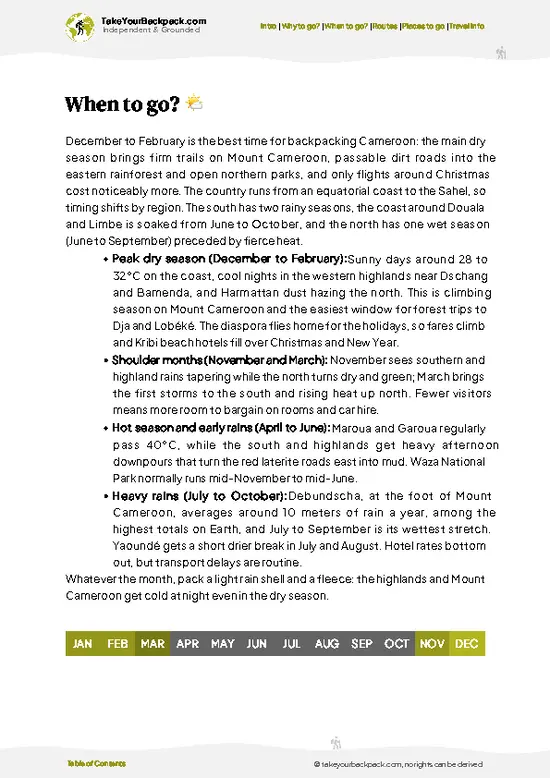
  • Weather: Wum’s rainy season from March to October drenches trails and swells rivers, making hiking slippery but lush. The dry season, November to February, offers crisp, clear skies perfect for trekking and photography.

  • Temperature: Expect highs around 28-32°C (82-90°F) in the dry months, cooling to 22-26°C (72-79°F) during rains. Nights can dip to 15°C (59°F), so pack layers for comfort.

  • Daylight Hours: Near the equator, daylight stays steady—about 12 hours year-round—giving you reliable time to explore without early sunsets cutting your day short.

  • Crowds: Wum is off the beaten path, so crowds are minimal year-round. The dry season sees a slight uptick as regional travelers arrive, but you’ll still find plenty of solitude.

  • Seasonal Activities: Dry months are ideal for trekking
read more 👉

  • Weather: Wum’s rainy season from March to October drenches trails and swells rivers, making hiking slippery but lush. The dry season, November to February, offers crisp, clear skies perfect for trekking and photography.

  • Temperature: Expect highs around 28-32°C (82-90°F) in the dry months, cooling to 22-26°C (72-79°F) during rains. Nights can dip to 15°C (59°F), so pack layers for comfort.

  • Daylight Hours: Near the equator, daylight stays steady—about 12 hours year-round—giving you reliable time to explore without early sunsets cutting your day short.

  • Crowds: Wum is off the beaten path, so crowds are minimal year-round. The dry season sees a slight uptick as regional travelers arrive, but you’ll still find plenty of solitude.

  • Seasonal Activities: Dry months are ideal for trekking to waterfalls and visiting local markets, while the rainy season brings vibrant greenery and birdwatching opportunities, though some paths may be inaccessible.

  • Price Fluctuations: Accommodation and transport costs dip during the rainy season due to lower demand, but expect slightly higher prices and booked spots in the dry season’s peak months.


Pro-tip: Aim for late November or early February to catch dry trails, manageable temperatures, and fewer travelers, unlocking Wum’s raw beauty without the mud slog.


source: climatestotravel.comJANJanuary: excellent for travelingFEBFebruary: highly recommended for travelingMARMarch: fair for travelingAPRApril: fair for travelingMAYMay: fair for travelingJUNJune: fair for travelingJULJuly: fair for travelingAUGAugust: fair for travelingSEPSeptember: fair for travelingOCTOctober: fair for travelingNOVNovember: highly recommended for travelingDECDecember: excellent for traveling
when-to-go

✈️ The backpacker research shortcutCameroon Travel Guide

An offline-friendly backpacking guide with optimized travel routes, ranked highlights, transport advice, and the best areas to stay.
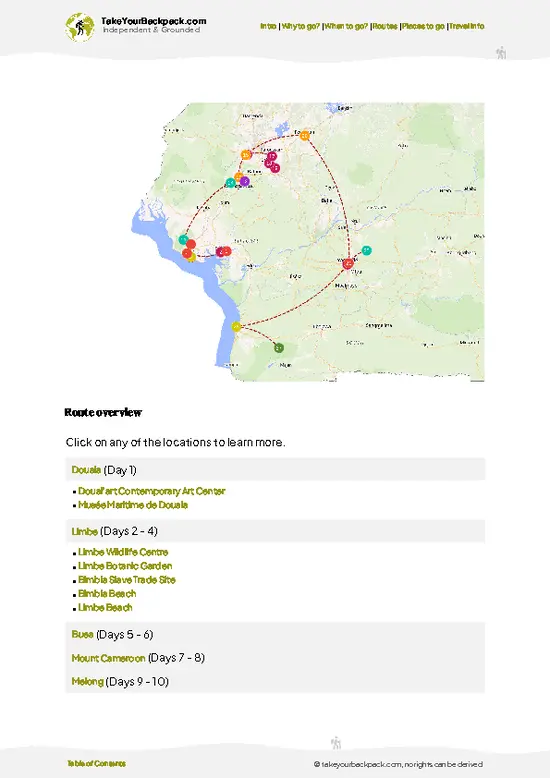
example page 0 from our offline Travel Guide for Cameroon
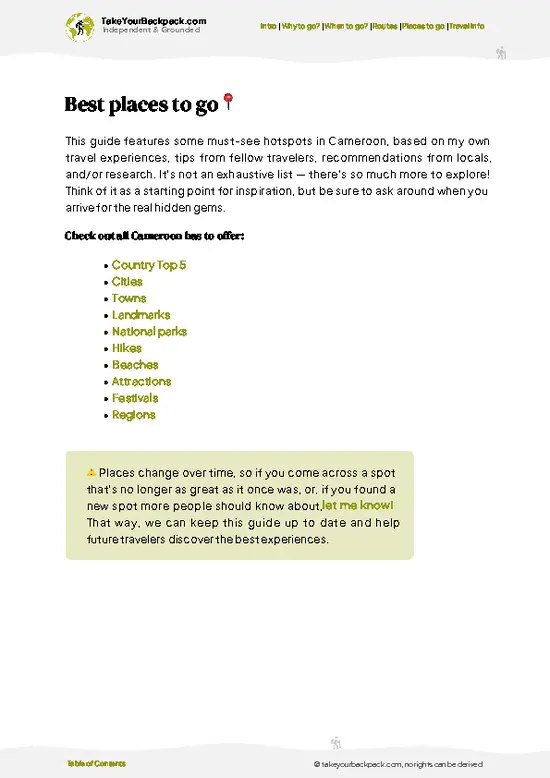
example page 1 from our offline Travel Guide for Cameroon
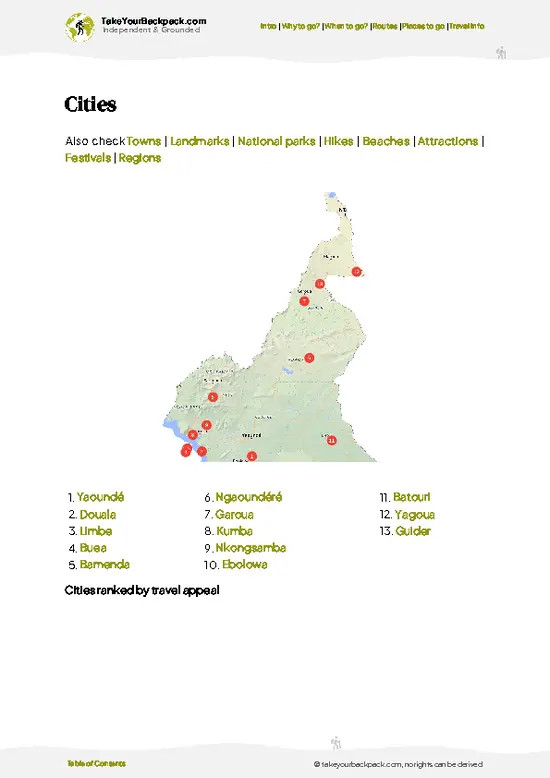
example page 2 from our offline Travel Guide for Cameroon
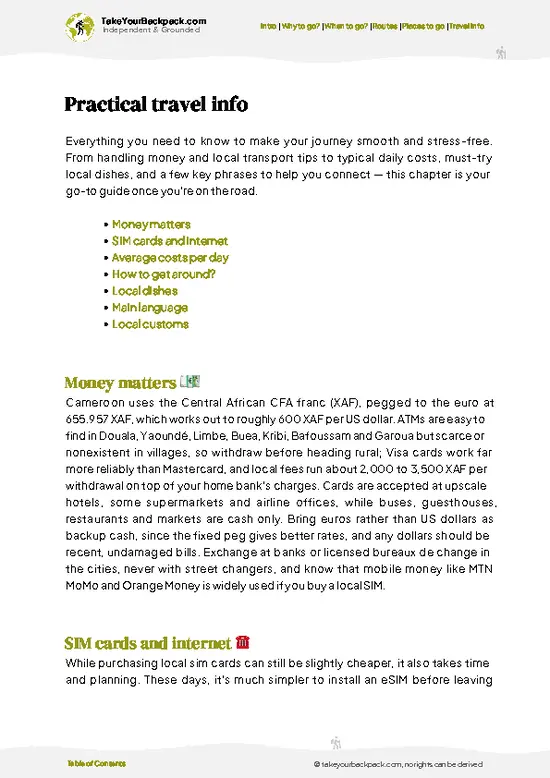
example page 3 from our offline Travel Guide for Cameroon
example page 4 from our offline Travel Guide for Cameroon
example page 5 from our offline Travel Guide for Cameroon
example page 6 from our offline Travel Guide for Cameroon
example page 7 from our offline Travel Guide for Cameroon
The digital guide (383 pages) contains:
95 highlights, ranked by travel appeal
Optimized 7, 14 & 21-day travel routes
Cities, national parks, landmarks, beaches
How to get around
Offline-friendly for travel without Wi-Fi
👉 Click to see all 30+ guide features

📅 Plan smarter in minutes, not weeks
Month by month travel advice
Festivals & national holidays
Budget expectations

🗺️ Go to the right places, skip the overrated ones
Honest pros & cons of destinations
Top hikes, parks & viewpoints
Lesser-known places most travelers miss
Clear “worth it vs skip it” guidance

🛏️ Travel smoothly without rookie mistakes
Best areas to stay
Transport systems explained simply
Common scams & safety advice
SIM cards, money & practical tips

🌍 Understand the country, not just visit it
Culture & traditions
52 Essential phrases & customs
Festivals worth planning around
Traveler-friendly historical context
Insights that make places more meaningful

📱 Built for real travel conditions
Fully downloadable PDF
Works completely offline
Optimized for phone use
Useful in remote areas & buses
Everything in one place
Save weeks of stressful planning
Get instant access to your full guide. 30‑day money-back guarantee.


By proceeding you agree to our terms.
Sent to your inbox immediately after payment • 100% Secure Checkout
Best Backpacking Travel Advisor 2025 tourism awardBest Backpacking
Travel Advisor
2025
What others say about Take Your Backpack Guides:
⭐⭐⭐⭐⭐
Fantastic, amazing amount of information!
⭐⭐⭐⭐⭐
My goodness this is amazing, it's what I've been looking for hats off too you!
⭐⭐⭐⭐⭐
I think this is absolutely BRILLIANT
⭐⭐⭐⭐
Very complete and informative. It's still missing places, but I gotta to commend you
⭐⭐⭐⭐⭐
This is truly amazing, thank you, can't wait to explore it with my kids!
⭐⭐⭐⭐⭐
Awesome resource, thank you!
⭐⭐⭐⭐⭐
This is amazing! Can't wait to explore the ones I haven't seen
⭐⭐⭐⭐
I love this! Well done, great idea.
⭐⭐⭐⭐⭐
Thanks for taking the time to make this gem!
⭐⭐⭐⭐⭐
This might be the best website I've ever seen.
⭐⭐⭐⭐⭐
Congratulations, and thank you so much for your work; it's incredibly valuable.
⭐⭐⭐⭐
In all seriousness I think you did a great job pointing out the important spots
⭐⭐⭐⭐⭐
10/10 very good
⭐⭐⭐⭐⭐
As someone who's only just starting to visit regularly this is awesome, thank you.
⭐⭐⭐⭐
Thank you very much! I'm going to visit my dad, it's going to be very useful!
⭐⭐⭐⭐⭐
This is really cool! We'll be travelling for the first time and this definitely come in handy.
⭐⭐⭐⭐⭐
You are now our minister of culture, congratulations 👨‍💼
⭐⭐⭐⭐⭐
Just wanted to tell you that this is a pearl! Going to follow your recommendations.
⭐⭐⭐⭐⭐
This is so cool. I'll definitely be using the resource for my travels soon.
⭐⭐⭐⭐⭐
This is very impressive! Good work.
⭐⭐⭐⭐⭐
This is an amazing and informative site. Very well done!

🛏️ Where to stay?Best areas to stay in Cameroon

In Wum, the best spot for backpackers is the town center near the market area. It’s where the pulse of daily life hums strongest—vendors shouting, the scent of fresh cassava and roasted peanuts mixing in the air. This zone is safe by local standards, with a steady flow of people making it easier to connect with fellow travelers and locals alike. Hostels here tend to be small but welcoming, offering simple dorms that encourage socializing over shared meals or evening stories. Compared to quieter residential neighborhoods, staying here means you’re plugged into the town’s rhythm, making navigation … read more 👉
In Wum, the best spot for backpackers is the town center near the market area. It’s where the pulse of daily life hums strongest—vendors shouting, the scent of fresh cassava and roasted peanuts mixing in the air. This zone is safe by local standards, with a steady flow of people making it easier to connect with fellow travelers and locals alike. Hostels here tend to be small but welcoming, offering simple dorms that encourage socializing over shared meals or evening stories. Compared to quieter residential neighborhoods, staying here means you’re plugged into the town’s rhythm, making navigation and spontaneous adventures smoother and more rewarding.

🚌 Getting aroundTransportation options and practical tips

Wum moves at its own pace—neither frantic nor sluggish, but a steady rhythm that feels like the town’s heartbeat syncing with the misty mornings and the slow fade of dusk. Streets hum with a mix of purposeful strides and casual pauses, where vendors call out in a cadence that’s more instinct than schedule. This isn’t a place where you’ll find rigid timetables posted on every corner; instead, you learn to read the flow, catching rides when they roll up and letting the day unfold with a bit of patience and curiosity.


  • Walking: The best way to absorb Wum’s character. Compact and pedestrian-friendly, most key spots are within 20-30 minutes on foot. Early mornings offer cool air and soft light, perfect for exploring without the midday heat.

  • Motorcycle Taxis (Boda Bodas): Available from dawn
read more 👉
Wum moves at its own pace—neither frantic nor sluggish, but a steady rhythm that feels like the town’s heartbeat syncing with the misty mornings and the slow fade of dusk. Streets hum with a mix of purposeful strides and casual pauses, where vendors call out in a cadence that’s more instinct than schedule. This isn’t a place where you’ll find rigid timetables posted on every corner; instead, you learn to read the flow, catching rides when they roll up and letting the day unfold with a bit of patience and curiosity.


  • Walking: The best way to absorb Wum’s character. Compact and pedestrian-friendly, most key spots are within 20-30 minutes on foot. Early mornings offer cool air and soft light, perfect for exploring without the midday heat.

  • Motorcycle Taxis (Boda Bodas): Available from dawn till late evening, these are the quickest way to cover longer distances. Expect to negotiate fares—usually under 500 XAF for short hops. Hold tight; the ride is bumpy but fast.

  • Shared Minibuses: These run irregularly, often filling up before departure. They’re cheap (around 300 XAF) but can be cramped and slow, especially during market days when the streets thicken with traffic.

  • Private Car Hire: More expensive but reliable for early departures or late returns. Prices vary, so bargaining is key. Ideal if you’re heading to remote villages or want to avoid the unpredictability of public options.

👛 Costs (as of 7 April 2025)Typical daily expenses

Backpacking in Wum, Cameroon, means embracing a pace where every dollar stretches and every experience feels grounded in local life. Here’s what you’ll typically spend day-to-day:
  • Dorm Accommodation: Options are limited and basic, often in guesthouses or small hostels. Expect to pay around $5 to $10 per night. These places won’t have luxury linens or hot showers on tap, but they offer a clean bed and a chance to connect with locals or fellow travelers.
  • Meals: Street food and small local eateries dominate. A filling meal of staples like plantains, beans, or grilled fish will set you back about $1.50 to $3. If you want something more substantial or a bit varied, budget up to $5 per meal. Fresh fruit and local snacks are cheap and plentiful, perfect for quick energy boosts.
  • Local Transport:
read more 👉
Backpacking in Wum, Cameroon, means embracing a pace where every dollar stretches and every experience feels grounded in local life. Here’s what you’ll typically spend day-to-day:
  • Dorm Accommodation: Options are limited and basic, often in guesthouses or small hostels. Expect to pay around $5 to $10 per night. These places won’t have luxury linens or hot showers on tap, but they offer a clean bed and a chance to connect with locals or fellow travelers.
  • Meals: Street food and small local eateries dominate. A filling meal of staples like plantains, beans, or grilled fish will set you back about $1.50 to $3. If you want something more substantial or a bit varied, budget up to $5 per meal. Fresh fruit and local snacks are cheap and plentiful, perfect for quick energy boosts.
  • Local Transport: Transport is mostly by shared taxis or motorbike taxis (benskins). Short rides cost around $0.50 to $1.50, depending on distance. For longer trips or private hires, expect to pay closer to $3 to $5. Walking is often the best way to soak in the town’s atmosphere and save cash.
  • Basic Activities/Entry Fees: Wum is more about natural surroundings than formal tourist sites. Entry fees to local attractions or natural parks, if any, are minimal—usually under $2. Guided hikes or cultural visits might cost $5 to $10, but these are rare and often arranged informally.
  • Miscellaneous Expenses: This includes essentials like bottled water, snacks, phone credit, or small souvenirs. Budget around $1 to $3 daily. Keep in mind that some items might be pricier due to limited availability, so a bit of extra cash here helps.

All told, you’re looking at roughly $10 to $25 per day to cover the basics in Wum. It’s a place where simplicity meets authenticity, and your budget buys you direct access to the rhythms of local life rather than polished tourist comforts.
⚠️ Prices can change and everyone travels differently, so take this as a rough guide. Hope it helps you plan your adventure!

🚌 Day tripsEasy escapes and nearby places

Wum, Cameroon, is a backpacker’s dream base, offering a gateway to stunning landscapes and rich culture. The charm of this town lies in its accessibility to day trips that pack a punch without draining your wallet or time.

Mount Manengouba
This trek is a must for anyone craving breathtaking views. The hike takes about 3-4 hours to reach the summit, where you’re rewarded with panoramic vistas of the surrounding valleys. The air is crisp, filled with the scent of pine and wildflowers. Expect to spend around 2,000 CFA for transport and a small fee for park access. The best time to go is during the dry season, from November to February, when the trails are less muddy. A common mistake? Underestimating the trail’s difficulty; wear sturdy shoes and bring plenty of water.
👉 Explore Mount Manengouba
read more 👉
Wum, Cameroon, is a backpacker’s dream base, offering a gateway to stunning landscapes and rich culture. The charm of this town lies in its accessibility to day trips that pack a punch without draining your wallet or time.

Mount Manengouba
This trek is a must for anyone craving breathtaking views. The hike takes about 3-4 hours to reach the summit, where you’re rewarded with panoramic vistas of the surrounding valleys. The air is crisp, filled with the scent of pine and wildflowers. Expect to spend around 2,000 CFA for transport and a small fee for park access. The best time to go is during the dry season, from November to February, when the trails are less muddy. A common mistake? Underestimating the trail’s difficulty; wear sturdy shoes and bring plenty of water.
👉 Explore Mount Manengouba

Lake Oku
A serene escape, Lake Oku is a volcanic lake surrounded by lush greenery. The journey takes about an hour by taxi-brousse, costing around 1,500 CFA. Once there, you can enjoy a peaceful walk along the shore or engage with local fishermen. The best time to visit is early morning when the mist rises off the water, creating a magical atmosphere. Many first-timers miss the chance to interact with the local community; take a moment to chat with the fishermen for a richer experience.


Limbe Beach
If you’re craving some sun and sand, a day trip to Limbe Beach is perfect. It’s about a two-hour drive, costing around 3,000 CFA. The salty breeze and the sound of waves crashing create a refreshing escape from the mountains. Visit during the week to avoid crowds and enjoy a more relaxed vibe. A common pitfall is forgetting sunscreen; the sun can be fierce, even on cloudy days.
👉 Explore Limbe Beach

Foumban
This vibrant town is known for its rich history and art. It takes about 1.5 hours to get there, with transport costing around 2,500 CFA. Explore the royal palace and local markets, where the air is filled with spices and the chatter of vendors. The best time to visit is during the annual arts festival in August, but any time offers a glimpse into the local culture. Many backpackers overlook the importance of learning a few phrases in French; it opens doors and enriches interactions.
👉 Explore Foumban
Want to know what more Cameroon offers?
The Cameroon Travel Guide describes 95 highlights, from cities to national parks, from beaches to hikes

Get the Travel Guide -

🛡️ SafetyTraveler Safety Guide

Wum, Cameroon, is generally safe, but a few practical tips can enhance your experience. The town’s lively market is a hub of activity, but keep your belongings close. Pickpocketing can happen in crowded areas, so wear a crossbody bag and keep your phone tucked away.

If you’re solo, be mindful after dark. The streets can feel quiet, and while locals are friendly, it’s wise to stick to well-lit areas.

Scams are rare, but some vendors might inflate prices for tourists. A friendly smile and a bit of bargaining can go a long way. If someone offers unsolicited help, politely decline; they may expect a tip.

Overall, trust your instincts, stay aware, and embrace the warmth of the community. Your adventure in Wum will be richer for it.

Other Cameroonian towns near Wum

Explore more nearby:

  • Fundong—Kom chiefdom, terraced hills, rural markets| 26 km away
  • Kumbo—Nso palace, highland views, religious centers| 69 km away
  • Mbouda—hilly terrain, roadside stalls, Bamileke culture| 87 km away

💡 Not sure where to go next?
Create a personalized itinerary for Cameroon including Wum and the places that fit your trip.

Generate my itinerary

👉 Discover all towns

Or checkout all Cameroon has to offer (think cities, towns, villages, national parks, hikes, beaches, festivals)
Country photo of Cameroon

We 💚 feedbackSumming up the experience

Wum has a pulse that’s hard to ignore. The air is thick with the scent of earth after rain, and the laughter of locals fills the streets. Don’t miss the market on Saturday; it’s a sensory overload of colors and sounds. But be ready for the heat—hydrate early and often. The best surprise? The warmth of the people who’ll invite you into their world. Embrace the chaos; it’s where the magic happens.

✍️ Help improve this page!
The information on this page is based on in-depth research, insights shared by experienced travelers, and feedback from the local travel community in Cameroon. While every effort is made to keep the information accurate and current, conditions can change — so if you spot anything incorrect or outdated, please get in touch.


🙋‍♂️ Give feedback

👋 Meet the founderWho’s Behind Take Your Backpack?

Johan, backpacker and founder of TakeYourBackpackHi, I’m Johan (Netherlands 🇳🇱), the creator of TakeYourBackpack. Over the past decade, I’ve backpacked through 80+ countries across six continents, gaining extensive experience with independent travel, long-term trips, and overland routes.

This site is built on a combination of firsthand travel experience and carefully curated insights from other backpackers. Many guides are based on places I’ve personally visited, while others bring together tips, observations, and practical advice shared by trusted travelers I’ve met along the way.

The goal is to provide realistic, experience-driven guidance — not generic itineraries — so you can explore destinations with better context, clearer expectations, and more confidence.

Get full Cameroon guide •
Instant download • 95 highlights • Full Offline guide