×

Cameroon🇨🇲 | townsTibatiLake Mbakaou, fishing camps, remote outpost | things to do and best time to go

Explore BanyoExplore Mbalmayo

Backpacking in Tibati
👌 Worth visitingtown ranked #19
By Johan Kruseman 🇳🇱 | Updated June 11, 2026

Everyone talks about Tibati’s lake—sure, it’s broad and blue, but the real reason to come is the pulse of daily life: the earthy scent of smoked fish, the clatter of market stalls, the slow swirl of dusk over red-dust streets. Set in central Cameroon, Tibati is more crossroads than destination, a practical pause between Ngaoundéré’s bustle and the wilder Adamawa Plateau. It’s not built for tourists—expect basic rooms, few fellow backpackers, and a town that quiets early. But if you want a place where the journey feels honest, and the landscape’s raw edges aren’t sanded down for visitors, Tibati delivers. Transport is mostly by bush taxi; walking works for the center. Costs are low, safety is average for the region, and the vibe is more local than lively—think slow evenings, not hostel bar crawls. Compared to bigger towns, Tibati is rougher, less scenic, but more real.

Discover everything you want to know in the 📖 Cameroon Travel Guide.


Get your Cameroon guide
95 ranked highlights, routes & tips, works offline (383 pages)
Loading the map 🌍
CLICK TO FILTER
cities
towns
landmarks
national parks
hikes
beaches
attractions
festivals
regions
SHOW COUNTRY’S BESTSHOW ALL

✨ Why go?
Ranked #19 town in Cameroon
Why Tibati should be on your travel list

Tibati serves as a gateway for backpackers eager to explore Cameroon’s wild heart. Its walkable streets invite you to mingle with locals, while small-scale hostels offer a cozy base for weary travelers. The town’s proximity to hiking trails and cultural sites makes it a strategic stop, perfect for those who want to dive deep into the region’s beauty without the tourist rush. Expect a friendly atmosphere that encourages conversations over local dishes. Most travelers linger a few days, soaking in the laid-back vibe, making it ideal for slow travelers and solo adventurers seeking connection and adventure.
Want to include Tibati in your Cameroon route?
Create a personalized Cameroon itinerary that includes Tibati and the places that fit your trip — based on your travel style, budget, and available time. Get your route in seconds.

Generate my trip

💡 HighlightsPlaces and moments you shouldn't skip

  • Lamidat (Palace of the Lamido) — The political and cultural heart of Tibati. The compound, the court yard, and the surrounding quarters give a real feel for Fulbe rulership and traditions; if you time a visit right you’ll catch ceremonies, storytelling or elders holding court.
  • Tibati Central Market (Marché Central) — A riot of color, spices, vegetables and fabrics. It’s where locals shop, gossip and barter; perfect for seeing daily life, trying street snacks and picking up affordable crafts.
  • Weekly Livestock Market (Marché aux bestiaux) — Tibati is an important cattle-trading hub; the market is lively, loud and very visual. Watching the negotiations, the herders’ garb and the movement of animals is a genuine cultural experience.
  • Grande Mosquée de Tibati — The town’s main mosque is both
read more 👉
  • Lamidat (Palace of the Lamido) — The political and cultural heart of Tibati. The compound, the court yard, and the surrounding quarters give a real feel for Fulbe rulership and traditions; if you time a visit right you’ll catch ceremonies, storytelling or elders holding court.
  • Tibati Central Market (Marché Central) — A riot of color, spices, vegetables and fabrics. It’s where locals shop, gossip and barter; perfect for seeing daily life, trying street snacks and picking up affordable crafts.
  • Weekly Livestock Market (Marché aux bestiaux) — Tibati is an important cattle-trading hub; the market is lively, loud and very visual. Watching the negotiations, the herders’ garb and the movement of animals is a genuine cultural experience.
  • Grande Mosquée de Tibati — The town’s main mosque is both an architectural anchor and a community center. Visiting (sensitively, outside prayer times unless invited) gives insight into local religious life and Fulbe mosque architecture.
  • Catholic Mission and Church — A historic mission compound with a church, clinic and school buildings. Besides the colonial-era architecture it’s a good place to meet long-term local projects and hear missionary-era stories that shaped the town.
  • Old German-era administrative post / fort remains — Scattered ruins and colonial-era buildings around town still bear traces of the early 20th-century German presence. The stones and stories here help explain Tibati’s modern layout and history.
  • Traditional Fulbe Quarter (the old town) — Narrow lanes, compound courtyards and traditional homesteads where Fulbe families live. Walking through (with respect) shows daily rhythms, local crafts and architecture you won’t see on glossy maps.
  • Artisan Quarter and Blacksmith Workshops — Small-scale ironwork, leathercraft and toolmaking are still done by hand here. Watching a blacksmith or leatherworker at their forge is low-key but very authentic—bring cash for a simple, useful souvenir.
  • Riverside banks and canoe landing — The river edge inside town is where fishermen, washerwomen and boatmen gather. It’s a relaxed slice of life: boats being loaded, fish drying, kids swimming, and a good spot for photos at sunrise or late afternoon.
  • Prefectural Square and Main Street — The civic spine of Tibati, where government buildings, shops and cafés cluster. It’s a handy place to feel the town’s pulse, catch public notices, and see how modern administration and traditional life sit side by side.
A few nice day trips outside town: Lac Mbakaou (the reservoir), the Djerem river valley, and nearby Fulbe villages and hills — all visitable from Tibati as easy day excursions.
Spotted a mistake or missing something? Contact us.

Things to do near Tibati

Ratings based on Tripadvisor reviews. When you book through this link, you support our work at no extra cost to you.

🏘️ NeighborhoodsKey areas and districts to know

Tibati offers a unique blend of culture and nature, making it a rewarding stop for backpackers.

Centre Ville: This is the heartbeat of Tibati. You’ll find bustling markets and local eateries. The vibe is lively, perfect for soaking in the local culture. It’s walkable, with easy access to transport. Ideal for short stays, but you might want to linger for the street food.

Quartier Ngoua: A quieter area, perfect for those seeking a more laid-back experience. It’s less touristy, with affordable guesthouses. The atmosphere is relaxed, making it suitable for longer stays. Nightlife is minimal, but you can enjoy peaceful evenings.

Quartier Mbandjock: This neighborhood is a bit off the beaten path. It’s a great spot for nature lovers, with trails nearby. Transport is less frequent, so plan ahead. … read more 👉
Tibati offers a unique blend of culture and nature, making it a rewarding stop for backpackers.

Centre Ville: This is the heartbeat of Tibati. You’ll find bustling markets and local eateries. The vibe is lively, perfect for soaking in the local culture. It’s walkable, with easy access to transport. Ideal for short stays, but you might want to linger for the street food.

Quartier Ngoua: A quieter area, perfect for those seeking a more laid-back experience. It’s less touristy, with affordable guesthouses. The atmosphere is relaxed, making it suitable for longer stays. Nightlife is minimal, but you can enjoy peaceful evenings.

Quartier Mbandjock: This neighborhood is a bit off the beaten path. It’s a great spot for nature lovers, with trails nearby. Transport is less frequent, so plan ahead. Ideal for longer stays if you want to explore the surrounding landscapes.

⌛️ 1 dayHow to make the most of one day

Tibati, Cameroon, is a vibrant crossroads of culture and nature, where the rhythms of daily life pulse alongside the lush landscapes. Start your morning at the local market in the heart of the town. The air is thick with the scent of spices and fresh produce. Engage with vendors; their smiles are as warm as the sun rising over the hills. Grab a steaming bowl of fufu and groundnut soup from a nearby stall—fuel for your adventures ahead.

In the afternoon, head to the nearby Boumba Bek National Park. The trails here are less traveled, offering a chance to connect with the wild. Listen for the calls of birds and the rustle of leaves; it’s a sensory feast. You might even spot a rare monkey swinging through the trees.

As evening falls, return to Tibati and stroll through the lively neighborhoods. … read more 👉
Tibati, Cameroon, is a vibrant crossroads of culture and nature, where the rhythms of daily life pulse alongside the lush landscapes. Start your morning at the local market in the heart of the town. The air is thick with the scent of spices and fresh produce. Engage with vendors; their smiles are as warm as the sun rising over the hills. Grab a steaming bowl of fufu and groundnut soup from a nearby stall—fuel for your adventures ahead.

In the afternoon, head to the nearby Boumba Bek National Park. The trails here are less traveled, offering a chance to connect with the wild. Listen for the calls of birds and the rustle of leaves; it’s a sensory feast. You might even spot a rare monkey swinging through the trees.

As evening falls, return to Tibati and stroll through the lively neighborhoods. Find a local eatery and savor grilled fish seasoned with local spices. The laughter and chatter around you create a warm atmosphere, wrapping up your day with the essence of community. This isn’t just a visit; it’s a dive into the heart of Cameroon.
Turn your Tibati visit into an Cameroon adventure
Build a complete Cameroon route with Tibati, hidden gems, must-see destinations, and realistic travel times included.

Generate my trip

🌤️ When to go?Seasonal considerations and timing


  • Topic: Weather – The dry season from November to February offers clear skies and less mud, making trails easier to navigate. Rainfall peaks from March to October, turning paths into slippery challenges and dampening outdoor plans.

  • Topic: Temperature – Daytime highs hover around 28-32°C (82-90°F) year-round, but humidity spikes during the rainy months, making the heat feel heavier and more draining.

  • Topic: Daylight Hours – Consistent daylight of about 12 hours daily means you can plan hikes and explorations without worrying about early nightfall, regardless of season.

  • Topic: Crowds – Tourist presence is minimal year-round, but the dry season sees a slight uptick as travelers seek reliable weather, so expect a bit more local bustle then.

  • Topic: Seasonal Activities – The dry months
read more 👉

  • Topic: Weather – The dry season from November to February offers clear skies and less mud, making trails easier to navigate. Rainfall peaks from March to October, turning paths into slippery challenges and dampening outdoor plans.

  • Topic: Temperature – Daytime highs hover around 28-32°C (82-90°F) year-round, but humidity spikes during the rainy months, making the heat feel heavier and more draining.

  • Topic: Daylight Hours – Consistent daylight of about 12 hours daily means you can plan hikes and explorations without worrying about early nightfall, regardless of season.

  • Topic: Crowds – Tourist presence is minimal year-round, but the dry season sees a slight uptick as travelers seek reliable weather, so expect a bit more local bustle then.

  • Topic: Seasonal Activities – The dry months are prime for cultural festivals and market visits, where the air fills with spices and chatter, while the rainy season invites lush greenery but fewer events.

  • Topic: Price Fluctuations – Accommodation and transport costs rise modestly in the dry season due to demand, but off-season rates during rains offer budget-friendly options if you don’t mind the wet.


Pro-tip: Aim for late November or early December—when the air is crisp, the earth is drying, and the town hums with local life before the peak tourist trickle.


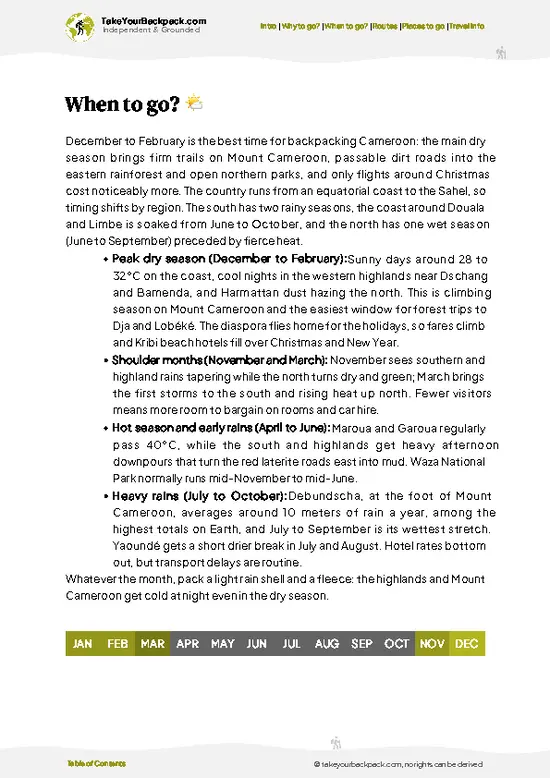
source: climatestotravel.comJANJanuary: excellent for travelingFEBFebruary: excellent for travelingMARMarch: fair for travelingAPRApril: fair for travelingMAYMay: fair for travelingJUNJune: fair for travelingJULJuly: fair for travelingAUGAugust: fair for travelingSEPSeptember: fair for travelingOCTOctober: fair for travelingNOVNovember: highly recommended for travelingDECDecember: excellent for traveling
when-to-go

✈️ The backpacker research shortcutCameroon Travel Guide

An offline-friendly backpacking guide with optimized travel routes, ranked highlights, transport advice, and the best areas to stay.
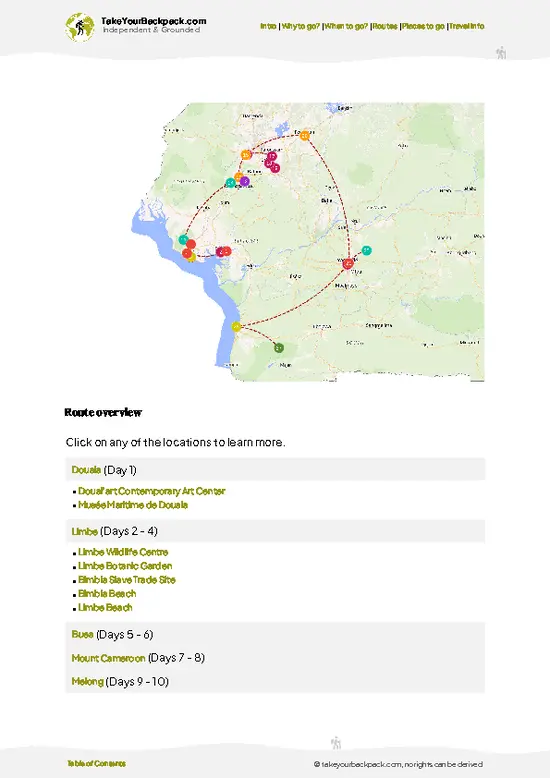
example page 0 from our offline Travel Guide for Cameroon
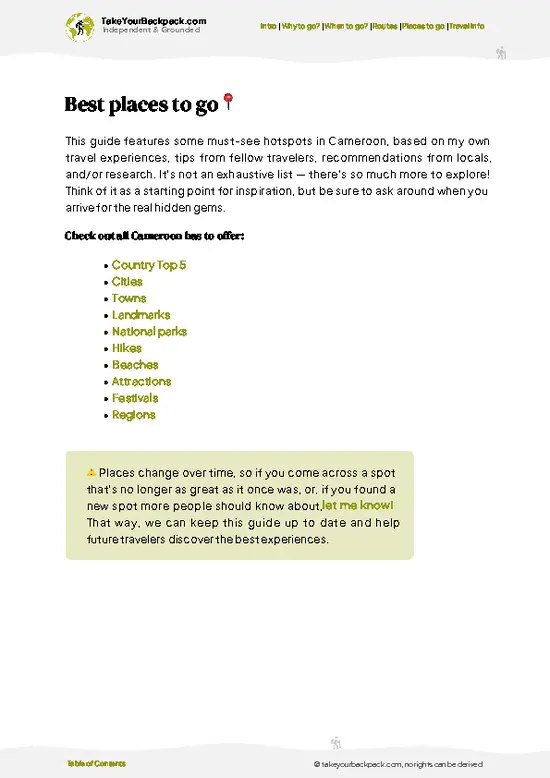
example page 1 from our offline Travel Guide for Cameroon
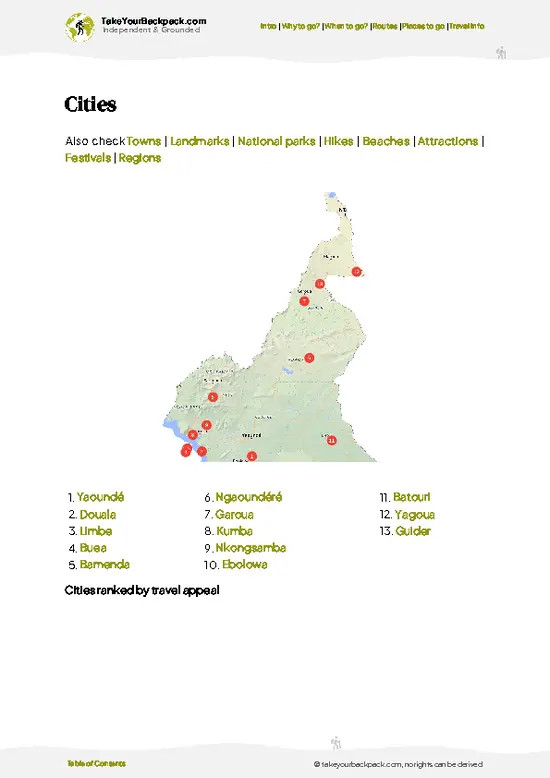
example page 2 from our offline Travel Guide for Cameroon
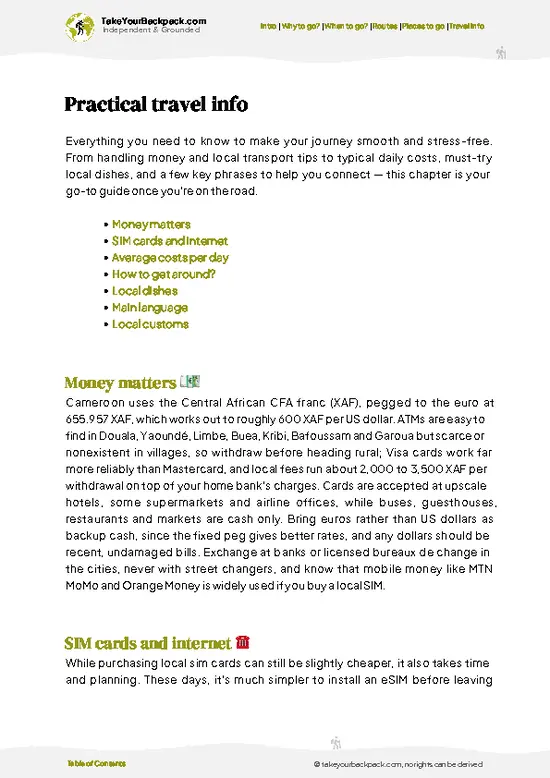
example page 3 from our offline Travel Guide for Cameroon
example page 4 from our offline Travel Guide for Cameroon
example page 5 from our offline Travel Guide for Cameroon
example page 6 from our offline Travel Guide for Cameroon
example page 7 from our offline Travel Guide for Cameroon
The digital guide (383 pages) contains:
95 highlights, ranked by travel appeal
Optimized 7, 14 & 21-day travel routes
Cities, national parks, landmarks, beaches
How to get around
Offline-friendly for travel without Wi-Fi
👉 Click to see all 30+ guide features

📅 Plan smarter in minutes, not weeks
Month by month travel advice
Festivals & national holidays
Budget expectations

🗺️ Go to the right places, skip the overrated ones
Honest pros & cons of destinations
Top hikes, parks & viewpoints
Lesser-known places most travelers miss
Clear “worth it vs skip it” guidance

🛏️ Travel smoothly without rookie mistakes
Best areas to stay
Transport systems explained simply
Common scams & safety advice
SIM cards, money & practical tips

🌍 Understand the country, not just visit it
Culture & traditions
52 Essential phrases & customs
Festivals worth planning around
Traveler-friendly historical context
Insights that make places more meaningful

📱 Built for real travel conditions
Fully downloadable PDF
Works completely offline
Optimized for phone use
Useful in remote areas & buses
Everything in one place
Save weeks of stressful planning
Get instant access to your full guide. 30‑day money-back guarantee.


By proceeding you agree to our terms.
Sent to your inbox immediately after payment • 100% Secure Checkout
Best Backpacking Travel Advisor 2025 tourism awardBest Backpacking
Travel Advisor
2025
What others say about Take Your Backpack Guides:
⭐⭐⭐⭐⭐
Fantastic, amazing amount of information!
⭐⭐⭐⭐⭐
My goodness this is amazing, it's what I've been looking for hats off too you!
⭐⭐⭐⭐⭐
I think this is absolutely BRILLIANT
⭐⭐⭐⭐
Very complete and informative. It's still missing places, but I gotta to commend you
⭐⭐⭐⭐⭐
This is truly amazing, thank you, can't wait to explore it with my kids!
⭐⭐⭐⭐⭐
Awesome resource, thank you!
⭐⭐⭐⭐⭐
This is amazing! Can't wait to explore the ones I haven't seen
⭐⭐⭐⭐
I love this! Well done, great idea.
⭐⭐⭐⭐⭐
Thanks for taking the time to make this gem!
⭐⭐⭐⭐⭐
This might be the best website I've ever seen.
⭐⭐⭐⭐⭐
Congratulations, and thank you so much for your work; it's incredibly valuable.
⭐⭐⭐⭐
In all seriousness I think you did a great job pointing out the important spots
⭐⭐⭐⭐⭐
10/10 very good
⭐⭐⭐⭐⭐
As someone who's only just starting to visit regularly this is awesome, thank you.
⭐⭐⭐⭐
Thank you very much! I'm going to visit my dad, it's going to be very useful!
⭐⭐⭐⭐⭐
This is really cool! We'll be travelling for the first time and this definitely come in handy.
⭐⭐⭐⭐⭐
You are now our minister of culture, congratulations 👨‍💼
⭐⭐⭐⭐⭐
Just wanted to tell you that this is a pearl! Going to follow your recommendations.
⭐⭐⭐⭐⭐
This is so cool. I'll definitely be using the resource for my travels soon.
⭐⭐⭐⭐⭐
This is very impressive! Good work.
⭐⭐⭐⭐⭐
This is an amazing and informative site. Very well done!

🛏️ Where to stay?Best areas and accommodation options

In Tibati, the best spot for backpackers is the central market area. It’s where the town pulses with life—early morning light filters through dust and chatter, and the scent of grilled fish and spices hangs thick. This neighborhood is safe enough for solo travelers, with a steady flow of locals and traders that naturally discourages trouble. It’s social without being overwhelming, perfect for striking up conversations over street food or a shared bench. Hostels here are basic but reliable, offering a chance to meet other budget travelers. Compared to quieter residential zones, this area keeps … read more 👉
In Tibati, the best spot for backpackers is the central market area. It’s where the town pulses with life—early morning light filters through dust and chatter, and the scent of grilled fish and spices hangs thick. This neighborhood is safe enough for solo travelers, with a steady flow of locals and traders that naturally discourages trouble. It’s social without being overwhelming, perfect for striking up conversations over street food or a shared bench. Hostels here are basic but reliable, offering a chance to meet other budget travelers. Compared to quieter residential zones, this area keeps you plugged into Tibati’s rhythm, making your stay feel like part of the town’s daily story rather than a sideline.

🚌 Getting aroundHow to get from A to B

Tibati moves at a pace that feels like a slow breath in the heat—nothing here rushes, but everything eventually finds its place. The sun drapes the streets in a warm, dusty glow by mid-morning, and the town wakes with a mix of deliberate steps and bursts of spontaneous chatter. You won’t find strict timetables or polished schedules; instead, transit flows on a rhythm of local intuition and the occasional honk signaling a shared ride’s readiness. This is a place where patience isn’t just a virtue—it’s your ticket to blending in and catching the best rides.


  • Walking: The heart of Tibati is compact enough to explore on foot, with dirt roads lined by market stalls and the scent of grilled fish. Walking is free, flexible, and the best way to soak in the town’s textures and sounds.

  • Shared Taxis
read more 👉
Tibati moves at a pace that feels like a slow breath in the heat—nothing here rushes, but everything eventually finds its place. The sun drapes the streets in a warm, dusty glow by mid-morning, and the town wakes with a mix of deliberate steps and bursts of spontaneous chatter. You won’t find strict timetables or polished schedules; instead, transit flows on a rhythm of local intuition and the occasional honk signaling a shared ride’s readiness. This is a place where patience isn’t just a virtue—it’s your ticket to blending in and catching the best rides.


  • Walking: The heart of Tibati is compact enough to explore on foot, with dirt roads lined by market stalls and the scent of grilled fish. Walking is free, flexible, and the best way to soak in the town’s textures and sounds.

  • Shared Taxis (Taxi-Brousse): These minibuses leave when full, usually between 7 AM and 5 PM, costing just a few dollars for trips to nearby towns. They’re slow but reliable, packed with locals and their goods, offering a raw slice of daily life.

  • Motorcycle Taxis (Boda-Boda): Available from dawn till dusk, these dart through traffic and dirt paths alike. They’re quick and cheap for short hops but hold on tight—the ride is bumpy and the wind carries the scent of earth and exhaust.

  • Bicycle Rentals: For the adventurous, renting a bike lets you cover more ground without losing the tactile connection to the environment. Rentals cost a couple of dollars a day, and you control your pace and stops.

👛 Costs (as of 4 April 2025)Travel costs and budget guide for Tibati

Backpacking in Tibati, Cameroon, means embracing a straightforward, no-frills lifestyle where every cost reflects the local pace and resources. The town’s modest size and limited tourist infrastructure keep prices low, but the trade-off is a raw, authentic experience.
  • Dorm Accommodation: Options are scarce and basic, often in guesthouses rather than formal hostels. Expect to pay around €5 to €10 per night. Rooms are simple, with minimal amenities, so bring your own comfort gear if you need it.
  • Meals: Street food and small local eateries dominate. A filling meal of grilled meat, rice, or beans with a local vegetable side runs about €1.50 to €3. Fresh fruit and snacks are even cheaper. Avoid imported goods—they hike prices unnecessarily.
  • Local Transport: Getting around Tibati means relying
read more 👉
Backpacking in Tibati, Cameroon, means embracing a straightforward, no-frills lifestyle where every cost reflects the local pace and resources. The town’s modest size and limited tourist infrastructure keep prices low, but the trade-off is a raw, authentic experience.
  • Dorm Accommodation: Options are scarce and basic, often in guesthouses rather than formal hostels. Expect to pay around €5 to €10 per night. Rooms are simple, with minimal amenities, so bring your own comfort gear if you need it.
  • Meals: Street food and small local eateries dominate. A filling meal of grilled meat, rice, or beans with a local vegetable side runs about €1.50 to €3. Fresh fruit and snacks are even cheaper. Avoid imported goods—they hike prices unnecessarily.
  • Local Transport: Getting around Tibati means relying on shared taxis or motorbike taxis. Fares typically range from €0.30 to €1 per trip within town. Walking is often the best way to soak in the atmosphere and save cash.
  • Basic Activities/Entry Fees: Tourist activities are limited and mostly informal. Visiting local markets or cultural spots is free or costs a nominal fee, usually under €1. Organized tours or guides, if available, might charge €5 to €10, but these are rare.
  • Miscellaneous Expenses: This covers essentials like bottled water, phone credit, or occasional treats. Budget around €1 to €2 daily. Keep in mind that reliable Wi-Fi is scarce, so offline entertainment or preparation is wise.

Overall, expect to spend between €10 and €18 per day backpacking in Tibati. This budget reflects the town’s simplicity and the need to adapt to limited services, but it also opens the door to a genuine, unvarnished Cameroonian experience.
⚠️ Prices can change and everyone travels differently, so take this as a rough guide. Hope it helps you plan your adventure!

🚌 Day tripsBest day trips from Tibati

Tibati, Cameroon, is a backpacker’s dream base for exploring the rich landscapes and cultures nearby. The town’s laid-back vibe makes it easy to gear up for some unforgettable day trips.

Mount Mbam
A trek up Mount Mbam rewards you with sweeping views of lush valleys and the chance to spot unique wildlife. The hike takes about 4-5 hours round trip, so start early to catch the morning light filtering through the trees. Expect to spend around $5 on transport and snacks. The dry season, from November to March, is ideal for clear skies. A common mistake? Underestimating the trail’s difficulty; wear sturdy shoes and bring plenty of water.


Ngambé-Tikar
Visit the Ngambé-Tikar village to immerse yourself in local culture. The journey takes about an hour by shared taxi, costing around $3. Here, … read more 👉
Tibati, Cameroon, is a backpacker’s dream base for exploring the rich landscapes and cultures nearby. The town’s laid-back vibe makes it easy to gear up for some unforgettable day trips.

Mount Mbam
A trek up Mount Mbam rewards you with sweeping views of lush valleys and the chance to spot unique wildlife. The hike takes about 4-5 hours round trip, so start early to catch the morning light filtering through the trees. Expect to spend around $5 on transport and snacks. The dry season, from November to March, is ideal for clear skies. A common mistake? Underestimating the trail’s difficulty; wear sturdy shoes and bring plenty of water.


Ngambé-Tikar
Visit the Ngambé-Tikar village to immerse yourself in local culture. The journey takes about an hour by shared taxi, costing around $3. Here, you can witness traditional crafts and perhaps join in a dance. The best time is during festivals, but any day offers a genuine experience. First-timers often overlook the importance of engaging with locals; don’t be shy—ask questions!


Lake Tchad
A trip to Lake Tchad is a serene escape. It’s about a 2-hour drive, costing roughly $10. The lake’s calm waters and surrounding greenery create a peaceful atmosphere perfect for a picnic. Visit in the early morning for stunning reflections on the water. Many travelers miss the chance to explore the shoreline; take a moment to wander and soak in the tranquility.
Want to know what more Cameroon offers?
The Cameroon Travel Guide describes 95 highlights, from cities to national parks, from beaches to hikes

Get the Travel Guide -

🛡️ SafetyTraveler Safety Guide

Tibati is generally safe, but staying aware enhances your experience. Stick to well-lit areas at night; the streets can feel quiet, and a little caution goes a long way. Solo travelers should blend in—avoid flashy gear and keep your phone out of sight.

Watch for the occasional overzealous vendor; a friendly smile can defuse any awkwardness. If someone offers unsolicited help, politely decline. Embrace the local pace, and you’ll find the charm in the everyday hustle. Just stay grounded, and you’ll navigate smoothly.

Other Cameroonian towns near Tibati

Explore more nearby:

  • Banyo—mountain passes, cattle herding, mud-brick homes| 95 km away
  • Meiganga—railway junction, Sahelian plains, cattle markets| 185 km away
  • Nanga Eboko—Sanaga River, colonial relics, transport stop| 202 km away

💡 Not sure where to go next?
Create a personalized itinerary for Cameroon including Tibati and the places that fit your trip.

Generate my itinerary

👉 Discover all towns

Or checkout all Cameroon has to offer (think cities, towns, villages, national parks, hikes, beaches, festivals)
Country photo of Cameroon

We 💚 feedbackFinal thoughts on visiting Tibati

Tibati pulses with a raw, earthy energy. The scent of wood smoke mingles with the laughter of locals, creating an inviting atmosphere. Embrace the unexpected: a spontaneous dance party can break out anywhere. Just watch your step on those uneven paths—trust me, it’s worth it.

✍️ Help improve this page!
The information on this page is based on in-depth research, insights shared by experienced travelers, and feedback from the local travel community in Cameroon. While every effort is made to keep the information accurate and current, conditions can change — so if you spot anything incorrect or outdated, please get in touch.


🙋‍♂️ Give feedback

👋 Meet the founderWho’s Behind Take Your Backpack?

Johan, backpacker and founder of TakeYourBackpackHi, I’m Johan (Netherlands 🇳🇱), the creator of TakeYourBackpack. Over the past decade, I’ve backpacked through 80+ countries across six continents, gaining extensive experience with independent travel, long-term trips, and overland routes.

This site is built on a combination of firsthand travel experience and carefully curated insights from other backpackers. Many guides are based on places I’ve personally visited, while others bring together tips, observations, and practical advice shared by trusted travelers I’ve met along the way.

The goal is to provide realistic, experience-driven guidance — not generic itineraries — so you can explore destinations with better context, clearer expectations, and more confidence.

Get full Cameroon guide •
Instant download • 95 highlights • Full Offline guide