×

Cameroon🇨🇲 | attractionsMusée La Blackitude Annex / Traditional Arts Galleriesrotating exhibitions, indigenous sculpture, textile arts | things to do and best time to go

Explore Bois Sainte AnastasieExplore Musée Royal de Batoufam

Backpacking in Musée La Blackitude Annex / Traditional Arts Galleries
👀 For curious travelersattraction ranked #17
By Johan Kruseman 🇳🇱 | Updated April 22, 2026

Everyone’s Instagram feed will tell you to visit Musée La Blackitude Annex for the photo ops—colorful masks, dramatic lighting, maybe a selfie with a carved ancestor figure. But if you’re only here for the snapshots, you’re missing the real story. The Annex, tucked away in Yaoundé’s city center, isn’t about curated perfection; it’s about raw, living heritage. This isn’t a sterile museum where artifacts sit behind glass. You’ll find objects that still matter to people today—ritual drums, beadwork, and thrones that whisper about Cameroon’s tangled, resilient past. For backpackers, the draw is the chance to get close to the pulse of local tradition, not just admire it from a distance. Yes, it’s less polished than the main Blackitude Museum, and you’ll dodge a few school groups and the occasional pushy guide. Entry is cheap, but don’t expect slick signage or air conditioning. What you get instead is a jolt of authenticity—messy, human, and far more memorable than the country’s bigger, more touristy stops.

Discover everything you want to know in the 📖 Cameroon Travel Guide.


Get your Cameroon guide
95 ranked highlights, routes & tips, works offline (383 pages)
Loading the map 🌍
CLICK TO FILTER
cities
towns
landmarks
national parks
hikes
beaches
attractions
festivals
regions
SHOW COUNTRY’S BESTSHOW ALL

✨ Why go?
Ranked #17 attraction in Cameroon
Why visitors keep coming back

Musée La Blackitude Annex isn’t your typical museum stop where you nod politely and move on. It’s a raw, unapologetic dive into Cameroon’s soul, a place where traditional arts don’t just hang on walls—they scream history, identity, and resistance. Sure, it’s not tucked away in some quiet corner; expect crowds, especially on weekends. But that’s part of the deal. This isn’t a polished tourist trap; it’s a living, breathing cultural hub where you can feel the pulse of Cameroon’s diverse ethnic groups through masks, textiles, and sculptures that have survived colonial erasure.

Backpackers who make the trek here aren’t just ticking off a checklist. They’re chasing a major milestone on the Cameroon route—a spot that demands you slow down and absorb the layers of meaning behind each artifact. The … read more 👉
Musée La Blackitude Annex isn’t your typical museum stop where you nod politely and move on. It’s a raw, unapologetic dive into Cameroon’s soul, a place where traditional arts don’t just hang on walls—they scream history, identity, and resistance. Sure, it’s not tucked away in some quiet corner; expect crowds, especially on weekends. But that’s part of the deal. This isn’t a polished tourist trap; it’s a living, breathing cultural hub where you can feel the pulse of Cameroon’s diverse ethnic groups through masks, textiles, and sculptures that have survived colonial erasure.

Backpackers who make the trek here aren’t just ticking off a checklist. They’re chasing a major milestone on the Cameroon route—a spot that demands you slow down and absorb the layers of meaning behind each artifact. The effort-to-reward ratio is high: navigating the bustling city streets to get here is a challenge, but once inside, you’re rewarded with an authentic encounter that no Instagram filter can replicate. This museum doesn’t just show you art; it forces you to reckon with the historical depth and ongoing cultural resilience of a nation often misunderstood. If you want to understand Cameroon beyond the surface, this is where you start.
Want to include Musée La Blackitude Annex / Traditional Arts Galleries in your Cameroon route?
Create a personalized Cameroon itinerary that includes Musée La Blackitude Annex / Traditional Arts Galleries and the places that fit your trip — based on your travel style, budget, and available time. Get your route in seconds.

Generate my trip

💡 HighlightsTop highlights of Musée La Blackitude Annex / Traditional Arts Galleries

Royal Regalia Room
Forget the sterile glass cases you find in most European museums. Here, you’re inches from the ceremonial thrones, beaded crowns, and scepters that once anchored the power of Cameroon’s traditional kingdoms. These aren’t props—they’re the real deal, still pulsing with the authority of the chiefs who used them. The staff will tell you who wore what, and why, with the kind of detail that makes you feel like you’re eavesdropping on a royal council, not just staring at artifacts.


Grassfields Mask Collection
If you think you’ve seen African masks, think again. The Blackitude’s collection is a crash course in the wild, theatrical, and sometimes downright eerie world of Grassfields masquerade. These masks aren’t just for show—they’re still used in rituals, and each one has a backstory … read more 👉
Royal Regalia Room
Forget the sterile glass cases you find in most European museums. Here, you’re inches from the ceremonial thrones, beaded crowns, and scepters that once anchored the power of Cameroon’s traditional kingdoms. These aren’t props—they’re the real deal, still pulsing with the authority of the chiefs who used them. The staff will tell you who wore what, and why, with the kind of detail that makes you feel like you’re eavesdropping on a royal council, not just staring at artifacts.


Grassfields Mask Collection
If you think you’ve seen African masks, think again. The Blackitude’s collection is a crash course in the wild, theatrical, and sometimes downright eerie world of Grassfields masquerade. These masks aren’t just for show—they’re still used in rituals, and each one has a backstory that’s more Game of Thrones than National Geographic. Expect to see masks with moving jaws, porcupine quills, and even human hair. The staff don’t just recite facts; they’ll break down the symbolism and, if you’re lucky, demonstrate the dance moves that bring these masks to life.


Live Storytelling and Oral History Sessions
This isn’t a museum where you shuffle around in silence. The Annex is famous for its live storytelling—sometimes delivered by griots or even members of the royal family. These aren’t sanitized, Disney-fied tales. You’ll hear about betrayals, epic migrations, and the kind of family drama that makes soap operas look tame. It’s raw, unscripted, and you’ll walk out with a head full of stories you won’t find in any guidebook.


Hands-On Traditional Music Workshops
You’re not just allowed to touch the instruments here—you’re expected to. Drums, xylophones, and thumb pianos are all fair game. The staff will show you how to coax a rhythm out of a balafon or get a talking drum to actually “talk.” It’s loud, chaotic, and a little intimidating at first, but it’s also the fastest way to understand why music is the backbone of Cameroonian culture. No talent required—just curiosity.


Textile and Beadwork Displays
The beadwork here is not your average souvenir stand fare. We’re talking ceremonial robes stitched with thousands of glass beads, each color and pattern loaded with meaning. The textiles are handwoven, often using techniques passed down through generations. You’ll see how status, clan, and even personal achievements are encoded in every stitch. If you’re into fashion, anthropology, or just appreciate the patience it takes to sew for months on end, this room is a goldmine.


Behind-the-Scenes Restoration Studio
If you ask nicely (and the staff aren’t swamped), you might get a peek into the restoration studio. This is where the magic happens—where battered masks and faded fabrics are painstakingly brought back to life. It’s messy, hands-on work, and seeing the process up close gives you a whole new respect for the craft. This isn’t a guarantee, but it’s worth asking for; it’s the kind of access you rarely get in bigger, more polished museums.
Spotted a mistake or missing something? Contact us.

Things to do near Musée La Blackitude Annex / Traditional Arts Galleries

Ratings based on Tripadvisor reviews. When you book through this link, you support our work at no extra cost to you.

🌤️ When to go?Choosing the right time of year


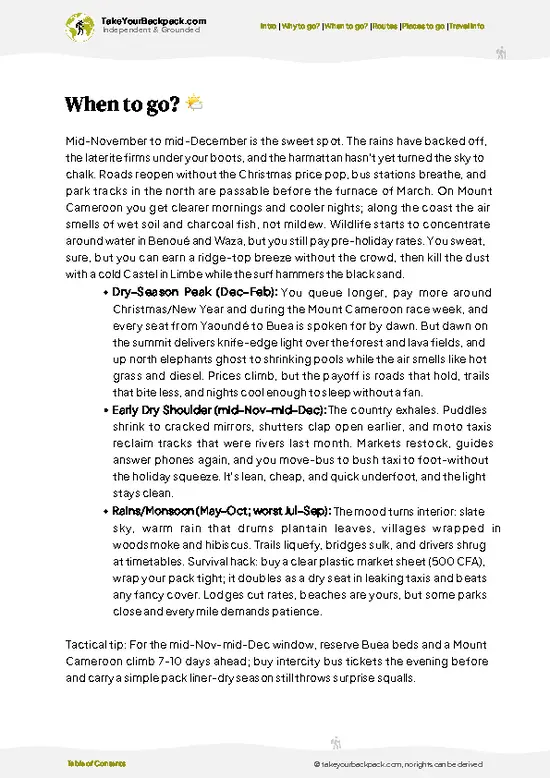
  • Weather: The best time to visit Musée La Blackitude Annex is during Cameroon’s dry season, from November to February. Expect less rain, which means fewer disruptions to your exploration. The wet season, especially from March to October, brings heavy rains that can make getting around tricky and dampen your museum experience.

  • Temperature: Temperatures hover around 24-30°C (75-86°F) year-round, but the dry season feels more comfortable with lower humidity. The rainy months can feel hotter and stickier, which might drain your energy faster during your visit.

  • Daylight Hours: Daylight is fairly consistent, roughly 11-12 hours daily. However, visiting earlier in the day during the dry season gives you more time to soak in the galleries without rushing.

  • Crowds: Tourist traffic peaks during the dry
read more 👉

  • Weather: The best time to visit Musée La Blackitude Annex is during Cameroon’s dry season, from November to February. Expect less rain, which means fewer disruptions to your exploration. The wet season, especially from March to October, brings heavy rains that can make getting around tricky and dampen your museum experience.

  • Temperature: Temperatures hover around 24-30°C (75-86°F) year-round, but the dry season feels more comfortable with lower humidity. The rainy months can feel hotter and stickier, which might drain your energy faster during your visit.

  • Daylight Hours: Daylight is fairly consistent, roughly 11-12 hours daily. However, visiting earlier in the day during the dry season gives you more time to soak in the galleries without rushing.

  • Crowds: Tourist traffic peaks during the dry months, especially December and January, when international travelers flock to Cameroon. If you want a quieter experience, aim for November or February, when the museum is less packed but still accessible.

  • Seasonal Activities: The dry season aligns with local festivals and cultural events, adding layers to your visit beyond the museum walls. These events often showcase traditional arts, complementing what you see inside.

  • Price Fluctuations: Expect slightly higher prices for accommodations and tours during the dry season due to demand. Visiting just before or after peak months can save you money without sacrificing much in terms of weather or experience.


Pro-tip: Plan your visit for November or February mornings to dodge crowds, enjoy pleasant weather, and catch local cultural events that bring the museum’s traditional arts to life.


source: climatestotravel.comJANJanuary: highly recommended for travelingFEBFebruary: excellent for travelingMARMarch: fair for travelingAPRApril: fair for travelingMAYMay: fair for travelingJUNJune: fair for travelingJULJuly: fair for travelingAUGAugust: fair for travelingSEPSeptember: fair for travelingOCTOctober: fair for travelingNOVNovember: excellent for travelingDECDecember: highly recommended for traveling
when-to-go

✈️ The backpacker research shortcutCameroon Travel Guide

An offline-friendly backpacking guide with optimized travel routes, ranked highlights, transport advice, and the best areas to stay.
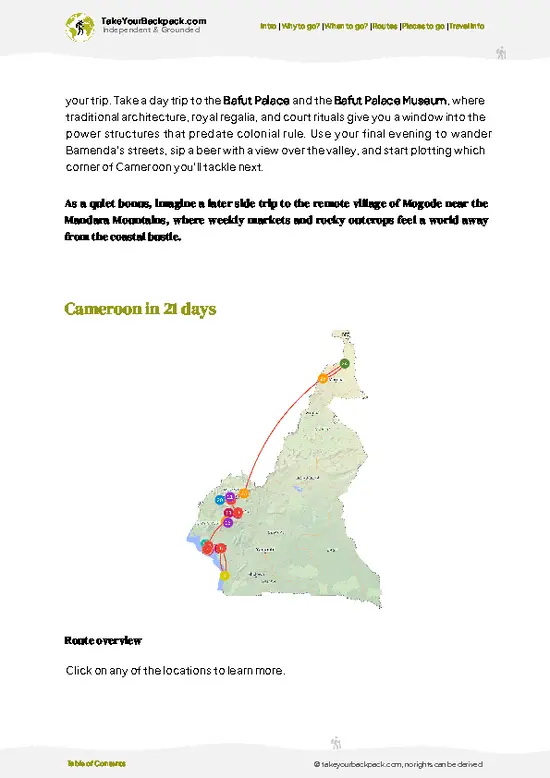
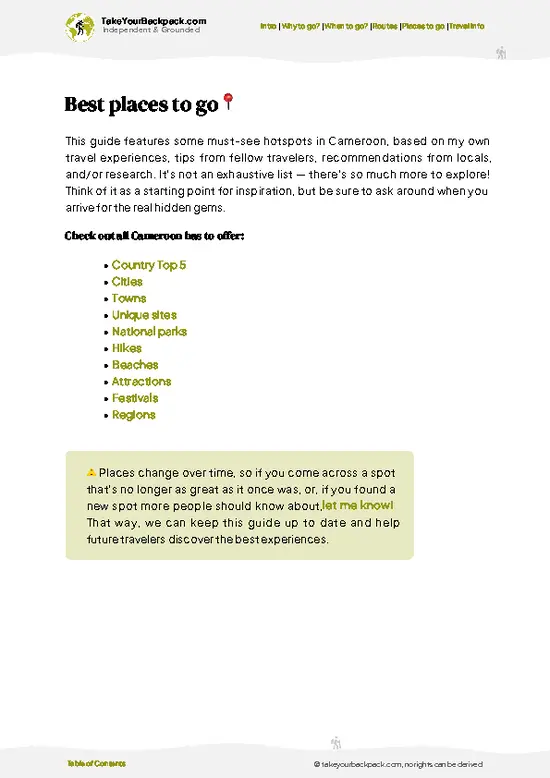
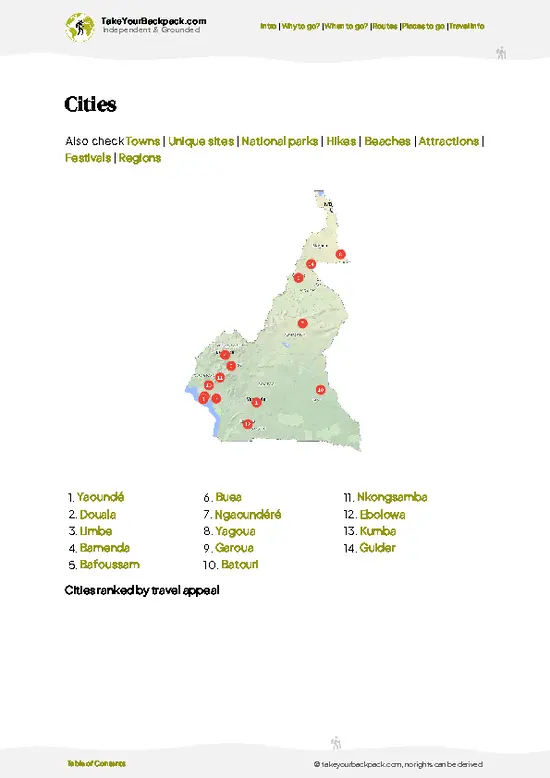
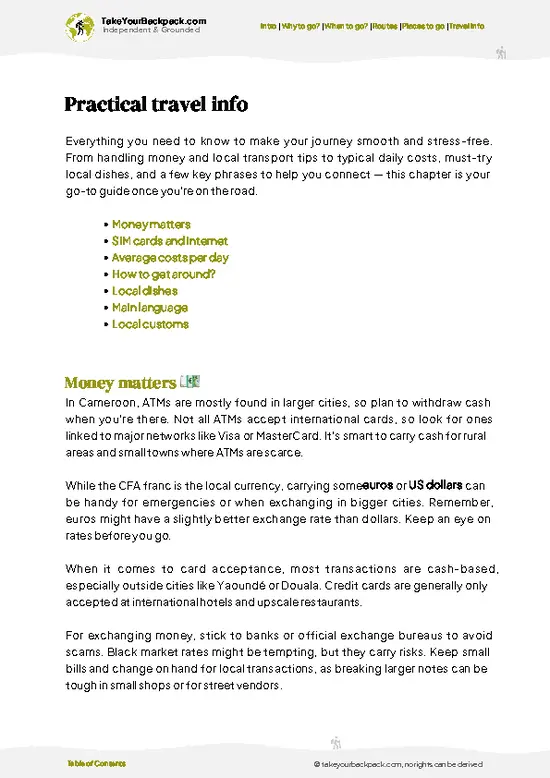
example page 0 from our offline Travel Guide for Cameroon
example page 1 from our offline Travel Guide for Cameroon
example page 2 from our offline Travel Guide for Cameroon
example page 3 from our offline Travel Guide for Cameroon
example page 4 from our offline Travel Guide for Cameroon
example page 5 from our offline Travel Guide for Cameroon
example page 6 from our offline Travel Guide for Cameroon
example page 7 from our offline Travel Guide for Cameroon
The digital guide (383 pages) contains:
95 highlights, ranked by travel appeal
Optimized 7, 14 & 21-day travel routes
Cities, national parks, landmarks, beaches
How to get around
Offline-friendly for travel without Wi-Fi
👉 Click to see all 30+ guide features

📅 Plan smarter in minutes, not weeks
Month by month travel advice
Festivals & national holidays
Budget expectations

🗺️ Go to the right places, skip the overrated ones
Honest pros & cons of destinations
Top hikes, parks & viewpoints
Lesser-known places most travelers miss
Clear “worth it vs skip it” guidance

🛏️ Travel smoothly without rookie mistakes
Best areas to stay
Transport systems explained simply
Common scams & safety advice
SIM cards, money & practical tips

🌍 Understand the country, not just visit it
Culture & traditions
52 Essential phrases & customs
Festivals worth planning around
Traveler-friendly historical context
Insights that make places more meaningful

📱 Built for real travel conditions
Fully downloadable PDF
Works completely offline
Optimized for phone use
Useful in remote areas & buses
Everything in one place
Save weeks of stressful planning
Get instant access to your full guide. 30‑day money-back guarantee.


By proceeding you agree to our terms.
Sent to your inbox immediately after payment • 100% Secure Checkout
Best Backpacking Travel Advisor 2025 tourism awardBest Backpacking
Travel Advisor
2025
What others say about Take Your Backpack Guides:
⭐⭐⭐⭐⭐
Fantastic, amazing amount of information!
⭐⭐⭐⭐⭐
My goodness this is amazing, it's what I've been looking for hats off too you!
⭐⭐⭐⭐⭐
I think this is absolutely BRILLIANT
⭐⭐⭐⭐
Very complete and informative. It's still missing places, but I gotta to commend you
⭐⭐⭐⭐⭐
This is truly amazing, thank you, can't wait to explore it with my kids!
⭐⭐⭐⭐⭐
Awesome resource, thank you!
⭐⭐⭐⭐⭐
This is amazing! Can't wait to explore the ones I haven't seen
⭐⭐⭐⭐
I love this! Well done, great idea.
⭐⭐⭐⭐⭐
Thanks for taking the time to make this gem!
⭐⭐⭐⭐⭐
This might be the best website I've ever seen.
⭐⭐⭐⭐⭐
Congratulations, and thank you so much for your work; it's incredibly valuable.
⭐⭐⭐⭐
In all seriousness I think you did a great job pointing out the important spots
⭐⭐⭐⭐⭐
10/10 very good
⭐⭐⭐⭐⭐
As someone who's only just starting to visit regularly this is awesome, thank you.
⭐⭐⭐⭐
Thank you very much! I'm going to visit my dad, it's going to be very useful!
⭐⭐⭐⭐⭐
This is really cool! We'll be travelling for the first time and this definitely come in handy.
⭐⭐⭐⭐⭐
You are now our minister of culture, congratulations 👨‍💼
⭐⭐⭐⭐⭐
Just wanted to tell you that this is a pearl! Going to follow your recommendations.
⭐⭐⭐⭐⭐
This is so cool. I'll definitely be using the resource for my travels soon.
⭐⭐⭐⭐⭐
This is very impressive! Good work.
⭐⭐⭐⭐⭐
This is an amazing and informative site. Very well done!

🛏️ Where to stay?Best areas and accommodation options

If you’re heading to the Musée La Blackitude Annex and Traditional Arts Galleries in Douala, Cameroon, brace yourself for a reality check. This isn’t a polished tourist zone with slick infrastructure or crowds of selfie-stick wielders. The area around the museum is gritty, alive, and unapologetically local. That means no luxury hotels or sanitized hostels within a stone’s throw. Instead, your best bet is to settle into neighborhoods that offer a genuine slice of Douala life—places where safety is a priority but social vibes and budget-friendly options coexist.

Look toward the Bonanjo district. … read more 👉
If you’re heading to the Musée La Blackitude Annex and Traditional Arts Galleries in Douala, Cameroon, brace yourself for a reality check. This isn’t a polished tourist zone with slick infrastructure or crowds of selfie-stick wielders. The area around the museum is gritty, alive, and unapologetically local. That means no luxury hotels or sanitized hostels within a stone’s throw. Instead, your best bet is to settle into neighborhoods that offer a genuine slice of Douala life—places where safety is a priority but social vibes and budget-friendly options coexist.

Look toward the Bonanjo district. It’s the city’s administrative heart, so it’s relatively secure and has a handful of guesthouses and budget lodgings that attract solo travelers and backpackers. The streets buzz with street vendors, local eateries, and a steady flow of people going about their day. It’s not polished, but it’s authentic. You’ll find other travelers here, which makes it easier to swap stories or find a guide for exploring beyond the museum.

Another solid choice is Akwa, a bit more commercial but still accessible on foot or by short taxi ride to the museum. It’s livelier at night, with bars and small clubs where you can meet locals and fellow backpackers. Prices here are reasonable, and the area feels safer after dark compared to other parts of the city.

Forget the fantasy of a quiet, touristy enclave near the museum. The real magic is in these neighborhoods where you’re immersed in daily Cameroonian life, surrounded by people who make the city pulse. It’s raw, it’s real, and it’s exactly what you want if you’re after more than just a photo op.

👛 Costs (as of 17 February 2025)Money, prices, and spending tips

As of the most recent estimates, the entry fee for the Musée La Blackitude Annex / Traditional Arts Galleries in Cameroon is approximately 3,000 CFA francs for adults. Additional costs may include guided tours, which are typically available for an extra fee. Please note that these prices are subject to change; it's advisable to check the museum's official website or contact them directly for the most current information.
⚠️ Prices can change and everyone travels differently, so take this as a rough guide. Hope it helps you plan your adventure!

Other Cameroonian attractions near Musée La Blackitude Annex / Traditional Arts Galleries

Explore more nearby:


💡 Not sure where to go next?
Create a personalized itinerary for Cameroon including Musée La Blackitude Annex / Traditional Arts Galleries and the places that fit your trip.

Generate my itinerary

👉 Discover all attractions

Or checkout all Cameroon has to offer (think cities, towns, villages, national parks, hikes, beaches, festivals)
Country photo of Cameroon

We 💚 feedbackParting advice and final tips

Musée La Blackitude Annex isn’t your polished, air-conditioned museum experience—it’s raw, a bit rough around the edges, and yes, it can get crowded with local school groups on weekends. But that’s part of its charm. The real magic is in the way the traditional arts come alive, not just as artifacts but as stories you can almost hear whispered in the wood carvings and textiles. If you’re patient and curious, you’ll catch moments that feel like a secret handshake with Cameroon’s soul. Just don’t expect a tourist trap; this place demands your attention and rewards it deeply.

✍️ Help improve this page!
The information on this page is based on in-depth research, insights shared by experienced travelers, and feedback from the local travel community in Cameroon. While every effort is made to keep the information accurate and current, conditions can change — so if you spot anything incorrect or outdated, please get in touch.


🙋‍♂️ Give feedback

👋 Meet the founderWho’s Behind Take Your Backpack?

Johan, backpacker and founder of TakeYourBackpackHi, I’m Johan (Netherlands 🇳🇱), the creator of TakeYourBackpack. Over the past decade, I’ve backpacked through 80+ countries across six continents, gaining extensive experience with independent travel, long-term trips, and overland routes.

This site is built on a combination of firsthand travel experience and carefully curated insights from other backpackers. Many guides are based on places I’ve personally visited, while others bring together tips, observations, and practical advice shared by trusted travelers I’ve met along the way.

The goal is to provide realistic, experience-driven guidance — not generic itineraries — so you can explore destinations with better context, clearer expectations, and more confidence.

Get full Cameroon guide •
Instant download • 95 highlights • Full Offline guide