×

Cameroon🇨🇲 | attractionsNational Museum of Camerooncolonial architecture, national collections, presidential residence | things to do and best time to go

Explore Mankon MuseumExplore Bimbia Slave Trade Site

Backpacking in National Museum of Cameroon
🏆 Top pickattraction ranked #4
By Johan Kruseman 🇳🇱 | Updated September 3, 2026

Forget the Instagram fantasy: the National Museum of Cameroon isn’t a palace of dazzling artifacts or a slick, interactive wonderland. It’s a stately colonial-era building in the heart of Yaoundé, and yes, the faded grandeur is real—so are the patchy exhibits and the occasional power cut. But here’s the twist: if you want to feel the pulse of Cameroon’s tangled history, this is where the stories get raw. You’ll dodge school groups and the odd bored security guard, but you’ll also find rooms packed with relics that don’t sugarcoat the country’s colonial scars or its wild cultural mash-up. It’s not cheap by local standards, but it won’t break a backpacker’s budget either. Don’t expect adrenaline or a polished show—expect a slow-burn immersion, with enough context to make the rest of Cameroon’s chaos make sense. Compared to the country’s wild parks or volcanic peaks, the museum is quieter, heavier, and—if you’re paying attention—far more revealing.

Discover everything you want to know in the 📖 Cameroon Travel Guide.


Get your Cameroon guide
95 ranked highlights, routes & tips, works offline (374 pages)
Loading the map 🌍
CLICK TO FILTER
cities
towns
landmarks
national parks
hikes
beaches
attractions
festivals
regions
SHOW COUNTRY’S BESTSHOW ALL

✨ Why go?
Ranked #4 attraction in Cameroon
Reasons people choose to visit here

The National Museum of Cameroon isn’t just another stop on the tourist checklist—it’s a hard-earned milestone that demands your attention. Sure, it’s not a flashy, Instagram-ready spot where you’ll find crowds snapping selfies every minute. In fact, the museum’s quiet halls often offer a rare chance to breathe and reflect amid Cameroon’s complex history. This place is the real deal for anyone who wants to understand the country beyond the surface.

Inside, you’ll find artifacts that tell stories of Cameroon’s diverse ethnic groups, colonial struggles, and rich traditions. It’s not just about old objects; it’s about connecting with the soul of a nation that’s often misunderstood. The museum’s collection is a deep dive into cultural identity and resilience, making it a crucial stop for backpackers … read more 👉
The National Museum of Cameroon isn’t just another stop on the tourist checklist—it’s a hard-earned milestone that demands your attention. Sure, it’s not a flashy, Instagram-ready spot where you’ll find crowds snapping selfies every minute. In fact, the museum’s quiet halls often offer a rare chance to breathe and reflect amid Cameroon’s complex history. This place is the real deal for anyone who wants to understand the country beyond the surface.

Inside, you’ll find artifacts that tell stories of Cameroon’s diverse ethnic groups, colonial struggles, and rich traditions. It’s not just about old objects; it’s about connecting with the soul of a nation that’s often misunderstood. The museum’s collection is a deep dive into cultural identity and resilience, making it a crucial stop for backpackers who want context, not just postcards.

Yes, the entry fee might feel like a splurge compared to other local attractions, but the payoff is huge. You’re investing in a perspective that transforms your entire journey through Cameroon. If you’re trekking the country route, this museum is a cultural anchor—grounding your experience in history and humanity before you head back into the wild.
Want to include National Museum of Cameroon in your Cameroon route?
Create a personalized Cameroon itinerary that includes National Museum of Cameroon and the places that fit your trip — based on your travel style, budget, and available time. Get your route in seconds.

Generate my trip

💡 HighlightsMust-see experiences and standout moments

The Royal Regalia Hall
Skip the Instagram filters—no amount of digital gloss can outshine the actual royal regalia on display here. This isn’t some dusty collection of crowns behind glass. You’re looking at the real, weighty symbols of Cameroon’s traditional kingdoms: beaded thrones, elephant tusk scepters, and feathered headdresses that have seen more intrigue than a season of political dramas. The craftsmanship is outrageous, but what really lands is the sense of living history. These aren’t relics—they’re still used in ceremonies today. You’ll feel the tension between old power and modern identity humming in the air.


The Independence Gallery
Forget the sanitized textbook version of Cameroon’s independence. This gallery throws you into the thick of it: propaganda posters, battered typewriters, … read more 👉
The Royal Regalia Hall
Skip the Instagram filters—no amount of digital gloss can outshine the actual royal regalia on display here. This isn’t some dusty collection of crowns behind glass. You’re looking at the real, weighty symbols of Cameroon’s traditional kingdoms: beaded thrones, elephant tusk scepters, and feathered headdresses that have seen more intrigue than a season of political dramas. The craftsmanship is outrageous, but what really lands is the sense of living history. These aren’t relics—they’re still used in ceremonies today. You’ll feel the tension between old power and modern identity humming in the air.


The Independence Gallery
Forget the sanitized textbook version of Cameroon’s independence. This gallery throws you into the thick of it: propaganda posters, battered typewriters, and the actual suits worn by the country’s first leaders. The storytelling is blunt and sometimes raw—there’s no sugarcoating the colonial hangover or the messy, hopeful scramble toward self-rule. If you want to understand why Cameroon is the way it is today, this is the crash course. It’s not always pretty, but it’s gripping.


Traditional Musical Instruments Collection
You can scroll past a thousand videos of African drumming, but standing in front of these instruments—massive slit drums, talking drums, and xylophones carved from single logs—you get it. The scale, the patina, the sense that these things have been played at weddings, funerals, and revolutions for centuries. Sometimes, if you’re lucky, a guide will demonstrate. The sound is thunderous and intimate at the same time. It’s the heartbeat of Cameroon, and it’s impossible to fake.


Grassfields Architecture Models
Instagram loves a quirky building, but these scale models of Grassfields palaces and compounds are the real deal. They’re not just pretty—they’re blueprints for a way of life. You’ll see how architecture here is about power, protection, and community, not just aesthetics. The detail is obsessive: miniature courtyards, carved doors, and symbolic layouts that map out social hierarchies. It’s a crash course in how space shapes society, and it’s way more interesting than another photo of a colonial mansion.


Contemporary Art Installations
This is where the museum throws a curveball. You expect tradition, but you get a jolt of modern Cameroonian creativity—video art, sculpture, and paintings that riff on everything from politics to pop culture. Some pieces are confrontational, others slyly funny, but all of them prove that Cameroon isn’t stuck in the past. If you want to see how a country wrestles with its own image, this is the room to linger in. It’s unpredictable, sometimes weird, and absolutely worth your time.
Spotted a mistake or missing something? Contact us.

Things to do near National Museum of Cameroon

Ratings based on Tripadvisor reviews. When you book through this link, you support our work at no extra cost to you.

🌤️ When to go?Best time to visit National Museum of Cameroon


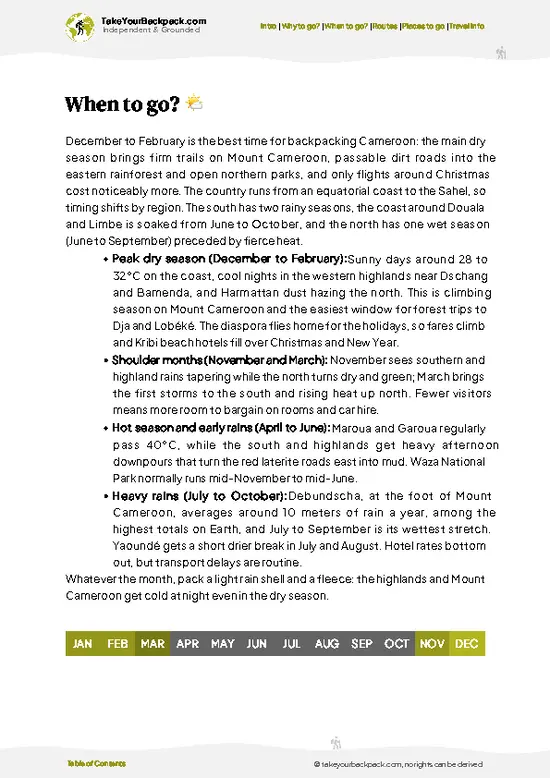
  • Weather: The best time to visit the National Museum of Cameroon is during the dry season, from November to February. Expect less rain, which means fewer interruptions and more comfortable exploring. The wet season, from March to October, brings heavy rains that can make travel and outdoor exhibits less enjoyable.

  • Temperature: Temperatures hover between 24°C and 30°C (75°F to 86°F) year-round, but the dry season feels less oppressive. The humidity drops, making it easier to spend hours wandering without feeling drained.

  • Daylight Hours: Daylight is fairly consistent, around 11 to 12 hours daily, but visiting earlier in the dry season means longer, sunnier days to soak in the museum’s outdoor cultural displays.

  • Crowds: Tourist numbers peak in December and January, especially around holidays.
read more 👉

  • Weather: The best time to visit the National Museum of Cameroon is during the dry season, from November to February. Expect less rain, which means fewer interruptions and more comfortable exploring. The wet season, from March to October, brings heavy rains that can make travel and outdoor exhibits less enjoyable.

  • Temperature: Temperatures hover between 24°C and 30°C (75°F to 86°F) year-round, but the dry season feels less oppressive. The humidity drops, making it easier to spend hours wandering without feeling drained.

  • Daylight Hours: Daylight is fairly consistent, around 11 to 12 hours daily, but visiting earlier in the dry season means longer, sunnier days to soak in the museum’s outdoor cultural displays.

  • Crowds: Tourist numbers peak in December and January, especially around holidays. If you want to dodge the crowds, aim for November or February when the museum is quieter, allowing for a more intimate experience with the exhibits.

  • Seasonal Activities: Cultural festivals often align with the dry season, adding layers of local color beyond the museum walls. November and December are prime months for catching traditional performances and markets nearby.

  • Price Fluctuations: Accommodation and travel costs spike during the holiday season (December-January). Visiting just before or after this period can save you money without sacrificing the quality of your visit.


Pro-tip: Plan your visit for November or February to balance pleasant weather, manageable crowds, and better prices—this is when the National Museum of Cameroon reveals its true character without the tourist gloss.


source: climatestotravel.comJANJanuary: highly recommended for travelingFEBFebruary: excellent for travelingMARMarch: fair for travelingAPRApril: fair for travelingMAYMay: fair for travelingJUNJune: fair for travelingJULJuly: fair for travelingAUGAugust: fair for travelingSEPSeptember: fair for travelingOCTOctober: fair for travelingNOVNovember: excellent for travelingDECDecember: highly recommended for traveling
cameroon-attraction-national-museum-of-cameroon v1
© Google |

✈️ The backpacker research shortcutCameroon Travel Guide

An offline-friendly backpacking guide with optimized travel routes, ranked highlights, transport advice, and the best areas to stay.
example page 0 from our offline Travel Guide for Cameroon
example page 1 from our offline Travel Guide for Cameroon
example page 2 from our offline Travel Guide for Cameroon
example page 3 from our offline Travel Guide for Cameroon
example page 4 from our offline Travel Guide for Cameroon
example page 5 from our offline Travel Guide for Cameroon
example page 6 from our offline Travel Guide for Cameroon
example page 7 from our offline Travel Guide for Cameroon
The digital guide (374 pages) contains:
95 highlights, ranked by travel appeal
Optimized 7, 14 & 21-day travel routes
Cities, national parks, landmarks, beaches
How to get around
Offline-friendly for travel without Wi-Fi
👉 Click to see all 30+ guide features

📅 Plan smarter in minutes, not weeks
Month by month travel advice
Festivals & national holidays
Budget expectations

🗺️ Go to the right places, skip the overrated ones
Honest pros & cons of destinations
Top hikes, parks & viewpoints
Lesser-known places most travelers miss
Clear “worth it vs skip it” guidance

🛏️ Travel smoothly without rookie mistakes
Best areas to stay
Transport systems explained simply
Common scams & safety advice
SIM cards, money & practical tips

🌍 Understand the country, not just visit it
Culture & traditions
52 Essential phrases & customs
Festivals worth planning around
Traveler-friendly historical context
Insights that make places more meaningful

📱 Built for real travel conditions
Fully downloadable PDF
Works completely offline
Optimized for phone use
Useful in remote areas & buses
Everything in one place
Save weeks of stressful planning
Get instant access to your full guide. 30‑day money-back guarantee.
+ Add another guide for just US$7.80

By proceeding you agree to our terms.
Sent to your inbox immediately after payment • 100% Secure Checkout
Best Backpacking Travel Advisor 2025 tourism awardBest Backpacking
Travel Advisor
2025
What others say about Take Your Backpack Guides:
⭐⭐⭐⭐⭐
Fantastic, amazing amount of information!
⭐⭐⭐⭐⭐
My goodness this is amazing, it's what I've been looking for hats off too you!
⭐⭐⭐⭐⭐
I think this is absolutely BRILLIANT
⭐⭐⭐⭐
Very complete and informative. It's still missing places, but I gotta to commend you
⭐⭐⭐⭐⭐
This is truly amazing, thank you, can't wait to explore it with my kids!
⭐⭐⭐⭐⭐
Awesome resource, thank you!
⭐⭐⭐⭐⭐
This is amazing! Can't wait to explore the ones I haven't seen
⭐⭐⭐⭐
I love this! Well done, great idea.
⭐⭐⭐⭐⭐
Thanks for taking the time to make this gem!
⭐⭐⭐⭐⭐
This might be the best website I've ever seen.
⭐⭐⭐⭐⭐
Congratulations, and thank you so much for your work; it's incredibly valuable.
⭐⭐⭐⭐
In all seriousness I think you did a great job pointing out the important spots
⭐⭐⭐⭐⭐
10/10 very good
⭐⭐⭐⭐⭐
As someone who's only just starting to visit regularly this is awesome, thank you.
⭐⭐⭐⭐
Thank you very much! I'm going to visit my dad, it's going to be very useful!
⭐⭐⭐⭐⭐
This is really cool! We'll be travelling for the first time and this definitely come in handy.
⭐⭐⭐⭐⭐
You are now our minister of culture, congratulations 👨‍💼
⭐⭐⭐⭐⭐
Just wanted to tell you that this is a pearl! Going to follow your recommendations.
⭐⭐⭐⭐⭐
This is so cool. I'll definitely be using the resource for my travels soon.
⭐⭐⭐⭐⭐
This is very impressive! Good work.
⭐⭐⭐⭐⭐
This is an amazing and informative site. Very well done!

🛏️ Where to stay?How to pick the right area

The National Museum of Cameroon sits smack in the middle of Yaoundé’s city center, which means you’re not escaping the urban buzz anytime soon. Forget the Instagram fantasy of quiet, contemplative museum visits—expect a steady hum of city life, honking cars, and the occasional street vendor weaving through the crowd. The area isn’t a backpacker’s wilderness retreat, but that’s exactly why it’s worth your time. Staying nearby means you’re plugged into the real pulse of Cameroonian daily life.

For backpackers, the best spots to crash are the neighborhoods just a few blocks out from the museum, … read more 👉
The National Museum of Cameroon sits smack in the middle of Yaoundé’s city center, which means you’re not escaping the urban buzz anytime soon. Forget the Instagram fantasy of quiet, contemplative museum visits—expect a steady hum of city life, honking cars, and the occasional street vendor weaving through the crowd. The area isn’t a backpacker’s wilderness retreat, but that’s exactly why it’s worth your time. Staying nearby means you’re plugged into the real pulse of Cameroonian daily life.

For backpackers, the best spots to crash are the neighborhoods just a few blocks out from the museum, where safety and social vibes intersect. These areas offer a mix of guesthouses and budget lodgings that attract solo travelers and small groups alike. You’ll find a community of like-minded explorers here, swapping stories over local beers or street food just a short walk from the museum’s doors. It’s not about luxury—it’s about connection and authenticity.

Yes, prices can be a bit higher than the outskirts, but you’re paying for proximity and the chance to dive into Yaoundé’s cultural heartbeat without a taxi ride every time you want to explore. If you want to experience Cameroon beyond the postcard, this is where you want to be. The museum is just the start; the real magic is in the streets around it.

👛 Costs (as of 3 September 2026)Money, prices, and spending tips

The entrance fee for the National Museum of Cameroon typically ranges from USD5 to USD10. Additional costs may include guided tours or special exhibition fees, which can vary but generally stay within a similar price range.
⚠️ Prices can change and everyone travels differently, so take this as a rough guide. Hope it helps you plan your adventure!

FAQFrequently asked questions about National Museum of Cameroon

Plan for about 1 to 2 hours to visit the National Museum of Cameroon to see the main exhibits comfortably. The museum is not very large but offers a good overview of Cameroon's cultural heritage. Allocate extra time if you want to read all the detailed descriptions or attend special exhibits.
Yes, the National Museum of Cameroon is worth the entrance fee, which is typically around 1000 CFA francs (about 2 USD). It provides valuable insight into Cameroon's diverse ethnic groups and history through artifacts and traditional crafts. The experience is enriching for those interested in African culture and history.
The National Museum of Cameroon is located in the capital city, Yaoundé. You can get there by taxi or local bus from central Yaoundé; it is about 3 km from the city center. Taxis are the most convenient option and cost a few hundred CFA francs depending on your starting point.
⚠️ Things can change over time, so always validate details locally before you go.

Other Cameroonian attractions near National Museum of Cameroon

Explore more nearby:


💡 Not sure where to go next?
Create a personalized itinerary for Cameroon including National Museum of Cameroon and the places that fit your trip.

Generate my itinerary

👉 Discover all attractions

Or checkout all Cameroon has to offer (think cities, towns, villages, national parks, hikes, beaches, festivals)
Country photo of Cameroon

We 💚 feedbackFinal thoughts on visiting National Museum of Cameroon

The National Museum of Cameroon isn’t a polished, crowd-free palace. Expect some noise, a few curious locals, and exhibits that don’t always have English labels. But that’s part of its charm—the rawness. The real magic is in the artifacts that tell stories you won’t find in glossy guidebooks: traditional masks that still hold spiritual weight, and everyday objects that reveal Cameroon’s rich cultural layers. If you’re patient and curious, this place rewards with a genuine connection to Cameroon’s soul, far from the usual tourist checklist.

✍️ Help improve this page!
The information on this page is based on in-depth research, insights shared by experienced travelers, and feedback from the local travel community in Cameroon. While every effort is made to keep the information accurate and current, conditions can change — so if you spot anything incorrect or outdated, please get in touch.


🙋‍♂️ Give feedback

👋 Meet the founderWho’s Behind Take Your Backpack?

Johan, backpacker and founder of TakeYourBackpackHi, I’m Johan (Netherlands 🇳🇱), the creator of TakeYourBackpack. Over the past decade, I’ve backpacked through 80+ countries across six continents, gaining extensive experience with independent travel, long-term trips, and overland routes.

This site is built on a combination of firsthand travel experience and carefully curated insights from other backpackers. Many guides are based on places I’ve personally visited, while others bring together tips, observations, and practical advice shared by trusted travelers I’ve met along the way.

The goal is to provide realistic, experience-driven guidance — not generic itineraries — so you can explore destinations with better context, clearer expectations, and more confidence.

Get full Cameroon guide •
Instant download • 95 highlights • Full Offline guide