×

Cameroon🇨🇲 | best attractionsThe Must-See 10 attractions in Cameroon

Cameroon’s attractions are defined by a striking contrast between its diverse landscapes and the rhythms of its many cultures, making it a complex playground for backpackers and independent travelers. From the humid, bustling streets of Douala to the cool, volcanic trails of Mount Cameroon, each region offers a distinct vibe shaped by climate, infrastructure, and local customs. Timing your visit is crucial: the dry season opens up easier access to remote northern parks like Waza, while the rainy months transform the southern rainforests into a lush, challenging trek. Choosing the right attraction here isn’t just about what you see—it shapes your entire experience, affecting safety, budget, and the depth of cultural immersion. For those traveling light and on their own terms, understanding these regional and seasonal nuances ensures you’re not just passing through but truly engaging with Cameroon’s raw, unfiltered character.

By Johan Kruseman 🇳🇱 | Updated June 2, 2026
Explore the best festivals in Cameroon

Why go?Key Factors That Shape the Experience

Cameroon’s attractions stand apart because they demand engagement beyond the surface. The country’s geographic diversity—from dense rainforests and volcanic highlands to sprawling savannas and Atlantic coastlines—creates a patchwork of environments that reward travelers willing to navigate its rugged infrastructure and variable climate. Unlike destinations where ease of access dominates, Cameroon asks for patience and adaptability. Roads can be rough, and transport options limited, but this friction filters out casual tourism, leaving space for deeper encounters with the land and its people.

The cultural fabric here is woven from over 250 ethnic groups, each with distinct languages, traditions, and histories. This complexity means that attractions are not just about sights but about immersion … read more 👉
Cameroon’s attractions stand apart because they demand engagement beyond the surface. The country’s geographic diversity—from dense rainforests and volcanic highlands to sprawling savannas and Atlantic coastlines—creates a patchwork of environments that reward travelers willing to navigate its rugged infrastructure and variable climate. Unlike destinations where ease of access dominates, Cameroon asks for patience and adaptability. Roads can be rough, and transport options limited, but this friction filters out casual tourism, leaving space for deeper encounters with the land and its people.

The cultural fabric here is woven from over 250 ethnic groups, each with distinct languages, traditions, and histories. This complexity means that attractions are not just about sights but about immersion in living cultures that have resisted homogenization. Travelers face the trade-off of investing time to understand local customs and languages, which are often underrepresented in mainstream guides, but this investment yields a richer, more textured experience than the typical tourist circuit. Cameroon’s colonial past and post-independence evolution add layers of historical significance that shape its urban and rural landscapes alike, offering context that deepens appreciation beyond surface-level sightseeing.

Climatic factors also play a crucial role. The country’s equatorial position brings intense heat and humidity in some regions, while others experience cooler, misty conditions at altitude. This variability means timing and route choices are critical; a well-planned itinerary can turn challenging weather into an asset, revealing landscapes at their most dramatic or serene. However, travelers must be prepared for sudden shifts and occasional isolation, as infrastructure outside major cities can be sparse.

Ultimately, Cameroon’s attractions matter because they resist easy consumption. The country rewards those who accept its logistical and environmental challenges with authentic, often transformative experiences. The trade-offs—between accessibility and immersion, comfort and discovery—are not obstacles but gateways to a travel experience that is as demanding as it is deeply rewarding.
Evaluating the Top Choices
The list of best attractions in Cameroon is created based on cultural significance or entertainment value. If you feel a attraction is missing in this list, please let us know.

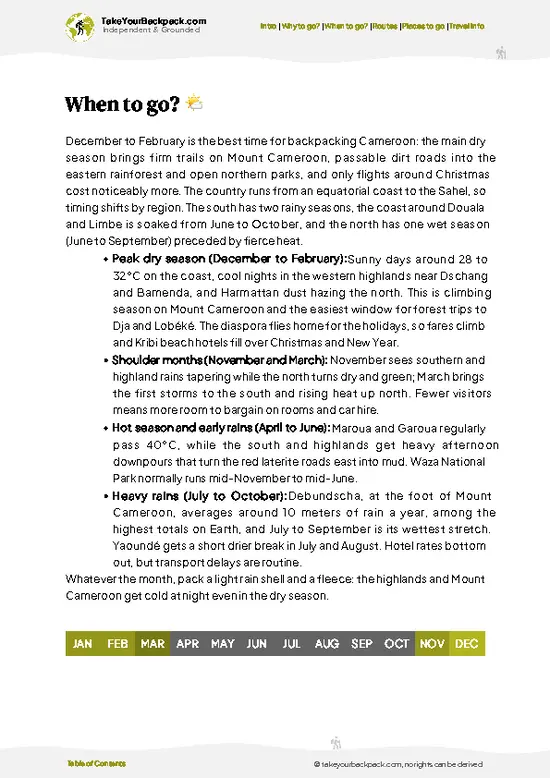
When to go?When to Plan Your Trip

Seasonal Rhythms and Their Impact on Exploring Cameroon


Cameroon’s climate swings between two main seasons: the wet and the dry. The wet season, marked by heavy, persistent rains, transforms the landscape into a lush, almost overwhelming green. Trails can turn to mud, rivers swell, and some rural roads become nearly impassable. This period challenges mobility and can limit access to certain attractions, especially those requiring trekking or off-road travel. The air thickens with humidity, and the scent of damp earth and vegetation dominates, making outdoor exploration more taxing but also deeply immersive for those prepared.

The dry season offers a stark contrast. Skies clear to a sharp blue, and the air dries out, easing the physical strain of hiking or long drives. This is when the country’s … read more 👉

Seasonal Rhythms and Their Impact on Exploring Cameroon


Cameroon’s climate swings between two main seasons: the wet and the dry. The wet season, marked by heavy, persistent rains, transforms the landscape into a lush, almost overwhelming green. Trails can turn to mud, rivers swell, and some rural roads become nearly impassable. This period challenges mobility and can limit access to certain attractions, especially those requiring trekking or off-road travel. The air thickens with humidity, and the scent of damp earth and vegetation dominates, making outdoor exploration more taxing but also deeply immersive for those prepared.

The dry season offers a stark contrast. Skies clear to a sharp blue, and the air dries out, easing the physical strain of hiking or long drives. This is when the country’s varied terrain—from savannahs to highlands—feels most accessible. Wildlife viewing improves as animals gather around shrinking water sources, and dusty trails harden underfoot. The dry season is the prime window for most travelers aiming to cover ground efficiently and enjoy outdoor activities without weather-related interruptions.

Between these extremes lie the shoulder seasons, brief transitions where rain tapers off or begins anew. These periods can be a double-edged sword: fewer tourists mean quieter paths and lower prices, but unpredictable weather can still disrupt plans. The landscape during these times is often at its most dramatic—freshly washed greenery meets drying earth, and the atmosphere carries a tension between seasons. Travelers willing to accept occasional showers and some logistical hiccups will find a more intimate experience, away from the crowds.

Peak travel times align closely with the dry season’s heart, when conditions are most stable. However, this also means popular routes and attractions can feel busier, and accommodations may cost more. Balancing these factors is key: the dry season rewards with reliability and comfort, while the wet season and shoulder periods offer a rawer, more elemental connection to Cameroon’s natural pulse, albeit with trade-offs in ease and accessibility.

attraction hoppingHow to Combine attractions Into One Trip

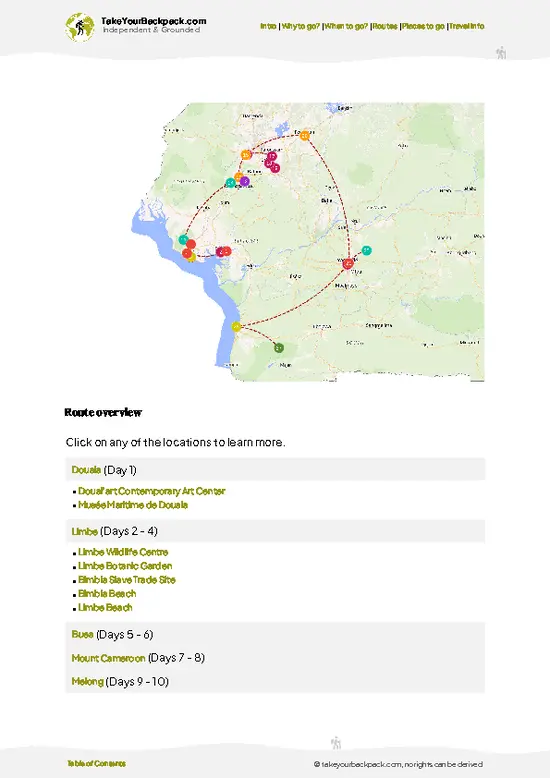
Mapping Cameroon’s Attractions into a Cohesive Journey

Cameroon’s diverse landscapes and cultural pockets demand a travel approach that respects both geography and the pace of discovery. The key is to cluster attractions by region, moving logically from one zone to the next rather than zigzagging across the country. This reduces travel fatigue and maximizes time spent soaking in the atmosphere rather than staring out of a bus window.

Regional Clusters and Directional Flow

Start by grouping stops into northern, central, and coastal regions. The northern savannah and volcanic highlands offer rugged trails and wildlife encounters that require more time on foot and patience for the heat and dust. The central region, with its bustling markets and cultural hubs, calls for a slower pace to absorb … read more 👉

Mapping Cameroon’s Attractions into a Cohesive Journey

Cameroon’s diverse landscapes and cultural pockets demand a travel approach that respects both geography and the pace of discovery. The key is to cluster attractions by region, moving logically from one zone to the next rather than zigzagging across the country. This reduces travel fatigue and maximizes time spent soaking in the atmosphere rather than staring out of a bus window.

Regional Clusters and Directional Flow

Start by grouping stops into northern, central, and coastal regions. The northern savannah and volcanic highlands offer rugged trails and wildlife encounters that require more time on foot and patience for the heat and dust. The central region, with its bustling markets and cultural hubs, calls for a slower pace to absorb the human rhythms and flavors. The coast delivers a different kind of reward—salt air, fishing villages, and beachside relaxation—best enjoyed with some buffer days to recover from inland exertions. Moving generally from north to south or vice versa helps maintain momentum without backtracking.

Time Investment and Realistic Pacing

Expect to spend at least two full days in each major cluster to appreciate the contrasts without rushing. Nature-heavy zones demand mornings for hikes before the midday heat, while cultural stops reward lingering afternoons and evenings. Trying to cram too many stops into a short window leads to superficial visits and exhaustion.

Common Pitfalls and Trade-offs

A frequent mistake is underestimating travel times on Cameroon’s roads, which can be unpredictable and slow. This often forces travelers to sacrifice depth for speed or vice versa. Budget travelers may opt for local transport, which adds time but offers authentic encounters, while those prioritizing comfort might choose private transfers at a higher cost but gain flexibility. Balancing effort and reward means accepting some rough patches—unpaved roads, basic accommodations—in exchange for moments like a panoramic summit view or a vibrant market scene that feels genuinely earned.

Flexibility and Strategic Planning

Build in buffer days and avoid rigid schedules. Weather, road conditions, and local events can shift plans unexpectedly. A flexible itinerary that respects the country’s rhythms allows travelers to pivot, linger where the vibe is right, and skip what feels forced. This approach transforms Cameroon’s sprawling attractions from a checklist into a layered, immersive experience.

The ListMust-Visit attractions in Cameroon

1 Limbe Wildlife Centre

primate sanctuary, rescued animals, educational exhibits

Observe gorillas, chimpanzees, and other species in naturalistic enclosures, supporting rehabilitation and public awareness of wildlife protection.

cameroon-attraction-limbe-wildlife-centre
© Google |

2 Limbe Botanic Garden

colonial-era gardens, rare plant species, Mount Cameroon foothills

Wander among labeled trees and themed plots, learning about local flora and the garden’s role in scientific research and conservation.

cameroon-attraction-limbe-botanic-garden
© Google |

3 Bafut Palace Museum

royal compound, traditional regalia, Bamenda Grassfields

Discover the layered history of the Bafut Fon’s court, where ceremonial objects and architecture reveal centuries of regional authority and ritual.

4 National Museum of Cameroon

colonial architecture, national collections, presidential residence

Survey artifacts spanning Cameroon’s pre-colonial, colonial, and modern eras, housed in a former presidential palace in Yaoundé.

cameroon-attraction-national-museum-of-cameroon v1
© Google |

5 Bimbia Slave Trade Site

coastal ruins, memorial stones, Atlantic embarkation point

Walk through the remnants of a slave port, tracing the physical and emotional journey endured by thousands along forested trails and stone relics.

cameroon-attraction-bimbia-slave-trade-site
© Google |

6 Musée des Civilisations

ethnic diversity, regional displays, multimedia exhibits

Survey Cameroon’s cultural complexity through interactive presentations and carefully curated objects representing major communities and traditions.

cameroon-attraction-musee-des-civilisations
© Google |

7 Reunification Monument

symbolic sculpture, panoramic platform, post-independence history

Ascend to a vantage point overlooking Yaoundé, reflecting on the monument’s role in commemorating the country’s unification process.

cameroon-attraction-reunification-monument
© Google |

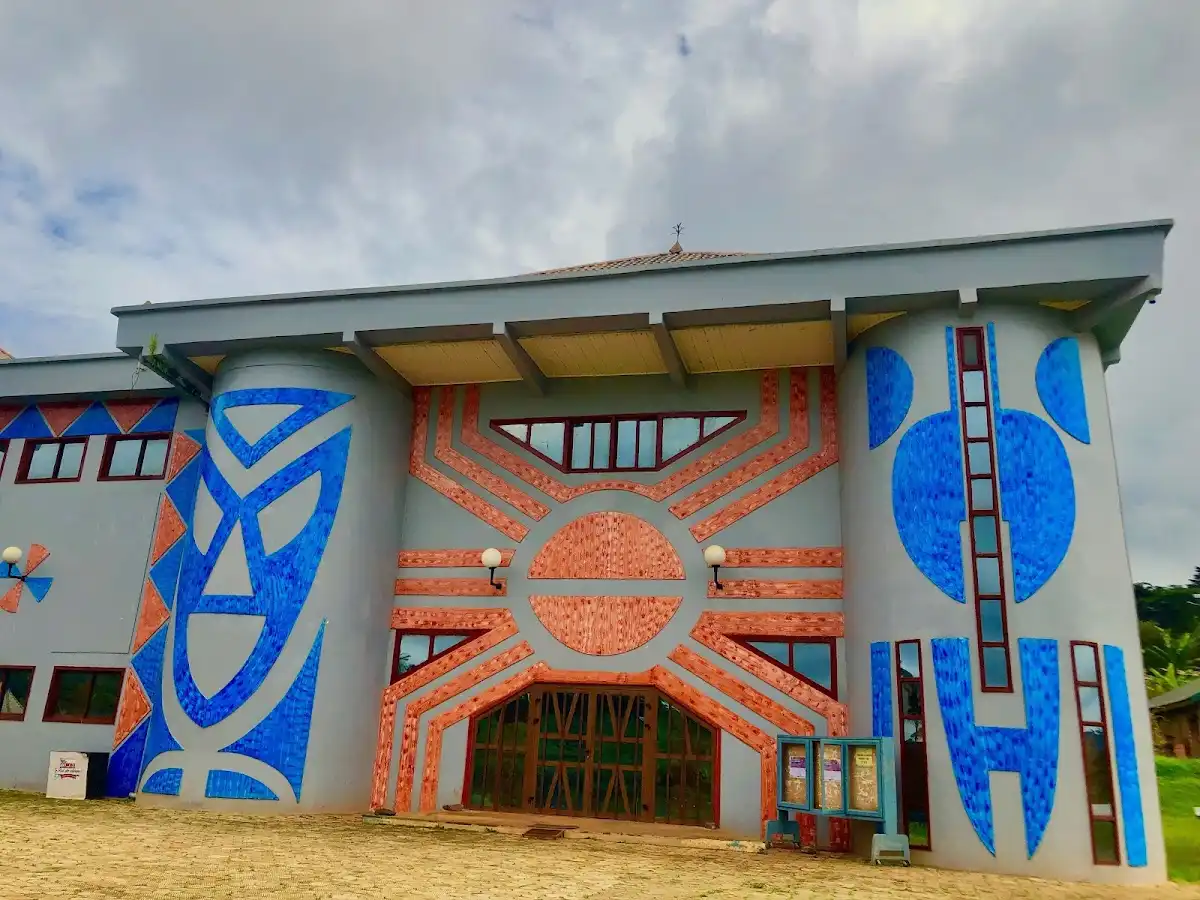
8 Bandjoun Station Art Center

contemporary installations, artist residencies, highland setting

Experience a creative hub where international and Cameroonian artists present evolving works in a striking building surrounded by rural landscapes.

cameroon-attraction-bandjoun-station-art-center
© Google |

9 Doual’art Contemporary Art Center

public art, urban interventions, creative workshops

Engage with installations and exhibitions that reflect Douala’s social realities, fostering dialogue between artists and the city’s communities.

cameroon-attraction-doualart-contemporary-art-center
© Google |

10 Musée Maritime de Douala

shipping history, navigational artifacts, port city heritage

Trace the evolution of maritime trade and technology along the Gulf of Guinea through ship models, maps, and archival photographs.

11 Blackitude Museum

private collection, royal artifacts, Yaoundé city center

View a diverse array of objects curated from across Cameroon, offering insight into local leadership, belief systems, and artistic expression.

12 Mankon Museum

palace artifacts, Bamenda Highlands, ritual objects

Examine ceremonial masks, thrones, and regalia that illustrate the spiritual and political life of the Mankon people.

13 Musée Royal de Baham

Baham dynasty, ancestral relics, ceremonial halls

Step into a living royal residence where objects and architecture narrate the lineage and customs of the Baham people.

14 Musée Royal de Batoufam

chieftaincy seat, sacred objects, community rituals

Tour a functioning palace complex, observing the interplay between tradition, leadership, and everyday village life.

15 Musée Ethnographique des Peuples de la Forêt

forest cultures, traditional crafts, Bantu and Pygmy heritage

Explore tools, musical instruments, and ritual items that document the daily life and beliefs of forest-dwelling peoples.

16 Bois Sainte Anastasie

urban forest, walking trails, Douala riverside

Stroll shaded paths beneath mature trees, observing birdlife and city views in a rare green space along the Wouri River.

17 Musée La Blackitude Annex / Traditional Arts Galleries

rotating exhibitions, indigenous sculpture, textile arts

Browse changing displays of regional craftsmanship, highlighting both ancestral techniques and evolving artistic forms.

Think you know Cameroon?

Prove you’re a true local — uncover 7 lesser-known attractions in Cameroon that locals tend to keep to themselves.
Loading the map 🌍

Expert viewWhat You Should Know

Expert Commentary


Cameroon is a country that demands patience and curiosity in equal measure. The best attractions here don’t reveal themselves all at once; they unfold through a series of gritty encounters with its diverse landscapes and cultures. If you’re aiming to get a meaningful sense of what Cameroon offers, plan to visit around three to five major attractions. This range strikes a balance between depth and breadth, allowing you to absorb the distinct flavors of the country without rushing or spreading yourself too thin.

Traveling through Cameroon means embracing a patchwork of conditions. Infrastructure varies wildly—some roads are smooth and well-maintained, while others are rough, dusty tracks that test your vehicle and your patience. This variability affects how much ground you … read more 👉

Expert Commentary


Cameroon is a country that demands patience and curiosity in equal measure. The best attractions here don’t reveal themselves all at once; they unfold through a series of gritty encounters with its diverse landscapes and cultures. If you’re aiming to get a meaningful sense of what Cameroon offers, plan to visit around three to five major attractions. This range strikes a balance between depth and breadth, allowing you to absorb the distinct flavors of the country without rushing or spreading yourself too thin.

Traveling through Cameroon means embracing a patchwork of conditions. Infrastructure varies wildly—some roads are smooth and well-maintained, while others are rough, dusty tracks that test your vehicle and your patience. This variability affects how much ground you can realistically cover in a day. Expect travel times to stretch longer than your GPS or guidebook suggests. The payoff is in the moments when the road opens up to reveal a landscape that feels untouched by time, or when a local market bursts with the scent of spices and fresh produce, grounding you in the here and now.

Budgeting for Cameroon requires a flexible mindset. The cost of visiting attractions can swing widely depending on your style of travel and the region you’re exploring. In more accessible areas, entry fees and local guides are modest, but venturing into remote regions often means paying a premium for transport, permits, and the occasional necessity of hiring local assistance. Factor in extra for unexpected expenses—broken-down vehicles, last-minute changes, or the occasional celebratory meal with new friends. The reward for this unpredictability is a richer, more authentic experience that no polished itinerary can replicate.

Prioritizing attractions in Cameroon means weighing what kind of experience you want. The country’s diversity is its strength, but it also means you can’t see everything without sacrificing quality. If you lean toward natural landscapes, prepare for physically demanding treks that test your endurance but reward you with views that feel carved out of another world. The air will thin, the sun will beat down, and your muscles will burn—but the moment you crest a ridge or stand before a volcanic crater, the effort crystallizes into something unforgettable. On the other hand, cultural sites offer a different kind of intensity. Here, the challenge is navigating language barriers, local customs, and sometimes wary hospitality. Patience and respect go a long way. The payoff is a glimpse into traditions and ways of life that have persisted despite modern pressures.

Safety is a practical concern that colors every decision in Cameroon. While many areas are welcoming and safe for travelers, others require vigilance and local advice. Political tensions and occasional unrest mean you should stay informed and flexible. Traveling with a local guide or fixer is often not just a convenience but a necessity. They can read the subtle shifts in atmosphere and help you avoid trouble before it finds you. This layer of caution adds complexity to planning but also deepens your connection to the places you visit. It’s a reminder that travel here is not about ticking boxes but about engaging with a living, breathing country.

Cultural sensitivity is equally crucial. Cameroon’s ethnic and linguistic diversity is staggering, and what’s normal in one region might be taboo in another. Dress modestly, ask before photographing people, and be ready to adapt your behavior. These small acts of respect open doors and create moments of genuine exchange. I’ve found that sharing a meal or a story with locals often becomes the highlight of the trip, far more than any landmark or scenic vista.

Time is another currency you’ll spend carefully in Cameroon. The country’s size and the condition of its transport network mean that moving between attractions can take longer than expected. Rushing from one site to the next often results in fatigue and missed opportunities. Instead, build in buffer days and allow yourself to linger where the experience feels richest. Sometimes the best moments happen off the beaten path—watching the light shift over a valley, hearing the distant call to prayer, or catching the laughter of children playing in a village square.

In terms of effort, Cameroon rewards those willing to get their hands dirty. Whether it’s hiking through dense forest, navigating crowded markets, or simply enduring long, bumpy rides, the physical and mental challenges are part of the package. The country doesn’t hand over its treasures easily. But when you finally stand in a place that has tested you, the sensory payoff is immediate and profound. The smell of damp earth after rain, the sharp contrast of colors in traditional dress, the taste of freshly roasted coffee—these details root you in the moment and make the journey worthwhile.

Ultimately, the best attractions in Cameroon are not just sights but experiences that engage all your senses and demand your full attention. Planning to visit a handful of key sites, allowing extra time for travel and rest, budgeting for unpredictability, and approaching each encounter with respect and openness will transform your trip from a checklist into a story worth telling. The grit of the streets and trails is the prelude to moments where the country’s soul reveals itself—raw, complex, and utterly compelling.

✈️ The backpacker research shortcutCameroon Travel Guide

An offline-friendly backpacking guide with optimized travel routes, ranked highlights, transport advice, and the best areas to stay.
example page 0 from our offline Travel Guide for Cameroon
example page 1 from our offline Travel Guide for Cameroon
example page 2 from our offline Travel Guide for Cameroon
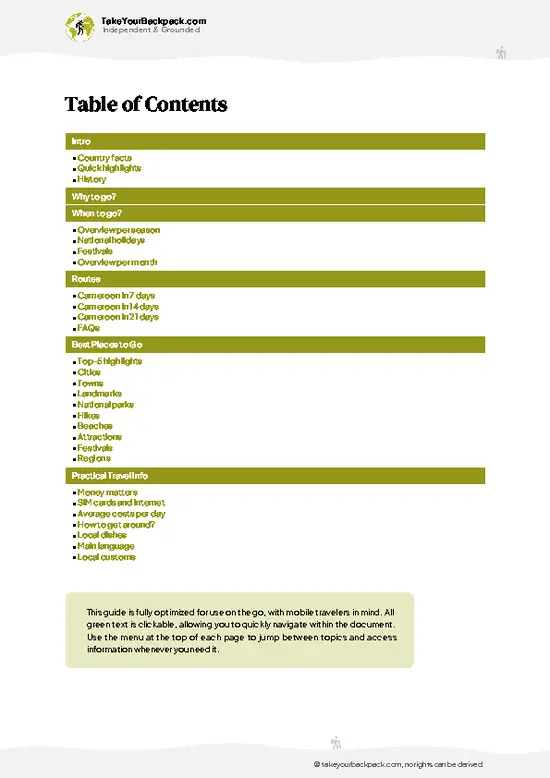
example page 3 from our offline Travel Guide for Cameroon
example page 4 from our offline Travel Guide for Cameroon
example page 5 from our offline Travel Guide for Cameroon
example page 6 from our offline Travel Guide for Cameroon
example page 7 from our offline Travel Guide for Cameroon
The digital guide (383 pages) contains:
95 highlights, ranked by travel appeal
Optimized 7, 14 & 21-day travel routes
Cities, national parks, landmarks, beaches
How to get around
Offline-friendly for travel without Wi-Fi
👉 Click to see all 30+ guide features

📅 Plan smarter in minutes, not weeks
Month by month travel advice
Festivals & national holidays
Budget expectations

🗺️ Go to the right places, skip the overrated ones
Honest pros & cons of destinations
Top hikes, parks & viewpoints
Lesser-known places most travelers miss
Clear “worth it vs skip it” guidance

🛏️ Travel smoothly without rookie mistakes
Best areas to stay
Transport systems explained simply
Common scams & safety advice
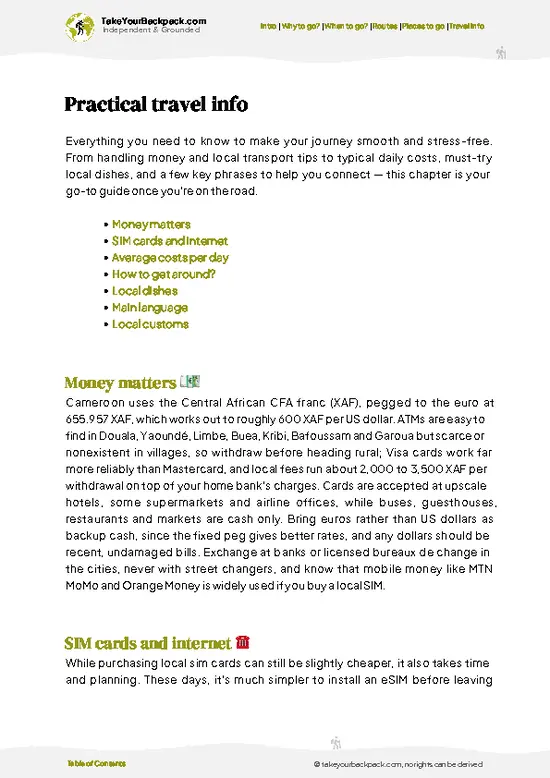
SIM cards, money & practical tips

🌍 Understand the country, not just visit it
Culture & traditions
52 Essential phrases & customs
Festivals worth planning around
Traveler-friendly historical context
Insights that make places more meaningful

📱 Built for real travel conditions
Fully downloadable PDF
Works completely offline
Optimized for phone use
Useful in remote areas & buses
Everything in one place
Save weeks of stressful planning
Get instant access to your full guide. 30‑day money-back guarantee.


By proceeding you agree to our terms.
Sent to your inbox immediately after payment • 100% Secure Checkout
Best Backpacking Travel Advisor 2025 tourism awardBest Backpacking
Travel Advisor
2025
What others say about Take Your Backpack Guides:
⭐⭐⭐⭐⭐
Fantastic, amazing amount of information!
⭐⭐⭐⭐⭐
My goodness this is amazing, it's what I've been looking for hats off too you!
⭐⭐⭐⭐⭐
I think this is absolutely BRILLIANT
⭐⭐⭐⭐
Very complete and informative. It's still missing places, but I gotta to commend you
⭐⭐⭐⭐⭐
This is truly amazing, thank you, can't wait to explore it with my kids!
⭐⭐⭐⭐⭐
Awesome resource, thank you!
⭐⭐⭐⭐⭐
This is amazing! Can't wait to explore the ones I haven't seen
⭐⭐⭐⭐
I love this! Well done, great idea.
⭐⭐⭐⭐⭐
Thanks for taking the time to make this gem!
⭐⭐⭐⭐⭐
This might be the best website I've ever seen.
⭐⭐⭐⭐⭐
Congratulations, and thank you so much for your work; it's incredibly valuable.
⭐⭐⭐⭐
In all seriousness I think you did a great job pointing out the important spots
⭐⭐⭐⭐⭐
10/10 very good
⭐⭐⭐⭐⭐
As someone who's only just starting to visit regularly this is awesome, thank you.
⭐⭐⭐⭐
Thank you very much! I'm going to visit my dad, it's going to be very useful!
⭐⭐⭐⭐⭐
This is really cool! We'll be travelling for the first time and this definitely come in handy.
⭐⭐⭐⭐⭐
You are now our minister of culture, congratulations 👨‍💼
⭐⭐⭐⭐⭐
Just wanted to tell you that this is a pearl! Going to follow your recommendations.
⭐⭐⭐⭐⭐
This is so cool. I'll definitely be using the resource for my travels soon.
⭐⭐⭐⭐⭐
This is very impressive! Good work.
⭐⭐⭐⭐⭐
This is an amazing and informative site. Very well done!

🛏️ Where to stay?Top Places to Consider Staying

Yes — hostels, budget guesthouses and low‑cost hotels are available in Cameroon’s main cities and tourist hubs for backpackers, but they concentrate in Douala, Yaoundé and a few regional towns so expect far fewer options in rural or highland areas and plan accordingly.
In Douala, Akwa offers the widest choice and nightlife with good transport links but only moderate nighttime security; Deïdo is cheapest and closest to markets and bus hubs yet busy and basic with lower safety after dark; Bonapriso gives quieter, safer stays at higher prices.
In Yaoundé, Bastos has safer, quieter expat‑style lodgings that cost more; Mokolo is the cheapest and most central near markets and buses but noisy and … read more 👉
Yes — hostels, budget guesthouses and low‑cost hotels are available in Cameroon’s main cities and tourist hubs for backpackers, but they concentrate in Douala, Yaoundé and a few regional towns so expect far fewer options in rural or highland areas and plan accordingly.
In Douala, Akwa offers the widest choice and nightlife with good transport links but only moderate nighttime security; Deïdo is cheapest and closest to markets and bus hubs yet busy and basic with lower safety after dark; Bonapriso gives quieter, safer stays at higher prices.
In Yaoundé, Bastos has safer, quieter expat‑style lodgings that cost more; Mokolo is the cheapest and most central near markets and buses but noisy and spartan; university areas (Ngoa‑Eké/Melen) host wallet‑friendly guesthouses and lively street food while being noisy and occasionally inconsistent on services.

If you enjoy meeting fellow travelers, consider choosing hostels with high ratings for atmosphere. On the other hand, if you prefer having your own space, a hotel might be a better option.

CameroonMore Places Across Cameroon

👋 Meet the founderWho’s Behind Take Your Backpack?

Johan, backpacker and founder of TakeYourBackpackHi, I’m Johan (Netherlands 🇳🇱), the creator of TakeYourBackpack. Over the past decade, I’ve backpacked through 80+ countries across six continents, gaining extensive experience with independent travel, long-term trips, and overland routes.

This site is built on a combination of firsthand travel experience and carefully curated insights from other backpackers. Many guides are based on places I’ve personally visited, while others bring together tips, observations, and practical advice shared by trusted travelers I’ve met along the way.

The goal is to provide realistic, experience-driven guidance — not generic itineraries — so you can explore destinations with better context, clearer expectations, and more confidence.

Get full Cameroon guide •
Instant download • 95 highlights • Full Offline guide