×

Cameroon🇨🇲 | attractionsBlackitude Museumprivate collection, royal artifacts, Yaoundé city center | things to do and best time to go

Explore Reunification MonumentExplore Musée Ethnographique des Peuples de la Forêt

Backpacking in Blackitude Museum
👍 Recommendedattraction ranked #11
By Johan Kruseman 🇳🇱 | Updated May 30, 2026

Everyone’s heard that you visit the Blackitude Museum to see “royal Cameroonian artifacts”—cue the Instagram shots of beaded crowns and ceremonial stools. But here’s the real deal: the Blackitude Museum, tucked into a side street in central Yaoundé, is less about gawking at relics and more about feeling the pulse of Cameroon’s living history, told by the descendants of those who shaped it. If you’re backpacking, this isn’t the country’s flashiest stop—no jungle treks, no volcanic drama, and you won’t find a crowd of selfie-stick tourists blocking the entrance. The wow-factor is quieter: you get hands-on access to objects you’d never see behind glass in Europe, and if you’re lucky, a family member of the founder will walk you through the stories themselves. Entry is cheap, but hours can be erratic and English explanations are hit-or-miss. Compared to Cameroon’s big-ticket wildlife parks or Mount Cameroon, Blackitude is intimate, raw, and refreshingly unpolished—more soul than spectacle.

Discover everything you want to know in the 📖 Cameroon Travel Guide.


Get your Cameroon guide
95 ranked highlights, routes & tips, works offline (383 pages)
Loading the map 🌍
CLICK TO FILTER
cities
towns
landmarks
national parks
hikes
beaches
attractions
festivals
regions
SHOW COUNTRY’S BESTSHOW ALL

✨ Why go?
Ranked #11 attraction in Cameroon
What makes this attraction worth visiting

The Blackitude Museum in Cameroon isn’t some polished, Instagram-perfect spot where you snap a quick selfie and move on. It’s crowded, yes—especially on weekends—but that’s because it’s a magnet for anyone serious about understanding African identity beyond the surface. This place is a heavyweight in cultural significance, showcasing artifacts that trace the continent’s history through a lens rarely seen in tourist brochures. You won’t find fluff here; the exhibits hit hard with stories of resilience, creativity, and the complex legacies of colonialism and independence.

Backpackers make time for Blackitude because it’s a milestone on the Cameroon route that demands attention. It’s not just about looking at objects behind glass; it’s about feeling the pulse of a people who’ve shaped and been … read more 👉
The Blackitude Museum in Cameroon isn’t some polished, Instagram-perfect spot where you snap a quick selfie and move on. It’s crowded, yes—especially on weekends—but that’s because it’s a magnet for anyone serious about understanding African identity beyond the surface. This place is a heavyweight in cultural significance, showcasing artifacts that trace the continent’s history through a lens rarely seen in tourist brochures. You won’t find fluff here; the exhibits hit hard with stories of resilience, creativity, and the complex legacies of colonialism and independence.

Backpackers make time for Blackitude because it’s a milestone on the Cameroon route that demands attention. It’s not just about looking at objects behind glass; it’s about feeling the pulse of a people who’ve shaped and been shaped by history in ways that ripple worldwide. The effort to get here—navigating local transport, sometimes dealing with language barriers—is part of the reward. You walk away with more than photos; you gain context and connection. This museum isn’t a quick stop; it’s a deep dive that changes how you see Cameroon and, frankly, the world. If you want a travel experience that punches above its weight, this is it.
Want to include Blackitude Museum in your Cameroon route?
Create a personalized Cameroon itinerary that includes Blackitude Museum and the places that fit your trip — based on your travel style, budget, and available time. Get your route in seconds.

Generate my trip

💡 HighlightsEssential experiences to have while visiting Blackitude Museum

The Royal Regalia Room
Let’s cut through the travel-brochure fog: this is not some dusty collection of “tribal artifacts” thrown together for tourists. The Royal Regalia Room is a crash course in the real power dynamics of Cameroon’s traditional kingdoms. You’ll see thrones, beaded crowns, and ceremonial swords that were actually used by Bamoun, Bamileke, and Tikar royalty. These aren’t replicas or props—they’re the real deal, and the craftsmanship is so intricate you’ll catch yourself leaning in to count the beads. The room doesn’t just display objects; it tells you who held power, how they showed it, and what it meant to rule before colonial lines were drawn. If you want to understand Cameroon’s backbone, start here.


The Oral History Vault
Instagram can’t capture this. The Blackitude Museum’s … read more 👉
The Royal Regalia Room
Let’s cut through the travel-brochure fog: this is not some dusty collection of “tribal artifacts” thrown together for tourists. The Royal Regalia Room is a crash course in the real power dynamics of Cameroon’s traditional kingdoms. You’ll see thrones, beaded crowns, and ceremonial swords that were actually used by Bamoun, Bamileke, and Tikar royalty. These aren’t replicas or props—they’re the real deal, and the craftsmanship is so intricate you’ll catch yourself leaning in to count the beads. The room doesn’t just display objects; it tells you who held power, how they showed it, and what it meant to rule before colonial lines were drawn. If you want to understand Cameroon’s backbone, start here.


The Oral History Vault
Instagram can’t capture this. The Blackitude Museum’s oral history section is a living, breathing archive. You’ll hear recorded stories from elders—some in English, some in French, many in local languages—recounting migration, war, and everyday life. It’s raw, unscripted, and sometimes contradictory, which is exactly the point. This is history as it’s remembered, not sanitized for textbooks. If you’re tired of museums that feel like mausoleums, this is your antidote. The voices here are as much the exhibit as the objects.


The Queen’s Private Collection
This is the museum’s ace in the hole. The founder, Her Majesty Queen Nana Agnes, didn’t just curate the collection—she lived it. Her private rooms are packed with personal heirlooms, gifts from visiting dignitaries, and ceremonial wear she actually used. There’s a sense of intimacy here that you won’t find in big, impersonal museums. You’re not just looking at “African art”—you’re seeing the lived experience of a modern royal family, with all the contradictions and pride that come with it.


Hands-On Musical Instruments
Forget the “do not touch” signs. Here, you’re encouraged to pick up a drum or thumb piano and make some noise. The staff will show you how to play a balafon or shake a set of traditional rattles. It’s not a staged performance; it’s a jam session with history. If you’ve ever wanted to feel the pulse of Central Africa, this is your chance. The tactile connection makes the culture stick in your memory long after you leave.


Guided Storytelling Tours
This is where the Blackitude Museum leaves the Instagram crowd in the dust. The guides are not bored employees reciting a script—they’re passionate storytellers, often with family ties to the artifacts. They’ll weave together the personal and the political, the mythic and the mundane, and they’re not afraid to challenge your assumptions. Expect to be called out if you ask a lazy question. This is the real magic: a museum that’s alive, opinionated, and deeply personal. If you want a selfie, go elsewhere. If you want a story that sticks, you’re in the right place.
Spotted a mistake or missing something? Contact us.

Things to do near Blackitude Museum

Ratings based on Tripadvisor reviews. When you book through this link, you support our work at no extra cost to you.

🌤️ When to go?Seasonal considerations and timing


  • Weather: The Blackitude Museum is best visited during Cameroon’s dry season, which runs from November to March. Expect less rain and more reliable conditions for exploring. The wet season, from April to October, brings heavy downpours that can turn the surrounding streets into mud traps and make outdoor exhibits less enjoyable.

  • Temperature: Temperatures hover between 22°C to 30°C (72°F to 86°F) year-round, but the dry season feels more comfortable. The humidity drops, making it easier to spend hours wandering the museum without feeling like you’re melting.

  • Daylight Hours: Daylight is fairly consistent, with about 11 to 12 hours daily. Visiting in the dry season means clearer skies and better natural light for photography and appreciating the museum’s intricate details.

  • Crowds: Tourist
read more 👉

  • Weather: The Blackitude Museum is best visited during Cameroon’s dry season, which runs from November to March. Expect less rain and more reliable conditions for exploring. The wet season, from April to October, brings heavy downpours that can turn the surrounding streets into mud traps and make outdoor exhibits less enjoyable.

  • Temperature: Temperatures hover between 22°C to 30°C (72°F to 86°F) year-round, but the dry season feels more comfortable. The humidity drops, making it easier to spend hours wandering the museum without feeling like you’re melting.

  • Daylight Hours: Daylight is fairly consistent, with about 11 to 12 hours daily. Visiting in the dry season means clearer skies and better natural light for photography and appreciating the museum’s intricate details.

  • Crowds: Tourist traffic peaks in December and January, coinciding with holiday travel. If you want to avoid the crush, aim for November or February when the museum is quieter but still enjoys good weather.

  • Seasonal Activities: The dry season aligns with local festivals and cultural events in Douala, adding layers to your visit beyond the museum itself. The rainy season sees fewer events, so you miss out on that extra cultural immersion.

  • Price Fluctuations: Entrance fees remain stable year-round, but accommodation and transport costs spike during the dry season’s peak months due to increased demand. Booking early can save you a chunk of change.


Pro-tip: Visit in late November or early February to dodge crowds, enjoy dry weather, and catch local cultural events without paying premium prices.


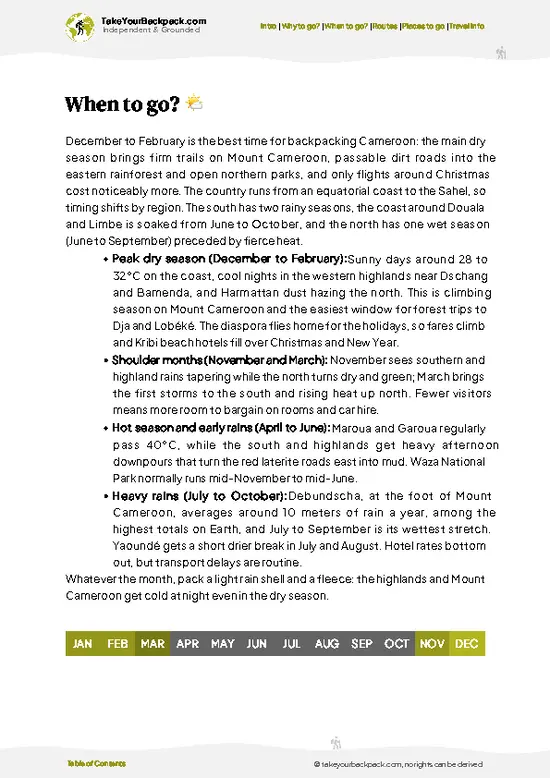
source: climatestotravel.comJANJanuary: highly recommended for travelingFEBFebruary: excellent for travelingMARMarch: highly recommended for travelingAPRApril: fair for travelingMAYMay: fair for travelingJUNJune: fair for travelingJULJuly: fair for travelingAUGAugust: fair for travelingSEPSeptember: fair for travelingOCTOctober: fair for travelingNOVNovember: excellent for travelingDECDecember: good for traveling
when-to-go

✈️ The backpacker research shortcutCameroon Travel Guide

An offline-friendly backpacking guide with optimized travel routes, ranked highlights, transport advice, and the best areas to stay.
example page 0 from our offline Travel Guide for Cameroon
example page 1 from our offline Travel Guide for Cameroon
example page 2 from our offline Travel Guide for Cameroon
example page 3 from our offline Travel Guide for Cameroon
example page 4 from our offline Travel Guide for Cameroon
example page 5 from our offline Travel Guide for Cameroon
example page 6 from our offline Travel Guide for Cameroon
example page 7 from our offline Travel Guide for Cameroon
The digital guide (383 pages) contains:
95 highlights, ranked by travel appeal
Optimized 7, 14 & 21-day travel routes
Cities, national parks, landmarks, beaches
How to get around
Offline-friendly for travel without Wi-Fi
👉 Click to see all 30+ guide features

📅 Plan smarter in minutes, not weeks
Month by month travel advice
Festivals & national holidays
Budget expectations

🗺️ Go to the right places, skip the overrated ones
Honest pros & cons of destinations
Top hikes, parks & viewpoints
Lesser-known places most travelers miss
Clear “worth it vs skip it” guidance

🛏️ Travel smoothly without rookie mistakes
Best areas to stay
Transport systems explained simply
Common scams & safety advice
SIM cards, money & practical tips

🌍 Understand the country, not just visit it
Culture & traditions
52 Essential phrases & customs
Festivals worth planning around
Traveler-friendly historical context
Insights that make places more meaningful

📱 Built for real travel conditions
Fully downloadable PDF
Works completely offline
Optimized for phone use
Useful in remote areas & buses
Everything in one place
Save weeks of stressful planning
Get instant access to your full guide. 30‑day money-back guarantee.


By proceeding you agree to our terms.
Sent to your inbox immediately after payment • 100% Secure Checkout
Best Backpacking Travel Advisor 2025 tourism awardBest Backpacking
Travel Advisor
2025
What others say about Take Your Backpack Guides:
⭐⭐⭐⭐⭐
Fantastic, amazing amount of information!
⭐⭐⭐⭐⭐
My goodness this is amazing, it's what I've been looking for hats off too you!
⭐⭐⭐⭐⭐
I think this is absolutely BRILLIANT
⭐⭐⭐⭐
Very complete and informative. It's still missing places, but I gotta to commend you
⭐⭐⭐⭐⭐
This is truly amazing, thank you, can't wait to explore it with my kids!
⭐⭐⭐⭐⭐
Awesome resource, thank you!
⭐⭐⭐⭐⭐
This is amazing! Can't wait to explore the ones I haven't seen
⭐⭐⭐⭐
I love this! Well done, great idea.
⭐⭐⭐⭐⭐
Thanks for taking the time to make this gem!
⭐⭐⭐⭐⭐
This might be the best website I've ever seen.
⭐⭐⭐⭐⭐
Congratulations, and thank you so much for your work; it's incredibly valuable.
⭐⭐⭐⭐
In all seriousness I think you did a great job pointing out the important spots
⭐⭐⭐⭐⭐
10/10 very good
⭐⭐⭐⭐⭐
As someone who's only just starting to visit regularly this is awesome, thank you.
⭐⭐⭐⭐
Thank you very much! I'm going to visit my dad, it's going to be very useful!
⭐⭐⭐⭐⭐
This is really cool! We'll be travelling for the first time and this definitely come in handy.
⭐⭐⭐⭐⭐
You are now our minister of culture, congratulations 👨‍💼
⭐⭐⭐⭐⭐
Just wanted to tell you that this is a pearl! Going to follow your recommendations.
⭐⭐⭐⭐⭐
This is so cool. I'll definitely be using the resource for my travels soon.
⭐⭐⭐⭐⭐
This is very impressive! Good work.
⭐⭐⭐⭐⭐
This is an amazing and informative site. Very well done!

🛏️ Where to stay?Where staying makes the most sense

If you’re heading to the Blackitude Museum in Douala, Cameroon, brace yourself for a reality check: this isn’t a polished tourist hotspot with endless backpacker hostels lined up like dominoes. The area around the museum is part of the city’s bustling core, which means it’s alive with local energy but also noisy, crowded, and a bit chaotic. Forget the Instagram-perfect quiet streets; here, you’re in the thick of urban life, which can be thrilling or overwhelming depending on your vibe.

For backpackers, the best bet is to stay in neighborhoods like Bonanjo or Akwa. These areas are the city’s commercial … read more 👉
If you’re heading to the Blackitude Museum in Douala, Cameroon, brace yourself for a reality check: this isn’t a polished tourist hotspot with endless backpacker hostels lined up like dominoes. The area around the museum is part of the city’s bustling core, which means it’s alive with local energy but also noisy, crowded, and a bit chaotic. Forget the Instagram-perfect quiet streets; here, you’re in the thick of urban life, which can be thrilling or overwhelming depending on your vibe.

For backpackers, the best bet is to stay in neighborhoods like Bonanjo or Akwa. These areas are the city’s commercial and cultural hubs, offering a mix of budget guesthouses and small hotels that attract solo travelers and budget-conscious visitors. They’re not luxury zones, but they’re safe enough if you keep your wits about you and stick to well-trodden streets after dark. Plus, these neighborhoods are where you’ll find the social pulse—street food vendors, local bars, and markets where you can swap stories with other travelers or locals.

The real magic here isn’t in plush accommodations but in the gritty, authentic experience of Douala’s everyday life. Staying close to the museum means you’re steps away from Cameroonian art, history, and culture that’s raw and unfiltered. It’s not about comfort; it’s about connection. If you want to soak in the city’s soul, this is where you want to be.

👛 Costs (as of 24 March 2025)How expensive it really is

As of the most recent estimates, the Blackitude Museum in Yaoundé, Cameroon, charges an entrance fee of approximately 3,000 CFA francs (about €5). Guided tours are available for an additional fee of around 1,000 CFA francs (€1.50). Photography may incur a separate charge of 1,000 CFA francs (€1.50). Additional costs for workshops or special exhibitions vary; it's advisable to check the museum's official website for the latest information.
⚠️ Prices can change and everyone travels differently, so take this as a rough guide. Hope it helps you plan your adventure!

Other Cameroonian attractions near Blackitude Museum

Explore more nearby:


💡 Not sure where to go next?
Create a personalized itinerary for Cameroon including Blackitude Museum and the places that fit your trip.

Generate my itinerary

👉 Discover all attractions

Or checkout all Cameroon has to offer (think cities, towns, villages, national parks, hikes, beaches, festivals)
Country photo of Cameroon

We 💚 feedbackParting advice and final tips

The Blackitude Museum isn’t some polished, crowd-pleasing spectacle—it’s raw, real, and unapologetically African in every corner. Expect a steady flow of visitors, especially on weekends, so don’t come looking for solitude. But here’s the kicker: the depth of history and culture packed into this place hits harder than any glossy Instagram post. The artifacts and stories don’t just sit behind glass; they demand your attention, challenge your assumptions, and leave you thinking long after you leave. It’s worth the hustle if you want something genuine, not just pretty.

✍️ Help improve this page!
The information on this page is based on in-depth research, insights shared by experienced travelers, and feedback from the local travel community in Cameroon. While every effort is made to keep the information accurate and current, conditions can change — so if you spot anything incorrect or outdated, please get in touch.


🙋‍♂️ Give feedback

👋 Meet the founderWho’s Behind Take Your Backpack?

Johan, backpacker and founder of TakeYourBackpackHi, I’m Johan (Netherlands 🇳🇱), the creator of TakeYourBackpack. Over the past decade, I’ve backpacked through 80+ countries across six continents, gaining extensive experience with independent travel, long-term trips, and overland routes.

This site is built on a combination of firsthand travel experience and carefully curated insights from other backpackers. Many guides are based on places I’ve personally visited, while others bring together tips, observations, and practical advice shared by trusted travelers I’ve met along the way.

The goal is to provide realistic, experience-driven guidance — not generic itineraries — so you can explore destinations with better context, clearer expectations, and more confidence.

Get full Cameroon guide •
Instant download • 95 highlights • Full Offline guide