×

Cameroon🇨🇲 | attractionsMusée Royal de BahamBaham dynasty, ancestral relics, ceremonial halls | things to do and best time to go

Explore Musée Royal de BatoufamExplore Bimbia Beach

Backpacking in Musée Royal de Baham
👍 Recommendedattraction ranked #9
By Johan Kruseman 🇳🇱 | Updated September 3, 2026

Here’s what nobody tells you: at Musée Royal de Baham, you can actually talk to the royal custodians—sometimes even the king’s family—without a velvet rope or a scripted tour guide in sight. The museum sits in the heart of Baham, a highland town in Cameroon’s Western Region, far from the capital’s chaos and the tourist conveyor belt of Yaoundé or Douala. If you’re picturing a polished, air-conditioned gallery, reset your expectations. This is a living palace, layered with the dust and drama of centuries, where the artifacts aren’t just relics—they’re still part of local rituals. The wow-factor? The sheer intimacy: you’re not peering at culture through glass, you’re standing in it. But don’t expect backpacker prices or easy transport; getting here means navigating bumpy roads and paying more than you would for a city museum. Crowds are rare, but so are English explanations. Compared to Cameroon’s big-ticket wildlife parks or volcanic hikes, Baham is quieter, deeper, and unapologetically real.

Discover everything you want to know in the 📖 Cameroon Travel Guide.


Get your Cameroon guide
95 ranked highlights, routes & tips, works offline (374 pages)
Loading the map 🌍
CLICK TO FILTER
cities
towns
landmarks
national parks
hikes
beaches
attractions
festivals
regions
SHOW COUNTRY’S BESTSHOW ALL

✨ Why go?
Ranked #9 attraction in Cameroon
Why visitors keep coming back

The Musée Royal de Baham isn’t just another stop on the Cameroon circuit—it’s a checkpoint where history punches you in the gut and culture grabs you by the collar. Sure, it’s not a quiet, off-the-beaten-path hideaway. Expect crowds, especially on weekends and holidays, and yes, the entry fee isn’t exactly pocket change for a backpacker. But here’s the kicker: this place is a living archive of the Bamileke people’s royal heritage, with artifacts and regalia that tell stories you won’t find in any textbook or Instagram post.

The museum’s real magic lies in its raw authenticity. You’re not just looking at relics behind glass; you’re stepping into a narrative of power, tradition, and resilience that’s been fiercely preserved. The craftsmanship on display—masks, textiles, and ceremonial objects—hits … read more 👉
The Musée Royal de Baham isn’t just another stop on the Cameroon circuit—it’s a checkpoint where history punches you in the gut and culture grabs you by the collar. Sure, it’s not a quiet, off-the-beaten-path hideaway. Expect crowds, especially on weekends and holidays, and yes, the entry fee isn’t exactly pocket change for a backpacker. But here’s the kicker: this place is a living archive of the Bamileke people’s royal heritage, with artifacts and regalia that tell stories you won’t find in any textbook or Instagram post.

The museum’s real magic lies in its raw authenticity. You’re not just looking at relics behind glass; you’re stepping into a narrative of power, tradition, and resilience that’s been fiercely preserved. The craftsmanship on display—masks, textiles, and ceremonial objects—hits a level of detail that demands your full attention. It’s a cultural deep dive that rewards the effort of getting there, especially if you’re threading through Cameroon’s western highlands.

For backpackers, it’s a milestone that connects you to the country’s soul beyond the usual tourist chatter. It’s a place where history isn’t sanitized but alive, challenging, and utterly compelling. Skip it, and you miss a vital piece of Cameroon’s identity.
Want to include Musée Royal de Baham in your Cameroon route?
Create a personalized Cameroon itinerary that includes Musée Royal de Baham and the places that fit your trip — based on your travel style, budget, and available time. Get your route in seconds.

Generate my trip

💡 HighlightsMust-see experiences and standout moments

The Royal Regalia Room
Forget the Instagrammed shots of dusty glass cases—this is the real deal. The regalia here isn’t just for show; it’s the living toolkit of Baham royalty. You’ll see beaded crowns, leopard-skin capes, and ceremonial stools that have survived centuries of power struggles and colonial interference. Each piece is loaded with symbolism, and the guides (often local historians or even palace insiders) don’t sugarcoat the stories. You’ll hear about alliances, betrayals, and the kind of political chess that makes Game of Thrones look like a playground spat.


The Ancestral Skulls Chamber
Yes, you read that right. This isn’t a sanitized European museum—here, the ancestors are present, literally. The skulls of past chiefs are kept in a sacred chamber, and their presence is treated … read more 👉
The Royal Regalia Room
Forget the Instagrammed shots of dusty glass cases—this is the real deal. The regalia here isn’t just for show; it’s the living toolkit of Baham royalty. You’ll see beaded crowns, leopard-skin capes, and ceremonial stools that have survived centuries of power struggles and colonial interference. Each piece is loaded with symbolism, and the guides (often local historians or even palace insiders) don’t sugarcoat the stories. You’ll hear about alliances, betrayals, and the kind of political chess that makes Game of Thrones look like a playground spat.


The Ancestral Skulls Chamber
Yes, you read that right. This isn’t a sanitized European museum—here, the ancestors are present, literally. The skulls of past chiefs are kept in a sacred chamber, and their presence is treated with a mix of reverence and matter-of-factness that’s both sobering and electrifying. It’s not for the squeamish, but it’s a rare, unfiltered look at how the Baham people connect with their lineage. No velvet ropes, no hushed audio guides—just raw, living tradition.


Live Storytelling and Oral Histories
If you’re lucky enough to visit when the griots (traditional storytellers) are in session, cancel your afternoon plans. These aren’t rehearsed tourist performances; they’re living archives, delivered with the kind of charisma that makes you forget your phone exists. The stories are unscripted, sometimes biting, often hilarious, and always loaded with local context. You’ll walk out with a head full of legends and a sense of how history is kept alive in Baham—not in textbooks, but in voices.


The Sacred Courtyard
This isn’t just a pretty photo op. The courtyard is the beating heart of the museum, still used for rituals and royal ceremonies. If you catch a festival or a rite of passage, you’re in for a sensory overload: drums that rattle your bones, dancers in masks that look like they’ve stepped out of another dimension, and a crowd that’s as much a part of the show as the performers. Even on a quiet day, the air feels charged—like you’re standing in a place where history is still happening.


Traditional Architecture and Royal Compound Layout
Don’t skip the buildings themselves. The museum is housed in the former royal palace, and the architecture is a masterclass in Bamileke design: steep thatched roofs, carved wooden pillars, and a layout that’s both practical and symbolic. Every doorway, every courtyard, every wall tells a story about hierarchy, spirituality, and survival. You’re not just looking at artifacts—you’re moving through a living blueprint of Baham society.


Hands-On Craft Demonstrations
If you’re the type who gets fidgety in front of glass cases, this is your antidote. Local artisans sometimes set up shop in the museum grounds, weaving raffia, carving wood, or beading jewelry right in front of you. This isn’t a staged “cultural village” setup—it’s the real craftspeople, working as they always have, happy to explain their process if you show genuine interest. You’ll leave with a deeper appreciation for the skill (and maybe a souvenir that isn’t mass-produced plastic).


Crowds? Not really an issue—this isn’t Paris or Marrakech. But don’t expect air conditioning or slick signage. What you get instead is raw, unfiltered access to a living royal tradition. The Musée Royal de Baham isn’t for box-tickers or selfie-chasers. It’s for travelers who want to feel the pulse of a place, not just collect another stamp.
Spotted a mistake or missing something? Contact us.

🌤️ When to go?When to go for the best experience


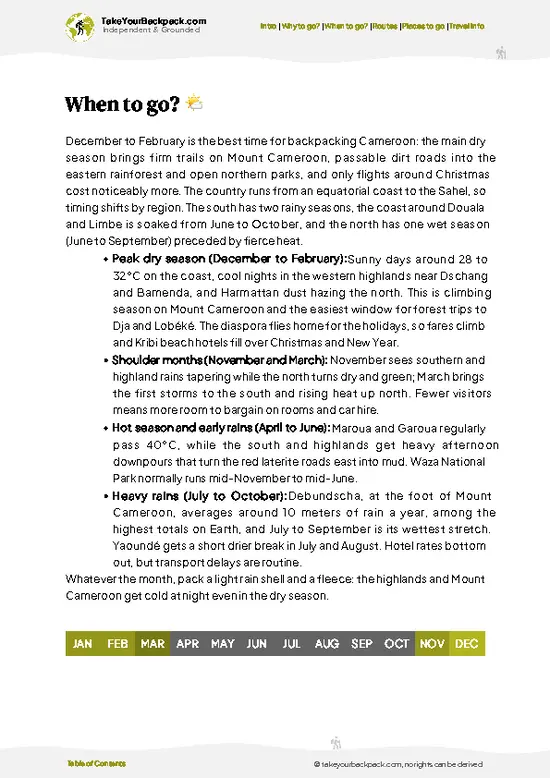
  • Weather: The best time to visit Musée Royal de Baham is during the dry season, from November to February. Expect less rain, which means you won’t be dodging puddles or mud on your way to the exhibits. The wet season, from March to October, brings heavy rains that can make travel tricky and dampen your experience.

  • Temperature: Temperatures hover between 20°C and 28°C (68°F to 82°F) year-round, but the dry season feels more comfortable. The humidity drops, making it easier to explore without feeling like you’re melting in the tropical heat.

  • Daylight Hours: Daylight is fairly consistent, with about 11 to 12 hours of light daily. Visiting in the dry season means clearer skies and better natural light for photography and wandering the grounds.

  • Crowds: The museum isn’t a tourist magnet,
read more 👉

  • Weather: The best time to visit Musée Royal de Baham is during the dry season, from November to February. Expect less rain, which means you won’t be dodging puddles or mud on your way to the exhibits. The wet season, from March to October, brings heavy rains that can make travel tricky and dampen your experience.

  • Temperature: Temperatures hover between 20°C and 28°C (68°F to 82°F) year-round, but the dry season feels more comfortable. The humidity drops, making it easier to explore without feeling like you’re melting in the tropical heat.

  • Daylight Hours: Daylight is fairly consistent, with about 11 to 12 hours of light daily. Visiting in the dry season means clearer skies and better natural light for photography and wandering the grounds.

  • Crowds: The museum isn’t a tourist magnet, but local visitors peak during holidays in December and January. If you want a quieter, more personal experience, aim for November or February.

  • Seasonal Activities: Cultural events and traditional ceremonies often align with the dry season, adding layers of authenticity to your visit. These are rare chances to see the local culture beyond the museum walls.

  • Price Fluctuations: Entry fees remain stable year-round, but accommodation and transport costs spike during the dry season’s holiday months. Booking early can save you from last-minute price gouging.


Pro-tip: Visit just before or after peak holiday months—November or February—to dodge crowds, enjoy pleasant weather, and catch cultural events without the premium prices.


source: climatestotravel.comJANJanuary: highly recommended for travelingFEBFebruary: excellent for travelingMARMarch: fair for travelingAPRApril: fair for travelingMAYMay: fair for travelingJUNJune: fair for travelingJULJuly: fair for travelingAUGAugust: fair for travelingSEPSeptember: fair for travelingOCTOctober: fair for travelingNOVNovember: excellent for travelingDECDecember: highly recommended for traveling
when-to-go

✈️ The backpacker research shortcutCameroon Travel Guide

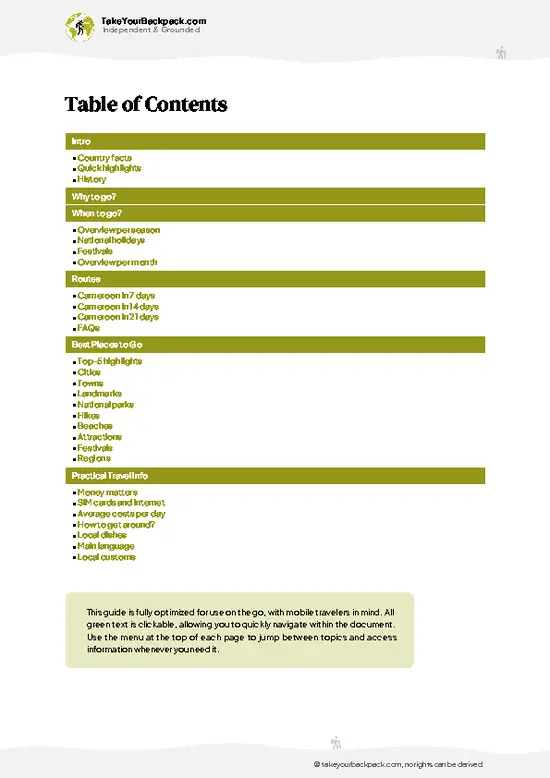
An offline-friendly backpacking guide with optimized travel routes, ranked highlights, transport advice, and the best areas to stay.
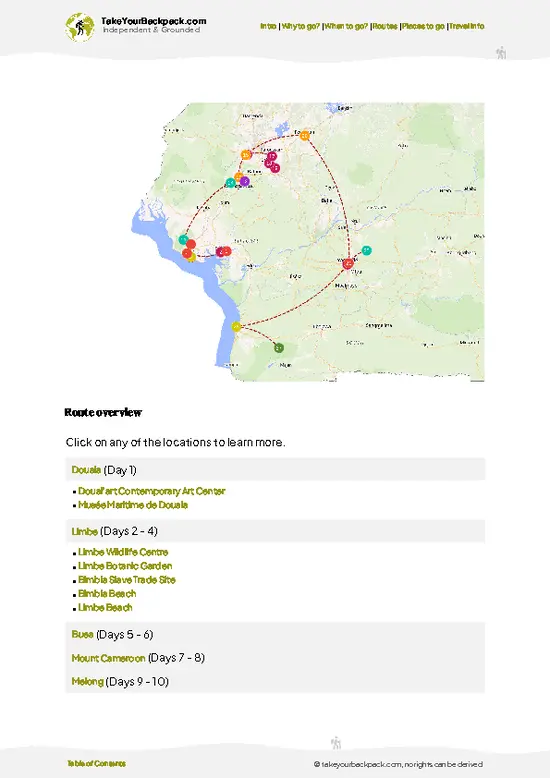
example page 0 from our offline Travel Guide for Cameroon
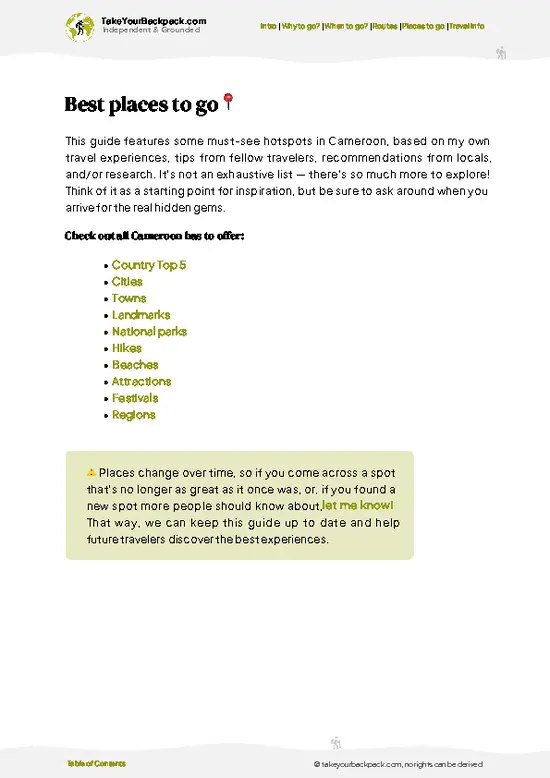
example page 1 from our offline Travel Guide for Cameroon
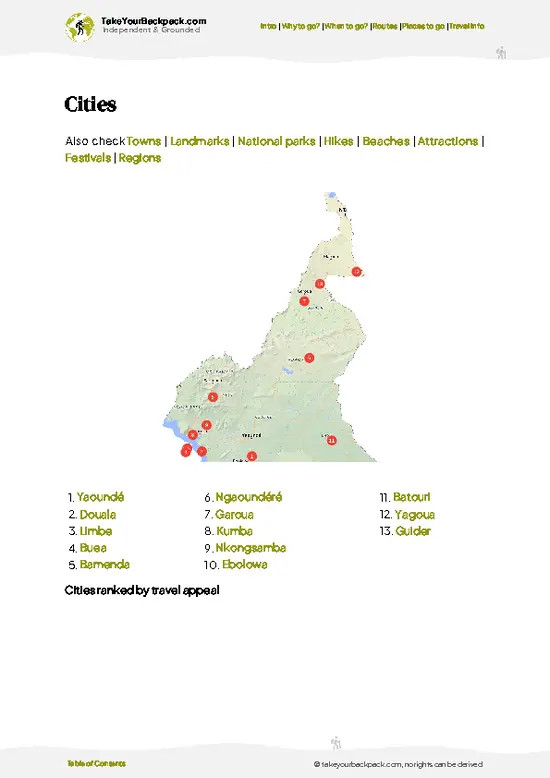
example page 2 from our offline Travel Guide for Cameroon
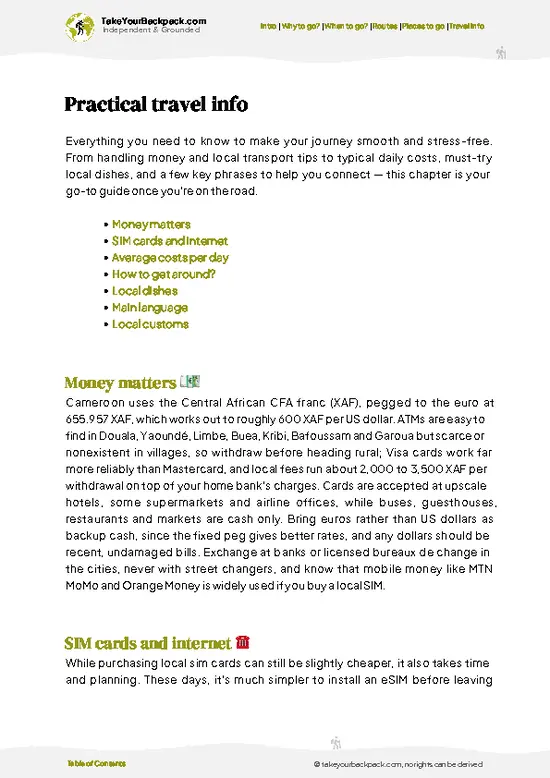
example page 3 from our offline Travel Guide for Cameroon
example page 4 from our offline Travel Guide for Cameroon
example page 5 from our offline Travel Guide for Cameroon
example page 6 from our offline Travel Guide for Cameroon
example page 7 from our offline Travel Guide for Cameroon
The digital guide (374 pages) contains:
95 highlights, ranked by travel appeal
Optimized 7, 14 & 21-day travel routes
Cities, national parks, landmarks, beaches
How to get around
Offline-friendly for travel without Wi-Fi
👉 Click to see all 30+ guide features

📅 Plan smarter in minutes, not weeks
Month by month travel advice
Festivals & national holidays
Budget expectations

🗺️ Go to the right places, skip the overrated ones
Honest pros & cons of destinations
Top hikes, parks & viewpoints
Lesser-known places most travelers miss
Clear “worth it vs skip it” guidance

🛏️ Travel smoothly without rookie mistakes
Best areas to stay
Transport systems explained simply
Common scams & safety advice
SIM cards, money & practical tips

🌍 Understand the country, not just visit it
Culture & traditions
52 Essential phrases & customs
Festivals worth planning around
Traveler-friendly historical context
Insights that make places more meaningful

📱 Built for real travel conditions
Fully downloadable PDF
Works completely offline
Optimized for phone use
Useful in remote areas & buses
Everything in one place
Save weeks of stressful planning
Get instant access to your full guide. 30‑day money-back guarantee.
+ Add another guide for just US$7.80

By proceeding you agree to our terms.
Sent to your inbox immediately after payment • 100% Secure Checkout
Best Backpacking Travel Advisor 2025 tourism awardBest Backpacking
Travel Advisor
2025
What others say about Take Your Backpack Guides:
⭐⭐⭐⭐⭐
Fantastic, amazing amount of information!
⭐⭐⭐⭐⭐
My goodness this is amazing, it's what I've been looking for hats off too you!
⭐⭐⭐⭐⭐
I think this is absolutely BRILLIANT
⭐⭐⭐⭐
Very complete and informative. It's still missing places, but I gotta to commend you
⭐⭐⭐⭐⭐
This is truly amazing, thank you, can't wait to explore it with my kids!
⭐⭐⭐⭐⭐
Awesome resource, thank you!
⭐⭐⭐⭐⭐
This is amazing! Can't wait to explore the ones I haven't seen
⭐⭐⭐⭐
I love this! Well done, great idea.
⭐⭐⭐⭐⭐
Thanks for taking the time to make this gem!
⭐⭐⭐⭐⭐
This might be the best website I've ever seen.
⭐⭐⭐⭐⭐
Congratulations, and thank you so much for your work; it's incredibly valuable.
⭐⭐⭐⭐
In all seriousness I think you did a great job pointing out the important spots
⭐⭐⭐⭐⭐
10/10 very good
⭐⭐⭐⭐⭐
As someone who's only just starting to visit regularly this is awesome, thank you.
⭐⭐⭐⭐
Thank you very much! I'm going to visit my dad, it's going to be very useful!
⭐⭐⭐⭐⭐
This is really cool! We'll be travelling for the first time and this definitely come in handy.
⭐⭐⭐⭐⭐
You are now our minister of culture, congratulations 👨‍💼
⭐⭐⭐⭐⭐
Just wanted to tell you that this is a pearl! Going to follow your recommendations.
⭐⭐⭐⭐⭐
This is so cool. I'll definitely be using the resource for my travels soon.
⭐⭐⭐⭐⭐
This is very impressive! Good work.
⭐⭐⭐⭐⭐
This is an amazing and informative site. Very well done!

🛏️ Where to stay?How to pick the right area

Musée Royal de Baham sits in a part of Cameroon that’s not exactly plastered all over backpacker forums, and that’s part of its charm. But let’s get real: this isn’t a polished tourist hub with endless cafes and nightlife. The best spots to stay are in the town of Baham itself, where you’ll find a handful of guesthouses and small inns that cater to budget travelers and solo adventurers. These places aren’t about luxury—they’re about connection. You’ll meet locals and fellow travelers who are here for the same reason: to dig into the culture and history without the fluff.

Safety-wise, Baham is … read more 👉
Musée Royal de Baham sits in a part of Cameroon that’s not exactly plastered all over backpacker forums, and that’s part of its charm. But let’s get real: this isn’t a polished tourist hub with endless cafes and nightlife. The best spots to stay are in the town of Baham itself, where you’ll find a handful of guesthouses and small inns that cater to budget travelers and solo adventurers. These places aren’t about luxury—they’re about connection. You’ll meet locals and fellow travelers who are here for the same reason: to dig into the culture and history without the fluff.

Safety-wise, Baham is generally calm, but it’s not a place to wander aimlessly after dark. Stick to the main streets near the museum and the town center. This area is where you’ll find the most social atmosphere, with small markets and local eateries where you can swap stories over a plate of Ndolé or grilled fish. It’s not Instagram-perfect, but it’s real.

If you want to avoid the tourist bubble, skip the outskirts and stay close to the heart of Baham. The vibe here is low-key but genuine, and that’s what makes it worth the trip. You’re not just visiting a museum—you’re stepping into a living community that’s proud of its heritage and ready to share it with those willing to listen.

👛 Costs (as of 3 September 2026)Travel costs and budget guide for Musée Royal de Baham

As of the most recent estimates, the entry fee for international visitors to the Musée Royal de Baham is 2,000 FCFA (approximately €3). Photography with a mobile phone is permitted for an additional 1,000 FCFA (approximately €1.50), while professional cameras require a fee of 5,000 FCFA (approximately €7.50). These fees are subject to change; it's advisable to confirm the current rates before your visit.

source: tourismeouestcameroun.com
⚠️ Prices can change and everyone travels differently, so take this as a rough guide. Hope it helps you plan your adventure!

FAQCommon questions from travelers

Allow about 1 to 2 hours to visit Musée Royal de Baham, enough time to explore the exhibits and understand the cultural significance of the Bamileke kingdom.
Yes, Musée Royal de Baham is worth the entrance fee, which is typically modest, around 1000 CFA francs. The museum offers valuable insights into Bamileke art, history, and royal traditions, making it a culturally enriching experience.
To get to Musée Royal de Baham, travel to the town of Baham in the West Region of Cameroon. From major cities like Douala or Yaoundé, take a bus or shared taxi to Baham, then walk or take local transport to the museum located near the royal palace.
⚠️ Things can change over time, so always validate details locally before you go.

Other Cameroonian attractions near Musée Royal de Baham

Explore more nearby:


💡 Not sure where to go next?
Create a personalized itinerary for Cameroon including Musée Royal de Baham and the places that fit your trip.

Generate my itinerary

👉 Discover all attractions

Or checkout all Cameroon has to offer (think cities, towns, villages, national parks, hikes, beaches, festivals)
Country photo of Cameroon

We 💚 feedbackFinal thoughts on visiting Musée Royal de Baham

The Musée Royal de Baham isn’t some polished, crowd-pleaser museum with glossy labels and endless selfies. It’s raw, a bit rough around the edges, and honestly, the crowds can be a grind if you hit peak hours. But here’s the kicker: the real magic is in the way the artifacts pulse with local life—each piece tells a story that’s still alive in the community. If you slow down and listen, you’ll catch the rhythm of Baham’s soul, something no Instagram shot can capture. Just don’t rush it.

✍️ Help improve this page!
The information on this page is based on in-depth research, insights shared by experienced travelers, and feedback from the local travel community in Cameroon. While every effort is made to keep the information accurate and current, conditions can change — so if you spot anything incorrect or outdated, please get in touch.


🙋‍♂️ Give feedback

👋 Meet the founderWho’s Behind Take Your Backpack?

Johan, backpacker and founder of TakeYourBackpackHi, I’m Johan (Netherlands 🇳🇱), the creator of TakeYourBackpack. Over the past decade, I’ve backpacked through 80+ countries across six continents, gaining extensive experience with independent travel, long-term trips, and overland routes.

This site is built on a combination of firsthand travel experience and carefully curated insights from other backpackers. Many guides are based on places I’ve personally visited, while others bring together tips, observations, and practical advice shared by trusted travelers I’ve met along the way.

The goal is to provide realistic, experience-driven guidance — not generic itineraries — so you can explore destinations with better context, clearer expectations, and more confidence.

Get full Cameroon guide •
Instant download • 95 highlights • Full Offline guide