×

Cameroon🇨🇲 | townsBanyomountain passes, cattle herding, mud-brick homes | things to do and best time to go

Explore Nanga EbokoExplore Tibati

Backpacking in Banyo
👌 Worth visitingtown ranked #18
By Johan Kruseman 🇳🇱 | Updated June 10, 2026

The first real fork in the road at Banyo is whether to linger or just pass through. That choice matters: Banyo sits in Cameroon’s Adamawa Plateau, a crossroads between the humid south and the drier north, and it feels like a threshold—dusty, sun-bleached, and honest about its pace. For backpackers, Banyo is rarely the main event. It’s a practical stopover, especially if you’re chasing the raw beauty of the Tikar Plain or heading toward the wilder north. The market’s a swirl of color and chatter, but nightlife is nearly non-existent and hostels are basic, so expect early nights and slow mornings. You’ll need patience for the bus connections, but the town’s walkable core and friendly, curious locals make up for the bumps. Compared to bigger towns like Ngaoundéré, Banyo is quieter, less polished, and more about the journey than the destination—perfect if you want a taste of real, unhurried Cameroon, but not if you crave backpacker crowds or urban comforts.

Discover everything you want to know in the 📖 Cameroon Travel Guide.


Get your Cameroon guide
95 ranked highlights, routes & tips, works offline (383 pages)
Loading the map 🌍
CLICK TO FILTER
cities
towns
landmarks
national parks
hikes
beaches
attractions
festivals
regions
SHOW COUNTRY’S BESTSHOW ALL

✨ Why go?
Ranked #18 town in Cameroon
Reasons people choose to visit here

Banyo, Cameroon, is a strategic stop for backpackers seeking authentic experiences. Its walkable streets make it easy to explore local markets and savor street food that bursts with flavor. The town serves as a gateway to nearby hikes in the lush hills, perfect for those who crave nature. Accommodations range from small-scale hostels to cozy guesthouses, fostering a friendly atmosphere where solo travelers and small groups can connect. Most visitors linger a few days, soaking in the cultural vibe before heading to the coast or deeper into the mountains. Banyo is ideal for slow travelers who appreciate the journey as much as the destination.
Want to include Banyo in your Cameroon route?
Create a personalized Cameroon itinerary that includes Banyo and the places that fit your trip — based on your travel style, budget, and available time. Get your route in seconds.

Generate my trip

💡 HighlightsDon't-miss highlights and experiences

  • Lamidat (Palace of the Lamido) — The living seat of Banyo’s traditional Fulani ruler. Visit to see distinctive local architecture, watch courtly routines, and (if you’re lucky) catch a small ceremony or audience with elders who’ll tell you the town’s history better than any plaque.
  • Grand Marché (central market) — The town’s busiest place for fresh produce, spices, fabrics and everyday gear. Great for people-watching, cheap street food, and picking up locally woven cloth or souvenirs while bargaining like a local.
  • Cattle market (market days) — A proper slice of Adamawa pastoral life: Fulani herders trading cattle and sheep, animated haggling, and colorful traditional dress. Best seen early morning on designated market days — bring cash and a respectful attitude for photos.
  • Central Mosque
read more 👉
  • Lamidat (Palace of the Lamido) — The living seat of Banyo’s traditional Fulani ruler. Visit to see distinctive local architecture, watch courtly routines, and (if you’re lucky) catch a small ceremony or audience with elders who’ll tell you the town’s history better than any plaque.
  • Grand Marché (central market) — The town’s busiest place for fresh produce, spices, fabrics and everyday gear. Great for people-watching, cheap street food, and picking up locally woven cloth or souvenirs while bargaining like a local.
  • Cattle market (market days) — A proper slice of Adamawa pastoral life: Fulani herders trading cattle and sheep, animated haggling, and colorful traditional dress. Best seen early morning on designated market days — bring cash and a respectful attitude for photos.
  • Central Mosque — The spiritual heart for many residents. Visiting (outside prayer times unless invited) gives you a sense of daily rhythms, calls to prayer, and how Islam is woven into community life here.
  • Old Missionary / Catholic mission compound — Historic mission buildings that played a role in local education and healthcare. The compound’s simple architecture and small school/church grounds tell the story of long-term contact between locals and missionaries.
  • Fulani Quarter (old town lanes) — Narrow alleys and traditional homesteads where you can see everyday life up close: kraals, household crafts, and the layout of a Fulani urban neighborhood. Walk slowly and ask before stepping into private yards.
  • Local artisan workshops — Small-scale leatherworkers, tailors and calabash/wood carvers who actually make what they sell. Watching an artisan at work and buying directly supports skills that aren’t mass-produced.
  • Colonial-era administrative buildings & town square — Scattered, modest colonial architecture and the main square give a window into the town’s 20th-century history and are nice places to sit, watch traffic and chat with locals.
  • Mayo-Banyo riverbanks and small fishing spots — The seasonal river edges are pleasant for short walks, morning fishing scenes and meeting riverside communities. Best in the dry season when paths are passable and villagers are around.
  • Community event grounds / festival venues — Not a single landmark, but wherever local wrestling matches, music nights or harvest celebrations are held is worth timing a visit for. These gatherings are where you’ll get the most authentic local performances and food.
A few good day-trip options just outside Banyo are the regional hub of Ngaoundéré, the town of Tibati and the nearby Mbakaou (Mbakaou) lake area — all visitable from Banyo for markets, scenery and wider Adamawa culture.
Spotted a mistake or missing something? Contact us.

Things to do near Banyo

Ratings based on Tripadvisor reviews. When you book through this link, you support our work at no extra cost to you.

🏘️ NeighborhoodsUnderstanding the local layout

Banyo is a vibrant hub in Cameroon that offers a mix of local culture and accessibility for backpackers. Here’s how to navigate its neighborhoods:

Centre Ville: This is the heart of Banyo. Expect a lively atmosphere with bustling markets and street vendors. It’s walkable, making it easy to explore on foot. Costs are moderate, and you’ll find a mix of budget accommodations. Nightlife here is vibrant, with local bars and music.

Ngoulemakong: A quieter area, perfect for longer stays. It has a more residential vibe, with fewer tourists. Costs are lower, and you can enjoy a more authentic experience. Transport options are decent, but you might need to rely on taxis for longer distances.

Mbanga: This neighborhood is known for its lush surroundings and tranquility. Ideal for those seeking peace … read more 👉
Banyo is a vibrant hub in Cameroon that offers a mix of local culture and accessibility for backpackers. Here’s how to navigate its neighborhoods:

Centre Ville: This is the heart of Banyo. Expect a lively atmosphere with bustling markets and street vendors. It’s walkable, making it easy to explore on foot. Costs are moderate, and you’ll find a mix of budget accommodations. Nightlife here is vibrant, with local bars and music.

Ngoulemakong: A quieter area, perfect for longer stays. It has a more residential vibe, with fewer tourists. Costs are lower, and you can enjoy a more authentic experience. Transport options are decent, but you might need to rely on taxis for longer distances.

Mbanga: This neighborhood is known for its lush surroundings and tranquility. Ideal for those seeking peace after a day of exploration. It’s less walkable, so plan for transport. Costs are reasonable, and it’s great for short retreats.

⌛️ 1 dayA smart one-day plan

Banyo, Cameroon, is a vibrant town where the pulse of everyday life beats strong. The air is thick with the scent of grilled plantains and the chatter of locals fills the streets. Start your morning at the bustling market in the heart of Banyo. The colors of fresh produce and handmade crafts create a sensory feast. Grab a warm, flaky meat pie from a vendor; it’s a local favorite that fuels your day.

In the afternoon, wander through the nearby neighborhood of Ngong, where you can visit the local artisans. Watch as they skillfully craft traditional pottery. This isn’t on the usual tourist path, but it’s a genuine slice of Banyo’s culture.

As the sun begins to set, head to the banks of the Sanaga River. The golden light reflects off the water, creating a serene backdrop. Enjoy a simple dinner … read more 👉
Banyo, Cameroon, is a vibrant town where the pulse of everyday life beats strong. The air is thick with the scent of grilled plantains and the chatter of locals fills the streets. Start your morning at the bustling market in the heart of Banyo. The colors of fresh produce and handmade crafts create a sensory feast. Grab a warm, flaky meat pie from a vendor; it’s a local favorite that fuels your day.

In the afternoon, wander through the nearby neighborhood of Ngong, where you can visit the local artisans. Watch as they skillfully craft traditional pottery. This isn’t on the usual tourist path, but it’s a genuine slice of Banyo’s culture.

As the sun begins to set, head to the banks of the Sanaga River. The golden light reflects off the water, creating a serene backdrop. Enjoy a simple dinner at a riverside eatery, savoring grilled fish while listening to the sounds of the evening. This day in Banyo isn’t just about sights; it’s about feeling the town’s heartbeat.
Turn your Banyo visit into an Cameroon adventure
Build a complete Cameroon route with Banyo, hidden gems, must-see destinations, and realistic travel times included.

Generate my trip

🌤️ When to go?Best time to visit Banyo


  • Weather: The dry season from November to February offers clear skies and less mud, making trails easier and the air crisp around 20-25°C (68-77°F). The wet season floods paths and turns the landscape lush but slippery.

  • Temperature: Daytime highs hover around 25-28°C (77-82°F) in dry months, while wet months can feel muggy with highs near 30°C (86°F). Nights cool down to 15-18°C (59-64°F), perfect for campfires.

  • Daylight Hours: Roughly 11-12 hours year-round, but the dry season’s clearer skies make the most of daylight for trekking and exploring without early fog or rain interruptions.

  • Crowds: Banyo stays quiet year-round, but the dry season attracts a few more local visitors, adding life without overwhelming the peaceful vibe.

  • Seasonal Activities: Dry months are best for hiking
read more 👉

  • Weather: The dry season from November to February offers clear skies and less mud, making trails easier and the air crisp around 20-25°C (68-77°F). The wet season floods paths and turns the landscape lush but slippery.

  • Temperature: Daytime highs hover around 25-28°C (77-82°F) in dry months, while wet months can feel muggy with highs near 30°C (86°F). Nights cool down to 15-18°C (59-64°F), perfect for campfires.

  • Daylight Hours: Roughly 11-12 hours year-round, but the dry season’s clearer skies make the most of daylight for trekking and exploring without early fog or rain interruptions.

  • Crowds: Banyo stays quiet year-round, but the dry season attracts a few more local visitors, adding life without overwhelming the peaceful vibe.

  • Seasonal Activities: Dry months are best for hiking and cultural festivals, while the wet season showcases vibrant greenery and birdwatching, though some trails may be inaccessible.

  • Price Fluctuations: Accommodation and transport costs dip slightly during the wet season due to fewer tourists, but expect to pay a premium for reliable guides and gear to handle the rain.


Pro-tip: Aim for late November to early February—when the air smells fresh, the ground is firm, and the town’s rhythms feel alive but not crowded.


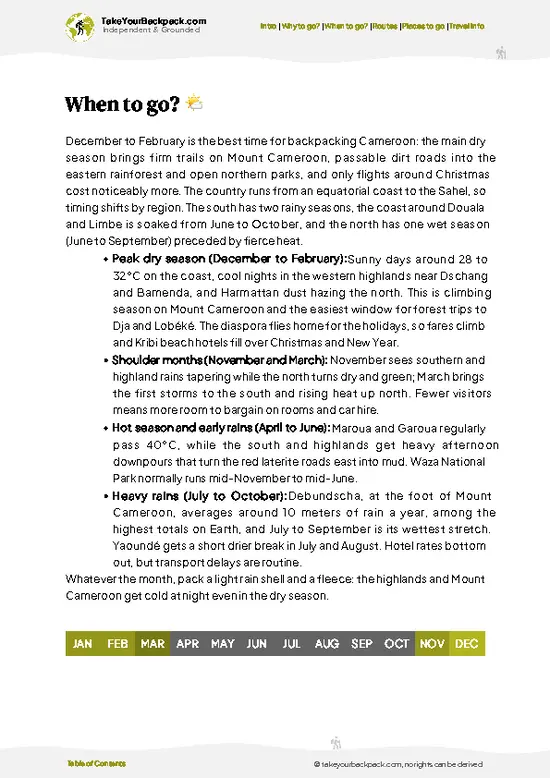
source: climatestotravel.comJANJanuary: excellent for travelingFEBFebruary: excellent for travelingMARMarch: fair for travelingAPRApril: fair for travelingMAYMay: fair for travelingJUNJune: good for travelingJULJuly: good for travelingAUGAugust: good for travelingSEPSeptember: good for travelingOCTOctober: good for travelingNOVNovember: highly recommended for travelingDECDecember: excellent for traveling
when-to-go

✈️ The backpacker research shortcutCameroon Travel Guide

An offline-friendly backpacking guide with optimized travel routes, ranked highlights, transport advice, and the best areas to stay.
example page 0 from our offline Travel Guide for Cameroon
example page 1 from our offline Travel Guide for Cameroon
example page 2 from our offline Travel Guide for Cameroon
example page 3 from our offline Travel Guide for Cameroon
example page 4 from our offline Travel Guide for Cameroon
example page 5 from our offline Travel Guide for Cameroon
example page 6 from our offline Travel Guide for Cameroon
example page 7 from our offline Travel Guide for Cameroon
The digital guide (383 pages) contains:
95 highlights, ranked by travel appeal
Optimized 7, 14 & 21-day travel routes
Cities, national parks, landmarks, beaches
How to get around
Offline-friendly for travel without Wi-Fi
👉 Click to see all 30+ guide features

📅 Plan smarter in minutes, not weeks
Month by month travel advice
Festivals & national holidays
Budget expectations

🗺️ Go to the right places, skip the overrated ones
Honest pros & cons of destinations
Top hikes, parks & viewpoints
Lesser-known places most travelers miss
Clear “worth it vs skip it” guidance

🛏️ Travel smoothly without rookie mistakes
Best areas to stay
Transport systems explained simply
Common scams & safety advice
SIM cards, money & practical tips

🌍 Understand the country, not just visit it
Culture & traditions
52 Essential phrases & customs
Festivals worth planning around
Traveler-friendly historical context
Insights that make places more meaningful

📱 Built for real travel conditions
Fully downloadable PDF
Works completely offline
Optimized for phone use
Useful in remote areas & buses
Everything in one place
Save weeks of stressful planning
Get instant access to your full guide. 30‑day money-back guarantee.


By proceeding you agree to our terms.
Sent to your inbox immediately after payment • 100% Secure Checkout
Best Backpacking Travel Advisor 2025 tourism awardBest Backpacking
Travel Advisor
2025
What others say about Take Your Backpack Guides:
⭐⭐⭐⭐⭐
Fantastic, amazing amount of information!
⭐⭐⭐⭐⭐
My goodness this is amazing, it's what I've been looking for hats off too you!
⭐⭐⭐⭐⭐
I think this is absolutely BRILLIANT
⭐⭐⭐⭐
Very complete and informative. It's still missing places, but I gotta to commend you
⭐⭐⭐⭐⭐
This is truly amazing, thank you, can't wait to explore it with my kids!
⭐⭐⭐⭐⭐
Awesome resource, thank you!
⭐⭐⭐⭐⭐
This is amazing! Can't wait to explore the ones I haven't seen
⭐⭐⭐⭐
I love this! Well done, great idea.
⭐⭐⭐⭐⭐
Thanks for taking the time to make this gem!
⭐⭐⭐⭐⭐
This might be the best website I've ever seen.
⭐⭐⭐⭐⭐
Congratulations, and thank you so much for your work; it's incredibly valuable.
⭐⭐⭐⭐
In all seriousness I think you did a great job pointing out the important spots
⭐⭐⭐⭐⭐
10/10 very good
⭐⭐⭐⭐⭐
As someone who's only just starting to visit regularly this is awesome, thank you.
⭐⭐⭐⭐
Thank you very much! I'm going to visit my dad, it's going to be very useful!
⭐⭐⭐⭐⭐
This is really cool! We'll be travelling for the first time and this definitely come in handy.
⭐⭐⭐⭐⭐
You are now our minister of culture, congratulations 👨‍💼
⭐⭐⭐⭐⭐
Just wanted to tell you that this is a pearl! Going to follow your recommendations.
⭐⭐⭐⭐⭐
This is so cool. I'll definitely be using the resource for my travels soon.
⭐⭐⭐⭐⭐
This is very impressive! Good work.
⭐⭐⭐⭐⭐
This is an amazing and informative site. Very well done!

🛏️ Where to stay?Best areas and accommodation options

In Banyo, the heart of backpacker life pulses strongest around the central market district and the nearby university quarter. These areas hum with activity from dawn, the air thick with the scent of fresh spices and grilled street food, making them natural magnets for solo travelers seeking connection and safety in numbers. The streets here are alive but manageable, with plenty of budget guesthouses and informal hostels that foster a social vibe—think shared meals and easy conversations under the glow of street lamps. Compared to the quieter, more residential outskirts, staying near the market … read more 👉
In Banyo, the heart of backpacker life pulses strongest around the central market district and the nearby university quarter. These areas hum with activity from dawn, the air thick with the scent of fresh spices and grilled street food, making them natural magnets for solo travelers seeking connection and safety in numbers. The streets here are alive but manageable, with plenty of budget guesthouses and informal hostels that foster a social vibe—think shared meals and easy conversations under the glow of street lamps. Compared to the quieter, more residential outskirts, staying near the market means you’re steps from local life, transport links, and the kind of authentic encounters that turn a trip into a story worth telling.

🚌 Getting aroundMoving around without the hassle

Banyo moves at its own pace—neither frantic nor sluggish, but a steady rhythm that feels like the town’s heartbeat syncing with the sun’s arc. The air carries a faint mix of eucalyptus and fresh earth, especially in the early morning when locals start their day. You won’t find rigid timetables slapped on every corner here; instead, transit flows with a mix of reliable schedules and a bit of local intuition. The streets hum with the occasional bus engine and the steady clip of footsteps, inviting you to blend into the daily pulse rather than fight it. Understanding this flow means you’re not just getting from point A to B—you’re sliding into the town’s natural groove, making every trip feel like part of the experience.


  • Walking: The most straightforward and budget-friendly way to explore
read more 👉
Banyo moves at its own pace—neither frantic nor sluggish, but a steady rhythm that feels like the town’s heartbeat syncing with the sun’s arc. The air carries a faint mix of eucalyptus and fresh earth, especially in the early morning when locals start their day. You won’t find rigid timetables slapped on every corner here; instead, transit flows with a mix of reliable schedules and a bit of local intuition. The streets hum with the occasional bus engine and the steady clip of footsteps, inviting you to blend into the daily pulse rather than fight it. Understanding this flow means you’re not just getting from point A to B—you’re sliding into the town’s natural groove, making every trip feel like part of the experience.


  • Walking: The most straightforward and budget-friendly way to explore Banyo’s compact center. Streets are flat and shaded by mature trees, making strolls comfortable even in midday sun. Walking lets you catch the subtle details—the scent of baking bread, the chatter from corner cafes—that buses miss.

  • Local Bus Service: Runs roughly from 6:00 AM to 9:00 PM, with fares around $2 per ride. Buses are modest but clean, and they hit all the main neighborhoods. They’re reliable enough if you stick to peak hours but expect some crowding during rush hour.

  • Shared Taxis (Maxi Taxis): These minibuses operate on popular routes without fixed schedules, leaving when full. They cost slightly more than buses but get you moving faster, especially during off-peak times. Perfect if you want flexibility without breaking the bank.

  • Bicycle Rentals: Available near the town square for about $10 a day. Banyo’s mostly flat terrain and quiet streets make cycling a breeze. It’s a great way to cover more ground while still soaking in the atmosphere at your own pace.

👛 Costs (as of 5 April 2025)What things cost and how to budget

Backpacking in Banyo, Cameroon, means embracing a pace where every dollar stretches, and every experience feels grounded in local rhythm. Here’s what you can expect to spend day-to-day.
  • Dorm Accommodation: Options are limited and basic, often in guesthouses rather than formal hostels. Expect to pay around €5 to €10 per night. Rooms might be simple, with shared bathrooms and minimal amenities, but they offer a cool refuge from the midday heat.
  • Meals: Street food and small local eateries dominate. A filling meal of grilled meat, rice, or beans with vegetables typically costs between €1.50 and €3. Fresh fruit and snacks are even cheaper. Cooking your own food is rare but possible if you find a guesthouse with kitchen access.
  • Local Transport: The main mode is shared taxis or minibuses, which
read more 👉
Backpacking in Banyo, Cameroon, means embracing a pace where every dollar stretches, and every experience feels grounded in local rhythm. Here’s what you can expect to spend day-to-day.
  • Dorm Accommodation: Options are limited and basic, often in guesthouses rather than formal hostels. Expect to pay around €5 to €10 per night. Rooms might be simple, with shared bathrooms and minimal amenities, but they offer a cool refuge from the midday heat.
  • Meals: Street food and small local eateries dominate. A filling meal of grilled meat, rice, or beans with vegetables typically costs between €1.50 and €3. Fresh fruit and snacks are even cheaper. Cooking your own food is rare but possible if you find a guesthouse with kitchen access.
  • Local Transport: The main mode is shared taxis or minibuses, which are inexpensive but can be crowded and unpredictable. A typical short ride within town costs about €0.30 to €0.50. For longer trips to nearby villages, budget up to €2.50. Walking is often the best way to soak in the atmosphere and avoid the dust and noise.
  • Basic Activities/Entry Fees: Banyo is more about the landscape and local culture than ticketed attractions. Visiting markets, wandering the town, or exploring nearby natural spots is mostly free. If you hire a local guide for cultural tours or hikes, expect to pay around €5 to €10 for a half-day.
  • Miscellaneous Expenses: Bottled water, snacks, and occasional phone credit top this list. Water costs about €0.30 per bottle. Budget another €1 to €2 daily for small extras like toiletries or a cold drink to beat the heat.

All told, a realistic daily budget for backpacking in Banyo falls between €10 and €20. This range covers the essentials without cutting corners on comfort or safety, letting you experience the town’s raw, unfiltered vibe without scrambling for cash.
⚠️ Prices can change and everyone travels differently, so take this as a rough guide. Hope it helps you plan your adventure!

🚌 Day tripsWhere to go beyond the main area

Banyo, Cameroon, is a backpacker’s dream base for exploring the surrounding wonders. The vibrant local culture and stunning landscapes make day trips not just easy, but essential.

Mount Manengouba
This trek is a must for those craving adventure. The hike to the summit offers breathtaking views of the crater lakes below. Expect about 4-5 hours of hiking, and bring sturdy shoes; the terrain can be tricky. Costs are minimal—just a few thousand CFA for transport and snacks. The best time to go is during the dry season, from November to February. A common mistake? Underestimating the weather; it can change quickly, so pack layers.
👉 Explore Mount Manengouba

Limbe Beaches
A trip to Limbe is like stepping into a postcard. The black sand beaches and the salty breeze are invigorating. It’s … read more 👉
Banyo, Cameroon, is a backpacker’s dream base for exploring the surrounding wonders. The vibrant local culture and stunning landscapes make day trips not just easy, but essential.

Mount Manengouba
This trek is a must for those craving adventure. The hike to the summit offers breathtaking views of the crater lakes below. Expect about 4-5 hours of hiking, and bring sturdy shoes; the terrain can be tricky. Costs are minimal—just a few thousand CFA for transport and snacks. The best time to go is during the dry season, from November to February. A common mistake? Underestimating the weather; it can change quickly, so pack layers.
👉 Explore Mount Manengouba

Limbe Beaches
A trip to Limbe is like stepping into a postcard. The black sand beaches and the salty breeze are invigorating. It’s about a 2-hour drive, so leave early to enjoy the day. Total costs hover around 5,000 CFA for transport and a meal. The dry season is ideal, but avoid weekends when locals flock to the beach. Many first-timers miss the local seafood stalls—don’t skip them!


Bafoussam Market
Dive into the heart of Cameroonian culture at this bustling market. It’s roughly a 1.5-hour trip, and you’ll find everything from spices to handcrafted goods. Budget around 3,000 CFA for transport and a few extra for snacks. Early mornings are best for the freshest produce and fewer crowds. A rookie mistake? Not haggling; it’s part of the experience!
Want to know what more Cameroon offers?
The Cameroon Travel Guide describes 95 highlights, from cities to national parks, from beaches to hikes

Get the Travel Guide -

🛡️ SafetyScams, Hazards, and Annoyances

Banyo, Cameroon, is generally safe, but a few practical tips can enhance your experience. Stay aware in crowded markets; pickpockets can be opportunistic. If you’re wandering solo at night, stick to well-lit areas and keep your phone handy for navigation.

Common scams include overly friendly locals offering unsolicited help—politely decline and trust your instincts. Everyday annoyances might involve negotiating prices, so be prepared to haggle. Carry yourself confidently, and you’ll blend in while enjoying the vibrant local culture.

Other Cameroonian towns near Banyo

Explore more nearby:

  • Tibati—Lake Mbakaou, fishing camps, remote outpost| 95 km away
  • Kumbo—Nso palace, highland views, religious centers| 138 km away
  • Foumban—Bamoun Sultanate, palace complex, artisan workshops, Islamic heritage| 152 km away

💡 Not sure where to go next?
Create a personalized itinerary for Cameroon including Banyo and the places that fit your trip.

Generate my itinerary

👉 Discover all towns

Or checkout all Cameroon has to offer (think cities, towns, villages, national parks, hikes, beaches, festivals)
Country photo of Cameroon

We 💚 feedbackKey takeaways before you go

Banyo pulses with a raw, unfiltered energy. The scent of grilled plantains wafts through the air, mingling with laughter from the market. Embrace the chaos, but watch your belongings closely; it’s lively, not dangerous. The warmth of the locals will surprise you—just dive in.

✍️ Help improve this page!
The information on this page is based on in-depth research, insights shared by experienced travelers, and feedback from the local travel community in Cameroon. While every effort is made to keep the information accurate and current, conditions can change — so if you spot anything incorrect or outdated, please get in touch.


🙋‍♂️ Give feedback

👋 Meet the founderWho’s Behind Take Your Backpack?

Johan, backpacker and founder of TakeYourBackpackHi, I’m Johan (Netherlands 🇳🇱), the creator of TakeYourBackpack. Over the past decade, I’ve backpacked through 80+ countries across six continents, gaining extensive experience with independent travel, long-term trips, and overland routes.

This site is built on a combination of firsthand travel experience and carefully curated insights from other backpackers. Many guides are based on places I’ve personally visited, while others bring together tips, observations, and practical advice shared by trusted travelers I’ve met along the way.

The goal is to provide realistic, experience-driven guidance — not generic itineraries — so you can explore destinations with better context, clearer expectations, and more confidence.

Get full Cameroon guide •
Instant download • 95 highlights • Full Offline guide