×

Cameroon🇨🇲 | townsTikoCreek wharf, banana packing sheds, colonial rail line | things to do and best time to go

Explore DschangExplore Loum

Backpacking in Tiko
🌟 Highlighttown ranked #9
By Johan Kruseman 🇳🇱 | Updated October 22, 2026

Tiko suits slow, curious travelers who like watching a working town more than ticking off sights, and it will bore anyone chasing nightlife or monuments. It sits in the Southwest Region of Cameroon, west of Douala across the Wouri estuary, at the edge of banana and rubber country. Expect wet heat, diesel and ripe fruit in the air, and the thump of fruit trucks. Sights are few because this is a plantation port, so use it as a stopover on the way to Limbe, Buea and Mount Cameroon. Hostels barely exist, so book a simple guesthouse and chat in the market maquis. Backpackers are rare, so locals will talk to you. Check current conditions in the Anglophone regions before you go. Best for patient solo travelers, poor for nightlife seekers.

Discover everything you want to know in the 📖 Cameroon Travel Guide.


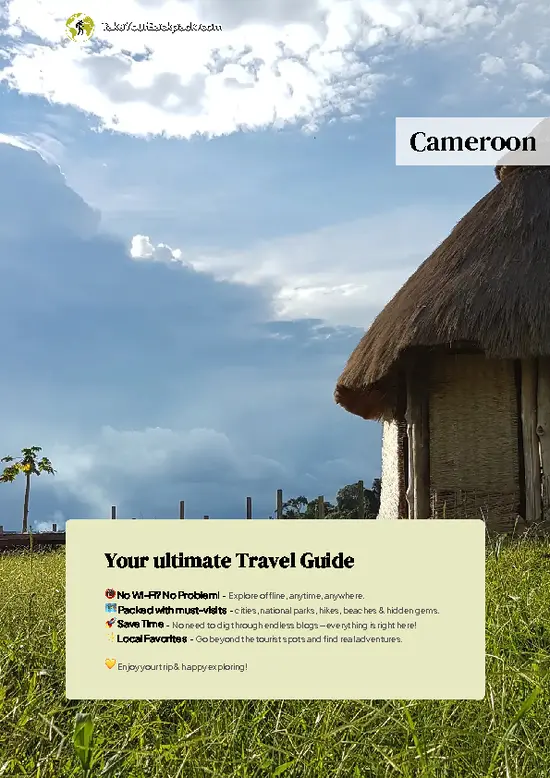
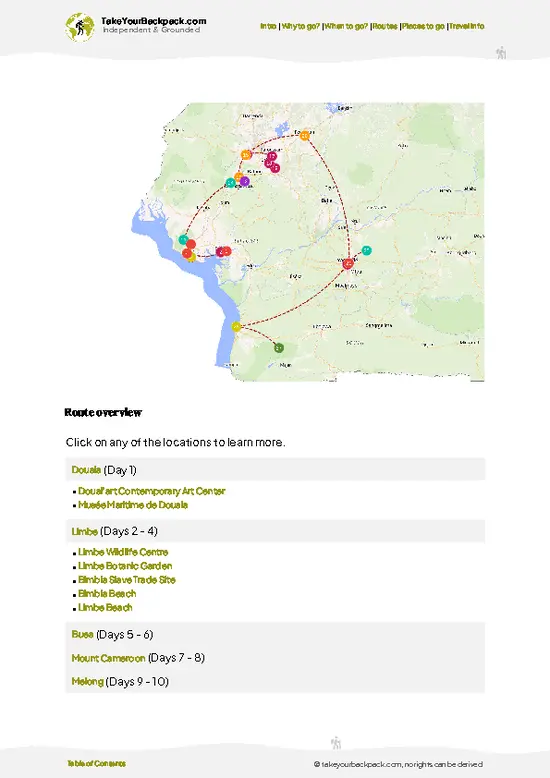
example page 0 from our offline Travel Guide for Cameroon
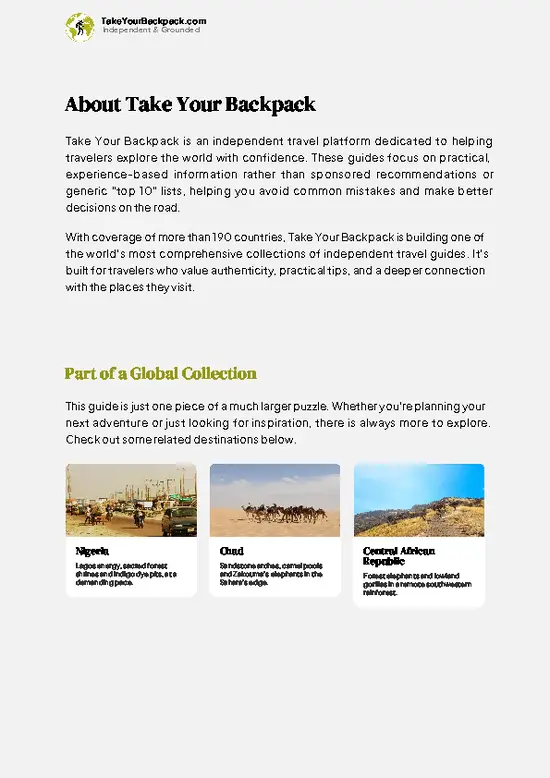
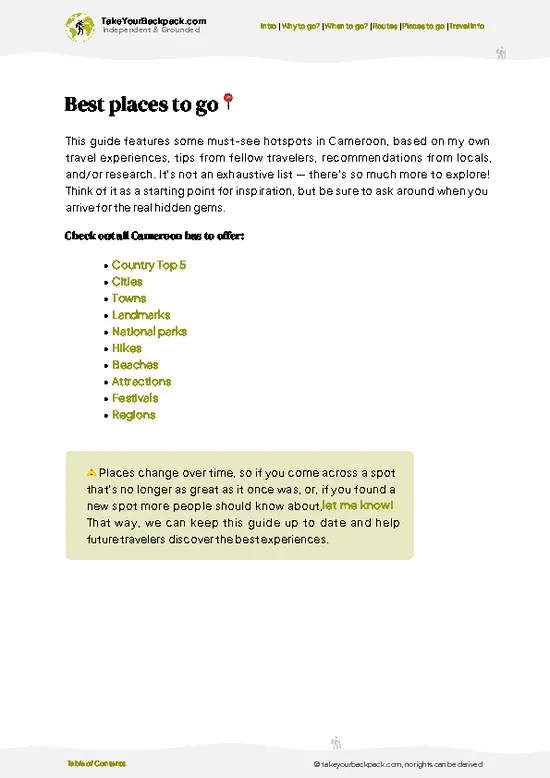
example page 1 from our offline Travel Guide for Cameroon
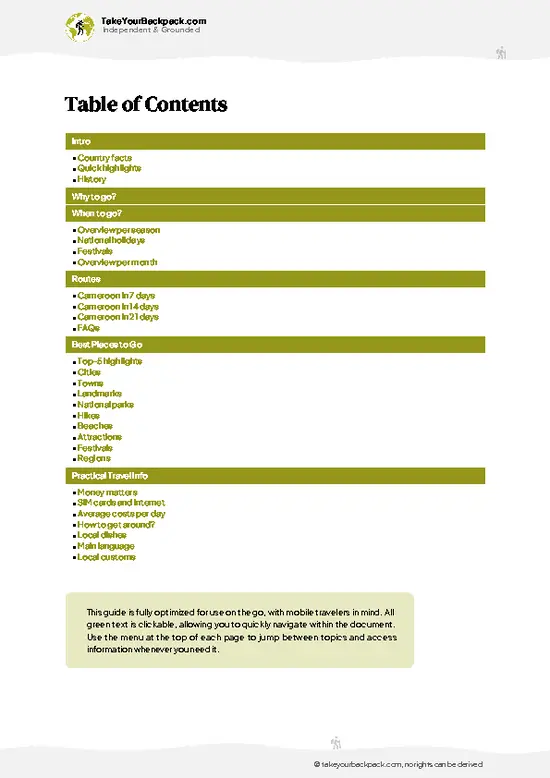
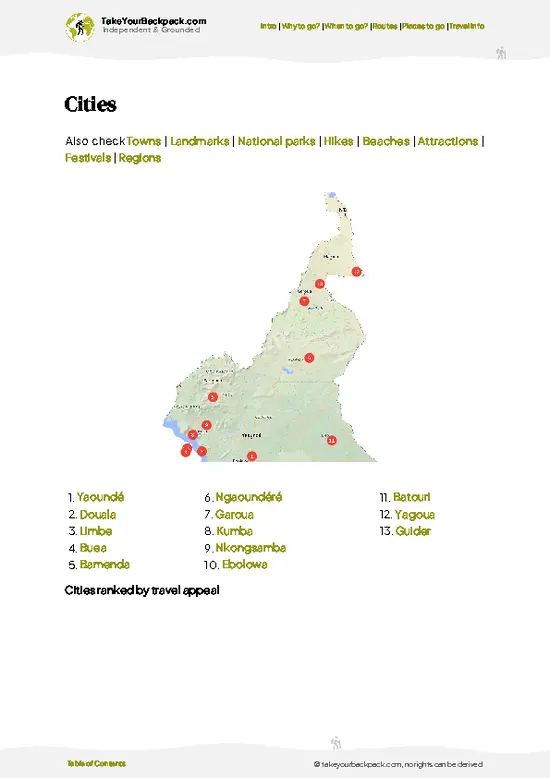
example page 2 from our offline Travel Guide for Cameroon
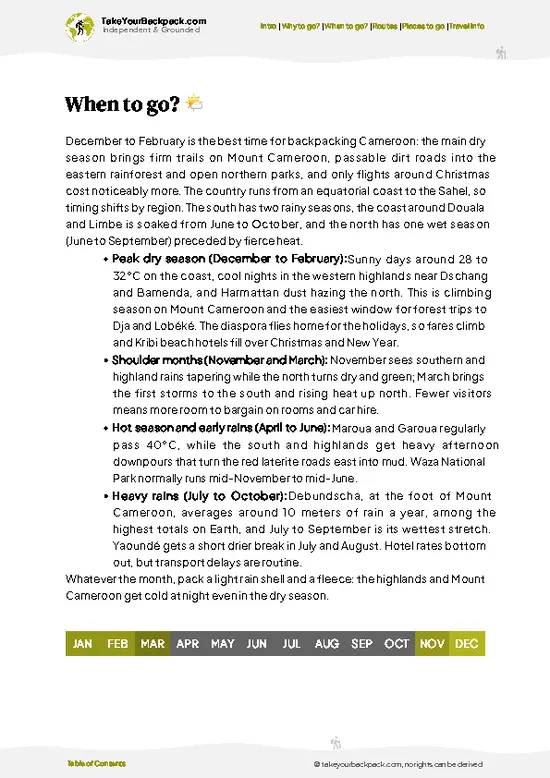
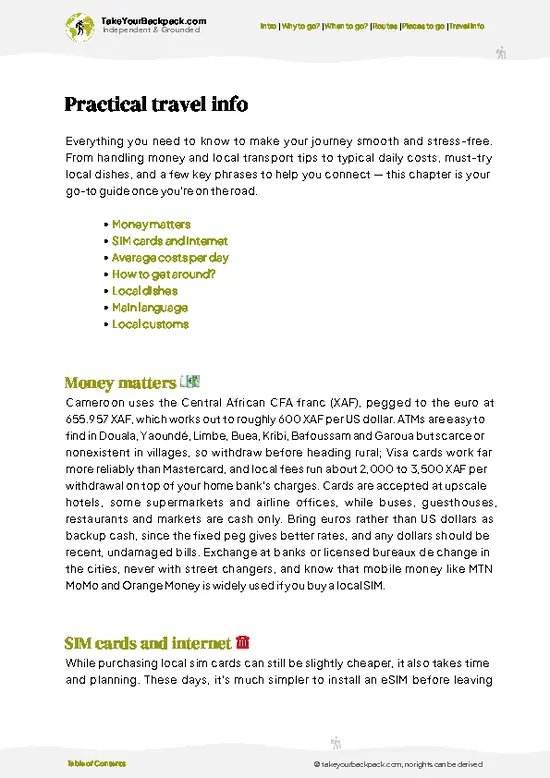
example page 3 from our offline Travel Guide for Cameroon
example page 4 from our offline Travel Guide for Cameroon
example page 5 from our offline Travel Guide for Cameroon
example page 6 from our offline Travel Guide for Cameroon
example page 7 from our offline Travel Guide for Cameroon
Loading the map 🌍
CLICK TO FILTER
cities
towns
landmarks
national parks
hikes
beaches
attractions
festivals
regions
SHOW COUNTRY’S BESTSHOW ALL

✨ Why go?
Ranked #9 town in Cameroon
The unique appeal for travelers

Tiko works as a gentle starting point for the Mount Cameroon side of the country, and it shows a Cameroon that few itineraries bother with. The town grew around the CDC banana and rubber estates, so the working life here is plantations, packing sheds and the creek, not tourist infrastructure. That makes it a good fit for slow travelers who like talking with people over grilled fish and cold beer in a roadside bar, and for solo travelers who want conversations without a crowd of other backpackers. Most people stay one night, two at most. The Tiko creek and wharf reward an unhurried morning, and the Tiko Central Market gives you a full sensory hit of the region’s fruit, smoked fish and cassava. Hikers can treat it as a cheap, quiet staging point before heading up the mountain. If you need hostels, … read more 👉
Tiko works as a gentle starting point for the Mount Cameroon side of the country, and it shows a Cameroon that few itineraries bother with. The town grew around the CDC banana and rubber estates, so the working life here is plantations, packing sheds and the creek, not tourist infrastructure. That makes it a good fit for slow travelers who like talking with people over grilled fish and cold beer in a roadside bar, and for solo travelers who want conversations without a crowd of other backpackers. Most people stay one night, two at most. The Tiko creek and wharf reward an unhurried morning, and the Tiko Central Market gives you a full sensory hit of the region’s fruit, smoked fish and cassava. Hikers can treat it as a cheap, quiet staging point before heading up the mountain. If you need hostels, tours and a social scene, push on to Limbe instead.

💡 HighlightsWhat this place is best known for

  1. Tiko Wharf and Creek. The old port waterfront is what Tiko is known for, with wooden boats, mangrove edges and cargo moving to and from the Douala side. Go early in the morning when activity peaks. Watching is free, a local boat ride runs about €2 to 5, and an hour is plenty.
  2. Tiko Central Market. This is the best place to see the town at full volume, with pineapples, plantains, palm oil, smoked fish and cheap secondhand clothes. Morning is busiest and coolest. Entry is free, snacks cost under €2, and 1 to 2 hours works.
  3. CDC Banana Plantations. Rows of banana plants and packing sheds surround the town and explain its whole economy. Walk the roadside edges by day, or ask the CDC for permission before entering a packing area. Allow 1 to 2 hours; outside access is usually free.
  4. Old Tiko Railway Line
… read more 👉
  1. Tiko Wharf and Creek. The old port waterfront is what Tiko is known for, with wooden boats, mangrove edges and cargo moving to and from the Douala side. Go early in the morning when activity peaks. Watching is free, a local boat ride runs about €2 to 5, and an hour is plenty.
  2. Tiko Central Market. This is the best place to see the town at full volume, with pineapples, plantains, palm oil, smoked fish and cheap secondhand clothes. Morning is busiest and coolest. Entry is free, snacks cost under €2, and 1 to 2 hours works.
  3. CDC Banana Plantations. Rows of banana plants and packing sheds surround the town and explain its whole economy. Walk the roadside edges by day, or ask the CDC for permission before entering a packing area. Allow 1 to 2 hours; outside access is usually free.
  4. Old Tiko Railway Line and Station. The colonial-era railway line served the plantations and is a quiet, photogenic reminder of the German and British years. Late afternoon light is gentlest. It costs nothing and takes about 30 to 45 minutes.
  5. Roadside Grill Stalls. Evening grilled fish, plantain and pepper sauce under bare bulbs are the nearest thing Tiko has to a nightlife scene. Meals cost roughly €2 to 4 and the evening can last 1 to 2 hours.
From Tiko, you can easily reach Limbe’s black-sand beaches and botanical garden, the colonial ruins at Bimbia, and Buea at the foot of Mount Cameroon as day trips.
For a first visit, the wharf and creek in the early morning is the one stop that explains Tiko best.
Spotted a mistake or missing something? Contact us.

Things to do near Tiko

Ratings based on Tripadvisor reviews. When you book through this link, you support our work at no extra cost to you.

🏘️ NeighborhoodsHow different areas shape the experience

Tiko is a small, flat port town on the Atlantic side of Mount Cameroon, and its areas blend into each other, so you can cover most of it on foot or by short moto ride. Heat and humidity peak by midday, so do your walking early or after the afternoon light softens.
  • Town Center and Main Market: Diesel fumes, grilled fish smoke and shouted prices pack the streets around the central market. Stalls open early because produce wilts fast in the heat, so go before 9 am for the best choice. Eat brochettes (grilled meat skewers) and plantains from roadside grills at dusk.
  • Tiko Port and Waterfront: Wooden boats, mangrove mud and a salty, fishy smell define this edge. Boats cross toward Nigeria's coast and the Bakassi area, which is why officials check papers here. Carry your passport copy and don't photograph
… read more 👉
Tiko is a small, flat port town on the Atlantic side of Mount Cameroon, and its areas blend into each other, so you can cover most of it on foot or by short moto ride. Heat and humidity peak by midday, so do your walking early or after the afternoon light softens.
  • Town Center and Main Market: Diesel fumes, grilled fish smoke and shouted prices pack the streets around the central market. Stalls open early because produce wilts fast in the heat, so go before 9 am for the best choice. Eat brochettes (grilled meat skewers) and plantains from roadside grills at dusk.
  • Tiko Port and Waterfront: Wooden boats, mangrove mud and a salty, fishy smell define this edge. Boats cross toward Nigeria's coast and the Bakassi area, which is why officials check papers here. Carry your passport copy and don't photograph the port or officials without asking.
  • Tiko Airport Area: Quiet, with wide roads, a few bars and little to see. Walk it only in daylight because lighting is thin.
  • Plantation Belt (Missellele and surrounds): Rubber and banana plantations run in tidy green rows, and the air smells of latex. Workers' camps sit along dirt tracks that turn to red mud in rain, so hire a moto for these rather than walking.

⌛️ 1 dayWhat you can realistically do in a day

7:00 AM, Tiko Wharf and Creek. Start at the waterfront while the air is still cool and the boats are loading. Watch the mangrove edge, then ask about a short local boat ride if the water is calm.
9:00 AM, Roadside Breakfast. Walk back into town and find a stall serving fried plantain, beans and strong sweet coffee or tea. It costs very little and is where locals trade news.
10:30 AM, Tiko Central Market. Wander the aisles slowly, tasting pineapple and looking at smoked fish, palm oil and spices. Keep small notes ready, and ask before photographing anyone.
1:00 PM, Lunch at a Local Maquis. Order grilled fish with bobolo or plantain and a cold drink. Take shade during the hottest hours.
3:00 PM, Old Railway Line. Stroll the old corridor that once carried bananas to the port. Few visitors come here, … read more 👉
7:00 AM, Tiko Wharf and Creek. Start at the waterfront while the air is still cool and the boats are loading. Watch the mangrove edge, then ask about a short local boat ride if the water is calm.
9:00 AM, Roadside Breakfast. Walk back into town and find a stall serving fried plantain, beans and strong sweet coffee or tea. It costs very little and is where locals trade news.
10:30 AM, Tiko Central Market. Wander the aisles slowly, tasting pineapple and looking at smoked fish, palm oil and spices. Keep small notes ready, and ask before photographing anyone.
1:00 PM, Lunch at a Local Maquis. Order grilled fish with bobolo or plantain and a cold drink. Take shade during the hottest hours.
3:00 PM, Old Railway Line. Stroll the old corridor that once carried bananas to the port. Few visitors come here, but the rusting track and plantation workers’ houses explain the town better than any sign.
4:30 PM, CDC Plantation Edges. Follow the roads between banana rows as the light softens. If you want to see a packing shed, ask a CDC office for permission first.
6:30 PM, Roadside Grills. Finish with grilled fish under bare bulbs and talk with whoever sits beside you.

🌤️ When to go?When to go for the best experience

Tiko is hot and humid all year, with highs of 28 to 32°C (82 to 90°F) and nights around 22 to 24°C (72 to 75°F). Rain dominates because Mount Cameroon's slopes catch Atlantic moisture.
  • Dry Season (November to February): Sunny, with the least rain and the easiest road travel. Harmattan haze can dim the views of the mountain, and prices for transport rise slightly around Christmas.
  • Transition (March to May): Humidity builds and storms start. Fares and rooms stay steady.
  • Wet Season (June to October): Torrential downpours, among the heaviest in Africa nearby, flood dirt roads and cloud hides the peak. Rooms are easiest to find, and daylight is roughly 12 hours year-round.
Aim for December or January and start trips early, before afternoon clouds close in.

source: climatestotravel.comJANJanuary: highly recommended for travelingFEBFebruary: highly recommended for travelingMARMarch: fair for travelingAPRApril: fair for travelingMAYMay: fair for travelingJUNJune: fair for travelingJULJuly: fair for travelingAUGAugust: fair for travelingSEPSeptember: fair for travelingOCTOctober: fair for travelingNOVNovember: good for travelingDECDecember: excellent for traveling
when-to-go

✈️ The backpacker research shortcutCameroon Travel Guide

An offline-friendly backpacking guide with optimized travel routes, ranked highlights, transport advice, and the best areas to stay.
example page 0 from our offline Travel Guide for Cameroon
example page 1 from our offline Travel Guide for Cameroon
example page 2 from our offline Travel Guide for Cameroon
example page 3 from our offline Travel Guide for Cameroon
example page 4 from our offline Travel Guide for Cameroon
example page 5 from our offline Travel Guide for Cameroon
example page 6 from our offline Travel Guide for Cameroon
example page 7 from our offline Travel Guide for Cameroon
The digital guide (351 pages) contains:
✅ 84 highlights, ranked by travel appeal
✅ Optimized 7, 14 & 21-day travel routes
✅ Cities, national parks, landmarks, beaches
✅ How to get around
✅ Offline-friendly for travel without Wi-Fi
👉 Click to see all 30+ guide features

📅 Plan smarter in minutes, not weeks
✅ Month by month travel advice
✅ Festivals & national holidays
✅ Budget expectations

🗺️ Go to the right places, skip the overrated ones
✅ Honest pros & cons of destinations
✅ Top hikes, parks & viewpoints
✅ Lesser-known places most travelers miss
✅ Clear “worth it vs skip it” guidance

🛏️ Travel smoothly without rookie mistakes
✅ Best areas to stay
✅ Transport systems explained simply
✅ Common scams & safety advice
✅ SIM cards, money & practical tips

🌍 Understand the country, not just visit it
✅ Culture & traditions
✅ 52 Essential phrases & customs
✅ Festivals worth planning around
✅ Traveler-friendly historical context
✅ Insights that make places more meaningful

📱 Built for real travel conditions
✅ Fully downloadable PDF
✅ Works completely offline
✅ Optimized for phone use
✅ Useful in remote areas & buses
✅ Everything in one place
Stop searching, start planning
Get instant access to your full guide. 30‑day money-back guarantee.
+ Add another guide for just

By proceeding you agree to our terms.
Sent to your inbox immediately after payment • 100% Secure Checkout
Best Backpacking Travel Advisor 2025 tourism awardBest Backpacking
Travel Advisor
2025
What others say about Take Your Backpack Guides:
⭐⭐⭐⭐⭐
Fantastic, amazing amount of information!
⭐⭐⭐⭐⭐
My goodness this is amazing, it's what I've been looking for hats off too you!
⭐⭐⭐⭐⭐
I think this is absolutely BRILLIANT
⭐⭐⭐⭐
Very complete and informative. It's still missing places, but I gotta to commend you
⭐⭐⭐⭐⭐
This is truly amazing, thank you, can't wait to explore it with my kids!
⭐⭐⭐⭐⭐
Awesome resource, thank you!
⭐⭐⭐⭐⭐
This is amazing! Can't wait to explore the ones I haven't seen
⭐⭐⭐⭐
I love this! Well done, great idea.
⭐⭐⭐⭐⭐
Thanks for taking the time to make this gem!
⭐⭐⭐⭐⭐
This might be the best website I've ever seen.
⭐⭐⭐⭐⭐
Congratulations, and thank you so much for your work; it's incredibly valuable.
⭐⭐⭐⭐
In all seriousness I think you did a great job pointing out the important spots
⭐⭐⭐⭐⭐
10/10 very good
⭐⭐⭐⭐⭐
As someone who's only just starting to visit regularly this is awesome, thank you.
⭐⭐⭐⭐
Thank you very much! I'm going to visit my dad, it's going to be very useful!
⭐⭐⭐⭐⭐
This is really cool! We'll be travelling for the first time and this definitely come in handy.
⭐⭐⭐⭐⭐
You are now our minister of culture, congratulations 👨‍💼
⭐⭐⭐⭐⭐
Just wanted to tell you that this is a pearl! Going to follow your recommendations.
⭐⭐⭐⭐⭐
This is so cool. I'll definitely be using the resource for my travels soon.
⭐⭐⭐⭐⭐
This is very impressive! Good work.
⭐⭐⭐⭐⭐
This is an amazing and informative site. Very well done!

🛏️ Where to stay?Best areas and accommodation options

The town center near the main market is the best area for a budget bed, because guesthouses cluster there and moto-taxis pass at all hours. True hostels are rare in Tiko, so expect simple guesthouses and small auberges with fan or air-conditioned rooms, typically €10 to 20 a night. Electricity cuts happen, so a room with a fan and a torch helps. The street noise starts before dawn with engines and roosters, so bring earplugs.

The second option is the Limbe side. Many backpackers sleep in nearby Limbe, 30 to 45 minutes away by minibus, where beds are more plentiful, beaches are close and evenings … read more 👉
The town center near the main market is the best area for a budget bed, because guesthouses cluster there and moto-taxis pass at all hours. True hostels are rare in Tiko, so expect simple guesthouses and small auberges with fan or air-conditioned rooms, typically €10 to 20 a night. Electricity cuts happen, so a room with a fan and a torch helps. The street noise starts before dawn with engines and roosters, so bring earplugs.

The second option is the Limbe side. Many backpackers sleep in nearby Limbe, 30 to 45 minutes away by minibus, where beds are more plentiful, beaches are close and evenings are livelier. It also has more eating choices after dark. Tiko itself is quiet at night and suits a short stop, while the airport area has a few larger hotels that cost more and sit far from the action. Book ahead around Christmas and public holidays.

🚌 Getting aroundTransportation options and practical tips

Tiko is easiest to handle by moto-taxi, because the town is flat, spread out and has no city bus network. Expect a hum of two-stroke engines, red dust in the dry months and slick mud in the wet.
  • Moto-taxi (bendskin): Most town rides cost about €0.25 to 0.60, and longer runs to the plantations about €1 to 2. Agree the price before climbing on, since drivers quote foreigners higher. Ask for a helmet, as many ride without one. They run from about 5:30 am to roughly 9 pm.
  • Shared taxi: Yellow cabs on fixed corridors pick up passengers along the way, costing about €0.30 to 0.50 per seat in town. You will share the back seat with three or four others and with sacks of produce. Say “dépôt” if you want the whole car, which costs several times more.
  • Intercity minibus and bus: Buses to Limbe take about
… read more 👉
Tiko is easiest to handle by moto-taxi, because the town is flat, spread out and has no city bus network. Expect a hum of two-stroke engines, red dust in the dry months and slick mud in the wet.
  • Moto-taxi (bendskin): Most town rides cost about €0.25 to 0.60, and longer runs to the plantations about €1 to 2. Agree the price before climbing on, since drivers quote foreigners higher. Ask for a helmet, as many ride without one. They run from about 5:30 am to roughly 9 pm.
  • Shared taxi: Yellow cabs on fixed corridors pick up passengers along the way, costing about €0.30 to 0.50 per seat in town. You will share the back seat with three or four others and with sacks of produce. Say “dépôt” if you want the whole car, which costs several times more.
  • Intercity minibus and bus: Buses to Limbe take about 30 to 45 minutes for roughly €0.70 to 1.20, and to Douala about 2 to 3 hours for €3 to 5, including the Wouri ferry or bridge delays. Vehicles leave when full, so go early in the morning, as they thin out by mid-afternoon.
  • Walking: Fine for the center in the cool of early morning. Sidewalks are broken or missing, and open drains run beside the roads, so watch your step after dark.
Carry small coins, since drivers rarely have change for large notes, and pay in Central African francs.

👛 Costs (as of 22 October 2026)Typical daily expenses

Tiko costs about €20 to 42 a day for a backpacker, and the total below is a realistic daily figure for high season. It is cheaper than Limbe or Douala, though dorm beds do not exist, so a basic private room stands in.
CategoryBudget RangeLocal Reality
Dorm accommodation€10 to 20Guesthouse rooms with a fan, no true dorms
Meals€5 to 10Grilled fish, plantains and rice at street stalls
Local transport€1 to 3Moto and shared taxi rides within town
Basic activities/entry fees€2 to 5Mostly free town sights, small fees elsewhere
Miscellaneous expenses€2 to 4Water, mobile data, phone credit
Total Daily Budget€20 to 42Around €31 for most travelers
Eat where the plantation workers eat, and you will pay about half of what restaurant prices run. Carry cash, since cards are rarely accepted and ATMs can be unreliable.
⚠️ Prices can change and everyone travels differently, so take this as a rough guide. Hope it helps you plan your adventure!

🚌 Day tripsShort trips worth adding

Tiko sits on a transport spine between Douala and Limbe, so day trips are easy by minibus and moto, and most return the same afternoon.
Limbe Botanic Garden and Beaches:
Limbe is 30 to 45 minutes away for about €0.70 to 1.20. The garden, founded in the 1890s, has shaded paths, and the black volcanic sand beaches smell of grilled fish at lunch. Budget about €10 to 15 with food and entry. Go from November to February, and don't swim near the fishing landings.
👉 Explore Limbe
Limbe Wildlife Centre:
A rescue sanctuary for gorillas, chimpanzees and drills, beside the garden. Entry is around €3 to 5. Arrive at opening, when the animals are fed and most active, and combine it with the town trip above to save on transport.
👉 Explore Limbe Wildlife Centre
Buea and Mount Cameroon Foothills:
Buea sits cooler … read more 👉
Tiko sits on a transport spine between Douala and Limbe, so day trips are easy by minibus and moto, and most return the same afternoon.
Limbe Botanic Garden and Beaches:
Limbe is 30 to 45 minutes away for about €0.70 to 1.20. The garden, founded in the 1890s, has shaded paths, and the black volcanic sand beaches smell of grilled fish at lunch. Budget about €10 to 15 with food and entry. Go from November to February, and don't swim near the fishing landings.
👉 Explore Limbe
Limbe Wildlife Centre:
A rescue sanctuary for gorillas, chimpanzees and drills, beside the garden. Entry is around €3 to 5. Arrive at opening, when the animals are fed and most active, and combine it with the town trip above to save on transport.
👉 Explore Limbe Wildlife Centre
Buea and Mount Cameroon Foothills:
Buea sits cooler on the slope, around 1 to 1.5 hours away by bus and shared taxi for €2 to 4. The air is fresher, and you can hike to waterfalls or the first mountain hut area with a local guide for roughly €10 to 20. Start early, because afternoon clouds drop quickly. A common first-timer error is trying the summit, which needs several days.
👉 Explore Buea
Douala:
The country's economic capital is 2 to 3 hours away for €3 to 5. Visit the Akwa markets and the Doual'art galleries. Leave by mid-afternoon to avoid heavy traffic.
👉 Explore Douala

🛡️ SafetyScams, Hazards, and Annoyances

Tiko is broadly calm, and most trouble is petty. Keep phones and cash out of sight in the market crowds, where pickpockets work, and avoid walking at night, when streets are poorly lit and potholed. Police and gendarme checkpoints are frequent, so carry your passport or a clear copy and stay polite. Small bribes are sometimes hinted at, and a patient, friendly tone usually settles it. Moto drivers may overcharge, so settle the price first. The Anglophone regions nearby have seen unrest, so check current local advice before heading inland toward Buea and beyond. Solo travelers, women included, do best by arranging rides before dark and sticking to busy streets.

FAQFrequently asked questions about Tiko

Tiko works better as a short stop than a main destination. It has working port life, plantations and a calm pace, but the main sights, such as Limbe's beaches and Mount Cameroon at Buea, lie 30 minutes to 1.5 hours away. Spend a night here only if you are crossing the region.
One to two days covers Tiko. A day for the market, waterfront and plantation area is enough, and a second can go to Limbe, about 30 to 45 minutes by minibus for €0.70 to 1.20. Add two to three days if you plan a Mount Cameroon climb from Buea.
Yes, Tiko is an easy day trip from Douala, roughly 2 to 3 hours each way by bus for €3 to 5, depending on traffic and the Wouri crossing. Leave early so you return before dark, and note that it is also close to Limbe, which makes a better pairing. There are few sights, so most visitors stay only half a day.
⚠️ Things can change over time, so always validate details locally before you go.

Other Cameroonian towns near Tiko

Explore more nearby:

  • Muyuka—Mount Cameroon foothills, oil-palm groves, Sunday choirs| 23 km away
  • Loum—Banana railhead, Moungo plantations, moto-taxi loops| 82 km away
  • Mundemba—Korup trailhead, Ndian administration, palm-oil neighborhoods| 111 km away

💡 Not sure where to go next?
Create a personalized itinerary for Cameroon including Tiko and the places that fit your trip.

Generate my itinerary

👉 Discover all towns

Or checkout all Cameroon has to offer (think cities, towns, villages, national parks, hikes, beaches, festivals)
Country photo of Cameroon

We 💚 feedbackParting advice and final tips

Tiko pairs best with Limbe and Buea, using it as a quiet, cheap first night before the beach or the mountain. Skip it if you only have a day to spare. If you stay, I would bring small bills for the market and be at the wharf early, before the heat flattens everything.

✍️ Help improve this page!
The information on this page is based on in-depth research, insights shared by experienced travelers, and feedback from the local travel community in Cameroon. While every effort is made to keep the information accurate and current, conditions can change — so if you spot anything incorrect or outdated, please get in touch.


🙋‍♂️ Give feedback

👋 Meet the founderWho’s Behind Take Your Backpack?

Johan, backpacker and founder of TakeYourBackpackHi, I’m Johan (Netherlands 🇳🇱), the creator of TakeYourBackpack. Over the past 3 decades, I’ve backpacked through 90+ countries across six continents, gaining extensive experience with independent travel, long-term trips, and overland routes.

This site is built on a combination of firsthand travel experience and carefully curated insights from other backpackers. Many guides are based on places I’ve personally visited, while others bring together tips, observations, and practical advice shared by trusted travelers I’ve met along the way.

The goal is to provide realistic, experience-driven guidance — not generic itineraries — so you can explore destinations with better context, clearer expectations, and more confidence.